即时零售

Search documents
外卖市场风云突变,百亿补贴后,美团、阿里、京东谁能笑到最后?
Sou Hu Cai Jing· 2025-09-16 10:40
Core Insights - The fierce competition in the food delivery market among major players like Meituan, Alibaba, and JD has led to significant losses for all involved, with Meituan's profit down by 11.5 billion RMB, JD's by 14.7 billion RMB, and Alibaba's by 10.3 billion RMB compared to the previous year [1][3][4] Group 1: Market Dynamics - The ongoing "hundred billion subsidy war" has resulted in each platform incurring substantial losses, despite the apparent benefits to consumers [1][3] - The average delivery service fee per order has drastically decreased to 3.2 RMB by Q2 2025, exacerbating the financial strain on these companies [4][10] Group 2: Revenue Structure - Meituan's revenue model relies on commissions, advertising fees, and delivery service fees, with the latter consistently falling short of covering delivery costs from 2021 to 2023 [4][5] - Despite the price wars, Meituan has managed to increase the average commission per order, indicating a rise in the prices of goods sold through its platform [7][9] Group 3: Competitive Landscape - The competition has evolved into a battle for "instant retail," where Meituan's expansion into categories like electronics and household appliances directly challenges Alibaba and JD's traditional markets [9][10] - The entry of JD and Alibaba into the food delivery space is primarily aimed at retaining their core user base and adapting to the changing retail landscape [10][11] Group 4: Future Implications - The outcome of this competition will not only determine the leaders in food delivery but also shape the future of retail over the next decade [17] - The shift towards online ordering and rapid delivery could disrupt traditional retail formats, leaving behind those who fail to adapt [13][15]



iPhone 17首发 近半数人希望当月入手新机 超六成人认为京东货量最多、最能抢到
Sou Hu Wang· 2025-09-16 08:04
Core Insights - Apple is expected to have a significant inventory of nearly 100 million units for the iPhone 17 series in 2025, marking an increase of approximately 20 million units compared to the iPhone 16 series, which is the highest in three years [1] - A survey indicates that nearly 50% of consumers plan to upgrade their phones, with the standard version of the iPhone 17 being the most preferred model [1][10] - JD.com is the preferred purchasing channel for over 80% of consumers, highlighting its strong brand reputation and reliability in the electronics market [5][25] Consumer Preferences - The primary purchasing considerations for consumers include product authenticity (69.3%), after-sales service (43.7%), and price promotions (42.2%) [2] - The iPhone 17's features, such as extended battery life (6 hours), improved display (120Hz), and faster charging (40W for Pro models), are major attractions for consumers [8][10] - 54.1% of consumers are most interested in better battery life, while 38.4% are drawn to the improved display [9] Purchasing Behavior - 45% of respondents plan to purchase the iPhone 17, with 30% specifically choosing the standard version [10] - 66% of consumers are inclined to buy models with 512GB storage or higher, indicating a trend towards higher-end specifications [10] - 69% of users prefer direct purchases, while 31% are considering trade-in options to reduce costs [18] Channel Analysis - JD.com has established a strong position in the 3C electronics sector, with over 1 million units of the iPhone 17 being shipped directly from Apple to JD.com [4] - The survey shows that 64% of respondents believe JD.com has the most inventory available for the iPhone 17, making it the top choice for consumers [16][17] - Instant retail platforms are not a mainstream choice for purchasing high-priced items like the iPhone, with only 3% of consumers considering this option [23][24] Promotions and Offers - JD.com offers significant trade-in subsidies of up to 2,100 yuan and various financing options to lower the barrier for consumers [23] - The platform's reputation for high trade-in values and smooth user experience is recognized by 70.6% of respondents [20]


华创证券:维持阿里巴巴-W“推荐”评级 目标价173.86港元
Zhi Tong Cai Jing· 2025-09-16 08:01
Core Viewpoint - Huachuang Securities maintains a "Buy" rating for Alibaba-W (09988) with a target price of HKD 173.86, driven by rapid growth in instant retail revenue and synergistic effects [1] Financial Performance - For FY26 Q1, Alibaba reported revenue of CNY 247.65 billion, a year-over-year increase of 2%, and a 10% increase when excluding disposed businesses [1] - Adjusted EBITA for FY26 Q1 was CNY 38.84 billion, down 14% year-over-year, with an EBITA margin of 16% [1] - Capital expenditures for FY26 Q1 were CNY 38.7 billion, up from CNY 24.6 billion in the previous quarter [1] Business Segment Analysis - **China E-commerce**: Revenue increased by 9.7% year-over-year, with customer management revenue (CMR) up 10.1% due to new software service fees and improved penetration of "full-site promotion" [1] - **International Business**: Revenue grew by 19% year-over-year, with adjusted EBITA showing a loss of CNY 0.59 billion, significantly reducing losses [3] - **Cloud Business**: Revenue rose by 26% year-over-year, with adjusted EBITA also up 26%, and an EBITA margin of 8.8%, driven by growth in public cloud services and increased adoption of AI-related products [1][2] Instant Retail Insights - Instant retail showed a year-over-year growth of 12%, with management highlighting operational metrics such as a peak daily order volume of 12 million and 300 million monthly active buyers [2] - Management aims to reduce unit economics (UE) for instant retail by half while projecting an additional CNY 1 trillion in GMV over the next three years [2] Cloud Business Outlook - The cloud business is expected to continue its upward trajectory, with a 26% growth rate in FY26 Q1 and AI revenue accounting for over 20% of external commercial income [2] - Management reiterated a commitment to invest CNY 380 billion over three years to bolster cloud growth [2]
华创证券:维持阿里巴巴-W(09988)“推荐”评级 目标价173.86港元
智通财经网· 2025-09-16 07:56
Core Viewpoint - Huachuang Securities maintains a "Buy" rating for Alibaba-W (09988) with a target price of HKD 173.86, driven by rapid growth in instant retail revenue and synergistic effects [1] Financial Performance - For FY26 Q1, Alibaba reported revenue of CNY 247.65 billion, a year-over-year increase of 2%, and a 10% increase when excluding disposed businesses [1] - Adjusted EBITA for FY26 Q1 was CNY 38.84 billion, down 14% year-over-year, with an EBITA margin of 16% [1] - Capital expenditures for FY26 Q1 were CNY 38.7 billion, up from CNY 24.6 billion in the previous quarter [1] Business Segment Analysis - **China E-commerce**: Revenue increased by 9.7% year-over-year, with customer management revenue (CMR) up 10.1% due to new software service fees and improved penetration of "full-site promotion" [1] - **International Business**: Revenue grew by 19% year-over-year, with adjusted EBITA showing a significant reduction in losses [1] - **Cloud Business**: Revenue rose by 26% year-over-year, with adjusted EBITA also increasing by 26%, and an EBITA margin of 8.8%, driven by growth in public cloud services and AI-related product adoption [1][2] Instant Retail Insights - Instant retail achieved a peak daily order volume of 12 million, with monthly active buyers reaching 300 million, a 200% increase since April [3] - The number of active riders reached 2 million daily, a 300% increase compared to April [3] - Management aims to reduce unit economics in instant retail by half while maintaining current consumer incentives [3] International Digital Business - AIDC revenue grew by 19% year-over-year, with adjusted EBITA showing a significant reduction in losses to CNY 0.59 billion [4] - The unit economics of AliExpress Choice continue to improve through collaboration with local merchants and AI tools to enhance marketing and procurement efficiency [4]
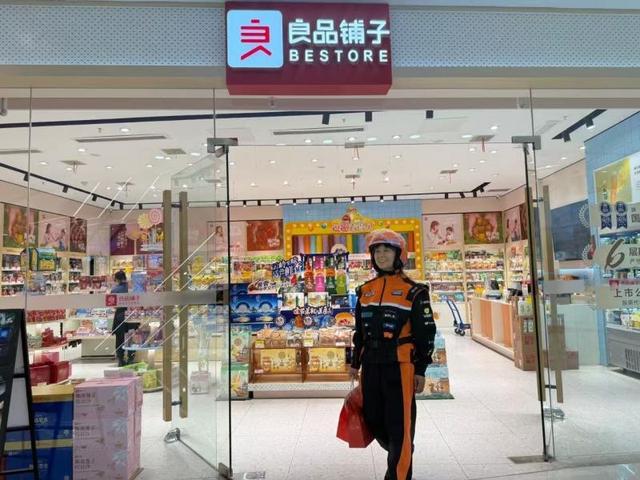
良品铺子接入淘宝闪购后4个月订单量增长285%
Xin Lang Cai Jing· 2025-09-16 06:06
Core Insights - The article highlights the significant growth of the snack brand Liangpinpuzi since its integration with Taobao Flash Sale, reporting a 285% year-on-year increase in order volume and a 51.2% rise in new customer acquisition within four months [1][3]. Company Strategy - Liangpinpuzi has adapted its product selection and operational strategies to align with the trend of instant retail, focusing on quick delivery and impulse purchases [3]. - The company has restructured its approach to online sales, emphasizing a refined selection of products tailored for immediate consumption rather than replicating traditional e-commerce or offline store SKU structures [3]. Consumer Behavior - There is a noticeable shift in consumer purchasing behavior from planned bulk buying to immediate retail, with more users seeking the convenience of 30-minute delivery [3]. - The demographic of Liangpinpuzi's customer base has evolved, with a significant increase in younger consumers, particularly college students and young professionals from the post-95 and post-00 generations [3]. Market Trends - The influx of various snack brands into Taobao Flash Sale has stimulated the demand for snack consumption, leading to a substantial increase in order volume for snack categories, particularly in July, where orders saw triple-digit growth [3].

外卖大战,战而不休为哪般?
Xin Hua Wang· 2025-09-16 02:57
Core Viewpoint - The ongoing "takeaway war" among delivery platforms is creating a vicious cycle for many restaurants, where participation in subsidy programs leads to losses, while non-participation results in reduced visibility and order volume [2][4]. Group 1: Impact on Restaurants - Many small and medium-sized restaurants are caught in a dilemma of whether to engage in the delivery business, facing significant pressure from high commission fees and low profit margins [5][6]. - For example, a restaurant selling a noodle dish priced at 21.8 yuan ends up with only 11.33 yuan after subsidies and fees, resulting in a meager profit of just 1 yuan [5][6]. - The phenomenon of "increased order volume but stagnant revenue" is prevalent, with many restaurants experiencing a surge in orders without a corresponding increase in income [17][19]. Group 2: Market Dynamics - The competition among platforms is not just about consumer acquisition but also about controlling the market dynamics, which is affecting the livelihoods of millions of workers in the industry [4][16]. - The "takeaway war" is leading to a concentration of resources among large brands, creating a scenario where smaller brands struggle to survive [20][22]. - The market is witnessing a shift where platforms are prioritizing large chain brands, leading to a "big brand breaks price, small brand goes bankrupt" cycle [20][22]. Group 3: Regulatory Response - Regulatory bodies are taking steps to address the irrational competition by proposing rules to protect pricing autonomy for businesses and promote transparency in platform operations [23][25]. - The government is advocating for a shift from price competition to quality competition, suggesting improvements in platform algorithms and reducing the burden on businesses [23][25]. Group 4: Future Outlook - Experts suggest that while the current environment is challenging, there is hope for a future where platforms may compete for merchants as well as consumers, potentially alleviating some pressure on small businesses [8][12]. - The long-term effects of the "takeaway war" could lead to a more balanced market if platforms adopt fairer practices and support smaller businesses [35][39].

网络零售大有潜力可挖
Jing Ji Ri Bao· 2025-09-16 00:04
Group 1 - The core viewpoint highlights the robust growth of e-commerce in China, with online retail sales increasing by 9.2% year-on-year from January to July, marking a new high for the year [1] - The online retail sector is reshaping consumer shopping habits and the retail landscape, driven by technological advancements such as big data and artificial intelligence, which enhance shopping efficiency [1][2] - The number of online shopping users in China has surpassed 900 million, with rural online retail sales growing by 6.4% in the first seven months of the year, indicating a shift in consumption patterns among rural residents [1][2] Group 2 - Policies like trade-in programs have significantly boosted rural consumption, with sales during the "618" shopping festival in county areas increasing by 54%, highlighting a shift towards new consumer goods [2] - The China Chain Store & Franchise Association reported that the top 100 online retail companies achieved a total sales volume of 2.17 trillion yuan, reflecting a year-on-year growth of 13.6% [2] - The ongoing transformation in the online retail market emphasizes the need for high-quality consumer supply and the expansion of new e-commerce models such as live streaming and instant retail [2][3] Group 3 - The increase in online retail activity has raised expectations for logistics efficiency, necessitating improvements in service networks and technology applications to meet diverse consumer needs [3] - There is a focus on enhancing the logistics distribution system, including cold chain logistics and village service stations, to facilitate better access to e-commerce for rural residents [3]
老白干酒:武陵酒没有中间经销商分销
Cai Jing Wang· 2025-09-16 00:03
Core Viewpoint - The company emphasizes a direct sales model without intermediaries, focusing on high-end private banquets and gift markets for its Wuling liquor products [1]. Group 1: Financial Management and Cost Control - The company has implemented comprehensive budget management and cost reduction initiatives to lower expense ratios and enhance profitability [1]. - In the first half of the year, the company actively expanded its regional market presence and increased targeted investments in brand promotion and consumer engagement despite industry challenges [1]. Group 2: Pricing Strategy and Market Positioning - The company has adopted an innovative marketing model with a direct-to-end consumer sales approach, avoiding middlemen and focusing on direct sales to terminal agents, major clients, and e-commerce platforms [1]. - The company aims to balance supply and demand to stabilize prices and promote healthy channel development, particularly in response to potential price fluctuations of competing products like Feitian Moutai [1]. Group 3: Online and Offline Integration - The company has strengthened its online presence by establishing official flagship stores on platforms such as JD, Tmall, Douyin, and Pinduoduo, tailoring products and strategies to different consumer characteristics [2]. - The company is embracing instant retail channels and has partnered with Yima to effectively integrate online and offline resources for deeper operational synergy [2].

美团-W(03690.HK)25Q2业绩点评:短期即时零售竞争压制利润 观察后续竞争节奏和新业务进展
Ge Long Hui· 2025-09-15 20:34
Core Viewpoint - The company reported a significant decline in adjusted net profit and gross margin due to intense competition in the instant retail sector, while new business revenues continue to grow but are impacted by overseas expansion losses [1][2][3] Financial Performance - In Q2 2025, the company achieved revenue of 91.84 billion yuan, a year-over-year increase of 11.7% and a quarter-over-quarter increase of 6.1% [1] - The gross margin was 33.1%, down from 41.2% in the same period last year [2] - Adjusted net profit was 1.49 billion yuan, representing a year-over-year decrease of 89.0% [1][2] - The adjusted profit margin was 1.6%, down 14.9 percentage points year-over-year and 11 percentage points quarter-over-quarter [1][2] Business Segments - Core local business revenue reached 65.35 billion yuan, up 7.7% year-over-year, with delivery revenue at 23.66 billion yuan (up 2.8% year-over-year) and commission revenue at 24.95 billion yuan (up 12.9% year-over-year) [1] - New business revenue was 26.49 billion yuan, a year-over-year increase of 22.8%, but incurred a loss of 1.88 billion yuan due to overseas expansion [1][3] Competitive Landscape - Intense competition in instant retail is squeezing the company's profits, with significant increases in delivery subsidies, rider costs, and user subsidies [2] - The company’s operating profit is under pressure due to the competitive landscape, which is influenced by competitors' strategies [2] Growth Prospects - The company is expanding its new business segments, with strong growth in instant retail and plans for further expansion in both domestic and international markets [3] - The company has established over 50,000 flash warehouses nationwide and is exploring new delivery models [3] Investment Outlook - Revenue forecasts for 2025-2027 have been adjusted to 374 billion, 427.7 billion, and 489.5 billion yuan respectively, with a projected net profit of -10.2 billion, 15.8 billion, and 38.5 billion yuan [3] - The target market capitalization for 2025 is set at 712.9 billion yuan, with a target price of 127.93 HKD [3]
贾国龙诽谤罗永浩事件升级;雷军“迎战”苹果
Sou Hu Cai Jing· 2025-09-15 15:03
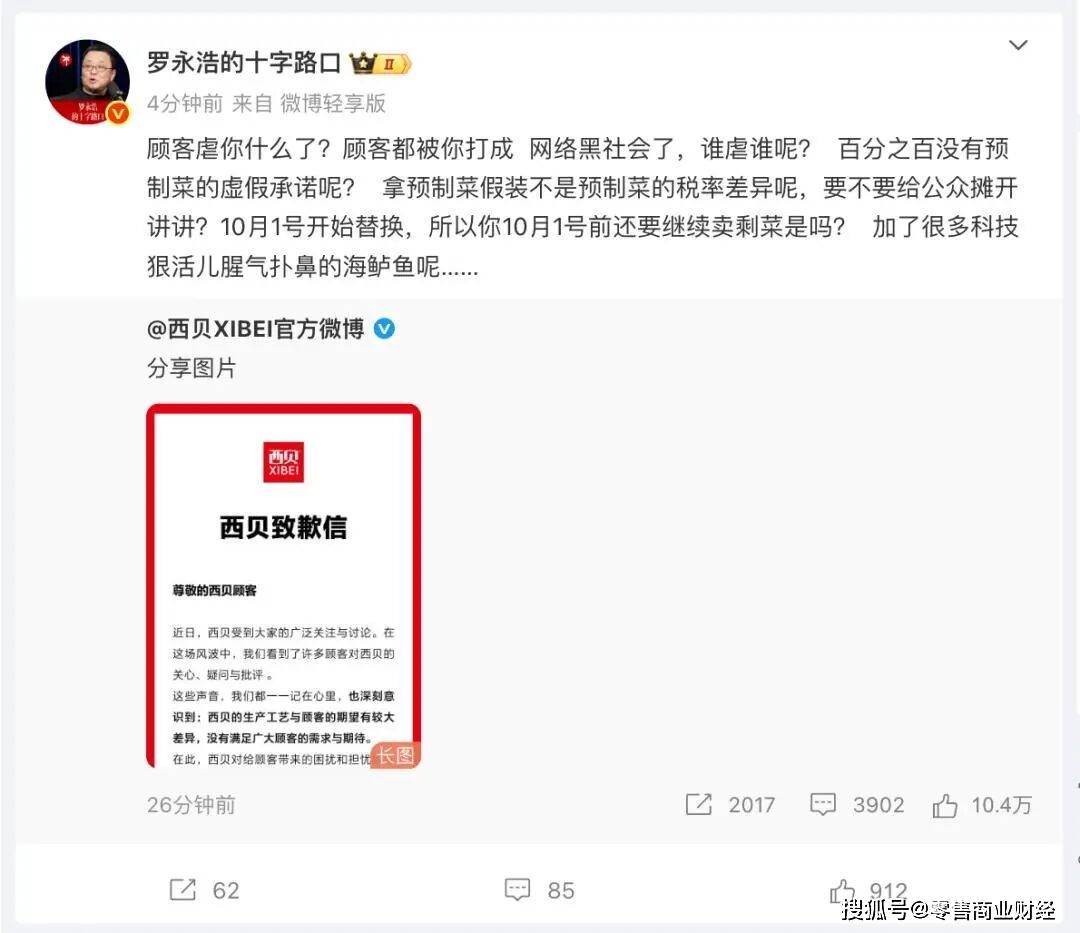
Group 1 - Xibei issued a second apology regarding the controversy over prepared dishes, changing the wording in their statement and promising to adjust some prepared dishes to be made fresh in-store by October 1 [1] - The founder of Xibei, Jia Guolong, faced backlash for derogatory comments about Luo Yonghao, which raised legal concerns regarding defamation [1] - Luo Yonghao criticized Xibei's promises as "false commitments" and questioned the quality and shelf life of the prepared dishes [1] Group 2 - Luo Yonghao announced that the owner of Hua Yu Hua has apologized to him, indicating a resolution to the previous conflict, while emphasizing the importance of consumer rights regarding prepared dishes [2] - Xiaomi's new 17 series smartphones are set to directly compete with Apple's iPhone, featuring the latest Snapdragon 8 Gen 2 chip and marking a significant upgrade for the brand [3] Group 3 - Pop Mart's new SKULLPANDA plush toys sold out quickly, with significant price premiums observed, although overall consumer enthusiasm appears to be declining compared to previous releases [4] - Midea has partnered with Tmall to enhance instant retail services, enabling rapid delivery from nearly 90 stores across 19 cities [4] Group 4 - Online retail sales in China reached 99,828 billion yuan in the first eight months of the year, showing a year-on-year growth of 9.6%, with physical goods sales growing by 6.4% [6] - Yonghui Supermarket plans to procure approximately 2,500 tons of chestnuts from a certified region known for its high-quality produce [8] Group 5 - Pinduoduo launched a significant subsidy program, reducing prices for the new iPhone 17 series by 1,000 yuan, making the iPhone 17 available for as low as 4,999 yuan [10] - JD MALL opened its first self-operated store in Shenzhen, featuring over 200 core brands and a wide range of products [11] Group 6 - JD is in talks to acquire Argos, the second-largest retail chain in the UK, which could enhance Argos's transformation with JD's expertise in retail and logistics [13] - Taobao Flash Sale and Ele.me initiated a "Bright Kitchen, Bright Stove" entrepreneurial support program aimed at assisting various entrepreneurs in the food industry [14] Group 7 - JD Seven Fresh launched a promotional event focused on Xinjiang products, showcasing local cuisine and culture while expanding its private label strategy [15] - Taobao Flash Sale anticipates a significant increase in brand participation for the upcoming Double 11 shopping festival [17] Group 8 - Meituan introduced a series of "Safe Consumption" products aimed at enhancing consumer protection and service quality across various sectors [18] - New national standards for food labeling are being implemented, with companies like Qianhe Flavor Industry leading the way in updating their packaging to comply with these regulations [20]