自动驾驶

Search documents
文远知行-W(00800):立足国内发力海外,RoboX商业化落地龙头
Soochow Securities· 2026-01-12 09:26
Investment Rating - The report assigns a "Buy" rating for the company, marking its first coverage [1]. Core Insights - The company is positioned as a leader in the commercialization of RoboTaxi, with a clear path towards profitability as it benefits from policy openings and technological advancements [7][8]. - The company has achieved significant revenue growth, with a projected increase in total revenue from 554.64 million yuan in 2025 to 1,987.24 million yuan in 2027, reflecting a compound annual growth rate (CAGR) of 110.26% [1]. - The company has a strong cash reserve of 5.4 billion yuan, which supports its research and development efforts and expansion plans [7]. Summary by Relevant Sections Financial Analysis - The company’s total revenue for 2023 is projected at 401.84 million yuan, with a year-on-year decline of 23.83%. However, it is expected to rebound with a growth of 53.58% in 2025 and 70.41% in 2026 [1]. - The net profit attributable to shareholders is forecasted to improve from a loss of 2.517 billion yuan in 2024 to a loss of 1.055 billion yuan in 2027 [1]. - The earnings per share (EPS) is expected to improve from -2.45 yuan in 2024 to -1.03 yuan in 2027 [1]. Industry Overview - The RoboTaxi market is anticipated to reach a scale of 200 billion yuan by 2030, capturing approximately 36% of the B-end shared mobility market [7][8]. - The company is the only entity globally to have obtained autonomous driving licenses in eight countries, showcasing its leading position in the industry [7]. - The report highlights the significant reduction in costs associated with autonomous driving technology, with the BOM cost dropping below 300,000 yuan, enhancing the profitability outlook for RoboTaxi operations [7][8]. Technological Edge - The company utilizes a multi-sensor fusion approach, integrating various technologies to enhance safety and reliability in autonomous driving [7][8]. - The development of the WeRideOne platform is central to the company's competitive advantage, enabling efficient autonomous driving solutions across multiple scenarios [7][8]. Market Positioning - The company has established a robust presence in both domestic and international markets, with successful operations in major cities such as Beijing, Guangzhou, and various locations in the Middle East [7][8]. - The report emphasizes the importance of capturing market share in developed regions, where the potential for RoboTaxi services is significantly higher compared to China [7][8].
NAVSIM SOTA!LatentVLA:通过潜在动作预测构建高效自驾VLA(OpenDriveLab&理想)
自动驾驶之心· 2026-01-12 09:20
Core Insights - The article discusses the introduction of LatentVLA, a new framework that integrates Vision-Language Models (VLMs) with traditional end-to-end methods for autonomous driving, achieving state-of-the-art performance in trajectory prediction [2][31][52]. Group 1: Background and Challenges - Recent advancements in end-to-end autonomous driving methods have shown impressive performance when trained on large human driving datasets, but they still face fundamental challenges due to the limited diversity of training data compared to real-world traffic conditions [4][10]. - Key challenges identified include: 1. Insensitivity in trajectory prediction and imprecision in outputs due to the discrete nature of language models [5]. 2. The burden of data annotation and language bias that limits the capture of implicit driving knowledge [5]. 3. Low computational efficiency and cognitive misalignment in VLMs, which often rely on multi-step reasoning that is time-consuming [5][6]. Group 2: LatentVLA Framework - LatentVLA proposes a self-supervised latent action prediction approach that allows VLMs to learn rich driving representations from unannotated trajectory data, alleviating language bias and reducing annotation costs [21][22]. - The framework employs knowledge distillation to transfer the learned representations and reasoning capabilities from the VLM to traditional end-to-end trajectory prediction networks, maintaining computational efficiency and numerical accuracy [21][22]. Group 3: Performance and Results - LatentVLA achieved a PDMS score of 92.4 on the NAVSIM benchmark, establishing a new state-of-the-art performance, and demonstrated strong zero-shot generalization capabilities on the nuScenes benchmark [31][41]. - The integration of VLM features significantly improved performance compared to baseline methods, with notable enhancements in trajectory planning accuracy [41][42]. Group 4: Experimental Analysis - The article presents a comprehensive analysis of the experimental results, showing that the distilled version of LatentVLA maintains competitive performance while significantly reducing inference latency, achieving a frame rate increase from 1.27 FPS to 4.82 FPS [52]. - The zero-shot performance on nuScenes was competitive, with an average L2 error of 0.33m, indicating strong cross-dataset generalization capabilities [44][45]. Group 5: Conclusion - LatentVLA effectively addresses three critical challenges in autonomous driving VLMs: insensitivity in trajectory prediction, reliance on language annotations, and low computational efficiency, providing a promising paradigm for leveraging pre-trained VLMs in real-world autonomous driving applications [52].

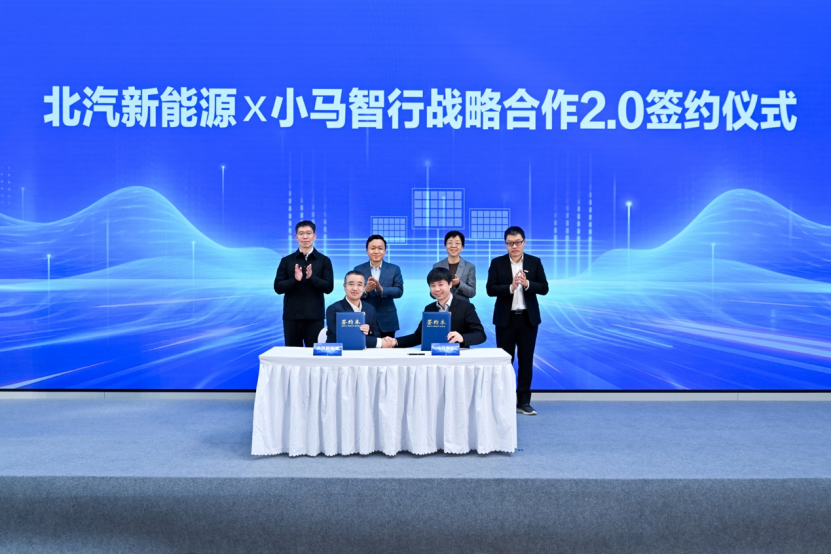
北汽新能源与小马智行宣告合作升级,撬动汽车智驾千亿级市场
Xin Lang Cai Jing· 2026-01-12 07:32
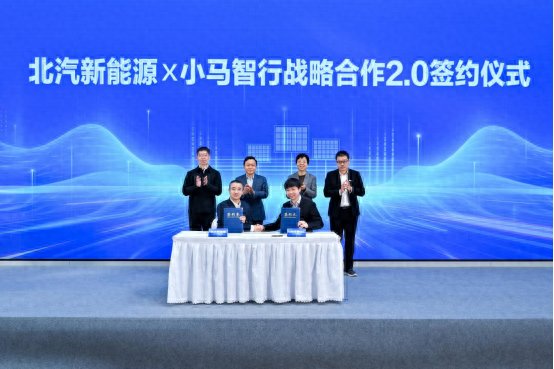
Core Insights - The strategic partnership between BAIC New Energy and Pony.ai has entered a new phase, focusing on comprehensive collaboration in various dimensions of the smart mobility ecosystem [1][3] Group 1: Partnership Overview - The collaboration is based on a prior technical partnership initiated in November 2024, which has already achieved mass production of L4-level Robotaxi models [3] - The partnership aims to systematically advance in five key areas: product co-creation, market expansion, industrial chain integration, ecosystem development, and capital collaboration [3] Group 2: Product Development - The companies will leverage the successful mass production experience of the Arcfox T5 Robotaxi to develop a diverse L4 product matrix, extending into high-end smart vehicle segments [3] - The first mass-produced vehicle, the Arcfox Alpha T5 Robotaxi, is set to roll off the production line in July 2025, with rapid scaling expected thereafter [4] Group 3: Market Strategy - The partnership will focus on deepening domestic market presence while promoting the "China solution" internationally, particularly in the Middle East and Europe [3] - The aim is to establish a sustainable Robotaxi business ecosystem by integrating research, production, customer acquisition, operation, maintenance, and financial services [3] Group 4: Operational Milestones - The Arcfox Alpha T5 Robotaxi has commenced full-scale operations in key areas such as Beijing Yizhuang and Shenzhen, providing users with a fully autonomous travel experience [6] - As of now, over 600 units of the Arcfox Alpha T5 Robotaxi have been produced, with significant operational milestones achieved within months of launch [4][6]
广和通涨超7% 端侧AI发展加速 机构看好公司新兴业务布局
Zhi Tong Cai Jing· 2026-01-12 07:17
Core Viewpoint - Guanghe Tong (300638) has seen a stock price increase of over 7%, currently trading at 18.05 HKD with a transaction volume of 209 million HKD, driven by recent developments in AI solutions and applications in the automotive sector [1] Group 1: Company Developments - Guanghe Tong recently showcased its AI package, Dream Eater, based on the self-developed MagiCore 2.0 lightweight computing solution at the Alibaba Cloud Tongyi exhibition [1] - The company has indicated that its 5G and V2X wireless communication modules and solutions are applicable in the autonomous driving sector, primarily focusing on smart cockpit applications in vehicles [1] Group 2: Market Outlook - According to Shenwan Hongyuan, Guanghe Tong is positioned as a core player in the global IoT module market, with expectations that AI/robotics and vehicle/FWA deployments will continue to drive revenue growth [1]

港股异动 | 广和通(00638)涨超7% 端侧AI发展加速 机构看好公司新兴业务布局
智通财经网· 2026-01-12 07:15
Core Viewpoint - Guanghe Tong (00638) has seen a stock price increase of over 7%, currently at 18.05 HKD, with a trading volume of 209 million HKD, driven by the launch of its AI solution at Alibaba Cloud's event [1] Group 1: Product Development - Guanghe Tong recently showcased its self-developed MagiCore 2.0 lightweight computing solution, the Dream Eater AI package, at the Alibaba Cloud Tongyi exhibition [1] - The company has indicated that its 5G and V2X wireless communication modules and solutions are applicable in the autonomous driving sector, primarily focusing on smart cockpit applications in vehicles [1] Group 2: Market Position and Growth Potential - According to Shenwan Hongyuan, Guanghe Tong is a core player in the global IoT module market, with expectations that AI/robotics and vehicle/FWA deployments will continue to drive revenue growth [1]
北汽新能源与小马智行战略合作步入2.0阶段
Cai Jing Wang· 2026-01-12 06:30
Core Insights - The strategic partnership between BAIC New Energy and Pony.ai marks a significant advancement in China's smart driving industry, aiming to create a collaborative innovation model for autonomous driving [1][3] - The collaboration will focus on a comprehensive approach that includes product development, market expansion, supply chain integration, ecosystem building, and capital cooperation [2][3] Group 1: Partnership Details - BAIC New Energy and Pony.ai have entered a "five-dimensional" strategic cooperation to enhance their collaboration in L4-level Robotaxi production and operation [1] - The partnership signifies a transition to a 2.0 era, emphasizing a complete closed-loop from technology development to commercial operation rather than merely increasing vehicle production [1][2] Group 2: Production and Operations - The first mass-produced vehicle is set to roll off the production line in July 2025, with plans to achieve 300 units within three months and over 600 units produced to date [2] - The safety performance of the vehicles has surpassed human driving levels by more than ten times, showcasing industry-leading development speed and maturity [2] Group 3: Future Collaboration Focus - Future collaboration will emphasize five key areas: product co-creation, market expansion, supply chain integration, ecosystem development, and capital cooperation [2] - The aim is to create a diverse L4 product matrix and extend the reach of the "Chinese solution" to international markets, particularly in the Middle East and Europe [2] Group 4: Industry Impact - This partnership is a crucial step for China's intelligent connected vehicle industry, moving from isolated technological breakthroughs to a systematic ecological competition [3] - BAIC New Energy plans to collaborate with more global tech companies to explore innovative boundaries in smart vehicles, aiming to reshape the landscape of smart mobility [3]

自主爆发 跃升向上,北汽集团公布年度成绩单
Zhong Guo Qi Che Bao Wang· 2026-01-12 03:07
Core Insights - In 2025, BAIC Group achieved a total vehicle sales of 1.752 million units, marking a year-on-year increase of 5.6%, with its self-owned brand sales reaching 1.07 million units, significantly outperforming the industry in both new energy and international business, setting a historical record [1] - The "Three-Year Leap Action" has initiated a structural transformation and qualitative leap for BAIC Group, entering a new development stage [1] Group 1: Sales Performance - BAIC's self-owned passenger vehicle sales experienced explosive growth, while its commercial vehicle sales maintained the industry lead, with total sales exceeding 1.07 million units, accounting for 61% of total sales [1] - BAIC Arcfox sold 163,000 units in 2025, achieving a year-on-year growth of 101%, with models like Arcfox T1 and the new Alpha T5 contributing to a monthly sales stabilization at 20,000 units [3] - Beijing Off-road vehicles sold over 200,000 units, a 38% increase year-on-year, with the BJ40 model leading the hard-core off-road sales for 11 consecutive months [3] Group 2: International Expansion - BAIC Group exported 308,000 vehicles in 2025, a historical high with a year-on-year growth of 26%, outpacing the industry by 7.3 percentage points, with a presence in over 130 countries and regions [4] - The international strategy for BAIC Foton is advancing, with significant sales growth in Africa, Europe, and Latin America, maintaining the top position in commercial vehicle exports [4] Group 3: New Energy Growth - BAIC Group's new energy vehicle sales surpassed 390,000 units in 2025, reflecting a year-on-year growth of 95%, significantly outpacing the industry average [7] - BAIC Foton's new energy commercial vehicles saw a growth of 82.3%, with a comprehensive acceleration in product and network scale [7] Group 4: Technological Innovation - BAIC Group is focusing on technological innovation, achieving significant progress in core technologies such as power batteries, electric drive, intelligent cockpit, and hydrogen fuel commercial vehicles [10] - BAIC has launched the "Beijing Automotive Yuanjing Intelligent" technology system, enhancing vehicle intelligence through shared data and collaborative multi-agent systems [10] - BAIC Foton unveiled the world's first engineering liquid hydrogen heavy truck, marking a significant achievement in the liquid hydrogen fuel heavy truck sector [12] Group 5: Corporate Responsibility and Community Engagement - BAIC Group is enhancing its corporate image by contributing to the economic and social development of Beijing, participating in significant national events, and supporting local sports teams [15] - The company has established strategic partnerships to promote its products and services, contributing to the modernization of the capital [15] Group 6: Future Outlook - For 2026, BAIC Group aims to achieve total vehicle sales of 2.2 million units, focusing on high-quality development and contributing to the modernization of China [18]

L3、L4齐发,北汽新能源猛攻自动驾驶商业化
Jing Ji Guan Cha Wang· 2026-01-12 02:54
Core Viewpoint - The launch of L3 version of BAIC's Arcfox Alpha S marks a significant step towards the commercialization of autonomous driving in China, with a strategic partnership established with Pony.ai to enhance L4 Robotaxi production and operation [2][3]. Group 1: Company Developments - BAIC New Energy officially commenced large-scale pilot operations for the L3 version of Arcfox Alpha S on January 10, indicating a shift towards commercial deployment in the autonomous driving sector [2]. - The company is one of the first in China to cover autonomous driving technology from L2 to L4, having received the first batch of L3 autonomous driving licenses by December 2025 [2]. - The self-developed "Yuanjing Intelligent" architecture provides crucial technical support for obtaining these licenses [2]. Group 2: Strategic Partnerships - BAIC New Energy and Pony.ai have entered a comprehensive strategic cooperation, moving into a "2.0 era" that focuses on creating a complete closed-loop from technology development to commercial operation [2][4]. - The collaboration began in November 2024, with BAIC providing a fully redundant chassis architecture and Pony.ai supplying its seventh-generation autonomous driving software and hardware system [3]. Group 3: Market and Product Expansion - The L4-level Arcfox Alpha T5 Robotaxi has begun mass production, with over 600 units produced and operational in various complex driving scenarios, achieving safety levels ten times higher than human drivers [3]. - Starting from November 2025, the Robotaxi has been fully operational in key areas of Beijing and Shenzhen, demonstrating a successful integration of production, testing, and operation [3]. Group 4: Future Directions - Future collaboration will focus on five dimensions: product development, market expansion, supply chain integration, ecosystem construction, and capital cooperation, aiming to create a sustainable Robotaxi business ecosystem [4]. - The partnership aims to promote "Chinese solutions" in international markets, particularly in the Middle East and Europe, while optimizing the L4 lifecycle costs [4]. - BAIC New Energy plans to collaborate with more global tech companies to explore innovative boundaries in smart vehicles, contributing to significant changes in the global mobility industry [4].
小马智行与北汽新能源全面深化战略合作,共筑自动驾驶全球商业化标杆
Jin Rong Jie Zi Xun· 2026-01-12 02:48
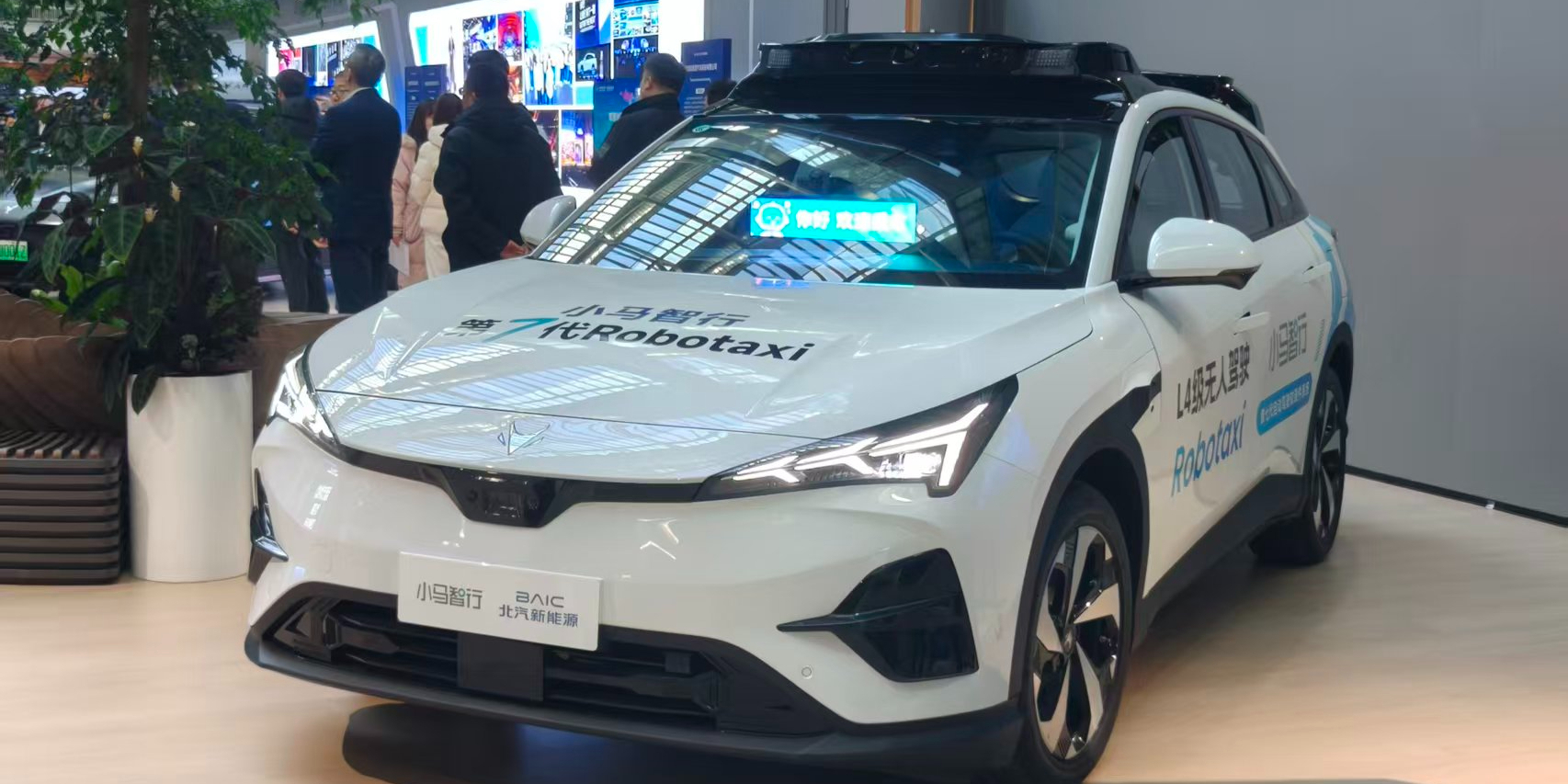
Core Insights - The partnership between Pony.ai and BAIC New Energy marks the initiation of a comprehensive strategic cooperation, termed "Cooperation 2.0," focusing on the mass production and commercialization of L4-level Robotaxis [1][3] Group 1: Strategic Cooperation Framework - The collaboration is built on five pillars: product co-creation, market expansion, industry chain integration, ecosystem development, and capital synergy, aiming to leverage a billion-level investment to drive the trillion-level smart driving industry [3] - The agreement was signed during BAIC New Energy's second Technology Day, highlighting the shift from single project cooperation to a full-system development approach [3] Group 2: Product and Market Development - The partnership will expand the Robotaxi product matrix from a single model to a comprehensive range, utilizing the production experience of the Arcfox Alpha T5 Robotaxi to develop more L4-level autonomous driving vehicles [4] - The collaboration aims to promote the "Chinese solution" for autonomous driving in global markets, with plans to introduce the Arcfox Alpha T5 Robotaxi and its operational model to regions such as the Middle East and Europe [4] Group 3: Industry Chain and Ecosystem Integration - The companies will initiate actions to enhance the supply chain, focusing on optimizing performance, maintenance costs, and lifecycle costs of L4 vehicles, thereby reducing BOM and operational costs for Robotaxis [6] - BAIC New Energy will integrate its resources, including travel platforms and after-market services, with Pony.ai's Robotaxi fleet to streamline the entire value chain from vehicle development to operation and maintenance [6] Group 4: Capital Collaboration - The partnership will deepen capital collaboration, focusing on technology research, supply chain investment, and global market expansion, creating a tightly bound framework of technology co-research, business co-expansion, and capital co-investment [7] Group 5: Production Milestones - The production scale of the Arcfox Alpha T5 Robotaxi has surpassed 600 units, exceeding Pony.ai's target of 1,000 units by 2025 and supporting the goal of achieving 3,000 units by the end of 2026 [9] - The Arcfox Alpha T5 Robotaxi is now fully operational in major cities like Beijing and Shenzhen, with plans to expand to more first-tier cities to meet diverse user travel needs [9][11] Group 6: Technological Advancements - The seventh-generation Arcfox Alpha T5 Robotaxi features significant upgrades in user experience, including enhanced ride comfort and smart interaction capabilities, aimed at providing a seamless travel experience [11] - The strategic cooperation signifies a new phase in the relationship between the two companies, emphasizing their commitment to advancing high-level intelligent driving technology and contributing to global transportation transformation [11]
特斯拉再度与半挂卡车相撞,造成一人死亡
Guan Cha Zhe Wang· 2026-01-12 02:48
Group 1 - A Tesla vehicle was involved in a collision with a semi-truck in California, resulting in at least one fatality [1] - The California Highway Patrol reported that the accident occurred on the eastbound lanes of the 210 freeway, leading to significant traffic disruptions [1] - Traffic was closed for approximately three hours, with detours implemented for affected drivers [1] Group 2 - This incident is not the first involving Tesla and semi-trucks; a previous accident in September 2023 resulted in multiple fatalities [3] - The family of a victim from the earlier accident has filed a lawsuit against Tesla, alleging that the vehicle's lane-keeping and driver-assist systems failed to function as advertised [3] - The lawsuit claims that Tesla's CEO Elon Musk has misrepresented the capabilities of the company's autonomous driving features, leading to a false sense of security among users [3]