贸易保护主义

Search documents
BBMarkets蓝莓外汇:美联储“三把手”警告,通胀预期是“暗雷“
Sou Hu Cai Jing· 2025-05-28 04:10
Core Viewpoint - The Federal Reserve must take decisive and strong policy actions to address inflation deviations from targets, especially in the context of rising trade protectionism and tariffs under the Trump administration [1][3] Group 1: Inflation Management - Inflation expectations management is a core pillar of modern central bank policy frameworks [1] - Historical experience indicates that the root causes of persistent inflation often stem from unanchored expectations, and the cost of restoring these expectations can rise exponentially [1][3] Group 2: Supply Chain and Geopolitical Risks - Supply chain disruptions and geopolitical risks significantly impact inflation dynamics, with the COVID-19 pandemic causing notable supply shocks that increase economic uncertainty [3] - The public's perception of future prices may undergo nonlinear changes due to sudden shocks [3] Group 3: Trade Policy Impact - The trade policies under the Trump administration complicate Federal Reserve decision-making, as tariffs exert pressure on the economy through both imported inflation and demand suppression [3] - The Federal Reserve has been assessing the lagged effects of trade policies on inflation since maintaining the benchmark interest rate in the 4.25%-4.50% range since December of the previous year [3] Group 4: Financial System Resilience - Current data from the New York Fed indicates that the banking system has sufficient reserves to withstand potential shocks, providing an important buffer for the market [3] - Adequate liquidity reserves will determine the financial system's resilience in the face of "black swan" events [3] Group 5: Policy Forward Guidance - The Federal Reserve emphasizes a data-dependent approach, avoiding overreaction to temporary fluctuations while guarding against the accumulation of potential risks [3] - The most effective policy is proactive expectation management rather than reactive crisis response [3]

全球工商界呼吁维护全球产供链安全稳定 2025年全球贸易投资促进峰会在京举行
Jin Rong Shi Bao· 2025-05-28 01:39
Group 1 - The global economy is entering a new period of turmoil and transformation due to rising unilateralism and protectionism, necessitating collaboration among the global business community to maintain a stable and efficient global industrial and supply chain [1][3] - The 2025 Global Trade and Investment Promotion Summit emphasized the importance of embracing the digital and intelligent era for mutual development, with a record number of international participants from 48 countries and regions [1][2] Group 2 - The "Beijing Initiative" released at the summit includes six key areas: building a collaborative digital system, sharing technological benefits, promoting trade liberalization, enhancing green transformation, fostering healthy AI development, and deepening global business cooperation for sustainable development [2] - Trade protectionism is making the global economy more vulnerable, with tariffs disrupting normal trade order and increasing global volatility, as highlighted by the president of the New Development Bank [3][4] Group 3 - The importance of resilient and vibrant global supply chains is underscored, with a call to avoid decoupling and trade wars, which have no winners and hinder economic development [3][4] - The rapid development of digital and intelligent technologies is seen as a significant opportunity for economic growth and industrial upgrading, with potential to reshape global productivity and competitiveness [5][6]
马寅初的第三条道路
Jing Ji Guan Cha Wang· 2025-05-27 11:27
Group 1 - Adam Smith's economic ideas initially inspired Chinese intellectuals, particularly during the late 19th and early 20th centuries, but ultimately did not take root in Chinese academic thought [2][3] - The shift in Chinese economic thought in the 1930s was led by Ma Yinchu, who proposed a balanced approach between free capitalism and Soviet-style socialism in his work "Economic Reconstruction of China" [3][5] - The Chinese Economic Society, founded in 1923, evolved to focus on practical economic issues rather than purely theoretical discussions, reflecting the changing priorities of its members [6][7] Group 2 - Ma Yinchu's economic philosophy transitioned from early liberalism to advocating for a "third way" that combined elements of both capitalism and socialism, influenced by the successes and failures of both systems [8][10] - The "third way" was characterized by a recognition of the limitations of extreme capitalism and communism, leading to a call for a mixed economic model that would suit China's unique conditions [9][11] - Ma Yinchu's ideas gained traction among influential figures in the government and business sectors, facilitating discussions on the implementation of controlled economic policies in China [16][17] Group 3 - The concept of "controlled economy" proposed by Ma Yinchu was distinct from Soviet-style planning, emphasizing the need for a balanced approach to production and distribution to avoid the pitfalls of both extreme capitalism and communism [14][15] - Ma Yinchu argued that China's socio-economic challenges required a departure from individualism towards a more collective approach, drawing inspiration from Friedrich List's nationalism [11][12] - The rapid acceptance of Ma Yinchu's "third way" among Chinese intellectuals and policymakers was evident in the discussions and resolutions of the Chinese Economic Society and its influence on national economic policies [17][18]

外媒聚焦首届东盟-中国-海合会峰会:特朗普让东南亚更向中国靠拢
Guan Cha Zhe Wang· 2025-05-27 10:31
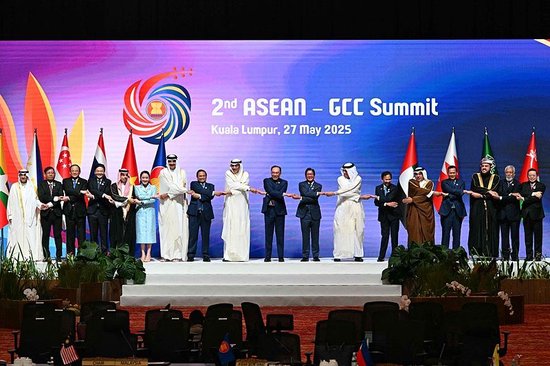
Core Viewpoint - The ASEAN-China-GCC summit marks a significant shift in trade relations, as ASEAN seeks to strengthen ties with China and Gulf countries in response to U.S. tariffs imposed by President Trump [1][2][4] Group 1: Summit Details - The ASEAN-China-GCC summit took place on May 27, 2023, in Kuala Lumpur, Malaysia, aiming to enhance economic cooperation and address trade risks [4][5] - A joint working group may be established to promote closer economic collaboration, focusing on infrastructure, logistics, and supply chain development related to China's Belt and Road Initiative [1][2] - The summit is seen as a milestone, reflecting a new phase in regional cooperation and the importance of the ASEAN-GCC partnership [5][6] Group 2: Economic Context - The combined population of ASEAN, China, and the GCC exceeds 2.1 billion, with a total economic output nearing $25 trillion, indicating vast cooperation potential [6] - The summit is a response to the increasing economic uncertainty and geopolitical challenges posed by U.S. protectionism, which is reshaping global trade dynamics [2][5] - ASEAN countries are actively seeking to diversify their economic partnerships, moving away from reliance on the U.S. due to uncertainties in economic relations [2][8] Group 3: Trade Impact - ASEAN member countries have faced significant tariff impacts, with Cambodia experiencing a 49% tariff rate, followed by Laos at 48% and Vietnam at 46% [8] - The summit reflects ASEAN's desire to expand trade relations beyond the U.S., particularly in light of the increasing trade surplus with the U.S. [8]
中国大量运回黄金,持债规模将至第三,特朗普对华放低姿态
Sou Hu Cai Jing· 2025-05-27 09:51
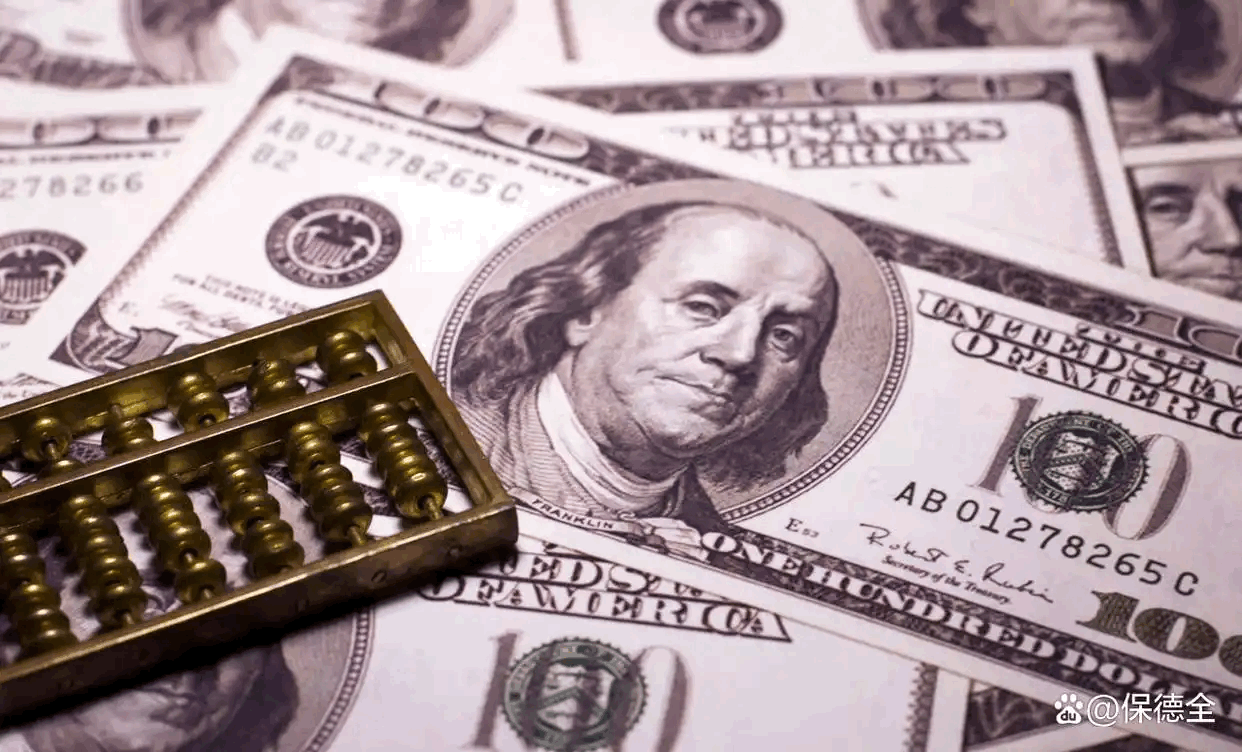
据央广网报道,最新官方储备资产情况。数据显示,4月末,我国外汇储备规模为3.28万亿元,连续第三个月增长;4月末,黄金储备规模为7377万盎司,连 续六个月增长。根据国家外汇局的统计数据,截至2025年4月末,我国外汇储备规模为32817亿美元,较3月末上升410亿美元,升幅为1.27%。外汇局指出, 2025年4月,受主要经济体宏观政策、经济增长预期等因素影响,美元指数下跌,全球金融资产价格涨跌互现。 特朗普(资料图) 美元(资料图) 自从2019年被日本超越之后,近年来中国在逐步减持美债,整体趋势非常明显,不过,这一次是自2023年2月以来最大规模的单月长期美债抛售,这已经不 是简单的投资行为。事实上,其原因也不难理解,总结起来就是四个字——风险规避。国际评级机构穆迪将美国主权信用评级从Aaa下调至Aa1,这是继标 普2011年、惠誉2023年之后,第三家主要评级机构对美国信用评级的调整。 中国由美国第二大债主变为第三大债主,英国变为第二大债主。3月正值本轮美债市场动荡前夕。美国财政部2025年3月国际资本流动报告(TIC)显示,日 本3月增持49亿美元美国国债,持仓规模为11308亿美元,依然是美国第一 ...
美国公司最近发现了一个漏洞,从中国进口的商品可以大幅降低关税
Sou Hu Cai Jing· 2025-05-27 08:26
Core Insights - The article discusses the activation of the "first sale rule" in U.S. customs law, which allows American companies to circumvent high tariffs on Chinese goods by calculating duties based on the initial sale price rather than the final sale price to U.S. retailers [1][3][5] Group 1: First Sale Rule - The first sale rule, established in 1988, allows for lower tariff calculations if certain conditions are met, such as the intermediary not being an affiliated party and having proper documentation [3][5] - This rule has gained attention as U.S. companies, facing high tariffs on Chinese imports, have begun to utilize it to significantly reduce their tariff burdens [5][7] Group 2: Impact on Tariffs - Tariffs on Chinese goods can reach as high as 30% or more, and using the first sale rule can effectively halve the taxable amount, leading to substantial savings for companies [7][9] - The rule has become a critical strategy for various industries, including luxury goods and biotechnology, as they seek to mitigate the financial impact of tariffs [5][7] Group 3: Political and Economic Implications - The use of this rule poses challenges for U.S. policymakers who advocate for trade protectionism, as it undermines the intended effects of high tariffs on Chinese imports [7][10] - The article suggests that the reactivation of this rule may create a dilemma for U.S. lawmakers, balancing national economic security with the interests of domestic companies [9][10] Group 4: Global Market Dynamics - From a Chinese perspective, the situation highlights the continued competitive advantage of Chinese products, which remain attractive to U.S. companies due to lower costs and reliable quality [10][12] - The article emphasizes that the evolving trade landscape reflects the complexities of global markets, where companies will seek new avenues to navigate regulatory challenges [12]
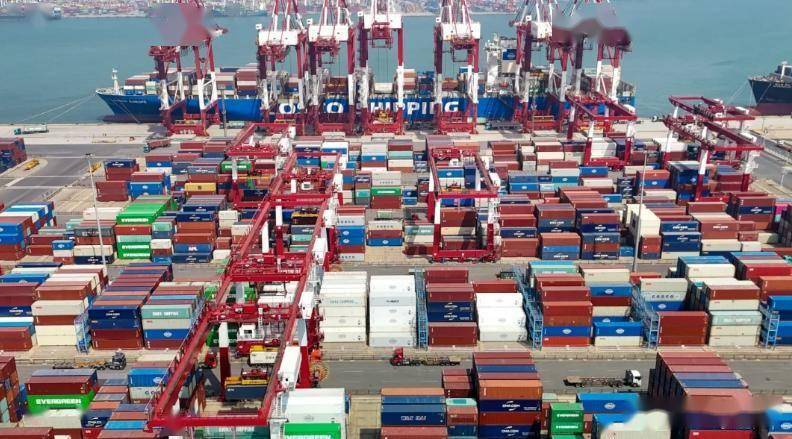
特朗普公开摊牌,谁对中国加征关税,就能换美国的“免死金牌”?
Sou Hu Cai Jing· 2025-05-27 07:22
Group 1 - The Trump administration has reached a "trade truce" with China unexpectedly quickly, contrasting with the slow negotiations with traditional allies [1] - The U.S. has proposed tariffs on Chinese goods as a condition for trade agreements with other countries, indicating a hardline stance in negotiations [4] - The European Union initially sought to cooperate with the U.S. on addressing challenges from China but has since adopted a more confrontational approach due to perceived unfair treatment [3][6] Group 2 - The U.S. trade protectionism is seen as isolating the country from global trade, failing to bring back capital and manufacturing, and not achieving consensus on isolating China [8] - The EU recognizes the importance of the Chinese market for its exports and is cautious about aligning with U.S. policies that could provoke retaliation from China [6] - The recent negotiations have not yielded significant breakthroughs, with only the U.K. successfully reaching a trade agreement with the U.S. [4]
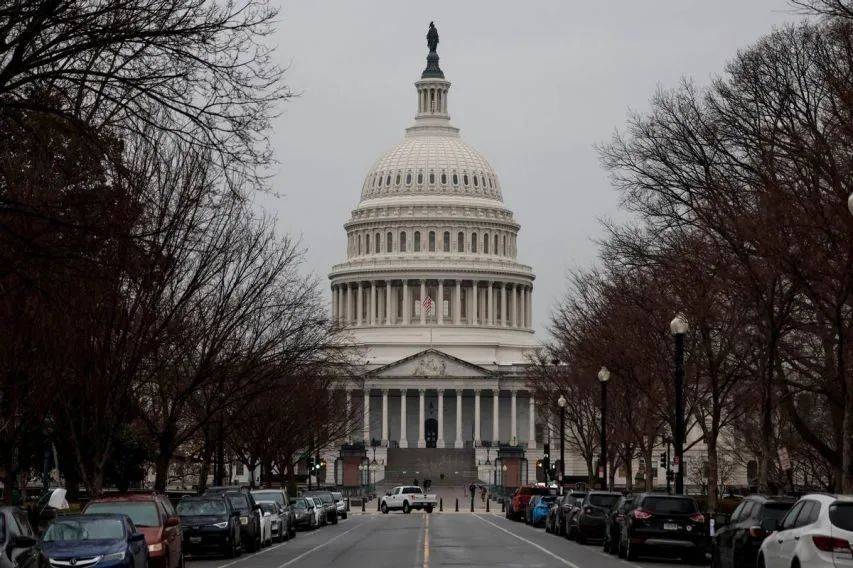
德国总理:若谈不拢,将反击!欧洲央行:美元主导地位正变得不确定
Mei Ri Jing Ji Xin Wen· 2025-05-27 02:03
此外默茨表示,美国科技公司在欧盟享有有利的税收环境,但这种情况不一定会持续下去,欧盟不希望与美国陷入关税战升级的情况,欧美双方需共同解决 经贸冲突。 德国总理默茨。图片来源:视觉中国 每经编辑|毕陆名 据央视新闻27日报道,当地时间26日,德国总理默茨表示,德国和其他欧盟国家不希望关税争端升级。从德国的角度看,加征关税会损害德国的利益,如果 欧美谈判无法达成一致,德国没有选择,德国将会对美国关税政策进行反击。 现在的欧美谈判正在努力避免局势升级,德国也希望避免关税战这种情况的出现。默茨还称,德国需要为欧盟与美国谈判的失败以及其他任何情况做好准 备。 据新华社26日报道,美国总统特朗普25日说,在与欧盟委员会主席冯德莱恩通电话后,他同意将对欧盟征收50%关税的起征时间从6月1日延至7月9日。 特朗普当天在新泽西州莫里斯顿登上总统专机前告诉媒体记者,冯德莱恩和他通了电话,希望推迟对欧盟征收50%关税的起征时间,以"认真推进"与美方的 谈判。据美国有线电视新闻网等媒体报道,特朗普对记者说,冯德莱恩在通话中告诉他:"我们将迅速聚在一起,看看是否能解决问题。"他在与冯德莱恩进 行"非常愉快的通话"后作出延期决定。 冯德 ...

中美谈判后,美国的歪招
Sou Hu Cai Jing· 2025-05-26 15:56
Group 1: Trade and Tariffs - The U.S. has announced the initiation of the withdrawal of the "AI diffusion rules" from the Biden administration, strengthening export controls on overseas AI chips, claiming that using Huawei's Ascend AI chips globally may violate U.S. regulations [3] - The U.S. Trade Representative's office plans to impose a 100% tariff on Chinese cranes and 20%-100% tariffs on container and chassis equipment, citing the need to bring shipbuilding back to the U.S. [3] - The U.S. Commerce Department has preliminarily determined that Chinese battery component materials receive "high subsidies," proposing countervailing duties that distort normal market competition into a "government subsidy war" [3] Group 2: Technology and Export Controls - The U.S. has included Huawei's Ascend chips in the category of "violating U.S. export controls," warning global companies against using U.S. AI chips to train Chinese AI models [4] - Reports indicate that the Trump administration is preparing to add multiple Chinese tech companies to the control list, expanding the "entity list" beyond Huawei and ZTE to include chip manufacturers [4] - The U.S. aims to cut off the development of China's tech industry through targeted measures, transforming technology exchange into a "tech cold war" [4] Group 3: U.S. Strategic Misjudgments - The U.S. is driven by political opportunism, with some politicians leveraging anti-China sentiment for political gain, even at the cost of U.S.-China economic relations [5] - The U.S. exhibits "hegemonic anxiety" as China's GDP approaches that of the U.S., attempting to delay China's industrial upgrades through tariffs and technology blockades [5] - The U.S. maintains a zero-sum game mentality, ignoring the deep integration of global supply chains and attempting to preserve its top position in the global value chain through "decoupling" [5] Group 4: Consequences of Unilateral Actions - Historical evidence shows that unilateral sanctions ultimately backfire, as seen in the 2025 trade war where the U.S. imposed a 145% tariff on Chinese goods, leading to significant losses for companies like Tesla and Apple, and increased living costs for American households [6] - The intensified technology blockade has caused companies like NVIDIA and AMD to lose access to the largest AI chip market, prompting China to accelerate the development of its semiconductor industry [7] - The U.S. efforts to form a "semiconductor alliance 2.0" have faced challenges, as countries like South Korea seek exemptions for chip exports to China, and companies like ASML continue to supply China with lithography machines [7]

中美局势有变?一觉醒来,美国对华下2道“战书”,中国无路可退
Sou Hu Cai Jing· 2025-05-26 14:47
Group 1: Trade Measures - The U.S. has imposed a 30% additional tariff on specific models of cranes imported from China, affecting over $1.5 billion worth of imports annually [3] - The U.S. Coast Guard announced a new port facility usage fee for Chinese-built vessels, charging double compared to other countries, impacting a wide range of ships including commercial and fishing vessels [3] - The construction industry in the U.S. is expected to see an 8% increase in project costs over the next year due to the crane tariff, potentially leading small contractors to abandon projects and affecting local employment [3] Group 2: Geopolitical Implications - The U.S. aims to weaken China's manufacturing competitiveness through economic measures, which is crucial for maintaining its dominance in the global supply chain [5] - The U.S. actions are seen as a political maneuver to divert attention from domestic economic and social issues, especially with elections approaching [6] - China is accelerating free trade agreement negotiations with other economies, reducing reliance on the U.S. market, and implementing reciprocal trade measures against certain U.S. goods [6] Group 3: International Reactions - International economic organizations emphasize that confrontation between the U.S. and China will harm both parties, advocating for cooperation as a solution [8] - The World Trade Organization has expressed concerns that U.S. protectionist measures undermine the multilateral trade system and could negatively impact global economic recovery [6] - Long-term cooperation in various fields such as trade, climate, and security is essential for both nations, with a call for dialogue to achieve mutual benefits and global economic stability [8]