反内卷

Search documents
芳烃日报:淡季存需求压制,反内卷提振情绪-20251226
Guan Tong Qi Huo· 2025-12-26 09:39
【冠通期货研究报告】 纯苯因关税问题,韩国对中国纯苯出口量增加,进口集中到货,港口库存压 力明显,但后续累库会逐步放缓,目前呈现供强需弱的格局。 苯乙烯方面:12 月 12 日至 18 日,中国苯乙烯工厂整体产量在 34.68 万吨, 较上期+2.38%;工厂产能利用率 69.13%,环比+1.02%。苯乙烯下游 EPS、PS、ABS 消耗量在 26.18 万吨,环比-3.89%。苯乙烯工厂库存在 17.10 万吨,环比上周 -4.23%。截至 12 月 22 日,苯乙烯华东港口库存在 13.93 万吨,环比上周+3.41%; 华南港口库存在 1.1 万吨,环比上周-26.67%。截至 12 月 17 日,苯乙烯非一体 化利润在-203 元/吨。截至 12 月 17 日,苯乙烯一体化利润在 421.08 元/吨。 苯乙烯在第四季度检修较多,港口库存去化,但根据行业往期规律来看,1-3 月属于需求淡季,季节性累库的可能性较大。 【宏观面分析】 工业和信息化部负责人透露,2025 年工业经济稳中有进,预计全年规模以 上工业增加值同比增长 5.9%。 国家发改委发表文章《大力推动传统产业优化提升》。文章指出,对新能 ...
涨价潮,来了?
大胡子说房· 2025-12-26 09:33
Core Viewpoint - A new wave of price increases is anticipated across various industries, driven by factors such as supply reduction, wage increases, and government policies aimed at stimulating domestic demand [1][5][30]. Group 1: Price Increases in Various Industries - McDonald's will raise prices on several menu items by 0.5-1 yuan starting December 15, 2025 [2]. - Moutai's wholesale prices for all products have increased, with the 25-year Flying Moutai rising by 40 yuan to 1600 yuan per bottle, and the Zodiac Snake variant surging by 230 yuan to 2000 yuan per bottle [3]. - SMIC has implemented a price increase of approximately 10% on certain production capacities, particularly focusing on the 8-inch BCD process platform [4]. - Major global shipping companies, including MSC, CMA CGM, Maersk, and Hapag-Lloyd, have announced plans to adjust freight rates starting January 1, 2026, including seasonal surcharges [4]. - Smartphone manufacturers like Xiaomi, OPPO, vivo, and Honor have raised prices on new models by 100 to 600 yuan compared to previous generations since October [5]. Group 2: Reasons Behind Price Increases - Price increases are partly a response to policies aimed at reducing overcapacity and promoting quality over quantity in production, as seen in industries like Moutai and SMIC [5][6]. - The price of lithium carbonate has risen from 92,800 yuan per ton to 104,900 yuan per ton, reflecting a monthly increase of over 13%, driven by production cuts from leading companies [6]. - The government has emphasized the need to stimulate domestic demand by increasing residents' income, which may lead to higher wages and consequently higher prices [6][7]. Group 3: Economic Outlook and Market Trends - The expectation is that inflation will become the main theme moving forward, with CPI gradually rising as the economy recovers from deflation [28][45]. - Monetary policies, including potential interest rate cuts, are anticipated to continue, providing a basis for inflation as liquidity increases in the market [34][40]. - The A-share market is expected to experience a slow bull market due to improved regulations, increased long-term capital inflows, and enhanced liquidity [41][43]. - As capital markets stabilize and residents' financial conditions improve, consumer spending is likely to increase, further driving price rises across various sectors [42][44].


风雨萧瑟,熊途依旧
Dong Zheng Qi Huo· 2025-12-26 08:58
年度报告——纯碱 风雨萧瑟,熊途依旧 | [走Ta势bl评e_级Ra:nk] | | 纯碱 | | : | 看跌 | | | --- | --- | --- | --- | --- | --- | --- | | 报告日期: | 2025 | 年 | 12 | 月 | 26 | 日 | 2025 年在行业扩能压力下,纯碱基本面呈过剩态势,年内 价格屡创新低。2026 年产能端的增长已是明牌,2025 年末 投产的 350 万吨产能将对 2026 年全年的纯碱供给端构成明 显冲击。本轮行业扩能预计至少持续到 2028 年,这种持续 大规模的低成本产能扩张对纯碱价格端的压制是显而易见 的。随着行业扩能压力进一步显现,加上明年煤价运行中 枢相较今年并无进一步下移空间,明年或有更多低竞争力 产能降负荷。预计 2026 年纯碱产量较 2025 年增长 3%左右。 ★2026 年纯碱消费量预计增长 2.7%,轻重碱表现继续分化: 能 源 化 工 近年来纯碱需求端维持增长态势。2025 年虽然重碱需求端 因浮法和光伏玻璃行业减产出现萎缩,但轻碱需求侧增长 较多,纯碱整体需求依然有所增长。展望 2026 年,我们认 为浮法和 ...
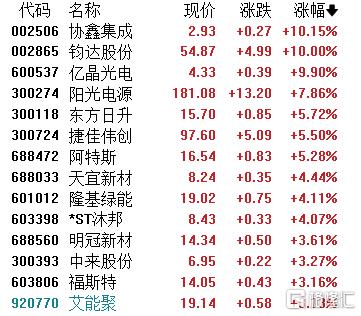
光伏板块股价大涨
Di Yi Cai Jing Zi Xun· 2025-12-26 08:42
Market Overview - The A-share photovoltaic sector experienced a surge of nearly 3%, with leading stocks including Yangguang Electric (300274.SZ), Jiejia Weichuang (300724.SZ), and Longi Green Energy (601012.SH) showing significant gains [2] - The continuous capacity reduction in upstream silicon materials and rising silver paste prices are positively impacting the photovoltaic industry chain, leading to price increases in downstream silicon wafer companies [2][3] Price Trends - According to Infolink Consulting, the prices of silicon wafers have increased significantly due to strong pricing intentions from silicon wafer manufacturers. The average transaction prices for various types of N-type monocrystalline silicon wafers rose as follows: - N-type G10L: 1.2 yuan/piece, up 2.56% week-on-week - N-type G12R: 1.31 yuan/piece, up 9.17% week-on-week - N-type G12: 1.52 yuan/piece, up 1.33% week-on-week [2][3] Cost Structure - Silver paste has surpassed silicon materials to become the largest cost component in photovoltaic modules, with silver prices increasing over 140% this year. The cost breakdown for photovoltaic components is as follows: - Silver paste: 17% - Silicon materials: 14% - Glass: 13% [3] Component Pricing - Major component manufacturers are raising module prices in response to rising silver prices, with recent market price increases ranging from 0.02 yuan/watt to 0.04 yuan/watt. The current transaction price for mainstream distributed components is between 0.68 yuan/watt and 0.71 yuan/watt [4] Industry Performance - The photovoltaic industry's upstream polysilicon spot prices have risen from 35,400 yuan/ton to 53,600 yuan/ton, leading to a reduction in industry losses. In the first three quarters of 2025, the industry reported losses of 31.039 billion yuan, with the third quarter losses narrowing by nearly 50% compared to the second quarter [5] Regulatory Environment - The National Development and Reform Commission emphasized the need for order regulation and innovation in the photovoltaic sector, aiming to enhance industry concentration and maintain a fair competitive environment. The focus is on eliminating inefficient capacity and promoting differentiated competitive advantages [4] Capacity Growth - As of the end of November, China's total installed power generation capacity reached 3.79 billion kilowatts, a year-on-year increase of 17.1%. Solar power generation capacity specifically reached 1.16 billion kilowatts, marking a 41.9% year-on-year growth [4]





中银国际:新技术推动新能源发电升级 维持行业“强于大市”评级
智通财经网· 2025-12-26 08:03
Core Viewpoint - The report from Zhongyin International highlights the growth potential in the offshore wind and photovoltaic (PV) sectors in China and Europe, driven by policy changes and technological advancements, despite short-term fluctuations in demand for new energy installations [1] Group 1: Wind Power - Offshore wind power demand is expected to grow, with coastal provinces in China showing positive attitudes towards development and regulatory approvals becoming more streamlined [2] - The impact of the 136 document on offshore wind projects is relatively limited, allowing for good economic viability [2] - The global offshore wind demand is increasing, with Europe projected to see a 50% growth in wind installations, particularly in offshore wind, which is expected to exceed 100% growth [2] Group 2: Photovoltaic (PV) Sector - The "anti-involution" policy is expected to drive the PV sector in 2024, with industry associations leading the implementation and increased government engagement anticipated in 2025 [3] - There is a risk of negative growth in PV installation scales in 2026, with no significant capacity exits expected in 2025, leading to a challenging supply-demand landscape [3] - The focus on "anti-involution" will guide investment in the PV sector, particularly in the silicon industry chain and the potential exit of inefficient capacities [3] Group 3: Technological Advancements - Perovskite technology is seen as a promising direction for enhancing PV manufacturing efficiency, with the potential to reshape the competitive landscape [4] - Perovskite components have demonstrated strong performance under low-light conditions, with some achieving over 20% efficiency, which could rival traditional silicon components [4] - Leading manufacturers are expected to ramp up production of perovskite battery components in 2026, which may positively impact the industry [4] Group 4: Investment Recommendations - In wind power, the "anti-involution" policy is stabilizing turbine prices, and offshore wind projects are becoming economically viable, suggesting a focus on turbine segments with improving profitability [5] - For the PV sector, attention should be given to the exit of battery and component capacities that could lead to price elasticity, as well as the industrialization potential of perovskite technology [5] - Prioritizing investments in growth-oriented new technologies and segments benefiting from the "anti-involution" policy is recommended [5]
光伏板块股价大涨,硅片企业联合涨价,能否持续?
Di Yi Cai Jing· 2025-12-26 07:44
Core Viewpoint - The price of silicon wafers has significantly increased due to rising costs of silicon materials and silver paste, with strong price support from silicon wafer manufacturers [1][2] Group 1: Silicon Wafer Market - Silicon wafer prices have shown a notable increase in the past week, driven by strong pricing intentions from manufacturers [1] - The average transaction price for N-type G10L monocrystalline silicon wafers rose to 1.2 yuan per piece, up 2.56% week-on-week; N-type G12R wafers reached 1.31 yuan, up 9.17%; and N-type G12 wafers hit 1.52 yuan, up 1.33% [1] - The overall price increase in silicon wafers is being transmitted downstream to component manufacturers, who are responding to industry self-discipline [1][2] Group 2: Silver Paste and Component Pricing - The continuous rise in silver paste prices, which have increased over 140% this year, has made it the largest cost component in photovoltaic modules, surpassing silicon materials [2] - The cost breakdown for photovoltaic components shows silver paste at 17%, silicon materials at 14%, and glass at 13% [2] - Component market prices have been adjusted upwards by 0.02 to 0.04 yuan per watt, with current prices for distributed mainstream components ranging from 0.68 to 0.71 yuan per watt [2] Group 3: Industry Trends and Statistics - The National Development and Reform Commission emphasizes the need for order regulation and innovation in the "new three" industries, including photovoltaics [3] - As of November, China's total installed power generation capacity reached 3.79 billion kilowatts, a year-on-year increase of 17.1%, with solar power capacity at 1.16 billion kilowatts, up 41.9% [3] - The price of polysilicon in the upstream market has risen from 35,400 yuan per ton to 53,600 yuan per ton, indicating a recovery in the industry as losses narrowed to 31.039 billion yuan in the first three quarters of 2025 [3]
曙“光”再现?龙头联手挺价引爆光伏行情
Ge Long Hui· 2025-12-26 07:36
Core Viewpoint - The photovoltaic equipment sector in A-shares has seen a significant rise due to major silicon wafer companies raising their prices, improving industry profit expectations and reflecting strong terminal demand with a 41.9% year-on-year increase in solar power generation capacity as of the end of November [1][8]. Price Adjustments - On December 25, four leading silicon wafer companies collectively raised their prices, with 183N wafers priced at 1.4 yuan per piece, 210RN at 1.5 yuan per piece, and 210N at 1.7 yuan per piece, resulting in an average increase of 12% [4]. - The price increase is attributed to significant rises in upstream silicon material costs, with the average transaction price for multi-crystalline silicon n-type raw materials at 53,900 yuan per ton, reflecting a week-on-week increase of 1.32% [5]. Market Dynamics - The slight increase in multi-crystalline silicon prices and moderate transaction volume indicate a gradual recovery of market confidence, with expectations for both volume and price stabilization in the near term [6]. - The cost pressures from rising prices are being passed down to downstream components, with leading companies like LONGi Green Energy and JinkoSolar raising their prices by 0.02 to 0.05 yuan per watt [6]. Industry Actions - The photovoltaic industry is undergoing a "de-involution" initiative, with the establishment of a platform for integrating and acquiring multi-crystalline silicon capacity to address excessive competition [8]. - The Ministry of Industry and Information Technology has indicated a focus on capacity regulation and the orderly exit of outdated capacities, aiming to enhance industry standards and reduce price competition [8]. Demand and Growth - As of the end of November, the total installed power generation capacity in China reached 3.79 billion kilowatts, with solar power capacity exceeding 1.16 billion kilowatts, marking a substantial year-on-year growth of 41.9% [8]. - The cumulative scale of solar power generation from January to November was 27.489 million kilowatts, with an additional installed capacity of 2.202 million kilowatts in November alone [8]. Future Outlook - The photovoltaic industry is expected to experience a positive trend, with improvements in profitability across the main industry chain and a gradual recovery of the pricing system [9]. - Despite potential slowdowns in new installations and supply-demand imbalances in 2026, the ongoing de-involution efforts are anticipated to accelerate market clearing and reshape the industry landscape [9].


部委与地方学习中央经济工作会议精神解析:开局之年,地方如何因地制宜?
Shenwan Hongyuan Securities· 2025-12-26 06:58
Group 1: Economic Policy Insights - The central economic work conference emphasizes the need for fiscal policies to "leave room for future risks" and monetary policies to be "forward-looking and scientifically adjusted" [10] - The focus is on optimizing domestic demand structure, highlighting a shift from commodity consumption to a balance between commodity and service consumption, with service consumption retail growth reaching 5.4% year-on-year [12] - Investment strategies will combine physical and human capital, prioritizing consumer infrastructure projects and major projects under the 14th Five-Year Plan [14] Group 2: Departmental and Local Government Actions - The Ministry of Finance aims to strengthen fiscal support by effectively utilizing various government bond funds and issuing long-term special bonds to support key projects [22] - Financial regulatory bodies are tasked with safeguarding the real economy and real estate markets, emphasizing the need for a coordinated financing mechanism for urban real estate [24] - Local governments are focusing on breaking "involution," promoting "investment in people," and establishing a correct performance view, with regions like Guangdong and Henan actively participating in national market integration [31]
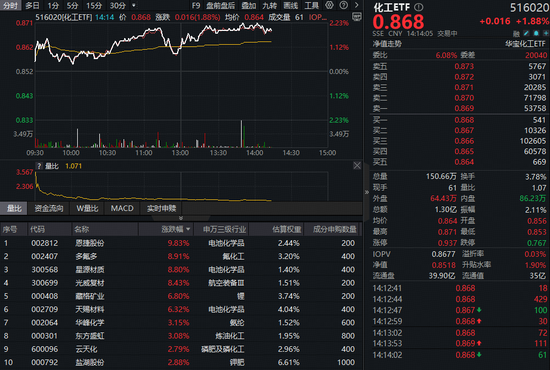
锂电爆发!化工板块继续猛攻,化工ETF(516020)盘中涨超2%!超80亿主力资金疯狂扫货
Xin Lang Cai Jing· 2025-12-26 06:30
Core Viewpoint - The chemical sector is experiencing significant gains, with the chemical ETF (516020) showing a price increase of 1.88% as of the report, driven by strong performances in lithium battery and fluorochemical stocks [1][8]. Group 1: Market Performance - The chemical ETF (516020) reached a maximum intraday increase of 2.23% [1][8]. - Key stocks in the sector include Enjie Co., which surged over 9%, and other notable performers like Dofluorid, Xingyuan Material, and Guangwei Composites, all rising over 8% [1][8]. - The basic chemical sector attracted significant capital inflow, with over 8.7 billion yuan net inflow on the day, ranking third among 30 sectors [1][3]. Group 2: Industry Trends - The lithium carbonate market is facing intensified competition, with reports of some companies halting production for maintenance due to significant price discrepancies between long-term contracts and spot prices [3][11]. - The National Development and Reform Commission emphasized the need for order regulation and innovation in key industries such as new energy vehicles and lithium batteries [3][11]. - Analysts predict that the chemical industry will see a negative growth in capital expenditure starting in 2024, with supply-side contractions expected due to the "anti-involution" trend and the clearing of outdated capacities [11]. Group 3: Investment Opportunities - Investment strategies should focus on sectors with improving supply-demand dynamics and rising industry prosperity [11][12]. - The chemical ETF (516020) is recommended for efficient exposure to the sector, with nearly 50% of its holdings in large-cap leading stocks [12][13]. - Key investment directions include sectors poised for recovery, leading companies driven by capital expenditure and R&D, and high-end chemical new materials benefiting from increased demand or domestic substitution [11][12].





新能源发电行业2026年投资策略:反内卷大势不改,新技术推动升级
Bank of China Securities· 2025-12-26 06:19
Overview - The report maintains a "stronger than market" rating for the renewable energy sector, highlighting that the demand for offshore wind power in China and Europe is increasing, leading to a rise in foundation demand and profit recovery for wind turbines. The "anti-involution" policy is expected to continue driving the photovoltaic sector, particularly with the expansion of perovskite technology. Overall, while short-term installation demand for renewable energy globally may be weak, there are structural opportunities in the market [1]. Key Points Supporting the Rating - The "anti-involution" trend is stabilizing wind turbine prices, enhancing profitability for manufacturers. China's offshore wind projects are becoming economically viable, contributing significantly to installed capacity. The demand for offshore wind in Europe and emerging markets is also on the rise [3]. - In the photovoltaic sector, the "anti-involution" policy remains the main theme, with a focus on the potential for capacity exits in battery and module production, as well as the industrialization potential of perovskite technology. Investment should prioritize growth-oriented new technology directions and the main industry chain benefiting from the "anti-involution" trend [3]. Investment Recommendations - For wind power, the report suggests prioritizing investments in the turbine segment, which is expected to recover profitability, and in the foundation segment that is progressing quickly in Europe. The offshore wind market is projected to grow significantly, with a focus on deep-sea projects [3]. - In the photovoltaic sector, the report emphasizes the importance of monitoring the "anti-involution" policy's impact on the industry, particularly regarding the exit of inefficient capacity and the enhancement of efficiency in battery and module production [3]. Long-term Outlook for Renewable Energy Demand - The report indicates that China's renewable energy demand is expected to remain robust in the long term, with an average annual installation capacity of over 400GW projected from 2025 to 2035. This is driven by the country's energy security needs and the ongoing transition to a low-carbon economy [13][16]. - The "136 Document" is noted for guiding the development of renewable energy projects towards market-oriented pricing, which is expected to stabilize project returns and promote high-quality development in the sector [31]. Photovoltaic Sector Insights - The report anticipates a moderate decline in photovoltaic installations in 2026 due to a phase of pre-installation in 2025, with projected installations of 290GW in 2025 and 180GW in 2026, reflecting a year-on-year decrease of 38% [33]. - The report highlights that the European photovoltaic market is facing growth challenges, with a forecasted installation of 64.2GW in 2025, indicating a slight decline. The U.S. market is also expected to experience pressure on growth due to policy adjustments [34][37]. Perovskite Technology Potential - Perovskite technology is identified as a key area for enhancing competitiveness in the photovoltaic manufacturing sector, with expectations for significant breakthroughs in industrialization by leading manufacturers in 2026 [33][44].