
消费升级

Search documents
中国经济三季报|消费市场稳健有力、向上向好 服务业“压舱石”作用显效
Yang Shi Wang· 2025-10-21 02:08
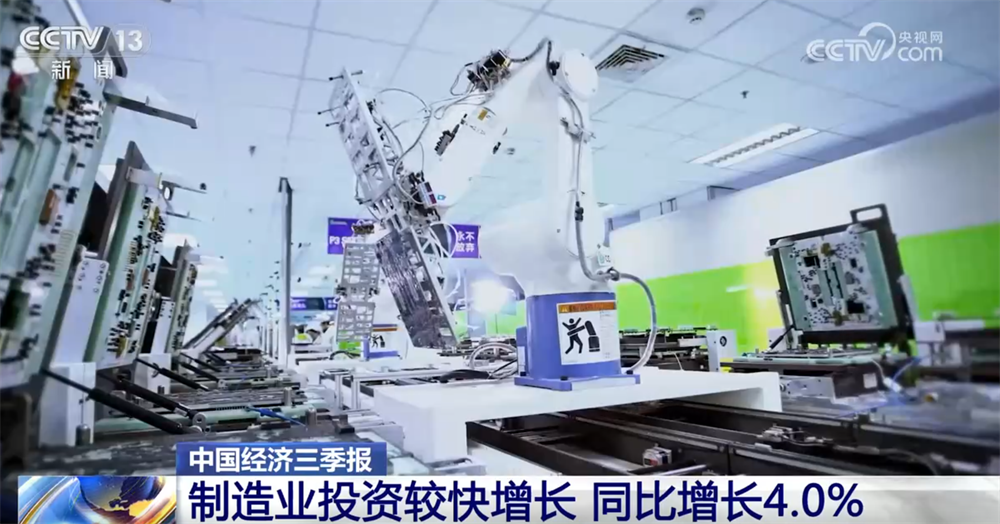
Economic Growth - China's GDP grew by 5.2% year-on-year in the first three quarters of this year, with industrial production increasing by 6.2% [1][3] - Manufacturing investment saw a rapid growth of 4.0% year-on-year [1] Consumer Market - The total retail sales of consumer goods reached 365,877 billion yuan, with a year-on-year growth of 4.5%, accelerating by 1.2 percentage points compared to the same period last year [4] - Urban and rural markets are expanding, with urban retail sales growing by 4.4% and rural retail sales by 4.6%, the latter outpacing urban growth by 0.2 percentage points [4] Income and Consumption - Rural residents' per capita disposable income increased by 6%, surpassing urban growth of 1.5% and the national average [7] - Online retail sales grew by 9.8% year-on-year, with green consumption and high-efficiency appliances also seeing significant growth [7] Service Sector - The service sector achieved a year-on-year growth of 5.4%, contributing 60.7% to the national economic growth [10] - Key areas such as information transmission, software, and IT services saw increases of 11.2% and 9.2% respectively [10] Innovation and New Consumption Models - The integration of "AI + consumption" is accelerating, with new technologies enhancing consumer experiences and meeting demands for quality and diversity [9][13] - The "service +" model is expanding, linking various service sectors like dining, accommodation, and travel, driving service consumption growth [16]

消费“主引擎”动能更强劲
Sou Hu Cai Jing· 2025-10-21 02:08
Core Insights - China's final consumption expenditure contributed 53.5% to economic growth in the first three quarters, an increase of 9.0 percentage points compared to the previous year, reinforcing its role as the "main engine" of economic growth [1][2] Group 1: Economic Policies and Measures - The government has implemented a series of macro policies to stimulate consumption, including the allocation of 300 billion yuan in special bonds to support the replacement of old consumer goods [2] - The "old-for-new" policy has led to significant retail growth in categories such as home appliances and communication devices, with retail sales in these sectors maintaining double-digit growth [2][3] - The domestic travel during the Mid-Autumn and National Day holidays reached 888 million trips, showcasing the resilience and vitality of China's consumer market [2] Group 2: Consumer Trends and Market Dynamics - Service consumption, particularly in leisure and travel, has shown strong performance, indicating a high enthusiasm for offline activities among consumers [3] - New consumption models, such as online shopping, have also seen substantial growth, highlighting their importance in supporting overall market expansion [3] - Upgraded consumer goods, including communication devices and home appliances, have experienced over 20% growth, reflecting a steady progression in consumer upgrading [3] Group 3: Future Outlook and Recommendations - The government aims to enhance internal growth momentum by implementing targeted measures to boost consumption, stabilize employment, and increase income channels for residents [4][5] - Suggestions include issuing consumption vouchers and organizing promotional activities to further stimulate consumer spending [5] - Long-term strategies should focus on increasing income levels for low- and middle-income groups and improving the social security system to alleviate concerns related to consumption [5]
“十四五”的势,如何把“不可能”变成“不是事”?
2 1 Shi Ji Jing Ji Bao Dao· 2025-10-21 02:08
Economic Growth - China's GDP is projected to reach 140 trillion yuan in 2023, up from 103 trillion yuan in 2020, achieving an increment of over 35 trillion yuan in five years, equivalent to recreating the Yangtze River Delta [1] - The average annual economic growth rate is 5.5%, contributing approximately 30% to global economic growth [1] Innovation and Technology - Research and development investment intensity is expected to increase to 2.68% in 2024, surpassing the overall level of the European Union [1] - Significant technological achievements include the successful commercial flight of the C919 aircraft and advancements in human-like robots and innovative pharmaceuticals [1] Consumer Behavior - Consumer spending has increased by 4 trillion yuan, driven by enhanced confidence from government initiatives such as childcare subsidies and pension increases [2] - New consumption trends are emerging in areas like sports tourism and cultural experiences, reflecting a shift in consumer willingness to spend [2] Renewable Energy and Green Transition - China has established the world's largest and fastest-growing renewable energy system, with total electricity consumption surpassing 1 trillion kilowatt-hours [2] - The country leads globally in the ownership, production, and charging infrastructure of electric vehicles [2] Global Trade and Cultural Influence - China's total goods trade has exceeded 40 trillion yuan, showcasing an expanding global trade network [2] - Chinese cultural products, such as the animated film "Nezha," have achieved significant international success, indicating a growing global cultural influence [2][3] Investment Sentiment - Several international investment banks have upgraded their ratings on Chinese assets to "overweight," leading to increased foreign capital inflow into China [3] - The ongoing economic momentum is viewed as a starting point for future growth, with expectations for continued positive developments in the upcoming five-year plan [3]
焦点访谈丨中国经济“三季报”:稳住基本盘 实现新突破
Yang Shi Xin Wen Ke Hu Duan· 2025-10-21 02:03
Economic Growth - China's GDP for the first three quarters grew by 5.2% year-on-year, with a total of 101,503.6 billion yuan [1][2] - Quarterly growth rates were 5.4% in Q1, 5.2% in Q2, and 4.8% in Q3, indicating a steady economic performance despite external pressures [1][2] Employment and Price Stability - Employment and prices remained generally stable, contributing to a solid economic foundation [2] - The foreign exchange reserves stood above 3.3 trillion USD, maintaining stability for 22 consecutive months [2] Industrial Profit Recovery - Industrial profits showed a turnaround, with profits for large industrial enterprises growing by 0.9% year-on-year from January to August, reversing a decline since May [5][9] - Key sectors driving this recovery included raw material manufacturing and equipment manufacturing, indicating strong market demand for high-tech products [4][9] Manufacturing and Innovation - The manufacturing sector's Purchasing Managers' Index (PMI) indicated expansion, with equipment manufacturing and high-tech manufacturing PMI at 51.9% and 51.6%, respectively [7] - High-tech manufacturing value added increased by 9.6% year-on-year, with significant growth in 3D printing equipment, industrial robots, and new energy vehicles [13][14] Investment Trends - Manufacturing investment grew by 4.0%, outpacing overall investment, with traditional industries undergoing upgrades and high-end equipment investments rising [16][17] - Private enterprises are increasing innovation investments in emerging industries despite a slowdown in private investment [16] Consumer Spending - Retail sales of consumer goods increased by 4.5% year-on-year, with a notable shift towards consumption upgrades driven by policies promoting product replacement [17][19] - Service retail sales grew by 5.2%, indicating a strong internal demand for services [21] External Trade Performance - China's goods trade reached 33.61 trillion yuan, growing by 4% year-on-year, with exports increasing by 7.1% [26][28] - The export of industrial robots surged by 54.9%, reflecting an improvement in the structure and value of exports [26][28]

研判2025!中国口香糖行业市场政策、产业链、销售规模、竞争格局及发展趋势分析:无糖口香糖、功能性口香糖产品逐渐成为市场新宠[图]
Chan Ye Xin Xi Wang· 2025-10-21 01:30
Overview - The gum market in China is experiencing steady growth, with sales expected to reach 78,400 tons and revenue of 12.202 billion yuan in 2024, averaging 155,600 yuan per ton [1][4] - Consumers are increasingly seeking gums with additional benefits such as dental care, stress relief, and energy boosting, moving beyond traditional breath-freshening functions [1][4] - Health consciousness is rising, leading consumers to prioritize "healthy ingredients" and "sugar-free formulas," making sugar-free and functional gums popular [1][4] Market Policies - China has implemented various policies to ensure food safety and quality in the gum industry, promoting a shift towards standardized and high-quality production [3] Industry Chain - The gum industry consists of upstream suppliers of raw materials (gum base, sweeteners, flavors), midstream production companies, and downstream sales channels including supermarkets, convenience stores, and e-commerce platforms [3] Current Development - The gum market is projected to grow, with a focus on health-oriented products. Exports are also significant, with 32,952.9 tons exported in the first eight months of 2025, generating 8.2553 million USD [4][5] Competitive Landscape - The market is highly concentrated, with the top three companies holding over 90% market share. Mars Wrigley (68.1%) and Mondelēz (19.3%) are the leading players, while local brands like Fujian Jiujiuwang and Fujian Yake are gaining traction [5][6] Future Trends - The demand for sugar-free gums is expected to rise, and companies will likely develop gums with specific health benefits. The Z generation's preferences for functionality, safety, and creative packaging will shape future product offerings [6][7]

海鲜“消费地图”拓展的启示(评论员观察)
Ren Min Ri Bao· 2025-10-20 22:01
Core Insights - The article emphasizes the importance of leveraging China's vast economic landscape to continuously unlock the potential of its large-scale market, with a focus on improving logistics and transportation systems as a key driver for consumption growth [1][2]. Group 1: Consumption Trends - There is a notable shift in consumer behavior, with traditional consumption areas revealing new potential, such as the increased availability and consumption of seafood in inland areas due to improved logistics [1][2]. - Data indicates that during the recent National Day and Mid-Autumn Festival holidays, sales of certain seafood items, like king crabs, surged by 185% year-on-year, particularly in second-tier and lower-tier cities [1][2]. Group 2: Economic Strategies - President Xi Jinping's call to actively expand domestic demand and create more consumption scenarios is highlighted, indicating a strategic focus on meeting the evolving needs of consumers [2][3]. - The article discusses the trend of "seafood going rural," supported by an increasingly efficient logistics network, which has led to significant price reductions for certain seafood items, enhancing consumer access [2][3]. Group 3: Innovation in Consumption - The integration of new technologies and innovative consumption models is crucial for tapping into new growth points, with examples from various cities showcasing how events and new retail formats attract consumers [3]. - Traditional sectors, such as dining, are also evolving with new offerings and experiences that cater to the upgraded consumer demand for quality over quantity [3]. Group 4: Quality and Supply - The article emphasizes the importance of quality in meeting consumer demands, citing examples like the development of high-quality aquaculture in Xinjiang, which is expected to produce over 5,000 tons of salmon by 2024 [3]. - The expansion of the seafood consumption market into central and western regions reflects the broader economic stability and potential within China, aligning with consumer expectations for higher quality living [3][4].
焦点访谈 | 多维度解析中国经济三季报:格局稳、势头进、特性韧
Yang Shi Wang· 2025-10-20 13:27
Economic Growth - China's GDP for the first three quarters grew by 5.2% year-on-year, with a total of 101,503.6 billion yuan [1][2] - Quarterly growth rates were 5.4% in Q1, 5.2% in Q2, and 4.8% in Q3, indicating a steady economic performance despite external pressures [1][2] Industrial Performance - Industrial profits for large-scale enterprises shifted from a 1.7% decline in the first seven months to a 0.9% increase by August, marking a significant turnaround [3][5] - Key sectors driving this recovery include raw materials manufacturing and equipment manufacturing, highlighting strong market demand for high-tech products [5][9] Manufacturing and Innovation - High-tech manufacturing value added increased by 9.6% year-on-year in the first three quarters, with notable growth in 3D printing equipment (40.5%), industrial robots (29.8%), and new energy vehicles (29.7%) [9][11] - The rapid growth of server production, which surged by 86.2% in August, underscores the importance of digital economy infrastructure [9][11] Investment Trends - Manufacturing investment grew by 4.0%, outpacing overall investment, with significant contributions from traditional industry upgrades and high-end equipment investments [13][14] - Private enterprises are increasingly investing in innovation and emerging industries, despite a slowdown in overall private investment [13][14] Consumer Behavior - Retail sales of consumer goods increased by 4.5% year-on-year, with a notable shift towards consumption upgrades driven by policies promoting product replacement [14][16] - Service retail sales grew by 5.2%, indicating a robust demand for service-oriented consumption [16] Trade Performance - China's goods trade reached 33.61 trillion yuan in the first three quarters, with a 4% year-on-year increase, and exports grew by 7.1% [20][22] - The export of industrial robots rose by 54.9%, reflecting an improvement in the structure and value of exports [22]

被万亿巨头忽略的赛道,却受年轻人追捧,有公司年销70亿
创业邦· 2025-10-20 10:44
Core Viewpoint - The soap market is experiencing a transformation driven by consumer preferences for natural and handmade products, despite the dominance of liquid personal care products. This shift reflects a broader trend towards simplicity and sustainability in consumer choices [4][5][22]. Market Overview - The soap market is relatively small compared to the skincare and shampoo markets, with soap accounting for only 21.43% of the body cleansing category sales in the first three quarters of 2024, while shower gels/oils hold 64.41% [4]. - Major brands like Safeguard and Lux maintain a strong position in the market, with soap prices typically ranging from 5 to 10 yuan, leading to slow growth [5][21]. Consumer Trends - There is a growing interest in natural, eco-friendly, and handmade soaps, creating localized market opportunities despite the overall stability of the soap market [5][8]. - A survey indicated that mainstream consumers expect soap prices to remain below 10 yuan, but there are signs of a shift as the market share for soaps priced between 10-20 yuan increased by 1.5% in May 2023 [8]. Brand Innovations - Brands like Hanbaoli are focusing on expanding the use cases for soap, emphasizing fragrance and emotional value, which allows soap to be perceived beyond just a cleansing product [10]. - The brand is experimenting with higher-priced products (29.9 yuan and 39.9 yuan) that utilize premium ingredients and unique scents to support the price increase [10]. Market Dynamics - The traditional soap market is facing challenges in scaling production while maintaining quality, as seen in the experiences of brands like Le'erfu, which emphasizes the importance of natural ingredients and long curing times [12][18]. - The success of brands like Lush, which combines a strong brand ethos with innovative product offerings, demonstrates the potential for redefining the soap category in a way that appeals to a broader audience [19][22]. Future Outlook - The soap market is expected to evolve with a blend of industrial production and handmade craftsmanship, where each plays a distinct role in meeting consumer demands for personalization and quality [22]. - The potential for redefining soap products is significant, as they can be adapted into various forms and uses, moving beyond the traditional perception of soap as merely a cleansing tool [23].

2000亿红海里跑出个黑金新贵
Hua Er Jie Jian Wen· 2025-10-20 10:13
Core Insights - The article discusses the rise of Guvet, a Chinese brand that integrates traditional "Yunjin" craftsmanship into high-end down jackets, challenging established international brands like Moncler and Canada Goose [2][3] - Guvet's founder, Wu Kunming, emphasizes a shift in the Chinese consumer market towards valuing quality and cultural identity over mere brand prestige, marking a significant transformation in consumer behavior [6][12] Company Overview - Guvet launched its "Black Gold Shell Yunjin" down jacket series on October 15, aiming to redefine high-end fashion in a market valued at nearly 200 billion [2] - The brand's strategy involves focusing on high-quality goose down products, moving away from lower-quality duck down, which has allowed it to target the mid-to-high-end market [4][8] Market Dynamics - The Chinese down jacket market has seen a compound annual growth rate of approximately 13% from 2020 to 2024, with the market size expected to exceed 200 billion by 2024 [5] - The competitive landscape has shifted, with domestic brands like Guvet beginning to capture market share traditionally held by foreign luxury brands [6][19] Consumer Behavior - The new generation of consumers, particularly those born between 1985 and 1995, prioritize product quality and personal satisfaction over brand recognition, leading to a decline in "symbolic consumption" [12][14] - This demographic shift has resulted in a demand for products that offer genuine value and emotional connection, rather than just brand prestige [15][18] Brand Strategy - Guvet's approach focuses on high-quality materials and craftsmanship, with a commitment to using top-tier goose down sourced from extreme cold regions, enhancing product performance and consumer trust [11][19] - The brand has established a clear identity by eliminating non-goose down products, allowing it to build a strong association with high-quality down jackets in consumers' minds [9][10] Cultural Integration - Guvet aims to blend traditional Chinese culture with modern design, exemplified by its collaboration with artisans to create culturally significant products, thereby enhancing its brand narrative [16][21] - The brand's strategy includes a commitment to cultural heritage, as seen in its initiatives to support traditional craftsmanship through dedicated funds [18][23] Global Expansion - Guvet is positioning itself as a global high-end brand, focusing on localizing its products for different markets, which includes adapting designs to meet the preferences of international consumers [20][22] - The brand's long-term vision is to redefine what constitutes a high-end Chinese brand on the global stage, emphasizing cultural value and innovation [21][24]

食品饮料行业20251H业绩分析:成本红利消退,盈利指标回落
Zhongyuan Securities· 2025-10-20 09:51
Investment Rating - The industry maintains a "Market Perform" investment rating, indicating that the industry index is expected to fluctuate between -10% to +10% relative to the CSI 300 index over the next six months [2][59]. Core Insights - Since 2021, the revenue growth rate of the food and beverage industry has shown a stepwise decline, with a further slowdown in the first half of 2025, recording a revenue growth of 2.47%, which is a decrease of 12.9, 4.17, 7.38, and 2.79 percentage points compared to the same periods in 2021, 2022, 2023, and 2024 respectively [9][10]. - The industry has experienced a decline in inventory turnover rates, indicating a slowdown in sales driven by insufficient consumer demand [23]. - The gross profit margin of the food and beverage sector peaked in 2024 but began to decline in the first half of 2025 due to the expiration of cost advantages, with the gross profit margin recorded at 51.32%, down 0.78 percentage points year-on-year [26][52]. - The report highlights a significant change in expense allocation among listed companies, with a reduction in sales expenses and a focus on internal control management, leading to a notable decrease in management expense ratios [42][44]. - Profitability indicators for the food and beverage sector, which had been rising since 2021 due to cost advantages, began to decline in the first half of 2025, with net profit margins recorded at 22.67% [52]. Summary by Sections Revenue Growth - The food and beverage industry has seen a continuous decline in revenue growth since 2021, with specific segments like snacks and soft drinks showing positive growth, while others like prepared foods and health products have experienced significant declines [10][11][15]. Inventory Turnover - The inventory turnover rate has decreased from 1.37 in 2021 to 1.11 in 2025, indicating a slowdown in sales activity attributed to weak consumer demand [23][25]. Gross Profit Margin - The gross profit margin has been on an upward trend until 2024, but it has started to decline in 2025 due to rising costs outpacing revenue growth, with a recorded margin of 51.32% [26][27]. Expense Management - There has been a shift in expense management, with a decrease in sales expenses and a focus on internal controls, resulting in lower management expense ratios [42][44]. Profitability Trends - Profitability indicators have started to decline in 2025, with net profit margins at 22.67%, reflecting the impact of slowing revenue growth and rising costs [52].