资本开支

Search documents
25Q1,几个有意思的经济“转折点”
Hu Xiu· 2025-06-09 00:18
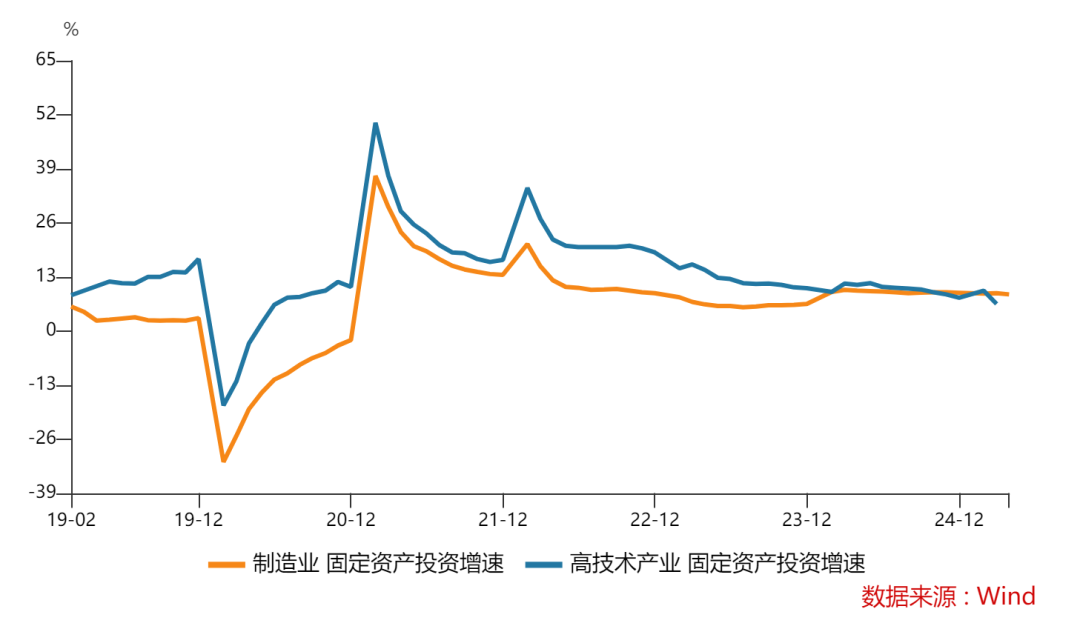
Group 1 - Investment in high-tech industries has been surpassed by overall manufacturing investment for the first time, indicating a shift in trends after three years of low returns on investments [1][3][4] - Many sectors, including new energy and semiconductors, are showing signs of overcapacity, with rapid technological iterations leading to outdated "new" technologies [3][4] - Private investments focused on financial returns have lagged behind state-owned enterprises, highlighting a disparity in investment strategies [4] Group 2 - Corporate profits are finally showing signs of recovery, with many sectors experiencing profit rebounds, although the automotive industry continues to struggle [5][9] - The gap between fixed asset investment in manufacturing and overall profits is narrowing, suggesting a potential shift towards prioritizing shareholder returns [9][11] - Regulatory pressures in the automotive sector and tightening capital constraints are contributing to a more sustainable investment environment [11] Group 3 - The growth rate of high-tech service industries remains strong, outperforming the manufacturing sector [14] - Consumer spending on services is lagging behind goods due to supply constraints and a lack of quality offerings, impacting overall consumption patterns [17][19] - New consumption trends, particularly those with emotional and differentiated attributes, are gaining traction, indicating a shift in consumer preferences [21]

比亚迪20250604
2025-06-04 15:25
Summary of BYD Conference Call Company Overview - **Company**: BYD - **Industry**: Electric Vehicles and Battery Manufacturing Key Points Production Capacity and Expansion - BYD's domestic production capacity is nearing completion, with planned capacity reaching 5.42 million vehicles, potentially expanding to 6 million vehicles [2][3] - Overseas factories in Thailand and Uzbekistan are operational, while Brazil and Hungary are expected to release capacity in the next two years, aiding foreign exchange reserves [2][3] Capital Expenditure (CAPEX) - From 2021 to 2024, BYD's cumulative capital expenditure is projected to be CNY 354.2 billion, with a peak in 2023 at CNY 120 billion, followed by a decrease to CNY 97.4 billion in 2024, representing a 20% year-on-year decline [2][5] - The CAPEX/DA ratio indicates a reduction in new capital expenditure demand after peaking in 2022 [5][6] Depreciation Policy Changes - In March 2023, BYD changed its accounting policy, shortening the depreciation period for power batteries and machinery, leading to an increase in the overall depreciation rate to 15.6% in 2024, impacting pre-tax profit by approximately 7.3% [2][5][7] - The aggressive depreciation policy has significantly reduced future depreciation pressure, enhancing profitability [7] Future Capital Expenditure Outlook - With domestic capacity nearing completion and a slowdown in overseas expansion, BYD's future capital expenditure is expected to decrease further, with ongoing projects down 42.5% year-on-year to CNY 20 billion [6][8] - The company is entering a phase of reduced capital expenditure, which will increase profit release potential [6] Asset Depreciation Rates - BYD has increased depreciation rates for various asset categories: machinery by 1.3%, transportation tools by 6.8%, and office equipment by 5.9%, resulting in implied depreciation periods of less than three years for machinery and transportation tools, and 1.6 years for office equipment [7][9] Battery and Vehicle Production Plans - BYD plans to increase domestic passenger vehicle capacity from 5.42 million to 5.92 million and exports from 350,000 to 1.55 million vehicles, while battery capacity is expected to grow from 655 GWh to 810 GWh [4][11] Long-term Outlook - BYD is positioned as a leader in the global new energy sector, focusing on advanced technology and market leadership, with plans for continued product innovation and global expansion [13] Research Reports - Recent research reports on BYD have focused on domestic market share comparisons, profitability analysis, and fixed asset depreciation, with future reports planned on overseas business strategies [14] Additional Insights - The capital expenditure is primarily allocated to buildings (27.7%), machinery (61.8%), and office equipment (8%) [9] - The unit capital expenditure for battery capacity expansion can be benchmarked against CATL's data, which indicates an average of CNY 260 million per GWh [10]

中国海油:2024及2025年一季度报点评:成本优势巩固,资本开支维稳专注高质量发展-20250523
Dongxing Securities· 2025-05-23 12:23
Investment Rating - The report maintains a "Strong Buy" rating for China National Offshore Oil Corporation (CNOOC) [4] Core Views - The company focuses on high-quality development with stable capital expenditures and solid cost advantages, leading to a robust financial performance in 2024 and 2025 [2][11] - CNOOC's revenue for 2024 is projected at 420.5 billion RMB, a year-on-year increase of 0.94%, while the net profit attributable to shareholders is expected to reach 137.9 billion RMB, up 11.38% year-on-year [1][2] Financial Performance Summary - In Q1 2025, the company reported a revenue of approximately 106.9 billion RMB, a decrease of 4% year-on-year, with a net profit of 36.56 billion RMB, down 7.9% year-on-year [1][3] - The average realized oil price in Q1 2025 was 72.65 USD per barrel, a decline of 7.7% year-on-year, while natural gas prices increased by 1.2% to 7.78 USD per thousand cubic feet [3][10] - CNOOC's total oil and gas production for 2024 was 726.8 million barrels of oil equivalent, reflecting a year-on-year growth of 7.2% [2][10] Cost Management and Capital Expenditure - The company achieved a barrel of oil cost of 28.52 USD in 2024, a slight decrease from 28.83 USD in 2023, indicating improved cost management [10] - For 2025, CNOOC plans to maintain high capital expenditures between 125 billion to 135 billion RMB, focusing on exploration and production [11] Profitability Forecast - The forecast for net profit attributable to shareholders for 2025 is 139.76 billion RMB, with an expected EPS of 2.94 RMB [11][13] - The company is projected to maintain a stable net profit growth trajectory through 2027, with estimates of 143.45 billion RMB and 144.67 billion RMB for 2026 and 2027, respectively [11][13]

中国海油(600938):2024及2025年一季度报点评:成本优势巩固,资本开支维稳专注高质量发展
Dongxing Securities· 2025-05-23 12:03
Investment Rating - The report maintains a "Strong Buy" rating for China National Offshore Oil Corporation (CNOOC) [4] Core Views - The financial indicators for 2024 show steady improvement, with a significant increase in net profit attributable to shareholders by 11.38% year-on-year, reaching 137.936 billion yuan [2][11] - The company focuses on its core oil and gas business, continuously increasing reserves and production, leading to a rise in oil and gas output and net profit margin despite fluctuations in international oil prices [2][11] - The average realized oil price for the first quarter of 2025 was 72.65 USD/barrel, a decrease of 7.7% year-on-year, while gas prices increased by 1.2% [3][11] Financial Performance Summary - In 2024, the operating revenue is projected to be 420.506 billion yuan, a year-on-year increase of 0.94%, with a net profit of 137.936 billion yuan [2][13] - The company achieved an oil and gas production of 726.8 million barrels of oil equivalent in 2024, a growth of 7.2% year-on-year, with a sales net profit margin of 32.81%, up by 3.02% [2][11] - The debt-to-asset ratio improved to 29.05%, a decrease of 4.53% year-on-year, indicating better financial stability [2][11] Cost Management - The average oil cost per barrel for 2024 was 28.52 USD, down from 28.83 USD in 2023, reflecting a solid cost advantage [10] - The company plans to maintain high capital expenditures in 2025, with a budget of 125 to 135 billion yuan, focusing on exploration and development [11][13] Production Goals - The production target for 2025 is set between 760 to 780 million barrels of oil equivalent, representing a year-on-year growth of 5.9% [11][13] - The company aims to pursue high-quality development and effective production growth [11]
公募又“自信”了!重仓股密集“AI+”,高估值担忧打破?
券商中国· 2025-05-21 11:45
资本开支的持续增长显著提振了公募基金的持仓信心。 受益于一系列资本运作与密集的资产收购,公募基金在AI赛道的重仓股呈现出联欢状态,这不仅在一定程度 上打消了外界对相关品种高估值的担忧,同时资本开支的大幅增长也暗含了市场繁荣周期的到来,并使得AI 赛道持续为基金经理贡献丰厚收益,部分基金重仓股不足三年时间涨幅已超12倍。 长城基金相关人士判断资本开支超预期,缓解了此前市场对AI逻辑持续性的担忧,当前流动性的恢复已使个 股机会从大盘股向中小市值个股扩散。 资本运作提振基金重仓股 在公募抱团的AI赛道股估值高企的背景下,相关公司纷纷加大资本运作。 因获阿里巴巴战略投资并在电商领域进行AI工具营销推广合作,广发基金、南方基金抱团买入的美图公司5月 21日收盘大涨高达18%,市值一举突破300亿港元,这使得美图公司在不足三年时间,股价累计涨幅达到惊人 的12.5倍。 5月21日,嘉实基金、信澳基金重仓的哔哩哔哩公司收盘涨幅约4%,该只基金重仓股发布2025年一季度报告显 示,一季度AI类广告收入暴增近4倍,此类AI驱动的广告收入的增长带动哔哩哔哩一季度业绩亏损收窄幅度高 达99%,创下该股近五年的最佳业绩。 此外,因收 ...

快递行业当下怎么看?价格战阴霾下,如何投资布局
2025-05-20 15:24
Summary of the Express Delivery Industry Conference Call Industry Overview - The express delivery industry experienced a growth rate of 21.6% in Q1, but dropped below 20% in April due to ongoing price wars. The competition is primarily concentrated in the central and northern regions of China, while traditional grain-producing areas maintain stable prices [1][3][5]. - Major companies like Shentong (申通) and YTO Express (圆通) have shown strong performance, with Shentong achieving a 19% increase in single ticket revenue in April, surpassing the industry average [1][7]. Key Insights and Arguments - **Price Stability and Competition**: Shentong has demonstrated remarkable price stability, with its franchisees showing resilience and actively capturing market share without excessive support from headquarters. This contrasts with other companies where franchisees lack motivation to seize market share [1][7]. - **Cost Control Strategies**: Companies are optimizing core costs such as transit and trunk transportation to cope with price competition. Yunda (运达) has achieved a historical low cost of 0.62 yuan per ticket, which is the lowest in the industry [1][8]. - **Single Ticket Delivery Fees**: Delivery fees have gradually decreased with the growth in business volume, but the extent of decline varies among companies. Shentong's delivery fees remained stable in Q1, validating its strategy of balancing profit and growth [1][9]. - **Capital Expenditure Disparities**: There is a divergence in capital expenditures among express delivery companies, with Zhongtong (中通) and YTO maintaining strong investments, indicating potential shifts in market share post-2025 [1][10]. Additional Important Points - **Market Sentiment and Stock Performance**: The overall market sentiment remains low, with stock prices of major companies declining despite Shentong's positive performance in Q1. SF Express (顺丰) has shown relative resilience due to its franchise model [2][13]. - **Regional Price Variations**: Prices in traditional grain-producing areas have not decreased significantly, while central and northern regions have seen substantial price drops, with some provinces experiencing growth rates of 30%-40% [6]. - **Future Industry Trends**: The express delivery industry is expected to face challenges in the upcoming months, with potential growth rates dropping to around 15% during the peak season. Companies may resort to price policies to enhance capacity utilization [14][15]. - **Impact of New Regulations**: New regulations are expected to influence the logistics industry significantly, promoting high-quality development and potentially providing government subsidies to leading companies [19][21]. Conclusion The express delivery industry is navigating a complex landscape characterized by price wars, varying performance among companies, and significant regional differences. Companies that effectively manage costs and maintain price stability, like Shentong and YTO, are likely to emerge stronger in the evolving market. The anticipated changes in capital expenditure and regulatory environment will also play a crucial role in shaping the industry's future dynamics.

腾讯控股(00700.HK):第一季度资本开支274.76亿元,去年同期为143.59亿元。
news flash· 2025-05-14 08:39
腾讯控股(00700.HK):第一季度资本开支274.76亿元,去年同期为143.59亿元。 ...

国泰海通|24年报和25年一季报总结(二)
国泰海通证券研究· 2025-05-13 13:11
Group 1: Mechanical Industry - The mechanical industry is expected to see a recovery in prosperity from 2024 to Q1 2025, with revenue and profit growth in semiconductor equipment, engineering machinery, and robotics [1][2] - In 2024, the mechanical industry is projected to achieve a revenue of 2.3 trillion yuan, a year-on-year increase of 4.9%, and a net profit of 123.24 billion yuan, a year-on-year decrease of 11.1% [1] - By Q1 2025, the total revenue is expected to reach 522.08 billion yuan, with a year-on-year increase of 8.8%, and a net profit of 38.33 billion yuan, a year-on-year increase of 20.1% [1] Group 2: Robotics and Semiconductor Equipment - The humanoid robot sector is anticipated to see significant profit growth, particularly in force sensors, bearings, and tendon drive components [2][3] - The transition from "multi-sensor fusion" to "body intelligence" in humanoid robots will create new demands for hardware and software technologies [3] - The semiconductor equipment sector is benefiting from domestic substitution and capital expenditure, with significant room for improvement in self-sufficiency due to geopolitical influences [3][4] Group 3: Engineering Machinery - The engineering machinery sector is expected to maintain high prosperity levels, driven by domestic demand and supportive fiscal policies [4] - Domestic sales of excavators are projected to continue increasing, despite some trade friction risks in exports [4] Group 4: Game Industry - The gaming industry is experiencing a recovery, with revenue growth starting from Q2 2024 and a significant increase in profits by Q1 2025 [6][8] - In 2024, the total revenue for the gaming industry reached 93.434 billion yuan, a year-on-year increase of 7.4%, while net profit decreased by 50% due to a drop in profit margins [7] - By Q1 2025, the gaming industry revenue is expected to reach 26.719 billion yuan, a year-on-year increase of 21.6%, with net profit reaching 3.482 billion yuan, reflecting a strong recovery [8] Group 5: Lithium Battery Industry - The lithium battery sector is seeing significant profit concentration among leading battery manufacturers, with overall revenue in 2024 reaching 1.755 trillion yuan, a year-on-year increase of 4.9% [11][12] - By Q1 2025, the lithium battery sector is projected to achieve a revenue of 414.084 billion yuan, a year-on-year increase of 22.75%, with net profit reaching 28.717 billion yuan, a year-on-year increase of 51.11% [13] Group 6: Home Appliance Industry - The home appliance sector is expected to show strong performance, with overall revenue and net profit in 2024 increasing by 6% and 9%, respectively [15] - By Q1 2025, revenue and net profit are projected to increase by 14% and 22%, respectively, driven by domestic demand and export opportunities [15][16] Group 7: Pharmaceutical Industry - The pharmaceutical sector is experiencing a divergence in performance, with innovative drugs driving growth in the pharmaceutical segment [19][20] - In 2024, the overall revenue for the pharmaceutical sector is expected to decline by 1.5%, while net profit is projected to decrease by 12.5% [20][21] Group 8: Real Estate Industry - The real estate sector is witnessing a decline in profitability, with gross margins reaching a historical low of 13.8% in 2024 [25][26] - The sector is expected to stabilize in 2025, with improvements in gross margins as land acquisition costs decrease [25][27] Group 9: Coal Industry - The coal sector is facing significant pressure, with prices expected to reach a turning point in May 2025 [32][34] - The average selling price of self-produced coal is projected to decline by 10.9% in Q1 2025 compared to 2024, impacting overall profitability [33] Group 10: ETF Holdings - Institutional investors have significantly increased their holdings in ETFs, with a 38.8% year-on-year growth, reaching 1.54 trillion yuan by the end of 2024 [36][37] - The proportion of state-owned funds in ETF holdings has also increased, indicating a shift in investment strategies [36][37]

粤电力A(000539) - 000539粤电力A投资者关系管理信息20250509
2025-05-09 09:34
Group 1: Market Overview - In 2025, the total bilateral negotiation transaction volume in Guangdong Province reached 3310.08 billion kWh, with an average transaction price of 391.87 RMB/kWh, a decrease of 73.77 RMB/kWh compared to the previous year [2] - The average transaction price for annual bilateral negotiation transactions has significantly decreased due to intensified market competition [2] Group 2: Company Performance - The company's electricity generation volume decreased by 10% year-on-year due to multiple maintenance activities at its power plants and weakened coastal wind intensity [2] - Despite a decline in coal prices, the company's revenue drop led to a decrease in gross profit from electricity generation, resulting in a loss for the first quarter [2] Group 3: Future Projects - The company has 8 million kW of coal power under construction, with an expected 4-5 million kW to be operational in 2025, and the remainder in 2026-2027 [3] - There are 194.2 million kW of gas power projects expected to be operational in 2026, and 207.9 million kW of renewable energy projects, with approximately 200 million kW expected to be operational in 2025 [3] Group 4: Capital Expenditure and Financial Strategy - The company plans to invest 16.096 billion RMB in 2025, with approximately 1.877 billion RMB allocated for capital contributions, focusing on thermal power, renewable energy, technological upgrades, and project acquisitions [4] - The company's debt-to-asset ratio was 79.47% in 2024, and future plans include managing debt levels, enhancing operational efficiency, and exploring equity financing opportunities [4]

Rivian: 渡劫 2025,R2 能否实现“绝地翻盘”?
海豚投研· 2025-05-08 00:58
Core Viewpoint - Rivian's Q1 2025 performance exceeded expectations with a total revenue of $1.24 billion, significantly higher than the market's forecast of around $1 billion, driven by strong automotive and software service revenues [1][4] Financial Performance - The overall gross margin improved to 16.6%, marking a 7 percentage point increase from the previous quarter, contrasting with the market's expectation of a negative gross margin of -13.5% [1][4] - The automotive business revenue exceeded expectations by $160 million, while software service revenue surpassed forecasts by $100 million [1] Market Concerns - Despite the positive revenue figures, Rivian's guidance for 2025 raised concerns, with management lowering the annual delivery target to 40,000-46,000 vehicles and increasing capital expenditures by $100 million [2][4] - The company faces additional challenges due to tariff impacts, which could further complicate its operational outlook for the year [2][4]