
关税

Search documents
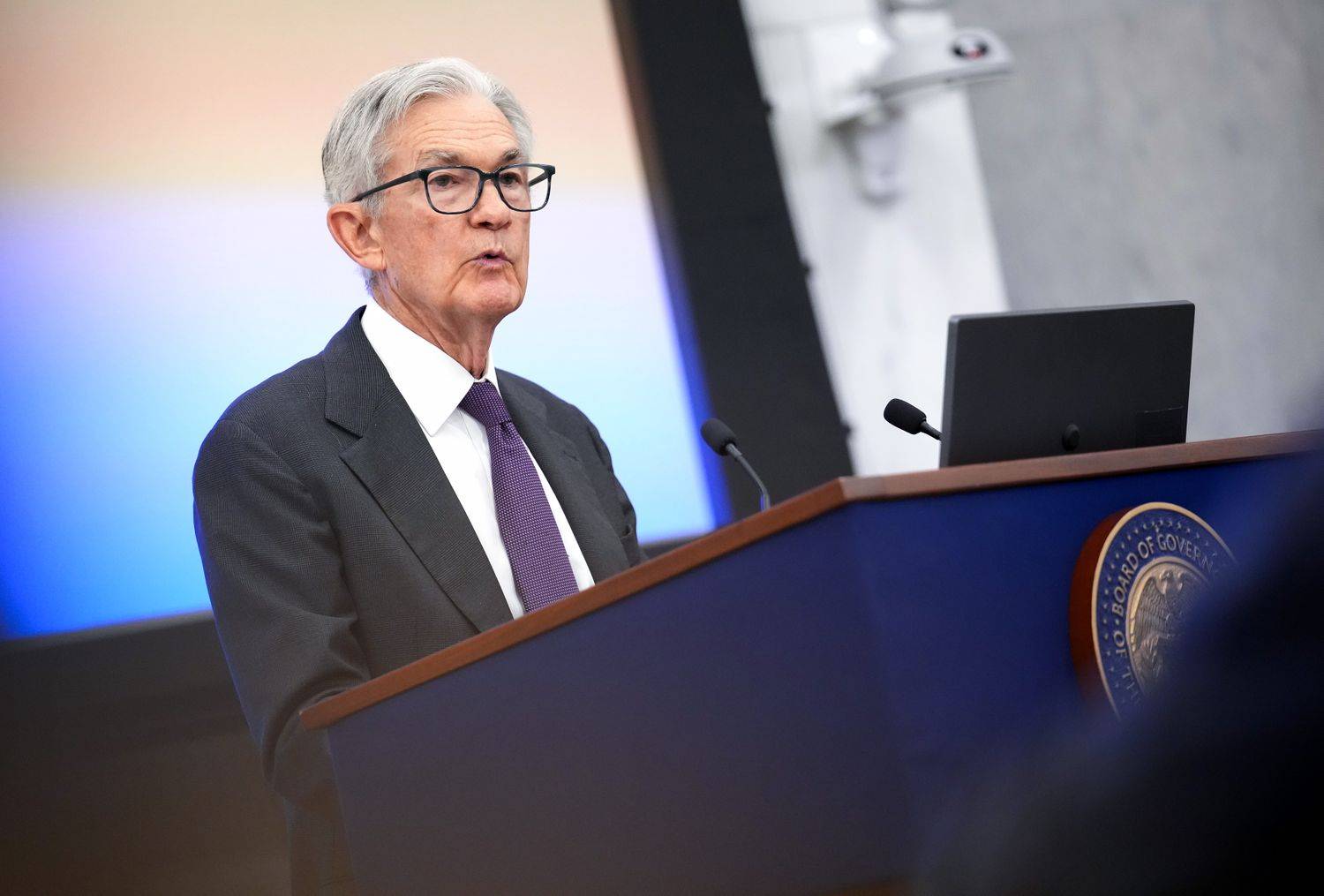
美联储会议前景:维持利率不变,关注经济数据
Sou Hu Cai Jing· 2025-07-28 15:51
Core Viewpoint - The Federal Reserve is not expected to lower interest rates in the upcoming meeting, but the market is closely watching for signs of potential rate cuts starting in September [2][4]. Group 1: Federal Reserve's Current Stance - Analysts believe that clarity regarding interest rate decisions has not yet arrived, allowing Fed Chair Jerome Powell to maintain a wait-and-see approach [5]. - The Fed has signaled the possibility of needing to cut rates, but officials are waiting to assess the impact of President Trump's tariffs on the economy [4][5]. - The current economic conditions are not significantly different from a few months ago, despite a slowdown in growth [5]. Group 2: Employment and Inflation - Employers continued to add jobs in June, despite the economic slowdown [6]. - Inflation remains above the Fed's 2% target, with tariffs increasing the risk of sustained high inflation [7]. - The Fed's benchmark interest rate is currently between 4.25% and 4.5%, with officials outlining the possibility of two rate cuts by the end of the year [7]. Group 3: Market Expectations - The market perceives that the Fed's patience may soon wane, with a 62% probability of a rate cut in September according to CME Group's FedWatch tool [8]. - The Fed will have access to July and August employment reports to evaluate whether the job market is slowing down [9]. Group 4: Diverging Opinions within the Fed - Some economists believe that waiting until September for a rate cut may be too late, with the possibility that the Fed may not cut rates at all this year [10]. - Analysts expect Powell to reiterate that any decisions will depend on data [11]. - There is a growing divide among Fed officials, with some expressing concerns about inflation and the need for patience [15][17]. Group 5: Reasons for Rate Cuts - Two Fed officials have shown a tendency towards rate cuts, citing signs of economic slowdown despite a seemingly normal economy [13]. - Lowering borrowing costs for businesses and consumers could provide support before further economic deterioration [14]. - Concerns about inflation driven by tariffs are present, but some officials believe these effects may take time to fully manifest [16].

国投期货贵金属日报-20250728
Guo Tou Qi Huo· 2025-07-28 13:06
| Million | >国技期货 | 贵金属日报 | | --- | --- | --- | | | 操作评级 | 2025年07月28日 | | 黄金 | ☆☆☆ | 刘冬博 高级分析师 | | 白银 | ☆☆☆ | F3062795 Z0015311 | | | | 吴江 高级分析师 | | | | F3085524 Z0016394 | | | | 010-58747784 | | | | gtaxinstitute@essence.com.cn | 今日贵金属偏弱震荡。关税方面,上周美国相继与多个国家达成贸易协议,其中最关键的日本和欧盟税率均 为15%,另外要求加大对美投资。特朗普称将对大部分国家征收15%至50%的简单关税,美商务部长称8月1日 关税上调最后期限不再延长。中美即将迎来新一轮谈判,超预期对抗概率较低。地缘方面,上周泰国和柬埔 寨边境争议地区发生交火,双方均称对方先开火。美国总统特朗普致电两国领导人,施压要求立即停火否则 不会就关税进行谈判。双方已同意在马来西亚举行会谈。降息前景方面,上周美国公布多项经济数据仍偏 强,标普全球制造业PMI 虽有回落,但服务业PMI 创阶段性新高,周度初 ...
宏观经济研究:2025年8月大类资产配置报告
Great Wall Securities· 2025-07-28 12:58
Group 1: Global Economic Outlook - The US is experiencing reduced uncertainty in economic growth due to the resolution of tariff negotiations with major trading partners, but inflation concerns are resurfacing[1] - Global inflation risks are increasing, potentially reversing expectations for interest rate cuts, which may impact financial markets in August and September[1] - The US government recorded a fiscal surplus of $27 billion in June, the first surplus in June in nearly eight years, which may alleviate some fiscal pressure from tax cuts[8] Group 2: Domestic Economic Conditions - China's economic stabilization in the first half of 2025 was primarily driven by increased fiscal spending and rapid export growth, but the real estate sector continues to face contraction pressures[1] - The "anti-involution" policy may become a central theme in the second half of the year, potentially improving market supply-demand relationships and restoring market confidence[1] - Real estate sales in the first half of 2025 saw a significant decline, with new residential prices in 70 major cities dropping by 0.3% month-on-month in June[14] Group 3: Asset Allocation Insights - International stock markets have been the main source of profit in July, buoyed by positive sentiment from US-EU trade agreements, offsetting declines in domestic and international bond markets[2] - The strategy for August maintains the July allocations, with a focus on hedging positions in Japanese and Italian stocks against German stocks, while being bearish on the international bond market[2] - Commodity prices, particularly crude oil, have seen seasonal increases, while gold remains attractive as a safe-haven asset amidst geopolitical uncertainties[2]
大越期货贵金属周报-20250728
Da Yue Qi Huo· 2025-07-28 10:21
Report Title Precious Metals Weekly Report (July 21 - July 25) [1] Report Industry Investment Rating Not provided Core Viewpoints - Last week, domestic commodities surged, and precious metal prices rose first and then fell. Silver remained stronger than gold. The prices of precious metals were supported by the domestic commodity boom despite trade agreement news from Japan and the EU. The expectation of a Fed rate cut continued to rise, and there were still supports for precious metal prices. Affected by the domestic industrial clearance policy, precious metal prices might be supported by non - ferrous metal prices, and silver prices had strong capital support [12]. Summary by Directory 1. Last Week's Review - **Precious Metal Price Movements**: - Shanghai Gold 2510 closed up 0.26%, reaching a maximum of 794 yuan/gram; COMEX Gold closed down 0.2%, reaching a maximum of 3451.7 dollars/ounce. - Shanghai Silver 2510 closed up 2.4%, reaching a new historical high of 9526 yuan/kilogram; COMEX Silver closed up 0.06%, reaching a maximum of 39.91 dollars/ounce, the highest since September 2011. - SGE Gold T + D closed up 0.29%, and SGE Silver T + D closed up 2.21%. - London Gold Spot closed down 0.4%, and London Silver Spot closed down 0.03%. - The US Dollar Index closed down 0.8%, and the US Dollar against Offshore RMB closed down 0.18% [4][12]. - **Trade Agreement News**: - The US and Japan reached a trade agreement with a 15% tariff rate, and Japan would invest 550 billion dollars in the US, with the US getting 90% of the profits. - The US and the EU reached a 15% tariff rate agreement. The EU would increase investment in the US by 600 billion dollars, buy US military equipment and 750 billion dollars of US energy products [12][13]. - **Economic Data**: - The US July Markit Manufacturing PMI fell into contraction, but the overall business activity expanded at the fastest pace since December. - The Eurozone July PMI rose to 51, a new high in nearly a year. Germany's manufacturing industry showed signs of recovery, while France's economy continued to shrink due to political deadlock. - US June existing - home sales dropped to the lowest level in nearly 15 years, while housing prices reached a new historical high [14][15]. 2. Weekly Review - **Market Focus**: This week, the China - US trade negotiation and the August 1 tariff "deadline" were the focuses, and the Fed's interest rate decision was highly anticipated. The US would also release key data such as non - farm payrolls, GDP, and PCE. The Bank of Japan would announce the target interest rate. China would hold a Politburo meeting at the end of July and release the official manufacturing PMI data [12]. - **Position Analysis**: - For Shanghai Gold, the net position decreased slightly, with more long positions added and short positions reduced, and the fluctuation was very limited. - For Shanghai Silver, the net position continued to increase, with both long and short positions increasing significantly. - CFTC net positions fluctuated slightly, with both long and short positions of gold and silver increasing, but the increase in short positions was limited [12]. 3. Fundamental Data - **ETF Positions**: SPDR Gold ETF positions continued to increase, and silver ETF positions increased in a fluctuating manner [31][33]. - **Inventory Data**: - COMEX Gold inventory increased slightly, and COMEX Silver inventory decreased slightly. - Shanghai Gold inventory data was presented, and Shanghai Silver inventory increased in a fluctuating manner [36][38]. 4. Position Data - **Shanghai Gold Top 20 Positions**: This week, long positions were 216,889, an increase of 5.34% from last week; short positions were 66,199, an increase of 5.86%; the net position was 150,690, an increase of 5.12% [23]. - **Shanghai Silver Top 20 Positions**: This week, long positions were 448,932, a decrease of 8.03% from last week; short positions were 348,227, a decrease of 7.89%; the net position was 100,705, a decrease of 8.53% [26]. - **CFTC Positions**: As of July 22, the net long position of CFTC gold increased significantly, with more long positions added and short positions reduced; the net long position of CFTC silver increased slightly, also with more long positions added and short positions reduced [27]. 5. Summary - Tariff agreements had no progress, the expectation of a rate cut increased significantly, and there were still supports for precious metal prices. Affected by the domestic industrial clearance policy, precious metal prices might be supported by non - ferrous metal prices, and silver prices were still relatively strong [12].
【黄金期货收评】美经济坚韧但疲软信号不容忽视 沪金日内下跌0.33%
Jin Tou Wang· 2025-07-28 08:03
【黄金期货最新行情】 | 7月28日 | 收盘价(元/克) | 当日涨跌幅 | 成交量(手) | 持仓量(手) | | --- | --- | --- | --- | --- | | 沪金主力 | 774.78 | -0.33% | 256019 | 209675 | 打开APP,查看更多高清行情>> 【基本面消息】 数据显示,7月28日上海黄金现货价格报价770.19元/克,相较于期货主力价格(774.78元/克)贴水4.59 元/克。 尽管年初有关关税可能引发通胀和经济放缓的担忧甚嚣尘上,美国经济却展现出惊人的韧性。消费者物 价涨幅温和,劳动力市场虽有放缓迹象,但尚未出现大幅恶化。经济学家普遍认为,只要劳动力市场保 持稳定,消费支出就不会显著下滑,从而支撑经济增长。然而,私营部门就业增长已降至八个月低点, 招聘活动放缓,大学毕业生就业难度加大,这些信号表明经济并非毫无瑕疵。 6月份,美国同比通胀率因关税影响略有上升,而一篮子领先经济指标显示,下半年经济增长可能放 缓。考克斯指出,当前市场对就业市场放缓的乐观情绪令人费解。她警告称,一旦就业市场显著恶化, 消费支出可能受到抑制,进而拖累经济增长。这种背景下, ...
受关税及重组业务成本拖累,奥迪下调盈利预期
news flash· 2025-07-28 07:30
受关税及重组业务成本拖累,奥迪下调盈利预期 金十数据7月28日讯,大众汽车旗下的奥迪下调了2025年的财务预期,因特朗普的关税和重组业务的成 本对这家汽车制造商的盈利带来了压力。奥迪集团(旗下还包括宾利、兰博基尼和摩托车制造商杜卡 迪)目前预计今年的营业销售回报率为5%至7%,而此前预期为7%至9%,原因是上半年盈利能力因关 税而大幅下滑。奥迪母公司大众汽车集团上周下调了全年业绩预期。 ...
美加贸易谈判陷入停滞银价拉升
Jin Tou Wang· 2025-07-28 07:07
今日周一(7月28日)欧盘时段,现货白银目前交投于38.27一线上方,今日开盘于38.04美元/盎司,截至发 稿,现货白银暂报38.30美元/盎司,上涨0.38%,最高触及38.32美元/盎司,最低下探38.03美元/盎司, 目前来看,现货白银盘内短线偏向看涨走势。 【要闻速递】 据市场调查显示,该协议将自8月1日起对大多数欧盟出口至美国的商品征收15%的关税,范围涵盖能 源、军工设备与部分制造品,同时欧盟也承诺大幅增加从美进口相关商品。尽管关税水平较高,但市场 视其为双边妥协的成果,有效终结了持续数月的僵局。 在另一边,美加贸易磋商陷入停滞状态。美国总统特朗普近日明确表示,不预期能在8月1日前与加拿大 达成贸易协议,称"我们与加拿大的谈判并不顺利,可能只会征税而非协商。"这一言论明显削弱市场对 达成协议的信心。 现货白银上周收十字星,刺破前高,回踩5周均线,RSI位于高位,波段整体趋势仍偏强。周五深度跳 水,失守10日均线,日线RSI延续回落,4小时一度刺破38关口,呈头肩顶,38.5下方可维持高空思路。 加拿大方面则表现出强硬立场。加拿大总理卡尼此前接受采访时指出,加方"不会接受不公平的协议", 更不会为 ...
15%关税拿下欧盟!特朗普的“降息梦”本周能否实现?
Sou Hu Cai Jing· 2025-07-28 05:56
Group 1 - The US and EU have reached a trade agreement, imposing a 15% tariff on EU goods entering the US, which is lower than the previously threatened 30% but higher than the EU's desired 10% [2][3] - The EU is expected to increase investments in the US by $600 billion and purchase military equipment worth several hundred billion dollars, along with $750 billion in energy products [2][3] - The agreement is seen as beneficial for the German automotive industry and the export-oriented German economy, helping to avoid a trade conflict [3] Group 2 - The US is finalizing reciprocal tariff rates with over 200 trade partners, with a deadline set for August 1, and the Commerce Secretary has stated that this deadline will not be extended [4] - The US government has collected hundreds of billions in tariffs this year, with most of the burden falling on American businesses rather than consumers [8][9] - Analysts predict that if tariffs increase in August, US retailers may have to raise prices, leading to potential inflationary pressures on consumers [9]
大摩警告:关税风暴未结束,8月1日警惕变盘
Jin Shi Shu Ju· 2025-07-28 05:41
Group 1 - The evolving tariff situation continues to create both pressure and opportunities for the market [2][5] - The most likely economic scenario is slow growth with persistent inflation, with a 40% probability assigned to this outcome [2] - The potential for a mild recession increases if tariffs are raised on key trading partners, as they account for nearly half of U.S. goods imports [5] Group 2 - Fixed income markets are expected to see rising U.S. Treasury prices due to anticipated dovish shifts from the Federal Reserve [3] - The stock market may experience a differentiated impact, with the S&P 500 likely to continue its upward trend despite growth slowdowns, driven by a weaker dollar and tax incentives for key sectors [3] - Industries sensitive to trade policies will face varying impacts, with industrial goods benefiting from domestic investment while consumer goods and retail sectors may struggle due to rising import costs [3][5]