
产业升级

Search documents
新疆科技创新大会召开 5位科学家和149项科研成果获表彰
Zhong Guo Jing Ji Wang· 2025-11-18 14:03
Core Points - The Xinjiang Science and Technology Innovation Conference was held in Urumqi, recognizing five scientists and 149 scientific achievements with awards for the 2024 Autonomous Region Science and Technology Outstanding Contribution Award [1] - The awarded achievements focus on key sectors such as oil and gas production, geological exploration, new energy materials, health, and ecological protection, providing strong technological support for industrial upgrading and high-quality economic development [1] Group 1 - Five scientists, including Wang Qinghua from China National Petroleum Corporation and Guzalynur Abulizi from Xinjiang Medical University, received the 2024 Autonomous Region Science and Technology Outstanding Contribution Award [1] - Guzalynur Abulizi highlighted the importance of teamwork in establishing a comprehensive cervical cancer prevention system that has benefited over 500,000 rural women [1] - A total of 149 scientific achievements were awarded, including 8 Natural Science Awards, 6 Technological Invention Awards, and 135 Science and Technology Progress Awards [1] Group 2 - Five high-level innovation platforms were officially unveiled, including the National Key Laboratory for Ecological Security and Sustainable Development in Arid Areas and the Silk Road Water Laboratory [2] - These platforms aim to enhance ecological protection, water resource management, intelligent equipment research, energy chemistry, and innovation ecology, injecting new momentum into regional high-quality development [2]
景顺长城北证50指数基金正在发行中
Zheng Quan Ri Bao Wang· 2025-11-18 13:17
景顺长城北证50指数基金的推出,为投资者便捷布局北交所提供了有效工具。景顺长城基金表示,随着经济持续复苏和科 技创新支持性政策红利释放,北证50指数成份股的基本面也迎来明显改善,有望推动指数估值中枢上移,助力行情持续发展。 公开资料显示,景顺长城基金持续深耕北交所投资,并取得了较为出色的业绩。截至10月31日,该公司旗下的景顺长城北 交所精选两年定开、景顺长城专精特新量化优选两只主动权益产品,A类份额年内分别取得63.36%、42.63%的净值增长率,均 显著跑赢同期业绩基准的涨幅(分别为20.71%、23.53%)。 (编辑 张昕) 本报讯 (记者昌校宇)今年以来,A股市场回暖,北交所市场表现尤为突出。截至10月31日,北证50指数年内累计涨幅达 52.51%,成为市场焦点。对于投资者而言,借助指数基金布局北交所,是一种低门槛、高效率的方式。11月17日,景顺长城基 金旗下景顺长城北证50指数基金正式发行。该产品跟踪北证50指数,帮助投资者"一键布局"北交所创新成长龙头企业,把握北 交所整体发展机遇。 近一年,北交所行情走强。作为北交所的代表性宽基指数,北证50指数汇聚了市值规模大、流动性强、市场代表性高的 ...
绕道东南亚,中国轮胎与当地橡胶业的共赢之路
2 1 Shi Ji Jing Ji Bao Dao· 2025-11-18 12:46
Core Insights - The tire industry is experiencing a significant shift as companies move operations to Southeast Asia, particularly Cambodia, Thailand, and Vietnam, due to favorable conditions for growth [1][2] - Southeast Asia produces nearly 70% of the world's natural rubber, with Thailand, Indonesia, and Vietnam being the top three producers, while Cambodia is emerging as a new growth hub [1] - Chinese tire manufacturers are establishing factories in Southeast Asia to circumvent tariffs imposed by Western countries, leading to a collaborative industrial ecosystem [1][2] Group 1: Industry Growth and Trends - Cambodia's tire export value is projected to reach $870 million in 2024, representing a 129% year-on-year increase [1] - The collaboration between Chinese companies and Southeast Asian nations is transforming the region from raw material suppliers to product manufacturers [2] - The establishment of Chinese factories in Cambodia is stabilizing the demand for local rubber, benefiting both local farmers and the manufacturing sector [1] Group 2: Infrastructure and Investment - Cambodia plans to invest $1 billion to expand the Sihanoukville port by 2029, enhancing infrastructure for the growing industry [2] - Over 20 energy projects are currently under construction in Southeast Asia, supporting the industrial growth [2] - Local employment is increasing, with over 90% of workers in the General Tire factory being local employees, indicating a shift in workforce dynamics [2] Group 3: Future Prospects - The collaboration is expected to extend beyond rubber and tires into automotive parts, green plastics, and bio-based rubber, creating a more sustainable industrial ecosystem [2] - China's imports of rubber from ASEAN countries increased by 40.7% in the first three quarters of the year, while exports of tires and automotive parts grew by 19.8% [2] - The signing of the upgraded China-ASEAN Free Trade Area 3.0 agreement will further deepen the integration of supply chains between China and ASEAN countries [2]

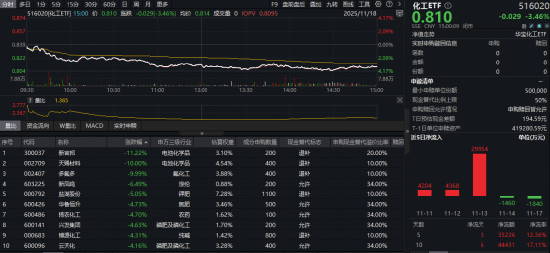
化工板块深度回调!锂电领跌,化工ETF(516020)盘中跌超4%!板块估值仍处低位,布局良机或现?
Xin Lang Ji Jin· 2025-11-18 11:32
Group 1 - The chemical sector experienced a significant pullback on November 18, with the chemical ETF (516020) declining by 3.46% and intra-day prices dropping over 4% [1] - Key stocks in the sector, including Tianqi Lithium and New Chemical Materials, faced substantial losses, with Tianqi Materials hitting the limit down and New Chemical Materials dropping by 11.22% [1] - Analysts suggest that the recent price corrections are normal, as the lithium battery materials sector is expected to see improved profitability in the coming year, indicating a potential rebound in demand and supply dynamics [3] Group 2 - The chemical ETF (516020) has seen significant net inflows, with over 3.52 billion CNY in net subscriptions over the last five trading days, indicating strong investor interest [3] - The current valuation of the chemical sector is relatively low, with the ETF's underlying index price-to-book ratio at 2.46, positioning it in the 44.23 percentile over the past decade, suggesting a favorable investment opportunity [3] - Future investment strategies should focus on sectors benefiting from de-involution, such as pesticides, urea, and organic silicon, as well as new materials like semiconductor materials and OLED materials, which are crucial for China's chemical industry development [4][5]

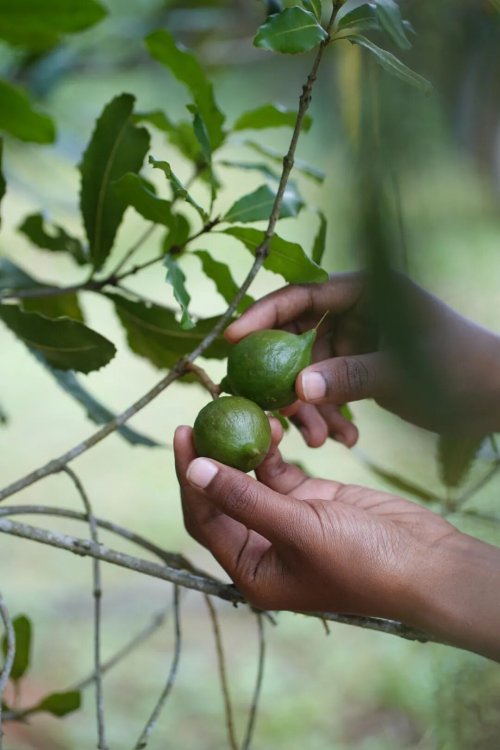
良品铺子 x 央视新闻:一颗云南坚果,“大” 写中国自信
Zhong Guo Shi Pin Wang· 2025-11-18 08:58
Core Insights - The article highlights the successful transformation of the macadamia nut industry in Yunnan, China, particularly in Ximeng County, where local farmers have shifted from small-scale cultivation to a more organized and profitable industry with the help of leading companies like Liangpinpuzi [1][2][4]. Group 1: Industry Development - The macadamia nut has evolved from an imported product to a national staple in China, with Yunnan becoming the largest production base globally, accounting for 47% of the world's macadamia nut area by 2025 [4]. - The local environment, characterized by high selenium content and favorable climatic conditions, contributes to the unique quality of Yunnan macadamia nuts, which are now marketed as a health food due to their nutritional benefits [6][4]. Group 2: Company Strategy - Liangpinpuzi has played a crucial role in establishing quality standards and modern agricultural practices, which have significantly improved the quality and marketability of local macadamia nuts [10][11]. - The company has implemented a systematic approach to empower the supply chain, including setting planting standards and offering higher prices for quality raw materials, thereby boosting farmers' confidence and income [11][13]. Group 3: Market Impact - The production of macadamia nuts in Yunnan has seen substantial growth, with the total industry output value reaching 10.16 billion yuan in 2024, a 71.04% increase from 2023, benefiting over 740,000 farmers [13][15]. - Liangpinpuzi's efforts have not only enhanced local production but also positioned Yunnan macadamia nuts as a premium product in both domestic and international markets, contributing to the region's economic development [15][17]. Group 4: Future Prospects - The company aims to replicate its successful model across various regions in China, focusing on sourcing high-quality local products and enhancing the overall value chain from production to consumer [20]. - Liangpinpuzi's commitment to integrating agricultural, industrial, and commercial sectors is expected to further elevate the status of local specialties, transforming them into recognized brands and driving rural revitalization [20].

湛江规上工业增速创年内新高
Nan Fang Ri Bao Wang Luo Ban· 2025-11-18 08:06
Group 1 - BASF's new 2-Ethylhexanol (2-EH) facility in Zhanjiang has officially commenced production, marking a significant milestone in the integrated base's development [1] - Zhanjiang's GDP growth rate for the first three quarters of this year is 5.0%, ranking third in the province, with industrial added value increasing by 10.4%, the highest growth rate in the province [1] - The industrial sector is a key driver of high-quality development in Zhanjiang, with major projects in green steel, green petrochemicals, green energy, and modern agriculture contributing to this growth [1][2] Group 2 - Zhanjiang's industrial development is transitioning from quantity expansion to quality improvement, with a resilient growth pattern and strong potential [2] - The city has seen significant contributions from the mining sector, with new oil fields coming online and increasing production rates [2] - The city's small-scale industrial sector has also shown growth, with a 6.5% increase in added value in the first three quarters of this year [2] Group 3 - Industrial parks in Zhanjiang are becoming strong engines for development, facilitating the transition to high-value-added products [3] - The industrial parks have reported an 11.9% increase in industrial added value year-on-year, showcasing robust momentum [4] - Zhanjiang's green petrochemical and modern agricultural industries have surpassed a total output value of 100 billion yuan, contributing to a modern industrial system [4] Group 4 - Technological transformation is a key strategy for Zhanjiang's industrial upgrade, with significant investments in industrial upgrades showing a 33.3% increase year-on-year [4] - The new materials sector is also emerging, with a new production base expected to generate an annual output value of 2 billion yuan [4] - Major projects are driving industrial growth, with Zhanjiang positioned to leverage its industrial capabilities for future development [5]
10个高端科学仪器装备与传感器产业项目落地怀柔
Xin Jing Bao· 2025-11-18 05:38
Core Insights - The article highlights the signing of multiple high-quality industrial projects in Huairou District during the 2025 Beijing High-end Scientific Instruments and Sensors Conference, indicating a significant step towards industrial development in the region [1] Group 1: Project Overview - A total of 10 industrial projects were signed, covering key areas such as mass spectrometry, spectroscopy, and optoelectronic sensors [1] - The projects include internationally pioneering achievements, core component research and development, and specialized solutions for critical fields like biomedicine and satellite communication [1] Group 2: Strategic Alignment - The signed projects align well with the industrial development direction of Huairou District, suggesting a strong potential for industrial upgrading and economic growth in the area [1]
价格战杀穿地板!外资批量撤资,中国市场变商业绞肉机
Sou Hu Cai Jing· 2025-11-18 03:37
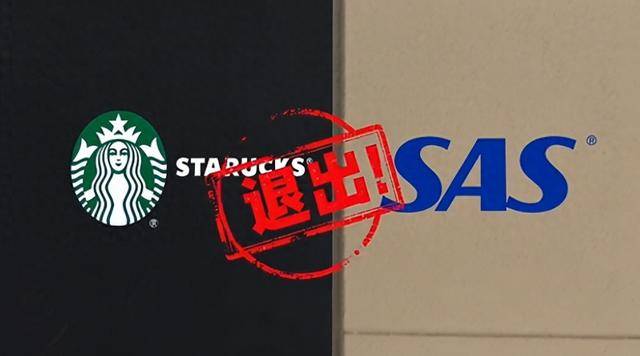
Group 1 - The recent trend of foreign companies withdrawing from the Chinese market has become increasingly pronounced, with notable exits including Starbucks and SAS, indicating a challenging business environment for foreign firms [1][3] - Starbucks, once a leading player in the coffee industry, announced its sale amid fierce competition from local brands like Luckin Coffee and Kudi, which offer significantly lower prices [1][3] - SAS, a major international software company, has completely withdrawn from China, further highlighting the trend of foreign companies retreating from the market [3] Group 2 - The exodus of foreign enterprises such as Google, Microsoft, and Volkswagen raises questions about the profitability of the Chinese market, suggesting that intense local competition may be driving these companies away [5][12] - The competitive landscape in various sectors, including coffee and automotive, has devolved into aggressive price wars, making it difficult for foreign brands to sustain their operations [7][12] - The current market dynamics, characterized by a focus on price competition rather than innovation, could lead to long-term negative consequences for the industry, including increased trade barriers and a lack of technological advancement [14][16]
宏观超话:10月经济数据解读
2025-11-18 01:15
Summary of Conference Call Notes Industry Overview - The macroeconomic environment shows increasing downward pressure, with fixed asset investment declining year-on-year and external demand turning negative, indicating potential negative impacts on the stock market [1][3] - Industrial production growth has dropped below 5%, with high-tech industries experiencing a decline in prosperity, although high-end, intelligent, and green industries, as well as shipbuilding, aerospace, and automotive manufacturing, remain resilient [1][4] Key Economic Indicators - Retail sales of consumer goods are declining due to weakened demand, particularly in home appliances, furniture, and automotive sectors, while communication equipment and cosmetics show growth [1][6] - Investment across various sectors is weakening, with significant declines in real estate new starts and sales area, and housing prices experiencing a larger month-on-month drop [1][8] - Infrastructure investment has decreased more than expected, influenced by debt resolution, insufficient project reserves, and local government debt constraints, although digital infrastructure and energy security projects may provide some support [1][8] Sector-Specific Insights - Investment demand in the chemical, food, pharmaceutical, and non-ferrous metal industries has contracted, but the core logic of industrial upgrading remains intact [1][9] - Manufacturing investment shows positive signals, particularly in computer electronics and electrical machinery, with a need to observe the sustainability of this recovery and its impact on overall investment [1][10] Consumer Behavior and Employment - National dining consumption improved in October due to the National Day and Mid-Autumn Festival, but overall retail sales continue to decline [1][6] - Despite weak goods consumption, there are positive signs of recovery in service consumption, supported by policy measures [1][6] Challenges and Policy Responses - The economy faces challenges with internal demand slowing and external demand declining, which may impact the fourth quarter's economic performance [1][12] - Historical trends suggest that as economic downturns and employment pressures rise, there will be an increase in counter-cyclical policies, with potential for new policy deployments [1][13] Market Dynamics - The capital market's resilience may diverge from the slowing economic momentum, reflecting long-term economic logic rather than short-term fluctuations [1][14] - Structural changes in the economy, particularly in the technology innovation sector, are expected to drive asset revaluation, suggesting a need for patience regarding short-term fundamental fluctuations [1][15]
今年以来 A股公司并购交易迭出 也频现港股公司“吃”A股公司——并购重组活力四射
Shang Hai Zheng Quan Bao· 2025-11-17 21:47
Group 1 - The core viewpoint of the article is that Huajian Medical is acquiring a controlling stake in Chuangye Huikang, reflecting a trend of "Hong Kong stocks eating A-shares" in the capital market, driven by deep changes in the medical industry towards data-driven smart healthcare ecosystems [2][4][7] - The acquisition involves a three-step plan to secure control, including share transfer and voting rights delegation, board restructuring, and a potential capital increase to solidify control [3][6][8] Group 2 - The first step involves the transfer of 96.52 million shares (6.23% of total shares) from the current major shareholder to Hangzhou Genghao, with a total transaction value of 500 million yuan, allowing Hangzhou Genghao to control 12.64% of voting rights [4][5] - The second step includes the nomination of four non-independent directors and two independent directors to the board, which will enable Hangzhou Genghao to become the controlling shareholder if the nominations are successful [5] - The final step is to initiate a targeted stock issuance to further consolidate control and inject capital into Chuangye Huikang [6] Group 3 - Huajian Medical's strategic rationale for the acquisition includes positioning itself in the "AI + healthcare" sector, anticipating a compound annual growth rate of 11.7% in the hospital application software market over the next five years [7] - The company aims to leverage its extensive distribution network covering over 1,700 top-tier hospitals to create a closed-loop solution combining testing data, clinical data, and AI algorithms [8] - The acquisition is seen as a move to enhance operational capabilities and achieve synergies, although Chuangye Huikang has faced financial challenges, with a projected net loss of 174 million yuan for 2024 [8]