
硬科技

Search documents
688256,大涨!“硬科技”全面爆发
Zhong Guo Zheng Quan Bao· 2025-08-22 04:47
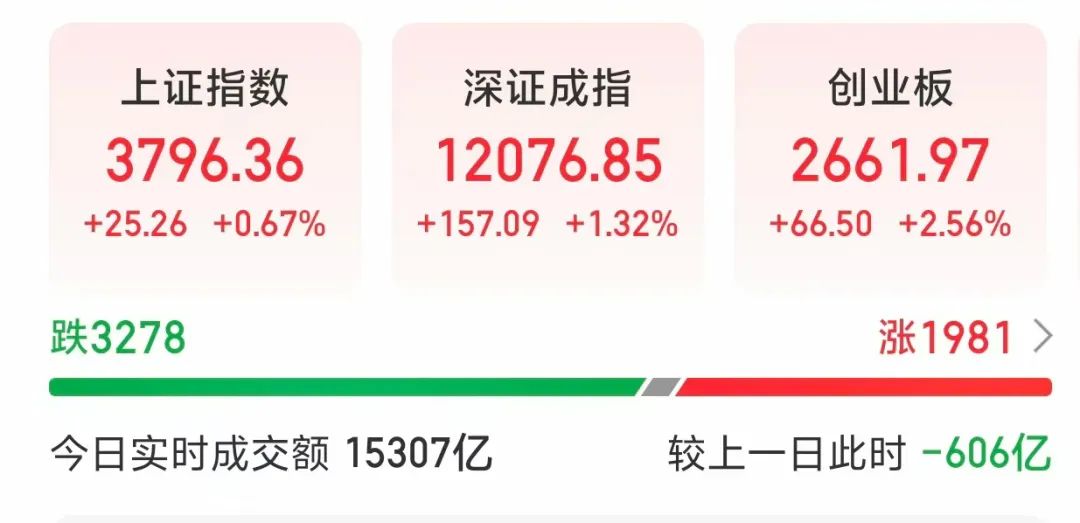
Core Viewpoint - The discussion around whether Cambrian Technology's stock price can surpass Kweichow Moutai has intensified, with Cambrian experiencing a significant price surge, reflecting a broader trend in the "hard technology" sector [1][2]. Group 1: Cambrian Technology and Market Performance - Cambrian Technology (688256) saw a 12.4% increase in stock price, reaching a high of 1188 CNY, with a closing price of 1164.45 CNY and a market capitalization of 487.1 billion CNY [1]. - Kweichow Moutai (600519) experienced a modest increase of 0.33%, closing at 1453.1 CNY [1]. - The "hard technology" sector witnessed a broad rally, with notable gains in stocks such as Haiguang Information, Zhongke Shuguang, and SMIC, contributing to a rise in the Shanghai Composite Index, which increased by 0.67% to 3796.36 points [1][2]. Group 2: Factors Driving the Hard Technology Surge - The semiconductor industry chain showed strong performance, with the STAR Market 50 Index rising by 5.25%, driven by both AI application and hardware sectors [2]. - Since mid-April, AI hardware has been on an upward trend, led by North American computing chains, indicating a significant demand for domestic computing chains to catch up [3]. - Cambrian's recent price movements have reshaped market perceptions of domestic computing chains, particularly following its historical high on August 12 [4]. Group 3: Catalysts for Growth in Domestic Computing - The release of DeepSeek-V3.1, which utilizes advanced parameters for next-generation domestic chips, is expected to accelerate the domestic computing ecosystem [5]. - The stock of Tianpu Co. surged after announcing a share transfer agreement with Zhonghao Xinying, a company focused on high-performance AI chips, indicating growing interest in AI chip development [5]. Group 4: Rare Earth Permanent Magnet Sector - The rare earth permanent magnet sector experienced significant gains, with leading stock Northern Rare Earth rising over 7% [6]. - Recent price increases in major rare earth products have prompted analysts to recommend focusing on companies with strong resource attributes and growth potential in production [8].


帮主郑重:美联储突然集体放鹰!鲍威尔讲话前夜,A股要小心这把“双刃剑”?
Sou Hu Cai Jing· 2025-08-22 01:49
Group 1 - The U.S. stock market experienced a decline, with the S&P 500 facing five consecutive days of losses, while Chinese electric vehicle stocks like Xpeng and NIO saw significant gains, indicating foreign investors' long-term confidence in China's new energy vehicles [3] - The recent hawkish comments from three Federal Reserve officials have reduced the probability of a rate cut in September from 80% to 75%, highlighting concerns over inflation due to increased tariffs [3] - The Atlanta Fed's report suggests that tariffs could lead to "secondary inflation," and the Cleveland Fed's president warned of a potential price increase wave, complicating the Fed's decision-making regarding interest rates [3] Group 2 - In the A-share market, the Shanghai Composite Index stabilized at 3,771 points, with net inflows of 3.86 billion from northbound funds, indicating foreign capital's search for certainty amid market volatility [4] - Domestic capital is shifting from high-tech stocks to defensive sectors like utilities and liquor, suggesting a strategy of risk management among local investors [4] - The Chinese government has initiated a third batch of 83 billion long-term special bonds focused on new energy and infrastructure, which is a positive signal for sectors like new energy vehicles and smart grids [5] Group 3 - Long-term investors are advised to focus on opportunities in hard technology sectors supported by policy, such as new energy vehicles and semiconductors, viewing pullbacks as buying opportunities [5] - Defensive sectors like liquor and utilities are recommended for risk-averse investors due to their stability and dividend potential [5] - Short-term trading strategies should consider catalysts like the computing power conference and potential interest rate cuts from the central bank, as seen with the record trading volume in ZTE [5]
精耕时代,潮涌嘉禾:产业未来大会邀您共赴产业变革新浪潮
36氪· 2025-08-21 13:07
Core Viewpoint - The article emphasizes the transition to a "precision farming era" in the global economic landscape, highlighting the importance of long-term value creation and ecological collaboration in business practices [3][4]. Group 1: Event Overview - The 2025 36Kr Industry Future Conference will be held in Xiamen from September 10 to 11, focusing on five core sectors: artificial intelligence, low-altitude economy, advanced manufacturing, new energy, and consumer goods [5][11]. - The conference aims to gather top minds from government, capital, and industry to collaboratively outline the future of China's industrial development [5][11]. Group 2: Market Dynamics - The Chinese venture capital market has shown remarkable resilience over the past year, with hard technology and advanced manufacturing emerging as dominant themes [7]. - The role of capital is shifting from mere supply to ecosystem builders, with "patient capital" becoming a cornerstone for driving industrial innovation [7][8]. Group 3: Capital and Collaboration - Local state-owned assets and government-guided funds are leading the charge in transforming capital's role from financial return to creating a sustainable ecosystem for innovative enterprises [8]. - The 2025 venture capital market is entering a new cycle characterized by "hard technology + scene landing + patient capital," necessitating a meticulous approach to grasp industrial development trends [8]. Group 4: Conference Activities - The conference will feature a "9.8-mile run" event designed to connect participants with Xiamen's scenic landmarks, symbolizing the integration of "patient capital and long-term companionship" [12]. - The agenda will focus on how government, capital, and industry can collaborate to address pain points and bottlenecks in industrial development [12]. Group 5: Symbolism and Call to Action - "Jiahe," the ancient name for Xiamen, symbolizes hope, resilience, and harvest, reflecting the need for meticulous efforts in the current market environment [13]. - The conference serves as a declaration and call to action for industry builders, capital enablers, and policy guides to witness and shape a brighter future for China's industry [13].
【榜单揭晓】2024-2025年度中国科技产业投资榜 | 甲子引力X
Sou Hu Cai Jing· 2025-08-21 12:25
Group 1 - The Chinese private equity investment market is at a critical "crossroad," transitioning from old challenges to a new era of opportunities, with issues like fundraising difficulties and long exit cycles being prominent [2][3] - The technology investment landscape in China's primary market is showing signs of recovery, with positive growth in fundraising, investment scale, and event numbers, alongside an increase in A-share and Hong Kong IPOs [2][3] - Key challenges remain, including long investment return cycles, extended A-share IPO review periods, and pressures on limited partners (LPs) for returns [2][3] Group 2 - Technology investment is undergoing a comprehensive recalibration, with hard technology becoming a dominant investment direction, and alignment with national technology strategies providing additional premiums [3] - New investment hotspots are emerging, particularly in AI technologies such as AI infrastructure, embodied intelligence, and AI agents, as international capital reassesses the investment value in China's tech industry [3] - The role of General Partners (GPs) is evolving from mere fund providers to post-investment enablers and future industry ecosystem builders, emphasizing deep participation in enterprise growth [3] Group 3 - The "2025 Gravity X China Technology Industry Investment Conference" was successfully held in Beijing, recognizing outstanding investment institutions, investors, and tech companies contributing to China's tech industry development [4] - The "2024-2025 China Technology Industry Investment List" aims to guide the industry towards a new direction and reconstruct value coordinates during this uncertain yet transformative period [4]

沪指续创十年新高,A500ETF易方达(159361)、沪深300ETF易方达(510310)等助力布局核心资产
Sou Hu Cai Jing· 2025-08-21 05:38
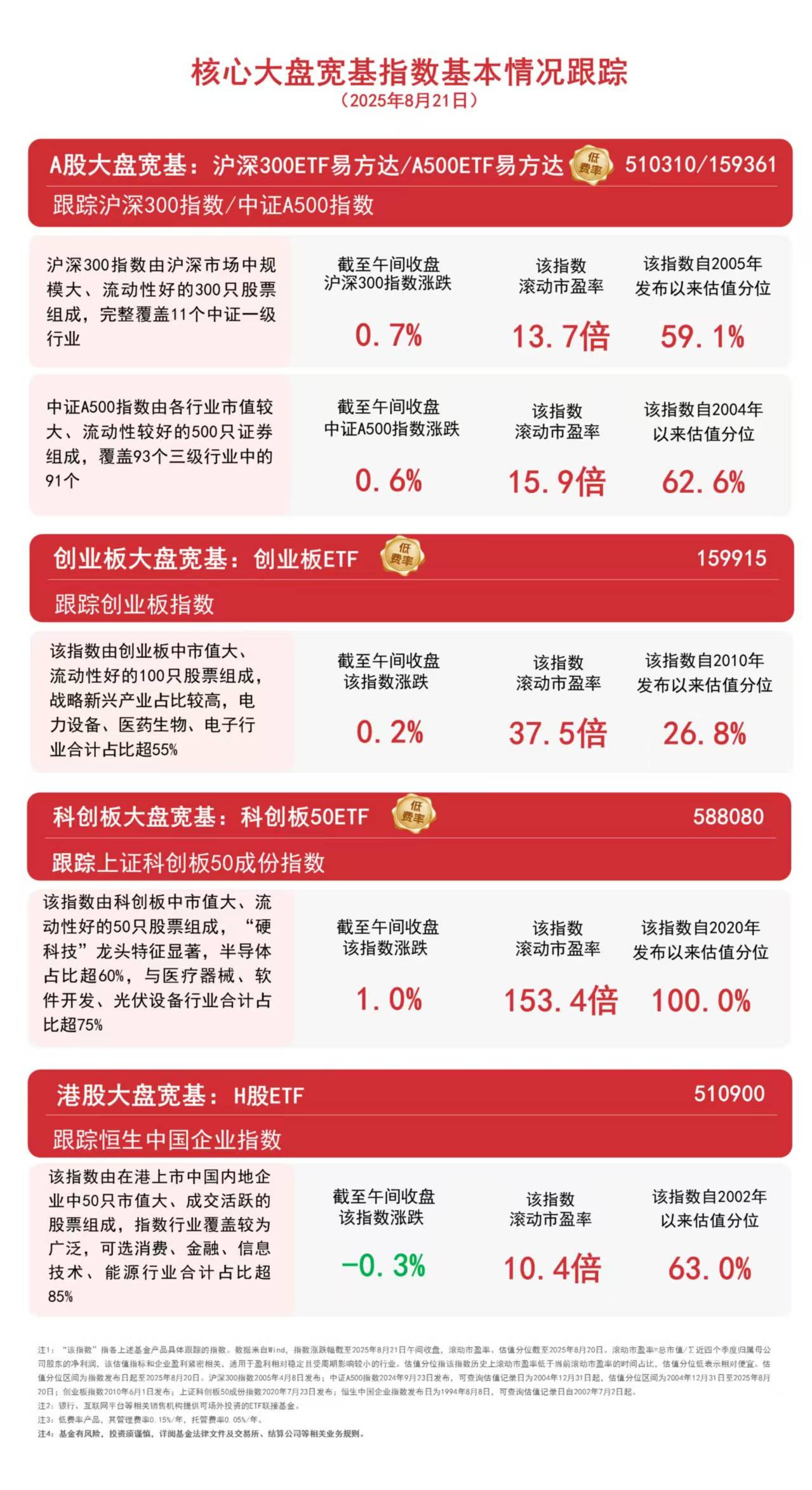
Market Overview - A-shares saw all three major indices rise in early trading, with the Shanghai Composite Index increasing by 0.35%, reaching a ten-year high [1] - The CSI A500 Index rose by 0.6%, the CSI 300 Index increased by 0.7%, the ChiNext Index gained 0.2%, and the STAR Market 50 Index climbed by 1.0% [1] - The Hang Seng Index showed mixed results, with energy and pharmaceutical sectors leading the gains, while the Hang Seng China Enterprises Index fell by 0.3% [1] Sector Performance - Sectors that performed well included cross-border payments, oil and gas extraction and services, and combustible ice [1] - The PCB concept and liquid cooling server sectors experienced adjustments [1]
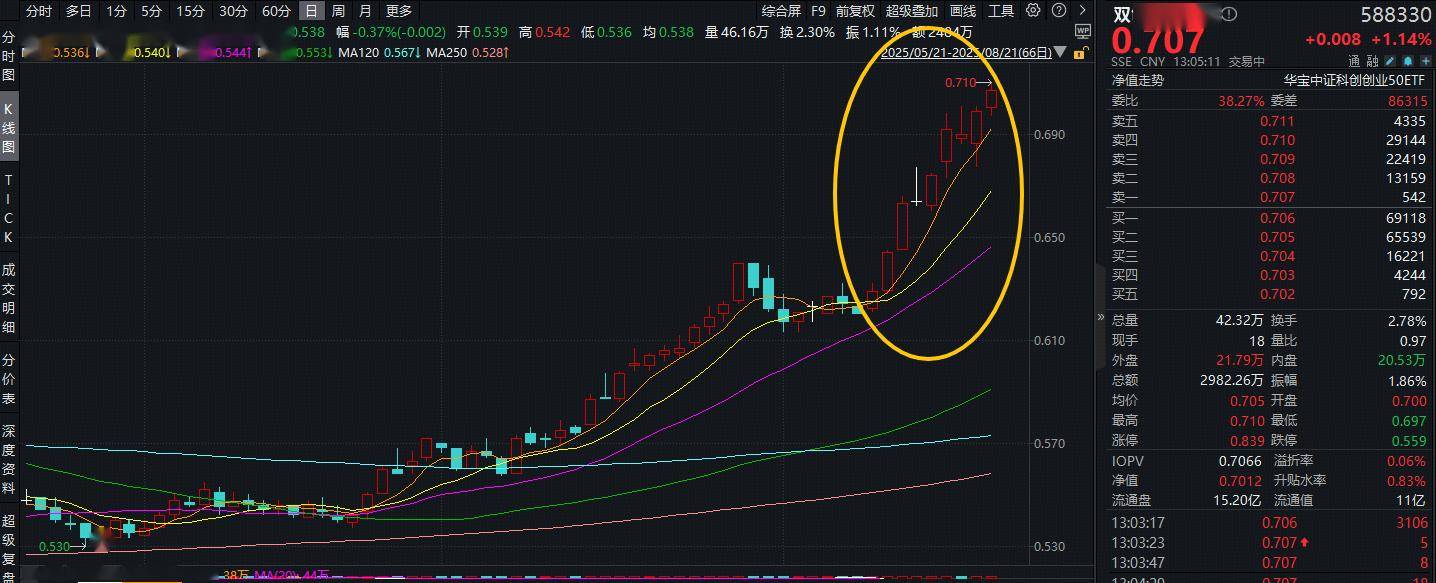
ETF盘中资讯|冲击9连涨!20CM高弹性——双创龙头ETF(588330)盘中涨超1.5%,刷新阶段新高!机构:硬科技景气度攀升!
Sou Hu Cai Jing· 2025-08-21 05:26
8月21日,硬科技宽基"小霸王"——双创龙头ETF(588330)场内价格盘中涨超1.5%,现涨1%,上探2022年3月以来的高点,实时成交额超2900万元,交投 较为活跃,基金最新规模为10.73亿元。 成份股方面,蓝思科技涨超9%,联影医疗、迈瑞医疗、寒武纪涨逾3%,石头科技、江波龙、中航成飞等个股跟涨。 消息面上,8月15日国家统计局数据显示7月高技术制造业增加值同比增长9.3%,集成电路制造增长26.9%,印证硬科技产业链景气度;同期美国云厂商上调 资本开支指引,谷歌2025年资本开支增至850亿美元,Meta指引2026年维持高投入,带动算力需求预期升温。 东方证券指出,科技板块或是确定性主线,尤其看好国内人工智能产业链。AI服务器、数据中心等场景推动PCB性能升级,新一代电子布和石英玻纤成为增 量机会,国产替代空间显现。AI应用领域量变积累质变,模型新版本发布将催化板块反弹。算力产业链中,液冷技术渗透率及价值量有望提升,国产算力 配置刚起步,先进制程产能支撑国产化进程。军工领域关注AI与无人技术结合,机器人聚焦新零部件及细分场景。此外,北美AI基建能源短板凸显,固体 氧化物燃料电池(SOFC)国内 ...
科创50ETF(588000)震荡走强上涨0.58%,机构称全球半导体增长延续乐观增长走势
Mei Ri Jing Ji Xin Wen· 2025-08-21 04:46
Group 1 - The core viewpoint indicates that the semiconductor sector is expected to maintain optimistic growth trends driven by AI and domestic innovation, with the semiconductor industry likely to benefit from industry dividends through the holdings of the Sci-Tech 50 ETF [1][2] - The Sci-Tech 50 ETF (588000) has shown a strong performance, with a 0.58% increase as of 10:18 on August 21, and a 6.22% rise over the past five days, driven by notable performances from holdings like Jingchen Co. and Cambrian [1] - The holdings of the Sci-Tech 50 ETF are heavily concentrated in the electronics sector (63.74%) and the pharmaceutical and biological sector (11.78%), totaling 75.52%, indicating a high concentration in hard technology [2] Group 2 - The semiconductor sector is projected to maintain a peak season in Q3, with positive earnings forecasts from various companies in the second quarter, suggesting a robust performance outlook [1] - The ETF's holdings include various segments such as semiconductors, medical devices, software development, and photovoltaic equipment, highlighting its focus on high-tech industries [2] - Investors optimistic about the long-term development prospects of China's hard technology are encouraged to continue monitoring the Sci-Tech 50 ETF [2]
上交所举办科创板六周年线上国际路演活动 解码投资新机遇新动能
Shang Hai Zheng Quan Bao· 2025-08-20 23:53
Group 1 - The Shanghai Stock Exchange (SSE) hosted an online roadshow event focusing on the sixth anniversary of the Sci-Tech Innovation Board (STAR Market), with nearly 50 institutions from major markets including the US, Europe, and Asia-Pacific participating [1][2] - The event aimed to promote the "1+6" policy reforms of the STAR Market and enhance international investors' understanding of the market and representative listed companies [1][2] - Over the past six years, the STAR Market has implemented a series of institutional innovations, becoming the preferred listing venue for domestic "hard technology" companies, with over 80% of listed companies in emerging industries such as new-generation information technology, biomedicine, and high-end equipment manufacturing [1][2] Group 2 - The SSE highlighted the achievements of the STAR Market in serving technological innovation and guiding capital towards "hard technology" enterprises, as well as the significant results of the "STAR Market Eight Measures" in index investment development [2] - The STAR Market index and ETF categories have been continuously enriched, playing an important role in attracting incremental capital and supporting key core technology innovations [2] - The SSE plans to accelerate the implementation of various reform measures under the guidance of the China Securities Regulatory Commission (CSRC), aiming to create a more attractive and competitive product system and enhance international investor services [2]
抢占前沿领域制高点 产业基金投资跑出加速度
Zhong Guo Zheng Quan Bao· 2025-08-20 20:20
Core Viewpoint - Shanghai Future Industry Fund is actively investing in multiple sub-funds, focusing on cutting-edge sectors such as neuroscience, synthetic biology, and hard technology, indicating a strong commitment to supporting emerging industries and local economic upgrades [1][2][4]. Investment Activities - Recently, Shanghai Future Industry Fund announced plans to invest in six sub-funds, including Shanghai Puqing Bencao Venture Capital Partnership and Shanghai Bilin Star Phase IV Venture Capital Partnership, marking its second batch of investments in less than four months [2][3]. - The fund aims to invest in a total of over twenty sub-funds this year, with a focus on creating a comprehensive innovation investment ecosystem [3]. Fund Characteristics - Established in 2024 with a total scale of 10 billion yuan, the Shanghai Future Industry Fund is fully funded by the Shanghai municipal government and managed by Shanghai Guotou Company [3]. - The fund has a 15-year investment cycle, reflecting a long-term commitment to nurturing investment projects, with the possibility of extending the term by three years if necessary [3]. Regional Trends - The rapid development of industry funds is not limited to Shanghai; other cities like Chengdu and Guangdong are also increasing their investment activities in various sectors [5][6]. - Chengdu launched its first future industry fund with an initial scale of 112 billion yuan, targeting ten future industry fields including humanoid robots and quantum technology [6]. Policy Support - Recent policy initiatives in Shanghai, such as the establishment of a 50 billion yuan industrial transformation upgrade fund, are aimed at enhancing investment in strategic projects and key industry segments [7]. - The focus on "hard technology" has become a significant trend among investment institutions, with expectations of fostering high-growth innovative companies [7][8].
抢占前沿领域制高点产业基金投资跑出加速度
Zhong Guo Zheng Quan Bao· 2025-08-20 20:17
Core Viewpoint - Shanghai Future Industry Fund has announced plans to invest in six new sub-funds, indicating a strong commitment to supporting emerging industries such as brain science, synthetic biology, and hard technology within a short timeframe [1][2][3] Investment Activities - The Shanghai Future Industry Fund has completed two rounds of investment decisions in less than four months, with the latest announcement including six sub-funds focused on various innovative sectors [1][2] - The fund aims to invest in approximately twenty sub-funds this year, targeting six key areas: future health, future information, future manufacturing, future energy, future space, and future materials [3] Fund Characteristics - Established in 2024 with a total scale of 10 billion yuan, the Shanghai Future Industry Fund is fully funded by the Shanghai municipal government and managed by Shanghai Guotou Company [2] - The fund has a 15-year investment cycle, reflecting a long-term commitment to nurturing projects and the potential for a three-year extension if necessary [2] Market Trends - The trend of rapid investment activity is not limited to Shanghai; other cities like Chengdu are also launching significant funds, with Chengdu's first future industry fund having a scale of 112 billion yuan [5] - The focus on "hard technology" has become a popular investment theme among various funds, driven by supportive policies and the increasing demand for innovative technologies [6] Supportive Policies - Recent policy initiatives in Shanghai aim to enhance the investment environment, including the establishment of a 50 billion yuan industrial transformation upgrade fund and the utilization of a 100 billion yuan fund for key strategic projects [5][6] - The establishment of various funds, including a 2 billion yuan seed fund for artificial intelligence, demonstrates a concerted effort to stimulate innovation and support early-stage companies [4]