智能化

Search documents
武汉经开区与神龙汽车共同探索中法合资新范式
Zhong Guo Jing Ji Wang· 2025-11-04 07:44
Core Insights - Shenlong Automobile is deepening strategic cooperation with Wuhan Economic Development Zone to explore a new model of Sino-French joint ventures, aiming to revitalize the company [1][2] - The company has a historical significance in China's automotive industry, having been established in 1992 as a joint venture between PSA Group and Dongfeng Motor [1] - In October 2023, Stellantis Group and Dongfeng Group reached an agreement on the future development plan for Shenlong Automobile, focusing on integrating into Dongfeng's new energy business [1] Group 1 - Shenlong Automobile is accelerating its transformation towards electrification, intelligence, and connectivity, aiming to create a "New Shenlong" [2] - In March 2023, a production cooperation agreement was signed between Wuhan Economic Development Zone and Shenlong Automobile to enhance production capacity at the Wuhan factory [2] - The company plans to leverage the complete automotive industry chain and innovation ecosystem in Wuhan to deepen localized R&D and production collaboration [2] Group 2 - Wuhan Economic Development Zone is committed to optimizing the business environment and providing policy support to facilitate Shenlong Automobile's growth [2] - The local government expresses strong support for Shenlong Automobile's initiatives to develop attractive and competitive new energy vehicles [2]
新版路线图来了!15年后的汽车将会是啥样?
Zhong Guo Jing Ji Wang· 2025-11-04 07:15
Core Viewpoint - The new "Energy-saving and New Energy Vehicle Technology Roadmap 3.0" outlines the development blueprint for China's automotive industry towards 2040, emphasizing low-carbon, electrification, and intelligence as key directions for growth [1][2]. Group 1: Future Development Directions - The automotive industry in China is set to focus on "low-carbon, electrification, and intelligence," with a significant enhancement in global competitiveness by 2040, positioning itself among the world's leading automotive powers [2]. Group 2: Expected Technological Breakthroughs - Intelligent connected vehicles are expected to enter a rapid market development phase within the next 5 to 15 years, with high-level autonomous driving vehicles achieving large-scale application. Solid-state batteries are anticipated to see small-scale application by 2030 and large-scale global promotion by 2035 [3]. Group 3: Environmental Key Indicators - A new key indicator for carbon emission intensity has been introduced, aiming for a 60% reduction in average carbon emission intensity of passenger vehicles by 2040 compared to 2024. This shift indicates a broader evaluation of environmental impact, focusing on carbon metrics rather than just energy consumption [4]. Group 4: Future Vehicle Composition - The future automotive landscape will not see a complete replacement of fuel vehicles by new energy vehicles; instead, a "coexistence" of oil and electricity is expected. By 2040, the penetration rate of new energy passenger vehicles is projected to exceed 85%, with pure electric vehicles (BEV) accounting for 80%. Internal combustion engines will still play a significant role, with their sales proportion in new passenger vehicle sales remaining around one-third [5][6].
中年男人最爱的豪车,利润暴跌99%
3 6 Ke· 2025-11-04 05:37
Core Viewpoint - Porsche, once hailed as the "most profitable car company in the world," is facing a severe operational crisis, with profits plummeting by 99% and a significant loss reported in the third quarter of 2025 [1][2]. Financial Performance - In the first three quarters of 2025, Porsche reported a loss of €9.66 billion (approximately ¥80 billion) and a drastic decline in sales profit from €40.35 billion to €40 million year-on-year, marking a 99% drop [1][2]. - The company's operating revenue for the first nine months of 2025 was approximately €26.86 billion, a 6% decrease compared to the previous year [2]. - The gross margin per vehicle fell to 13.2% in Q3 2025, the lowest for the year, indicating a significant erosion of brand value [2][4]. Market Dynamics - The Chinese market, once a key driver for Porsche, has seen a continuous decline in sales, dropping from 95,700 units in 2021 to 32,000 units in the first three quarters of 2025, a 26% year-on-year decrease [4][5]. - While the U.S. market showed some growth with 64,446 units delivered in the first three quarters of 2025, the impact of tariffs has diminished this growth, with additional costs reaching €300 million [4][5]. Strategic Challenges - Porsche's profit collapse is attributed to a combination of strategic missteps, external shocks, and market misjudgments [5][6]. - The company has shifted its strategy from a focus on electric vehicles to a more diversified approach, which has led to significant restructuring costs amounting to €2.7 billion in the first three quarters of 2025 [6][8]. - The management's decision to delay electric vehicle launches and extend the lifecycle of combustion engine models has resulted in a disconnect with market demands [8][10]. Management Changes - The announcement of the end of the "shared CEO" model and the potential appointment of Michael Leiters, who has extensive experience in product development, has raised market expectations for a turnaround [9][10]. Historical Context - Porsche has faced crises before, notably in the 1990s, and successfully revived its brand with the introduction of the Boxster, which attracted younger consumers [10][12]. - The current crisis is seen as a pivotal moment for Porsche, with the need to balance new energy product capabilities, intelligent experiences, and brand value to navigate the evolving market landscape [12][14]. Future Outlook - The company aims to regain its footing in the Chinese market by focusing on younger, digitally-savvy consumers and optimizing its dealer network [12][14]. - The success of Porsche's turnaround efforts will depend on its ability to adapt to changing consumer preferences and market conditions, particularly in the context of increasing competition in the electric vehicle space [12][14].


太钢不锈前三季度归母净利润同比大增超200%
Zheng Quan Ri Bao Wang· 2025-11-04 04:44
Core Viewpoint - Taiyuan Iron and Steel (Group) Co., Ltd. (Tai Steel) has demonstrated resilience in profitability despite the ongoing challenges in the steel industry, achieving significant growth in net profit while navigating a declining revenue environment [1][2]. Financial Performance - In the first three quarters of 2025, Tai Steel reported operating revenue of 68.004 billion yuan and a net profit attributable to shareholders of 568 million yuan, marking a year-on-year increase of 202.48% [1]. - In Q3 2025, the company recorded total operating revenue of 22.037 billion yuan, a year-on-year decrease of 13.82%, while net profit rose by 125.25% to 175 million yuan, indicating strong operational resilience [1]. Industry Context - The steel industry is still in an adjustment phase, with national crude steel production down 2.9% year-on-year to 746 million tons, and apparent consumption down 5.7% to 649 million tons in the first three quarters [2]. - Despite a 1.9-fold increase in profits for major steel enterprises, the industry faces significant challenges, particularly for small and medium-sized enterprises struggling to break even [2]. Operational Efficiency - Tai Steel achieved a reduction in steel production costs by 8% year-on-year through integrated operations and collaboration at its Taiyuan base [3]. - The company’s cash flow from operating activities reached 3.209 billion yuan, up 35.45% year-on-year, reflecting improved profitability and capital efficiency [2][3]. Product Innovation and Market Strategy - High-value-added products accounted for over 60% of revenue, with new products contributing 15% to revenue growth [3]. - The company has committed 3.4% of its annual revenue to R&D, with R&D expenses projected to reach 4.113 billion yuan in 2024, supporting continuous product innovation [4]. Future Development Plans - For Q4 2025 and 2026, the company plans to expand production of high-end products such as "hand-torn steel" and nuclear power steel, while also focusing on low-carbon metallurgy projects [6]. - The company aims to deepen collaborations with educational institutions to advance hydrogen-based smelting technology, emphasizing a strategic focus on high-end market demands without large-scale capacity investments [6].

中联重科(000157):拟发行港股可转债,充分彰显未来业绩增长信心
Soochow Securities· 2025-11-04 03:33
Investment Rating - The report maintains a "Buy" rating for the company [1] Core Views - The company plans to issue up to RMB 6 billion in H-share convertible bonds, with approximately 50% allocated to support its globalization strategy and the other 50% for intelligent technology research and development [2] - The issuance of convertible bonds at a premium protects existing shareholders' interests and reflects confidence in future performance, with a conversion premium rate of 35% indicating strong future earnings expectations [3] - The engineering machinery industry is expected to experience an upward trend, with domestic demand recovering and international markets showing increasing demand, leading to a positive revenue outlook for the company [4] Financial Projections - The company forecasts total revenue of RMB 45,478 million in 2024, increasing to RMB 72,492 million by 2027, with a compound annual growth rate (CAGR) of 14.36% [1] - The net profit attributable to shareholders is projected to grow from RMB 3,520 million in 2024 to RMB 7,377 million in 2027, reflecting a CAGR of 21.04% [1] - The earnings per share (EPS) is expected to rise from RMB 0.41 in 2024 to RMB 0.85 in 2027, indicating a strong growth trajectory [1]

重点公司三季报总结:一周一刻钟,大事快评(W130)
Shenwan Hongyuan Securities· 2025-11-04 02:15
Investment Rating - The industry investment rating is "Overweight" indicating a positive outlook for the sector compared to the overall market performance [15]. Core Insights - The report highlights a mixed performance among key automotive companies, with some showing resilience and growth potential, particularly in high-end and international markets [3][4]. - The report emphasizes the importance of technological advancements and the integration of smart features in vehicles, which are expected to drive profitability [5][6]. - There is a notable focus on companies with strong performance in the robotics sector and those expanding their international presence, suggesting a trend towards diversification and innovation [8][9]. Summary by Sections Overall Performance - BYD reported a slight revenue decline but saw a recovery in ASP and gross margin, supported by international expansion and high-end product offerings [3][4]. - Great Wall Motors faced challenges due to scrappage tax and exchange rate impacts but is expected to benefit from new platform launches [4]. - Seres achieved strong gross margins driven by the M8 model, with further profit growth anticipated from the upcoming M7 model [4]. Component Manufacturers - Fuyao Glass experienced a 18.9% revenue increase and a 14.1% rise in net profit, with a focus on high-value products [5]. - Kobot's revenue grew by 11.8%, although net profit remained stable due to losses from consolidated businesses [5]. - Star Universe's revenue growth was bolstered by Seres, and the company is expanding into robotics [5][6]. Investment Recommendations - The report recommends focusing on leading domestic manufacturers like BYD, Geely, and XPeng, as well as companies involved in smart technology and robotics [3][5]. - It suggests monitoring state-owned enterprise consolidations and component manufacturers with strong growth potential, such as Fuyao Glass and Silver Wheel [3][5][6].





全球顶级投资机构:从补短板到体系重构,中国企业出海全新机遇来临
Sou Hu Cai Jing· 2025-11-04 01:57
Core Insights - The forum highlighted that China's industrial upgrade is shifting from merely addressing shortcomings to a comprehensive system reconstruction, creating numerous investment opportunities in automation, green technology, and intelligence [1][24][30] Group 1: Investment Opportunities - The focus areas for investment include automation, where China has developed competitive advantages, particularly in motor product exports [6][10] - Green technology is emphasized as a long-term focus, despite current supply-demand imbalances in the renewable energy sector [6][10] - The intelligence sector is witnessing significant growth in demand for technology and new components, indicating a long-term trend for investment [6][10] Group 2: Market Dynamics - The Chinese market is characterized by a significant unmet consumer demand, which is a key area for future investment [7][10] - The Hong Kong stock market has shown positive performance, with increased IPO activity and a complex investor structure, indicating a favorable investment environment [10][12] - The overall sentiment in the market is cautious yet optimistic, with a focus on cash flow and policy certainty [24][30] Group 3: Global Expansion - Chinese companies are increasingly looking to expand overseas, with a focus on integrating into local markets and building brand recognition [12][14] - The shift in China's outward direct investment (ODI) is moving from infrastructure and raw materials to technology, brand, and high-end manufacturing [25][26] - The importance of local integration and building ecosystems is highlighted as critical for successful overseas expansion [14][20] Group 4: Sector-Specific Insights - The technology sector is identified as a key area for future investment, with a focus on companies that continuously invest in R&D and possess core technological advantages [30][31] - The cultural and entertainment industries are also seen as promising for overseas expansion, leveraging mature IP operations and user management capabilities [30][31] - The advanced manufacturing and AI application sectors are noted for their resilience and global competitiveness, providing unique investment opportunities [31][34]

晨会纪要:对近期重要经济金融新闻、行业事件、公司公告等进行点评-20251104
Xiangcai Securities· 2025-11-04 01:45
Group 1: Automotive Industry - The report highlights that Ningbo Huaxiang's Q3 2025 performance shows a significant increase in net profit, primarily due to the sale of European operations which alleviated previous losses, alongside a recovery in profits driven by the growth of domestic self-owned brands [2][7] - The company is accelerating its transformation towards lightweight and intelligent products, with revenue from self-owned brands expected to exceed 40% of total revenue by 2025 [3] - The company has successfully completed the divestiture of its European subsidiaries, which will allow for a more accurate reflection of its future operational performance and investment value [5] Group 2: Robotics and New Growth Areas - Ningbo Huaxiang is expanding into the humanoid robotics sector, having signed a contract to produce full-size biped robots for Shanghai Zhiyuan, which is expected to accelerate growth in this emerging business area [6] - A joint venture has been established to focus on robot data collection and training, as well as the development of intelligent models, indicating a strategic move towards innovation in robotics [6] Group 3: Financial Projections and Investment Recommendations - The company is projected to achieve revenues of 288.90 billion, 320.23 billion, and 350.39 billion from 2025 to 2027, with corresponding net profits of 5.16 billion, 13.21 billion, and 16.12 billion, reflecting a significant growth trajectory [7] - The report recommends investors pay attention to the company's developments in the humanoid robotics field and its core business capabilities, with an initial coverage rating of "Accumulate" [7] Group 4: Medical Consumables Industry - The medical consumables sector experienced a decline of 1.98% last week, with notable performances from companies like Zhend Medical and Tianyi Medical, while others like Nanwei Medical and Sainuo Medical faced significant losses [9][10] - Gansu province is leading a centralized procurement initiative for heart valve products, which may accelerate the domestic market's growth and provide opportunities for local brands, although it poses risks of revenue pressure due to potential price reductions [10] Group 5: Company Performance in Medical Consumables - Spring Medical reported a substantial increase in net profit for the first three quarters of 2025, with a 213.21% year-on-year growth, indicating strong operational performance and improved cash flow [12] - The report suggests that the pressure from centralized procurement on high-value consumables is gradually being absorbed, with ongoing innovation and overseas business development expected to drive future growth [12][13]


全球顶级投资机构:从补短板到体系重构,中国企业出海全新机遇来临
中国基金报· 2025-11-04 01:39
Core Viewpoint - The article discusses the transformation of China's industrial upgrade from merely filling gaps to a comprehensive system reconstruction, creating numerous investment opportunities in automation, greening, and intelligence within the manufacturing sector [2][32]. Group 1: Investment Opportunities - The focus is on three key areas for investment: automation, green production, and intelligence. Automation has shown a competitive advantage in China's manufacturing, with motor product exports growing faster than overall exports by about 2 percentage points [8]. - Green production is emphasized as a long-term focus, despite current supply-demand imbalances in the renewable energy sector, with potential for mean reversion through supportive policies [9]. - The intelligence sector is highlighted as a long-term trend, with significant growth in demand for technology and new components, although many industries are still in the exploratory phase [9]. Group 2: Market Dynamics - The article notes a significant divergence in market performance, with new economy sectors outperforming traditional ones, reinforcing the investment logic based on industrial upgrades [8]. - The Hong Kong stock market has seen increased activity, particularly in IPOs, with a complex investor structure that includes both long-term and trading strategies [13]. Group 3: Global Expansion - The article emphasizes the importance of understanding local markets for Chinese companies looking to expand internationally. Successful overseas ventures require local market experience and a sound value system [8][20]. - The shift from traditional exports to global operations is noted, with a focus on brand building, ecosystem development, and localization as key barriers to entry in foreign markets [21][20]. Group 4: Industry Insights - The article highlights the systemic advantages of Chinese manufacturing, particularly in new energy, electric vehicles, and AI, where Chinese companies are rapidly advancing [14][11]. - The need for companies to integrate into local ecosystems and achieve "common prosperity" is stressed, as many firms face challenges in local market integration [28][26]. Group 5: Economic Outlook - The article presents a cautiously optimistic view of the Chinese market, with signs of recovery and a shift towards a more rational investment approach focusing on cash flow and policy certainty [31]. - The transition from a follow-up model to a systematic reconstruction of the industry is seen as a significant historical shift, supported by China's talent pool and innovation capabilities [34][32]. Group 6: Future Trends - The article identifies three trends for future investment: industrial collaboration, diversification of overseas markets, and enhanced risk management capabilities [35]. - It also points to the importance of focusing on hidden champions in the industry, specialized consumer products, and new infrastructure opportunities in green and digital sectors [35]. Group 7: Technology Focus - The article underscores the critical role of technology in future investments, particularly in advanced manufacturing, AI applications, and the development of a robust talent ecosystem [44]. - It emphasizes the need for long-term value and global scarcity in technology investments, advocating for a deep understanding of industry dynamics to capture growth opportunities [44].

创新势能足 产业焕新机
Ren Min Ri Bao Hai Wai Ban· 2025-11-04 01:21
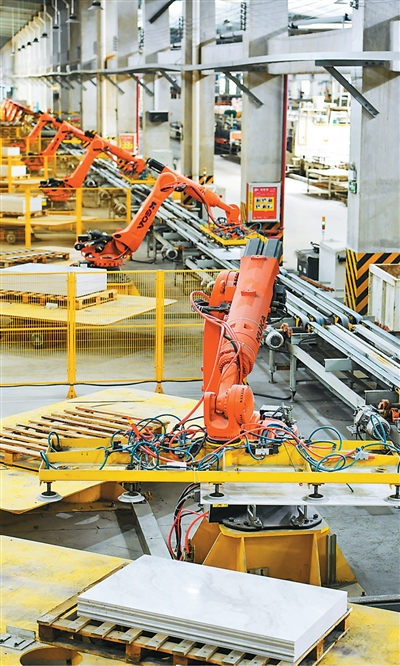
Core Insights - The article highlights the rapid advancement of automation and intelligent manufacturing across various industries in China, showcasing the integration of AI and digital technologies into traditional production processes [13]. Group 1: Automation in Manufacturing - Jiangxi Province's Weimei Ceramics Co., Ltd. has achieved fully digital and intelligent production on its automated ceramic production line [1]. - In Anhui Province, CRRC Puzhen Alstom Transportation Systems Co., Ltd. is manufacturing unmanned rail trains, indicating a shift towards autonomous transportation solutions [3]. - A toy manufacturing company in Yongzhou, Hunan Province, is utilizing automated production lines, reflecting the trend of automation in consumer goods manufacturing [11]. Group 2: Intelligent Mining and Resource Management - In Hainan Province, an unmanned mining truck is operating at a granite mining project, which is recognized as the most intelligent "AI + green smart mine" in the region [2]. - Shandong Province's Rongcheng City is accelerating the development of a new energy system that integrates nuclear, wind, and solar resources, indicating a strategic approach to resource management and industrial cultivation [5]. Group 3: Smart Factories and AI Integration - In Fujian Province, Shuangchi Technology's smart factory uses AI to match consumers' foot data with suitable shoe designs, demonstrating the application of AI in personalized manufacturing [7]. - In Heilongjiang Province, AI is employed for quality inspection in the manufacturing process at Harbin Boiler Factory, showcasing the role of AI in enhancing product quality [9]. - The "island-style" lean manufacturing factory by SAIC-GM-Wuling in Liuzhou, Guangxi, represents a breakthrough in traditional assembly line models, emphasizing innovative production methods [9]. Group 4: Industry Transformation and Policy Support - The 20th Central Committee of the Communist Party of China has outlined strategies to optimize traditional industries and foster emerging sectors, aligning with the ongoing trend of intelligent and green industrial transformation [13].