
硬科技

Search documents
基金早班车丨九成主动权益基金年内收益为正,逾千只净值刷新高
Sou Hu Cai Jing· 2025-08-08 00:49
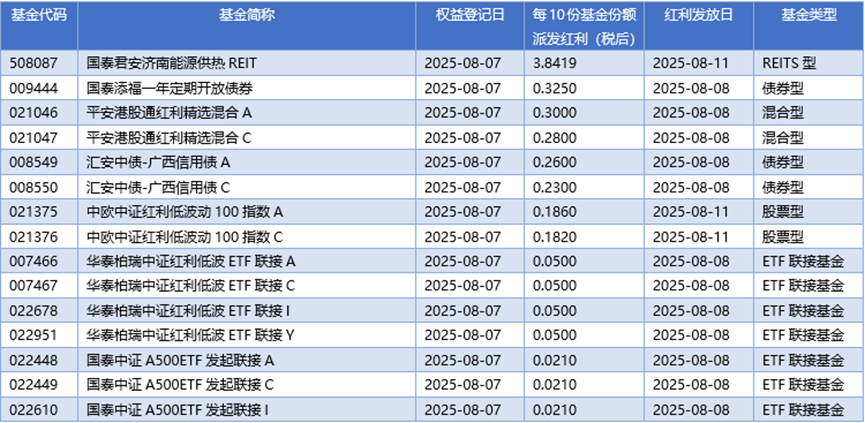
Market Overview - The A-share market has shown signs of recovery, leading to a strong rebound in actively managed equity funds, with over 90% of products seeing net value increases this year, and 1,126 funds reaching new highs since their inception [1][2] - As of August 7, the Shanghai Composite Index rose by 0.16% to 3,639.67 points, marking a new annual high, while the Shenzhen Component Index and the ChiNext Index experienced slight declines [1] Fund Performance - The year has seen significant performance divergence among actively managed equity funds, with top performers achieving returns close to 130%, while the worst performers faced declines exceeding 18% [2] - The leading sectors contributing to fund performance include innovative pharmaceuticals, hard technology, and new consumption, prompting many high-performing funds to limit purchases and new products to attract capital [2] Fund Issuance and Dividends - On August 7, 10 new funds were launched, primarily focusing on bond and equity types, with a notable fundraising target of 6 billion yuan for the CITIC Prudential Stable and Interest Rate Bond Fund [2] - A total of 15 funds declared dividends, with the highest payout being 3.8419 yuan per 10 shares from the Guotai Junan Jinan Energy Heating Closed Infrastructure Securities Investment Fund [2] Fund Registration Trends - The recovery in the A-share market has led to a surge in private securities product registrations, with 1,298 products registered in July alone, a month-on-month increase of 18%, marking a 27-month record [2] - Year-to-date, a total of 6,759 products have been registered, reflecting a year-on-year increase of 61.39%, with index-enhanced strategies seeing a 52% increase in registrations [2] Top Performing Funds - The best-performing fund on August 7 was the Qianhai Kaiyuan Hong Kong-Shenzhen Core Resource Mixed Fund C, with a daily growth rate of 5.2471%, followed closely by its counterpart A [4] - In the stock fund category, the top performer was the Huabao CSI Rare Metals Index Enhanced Fund A, with a daily growth rate of 2.3076% [5]

帮主郑重:龙虎榜惊现机构“假摔”大戏!三路主力暗度陈仓
Sou Hu Cai Jing· 2025-08-08 00:45
Core Viewpoint - The market experienced a divergence where the index rose while over 3000 stocks declined, indicating a strategic shift by institutional investors towards hard technology sectors like semiconductors and military equipment, while creating panic in sectors like innovative pharmaceuticals and photovoltaics [1] Group 1: Institutional Actions - Institutional investors engaged in a "fake drop" strategy, focusing on technology and military sectors as key investment areas [3] - Hongtian Co., Ltd. was a major target with a net purchase of 300 million, driven by three institutions betting on domestic semiconductor equipment replacement linked to SMIC's 7nm etching machine orders [3] - Dongfang Precision Engineering saw a net purchase of 200 million, with retail investor Chen Xiaoqun increasing holdings by 140 million, targeting humanoid robot reducers with production capacity extending to 2026 [4] - Northern Long Dragon experienced a net purchase of 27.99 million despite institutional sell-offs of 220 million, with retail investors countering the trend, supported by military drone orders [5] Group 2: Retail Investor Strategies - Retail investors aggressively locked in positions in rare earth permanent magnets and semiconductors, driven by policy and order dynamics [6] - In rare earth permanent magnets, retail investor Zhang Mengzhu sealed 23 million in Ningbo Yunsheng, amid rumors of countermeasures and a 12% increase in ore prices [6] - In semiconductors, retail investor "Zuoshu Xin Yi" sealed 35 million in Fuman Micro, with a breakthrough in 5G RF chip production linked to 80% of BYD's orders [7] Group 3: Market Dynamics and Recommendations - The market shows a significant disconnect between institutional and retail investor perceptions, with three strategies to identify "fake rallies" [9] - Volume analysis indicates that Hongtian Co., Ltd. had a shrinking volume with a 12.22% turnover rate, confirming its status as a true leader, while Ningbo Yunsheng showed insufficient closing orders, indicating a false rally [10] - Order verification reveals that Fuman Micro's production capacity extends to 2026 with a 45% gross margin, while Qianhong Pharmaceutical's net profit plummeted by 60%, suggesting speculative trading [10] - The net inflow into the semiconductor sector reached 4.467 billion, accounting for 20% of the entire market, indicating strong institutional interest [12]

ETF市场日报 | 稀土板块集体领涨!创新药相关ETF连续回调
Sou Hu Cai Jing· 2025-08-07 07:34
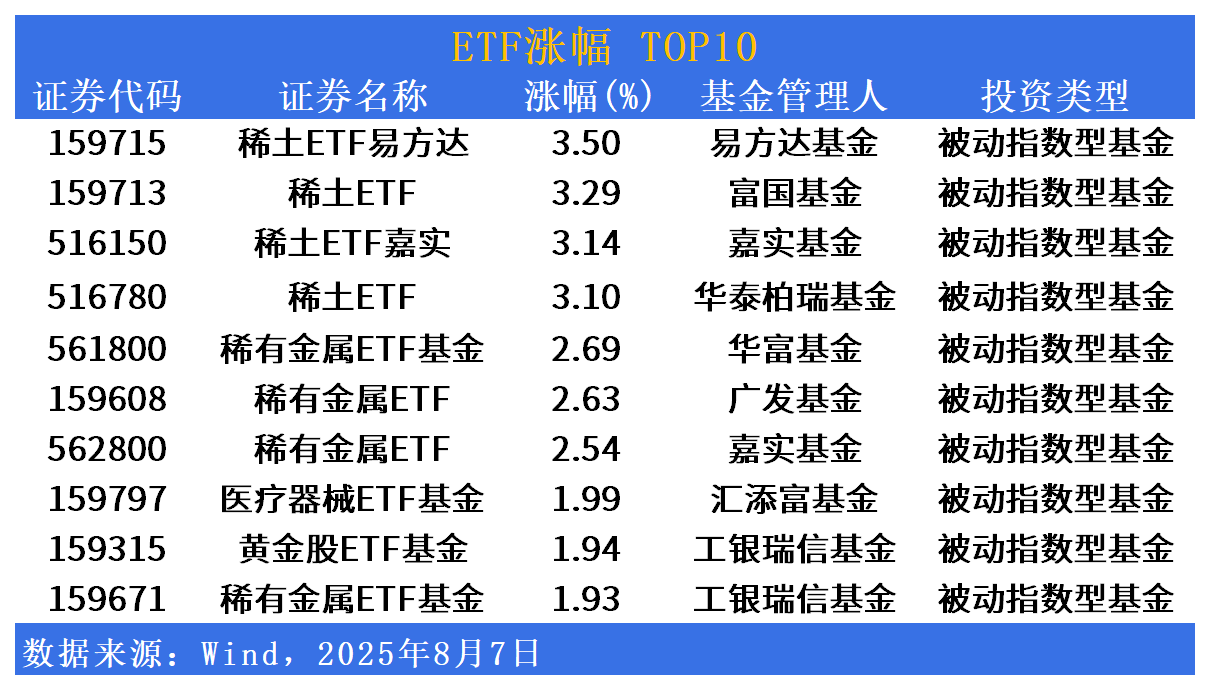
Market Overview - A-shares showed mixed performance with the Shanghai Composite Index reaching a new high for the year, closing up by 0.16%, while the Shenzhen Component Index and the ChiNext Index fell by 0.18% and 0.68% respectively [1] - The total trading volume in the Shanghai and Shenzhen markets reached 1.8255 trillion yuan [1] ETF Performance - The top-performing ETF was the Rare Earth ETF managed by E Fund (159715), which rose by 3.50%, followed by other rare earth ETFs with gains exceeding 3% [2] - The innovation drug sector experienced a decline, with the top ETF in this category, the Innovation Drug ETF managed by Huatai-PB, falling by 3.09% [5] Industry Insights - The global trade environment is changing, with the U.S. imposing a 25% tariff on Indian goods in response to India's import of Russian oil. Germany plans to establish a 100 billion euro fund focusing on key raw materials to ensure supply chain security [3] - The non-ferrous metals sector is expected to see continued price increases for rare earths and tungsten, supported by orderly competition in the energy metal industry [3] - The innovation drug sector is witnessing breakthroughs in payment mechanisms and internationalization, with over 100 drugs being submitted for inclusion in the national innovation drug catalog and a significant increase in BD transactions [5] Trading Activity - The Short-term Bond ETF (511360) had the highest trading volume at 24.789 billion yuan, followed by the Yinhua Daily Profit ETF (211880) and the Huabao Tianyi ETF (211990) with volumes exceeding 20 billion yuan [6] - The 5-Year Local Government Bond ETF (511060) had the highest turnover rate at 223%, indicating strong trading activity in this segment [7] New Listings - The Sci-Tech 200 ETF (589200) is set to launch, tracking the Sci-Tech 200 Index, which focuses on small-cap, liquid stocks from the Sci-Tech board, highlighting the development of China's capital market [8]
帮主郑重:半导体的三把火!资金暗战藏玄机,下午盯紧这条生死线!
Sou Hu Cai Jing· 2025-08-07 05:06
Group 1 - The semiconductor sector is experiencing a surge driven by policy support, technological advancements, and capital migration, with companies like 富满微 and 斯达半导 leading the charge [1][2] - The new semiconductor equipment tax rebate policy has been implemented, benefiting companies like 北方华创, which has orders extending to 2026 [1] - 中芯国际 has achieved a 90% yield on 7nm chips, indicating significant progress in the semiconductor industry [1] Group 2 - The market is showing signs of divergence, with a significant drop in the CRO sector and a mixed performance in small metals, highlighting the importance of military orders for companies like 云南锗业 [2][4] - The key resistance level for the market is around 3620 points, with substantial selling pressure from trapped and profit-taking investors [3][4] - Afternoon trading strategies suggest waiting for a clear breakout above 3620 points before making moves, focusing on semiconductor stocks and avoiding speculative plays [5][6]
当科技理想照进产业现实,解码ETF时代的投资法则
2 1 Shi Ji Jing Ji Bao Dao· 2025-08-07 03:07
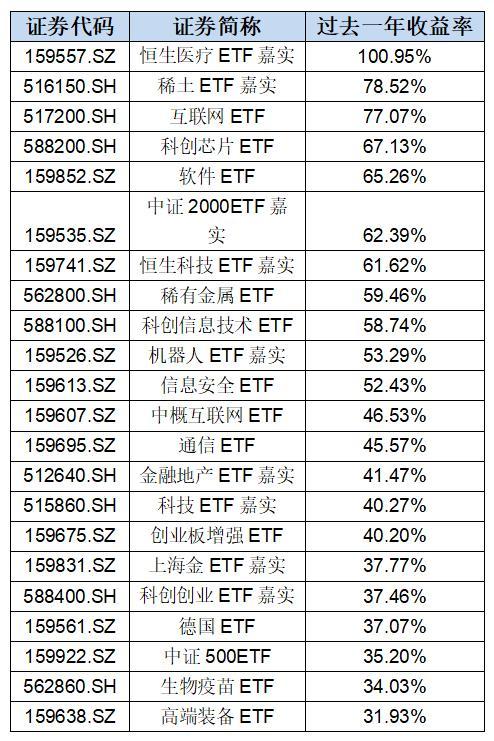
Core Insights - The proactive layout of ETFs by the company has shown effectiveness, particularly in the context of the AI era, emphasizing the combination of "hard technology + soft power" as a driving force for industry logic [1][2][3] - The company has established a comprehensive investment map focusing on four major directions: "Digital AI," "Self-Control," "Life Technology," and "Green Low-Carbon," indicating a strategic approach to future economic growth [4][5] ETF Performance - The Sci-Tech Chip ETF (588200) has become the leading ETF in the chip sector, demonstrating stronger explosive power during chip market rallies compared to its peers [2][3] - The Software ETF (159852), recognized as one of the ETFs with the highest AI application content, has grown to a scale of 5 billion yuan, making it the leading software ETF in the market [3][11] - Over the past year, several ETFs under the company have seen significant returns, with the Hang Seng Medical ETF achieving a return of 100.95% and the Sci-Tech Chip ETF returning 67.13% [6][7] Investment Opportunities - The rapid advancements in foundational AI models and the flourishing of AI applications are creating new investment opportunities, particularly in software, which is becoming a profit center [3][4] - The company has identified that without chips, AI lacks its essence, and without software, AI cannot function effectively, highlighting the interdependence of these sectors [3][4] Market Trends - The total scale of domestic ETFs has reached 4.64 trillion yuan, with 1,234 products available, indicating a growing market for ETF investments [8] - The company has introduced innovative tools like the "Super Jia Bei" index investment tool to help investors navigate the complex ETF landscape and select suitable products [8][9] Strategic Focus - The company emphasizes a deep understanding of industry dynamics to identify enterprises with genuine technological breakthrough potential, rather than merely chasing market trends [4][5] - The focus on "self-control" aligns with national economic security and industrial safety, while the "green low-carbon" strategy responds to the national dual carbon goals [5][12]
中泰国际每日晨讯-20250807
ZHONGTAI INTERNATIONAL SECURITIES· 2025-08-07 02:42
Market Overview - On August 6, the Hang Seng Index experienced a slight increase of 0.03%, closing at 24,910 points, with the Hang Seng Tech Index rising by 0.2% to 5,532 points[1] - The total market turnover was HKD 215.2 billion, indicating a gradual decrease in trading activity this week but still maintaining an active level[1] - Net inflow from the Hong Kong Stock Connect was HKD 9.4 billion[1] Sector Performance - The cyclical sectors surged due to "anti-involution" policies, with Morningstar Paper (1812 HK) and Nine Dragons Paper (2689 HK) both rising by 10.8%[1] - Technology stocks showed mixed performance; Tencent (700 HK) rose by 1.7%, while Alibaba (9988 HK) increased by 0.6%, but Meituan (3690 HK) and Baidu (9888 HK) fell[1] - Airline stocks faced significant pressure after Cathay Pacific (293 HK) reported a 9.7% drop in performance[1] Economic Indicators - The U.S. ISM Non-Manufacturing Index unexpectedly fell to 50.1 in July, indicating a slowdown in service sector growth, with new orders showing minimal growth and employment continuing to decline[3] - Rising costs were highlighted, with raw material and service price indicators reaching their highest levels since October 2022, reflecting the impact of tariff uncertainties on supply chains[3] Real Estate Market - In the week ending August 3, the transaction volume of new homes in 30 major cities fell to 161 million square meters, a year-on-year decline of 17.7%[5] - The cumulative transaction volume of new homes in first-tier cities showed a mixed trend, with Beijing down 1.9% and Guangzhou up 14.2% year-on-year[6] Policy Outlook - The Central Political Bureau emphasized the need for sustained macroeconomic policies, including proactive fiscal measures and moderately loose monetary policies, to enhance economic recovery[9] - The real estate sector is expected to benefit from upcoming specific measures aimed at promoting housing demand and inventory reduction[12]
帮主郑重:七部门新政引爆三大资本战场!中长线布局黄金期已至
Sou Hu Cai Jing· 2025-08-06 16:51
Core Insights - The document outlines a significant policy initiative titled "Guiding Opinions on Financial Support for New Industrialization," which aims to create investment opportunities in specific sectors over the next three years [1] Policy Framework - Financial support will be directed towards "hard technology" sectors, with banks providing dedicated credit plans for manufacturing, particularly in critical areas like integrated circuits and industrial mother machines [3] - Companies in key technology sectors will benefit from expedited listing processes and debt issuance, enhancing their access to capital [3] Key Investment Areas - **High-end Equipment Manufacturing**: The domestic production rate of five-axis CNC machine tools has increased from 12% to 37%, with companies like Kede CNC securing high-margin military contracts [3] - **Green Energy Revolution**: The capital requirement for wind and solar storage projects has been reduced, with financing costs dropping to 3.8%. Companies like Longi Green Energy have received significant credit lines [3] - **Digital Economy Infrastructure**: Long-term loans are available for 5G network construction, with companies like ZTE signing numerous smart factory projects [3] Investment Strategy - Investors are advised to focus on companies with genuine technological advancements rather than those merely riding on trends. For instance, Kede CNC and Zhongwang Software are highlighted for their strong market positions [4] - Companies should demonstrate robust financial performance, with net profit growth exceeding 30% and gross margins above 40% to qualify as solid investment targets [4] Long-term Outlook - A mature financial support system is expected by 2027, indicating a period of order surges from 2024 to 2025, followed by profit realization from 2026 to 2027 [5]
合理资本开支护航硬科技上市公司发展
Zheng Quan Ri Bao· 2025-08-06 16:26
Core Viewpoint - The development of hard technology listed companies is crucial for innovation and economic growth, with capital expenditure being a key component of their development strategy, supporting sustainable growth [1][2]. Group 1: Impact of Capital Expenditure - Capital expenditure is essential for acquiring long-term assets such as land, buildings, and equipment, which provide economic benefits over multiple accounting periods [1]. - Reasonable growth in capital expenditure positively impacts hard technology listed companies by enabling them to expand production capacity, enhance R&D capabilities, and optimize asset structures, ultimately improving future revenue expectations and valuation [1][2]. Group 2: Expansion of Production Capacity - Increased capital expenditure allows companies, particularly in the AI sector, to invest in R&D, expand core teams, and accelerate the iteration of AI models in response to growing market demand [1]. - By optimizing supply chains and establishing long-term partnerships with suppliers, companies can reduce hardware procurement and computing costs, leading to a positive cycle of scale effects, price advantages, and increased market share [1]. Group 3: Enhancement of R&D Capabilities - Continuous investment in R&D through capital expenditure enables hard technology companies to acquire advanced research equipment and attract high-end talent, accelerating the launch of new technologies and products [2]. - For instance, companies in the artificial intelligence field can develop smarter and more efficient models by allocating capital towards high-performance computing and algorithm development [2]. Group 4: Optimization of Asset Structure - The rapid evolution of the technology sector necessitates that companies keep pace with industry trends by strategically acquiring assets and phasing out outdated technologies [2]. - For example, communication equipment manufacturers that invest in 5G-related technologies and equipment can quickly adjust their asset structures to seize new market opportunities [2]. Group 5: Decision-Making in Capital Expenditure - While capital expenditure is vital, it also carries risks; companies must establish rigorous decision-making mechanisms to understand industry trends, market demands, and competitor dynamics [2]. - A thorough evaluation of investment projects' feasibility and potential returns is essential for the healthy and long-term development of hard technology listed companies [2].
机器人行情回归,科创板延续涨势,关注科创板50ETF(588080)等产品投资机会
Sou Hu Cai Jing· 2025-08-06 12:46
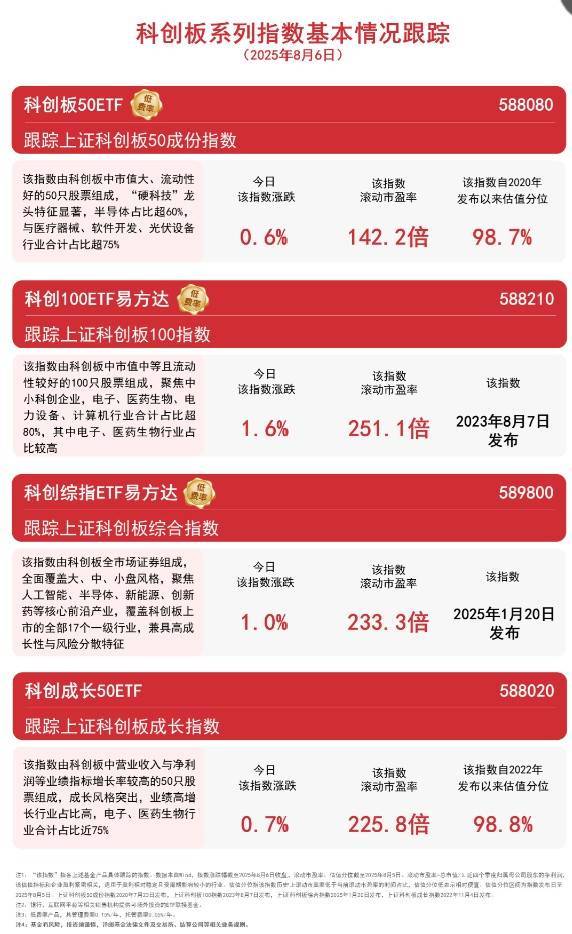
Group 1 - The STAR Market showed strong performance today, with significant gains in robotics and 3D printing concept stocks [1] - The STAR 100 Index increased by 1.6%, the STAR Composite Index rose by 1.0%, the STAR Growth Index went up by 0.7%, and the STAR 50 Component Index climbed by 0.6% [1] Group 2 - The STAR 50 ETF tracks the STAR 50 Component Index, which consists of 50 large-cap and liquid stocks, with over 60% in semiconductors and more than 75% in semiconductor, medical devices, software development, and photovoltaic equipment [2] - The STAR 100 ETF follows the STAR 100 Index, focusing on 100 medium-cap stocks, with over 80% in electronics, pharmaceuticals, electrical equipment, and computers, particularly high representation in electronics and pharmaceuticals [2] - The STAR Composite ETF covers the entire STAR market, focusing on core industries such as artificial intelligence, semiconductors, new energy, and innovative pharmaceuticals, encompassing all 17 primary industries listed on the STAR Market [2] - The STAR Growth 50 ETF tracks the STAR Growth Index, which includes 50 stocks with high growth rates in revenue and net profit, with nearly 75% in electronics and pharmaceuticals [2]

【西街观察】 开户热是对A股的信心投票
Bei Jing Shang Bao· 2025-08-05 14:55
Group 1 - The number of new A-share accounts reached 1.9636 million in July 2025, a year-on-year increase of 70.5% compared to 1.1514 million in July 2024, and a month-on-month increase of 19.27% from 1.6464 million in June 2025, indicating strong investor confidence in the capital market [1] - The A-share market has shown characteristics of stability and activity, with major indices steadily rising since mid-April, and the daily trading volume consistently exceeding 1 trillion yuan, reflecting a positive market environment [1] - Economic factors such as high-quality development, macro policy expectations, and asset valuation recovery provide a solid foundation for maintaining a stable and healthy market, boosting investor confidence [1] Group 2 - The emergence of innovative sectors such as pharmaceuticals, semiconductors, artificial intelligence, and low-altitude economy is contributing to the optimization of economic structure during the transformation and upgrading process, enhancing the appeal of Chinese tech assets [2] - The implementation of new policies, including the "National Nine Articles" and the capital market "1+N" policy documents, has effectively promoted long-term capital inflow, public fund reforms, and significant breakthroughs in capital market reforms [2] - The dual enhancement of listed company quality and investment value has increased the attractiveness of A-shares to new investors, with stricter regulations ensuring higher quality listings and encouraging companies to increase dividend payouts [3] Group 3 - The low interest rates on bank deposits have made high-dividend and stable profit assets in the capital market more appealing, leading to a potential shift of funds from savings to stock investments [3] - The surge in new account openings reflects the actual actions of investors, indicating their confidence in the investment value of the A-share market [3]