低利率时代

Search documents
低利率时代,如何积累资产,打造无限现金流?| 螺丝钉带你读书
银行螺丝钉· 2025-07-26 13:44
Core Viewpoint - The article emphasizes the strategy of using income to purchase assets and utilizing the cash flow from those assets to cover expenses, ultimately aiming for financial freedom [3][4][11]. Group 1: Cash Flow Demand and Investment Trends - Low interest rates have increased the demand for cash flow assets, a trend observed in regions like Japan and Hong Kong [4][5]. - In many countries, deposits are the largest financial asset, with China's RMB deposits exceeding 300 trillion [6][7]. - As deposit interest rates decline, investors seek alternative cash flow-generating assets, leading to better performance in dividend stocks, REITs, and fixed-income products post-2023 [11]. Group 2: Common Cash Flow Assets - Common cash flow assets include: 1. Dividend index funds, with many offering yields over 4%, significantly higher than deposit rates [12]. 2. REITs, which invest in commercial real estate and distribute approximately 90% of rental income as dividends [32][33]. 3. Other cash flow sources such as insurance policies, rental income from multiple properties, and stable salary income [35][37]. Group 3: Building Infinite Cash Flow - To create an "infinite cash flow," one should: 1. Identify and invest in undervalued cash flow assets when their yields are high [39]. 2. Use income to purchase these assets, thereby increasing the asset base and cash flow over time [40][42]. 3. Utilize the cash flow from these assets to cover household expenses, aiming for financial independence [43][45]. Group 4: Real Estate Considerations - In the context of China's unique market, many families have invested in real estate during bullish periods but face challenges in bear markets [48][50]. - Understanding how to manage real estate cash flow during downturns is crucial for building a more resilient cash flow strategy [51].


保险的重磅新闻落地了
表舅是养基大户· 2025-07-25 13:01
Group 1 - The core viewpoint of the article highlights the recent fluctuations in the A-share market, particularly the rise of AI-related stocks and the decline of the hydropower engineering sector due to shifting investor focus ahead of an AI conference in Shanghai [1] - The insurance industry is facing a significant change as the insurance association has officially lowered the preset interest rates, with new rates set to take effect on September 1, where the maximum preset rate for ordinary life insurance is 2%, for participating insurance is 1.75%, and for universal insurance is 1% [4][11] - The article discusses the ongoing trend of low interest rates, predicting that the key rates will continue to decline, which has been a foundational basis for many investment decisions this year [6][9] Group 2 - The impact of the insurance preset rate reduction is expected to lead to a "buy before the price increase" phenomenon, but the article expresses skepticism about a significant surge in new policy sales due to already low preset rates and market saturation [11] - Insurance companies are likely to increase the sales of participating insurance products as the difference in interest rates between traditional life insurance and participating insurance narrows [12] - The article notes that the pressure on small and medium-sized insurance companies will increase, as lower preset rates reduce customer attraction and intensify competition from other financial products [12][13] Group 3 - The article mentions that the trend of concentration among leading insurance companies will strengthen as the industry adapts to the new interest rate environment, with significant capital flows into leading insurance firms reflected in the performance of related ETFs [13][14] - The article highlights the recent net inflow of over 800 billion into Hong Kong stocks, indicating strong demand from investors despite market volatility [17] - The public fund industry has seen a turning point with a notable increase in the share of mixed funds, suggesting a potential shift in investor sentiment towards active equity investments [18]

红利港股ETF(159331)盘中迎净流入!低利率时代,关注可月月评估分红的红利港股ETF(159331)
Mei Ri Jing Ji Xin Wen· 2025-07-25 05:35
Group 1 - The core viewpoint of the news is that the Dividend Hong Kong Stock ETF (159331) is experiencing significant net inflows, indicating strong investor interest in dividend-paying assets amid a low interest rate environment [1] - The ETF tracks the Hong Kong Stock Connect High Dividend Index, which includes 30 high dividend yield securities from Hong Kong-listed companies that meet liquidity and continuous dividend criteria [1] - The index focuses on quality companies with stable dividend capabilities, primarily in traditional sectors such as real estate and energy, reflecting the overall performance of high dividend securities in the Hong Kong market [1] Group 2 - The Dividend Hong Kong Stock ETF (159331) has distributed dividends for 11 consecutive months since its launch, making it an attractive option for investors seeking regular income [2] - Investors without stock accounts can consider related funds such as the Cathay CSI Hong Kong Stock Connect High Dividend Investment ETF Initiated Link A (022274) and Link C (022275) [2] - The fund's distribution principles allow for monthly evaluations of excess returns relative to benchmarks, enabling cash distributions when certain performance criteria are met [3]
日本Seven银行们的颠覆性启示:谁来拯救低利率时代?
3 6 Ke· 2025-07-25 04:14
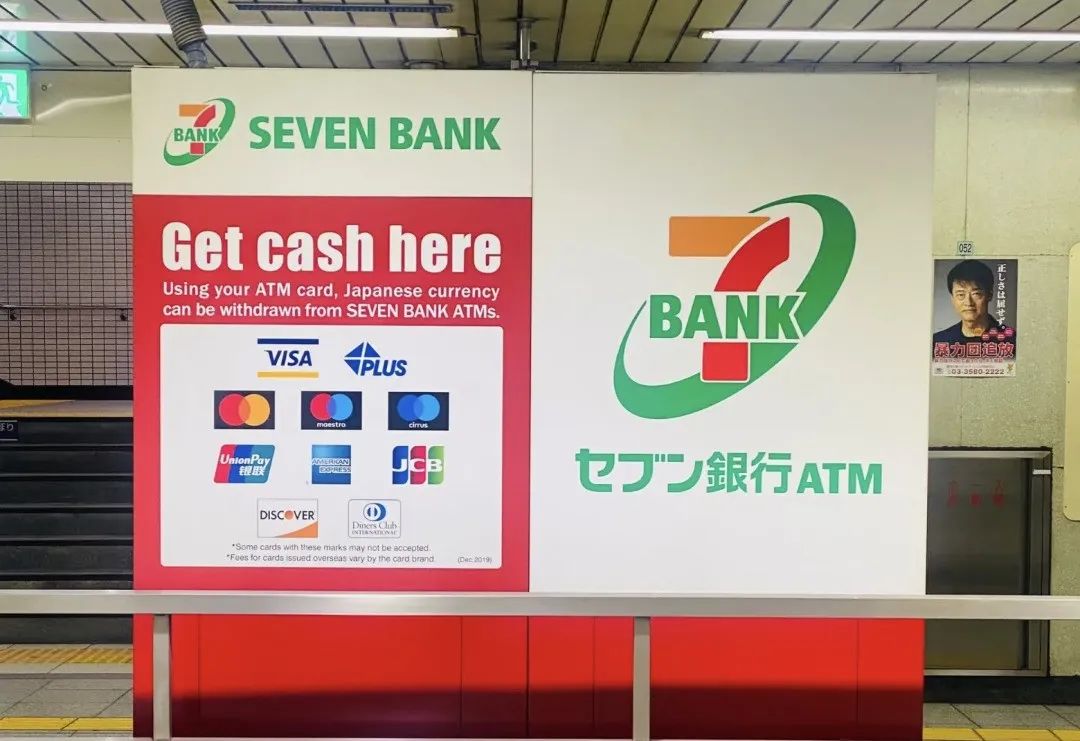
Core Viewpoint - The Bank of Japan has ended its eight-year negative interest rate policy, raising the benchmark rate from -0.1% to a range of 0%-0.1%, yet the banking sector continues to face long-term low-interest challenges [1] Group 1: Japanese Banking Sector Challenges - Japan's net interest margin (NIM) has remained below 1% since the 1990s, with an average NIM of approximately 0.6%-0.8% in 2024, significantly lower than the U.S. banking sector's 2.6%-3.2% and China's 1.5%-1.6% [1] - The challenge for global banking is to create value in a low-interest environment, as highlighted by the case of Seven Bank [1] Group 2: Seven Bank's Unique Model - Seven Bank, controlled by convenience store giant 7-11, has successfully embedded ATMs in over 30,000 stores, creating a financial service network within a "3-kilometer living circle" [2] - The cost structure of Seven Bank's ATMs is significantly lower, with operational costs reduced to 40,000 yen per unit compared to 120,000 yen for traditional banks, resulting in total operational costs being only 30%-40% of traditional banks [2] Group 3: Transaction Frequency and Revenue Growth - Seven Bank's ATMs have an average daily transaction volume exceeding 100, with peak hours accounting for 35% of transactions, leading to a rise in fee income from 12% in 2010 to 38% in 2024, surpassing the average of 18%-20% in the Japanese banking sector [3] - The bank's cross-subsidy model, allowing customers to redeem convenience store points for banking fees, has increased customer visit frequency from 0.8 to 3.2 times per month [4] Group 4: Adaptation to Aging Population - Seven Bank initiated a "zero-step outlet" plan in 2015 to cater to Japan's aging population, featuring adjustable counter heights and simplified transaction processes [6] - These adaptations have resulted in a 78% usage rate among elderly customers and a 31% increase in their assets under management (AUM) [7] Group 5: AI and Service Efficiency - Mizuho Bank's hybrid service model combines AI and human agents to enhance customer service efficiency, reducing wait times from 8 minutes to 2 minutes while only increasing labor costs by 12% [7] - Mitsubishi UFJ's "family financial advisor" model integrates family account information to provide tailored financial products, increasing account penetration rates significantly [9] Group 6: Implications for Chinese Banking - China's banking sector is experiencing a decline in NIM, projected to fall to 1.40%-1.43% by mid-2025, narrowing the gap with Japan's NIM [11] - Chinese banks face challenges such as excessive focus on physical branches and fragmented technology investments, which hinder their ability to create a cohesive ecosystem [12] Group 7: Strategic Opportunities for Chinese Banks - Chinese banks can adopt localized models similar to Seven Bank by partnering with chain supermarkets to create a "15-minute financial service circle" [13] - Implementing tiered AI services can cater to different age demographics, while a points system for purchasing retirement financial products can create a financial-consumption-elderly care loop [15] Group 8: Future Directions in Technology - The deployment of low-cost sensors for real-time monitoring of branch traffic and service peaks can optimize resource allocation [16] - Introducing multifunctional robots in branches can streamline standard inquiries and guidance [17] - Exploring brain-computer interface technology for enhancing customer experience through emotion recognition can be a forward-looking strategy [18] Conclusion - The practices of the Japanese banking sector illustrate that in a low-interest environment, monopolistic scenarios, technological penetration, and ecosystem collaboration will form a new competitive triangle, presenting a strategic opportunity for Chinese banks to shift from a scale-oriented to a value-oriented approach [19]

低利率时代海外养老金投资策略专题:低利率下美国养老金如何投资?
Hua Yuan Zheng Quan· 2025-07-24 09:55
Core Insights - The report discusses the investment strategies of U.S. pensions during low interest rate periods, highlighting the significant shifts in asset allocation in response to economic shocks and changing market conditions [2][5][9] - It emphasizes the importance of diversifying investments into alternative assets such as private equity, real estate, and infrastructure to enhance returns and mitigate risks in a low yield environment [2][78] Group 1: Low Interest Rate Environment - The U.S. has experienced two notable low interest rate periods: from January 2009 to December 2015 and from March 2020 to March 2022, characterized by federal funds rates below 0.3% and 0.2% respectively [5][9] - During these periods, the U.S. pension system, particularly the second pillar, saw significant changes in asset allocation, with a notable increase in bond and mixed fund investments [2][9] Group 2: U.S. Pension Structure - As of Q1 2025, the total scale of the U.S. pension system reached $44.1 trillion, with the second pillar (employer-sponsored plans) being the largest component at $24.2 trillion [9][12] - The second pillar consists of Defined Benefit (DB) plans and Defined Contribution (DC) plans, with the latter growing in prominence over the past three decades [12][18] Group 3: DC Plan Investment Characteristics - DC plans have maintained a core allocation to equity funds, with significant increases in mixed and bond fund allocations during economic downturns [21][23] - The report notes that during the early stages of economic shocks, DC plans rapidly increased their bond fund allocations, reflecting a shift towards safer assets [23][24] Group 4: DB Plan Investment Characteristics - The New York State Common Retirement Fund and Texas Teacher Retirement System are highlighted as examples of DB plans that have adjusted their asset allocations in response to low interest rates [43][66] - The New York fund has maintained a stable allocation to fixed income while increasing exposure to alternative investments, whereas the Texas fund has significantly increased its allocation to private equity and real estate [44][70] Group 5: Investment Implications - The report concludes that in low interest rate environments, U.S. pensions should focus on increasing allocations to fixed income and alternative investments to enhance portfolio resilience and returns [78]
德邦基金固收投资总监邹舟:低利率时代,以精耕细作博弈超额收益
Sou Hu Cai Jing· 2025-07-24 01:20
Core Viewpoint - In the current macroeconomic environment, fund managers must maintain objective and calm investment decisions amidst market noise and emotional fluctuations, emphasizing the importance of logical reasoning and client-centric approaches [1][3]. Group 1: Investment Strategy - The investment framework for fixed income must transition from a coarse management approach to a more refined one due to the ongoing low interest rate environment and scarcity of quality assets [4]. - The investment framework is summarized as "three bowls of noodles": macro fundamentals, market policy, and micro sentiment [4]. - The era of achieving considerable returns through a few major market movements is over; higher frequency tracking and precise judgment are now essential for generating excess returns [4][6]. Group 2: Client Orientation - The focus on client needs requires balancing relative and absolute returns, with absolute returns being the core investment demand [6]. - A multi-strategy framework is employed in investment portfolios, aiming to secure more return opportunities across different market phases [6]. - Liquidity management and drawdown control are tailored to the product's positioning and the risk tolerance of the liability side [6]. Group 3: Market Outlook - The overall direction of the bond market remains positive, supported by a loose monetary policy and the need for economic transition towards high-quality development [9]. - Various pure bond investment targets, such as credit bonds, interest rate bonds, and local government bonds, are expected to present good investment opportunities in the second half of the year [9]. - Convertible bonds are highlighted as valuable due to their fixed income characteristics and potential for capital appreciation, which can enhance portfolio returns while mitigating overall risk [10].

从国际到本土:物价低迷应对策略及中国趋势分析—低利率时代系列(七)
Soochow Securities· 2025-07-23 09:18
Group 1 - The report highlights that in the first half of 2025, China's CPI averaged -0.1% year-on-year, and PPI averaged -2.8%, indicating a downward trend compared to the second half of 2024 [3][19] - The report emphasizes that while China is not in a "deflation" situation, the low interest rate and low price environment necessitates analyzing how other economies have responded to deflationary pressures [19][4] - The report outlines that deflation is characterized by a continuous decline in money supply and prices, leading to economic recession, and is self-reinforcing through a "debt-deflation" cycle [20][21] Group 2 - The report discusses Japan's response to deflation from 1999 to 2003, where it implemented large-scale fiscal expansion and introduced a 2% inflation target alongside quantitative easing [26][29] - The report also details the U.S. response during the 2008 financial crisis, which included aggressive monetary policy easing and fiscal measures such as tax rebates and support for struggling companies [47][57] - The report predicts that China's inflation may see a mild recovery in the second half of 2025, while PPI is expected to remain low but with a narrowing decline [4][8] Group 3 - The report analyzes the structure of CPI, noting that high-weight categories such as food and housing are experiencing price declines, which significantly suppresses overall CPI [5][80] - It highlights that the PPI structure shows a significant impact from production materials, which account for approximately 75.34% of PPI, with energy and raw materials experiencing substantial price drops [4][85] - The report indicates that despite policies aimed at stimulating consumption, the transmission of these policies to price increases has been limited due to structural issues in the economy [74][84]
低利率时代,“红利月月享”如何破解资产荒?
Sou Hu Cai Jing· 2025-07-23 05:46
Core Viewpoint - The current low interest rate environment has led to an "asset shortage," prompting investors to seek alternative investment opportunities, with dividend-focused assets emerging as a viable solution [1][2]. Group 1: Investment Environment - The continuous decline in deposit interest rates due to multiple rate cuts by the central bank has diminished the attractiveness of traditional savings [2]. - Dividend indices currently offer yields above 4%, positioning them as core tools to replace traditional fixed-income investments in the context of economic transformation and high household savings [2]. Group 2: Dividend ETF Strategy - The "Monthly Dividend Enjoyment" combination, consisting of three dividend ETFs, allows for diversified market exposure and style variation, with a unique design for dividend distribution that enables monthly payouts [1][5]. - The combination includes the Dividend Value ETF, the Hang Seng Dividend Low Volatility ETF, and the Dividend Low Volatility ETF, which collectively enhance stability and risk diversification while aiming for improved returns [5]. Group 3: Performance Metrics - Historical backtesting shows that an equal-weighted holding of the three dividend indices results in lower volatility and maximum drawdown compared to holding a single index [5]. - The annualized returns for the Dividend Value ETF, Hang Seng High Dividend Low Volatility Index, and Dividend Low Volatility ETF are 12.5%, 18.1%, and 13.1% respectively, with an overall equal-weighted return of 14.6% [5].
券商资管系公募,排名来了!
Zhong Guo Ji Jin Bao· 2025-07-22 16:15
Core Insights - The latest public fund reports reveal significant growth in the asset management scale of brokerage firms, with top firms exceeding 100 billion yuan in management scale [2][3]. Group 1: Asset Management Scale - As of the end of Q2 2025, four brokerage asset management firms have surpassed 100 billion yuan in public fund assets, with Dongfanghong Asset Management leading at 179.84 billion yuan [3][4]. - Other top firms include Huatai Securities Asset Management at 165.11 billion yuan, Zhongyin International Securities at 130.31 billion yuan, and Caitong Securities Asset Management at 113.61 billion yuan [3][4]. - Compared to the end of Q1 2025, the asset management scale of leading brokerage firms has generally increased, with Dongfanghong and Huatai Securities both growing by over 20 billion yuan [3]. Group 2: Fund Manager Performance - In the first half of the year, the A-share market was active, leading to strong performance from equity fund managers, with notable net value increases in their products [5]. - For instance, the Dongfanghong Medical Upgrade Stock Fund managed by Jiang Qi saw a net value growth of 44.55% in the first half of the year, reaching a new high since its inception [5][6]. - Fund managers are optimistic about the innovation drug sector, with strategies focusing on biopharmaceuticals and increased allocations to innovative drugs in the Hong Kong and STAR markets [6]. Group 3: Market Outlook - Fund managers express a positive long-term outlook, citing the transition to a low-interest-rate environment and the potential for wealth to shift from savings to equity assets [6]. - The anticipated economic slowdown may lead to a systematic increase in return on equity (ROE), supporting a long-term bullish trend in Chinese assets [6]. - The performance of certain cyclical industries has been mixed, but overall macroeconomic sentiment remains optimistic [7].

券商资管系公募,排名来了!
中国基金报· 2025-07-22 16:05
Core Viewpoint - The article discusses the recent disclosure of public fund second-quarter reports by securities asset management firms, highlighting the growth in asset management scale and insights from fund managers [2][3]. Group 1: Asset Management Scale - As of the end of Q2 2025, four securities asset management firms have surpassed a public fund asset management scale of 100 billion yuan, with Dongfanghong Asset Management leading at 179.84 billion yuan, followed by Huatai Securities Asset Management at 165.11 billion yuan, and Zhongyin Securities at 130.31 billion yuan [4]. - Compared to the end of Q1 2025, the top securities asset management firms have generally experienced growth in public fund management scale, with Dongfanghong and Huatai Securities increasing by over 20 billion yuan each, and招商证券 growing by 3.3 billion yuan [4]. Group 2: Fund Manager Insights - The A-share market has been active in the first half of the year, with securities asset management fund managers generally reporting good performance and rising product net values [6]. - Jiang Qi, the fund manager of Dongfanghong Medical Upgrade Stock A, reported a net value increase of 44.55% in the first half of the year, reaching a new high since its inception [7]. - Jiang Qi maintains a high stock position of 90.37% and has increased allocations to innovative drugs in the Hong Kong and Sci-Tech Innovation Board markets, indicating a strong belief in the growth of the innovative drug sector [7]. - Zhou Yun, managing the Dongfanghong JD Big Data Mixed Fund, noted a net value increase of 6.55% in the first half of the year, emphasizing the long-term impact of low interest rates and the shift of household wealth towards equity assets [8]. - Jiang Cheng, Deputy General Manager of Zhongtai Asset Management, reported that his product's net value has increased over 108% in the past five years, while expressing a cautious outlook on individual stocks despite a generally optimistic macroeconomic view [9][10].