文化出海

Search documents
“文化出海”视域下高校语言类专业教学改革的三重使命
Xin Hua Ri Bao· 2025-11-18 00:02
Core Perspective - Cultural export is not only an important engine for enhancing the economic value of the cultural industry but also a global practice for the modern transformation of Chinese civilization [1] Group 1: Language and Cultural Transmission - Language plays a crucial role as a hub for translation and dissemination in cultural export, serving as a deep carrier of cultural values, thinking patterns, and aesthetic experiences [2] - The dual challenges of "translatability" and "perceptibility" must be addressed for Chinese culture to truly integrate into the global context, particularly regarding traditional concepts that lack direct Western equivalents [2] - Language programs in universities should develop classroom models focusing on "cultural symbols," "emotional narratives," and "value consensus" to enhance cultural transmission [2] Group 2: Educational Transformation and Curriculum Innovation - Cultural export drives the transformation and upgrading of language disciplines, necessitating a new set of professional skills and competencies for talent development [3] - Traditional language education often emphasizes systematic knowledge and basic skills, while neglecting cross-cultural communication, digital technology application, and overseas cultural project management [3] - Universities should foster students' proficiency in digital tools and encourage project-based practices to digitize, translate, and creatively disseminate traditional cultural resources [3] Group 3: Dual Empowerment and Technological Integration - A new model of dual empowerment should be explored, integrating digital humanities and artificial intelligence to promote the modern transformation of traditional cultural resources [4] - Effective feedback mechanisms should be established to ensure that overseas audience preferences are communicated back to local creative processes, facilitating a positive interaction between cultural production and dissemination [4] - Digital technologies provide new research paradigms for traditional culture, enabling the construction of systematic cultural knowledge graphs and enhancing the expression and dissemination of traditional culture through AI [4][5]
第五届中华老字号创新发展大会举办
Zhong Guo Jing Ji Wang· 2025-11-14 00:29
Core Insights - The article emphasizes the significance of traditional Chinese brands, known as "Chinese Time-honored Brands," which embody the essence of Chinese culture and have evolved through innovation over centuries [1][2]. Group 1: Current Status of Chinese Time-honored Brands - The Ministry of Commerce has recognized a total of 1,450 Chinese Time-honored Brands [2]. - Recent events, such as the International Exchange Activity and the Fifth Innovation Development Conference, have brought together representatives from various brands to explore new paths for innovation and collaboration [2]. Group 2: Commitment to Craftsmanship - The enduring success of Time-honored Brands is attributed to their commitment to craftsmanship and cultural heritage, which are closely linked to the nation's economy and people's livelihoods [3]. - Brands like Liu Bi Ju and Tong Ren Tang exemplify this commitment through their dedication to quality and ethical practices [3]. - Dong'e Ejiao has maintained its unique production techniques for nearly 3,000 years, emphasizing the importance of preserving traditional methods while modernizing [3]. Group 3: Innovation and Market Adaptation - Time-honored Brands are actively adapting to market demands by embracing innovation, targeting younger consumers, and leveraging digital technologies [4][5]. - Dong'e Ejiao has successfully transformed its image from an "elderly brand" to a trendy national brand by collaborating with popular tea brands and launching products that appeal to younger audiences [5][6]. - China Tea Company has focused on optimizing product flavors and modernizing packaging to attract younger consumers [6]. Group 4: Digital Transformation - The digital transformation of Time-honored Brands is crucial for their evolution, with Dong'e Ejiao achieving a digitalization level that meets the highest standards [6]. - The online business of Dong'e Ejiao now accounts for nearly 30% of its overall operations, showcasing the impact of digital strategies [6]. - China Tea Company is implementing digital controls across the entire supply chain, from cultivation to processing [7]. Group 5: Cultural Export and Global Reach - Time-honored Brands are becoming important vehicles for cultural export, with Tong Ren Tang expanding its presence globally since the 1990s [7]. - Dong'e Ejiao has participated in international conferences to promote traditional Chinese medicine, indicating a growing acceptance of Chinese culture abroad [7]. - China Tea Company aims to share Chinese culture through tea, enhancing global consumer experiences with Chinese lifestyle and values [7].

中金 | 深度布局“十五五”:传媒篇
中金点睛· 2025-11-14 00:18
Group 1: Core Insights - The article emphasizes the importance of a favorable policy environment in fostering a new content cycle in the cultural industry, particularly in gaming and long-form video content [2][3] - It highlights the need for continuous innovation in high-quality content to retain users on long video platforms, with a focus on flexible funding and creative energy [2][3] - The article predicts that the period from 2026 to 2028 will be crucial for content innovation and mechanism optimization in the industry [3] Group 2: AI Integration - AI is entering a new stage of development, promoting deep integration with various industries, including media, where significant breakthroughs in AI applications are expected by 2025 [6] - The article outlines specific areas of AI application, including film and television, gaming, advertising, and social media, where AI is enhancing efficiency and commercial viability [6][7] - It anticipates that as AI technology matures, there will be a shift towards highly automated content generation across multiple sectors, leading to increased user engagement and monetization [7] Group 3: Cultural Export - The article discusses the trend of "cultural export," where Chinese cultural products are increasingly tailored for global markets, moving from generic content to high-quality, culturally rich offerings [9] - It notes that leading companies in the gaming sector are achieving global distribution success, while web literature and short dramas are also adapting to local markets through translation and localization efforts [9] - The integration of AI is expected to further enhance the scalability of cultural exports, allowing for more efficient production and distribution [9] Group 4: IP Economy - The article highlights the growing demand for high-quality, serialized content, driving the IP economy, which involves monetizing intellectual property through various media and product forms [11] - It observes that content IP companies are increasingly focusing on strategic IP development to mitigate profit volatility and expand commercial opportunities [11] - The article suggests that the maturation of the domestic IP industry will lead to a systematic revaluation of IP assets, with companies possessing differentiated IP reserves gaining competitive advantages [11]


ST华通(002602):文化出海扛旗者,王者归来犹可期
CMS· 2025-11-11 15:11
Investment Rating - The report gives a "Strong Buy" investment rating for the company [2]. Core Insights - The company has a strong focus on the gaming industry, particularly in SLG (Simulation and Strategy Games) and classic IPs, and has innovatively opened the "SLG+X" gaming track, leading to significant revenue growth [1][8]. - The company has successfully launched hit products like "Endless Winter" and "Bouncing Kingdom," which have topped various app store charts, showcasing its strong product replication capabilities [1][8]. - The company has achieved a significant turnaround, with a notable increase in revenue and profit margins, driven by its subsidiary, Point Interactive, which has seen explosive growth in both domestic and overseas markets [6][27]. Company Overview - The company has transitioned from automotive parts to the internet gaming industry, acquiring key players like Point Interactive and Shengqu Games to establish a dual-driven operational model [16][18]. - The company has diversified its business into AI and cloud data services, alongside its core gaming operations, enhancing its technological capabilities [16][18]. Financial Performance - In 2024, the company achieved total revenue of 22.62 billion yuan, a year-on-year increase of 70.27%, and a net profit of 1.213 billion yuan, up 131.51% [6][27]. - For the first half of 2025, the company reported revenue of 17.207 billion yuan and a net profit of 2.656 billion yuan, reflecting year-on-year growth of 85.50% and 129.33%, respectively [6][27]. - The company's revenue from gaming has surpassed 90% of total revenue, indicating a strong focus on this segment [30]. Market Dynamics - The global mobile gaming market is shifting from user growth to value-driven consumption, with significant revenue growth expected in the coming years [41][51]. - The Chinese gaming market has reached new highs in revenue and user numbers, with a total sales revenue of 168 billion yuan in the first half of 2025, marking a 14.08% increase year-on-year [41][46]. Strategic Positioning - The company has established a robust overseas presence, with its games achieving significant sales in key markets such as the United States, Japan, and South Korea [48]. - The partnership with Tencent, which holds a 10% stake in the company, enhances its operational capabilities and market reach [6][16].

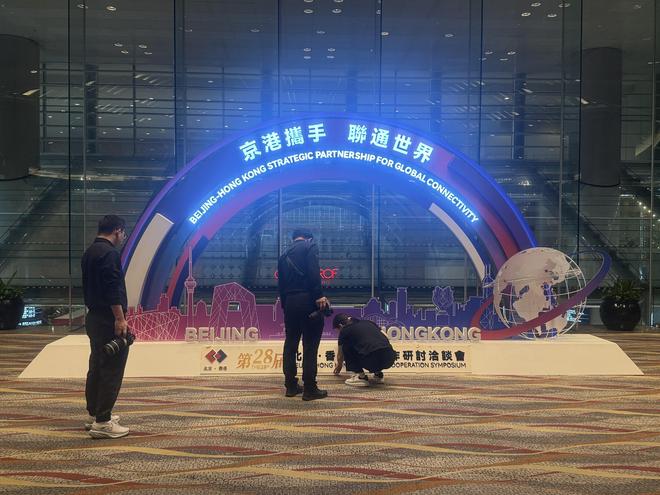
第二十八届京港洽谈会即将启幕,双向投资与合作再升级
Xin Jing Bao· 2025-11-11 12:28
Core Viewpoint - The 28th Beijing-Hong Kong Economic Cooperation Symposium will be held from November 12 to 13 in Hong Kong, focusing on enhancing collaboration between the two cities in various sectors such as finance, technology, and trade [1][3]. Group 1: Event Overview - The symposium will feature an opening ceremony, thematic promotions, investment negotiations, and 13 specialized activities, all aimed at promoting efficient resource alignment and exploring new global market opportunities [1][3]. - Over 300 enterprises from Beijing will participate, covering key sectors like technology, finance, and artificial intelligence, with dedicated areas for showcasing Beijing's business environment and regional advantages [3]. Group 2: Legal and Arbitration Services - A new arbitration legal service section will be introduced, aiming to enhance international arbitration through innovative regulations and high-level dialogues to improve dispute resolution cooperation [5]. - The Beijing International Arbitration Center will launch its Hong Kong branch, facilitating legal service integration and resource sharing between the two regions [5]. Group 3: Technology and Innovation Collaboration - The symposium will renew the memorandum for deepening technological collaboration between Beijing and Hong Kong, focusing on technology transfer and youth entrepreneurship [6]. - Multiple cooperation agreements will be signed in areas such as cultural exchange, intellectual property, and green development, establishing sustainable collaboration mechanisms [6]. Group 4: Economic Impact and Investment - The event aims to announce 160 investment projects with a total investment amount of 60.32 billion yuan, covering various sectors including space resources and technology cooperation [8]. - Since its inception, the symposium has facilitated over 650 projects with a total contract value exceeding 129.3 billion USD, highlighting the ongoing economic integration between the two cities [10]. Group 5: Trade and Investment Statistics - Since 2020, Hong Kong's actual investment in Beijing has reached 57.49 billion USD, accounting for over 80% of the city's total foreign investment during the same period [10]. - The trade volume between Beijing and Hong Kong reached 546.66 billion yuan, with a year-on-year increase of 81.4% in the first nine months of 2025, indicating strong cooperation resilience and growth potential [10].
报告:今年前八月海外微短剧市场总收入同比增194.9%
Zhong Guo Xin Wen Wang· 2025-11-11 12:13
Core Insights - The overseas micro-drama market generated a total revenue of $1.525 billion from January to August 2025, marking a year-on-year increase of 194.9% [1] - Micro-dramas have become a significant medium for Chinese cultural export, supported by a mature industrial production system and a rich repository of web literature IP resources [1] Industry Overview - The white paper outlines the development trends of China's micro-drama industry, focusing on aspects such as industry overview, content creation, business models, and technological innovation [1] - The average daily usage time for micro-drama applications reached 120.5 minutes per user from January to August 2025, suggesting that micro-drama usage may have surpassed that of long video applications [1] Technological Innovation - Chinese animated micro-films and AI live-action dramas are rapidly growing, with significant breakthroughs expected in AI live-action dramas by the second half of 2024 [2] - The production cost for regular AI live-action dramas is approximately 1,000 RMB per minute, while premium AI live-action dramas can cost between 20,000 to 50,000 RMB per minute due to higher computational and labor inputs [2]
国元证券:Kimi K2 Thinking模型发布 看好AI应用等主题方向
智通财经网· 2025-11-11 11:51
AI Applications - The October AI application rankings show ChatGPT, Doubao, Quark, Baidu Cloud, and Gemini as the top five globally [1][2] - Doubao surpasses Quark to become the leading domestic application with a monthly MAU of 159 million, reflecting a 6.28% month-over-month growth [1][2] - Other notable monthly active users include Tencent Yuanbao at 73 million, Deepseek at 72 million, and ByteDance's Jimeng AI at 4.511 million, with a 5.16% month-over-month increase [1][2] - Significant events in AI include OpenAI's $38 billion computing partnership with Amazon, the release of the Kimi K2Thinking model, iFlytek's launch of the Xunfei Spark X1.5 and related AI products, and OpenAI's introduction of GPT-5-Codex-Mini [2] Gaming - The top three games on the iOS weekly sales chart as of November 6 are "Honkai: Star Rail," "Honor of Kings," and "Delta Force" [3] - The game "Supernatural Action Group" launched a new character and ranked between 15-25 during the week, while G-bits' "Staff Sword Legend" ranked around 40 [3] - A partnership between Shengqu Games and Mango TV aims to create a new ecosystem for mini-games, and Bilibili's single-player game "Escape from Duckkov" has sold over 3 million copies [3] Film and Television - The total box office for the week of November 1-7 reached 207 million yuan, with "Improv Murder" as the top film, earning 42.11 million yuan and accounting for 20.3% of the weekly box office [3] - Upcoming films include "Demon Slayer: Infinity Castle Chapter One" and "Now You See Me 3," with high anticipation levels indicated by 579,000 and 284,000 people wanting to watch, respectively [3] - "Zootopia 2" is scheduled for release on November 26, and "Avatar: Fire and Ash" on December 19, highlighting a rich supply of imported films [3]

传媒行业周报:KimiK2Thinking模型发布,关注进口影片表现-20251110
Guoyuan Securities· 2025-11-10 13:15
Investment Rating - The report maintains a "Buy" rating for the media industry, indicating a positive outlook for the sector [6][34]. Core Insights - The media industry saw a slight increase of 0.16% in the week from November 1 to November 7, 2025, ranking 18th among various industries. Notable performers included China Film, Jishi Media, and Chinese Media, with Baidu Group-SW and NetEase-S showing strong weekly gains in the Hang Seng Technology Index [10][16]. - The report emphasizes the potential in AI applications and cultural exports, particularly focusing on sub-sectors such as gaming, IP, short dramas, and publishing [4][34]. Summary by Sections Market Performance - The media industry experienced a weekly increase of 0.16%, while the Shanghai Composite Index rose by 1.08% and the Shenzhen Component Index by 0.19%. The gaming sector saw a decline of 0.29%, while the film and television sector increased by 2.49% [10][12]. Key Industry Data - **AI Applications**: In October, the top five AI applications globally were ChatGPT, Doubao, Quark, Baidu Cloud, and Gemini. Doubao led domestic applications with a monthly active user (MAU) count of 159.41 million, reflecting a 6.28% month-over-month growth [20][21]. - **Gaming**: The iOS gaming sales chart for November 6, 2025, was topped by "Honkai: Star Rail," followed by "Honor of Kings" and "Delta Force." The report also noted the upcoming release of seven new games between November 13 and November 15 [23][25]. - **Film**: The total box office for the week was 207 million yuan, with "Improv Murder" leading at 42.11 million yuan, accounting for 20.3% of the weekly total. Upcoming films include "Demon Slayer: Infinity Castle Chapter" and "Now You See Me 3" [27][28][31]. Investment Recommendations - The report suggests focusing on themes such as AI applications and cultural exports, with specific attention to companies like Giant Network, Kaiying Network, and Perfect World among others [4][34].



微短剧产业“领跑者” 杭州临平做对了什么?
Zhong Guo Xin Wen Wang· 2025-11-10 12:20
Core Insights - The article highlights the rapid development of the micro-short drama industry in Linping District, Hangzhou, which has become a leading area in Zhejiang's micro-short drama sector, attracting over 200 upstream and downstream enterprises and serving more than 700 production teams [1][2]. Group 1: Industry Growth and Strategy - Linping has set ambitious goals, including becoming the "most understanding local government for micro-short dramas" in 2023 and aiming for the title of "National Micro-Short Drama City" in the following years [1]. - The user base for micro-short dramas in China is projected to reach 626 million by June 2025, accounting for 55.8% of internet users, indicating a significant market opportunity [1]. Group 2: Brand Development and Ecosystem - The Linping Micro-Short Drama Conference has been established as a core platform for industry exchange, attracting major online platforms and leading enterprises to discuss key topics such as "quality creation" and "business models" [2]. - Linping's strategy includes attracting high-quality enterprises across the entire value chain from content creation to distribution, leveraging local leading companies to create a cluster advantage [2]. Group 3: Infrastructure and Support - Linping has developed the "Lin Ying Factory," a comprehensive industrial complex that includes the largest professional variety studio in Zhejiang and over 40 dedicated shooting scenes, providing one-stop services for production teams [4]. - A 100 million yuan "Da Mei Lin Zhuo" industrial fund has been established to support the audiovisual industry, along with policies to provide lifecycle support for enterprises [4]. Group 4: Professional Services and Talent Development - The establishment of various centers for film and television collaboration, content review, and artistic guidance has enhanced the professional service system, supporting over 200 talent training sessions annually [5]. - Initiatives such as training camps for young screenwriters and workshops for content creation have been implemented to nurture new talent in the industry [5]. Group 5: Cultural Export and Global Reach - Linping aims to expand the reach of Chinese traditional culture through micro-short dramas, with successful projects like "Diary of Miss Zhao" gaining international recognition [7]. - The launch of the overseas short drama platform FlickReels by Long Eagle Technology has quickly gained popularity in multiple countries, indicating a successful strategy for cultural export [7]. Group 6: Industry Challenges and Future Plans - Linping plans to address industry challenges such as copyright infringement by establishing a national micro-short drama copyright protection and trading center [8]. - The third Hangzhou Micro-Short Drama Conference is set to take place from November 10 to 11, 2023, where various industry plans and honors will be announced [8].

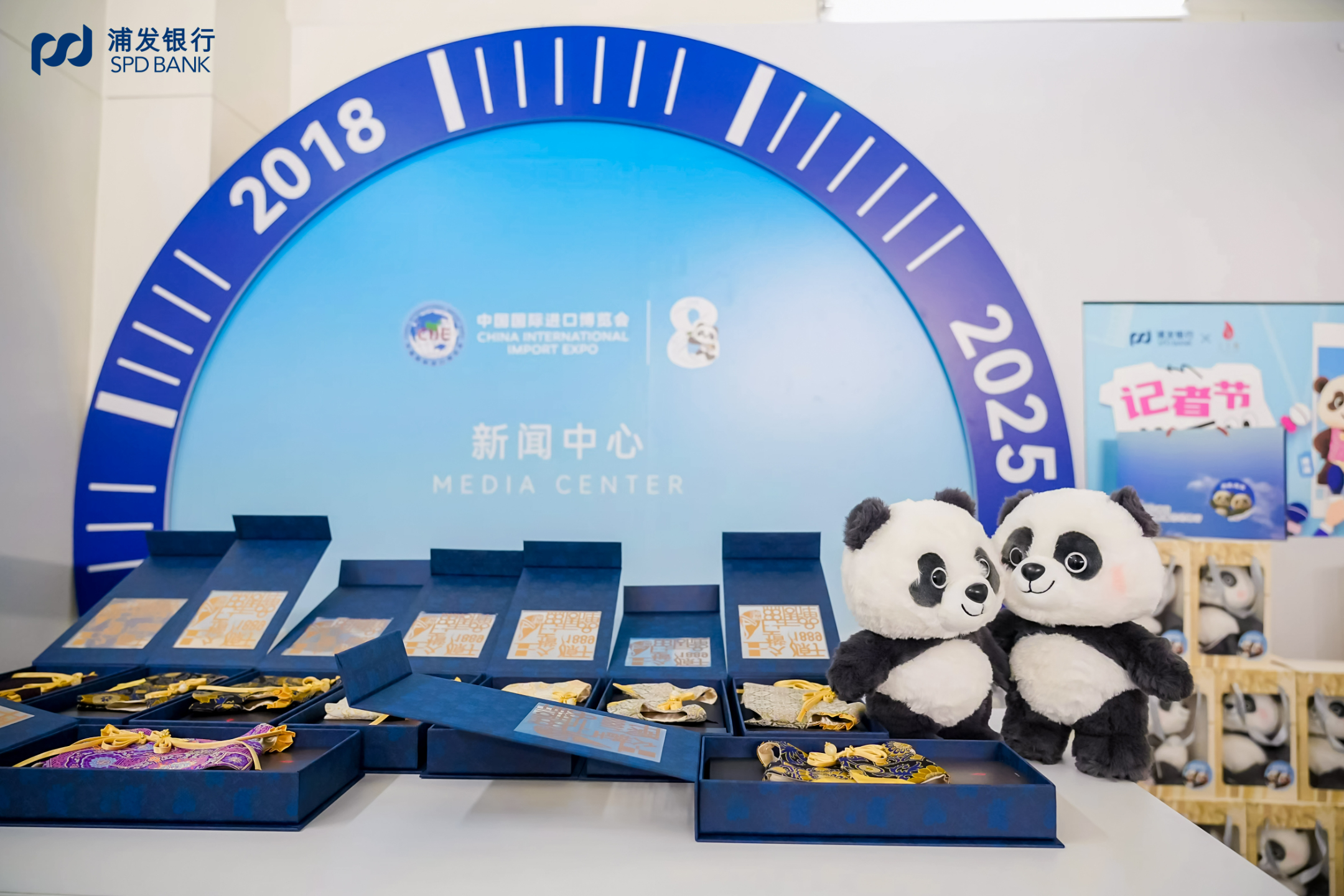
为熊猫“穿上”千年宋锦 浦发银行携非遗亮相进博会新闻中心
Guo Ji Jin Rong Bao· 2025-11-08 12:18
Core Insights - The collaboration between SPDB and Shangjiukai Company showcases the integration of finance and intangible cultural heritage, specifically the Song brocade, at the 8th China International Import Expo [2][6] - Song brocade is recognized as one of China's three major brocades and was listed as a national intangible cultural heritage in 2006 and as a UNESCO intangible cultural heritage in 2009 [3] - Shangjiukai Company, established in December 2012, is a pioneer in the inheritance and innovation of Song brocade products, expanding its application beyond traditional clothing to include bags, home textiles, and crafts [4] Company Overview - Shangjiukai Company is located in Suzhou, known as the "Silk Capital," and has developed two brands, "Roma Family" and "Shangjiukai," while collaborating with institutions and designers for continuous innovation [5] - The partnership with SPDB began in 2014, providing financial support during a critical transformation period for the textile industry in Wujiang, leading to a doubling of credit support for Shangjiukai [4][7] Financial Support and Innovation - SPDB emphasizes cross-border finance as a key area for digital transformation, launching the "Puying Cross-Border" brand to assist cultural enterprises in going global [6] - The Song brocade products have been featured in significant international events, including the APEC meeting in 2014 and the Belt and Road Forum in 2017, enhancing China's cultural confidence on the global stage [6] - SPDB has tailored financial solutions to meet the needs of Shangjiukai, significantly reducing financing costs and alleviating cash flow pressures, thus supporting the company's focus on heritage skills [7] Future Outlook - SPDB aims to continue leveraging financial innovation to connect global resources and promote China's intangible cultural heritage and innovation to the world [8]