智能驾驶

Search documents
港股异动 | 小鹏汽车-W(09868)一度跌超5% 科技日将聚焦Robotaxi等领域成果
Xin Lang Cai Jing· 2025-11-05 03:25
Core Viewpoint - Xiaopeng Motors experienced a significant stock decline, dropping over 5% and closing at 85.3 HKD with a trading volume of 764 million HKD, amidst anticipation for its upcoming AI Technology Day on November 5, 2025 [1] Group 1: Company Developments - Xiaopeng Motors will hold its AI Technology Day in Guangzhou, where CEO He Xiaopeng will present the company's advancements in AI, particularly in the physical world [1] - He Xiaopeng described the upcoming announcements as "emergent" and indicated that the company has achieved surprising capabilities in physical AI, with multiple breakthroughs expected to be showcased [1] Group 2: Industry Context - Reports suggest that Gaode is entering the Robotaxi market and is expected to collaborate closely with a car manufacturer, which is anticipated to be Xiaopeng Motors [1]
金龙汽车20251104
2025-11-05 01:29
Summary of Jinlong Automobile Conference Call Company Overview - **Company**: Jinlong Automobile - **Industry**: Automotive, specifically bus manufacturing Key Financial Performance - **Q3 2025 Revenue**: 780,000 CNY, up 159.25% YoY [2] - **Earnings Per Share (EPS)**: 0.34 CNY, up 209.09% YoY [2] - **Total Bus Sales**: 34,862 units, up 5.86% YoY [2] - **Gross Margin**: Increased by nearly 2 percentage points QoQ due to cost reduction and higher-value orders [2][5] - **Net Profit**: 247 million CNY, up 223.71% YoY [3] Growth Drivers - **Cost Reduction and Efficiency**: Significant improvements in cost management and procurement strategies [2][5] - **Export Business**: Exports accounted for over 60% of total sales, contributing positively to gross margin [2][5] - **High-Value Orders**: Increased proportion of high-value orders has positively impacted profitability [2][5] Future Outlook - **Q4 2025 Expectations**: Continued growth in revenue and profit, but uncertainty in gross margin improvement [6] - **Annual Performance Goals**: Targeting positive net profit after deductions, a 2 percentage point increase in gross margin, and ROE exceeding 6% [7] - **Sales Projections**: Domestic sales may decline by 5%-10% in 2025, but overseas markets are expected to grow by 10%-15% annually [4][27] Export Market Insights - **Key Markets**: Significant growth in Asia, Middle East, Southeast Asia, and Northeast Asia, with Israel as the largest export destination [4][14] - **Demand Drivers**: Increased demand in Southeast Asia due to reduced exports from Japanese manufacturers and electric vehicle projects [4][14] Strategic Initiatives - **Intelligent Driving**: Early investments in smart driving technology, including partnerships with Baidu for autonomous buses [4][9] - **Consolidation of Subsidiaries**: Ongoing integration of three bus manufacturing subsidiaries to enhance operational efficiency [17][22] - **Centralized Procurement**: Achieved over 30% centralized procurement, aiming for 90% by the end of 2027 [10][19] Challenges and Risks - **Domestic Market Volatility**: Anticipated decline in domestic sales due to subsidy changes and market conditions [27] - **Competitive Landscape**: Need to improve market share against competitors like Yutong, which holds a significant portion of the market [29] Additional Insights - **Non-Recurring Gains**: Third-quarter non-recurring gains primarily from government subsidies and reduced financial income [8] - **Future Product Development**: Focus on enhancing vehicle comfort and performance through advanced technologies [29][30] Conclusion Jinlong Automobile is experiencing significant growth driven by export markets and strategic cost management. The company is well-positioned for future growth, although it faces challenges in the domestic market and competition. The focus on intelligent driving and centralized procurement will likely enhance its competitive edge in the coming years.

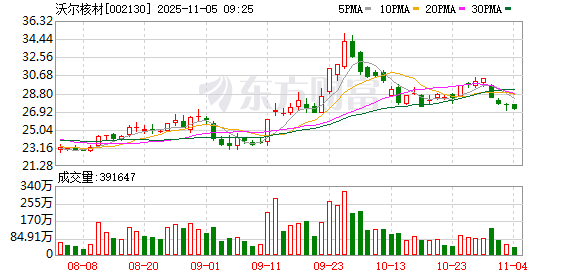
沃尔核材:公司的机器人线缆可应用于关节机器人、协作机器人、直角坐标机器人等领域
Mei Ri Jing Ji Xin Wen· 2025-11-05 01:25
Group 1 - The company is actively involved in the development of high-speed copper cable business, which is essential for emerging industries such as AI servers, intelligent driving, and robotics [2] - The rapid growth of these industries is expected to significantly increase the demand for high-speed communication transmission [2] - The company's robotic cables are applicable in various fields, including joint robots, collaborative robots, and Cartesian coordinate robots, as well as in powering, communicating, and transmitting visual signals for embodied intelligent robots [2] Group 2 - The company's direct customers are primarily harness manufacturers, who then supply to robot manufacturers for end-use [2]


保隆科技2025年第三季度业绩说明会问答实录
Quan Jing Wang· 2025-11-05 01:02
Core Viewpoint - The company held a successful Q3 2025 earnings presentation, achieving a 100% response rate to investor questions, indicating strong engagement and transparency with stakeholders [1]. Group 1: Business Collaboration and Product Development - The company has signed strategic cooperation agreements with NIO and Li Auto, moving beyond mere component supply to joint product development and supply chain management in areas like TPMS, intelligent suspension, and sensors [2][3]. - The company is gradually investing resources to expand into the robotics sector, with ongoing developments in sensor-related business for robots [2][3]. Group 2: Financial Performance and Profitability - In Q3 2025, the company reported a 14% year-on-year revenue increase, but a 37% decline in net profit, attributed to intensified domestic competition affecting component suppliers' profitability [9][28]. - The company aims to maintain revenue growth while improving operational efficiency to address the "growth without profit" phenomenon caused by customer price reductions and tariff impacts [3][9]. Group 3: Market Position and Product Offerings - The company has established a comprehensive product matrix in the intelligent suspension industry, including air springs, control units, and integrated suspension systems, and has secured projects with high-end domestic models [6][12]. - The company anticipates significant revenue growth in the air suspension business, with a forecast of over 200,000 units produced in Q4, driven by demand from models like NIO ES8 and Li Auto i8 [5][6]. Group 4: Debt and Financial Management - The company has a total external guarantee amounting to 3.737 billion yuan, exceeding 116% of its net assets, and is implementing monitoring mechanisms to manage potential risks associated with high guarantees [4]. - The company plans to issue convertible bonds in 2024 to manage long-term debt, which could reduce the asset-liability ratio if converted into equity [9][28]. Group 5: R&D and Future Plans - The company is focusing on enhancing its R&D capabilities, particularly in intelligent suspension and sensor technologies, with a significant number of patents granted [10][32]. - The company is collaborating with experienced teams in the robotics field, with plans to gradually expand its product offerings in this area [19][38]. Group 6: Market Strategy and Investor Relations - The company emphasizes market management strategies, including stable dividends and share buybacks, to enhance shareholder value and maintain investor confidence [5][42]. - The company is committed to improving communication with investors through various channels, including performance briefings and interactive sessions, to effectively convey its value [5][42].

德赛西威(002920.SZ):英伟达是公司核心供应商之一,在智驾业务上针对其不同芯片开发不同的解决方案
Ge Long Hui· 2025-11-04 15:10
Core Insights - Desay SV Automotive (002920.SZ) identifies NVIDIA as one of its core suppliers, particularly in the development of various solutions tailored to different chips for its intelligent driving business [1] Company Summary - Desay SV Automotive is actively engaging with NVIDIA to leverage its chip technology for enhancing its intelligent driving solutions [1]
长安汽车 | 10月:自主品牌销量增长 智驾、机器人发展提速【民生汽车 崔琰团队】
汽车琰究· 2025-11-04 14:53
Core Viewpoint - The company is experiencing significant growth in wholesale sales, particularly in its self-owned and new energy vehicle brands, indicating a successful transition towards electric and intelligent vehicles [2][3][4]. Group 1: Sales Performance - In October, the group's wholesale sales reached 278,000 units, a year-on-year increase of 11.0% and a month-on-month increase of 4.6% [2]. - Cumulatively, from January to October, the total wholesale sales amounted to 2.374 million units, reflecting a year-on-year growth of 10.1% [2]. - The self-owned brand's wholesale sales in October were 237,000 units, up 11.3% year-on-year and 4.9% month-on-month [3]. Group 2: New Energy Vehicle Growth - The company's new energy vehicle wholesale sales in October reached 119,000 units, marking a year-on-year increase of 36.1% and a month-on-month increase of 15.0% [3]. - From January to October, cumulative new energy vehicle sales totaled 869,000 units, representing a year-on-year growth of 60.6% [3]. Group 3: Brand Performance - The Deep Blue brand sold 37,000 units in October, a year-on-year increase of 28.1% and a month-on-month increase of 9.4% [3]. - The Avita brand achieved sales of 13,506 units in October, up 34.3% year-on-year and 22.5% month-on-month [3]. Group 4: Future Outlook - The company aims for a sales target of 3 million units by 2025, with new energy vehicle sales targeted at 1 million units [3]. - Upcoming models such as the Deep Blue L06 and others are expected to enhance the company's product lineup and support its transition to electric vehicles [4]. Group 5: Corporate Developments - The establishment of a new group under Changan Automobile aims to integrate resources and enhance operational efficiency, with plans for future innovations including humanoid robots and flying cars [5]. - The new group's strategy focuses on building a globally competitive automotive brand with core technologies [5]. Group 6: Financial Projections - Revenue projections for 2025-2027 are estimated at 189.6 billion, 209.5 billion, and 233.5 billion yuan respectively, with corresponding net profits of 6.31 billion, 8.16 billion, and 10.94 billion yuan [6][7]. - The expected earnings per share (EPS) for the same period are projected to be 0.64, 0.82, and 1.10 yuan, indicating a positive growth trajectory [6][7].


新势力 | 10月:车市平稳 新势力销量向上【民生汽车 崔琰团队】
汽车琰究· 2025-11-04 14:53
Core Viewpoint - The article highlights the stable performance of the new energy vehicle market in October 2025, with significant growth in delivery volumes for several key players, indicating a strong demand and increasing market penetration of new energy vehicles [2][3]. Group 1: Market Overview - In October 2025, the retail market for narrow passenger vehicles is estimated at approximately 2.2 million units, a year-on-year decrease of 2.6% and a month-on-month decrease of 2.0%. The new energy vehicle retail volume is expected to reach 1.32 million units, with a penetration rate of around 60.0% [3]. - The combined delivery of six new energy vehicle companies (excluding Xiaomi) reached 232,903 units in October, representing a year-on-year increase of 16.7% and a month-on-month increase of 3.8% [3]. Group 2: Company Performance - **Leap Motor**: Delivered 70,289 units in October, a year-on-year increase of 84.1% and a month-on-month increase of 5.4%. The growth is attributed to strong sales of models C10 and B01, with the C10 accounting for 23.4% of total deliveries [4]. - **Xpeng Motors**: Delivered 42,013 units in October, a year-on-year increase of 75.7% and a month-on-month increase of 1.0%. The MONA M03 model contributed significantly to the sales [5]. - **NIO**: Delivered 40,397 units in October, a year-on-year increase of 92.6% and a month-on-month increase of 16.3%. The delivery of the ET5T and ES6 models played a key role in this growth [6]. - **Li Auto**: Delivered 31,767 units in October, a year-on-year decrease of 38.2% and a month-on-month decrease of 6.4%. The company is expected to recover as new electric models are introduced [6]. - **Aion**: Delivered 27,014 units in October, a year-on-year decrease of 32.6% and a month-on-month decrease of 7.2% [6]. - **Zeekr**: Delivered 21,423 units in October, a year-on-year decrease of 14.5% but a month-on-month increase of 17.3% [6]. Group 3: Technological Advancements - The article discusses the acceleration of end-to-end technology applications in intelligent driving, with a focus on achieving equality in smart driving capabilities. Companies like Xpeng and those associated with Huawei are leading the charge in this area [8]. - The article predicts that advancements in intelligent driving technology will lower hardware barriers and expand applications in the mainstream market, particularly for vehicles priced under 200,000 yuan [8]. Group 4: Investment Recommendations - The article recommends focusing on companies with strong intelligent driving capabilities and those that are well-positioned in the new energy vehicle market, including Geely, Xpeng, Li Auto, BYD, and Xiaomi [9][10].



卓胜微(300782) - 2025年11月4日投资者关系活动记录表
2025-11-04 12:40
Group 1: Financial Performance - As of Q3 2025, the company achieved a revenue of 1.065 billion CNY, with a net profit margin of 12.36% and a significant reduction in net loss by 76.84% compared to the previous quarter [2][3] - The company's inventory stood at approximately 3.016 billion CNY by the end of Q3 2025, attributed to increased raw material reserves to support production ramp-up [4][5] Group 2: Market Outlook and Strategy - The global RF front-end module market is projected to reach approximately 26.54 billion USD in 2024, indicating significant growth potential [3][5] - The company is focusing on expanding its RF chip manufacturing capacity to meet the rising demand for customized and high-end module products, driven by the urgent need for domestic alternatives in 5G technology [3][4] Group 3: Challenges and Future Plans - Short-term performance is pressured by high capital expenditures during production line construction, leading to increased fixed asset depreciation and elevated costs during the ramp-up phase [5][6] - The company aims to enhance its core competitiveness by investing in new technologies and expanding its resource platform, with a focus on AI, robotics, and smart driving markets [5][6]
地平线又投出一个IPO,拿下国内9大车厂,上汽商汤都是股东
3 6 Ke· 2025-11-04 12:28
Core Viewpoint - Suzhou Tiantong Weishi Electronic Technology Co., Ltd. (Tiantong Weishi) has submitted its listing application to the Hong Kong Stock Exchange, marking a significant step in its capital journey and reflecting the rapid development of China's intelligent driving industry [1][22]. Group 1: Company Overview - Tiantong Weishi, established in 2016, is a software-centric provider of intelligent driving solutions, offering L2-L4 level solutions globally [3][11]. - The company is the second-largest provider of L2-L2+ level driving and parking solutions in China by installation volume as of 2024, and the third-largest provider of DMS solutions [3][11]. - Tiantong Weishi has secured contracts for 144 vehicle models and has intention orders for L4 solutions valued at 1 billion RMB, collaborating with 9 of the top ten car manufacturers in China [3][18]. Group 2: Financial Performance - The company's revenue for 2022, 2023, and projected for 2024 is 171.8 million RMB, 203.6 million RMB, and 482.9 million RMB respectively, indicating significant growth driven by L4 solution revenues [6][7]. - In the first half of 2025, Tiantong Weishi reported a revenue of 157.3 million RMB, a 182.1% increase from the same period in 2024, primarily due to the rapid expansion of L4 business [8][10]. - Cumulative net losses exceeded 1.2 billion RMB over three and a half years, with net losses for 2022, 2023, 2024, and the first half of 2025 reported at 325 million RMB, 231 million RMB, 463 million RMB, and 193 million RMB respectively [8][10]. Group 3: Business Segments - Tiantong Weishi offers three main types of solutions: L2 level solutions (including parking and driving solutions), L4 level solutions (including Robotruck, Robobus, and Robotaxi), and engineering services [4][11]. - The L4 solutions accounted for over 50% of the company's revenue in 2024, with L4 solution revenue reaching 243 million RMB [16][18]. - The company has developed a unified system architecture for L4 solutions based on its experience in delivering L2-L2+ level solutions [12][16]. Group 4: Investment and Shareholding - Tiantong Weishi completed a 500 million RMB Series D financing round in July 2023, with notable investors including ZF, SAIC North America, BAIC Investment, Horizon Robotics, SenseTime, and China Unicom [3][21]. - The founder, Wang Xi, holds approximately 41.61% of the shares, with significant backing from well-known enterprises that provide not only financial support but also potential technological collaboration and resource integration [21][22]. Group 5: Industry Context - The IPO of Tiantong Weishi represents a critical step for the company and reflects the broader trend of the intelligent driving industry in China moving towards global markets [22][23]. - The company's ability to leverage technological synergies and improve operational efficiency will be crucial for its transition to scalable profitability in the intelligent driving sector [23].
“蔚小理”集体变阵,人事调整下的AI大模型之争
Zhong Guo Qi Che Bao Wang· 2025-11-04 11:39
Core Insights - The recent rapid executive changes at Xiaopeng, NIO, and Li Auto reflect an urgent shift towards AI large models in the autonomous driving sector, indicating a fierce competition among these companies [2][3][4] Group 1: Executive Changes and Organizational Restructuring - Xiaopeng Motors has appointed Liu Xianming, previously from Meta and Cruise, to lead its autonomous driving center, signaling a strong commitment to AI large models [3] - NIO has seen the departure of key figures in its AI team, including Bai Yuli and Huang Xin, and is restructuring to focus on "World Model 2.0" [3][4] - Li Auto has restructured its autonomous driving department, splitting its teams into 11 sub-departments to enhance flexibility and focus on AI [4] Group 2: Shift in Technology Strategy - The automotive industry is witnessing a fundamental shift from traditional modular architectures to end-to-end large models, with VLA and WA being the two main technical routes [6][7] - The VLA route emphasizes converting visual information into language semantics before decision-making, while the WA route focuses on generating driving behavior directly from perception [6][7] Group 3: Competitive Landscape and Market Dynamics - The competition in autonomous driving is intensifying, with companies needing to adapt quickly to avoid being left behind [10][11] - The shift towards AI large models is seen as essential for maintaining competitiveness, as traditional methods are proving inadequate in complex driving scenarios [3][10] Group 4: Investment and Financial Implications - Companies are significantly increasing their R&D investments in autonomous driving, with Xiaopeng, NIO, and Li Auto allocating a substantial portion of their budgets to this area [11] - Xiaopeng's R&D expenditure for the first half of the year reached approximately 4.19 billion yuan, a notable increase from 2.82 billion yuan in the same period last year [11] Group 5: Future Outlook - The ongoing competition in AI large models is expected to reshape the automotive industry's competitive landscape, with companies recognizing the critical importance of this technology for future success [12]