产品创新

Search documents
科研+营销+数字三重赋能,光明乳业以创新动能激活百年品牌生命力
Quan Jing Wang· 2026-01-09 10:36
Core Viewpoint - Bright Dairy is a benchmark in the development of China's dairy industry, committed to the mission of "serving the nation through dairy" and "protecting the health of the nation" while continuously innovating to meet new consumer trends [1] Group 1: Product Innovation and Quality - Bright Dairy leverages its unique national key laboratory in biotechnology to transform research capabilities into product competitiveness, achieving multiple industry firsts, including the introduction of the first ambient yogurt brand, "Mosi Lian" [2] - The company launched its first additive-free yogurt, "Rushi," leading the trend of healthy consumption with pure quality [2] - Bright Dairy is the first dairy company globally to label active ingredient content on its "Youbei" fresh milk packaging, setting a new standard for fresh milk quality with the upcoming 5.0 version featuring significant breakthroughs in protein and immunoglobulin content [2] Group 2: Marketing and Cultural Integration - Bright Dairy actively integrates into urban culture, exemplified by the customized ice cream gift boxes for "Shanghai Summer," which incorporate local dialect elements and blind box concepts, enhancing brand cultural value and market appeal [3] - The brand targets Generation Z through strategic sponsorships, such as the exclusive naming of the variety show "Tian Sheng Yi Dui" and sponsorship of the 2025 Shanghai Rolex Master, revitalizing the brand's image in a modern context [3] Group 3: Digital Asset Ecosystem - In response to the digital economy, Bright Dairy has established a digital asset issuance platform, becoming the first dairy company in China to do so, with plans to support secondary trading of digital assets [4] - By July 2025, the company had issued over 27,000 digital assets, significantly increasing new user growth by 43% through its "Sui Xin Ding" app, creating a sustainable growth avenue for the brand [4] - Bright Dairy aims to maintain its core philosophy of "freshness and quality" while using craftsmanship and innovation to ensure the longevity and vitality of its century-old brand [4]


海通国际:维持毛戈平“优于大市”评级 目标价108.2港元
Zhi Tong Cai Jing· 2026-01-09 01:25
Group 1 - The core viewpoint of Haitong International is to maintain an "outperform" rating for Maogeping (01318), with a target price of HKD 108.2, indicating a potential upside of 23.1% based on a 32X PE for 2026. The firm believes that the brand strength and fundamentals remain solid, with the company's core value lying in its strong high-end brand positioning and continuous product innovation [1] Group 2 - Haitong International expects Maogeping to continue strong growth in the second half of 2025, benefiting from robust offline same-store performance driven by sales volume, despite a weakening consumer spending power in the latter half of the year. The expansion of membership and high repurchase rates support sales growth [2] - The company is projected to achieve revenues of RMB 5.101 billion, RMB 6.489 billion, and RMB 8.115 billion for 2025-2027, representing year-on-year growth of 31.3%, 27.2%, and 25.0% respectively. Net profit attributable to the parent company is expected to be RMB 1.201 billion, RMB 1.494 billion, and RMB 1.848 billion for the same period, with growth rates of 36.4%, 24.4%, and 23.7% respectively [2] Group 3 - The company has signed a strategic agreement with investment institution Luwei Kaiteng to inject internationalization and capitalization momentum, focusing on global market expansion, establishing a high-end beauty investment fund, and optimizing corporate governance. This collaboration is expected to significantly enhance the company's penetration in overseas high-end markets and open up avenues for future growth through the investment fund platform [3] Group 4 - The company's controlling shareholders and some directors plan to reduce their holdings by up to 3.51% of the total share capital, equating to a maximum of 1,720 shares, valued at approximately HKD 15.1 billion based on the closing price of HKD 87.95 per share on January 7. The reduction is primarily for personal financial planning, and the company emphasizes that this will not lead to a change in control, as the founding family will maintain around 70% ownership [4]
卖1元冰淇淋的宜家,越来越少了
36氪· 2026-01-08 10:22
Core Viewpoint - IKEA China announced the closure of 7 stores, reducing the total number of stores from 38 to 31, as part of a strategic shift to optimize costs and improve efficiency in response to changing consumer behavior in the Chinese market [4][6]. Group 1: Store Closures and Strategic Shift - The stores set to close include significant locations such as IKEA Shanghai Baoshan and IKEA Guangzhou Panyu, with the closures effective from February 2, 2026 [5]. - The decision to close these stores is not due to their inability to operate but is a proactive measure to reallocate resources and enhance operational efficiency [6][7]. - This marks a continuation of IKEA's strategic adjustments in China, which have included previous store closures and a focus on optimizing its retail footprint [6][7]. Group 2: Market Challenges and Competition - IKEA faces increasing competition from local brands and changing consumer preferences, which have made it difficult to attract Chinese consumers [8][10]. - The brand's traditional Nordic minimalist design is losing appeal among younger consumers, who are now more inclined towards local styles and offerings [8]. - Local competitors, such as the clothing brand "Deer Island" and furniture brand "Lin's Wood Industry," are expanding aggressively, posing a direct challenge to IKEA's market position [10][11][12]. Group 3: Financial Performance of Ingka Group - Ingka Group, IKEA's operating entity in China, reported a decline in global revenue to €41.864 billion in the 2024 fiscal year, a decrease of 5.5% year-on-year, with net profit dropping by 46.5% [13]. - The financial struggles have led to strategic partnerships aimed at alleviating financial pressure, including a collaboration with Gaohe Capital to manage shopping centers in key cities [13]. - Despite a slight recovery in net profit for the 2025 fiscal year, overall revenue remains below previous levels, indicating ongoing financial challenges [13]. Group 4: Broader Market Trends - Other international brands, such as NITORI and MUJI, are also facing difficulties in the Chinese market, with significant store closures reported [14]. - The rapidly changing market environment and the rise of domestic brands suggest that IKEA's transformation will be a challenging endeavor in a highly competitive landscape [15].

露露柠檬运动成衣(LULU):近况更新:持续丰富商务和居家休闲产品线,CEO即将离任
Haitong Securities International· 2026-01-08 02:35
Investment Rating - The investment rating for Lululemon Athletica is maintained at "Neutral" with a target price of $215.50, reflecting a potential upside of 1.5% from the current price of $211.72 [2][16]. Core Insights - The company reported a revenue of $7.46 billion for 3QFY25, which is a year-on-year increase of 7.0%. However, revenue growth is expected to slow in 4QFY25 due to calendar shifts, with management anticipating a narrowing of overall revenue growth compared to the previous quarter [4][13]. - The current CEO, Calvin McDonald, will step down in January 2026, and the board has appointed Marti Morfitt as Executive Chair, with Meghan Frank and Andre Maestrini serving as Co-CEOs until a permanent CEO is found [4][16]. - The gross margin for 3QFY25 was reported at 55.6%, a decrease of 290 basis points year-on-year, which was better than the previously guided impact of 410 basis points [5][14]. - The company is focusing on product innovation to revitalize its North American business, with plans to increase the proportion of new products in the Spring 2026 collection to 35% [6][15]. Financial Summary - Revenue projections for FY2025, FY2026, and FY2027 are $11.03 billion, $11.58 billion, and $12.14 billion, respectively, with year-on-year growth rates of 4.2%, 5.0%, and 4.9% [9][16]. - Net profit estimates for the same periods are $1.55 billion, $1.51 billion, and $1.60 billion, reflecting changes of -14.4%, -2.9%, and +6.1% year-on-year [9][16]. - The company has a strong cash flow position, holding $1.0 billion in cash with no debt as of the end of 3QFY25, and has approved a new $1 billion share repurchase authorization [5][14].

卖1元冰淇淋的宜家,越来越少了
3 6 Ke· 2026-01-08 01:14
Core Insights - IKEA China announced the closure of seven stores, effective February 2, 2026, as part of a strategic shift to optimize costs and improve efficiency [1][2] - The closures will reduce the number of IKEA stores in mainland China from 38 to 31, impacting consumer access in several cities [1][2] - The company has been struggling to adapt to the rapidly changing consumer environment in China, leading to a series of store closures over the past few years [2][3] Group 1: Store Closures and Strategic Shift - IKEA China will close seven stores, including significant locations in Shanghai and Guangzhou, which were previously major investments [1] - The closures are part of a broader strategy to enhance operational efficiency and reallocate resources to better meet consumer needs [2] - The company aims to increase store productivity and focus on channels that are more aligned with consumer preferences [2][3] Group 2: Market Challenges and Competition - IKEA has faced increasing competition from local brands and changing consumer preferences, leading to a disconnect between its product offerings and market demands [3][4] - The company has attempted to implement price reductions and product innovations, but these efforts have not fully addressed the underlying issues [2][3] - Local competitors, such as "鹿岛" and "源氏木语," are expanding rapidly, further intensifying competition in the home goods market [4][5] Group 3: Financial Performance of Ingka Group - Ingka Group, IKEA's parent company, reported a decline in global revenue to €418.64 billion in the 2024 fiscal year, a 5.5% decrease year-over-year [6] - The net profit for Ingka Group fell significantly by 46.5% to €8.06 billion, indicating financial strain [6] - Strategic partnerships and adjustments in retail operations are being pursued to alleviate financial pressures [6] Group 4: Broader Industry Trends - Other international brands, such as NITORI and MUJI, are also facing challenges in the Chinese market, with significant store closures reported [7][8] - The competitive landscape is becoming increasingly difficult, with local brands gaining market share and altering consumer expectations [8]
大行评级|花旗:预期泡泡玛特通过IP多元化及产品创新推动长期增长 维持“买入”评级
Xin Lang Cai Jing· 2026-01-07 04:51
Core Viewpoint - Citigroup's research report indicates that Pop Mart's long-term strategy focuses on products, content, community, and IP protection, aiming to establish LABUBU as a sustainable IP [1] Group 1: Strategic Focus - The diversified IP strategy is expected to enhance the company's ability to withstand risks associated with single IP cycles and stimulate new demand [1] - Licensing business is anticipated to deeply connect with all consumer segments, potentially becoming another revenue growth engine for Pop Mart [1] Group 2: Future Outlook - By 2026, the company is expected to achieve breakthroughs in IP diversification, product innovation, and cross-sector monetization to support sustained growth [1] - Citigroup maintains a "Buy" rating with a target price of HKD 415 [1]

iPhone 17系列中国销量破1500万 标准版成增长主力
Xin Lang Cai Jing· 2026-01-07 01:40
Core Insights - The iPhone 17 series has shown strong sales performance in the Chinese market, surpassing 15 million units sold, with a cumulative sales figure of 15.57 million units as of week 52 of 2025, indicating robust market appeal [2][3] - The standard model of the iPhone 17 has become the key driver of overall sales growth, with its sales nearly doubling compared to the previous generation during the same period [2][3] - The growth in sales is attributed to a more competitive product positioning, with significant upgrades including an increase in base storage capacity from 128GB to 256GB and the introduction of a 120Hz ProMotion adaptive refresh rate display, enhancing user experience [2][3] Industry Position - Apple maintains a solid lead in the high-end smartphone market, facing competition from local brands that have not yet posed a substantial challenge in this segment [3] - With ongoing product innovation and strong user loyalty, Apple is expected to continue leading global smartphone shipments through 2026 [3]

入境游喜迎“开门红” 中国旅游市场如何吸引全球目光?
Yang Shi Wang· 2026-01-06 22:31
Group 1 - The inbound tourism market in China experienced a significant boost during the recent New Year holiday, with 292,000 foreign visitors benefiting from visa-free policies, marking a 35.8% increase compared to the same period last year [1] - Online travel platforms reported that the booking volume for experiential travel products surged over 30 times, with 97 cities welcoming international tourists, indicating a broad interest beyond major cities like Beijing and Shanghai [3] - Harbin has become a popular destination for inbound tourists, with over 30,000 foreign visitors to the Harbin Ice and Snow World since its opening, reflecting a nearly doubled growth in inbound travel orders this winter season [4][5] Group 2 - The New Year holiday saw a rise in interest for unique travel experiences, such as shopping in island resorts and exploring ancient towns, with Hainan reporting over 31,000 inbound travelers, a 23.5% increase year-on-year [6] - The tourism market in China is entering a phase of high growth and quality development, driven by product innovation and deepening destination experiences, particularly in the ice and snow tourism sector [7] - The 2025 China Inbound Tourism Annual Report indicates a 100% growth in inbound travel bookings in the first three quarters of 2025, with orders from visa-free countries increasing by an average of 153%, suggesting sustained interest into 2026 [9]
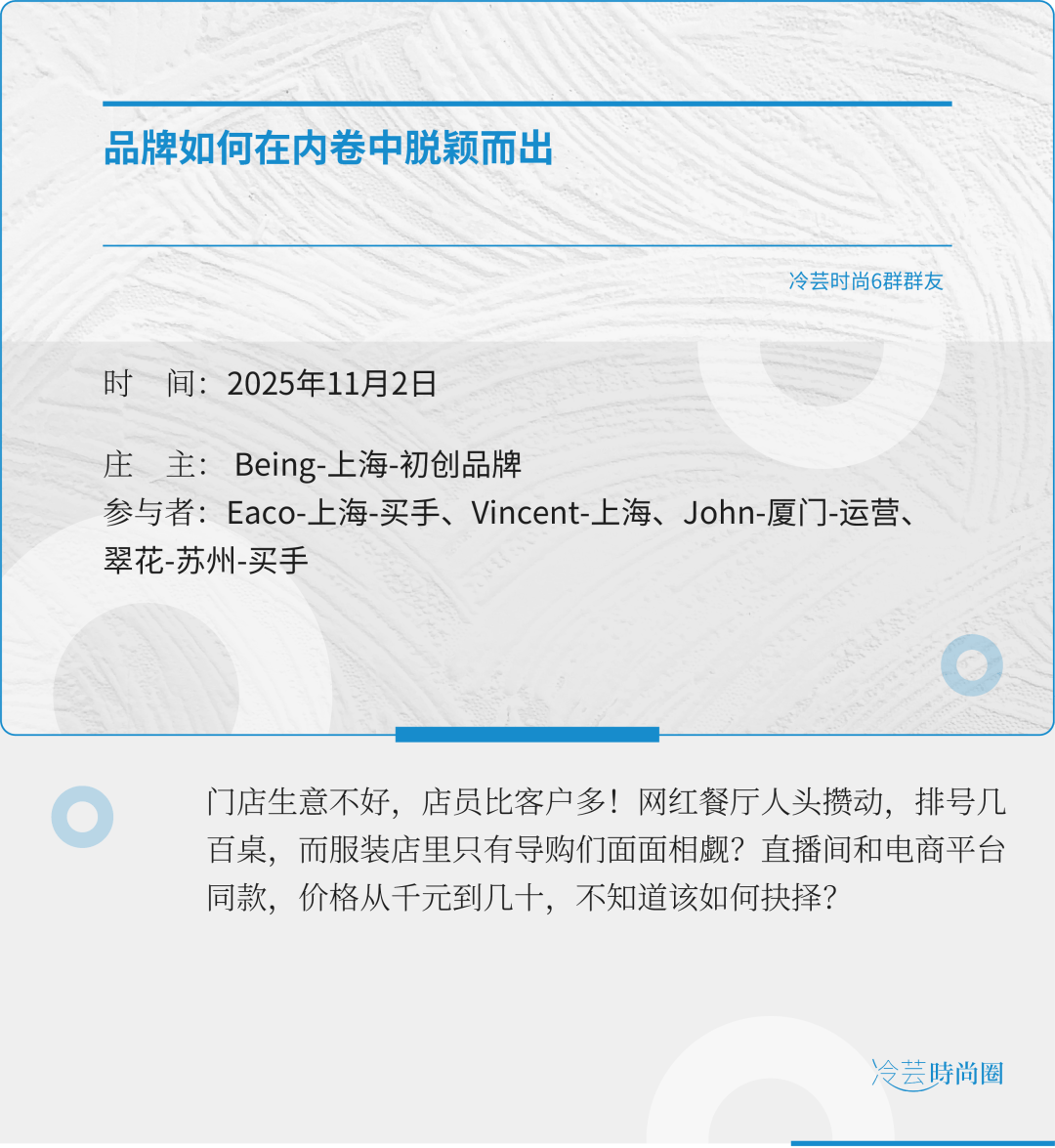
品牌如何在内卷中脱颖而出?
Sou Hu Cai Jing· 2026-01-06 21:44
Group 1 - The current state of the clothing brand business is challenging, with many companies in Hangzhou facing layoffs and intense competition, leading to low foot traffic in clothing stores compared to restaurants [3][15] - Shopping centers are seeing high customer traffic for dining experiences, while clothing retail stores struggle with low purchase rates despite high foot traffic in some locations [3][4] - Brands like Uniqlo maintain consistent customer flow, while others like Hotwind experience fluctuating foot traffic, indicating a disparity in consumer interest [6][8] Group 2 - Brands such as Xicheng Village and Aiyifu have expanded rapidly, with Aiyifu reaching over 4,000 stores and annual sales exceeding 4 billion, but face challenges in maintaining profitability due to higher operational costs in malls [7][8] - The Crying Center has opened new stores with decent foot traffic, indicating a potential market for affordable fashion [9] - The Mason Prince flagship store invested heavily in decor, suggesting that experiential retail may attract customers despite the overall market challenges [12] Group 3 - The core issue for underperforming stores is the lack of unique design and craftsmanship that resonates with consumers, leading to a perception of sameness in the market [15][19] - Brands need to enhance the in-store experience, transforming retail spaces into centers of brand storytelling and customer engagement to differentiate from e-commerce [16][25] - Consumer preferences are shifting towards unique aesthetics and brand values, with many prioritizing product quality and design over brand names [17][18] Group 4 - The market is characterized by significant product homogeneity, with many brands following trends rather than establishing unique identities, resulting in price-based competition [19][23] - Successful brands like JNBY emphasize product differentiation through distinctive design and quality, maintaining high customer loyalty and financial performance [24] - Brands must focus on user experience and personalized service to remain relevant, with innovative approaches like upcycling old clothing gaining traction [25][26] Group 5 - Sustainable practices are becoming essential for brand perception, with companies encouraged to integrate sustainability into their core values and operations [27] - The industry is urged to move beyond mere trend-following to create meaningful connections with consumers, fostering loyalty through shared values and experiences [22][27]
破局存量竞争,从头部酒企经销商大会看2026白酒行业新航向
Sou Hu Cai Jing· 2026-01-06 13:14
Core Insights - The white liquor industry in 2025 is characterized by both "pain and transformation," with high inventory levels and price inversions affecting the market, leading some companies to engage in "price reduction for volume" strategies [2] - The trend of rational consumption is deepening, with "face consumption" giving way to "self-enjoyment drinking" [2] Group 1: Industry Trends - The industry is transitioning from a phase of scale pursuit to a "medium-low growth era," where leading companies must find a balance between "progress" and "stability" [4] - Major companies like Moutai and Wuliangye are focusing on long-term strategies, emphasizing market stability and adapting product offerings to align with consumer demand [4][6] - The white liquor sector has moved away from expansion, prioritizing "healthiness first" in a competitive environment [9] Group 2: Company Strategies - Moutai aims to enhance market stability by reducing the volume of high-value products and dynamically balancing product supply based on market demand [4][9] - Wuliangye has defined 2026 as a year for "marketing innovation," focusing on balancing short-term and long-term strategies, supply and demand, and development and safety [4][11] - Other companies like Jinshiyuan and Gujing Gongjiu are also emphasizing market breakthroughs, brand enhancement, and structural upgrades in their strategic plans for 2026 [6][8] Group 3: Consumer Focus - Moutai is shifting towards a consumer-centric approach, promoting a multi-channel sales model and focusing on new consumption scenarios [14] - Wuliangye is targeting new consumer demographics, including younger and female consumers, to expand its market base [14][20] - Gujing Gongjiu is integrating health products into its strategy, aiming to create new consumer experiences and lifestyle offerings [15][21] Group 4: Product Innovation - The industry is witnessing a generational shift in consumer preferences, with younger consumers showing less interest in traditional liquor [17] - Wuliangye is launching lower-alcohol products and innovative experiences to attract younger consumers [17][20] - Gujing Gongjiu has introduced a "light degree" concept with new product lines aimed at younger audiences, enhancing its retail experience [21] Group 5: Collaborative Ecosystem - Companies are moving towards a collaborative ecosystem, viewing distributors as integral to brand development rather than mere sales channels [11][13] - The focus is on building a "shared destiny" between manufacturers and distributors, emphasizing risk-sharing and mutual benefits [11][13]