
关税调整

Search documents
今夜美股前瞻 | 美联储收官会议抵制降息比例近半,特朗普称是否立即降息将是新任美联储主席的试金石,三大股指期货涨跌互现
Sou Hu Cai Jing· 2025-12-09 12:50
1. 12月9日(周二)美股盘前,美股三大股指 期货涨跌互现。截至发稿,道指期货涨0.06%,标普期货涨 0.08%,纳指期货跌0.03%。 2. 截至发稿,欧洲股市主要指数涨跌互现。欧洲斯托克50指数跌0.21%,英 国富时100指数涨0.07%,法国CAC40指数跌0.61%,德国DAX30指数涨0.3%。 3. 截至发稿,WTI原油 涨0.37%,报59.1美元/桶。布伦特原油涨0.35%,报62.71美元/桶。纽交所 黄金涨0.25%,报4228.3美元/ 盎司。 市场消息 1、国际现货黄金筹码形成双峰分布,两峰之间有筹码缺口区域,需留意两处筹码峰值 对价格运动的影响。 2、美联储年度收官会议中,12名票委及19位成员中抵制降息比例接近半数,鲍威 尔或复制2019年降息加设限策略。 3、国际现货黄金重回4200关口,上方空单密集;美日持续反弹,现 价附近多单挂单密集。 4、美国总统特朗普表示可能降低部分商品关税,立即降息是选择美联储新主席 的试金石。 5、巴西研究提高汽车和 钢铁进口关税。 个股消息 1、英伟达向经美国商务部审核批准的商 业客户提供H200芯片。 2、派拉蒙天舞公司宣布季度现金股息为每 ...
美股前瞻 | 三大股指期货齐涨,特朗普允许英伟达(NVDA.US)向中国出售H200芯片
智通财经网· 2025-12-09 12:10
1. 12月9日(周二)美股盘前,美股三大股指期货齐涨。截至发稿,道指期货涨0.08%,标普500指数期货涨0.09%,纳指期货涨0.04%。 | = US 30 | 47,775.50 | 47,816.00 | 47,687.50 | +36.20 | +0.08% | | --- | --- | --- | --- | --- | --- | | = US 500 | 6,852.50 | 6,861.10 | 6,838.30 | +6.00 | +0.09% | | ■ US Tech 100 | 25,639.30 | 25,695.50 | 25,577.80 | +11.30 | +0.04% | 2. 截至发稿,德国DAX指数涨0.26%,英国富时100指数涨0.11%,法国CAC40指数跌0.59%,欧洲斯托克50指数跌0.23%。 | 德國DAX30 | 24,118.50 | 24,192.50 | 24,070.51 | +62.81 | +0.26% | | --- | --- | --- | --- | --- | --- | | 英國富時100 | 9,655.67 | 9,6 ...



美国将韩国汽车关税降至15% 并回溯至11月1日
Xin Lang Cai Jing· 2025-12-04 00:30
Core Points - The U.S. has reduced tariffs on South Korean automobiles and parts from 25% to 15%, retroactive to November 1 [1] - The official notification has been published in the Federal Register, with a formal release planned for December 4 [1] - Pickup trucks will continue to face a 25% tariff, in line with most-favored-nation treatment and the terms of the Korea-U.S. Free Trade Agreement [1] - Tariff reductions on certain wooden products, as well as aircraft and aircraft parts, will be retroactive to November 14, the date of the signing of the memorandum of understanding between the two countries [1]
卢特尼克表示,欧盟须以放松科技公司监管换取降低钢铁关税
Shang Wu Bu Wang Zhan· 2025-12-02 17:14
Core Viewpoint - The U.S. Secretary of Commerce, Gina Raimondo, indicates that the European Union (EU) must modify its digital regulations in exchange for a reduction in steel and aluminum tariffs [1] Group 1: Trade Agreement Context - The U.S. and EU reached a trade agreement in July, which includes a 15% tariff on most EU goods and a commitment from the EU to eliminate tariffs on U.S. industrial products and certain agricultural goods [1] - The agreement also aims to reduce other tariffs, including a 50% tariff on EU steel and aluminum products, with the EU currently imposing equivalent tariffs on steel imports exceeding specific quotas [1] Group 2: Regulatory and Economic Implications - U.S. officials express that any agreement on steel and aluminum is contingent upon the EU lifting certain regulations on major U.S. tech companies [1] - This linkage of tech regulation and metal tariffs places the EU in a difficult position, as it has consistently maintained that it will not allow other countries to dictate its tech regulatory framework [1] - The imposition of metal tariffs has caused significant economic harm across the European continent, raising concerns among European officials and businesses [1]
US Commerce chief confirms South Korea's 15% tariff rate retroactive to November 1
Reuters· 2025-12-01 22:06
U.S. Commerce Secretary Howard Lutnick on Monday confirmed that the general tariff rate on imports from South Korea, including on autos, would drop to 15% retroactive to November 1 because South Korea... ...
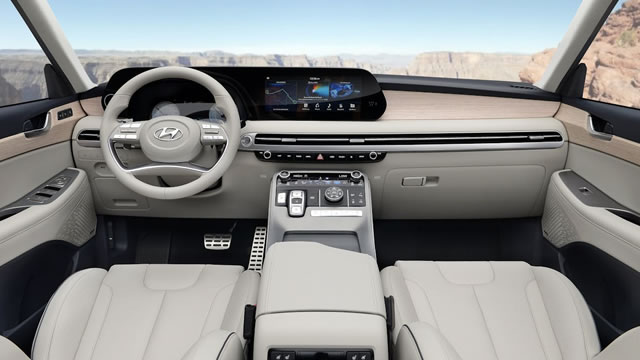
US to lower tariffs on South Korean autos to 15% effective Nov 1, Lutnick says
Reuters· 2025-12-01 21:40
Core Point - The U.S. will reduce import duties on South Korean automobiles to 15%, effective retroactively from November 1, aligning with the tariffs imposed on Japan and the EU [1] Group 1 - The new tariff rate of 15% matches the reciprocal tariffs that Japan and the EU have imposed [1] - The decision was announced by Commerce Secretary Howard Lutnick [1]
加拿大宣布新措施 支持受美关税冲击的钢铁木材行业
Zhong Guo Xin Wen Wang· 2025-11-27 08:07
Core Points - Canada announced new measures to support its steel and lumber industries in response to U.S. tariffs, aiming to strengthen the domestic market [1][2] - The Canadian government will implement import restrictions on steel, reducing quotas for non-FTA partners from 50% to 20% and for FTA partners from 100% to 75% starting in 2024 [1] - A 25% tariff will be imposed on certain imported steel derivatives, and border control measures will be enhanced to combat steel dumping [1] - Starting in spring 2026, the government will collaborate with railway companies to reduce interprovincial transportation costs for steel and lumber by 50% [1] - The government will prioritize the use of domestic steel and lumber in housing construction and provide financial assistance to affected domestic companies [1][2] Industry Impact - The Canadian economy is shifting from reliance on a single trade partner to a more self-sufficient model that can withstand global shocks [2] - Over 75% of Canada's exports are directed towards the U.S., with significant reliance on the U.S. market for lumber, aluminum, and steel [2] - The steel and lumber industries have been severely impacted by U.S. tariffs, which were raised to 50% for steel and aluminum and additional tariffs were imposed on lumber and its derivatives [2]
东方财富证券:中国户外消费品牌增速亮眼 关注纺服制造产业链复苏
Zhi Tong Cai Jing· 2025-11-26 11:06
Core Insights - The outdoor consumption market in China is expected to experience strong and sustained growth, with 96% of outdoor consumers planning to continue their spending, and 27% intending to invest more in the future [1][2]. Group 1: Outdoor Consumption Trends - As of early April 2025, the number of outdoor sports participants in China has surpassed 400 million, indicating a participation rate of approximately 30%, which still has room to double compared to the U.S. [1] - The outdoor footwear and apparel market for Chinese brands is projected to grow at a CAGR of 17.4% from 2020 to 2024, significantly outpacing international brands' CAGR of 9.4% [1]. Group 2: Key Product Categories - For jackets, affordable options priced between 349-699 yuan dominate the market, while higher-priced jackets (699-1599 yuan and above) are experiencing sales growth rates of 26% and 24% respectively [3]. - Sunscreen clothing is primarily represented by new brands, with mainstream prices mostly below 200 yuan, while established brands like Camel and Bosideng are also entering this segment [3]. - Running shoes are becoming a focal point for brand competition, with performance being a key purchasing factor. The domestic running shoe market is expected to grow due to increased participation in running events and the rise of local brands offering competitive pricing [3]. Group 3: Seasonal Demand and Market Dynamics - A forecasted cold wave in China is expected to boost demand for down jackets, with the market projected to reach 2400-2500 billion yuan by 2025, indicating significant growth potential [4]. - The upcoming leap year in 2026 will extend the effective sales period for winter products, further benefiting down jacket sales [4]. Group 4: Manufacturing and Brand Recovery - The recovery of Nike's supply chain is anticipated, with improvements in inventory and gross margins expected by 2026, following a restructuring process similar to Adidas's recent reforms [5][6]. - Nike's revenue and net profit showed slight improvements, with a 1.1% increase in revenue but a 30.8% decline in net profit, indicating ongoing challenges during the inventory reduction phase [5]. Group 5: U.S. Apparel Market Inventory - As of July 2025, U.S. apparel inventory stands at approximately $86.5 billion, down 14.2% from its peak in August 2022, suggesting a healthier inventory situation [7]. - Recent tariff reductions on apparel from ASEAN countries are expected to alleviate concerns regarding brand ordering sentiment, as tariffs have decreased to around 20% [7].

韩政府致函美方告知涉对美投资立法程序启动
Di Yi Cai Jing· 2025-11-26 06:27
Group 1 - The South Korean Ministry of Trade, Industry and Energy announced that a special bill regarding the Korea-U.S. strategic investment management was submitted to the National Assembly of South Korea [1] - The South Korean government requested the U.S. to promptly publish a reduction of tariffs on South Korean automotive and parts exports to 15%, effective retroactively from the 1st of this month [1]
【环球财经】欧盟对美国货物贸易顺差持续下降
Xin Hua Cai Jing· 2025-11-26 05:25
Core Insights - The European Union (EU) reported a trade surplus of 40.8 billion euros with the United States in Q3, a decrease of 13.3% from the surplus of 47.1 billion euros in Q2 and a significant drop of 49.7% compared to the surplus of 81.2 billion euros in Q1 [1][2] Trade Performance - In Q1, the trade performance was notably strong due to anticipated U.S. tariff increases, leading to a significant rise in EU exports to the U.S. [2] - In Q3, the EU maintained a trade surplus with the U.S. in chemicals and related products, machinery and vehicles, other manufactured goods, and food and beverages, while experiencing a deficit in energy, raw materials, and other goods [2] Energy Imports - Following the outbreak of the Russia-Ukraine conflict, the EU significantly increased its energy imports from the U.S., resulting in a higher growth rate of imports from the U.S. compared to other global regions [2] Trade Agreement Challenges - The EU had hoped that a trade agreement reached in July with the U.S. would alleviate trade tensions, but this has not materialized as expected [2] - The European Commission is seeking a reduction in U.S. tariffs on steel and aluminum, as well as exemptions for various goods, including alcoholic beverages and medical devices [2] - U.S. Secretary of Commerce Gina Raimondo linked the reduction of steel and aluminum tariffs to the EU's adjustment of its technology industry regulatory framework, raising concerns within the EU about the potential hollowing out of the trade agreement [2]