
地缘政治不确定性

Search documents
张尧浠:美联储更宽松周期前景升温、金价预酝酿进一步牛市
Sou Hu Cai Jing· 2025-12-03 01:04
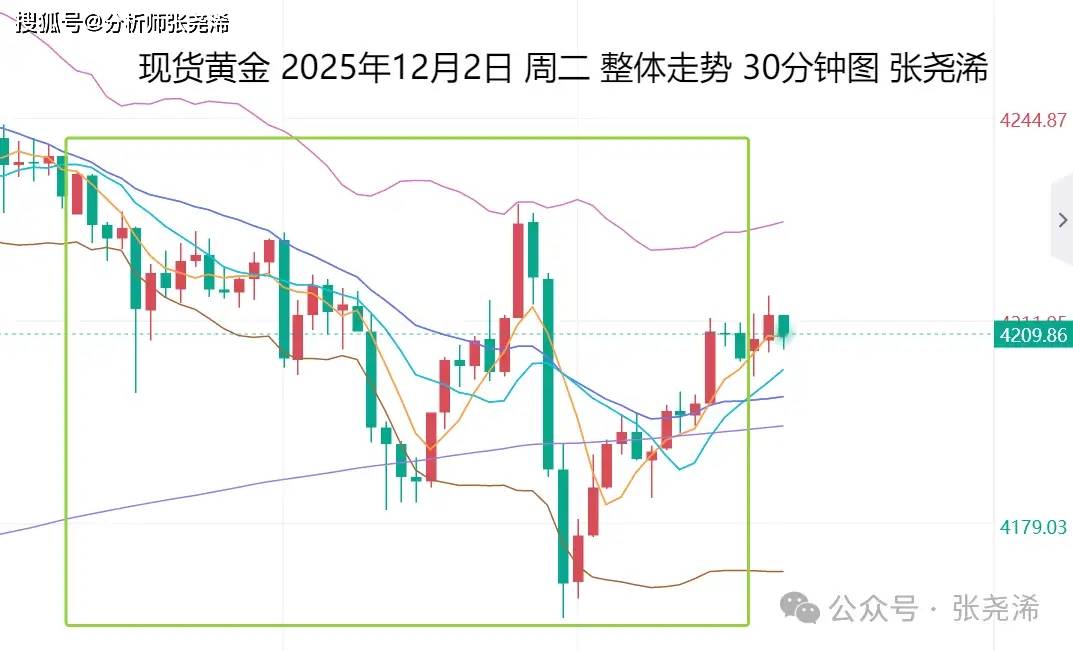
Core Viewpoint - The outlook for a more accommodative monetary policy from the Federal Reserve is increasing, which is expected to support a further bull market for gold prices [1][3][5]. Group 1: Market Performance - On December 2, international gold prices opened at $4231.36 per ounce, reached a high of $4235.97, and then fell to a low of $4163.81 before closing at $4205.63, resulting in a daily decline of $25.73 or 0.61% [1][3]. - The daily trading range was $72.16, indicating volatility in the market [1]. Group 2: Influencing Factors - Technical resistance and profit-taking led to a decline in gold prices, but support buying and expectations of a more dovish Federal Reserve under Trump's potential nominee for chair, Hassett, helped gold prices recover [3][5]. - The upcoming U.S. ADP employment figures and core PCE inflation data are anticipated to influence market expectations for interest rate cuts, which could further support gold prices [3][5]. Group 3: Long-term Outlook - The U.S. dollar index is expected to remain under pressure, which is favorable for gold prices, as it is trading below key moving averages [5]. - Strong demand for gold from global central banks continues, with a reported net purchase of 53 tons in October, a 36% increase month-over-month, marking the largest monthly net demand since early 2025 [5]. - Geopolitical tensions are also providing a solid support base for gold prices [5]. Group 4: Technical Analysis - Monthly and weekly charts indicate a bullish trend for gold, with the need to break above the $4400 level to open further upside potential [8]. - Short-term pullbacks are viewed as buying opportunities, with historical trends suggesting that corrections during rate-cutting cycles often lead to significant upward movements [6][8]. Group 5: Price Levels - Key support levels for gold are identified at $4195 and $4180, while resistance levels are at $4220 and $4245 [10]. - For silver, support is noted at $58.10 and $57.70, with resistance at $59.00 and $59.70 [10].

香港第一金:鲍威尔讲话在即,黄金波动或将加剧
Sou Hu Cai Jing· 2025-12-01 08:07
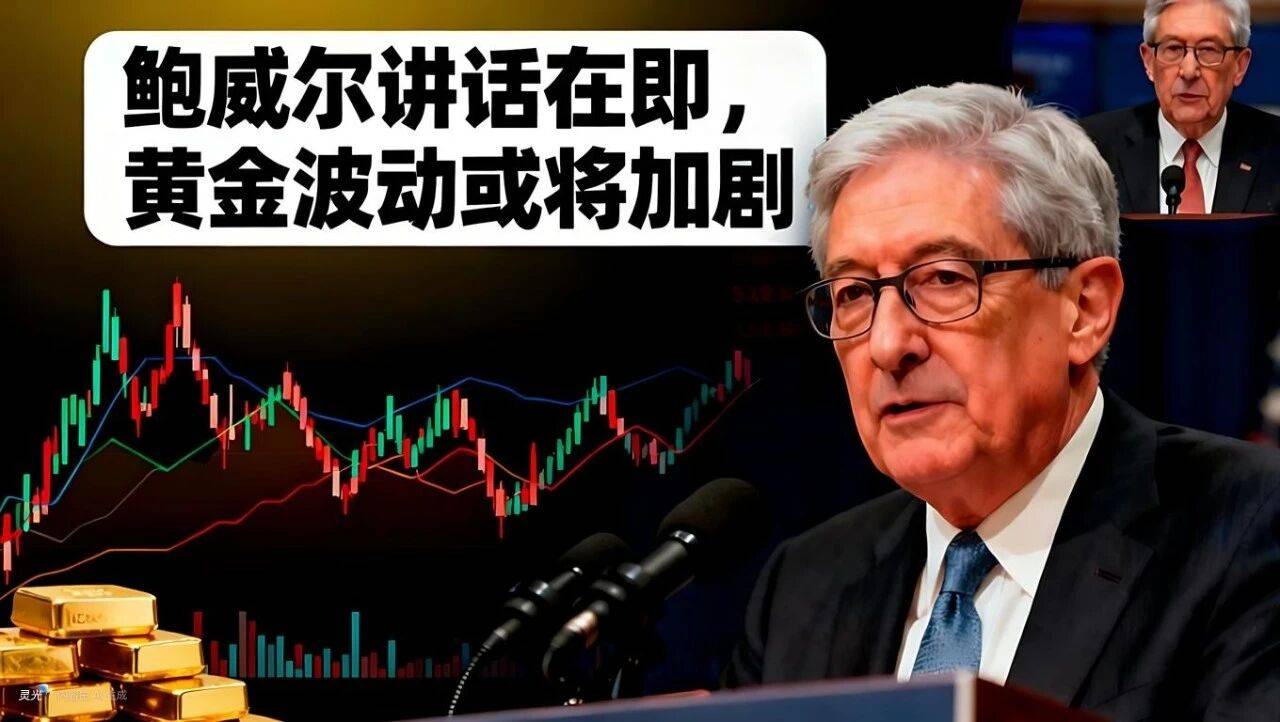
今日思路: 关注4250美元区域。如果金价反弹至这些位置附近并出现上涨乏力迹象(例如看跌的K线形态),可以考虑轻仓试空。 第一金杨生,DYJPPLI,香港第一金,第一金官网,第一金平台,第一金代理 根据当前市场情况,短期趋势依然偏多,但需要密切关注关键阻力的突破情况。 美联储降息预期强劲:市场对美联储在12月降息的概率预期维持在85%以上,甚至达到87.4%。这是当前推动金价上涨的核心动力。关键技术阻力:4242- 4250美元区域是近期的重要技术阻力位。4264美元和4275美元则是更高的压力位。 美元表现疲软:美元指数走软,创下数月来的最差单周表现,这使得以美元计价的黄金对其他货币持有者来说更便宜。潜在获利了结:在金价近期持续上涨 (上周涨3.9%,11月涨5.5%)后,部分投资者可能选择卖出锁定利润,导致短期回调。 地缘政治不确定性:俄乌和谈进展等事件仍带来不确定性,潜在地缘风险会催生避险需求。 关注4200-4210美元以及4189-4196美元这两个支撑区域。若金价回落至此区域并出现企稳信号(例如看涨K线组合),可考虑轻仓博取反弹。 如果金价有效跌破4180美元的支撑,短期上涨结构可能被破坏。反之, ...
机构:金价继续在地缘政治不确定性中寻找潜在支撑
Sou Hu Cai Jing· 2025-11-25 12:22
来源:格隆汇APP 格隆汇11月25日|Kudotrade的分析师Konstantinos Chrysikos表示,尽管美联储的下一步政策行动存在更 广泛的不确定性,但地缘政治紧张局势仍在支撑金价。他表示:"主导地缘政治背景的仍是中东的不稳 定和东欧重新出现的紧张局势。虽然外交渠道仍在探索俄乌潜在协议的轮廓,但仍难以取得有意义的进 展。"与此同时,Chrysikos表示,投资需求也显现出韧性,亚洲强劲需求推动黄金ETF资金持续流入。 随着美联储临近年内最后一次政策会议,投资者正密切关注延迟发布的美国经济数据,这些数据有望更 清晰地揭示劳动力市场趋势和通胀压力。 ...
机构:潜在的干预措施不太可能扭转日元的广泛贬值趋势 需进行财政和货币政策转变以帮助稳定日元
Sou Hu Cai Jing· 2025-11-24 04:42
Core Viewpoint - The potential intervention measures are unlikely to reverse the broad depreciation trend of the yen but may slow its decline [1] Group 1: Factors Influencing Yen Depreciation - Fiscal policy shifts, delayed monetary policy, and geopolitical uncertainties are contributing to the yen's weakness [1] - Recent comments from Japan's Finance Minister indicate concern over the rapid and unilateral depreciation of the yen [1] Group 2: Intervention Risks and Requirements - Analysts suggest that if the yen sharply weakens again, approaching the 158-160 yen range, the risk of intervention is real [1] - To reverse the trend of USD/JPY, decision-makers need to demonstrate fiscal discipline to restore credibility [1] - The Bank of Japan also needs to normalize its policies for effective intervention [1] - A weaker dollar could also assist in stabilizing the yen [1]
瑞银上调2026年黄金目标价至4500美元!牛市还将延续
Sou Hu Cai Jing· 2025-11-23 11:52
Core Viewpoint - UBS has raised its gold price target for mid-2026 from $4,200 to $4,500 per ounce, indicating a potential upside of over 12% from current levels [1][3]. Group 1: Gold Price Performance - Gold has been one of the best-performing asset classes in 2025, with an increase of nearly 60% year-to-date, stabilizing above $4,000 per ounce [3]. - In October, gold prices reached a historical high of nearly $4,400 per ounce before retreating below $4,000 [3]. Group 2: Factors Driving Price Increase - Key factors supporting the rise in gold prices include expectations of Federal Reserve interest rate cuts and declining real yields, which make gold more attractive as a non-yielding asset [5]. - Geopolitical uncertainties and changes in the U.S. domestic policy environment, particularly related to upcoming midterm elections and increasing fiscal risks, are also significant supports for gold prices [5]. Group 3: Changes in Demand Structure - The demand structure for gold is evolving, with increased participation from institutional investors and notable purchases by central banks [7]. - UBS estimates that central bank gold purchases will reach approximately 900 tons in 2026, significantly higher than the annual average of 450 to 500 tons from 2010 to 2021 [7]. Group 4: Institutional Outlook on Gold - Multiple Wall Street institutions, including Goldman Sachs and JPMorgan, are optimistic about gold prices, with Goldman predicting a price of $4,900 by the end of 2026 and JPMorgan projecting a range of $4,975 to $5,062 per ounce [12][13]. Group 5: Strategies for Ordinary Investors - UBS recommends that ordinary investors allocate around 5% of their total assets to gold to enhance portfolio diversification and provide a buffer against systemic risks [16]. - The firm suggests a strategy of buying on dips, indicating that investor allocation to gold remains insufficient [16]. Group 6: Future Price Predictions - UBS anticipates that gold prices may consolidate around $4,300 after the U.S. midterm elections in 2026, with potential to reach $4,900 if political and financial risks escalate [18]. - The trend of central banks and investors purchasing gold is likely to continue, reinforcing gold's appeal as a safe-haven asset amid increasing global economic and political uncertainties [18].
黄金时间·每日论金:金价暂时守稳4000美元关口,短期延续震荡反复格局
Sou Hu Cai Jing· 2025-11-19 11:56
转自:新华财经 新华财经北京11月19日电 本周伊始,国际现货金价震荡企稳。尤其是周一(11月18日),国际金价盘 中跌破4000美元关口后企稳回升,日涨0.54%。随着金价日K线走出带有长下影线的小阳线形态,短期 暂时守稳4000美元整数,预计或将维持震荡反复行情。 基本面上分析来看,美国政府停摆结束已告一段落,美联储降息预期降温成为抑制当前金价的最大影响 因素。近期,美联储官员的表态显示内部分歧进一步加深,美联储降息概率从早期的80%以上降至60% 左右,而随着多位美联储官员先后发表鹰派表态,市场对12月降息的预期进一步降低,特别是美联储副 主席杰斐逊明确表示"进一步降息需要缓慢推进"之后,市场对12月降息的押注一度降至40%左右。目前 虽有部分美联储官员仍然支持降息,但或仍将是"风险管理式"的预防性降息。 与此同时,地缘政治方面再现不确定性,特朗普暗示可能扩大在拉丁美洲的军事行动范围,这一表态可 能推升市场的避险需求。 综合而言,降息预期继续对短期金价形成压制作用,而地缘局势的紧张限制了金价的下行空间。从基本 面看短期金价将继续维持震荡横盘格局。不过,部分央行持续增持黄金,全球去美元化的货币重构背景 没 ...
铜的思考:本轮上涨结束了吗?
对冲研投· 2025-11-05 11:25
Core Viewpoint - The article analyzes the long-term upward trend of copper prices driven by three main factors: the commodity currency logic, structural supply shortages, and new demand dynamics, while also discussing the recent price pullback and future marginal driving conditions [3][4][5]. Group 1: Reasons for Copper Price Surge - Commodity currency logic: The global monetary system's credit challenges and major central banks' large-scale easing have led to strong inflation expectations, making copper's "commodity currency" attribute a dominant price driver over its "industrial commodity" attribute [4][10]. - Structural supply shortages: Factors such as "policy-induced stockpiling," "mine production cuts," and "catalytic accidents" have created significant supply pressures, making it easy for demand increases to lead to substantial price hikes [4][28]. - New demand dynamics: The current copper price increase is driven not only by supply tightening but also by significant demand growth from AI computing power, global energy infrastructure reconstruction, and emerging technology sectors, reshaping the long-term supply-demand landscape for copper [4][29]. Group 2: Reasons for Recent Price Pullback - The relative tightening of global dollar liquidity is the main tail risk affecting copper prices, with the U.S. Treasury and the Federal Reserve withdrawing dollar funds from risk assets since October, leading to rising U.S. Treasury yields and a stronger dollar index [5][37]. Group 3: Future Marginal Driving Conditions - The medium to long-term supply-demand gap for copper is predictable, with the largest marginal variables coming from macroeconomic factors that will influence copper prices from the demand side [6][34]. - The continuation of the commodity currency logic is crucial, as the market's perception of physical asset attractiveness remains strong amid expectations of global liquidity easing [34]. - The market's expectations regarding interest rate cuts and the cessation of balance sheet reduction are significant, as they can define recovery or recession scenarios [36][37]. - The gradual reduction of risks in U.S.-China relations may also influence copper prices positively, as recent negotiations have led to a decrease in demand risk [40].

突发下跌,全球一夜感冒
Sou Hu Cai Jing· 2025-11-04 14:53
Market Overview - Global markets are experiencing a significant downturn, with Asian markets leading the decline. The South Korean stock market fell by 2.4%, the Nikkei index dropped by 1.7%, and the Hang Seng index decreased by 0.8% [2]. European markets also faced losses, with France's CAC 40 down by 1.3% and Germany's DAX down by 1.6% [2]. Meanwhile, U.S. stock futures recorded the largest single-day drop since October 10, when Trump threatened 100% tariffs [2]. Market Sentiment - The recent market decline is characterized as a "headless drop," not triggered by a single news event but rather by accumulated negative sentiment [2]. Several Federal Reserve officials made conflicting statements, leading to increased uncertainty among investors who had previously anticipated a rate cut in December [2]. This uncertainty has prompted a defensive stance among investors, resulting in a withdrawal from the market [2]. Expert Warnings - Prominent figures in finance have issued warnings about the market's valuation. At a high-profile financial summit in Hong Kong, several Wall Street leaders reached a rare consensus, cautioning that the stock market could decline by more than 10% in the next 12 to 24 months [2]. Mike Gitlin, CEO of Capital Group, which manages $3 trillion in assets, noted that most investors view the current U.S. stock market as "between reasonable and overpriced," with few considering it "cheap" [2]. Market Risks - Ted Pick from Morgan Stanley echoed similar sentiments, stating that the market has risen too much and is now facing risks from policy errors and geopolitical uncertainties [3]. Ken Griffin, founder of Citadel, remarked that the most extreme market behaviors often occur at the peaks of bull markets and the troughs of bear markets, suggesting that the current market is deep into a bull phase [3]. Upcoming Earnings Reports - Attention is turning to upcoming earnings reports from major companies. If AMD's earnings report is interpreted negatively by the market, it could indicate a shift to a defensive investment mode. Conversely, if AMD performs well and boosts the AI sector, it may lead to a temporary rebound in the market [3].
有色60ETF(159881)盘中下探,供需紧平衡或支撑行业独立走势,把握回调机遇
Mei Ri Jing Ji Xin Wen· 2025-11-03 07:40
Core Viewpoint - The non-ferrous metals sector is entering a new cycle driven by a tight supply-demand balance, supported by global monetary easing, enhanced resource strategic positioning, and the resonance of old and new industrial transformations [1] Group 1: Industry Overview - The non-ferrous metals industry is characterized by a relatively independent performance due to structural supply-demand contradictions and the overlapping demands of old and new industries [1] - Industrial metals, particularly copper, are gaining attention due to improved supply-demand dynamics [1] - In the small metals sector, strategic resources like lithium and rare earths are experiencing sustained demand growth in the context of the energy transition [1] - Gold maintains its allocation value as a safe-haven asset amid geopolitical uncertainties [1] Group 2: ETF and Index Information - The Non-Ferrous 60 ETF (159881) tracks the CSI Non-Ferrous Index (930708), which selects 60 listed companies involved in the entire non-ferrous metal industry chain from the Shanghai and Shenzhen markets [1] - The index has a high weight distribution in sub-sectors such as gold, rare earths, and lithium, while also maintaining good industry diversification [1] - The index comprehensively reflects the overall performance of listed companies in China's non-ferrous metals industry [1]
黄金时间·一周金市回顾:美联储鹰派降息叠加贸易局势好转 金价将延续调整格局
Xin Hua Cai Jing· 2025-11-03 07:07
Core Viewpoint - International gold prices experienced a high-level correction, with a weekly decline of 2.65%, closing at $4003.23 per ounce, despite a 3.76% increase in October, marking the third consecutive month of gains [1][2]. Group 1: Market Dynamics - The decline in gold prices was attributed to a reduction in the appeal of gold as a safe-haven asset due to easing trade tensions and hawkish signals from the Federal Reserve regarding interest rate cuts [1][4]. - The Federal Reserve lowered the federal funds rate by 25 basis points to a target range of 3.75%-4.00% but indicated that a December rate cut is not guaranteed, leading to a shift in market expectations [2][3]. - The market anticipates that the probability of a December rate cut has decreased from 83% to 65% following the Fed's recent statements [2][3]. Group 2: Economic Indicators - The ongoing U.S. government shutdown has delayed the release of key economic data, making private sector data crucial for assessing labor market and inflation trends [3]. - Important upcoming data releases include the ISM Manufacturing PMI, JOLTS job openings, ADP employment changes, and consumer confidence surveys, which will influence market expectations for future Fed policy [3]. Group 3: Geopolitical Factors - Easing trade tensions between the U.S. and China have contributed to a decline in gold prices, with gold dropping nearly $500 from its recent high [4]. - Geopolitical uncertainties, particularly in the Middle East and South America, continue to provide some support for gold prices, as traditional hedging against uncertainty remains relevant [5][6]. Group 4: Technical Analysis - Short-term resistance levels for gold are identified at $4030-$4060 per ounce, with key resistance at $4090-$4115 per ounce; support levels are at $3950-$3900 per ounce and key support at $3800-$3750 per ounce [6]. - Domestic gold futures have shown significant volatility, with resistance seen at 930-950 CNY per gram and support at 900-890 CNY per gram [6].