结构性牛市

Search documents
这一轮走势,会复制10年前的行情吗?
大胡子说房· 2025-08-23 04:51
Core Viewpoint - The recent rally in the A-share market has drawn significant attention, reminiscent of the 2015 bull market, raising concerns about a potential repeat of past market volatility [5][6][13]. Market Performance - The A-share market has shown a continuous upward trend, with the index approaching 3800 points and daily trading volumes exceeding 2 trillion yuan [1]. - The interest in the A-share market has even attracted foreign investors, particularly from South Korea, with their holdings increasing from 19.083 billion yuan at the end of 2024 to 24.475 billion yuan, a growth of nearly 30% [2][4]. Historical Comparison - The 2015 bull market was characterized by excessive liquidity, primarily driven by foreign capital and unregulated leverage, leading to a significant crash afterward [7][8]. - The market's total value evaporated by 25.5 trillion yuan, a decline of 36%, with over 30% of stocks experiencing more than a 50% drop [6]. Funding Sources - The current market rally is also driven by liquidity, but the sources of funds differ from 2015. The main contributors now are state-backed funds and institutional leverage, rather than foreign capital [9][10]. - The role of foreign capital has been replaced by state-backed funds, which are considered more stable as they aim to support the market [10]. Risk Management - The financial regulatory environment has improved since 2015, with stricter controls on foreign capital and leverage, reducing the risk of a sudden market collapse [12]. - The current market's leverage is primarily held by institutions, which have a stronger risk management capability compared to retail investors who dominated the previous bull market [10][11]. Market Structure - The current market resembles a structural bull market similar to early 2021, where only specific sectors, like technology, are experiencing significant gains while others lag behind [14][15]. - The likelihood of a broad-based bull market is low, as state-backed funds are unlikely to push all stocks up simultaneously, preferring a controlled, gradual increase [15][16]. Investment Strategy - Investors are advised to either hold onto index-related stocks or strategically position themselves in sectors that are expected to benefit from the current market dynamics [17].


韩国人都开始买入大A,牛真的要来了?
大胡子说房· 2025-08-21 12:28
Core Viewpoint - The current bullish trend in the A-share market is reminiscent of the 2015 bull market, raising concerns about a potential repeat of the rapid decline that followed that period [5][6][13]. Market Performance - The A-share market has seen a continuous rise, with the index approaching 3800 points and daily trading volumes exceeding 2 trillion yuan [1]. - The interest in the A-share market has increased significantly, even attracting foreign investors, particularly from South Korea, whose holdings in Chinese stocks rose from 19.083 billion yuan at the end of 2024 to 24.475 billion yuan, marking an increase of nearly 30% [2][4]. Comparison with 2015 Bull Market - The 2015 bull market was primarily driven by excess liquidity, with significant contributions from foreign capital and unregulated leverage [7][8]. - In contrast, the current market is supported by domestic government funds and institutional leverage, with foreign capital's role being replaced by more stable domestic sources [9][10]. - The risk management capabilities of the financial system have improved since 2015, with stricter regulations on foreign capital and leverage, reducing the likelihood of a similar crash [12][11]. Market Structure - The current market resembles a structural bull market, similar to early 2021, where only specific sectors, such as technology, are experiencing significant gains while others lag behind [14][15]. - The government is likely to maintain a slow bull market strategy, which may prevent widespread participation from retail investors and lead to a rotation of funds among different sectors [16][15]. Investment Strategy - Investors are advised to either hold onto indices related to the market or strategically position themselves in sectors that have not yet experienced significant gains [17]. - The current phase is viewed as the initial stage of a bull market, with opportunities for those who can recognize market signals and trends [17].

统计称股民今年人均赚2万
21世纪经济报道· 2025-08-21 09:36
Core Viewpoint - The A-share market is experiencing a significant rally, with the Shanghai Composite Index reaching a nearly ten-year high and the total market capitalization surpassing 101 trillion yuan, marking a substantial increase from the previous year [2][3]. Market Performance - The A-share market's total market capitalization increased by 15.63 trillion yuan this year, reaching 101.18 trillion yuan as of August 21 [2]. - Personal investors hold approximately 33% of the shares, resulting in a net increase of 5.16 trillion yuan in market value for individual investors, equating to an average profit of about 21,500 yuan per investor this year [3]. Fund Performance - A significant number of funds have returned to profitability, with over 1,100 active equity funds reaching historical net asset value highs in recent trading days [4][5]. - The Wind data indicates that 98% of the 4,539 active equity funds have generated positive returns this year, with an average return rate of 20.14% [6]. - The Wen index for active equity funds has risen by 21.92% this year, outperforming the CSI 300 index by approximately 15 percentage points [6]. Sector Analysis - The technology and pharmaceutical sectors have shown particularly strong performance, with ten funds achieving over 100% returns this year [7]. - Fund managers are generally optimistic about the market's medium to long-term trends, with many increasing their positions in technology stocks [13]. Fund Redemption Trends - Although there has been some redemption pressure, it has eased recently, with some funds experiencing large redemptions not due to profit-taking but because clients feel the funds are not performing quickly enough [9]. - Concerns about potential market corrections exist, as historical patterns suggest that rapid market increases can lead to significant pullbacks [10]. Investment Strategies - Fund managers are focusing on sectors with high growth potential, such as AI, semiconductors, and healthcare, while also considering value sectors like finance and insurance [14][15]. - The current market is characterized by a structural bull market, with a preference for high-dividend and high-growth assets [14].

沪指续创近十年新高:政策红利与科技主线共振下的慢牛新格局
Sou Hu Cai Jing· 2025-08-21 01:14
Core Insights - The A-share market has reached a ten-year high, with the Shanghai Composite Index closing at 3766.21 points, driven by policy support and increased capital inflow [2] - The market is experiencing a "slow bull" trend, characterized by high trading volumes and a shift towards technology and high-dividend sectors [2][9] Group 1: Drivers Behind the Breakthrough - The recent market surge is supported by new policies aimed at enhancing dividend regulation and encouraging long-term capital inflow, alongside signals of liquidity easing from the central bank [2] - Data shows a significant shift in capital, with a reduction of 1.11 trillion yuan in household deposits and an increase of 2.14 trillion yuan in non-bank institution deposits, indicating a migration of wealth towards equity markets [2] - Foreign capital has also shown confidence, with net inflows exceeding 200 billion yuan in a month and foreign ownership levels rising to historical highs [2] Group 2: Concerns and Challenges - Despite the bullish sentiment, there are concerns about market divergence, as evidenced by a drop in trading volume by 180.2 billion yuan on August 20, and a modest increase in the ChiNext Index [3] - The upcoming mid-year earnings reports may serve as a critical juncture for market sentiment, with less than 60% of companies expected to report positive results, particularly in the real estate and consumer electronics sectors [3] Group 3: Future Outlook and Opportunities - Three main investment themes are identified: 1. **Technology Growth**: Benefiting from policy support and global tech competition, particularly in semiconductor equipment and AI applications [4] 2. **High Dividend Yield**: Sectors like liquor and banking are expected to see valuation recovery, with liquor stocks showing a year-to-date increase of 4.43% [5] 3. **Dividend Assets**: The new policies are driving a reallocation of assets towards high-dividend stocks, with significant inflows into dividend index ETFs [6] Group 4: Institutional Consensus - There is a general agreement among institutions that the slow bull market will continue, although short-term volatility should be monitored [7] - Investment strategies are recommended to focus on growth technology sectors and stable dividend-paying assets, with an emphasis on the long-term benefits of domestic substitution and industrial upgrades [7][9]
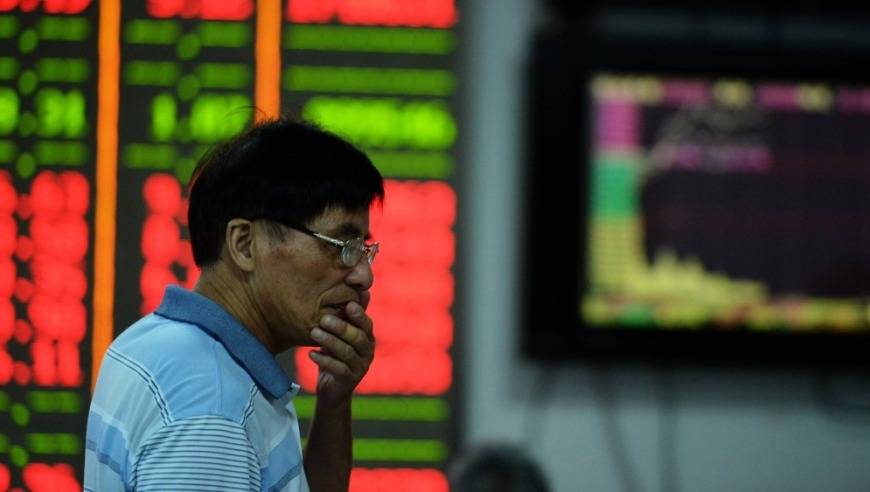
A股拒绝调整,继续新高!
Sou Hu Cai Jing· 2025-08-20 13:06
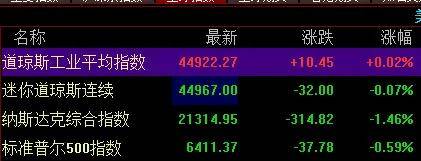
Group 1 - A-shares continue to perform well despite global market declines, with significant support from large financial stocks [1][4] - The recent drop in global markets, including a 1.46% decline in the Nasdaq, has led to a cautious approach from investors, prompting a sell-off [2][4] - The Jackson Hole meeting is anticipated to be crucial, with investors closely watching for comments from Fed Chair Powell regarding monetary policy adjustments [2] Group 2 - The initial low opening of A-shares provided a buying opportunity for investors, particularly in sectors like semiconductors, automotive, and liquor, indicating a structural bull market [4][6] - Margin trading has seen significant inflows, with net inflows of 39.7 billion and 29.4 billion in the previous two trading days, reminiscent of the 2015 market [4] - Major indices continue to reach new highs, although short-term indicators suggest potential for a structural adjustment in the near future [6]
写在新高之后:盈利的持仓何时考虑止盈?又该如何止盈?
天天基金网· 2025-08-20 11:27
Core Viewpoint - The article discusses the importance of profit-taking strategies in a structurally differentiated market, emphasizing the need for investors to balance between realizing gains and maintaining exposure to potential future profits [4][15]. Summary by Sections 1. Essence of Profit-Taking - The fundamental logic of investing is to buy low and sell high, but many investors struggle due to market uncertainty and psychological factors like loss aversion and disposition effect [6][7]. - Current market conditions show significant structural differentiation, with some sectors like AI and innovative pharmaceuticals performing well, while others like consumer goods and real estate lag behind [8][15]. - Historical examples from 2007 and 2015 illustrate that even in bull markets, significant corrections can occur, highlighting the importance of strategic profit-taking [10][15]. 2. Rational Strategies for Profit-Taking - **Target Profit Method**: Set a target return (e.g., +15%, +20%, +30%) for selling part or all of the position. This method is straightforward but can lead to missed opportunities if targets are set too low or too high [17][20]. - **Drawdown Profit-Taking Method**: Establish a maximum drawdown threshold (e.g., -10%, -15%) to lock in profits when the threshold is reached, balancing risk tolerance and fund type [22][24]. - **Index Valuation Percentile Method**: Use historical valuation percentiles (e.g., PE, PB ratios) to determine when to sell, with high percentiles indicating overvaluation and low percentiles indicating undervaluation [26][27]. 3. After Profit-Taking: Reinvestment Strategies - **Rebalancing**: Adjust the asset allocation back to the original target if stock exposure has increased significantly due to market gains [30]. - **Seeking New Opportunities**: Identify undervalued investment opportunities in the current market environment [31]. - **Building Cash Reserves**: Maintain some profits in cash to capitalize on better investment opportunities in the future [32]. 4. Conclusion on Profit-Taking - The essence of profit-taking is risk management rather than market prediction, with a focus on understanding personal investment logic and risk tolerance [33][35].

“慢牛”行情下,各种资金的众生相
Sou Hu Cai Jing· 2025-08-19 12:25
Group 1 - The A-share market reached a historic milestone in August 2025, with the Shanghai Composite Index breaking 3731.69 points, marking a nearly 10-year high since August 2015, indicating a new phase of a slow bull market [2] - The trading volume surged, with A-shares exceeding 2 trillion yuan in daily turnover for six consecutive trading days from August 13 to 18, a phenomenon only seen three times in history [2] - The market's recovery from the tariff impacts of 2024 is evident, suggesting a structural shift in investor sentiment and market dynamics [2] Group 2 - Retail investors showed a gradual entry into the market, with 1.9636 million new accounts opened in July 2025, a year-on-year increase of 70%, but a month-on-month increase of only 19%, indicating a cautious approach [3] - Retail investors are hesitant to enter the market due to the structural characteristics of the current bull market, which features rapid rotations and difficult timing for investments [3] Group 3 - Speculative funds have become the most active participants in the market, with daily trading amounts on the top trading desks reaching 30.8 billion yuan in early August, a 120% increase from the low in April [5] - The rise in speculative trading is attributed to the popularity of quantitative strategies, with algorithmic trading now accounting for over 35% of A-share transactions [5][7] - Market sentiment indicators reflect this trend, with short-term funds showing a 40% increase in elasticity compared to the overall market index [7] Group 4 - Leverage funds have seen a continuous net inflow since late June, exceeding 200 billion yuan, pushing the margin balance above 2 trillion yuan [8] - The proportion of margin trading has increased from 7.2% in April to 10.5%, with 38% of financing directed towards technology sectors like computing power and semiconductors [8] Group 5 - The private equity market has experienced a "volume and price rise," with quantitative products becoming the main growth driver, accounting for 45% of all private equity securities products [10] - The average return for quantitative private equity in the first half of 2025 was 16.3%, while subjective long positions achieved a monthly return of 5.9% in July [10] Group 6 - There is significant potential for further inflow of resident funds into the market, with household deposits reaching 162 trillion yuan, representing 116% of GDP, indicating a large reservoir of capital yet to be deployed [12] - The expected migration of resident funds towards equity assets is anticipated to strengthen in the second half of 2025, with over 2 trillion yuan in deposits and financial products maturing [12] - Foreign capital inflow has reversed a two-year trend of net selling, with a net increase of 18.8 billion USD in domestic stocks and funds in May and June 2025 [13] Group 7 - The A-share market is transitioning from a "policy bottom" to a "funding bottom," characterized by active speculative funds, inflows of leverage funds, and adjustments in private equity [16] - The overall market structure is evolving, with the potential for significant changes in funding dynamics, suggesting that the current market phase may just be beginning [16]

指数超越3674.4点,市场为何感受不到赚钱效应?
Sou Hu Cai Jing· 2025-08-15 01:43
Core Viewpoint - The Shanghai Composite Index successfully surpassed the previous high of 3674.4 points on August 13, closing at 3683.46 points, marking a significant recovery after 10 months of market evolution [1] Market Performance - The index rose by 17.54 points on August 13, achieving a total increase of 660 points, or over 20%, from its lowest point of 3040.69 on April 7 [3] - Despite the index recovery, investor reactions were muted due to the lack of a broad-based profit effect, with only 2733 stocks rising on the same day, leaving nearly half of the stocks either down or flat [3][4] Stock Performance - As of August 13, 3511 stocks had surpassed their opening prices from October 8, 2022, accounting for 65.9% of the total, with 60 stocks seeing gains over 200%, the highest being 1130.80% for a specific stock [4] - However, a significant portion of stocks, approximately 34.1% or about 1900 stocks, either did not rise or fell, with 172 stocks hitting new lows since the "9.24" market [4][5] Market Comparison - The current market is characterized as a "structural bull market," contrasting with the "9.24" market, which was a "universal bull market" where most stocks rose, creating a widespread profit effect [5][6] - On October 8, 2022, the A-share market saw a trading volume of 3.48 trillion yuan, significantly higher than the 2.18 trillion yuan on August 13, indicating a lack of investor engagement in the current market [5] Investment Strategy - Given the current market dynamics, the focus for investors should be on selecting individual stocks rather than following the index, as the index's rise does not equate to wealth growth for most investors [6]

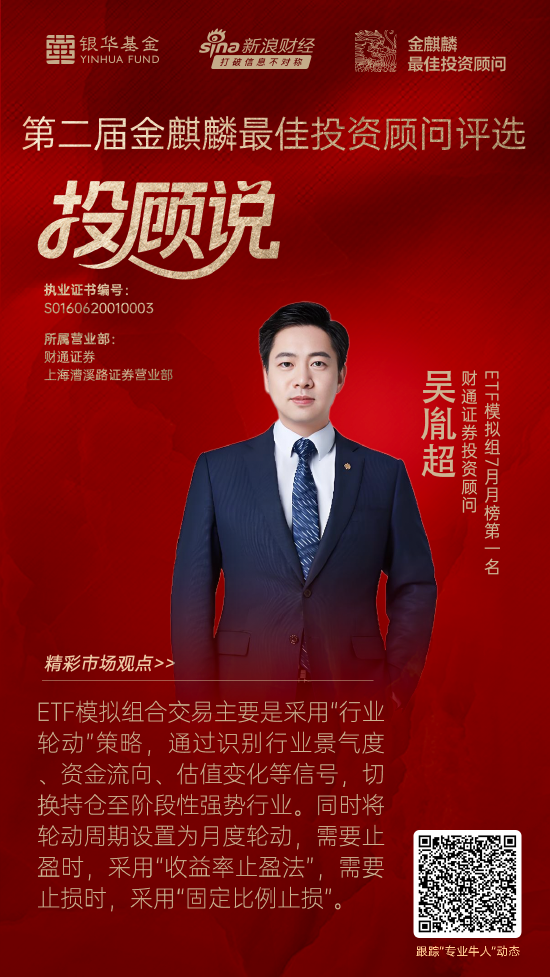
【金麒麟优秀投顾访谈】财通证券投顾吴胤超:ETF模拟组合采用“行业轮动”策略 未来行业服务蕴含四大挑战
Xin Lang Zheng Quan· 2025-08-13 08:21
Core Viewpoint - The Chinese wealth management industry is entering a high-growth cycle, with investment advisors playing a crucial role in guiding asset allocation for clients [1] Group 1: Market Trends and Strategies - The current market is characterized by a "structural bull market," with significant differences in returns across industries, making rotation strategies effective for capturing excess returns [2][3] - The second quarter GDP growth rate was 5.2%, indicating a recovery in corporate earnings and providing a solid foundation for market support [3] - Northbound capital saw a net increase of $10.1 billion in the first half of the year, while financing balances increased by 75 billion yuan since April, reflecting a trend of retail savings entering the market through public funds [3] Group 2: Investment Advisor Challenges and Opportunities - Investment advisors face challenges in transforming service models from "sell-side sales" to "buy-side advisory," requiring a restructuring of income sources and balancing short-term gains with long-term asset allocation [4][5] - The integration of technology is essential, as AI can replace basic analysis tasks, but advisors must enhance their skills in human-machine collaboration to meet clients' emotional needs [4][5] - The demand for cross-disciplinary knowledge is increasing, particularly in areas like retirement, taxation, and cross-border assets, highlighting the need for composite talent in the advisory field [4] Group 3: Future Development of Investment Advisory Services - The core path for enhancing service capabilities involves shifting to a client-centric approach, focusing on account-level returns and satisfaction, and building deep trust with clients [5] - The future of advisory services will rely on "human-machine collaboration," where AI handles standardized processes, allowing advisors to focus on emotional support and client relationships [5] - The goal is to enhance both the financial and emotional value of client accounts, addressing the issue of market gains not translating into client profits, and moving towards a new stage of inclusive finance [5]

8月12日财经简报|比特币突破12万 哪吒汽车出现债务问题
Sou Hu Cai Jing· 2025-08-12 10:20
Market Performance - The Shanghai Composite Index rose by 0.34% to 3647.55 points, with the Shenzhen Component Index increasing by 1.46% and the ChiNext Index by 1.96%, marking a six-day consecutive rise and a new yearly high, driven by sectors such as semiconductors, lithium mining, and computing power [2] - Over 4000 stocks experienced gains, with significant net inflows from northbound funds, boosted by public fund purchases and simplified entry processes for foreign capital [2] Industry Dynamics - Lithium supply and demand tension arose as CATL's Yichun lithium mine halted production due to the expiration of its mining license, alongside issues with salt lake lithium extraction companies, leading to a surge in lithium carbonate futures prices, reaching a four-month high [3] - Huawei announced breakthroughs in AI inference technology, reducing reliance on HBM chips, while major US tech companies continued share buybacks exceeding $980 billion this year, supporting the global tech sector [3] Policy and Economic Factors - The Ministry of Finance introduced personal consumption loan interest subsidy policies covering sectors like automotive and home goods, while the implementation rules for the VAT law are under consultation to refine tax incentives [3] - The US and China have again postponed the imposition of a 24% tariff on $50 billion worth of goods for 90 days, retaining a 10% tariff, signaling a de-escalation in trade tensions [2] Corporate Developments - Neta Auto was listed as a dishonest executor due to debt issues, while Master Kong reported a decline in revenue for the first half of the year, facing transformation pressures in the traditional fast-moving consumer goods sector [4]