
贸易协议

Search documents
涉及关税,特朗普警告
Zheng Quan Shi Bao· 2025-11-11 10:23
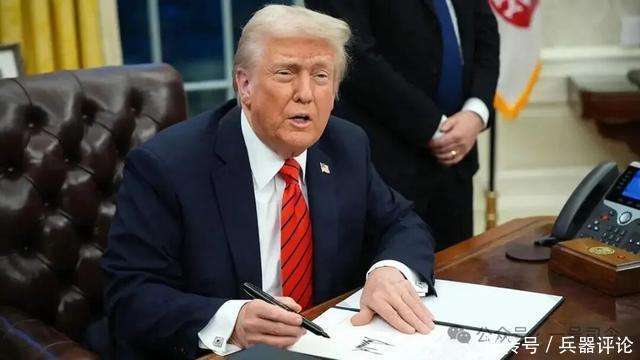
特朗普发出重大警告! 美国总统特朗普当地时间周一警告,如果美国最高法院裁定他在全球范围内实施的全面关税政策无效, 美国将面临经济和国家安全灾难。 特朗普称,如果法院裁定征税违法并须退回已征关税,涉及金额将超过2万亿美元的关税收入与投资。 同日,特朗普还警告称,所有空中交通管制员须立即返岗,任何不返回的人都将受到严厉的"处罚"。 来看详细报道! 涉及关税!特朗普警告 据路透社消息,当地时间周一,美国总统特朗普说,如果美国最高法院裁定其动用紧急权力法对几乎所 有贸易伙伴加征全面关税的行为违宪,美国将面临经济与国家安全危机。 特朗普称,他的政府计划利用关税红利向中低收入的美国人每人发放2000美元,并将剩余收入用于降低 美国债务。 特朗普还在社交媒体发文称,如果法院裁定征税违法并须退回已征关税,涉及金额将超过2万亿美元的 关税收入与投资。"他们给出的数字不对……如果我们在最高法院败诉,将会造成经济灾难,也会造成 国家安全灾难。"特朗普说道。 巴雷特大法官说,法院在处理已缴纳被裁定为非法关税的美国进口商的退款事宜时,"可能会一团糟"。 目前尚不清楚最高法院何时会做出裁决,以及如果特朗普败诉,企业是否有权获得迄今为止已 ...
美印或达成贸易协议沪银看涨
Jin Tou Wang· 2025-11-11 04:50
Group 1 - Silver futures are currently trading above 11845, with an opening price of 11810 and a current price of 11936, reflecting a 3.68% increase [1] - The highest price reached today is 11961, while the lowest was 11704, indicating a short-term volatile trading pattern [1] - Analysts suggest that if silver futures break above 11600, a bullish trend could be established, with potential targets at 12000 and 12380 [4] Group 2 - President Trump announced that the U.S. is close to finalizing a trade agreement with India aimed at enhancing economic and security relations, increasing U.S. energy exports, and promoting investment in key industries [3] - Trump emphasized that the upcoming agreement is significantly different from past agreements and expressed optimism about its imminent completion [3] - There are indications that Switzerland is negotiating a 15% tariff rate on exports to the U.S., which would significantly reduce the previous 39% tariff imposed in August [3]
指数上涨1.90%。大消费板块多行业涨
Xin Yong An Guo Ji Zheng Quan· 2025-11-11 03:45
Market Performance - A-shares saw a rise with the Shanghai Composite Index closing up 0.53% at 4018.6 points, while the Shenzhen Component Index increased by 0.18%[1] - The Hang Seng Index in Hong Kong closed up 1.55% at 26649.06 points, with the Hang Seng Tech Index rising 1.34% and the Hang Seng China Enterprises Index up 1.90%[1] - The total market turnover in Hong Kong decreased to 2147.878 million HKD[1] Economic Indicators - The U.S. government shutdown is expected to end soon, with the Senate likely to vote on a temporary funding bill[1] - China's passenger car sales fell for the first time in over a year, with a 0.8% year-on-year decline in October due to the withdrawal of trade-in subsidies[1][12] International Trade - Switzerland is reportedly close to reaching an agreement with the U.S. to reduce export tax rates from 39% to 15%, with a potential deal expected in the next two weeks[12] - The U.S. trade representative is optimistic about reaching a trade agreement with India, which may involve lowering tariffs on Indian goods[12]






中美关税“休战”,特朗普按时履行中美会晤承诺,美国带头降低对华关税
Sou Hu Cai Jing· 2025-11-08 09:51
Group 1: Trade Agreement Overview - The US and China reached important agreements during their meeting in Busan, including mutual tariff reductions and the suspension of certain export control measures [1][3] - The US will lower the "fentanyl tariff" from 20% to 10% starting November 10, while continuing to suspend the 24% reciprocal tariff on Chinese goods for another year [1][5] - China will also suspend the additional 24% tariffs on US goods and maintain a 10% tariff [1][3] Group 2: Agricultural Trade - China announced the cessation of additional tariffs on US agricultural products such as chicken, wheat, corn, cotton, sorghum, and soybeans, allowing US agricultural products to re-enter the Chinese market [3][5] - The US expects China to purchase at least 12 million tons of US soybeans in the last two months of 2025, and at least 25 million tons annually from 2026 to 2028 [5] Group 3: Export Controls and Negotiation Dynamics - The US will suspend the implementation of the 50% penetrating export control rules and the maritime 301 investigation against China, while China will also pause its related export control measures [3][5] - The negotiations demonstrated flexibility from both sides, leading to a compromise agreement [3][6] Group 4: Economic Implications - The agreement is expected to stabilize the US economy, particularly benefiting agricultural states, and alleviate domestic inflation pressures through tariff reductions [6] - For China, maintaining stable economic relations is crucial for high-quality economic development, and limited concessions can provide more space for technological advancement [6] Group 5: Global Trade Impact - The trade truce is seen as a positive influence on global trade stability, providing clearer policy expectations for multinational companies [6] - The effective weighted trade tariff from the US to China has decreased from 107% to approximately 40%, exceeding market expectations [6] Group 6: E-commerce Industry Outlook - The reduction in US tariffs is a positive signal for the cross-border e-commerce industry, enhancing price competitiveness and potentially improving profit margins [8]

亚洲经济-协议达成是否就意味着贸易会增加?
2025-11-04 01:56
Summary of Key Points from the Conference Call Industry Overview - The report discusses the recent trade agreements between the United States and several Asian economies, excluding China, and their potential impact on trade dynamics in the region [8][10][11]. Core Insights and Arguments - **Trade Agreements and Economic Uncertainty**: The recent trade agreements are expected to reduce uncertainty in trade relations, particularly with China and India, which may support a recovery in non-tech exports [8][10][11]. - **Non-Tech Exports Performance**: Non-tech exports, which account for 75% of Asia's total exports, have shown signs of weakness but are projected to recover gradually starting early next year [3][8][20][22]. - **Impact of Tariff Reductions**: The anticipated reduction in tariffs, particularly with India and China, could lower the average tariff rate on U.S. imports from Asia by approximately 5 percentage points to 20% [11][15][22]. - **Economic Growth Projections**: The report suggests that if non-tech exports recover, it will significantly contribute to broader economic improvements, boosting capital spending and employment [8][10][22]. Additional Important Insights - **Current Export Trends**: As of September 2025, Asia's overall exports have increased by 6%, primarily driven by strong tech exports, which grew by 17% in August [17][18][20]. - **Weakness in Non-Tech Exports**: Non-tech exports have been relatively stagnant, with only a 3% year-over-year increase in August, reflecting a potential "pullback effect" from earlier order placements [20][22]. - **Future Expectations**: The report anticipates a mild recovery in non-tech exports due to decreasing uncertainty and the gradual effects of monetary easing, which should support overall demand [22][23]. Conclusion - The recent trade agreements and expected tariff reductions are likely to play a crucial role in stabilizing and potentially enhancing trade dynamics in Asia, particularly for non-tech exports, which are essential for broader economic recovery [8][10][11][22].
国泰君安期货所长早读-20251104
Guo Tai Jun An Qi Huo· 2025-11-04 01:39
Group 1: Report Industry Investment Ratings - No industry investment ratings are provided in the report. Group 2: Core Views of the Report - China's October RatingDog manufacturing PMI data was mixed. The PMI was 50.6, indicating continued improvement in manufacturing sentiment, but lower than the previous value of 51.2, suggesting a slowdown in growth [7]. - The soymeal market should focus on the return to US soybean cost trading. The domestic soymeal market has been in a "trade news trading" phase since late August. After the US President's Asian trip at the end of October, relevant trade agreements were reached, which had a substantial positive impact on US soybeans and soymeal. The price of US soybeans reached a new high in nearly 16 months, and domestic soymeal rebounded cautiously [8]. - The soda ash market trend remains weak. In the short term, the reduction in glass production in the Shahe area has put pressure on the rigid demand for soda ash. In the medium term, the problems of high production and high inventory in the soda ash industry have not slowed down but increased [10]. Group 3: Summaries Based on Related Catalogs Metals - **Gold**: Focus on US bank risks. The trend strength is 0, indicating a neutral view [13][16][18]. - **Silver**: It is expected to have an oscillatory rebound. The trend strength is 1, indicating a slightly bullish view [13][16][18]. - **Copper**: The decrease in LME inventory limits price decline. The trend strength is 0, indicating a neutral view [13][20][22]. - **Zinc**: It is expected to run strongly. The trend strength is 0, indicating a neutral view [13][23][25]. - **Lead**: The continuous decrease in overseas inventory supports the price. The trend strength is 0, indicating a neutral view [13][26][27]. - **Tin**: Pay attention to macro - impacts. The trend strength is 1, indicating a slightly bullish view [13][29][32]. - **Aluminum**: It is expected to have a strong - oscillatory trend. The trend strength is 1, indicating a slightly bullish view [13][33][35]. - **Alumina**: There is support at the bottom. The trend strength is 0, indicating a neutral view [13][33][35]. - **Cast Aluminum Alloy**: It is expected to have a strong - oscillatory trend. The trend strength is 1, indicating a slightly bullish view [13][33][35]. - **Nickel**: The accumulation of inventory at the smelting end suppresses the price, while the uncertainty at the ore end provides support. The trend strength is 0, indicating a neutral view [13][37][39]. - **Stainless Steel**: The steel price is expected to run in a narrow range at a low level. The trend strength is 0, indicating a neutral view [13][37][39]. Energy and Chemicals - **Carbonate Lithium**: There is a game between improving demand and the expectation of resuming production, and it is expected to oscillate within a range. The trend strength is 0, indicating a neutral view [13][40][43]. - **Industrial Silicon**: The warehouse receipts continue to decline, and the bottom support is relatively strong. The trend strength is 1, indicating a slightly bullish view [13][44][47]. - **Polysilicon**: Pay attention to whether an announcement will be released this week. The trend strength is 0, indicating a neutral view [13][45][47]. - **Iron Ore**: It is expected to fluctuate at a high level. The trend strength is 0, indicating a neutral view [13][48]. - **Rebar**: Affected by sector sentiment, it is expected to have a wide - range oscillation. The trend strength is 0, indicating a neutral view [13][50][53]. - **Hot - Rolled Coil**: Affected by sector sentiment, it is expected to have a wide - range oscillation. The trend strength is 0, indicating a neutral view [13][50][53]. - **Silicon Ferrosilicon**: Affected by sector sentiment and supply - demand factors, it is expected to have a wide - range oscillation. The trend strength is 0, indicating a neutral view [13][54][57]. - **Manganese Silicide**: Affected by sector sentiment and supply - demand factors, it is expected to have a wide - range oscillation. The trend strength is 0, indicating a neutral view [13][54][57]. - **Coke**: It is expected to have a strong - oscillatory trend. The trend strength is 0, indicating a neutral view [13][58][60]. - **Coking Coal**: The macro and sector themes resonate, and it is expected to have a strong - oscillatory trend. The trend strength is 0, indicating a neutral view [13][59][60]. - **Log**: It is expected to oscillate repeatedly [13][61].
超级央行周主要央行利率决议点评与展望
Min Yin Zheng Quan· 2025-11-03 08:49
Group 1 - The report highlights that the Federal Reserve has lowered the federal funds rate target range by 25 basis points to 3.75% to 4.00%, aligning with market expectations, while signaling that further rate cuts are not guaranteed [4][10][14] - The report notes that Japan's core CPI has risen, with Tokyo's CPI increasing by 2.8% year-on-year, indicating potential inflationary pressures that may prompt the Bank of Japan to consider rate hikes [15][34] - The European Central Bank has maintained its key refinancing rate at 2.15%, suggesting that the rate-cutting cycle in the Eurozone is likely over, with a high probability of maintaining current rates in December [15][29] Group 2 - Key economic indicators show that the U.S. fiscal deficit rate has decreased, with September fiscal revenue at $543.7 billion and a projected fiscal deficit of $1.775 trillion for the fiscal year 2025, reflecting a year-on-year decrease of 2.3% [20][21] - The report indicates that the Eurozone's GDP for Q3 has shown a better-than-expected performance, with a quarter-on-quarter growth of 0.2% and a year-on-year growth of 1.3% [26][27] - In Japan, industrial production has rebounded, with a 2.2% month-on-month increase in the industrial production index, signaling a recovery in economic activity [35]
越秀证券每日晨报-20251103
越秀证券· 2025-11-03 02:20
Market Performance - The Hang Seng Index closed at 25,906, down 1.43% for the day and up 29.15% year-to-date [1] - The Hang Seng Tech Index fell 2.37% to 5,908, with a year-to-date increase of 32.23% [1] - The CSI 300 Index decreased by 1.47% to 4,640, with a year-to-date rise of 17.94% [1] - The Dow Jones Index rose slightly by 0.09% to 47,562, with a year-to-date increase of 11.80% [1] Currency and Commodity Overview - The Renminbi Index increased by 1.23% over the past month and 1.47% over six months, currently at 97.550 [2] - Brent crude oil price is at $64.55 per barrel, down 2.24% month-on-month but up 7.01% over six months [2] - Gold prices rose by 3.65% in the last month, currently at $4,001.04 per ounce, with a 21.63% increase over six months [2] Hong Kong Market Review - The Hong Kong stock market has seen a decline, with the Hang Seng Index falling below 26,000 points and experiencing three consecutive days of losses [5] - Major declines were noted in technology stocks, with Alibaba dropping over 4% [5] - The overall trading volume in the main board decreased to over 257.6 billion HKD [5] A-share Market Review - The Shanghai and Shenzhen stock markets closed lower, with the Shanghai Composite Index down 0.81% to 3,954 [6] - The ChiNext Index fell over 2%, while the Shenzhen Component Index decreased by 1.14% [6] - The A-share market has ended a five-month upward trend, with October showing a slight increase of 1.85% for the Shanghai Composite Index [6] US Market Overview - US stock indices reversed previous declines, with the Dow Jones gaining 0.1% and the S&P 500 rising by 0.3% [7] - Notable performances included Amazon's cloud computing business exceeding expectations, driving its stock price up nearly 10% [7] - The Nasdaq Index increased by over 0.6%, marking a three-week consecutive rise [7] European Market Overview - European stock markets showed weakness, with the DAX Index falling nearly 0.7% to 23,958 [8] - The UK FTSE 100 Index ended a nine-day rise, closing at 9,717, down over 0.4% [8] - Overall, European markets are digesting mixed corporate earnings amid moderate inflation data [8] Economic Indicators - Hong Kong's GDP grew by 3.8% year-on-year in Q3 2025, up from 3.1% in Q2 [15] - The software industry in mainland China reported a revenue increase of 13% year-on-year, reaching 11.11 trillion RMB [19] - BYD's new energy vehicle sales in October reached 441,706 units, a month-on-month increase of 11.5% [21]
印度一国有企业宣布暂停
中国能源报· 2025-10-31 11:37
Core Viewpoint - Indian state-owned oil company Hindustan Petroleum Corporation Limited (HPCL) has suspended the purchase of Russian crude oil amid escalating tensions with the United States and new sanctions on Russian oil exports [3][4]. Group 1: Company Actions - HPCL announced the suspension of Russian crude oil purchases following reports of its previous transactions involving nearly $280 million worth of Russian oil transported by sanctioned vessels [3]. - The company stated that it was unaware of the specific vessels used for transportation and their sanction status at the time of delivery, as the oil was sold on a delivered basis [4]. Group 2: Market Context - The suspension comes after the U.S. imposed new sanctions targeting major Russian oil producers, including Lukoil and Rosneft, which has influenced Indian refiners' purchasing decisions [3][4]. - Reliance Industries, India's largest private oil buyer, also decided to halt Russian crude oil purchases, indicating a potential shift in India's oil procurement strategy [4]. Group 3: Broader Implications - The decision by Indian refiners to pause Russian oil purchases may enhance the likelihood of a trade agreement between India and the U.S., as the two countries navigate their complex relationship [4]. - India, being one of the largest crude oil importers globally, relies on foreign suppliers for over 85% of its oil needs, traditionally sourcing from Middle Eastern countries but increasingly turning to discounted Russian oil since 2022 [4].

五矿期货农产品早报:农产品早报2025-10-31-20251031
Wu Kuang Qi Huo· 2025-10-31 01:23
Report Industry Investment Rating No relevant information provided. Core View of the Report - For soybeans and soybean meal, the global soybean supply is expected to remain loose. With high domestic soybean and soybean meal inventories, the import of US soybeans may slow down the domestic de - stocking process and reduce the crushing profit margin. It is recommended to sell on rebounds [2][4]. - For palm oil, the high - yield in Malaysia and Indonesia suppresses the market. If the high - yield in Indonesia cannot be sustained, the inventory accumulation situation may reverse; otherwise, it will continue to be weak. It is recommended to view it as oscillating weakly before the export of Malaysian palm oil improves [8]. - For sugar, the tightening of syrup and premix import controls drives the rebound of Zhengzhou sugar prices. However, due to the negative data of sugarcane crushing and sugar production in Brazil and the expected increase in production in the Northern Hemisphere, it is advisable to wait for the rebound to weaken and then look for short - selling opportunities [10]. - For cotton, the demand during the peak consumption season is weak this year, and there is an expected bumper harvest in the new year. Although the recent increase in the purchase price of new cotton drives the rebound of Zhengzhou cotton, the upward space of cotton prices is relatively limited in the short term [13]. - For eggs, the spot price still has a rebound expectation but is limited by high supply. The futures market is in a state of bottom - building, and it is recommended to wait and see [17]. - For pigs, in the medium term, pig prices are likely to fall easily due to high supply pressure. In the short term, there may be a rebound, and it is recommended to gradually establish reverse - spread positions and short - sell after reaching the pressure level [19]. Summary by Related Catalogs Soybeans and Soybean Meal - **Market Information**: Overnight, CBOT soybeans rose as US officials said China would buy tens of millions of tons of soybeans. On Thursday, the domestic soybean meal spot price was stable, with the East China price at 2910 yuan/ton, the transaction volume at 145,000 tons, and the delivery volume at 196,400 tons. The inventory days of domestic feed enterprises increased by 0.03 days to 7.95 days last week. The soybean meal inventory of oil mills increased, and the soybean inventory decreased month - on - month. The total inventory was high and showed a slight de - stocking trend. MYSTEEL estimated that the domestic soybean crushing volume of oil mills this week would be 2.3392 million tons, compared with 2.3674 million tons last week. As of last Thursday, the soybean sowing rate in Brazil's 2025/26 season had reached 36%, and the rainfall in the main planting areas was at a neutral level [2]. - **Strategy**: The import cost of soybeans is mainly oscillating. With high domestic soybean and soybean meal inventories, the crushing profit is under pressure. It is recommended to sell on rebounds [4]. Palm Oil - **Market Information**: ITS and AMSPEC data showed that the export volume of Malaysian palm oil from October 1 - 10 increased by 9.86% - 19.37% compared with the same period last month, the export volume from October 1 - 15 increased by 12.3% - 16.2%, the export volume from October 1 - 20 increased by 3.4%, and the export volume from October 1 - 25 decreased by 0.4%. SPPOMA data showed that the palm oil production in Malaysia from October 1 - 15 increased by 6.86% month - on - month, the production from October 1 - 20 increased by 2.71%, and the production from October 1 - 25 increased by 1.63%. The high - yield in Malaysia and Indonesia suppresses the market, and there are rumors that Indonesia may suspend the implementation of B50 in 2026. The domestic spot basis is stable at a low level [5]. - **Strategy**: The high - yield in Malaysia and Indonesia suppresses the palm oil market. If the high - yield in Indonesia cannot be sustained, the inventory accumulation situation may reverse; otherwise, it will continue to be weak. It is recommended to view it as oscillating weakly before the export of Malaysian palm oil improves [8]. Sugar - **Market Information**: On Thursday, the price of Zhengzhou sugar futures oscillated weakly. The closing price of the January contract was 5472 yuan/ton, a decrease of 22 yuan/ton or 0.4% compared with the previous trading day. The spot prices of sugar in Guangxi, Yunnan, and processing plants were stable. The customs has tightened the import control of Thai syrup and premix, with the number of suspended enterprises increasing from 35 to 44, and the scope of suspension expanding [9]. - **Strategy**: The tightening of import controls drives the rebound of sugar prices. However, due to the negative data of sugar production in Brazil and the expected increase in production in the Northern Hemisphere, it is advisable to wait for the rebound to weaken and then look for short - selling opportunities [10]. Cotton - **Market Information**: On Thursday, the price of Zhengzhou cotton futures oscillated narrowly. The closing price of the January contract was 13,600 yuan/ton, a decrease of 20 yuan/ton or 0.15% compared with the previous trading day. The spot price of cotton increased slightly, and the basis was 1243 yuan/ton. The China - US economic and trade teams reached some consensus in the negotiations, including the cancellation of the 10% "fentanyl tariff" by the US on Chinese goods [12]. - **Strategy**: The demand during the peak consumption season is weak this year, and there is an expected bumper harvest in the new year. Although the recent increase in the purchase price of new cotton drives the rebound of Zhengzhou cotton, the upward space of cotton prices is relatively limited in the short term [13]. Eggs - **Market Information**: The national egg prices were mostly stable, with a few areas having narrow adjustments. The average price in the main production areas remained at 2.88 yuan/jin. The supply was relatively stable, and the market sales were average. It is expected that the national egg prices will mostly remain stable and a few areas may have narrow adjustments today [15][16]. - **Strategy**: The spot price still has a rebound expectation but is limited by high supply. The futures market is in a state of bottom - building, and it is recommended to wait and see [17]. Pigs - **Market Information**: Yesterday, domestic pig prices showed mixed trends with more price - falling areas. As the end of the month approaches, the enthusiasm of farmers for slaughter is not high, but the downstream's enthusiasm for purchasing decreases after the price increase. It is expected that pig prices will be stable with a weak trend today [18]. - **Strategy**: In the medium term, pig prices are likely to fall easily due to high supply pressure. In the short term, there may be a rebound. It is recommended to gradually establish reverse - spread positions and short - sell after reaching the pressure level [19].