资产配置

Search documents
现在卖掉房子,是“聪明”还是“愚蠢”?内行人一席话,才发现我想错了
Sou Hu Cai Jing· 2025-08-29 22:39
Core Insights - A neighbor recently sold their property at a 20% discount below market price, causing a stir among other homeowners in the community [1][3] - Opinions are divided; some view the sale as a wise move to avoid future losses, while others see it as hasty and potentially damaging to overall property values in the area [3][4] - The real estate market is showing signs of differentiation, with desirable properties still in demand while less attractive ones struggle to sell [4] Market Analysis - According to the National Bureau of Statistics, in the first quarter of this year, 45 cities saw year-on-year increases in new home prices, while only 25 experienced declines, indicating a varied performance across different regions [3] - The current market is characterized by a clear divide: good properties are selling well, while poor ones are not attracting buyers, reflecting a maturation of the market [4] Selling Considerations - Several scenarios warrant selling a property: 1. Upgrading living conditions due to space constraints or poor living conditions [5] 2. Diversifying assets when real estate constitutes a high percentage of total assets [5] 3. Addressing urgent financial needs, such as starting a business or medical emergencies [5] 4. High holding costs for older properties that diminish living quality [6] Cautionary Factors - Certain situations require careful consideration before selling: 1. Selling impulsively due to market rumors without independent analysis [8] 2. Lack of a clear plan for the proceeds from the sale [8] 3. Emotional decision-making based on temporary market fluctuations [8] 4. Selling the only residence, which could lead to housing instability [8] Future Outlook - The real estate market may continue to adjust in the short term, but the long-term value retention of quality properties remains strong [9] - Demand for high-quality housing is expected to persist, particularly in well-located and well-equipped properties, indicating potential value growth [9][10] - The "golden era" of real estate may be over, but a "silver era" is just beginning, suggesting ongoing opportunities in the market [9][10]


固定收益专题:低利率时代资管机构之美国银行保险篇
GOLDEN SUN SECURITIES· 2025-08-29 12:03
Report Industry Investment Rating No information provided in the given content. Core Viewpoints of the Report - The report focuses on the asset allocation strategies of US banks and life insurance companies during the low - interest rate period and their responses to interest rate reversals, and provides implications for the Chinese financial industry [1][9]. - US banks contract high - risk exposures, increase low - risk asset holdings, and adjust the structure of securities investment accounts according to different interest rate stages. The bankruptcy of Silicon Valley Bank is a typical case of liquidity crisis caused by maturity mismatch [1][2]. - US life insurance companies optimize asset allocation in different accounts, increase equity - based asset investments, lengthen bond durations, and lower bond credit ratings to obtain higher returns [3][5]. Summary by Directory 1. Low - interest Rate Period of US Bank Asset Allocation 1.1 US Bank Asset - side Allocation Situation - US banks contract high - risk exposures, reduce high - risk asset holdings (such as real estate construction and development loans), and increase low - risk asset holdings (such as Treasury bonds). The proportion of real estate construction and development loans dropped from 8.0% in 2007 to 2.9% in Q2 2012, while the proportion of Treasury bond holdings increased during several periods [10]. - In terms of account structure, in the early stage of low - interest rates, the proportion of securities - related assets increased, but the proportion of income decreased. In the later stage, the scale of loan business increased. The proportion of loan - related assets decreased from 61% in Q2 2007 to 55% in Q4 2010 and then gradually recovered [13]. - In securities investment accounts, the proportion of AFS accounts increased in the early stage of low - interest rates and shifted to HTM accounts in the later stage. From 2013 - 2017, the average HTM holding ratio increased by 11.8 percentage points compared with 2009 - 2012, and in 2022, it increased by 15.9 percentage points compared with 2020 - 2021 [16]. 1.2 Silicon Valley Bank Event Occurrence - In 2023, Silicon Valley Bank went bankrupt due to its aggressive business strategy and loopholes in interest rate risk management. During the low - interest rate period, it adopted a single - variety, long - term asset allocation model, ignoring potential interest rate risks. By the end of 2022, the total investment in securities - related assets was as high as $120.1 billion, accounting for 57% of assets [17][20]. - During the rapid interest rate increase period, the negative convexity of MBS lengthened the duration passively, and the accounting treatment concealed the real risk. As of the end of 2022, the unrealized loss of HTM assets was as high as $15.16 billion [29]. - The early business model had a maturity mismatch between assets and liabilities, and the structural defects on the liability side amplified the crisis. In 2023, due to increased depositor withdrawal demand and difficulty in attracting deposits, it announced the sale of $21 billion of AFS and recognized an $1.8 billion loss, leading to a run and being taken over by the FDIC [31]. 1.3 Silicon Valley Bank Event Disposal and Systemic Risk - After the Silicon Valley Bank event, the treatment measures included takeover, deposit insurance, liquidity support, and mergers. The FDIC estimated that the risk disposal would cost about $20 billion to the US Deposit Insurance Fund [34]. - There are systemic risks during the rapid interest rate increase period in the US. Some small and medium - sized US banks are more affected by spill - over effects, such as Signature Bank and First Republic Bank. A large amount of deposits flowed out of small US banks after the event [35][36]. 2. Low - interest Rate Period of US Life Insurance Asset Allocation 2.1 Optimize Asset Allocation in Different Accounts and Increase Equity - based Asset Investment in Independent Accounts - US life insurance funds are managed through general accounts and independent accounts. In the general account, the proportion of bond investments decreased from about 72.4% in 2010 to 63.8% in 2023, while in the independent account, the average stock investment ratio was about 78.58% from 2009 - 2021 [44][45]. 2.2 Expand the Proportion of Corporate Bonds and Lengthen Asset Duration to Narrow the Duration Gap - US life insurance companies increase the proportion of investment - grade corporate bonds (AAA) and show a characteristic of lengthening bond durations. The weighted average duration of bond investments increased from 10.7 years in 2007 to 12.265 years in 2022 [50]. 2.3 Obtain Risk Premium Returns by Lowering Bond Credit Ratings - US life insurance companies lower bond credit ratings to obtain risk premium compensation. The proportion of Class 1 bonds decreased from 68.15% in 2005 to 59.10% in 2023, while the proportion of Class 2 bonds increased from about 26.11% to 35.88% [59]. 2.4 Increase the Proportion of Independent Account Products on the Liability Side - The independent account's liability side consists of investment - type policies. As interest rates decline, the investment scale of independent accounts expands, and the stable management fee income can support the investment profits of life insurance companies [67]. Implications for China - Banks should contract high - risk exposures, increase low - risk asset holdings, and adjust the structure of securities investment accounts according to interest rate trends [4][68]. - Banks should pay attention to the stability of asset - liability structures, use risk management tools such as stress tests, and make contingency plans for extreme situations [4]. - Financial risk disposal should be prompt and forceful. - Insurance companies should optimize asset allocation in different accounts, appropriately increase equity - based asset investments, and obtain higher returns by lengthening bond durations and lowering bond credit ratings [5][70].
均衡权益仓位设计 农银平衡价值混合基金9月1日起发行
Zhong Zheng Wang· 2025-08-29 07:45
Group 1 - The A-share market is currently experiencing a phase of valuation repair and structural differentiation, leading to a configuration dilemma for investors who are concerned about high equity positions amid volatility and missed opportunities in fixed income [1] - The Agricultural Bank of China Balanced Value Mixed Fund will officially launch on September 1, featuring a core design of "30%-70% dynamic adjustment of equity positions" to provide a professional solution for investors seeking long-term returns with controlled risk [1][2] - The fund's design breaks away from the traditional single attribute of mixed funds, focusing on "large asset rotation" as the core strategy for portfolio construction [1][2] Group 2 - The 30%-70% equity asset allocation range is based on a dynamic decision-making framework that considers macroeconomic cycles, market valuation levels, and industry prosperity [2] - The fund aims to meet the core demands of three types of investors: those with moderate risk tolerance seeking a core position for family asset allocation, those looking for value appreciation for retirement savings through a "fixed income base + equity enhancement" model, and institutional investors using it as a balancing tool in their overall asset allocation [2] - The proposed fund manager, Liao Ling, has developed an investment system focused on "deep fundamental research + valuation safety margin" through various market cycles, emphasizing high ROE, low PEG, and strong cash flow in stock selection [3] Group 3 - Liao Ling plans to adopt a prudent building strategy for the new fund, balancing return expectations with volatility control, gradually accumulating a safety cushion while increasing equity positions [3] - The focus will be on selecting quality companies based on industry trends, performance trajectories, and fundamental stability, while also considering valuation to avoid high-valuation stocks that may experience significant volatility due to external shocks [3]
2025-2029全球展望及资产配置策略
Sou Hu Cai Jing· 2025-08-29 07:34
Group 1: Global Economic Outlook - The global economy is currently in a phase of significant uncertainty due to frequent adjustments in U.S. trade policies, accumulating debt risks, and increasingly complex geopolitical situations [1][2] - In the first half of 2025, global economic recovery is primarily driven by exports and investments in the U.S., while private consumption remains relatively weak [1][2] - Different economies exhibit varied characteristics: China's growth is supported by strong exports and investment, the U.S. shows signs of temporary weakness followed by a rebound in private consumption, and the Eurozone experiences a continuous recovery in services and manufacturing [1][2] Group 2: Economic Projections - China's GDP growth is projected at approximately 4.8% in 2025, with expectations of moderate growth in subsequent years driven by fiscal policy and structural transformation towards technology and green investments [1][24] - The U.S. economy is expected to grow at a rate of 1.9% in 2025, with a compound annual growth rate of about 2.02% from 2026 to 2030, influenced by tariff policies and potential monetary easing [2][28] - The Eurozone's GDP growth is forecasted to increase from 0.9% in 2025 to 1.3% by 2027, supported by wage growth, improved employment, and favorable financing conditions [2][30] Group 3: Asset Allocation Trends - There has been a notable trend of "reducing traditional assets and increasing allocations to fixed income and alternative assets" over the past five years, as global investors adjust their portfolios to manage market volatility and seek returns [2][42] - The attractiveness of bonds has increased with rising yields, while alternative assets like private equity and infrastructure are gaining more attention [2][42] - International institutions are diversifying their strategies, with some maintaining risk appetite through credit products, while others prefer lower volatility fixed income assets [3][34] Group 4: Sector-Specific Insights - The AI revolution is becoming a significant driver in the technology sector, with high demand for data centers, cloud services, and semiconductors [4] - The healthcare sector is experiencing robust demand due to aging populations, combining defensive and growth characteristics [4] - The defense and military industry is benefiting from increased global defense spending, while manufacturing is poised for new investment opportunities amid global supply chain restructuring [4]
关于秋季市场,券商最新展望!
天天基金网· 2025-08-29 05:56
Core Viewpoint - The article emphasizes a positive outlook for China's asset market, driven by improved liquidity and supportive fiscal policies, with a long-term trend of asset revaluation expected [2][4][5]. Group 1: Market Outlook - Analysts from Huatai Securities express optimism about the continuation of diverse fiscal policies and improved liquidity, which are expected to support growth [5]. - The chief macroeconomic analyst at Huatai Securities highlights the need for investors to be cautious about the declining credibility of the US dollar and suggests a shift towards scarce assets like equities [5]. - The chief strategist at Guojin Securities describes the current market as entering a "dawn" phase, with expectations of stabilizing capital returns for domestic manufacturing firms [6]. Group 2: Liquidity and Capital Flows - Huatai Securities reports a significant net inflow of trading funds into the market, reaching the highest activity level since 2016, with further room for foreign capital to increase positions in A-shares [8]. - Data indicates that the net inflow of funds into A-shares accounts for approximately 2.1% of the free float market value, suggesting a slight net inflow status [8]. - Analysts note a potential shift of household funds from bank wealth management products to non-bank financial products and capital markets, indicating a positive trend for stock market investments [8]. Group 3: Investment Focus - Analysts recommend focusing on the technology sector, which is expected to lead the market as China transitions from a follower to a leader in the global economy [10]. - The structural characteristics of the market are anticipated to resemble those of the Nasdaq, with technology being a core asset for both domestic and foreign investors [10]. - Recommendations include paying attention to physical assets benefiting from overseas manufacturing recovery and capital goods, as well as insurance and brokerage sectors expected to see improved capital returns [11].


新华保险(601336):转型兑现,盈利提升
Guoxin Securities· 2025-08-29 05:26
Investment Rating - The investment rating for the company is "Outperform the Market" [6][4]. Core Views - The company has achieved significant growth in both business value and investment returns, with a notable increase in profit [1]. - The individual insurance and bank insurance channels have driven substantial growth in new premium income, with year-on-year increases of 5.5% and 65.1% respectively [2]. - The company is focusing on long-term and structured product transformation, leading to a 58.4% year-on-year increase in new business value [3]. - The company maintains a high level of investment returns, with an annualized total investment return rate of 5.9% [3]. Summary by Sections Business Performance - In the first half of 2025, the company achieved original insurance premium income of 121.26 billion yuan, a year-on-year increase of 22.7%, and a new business value of 6.18 billion yuan, up 58.4% [1]. - The company reported a net profit attributable to shareholders of 14.80 billion yuan, reflecting a year-on-year growth of 33.53% [1]. Channel Performance - The individual insurance channel contributed significantly to new premium income, with first-year premium income for long-term insurance reaching 14.51 billion yuan, a 70.8% increase year-on-year [2]. - The bank insurance channel saw first-year premium income for long-term insurance reach 24.94 billion yuan, a remarkable 150.3% increase year-on-year [2]. Product Strategy - The company is enhancing the proportion of long-term insurance products, with first-year premium income for long-term insurance reaching 25.53 billion yuan, a 64.9% increase year-on-year [3]. - The company is also increasing the share of floating return-type dividend insurance products, with premium income of 18.27 billion yuan, up 24.9% year-on-year [3]. Investment Returns - The company achieved investment income of 18.76 billion yuan, a year-on-year increase of 33.7%, and interest income of 16.21 billion yuan, up 5.3% [3]. - The company's high-dividend OCI equity investments grew from 30.64 billion yuan at the beginning of the year to 37.47 billion yuan, an increase of 6.83 billion yuan [3]. Financial Forecast - The company maintains its earnings forecast for 2025 to 2027, expecting EPS of 8.28, 8.93, and 9.02 yuan per share respectively, with current stock prices corresponding to P/EV ratios of 0.71, 0.65, and 0.60 [4][5].

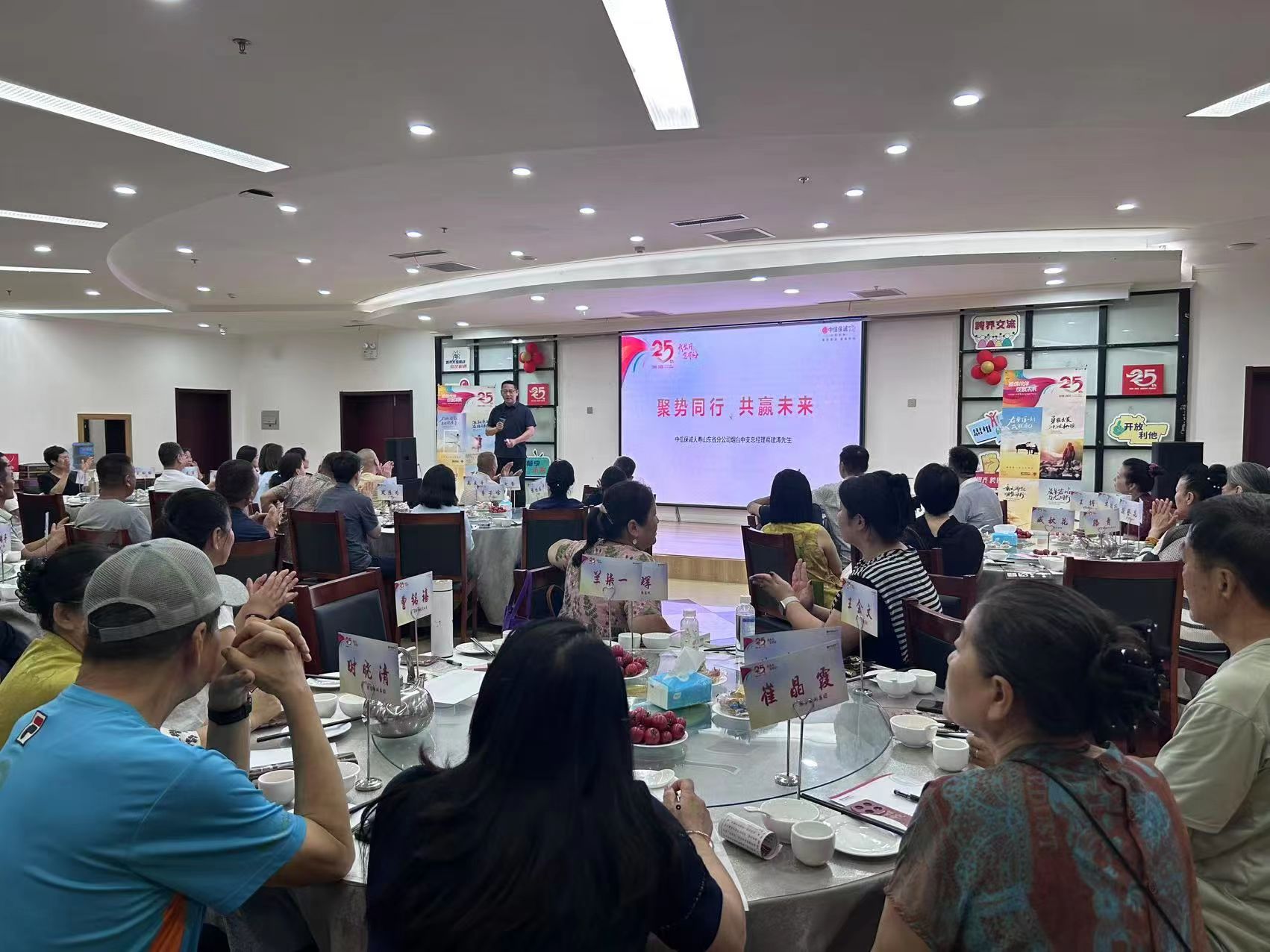
诚信伙伴·成就未来|中信保诚人寿淄博中支举办25周年司庆暨客户节交流论坛会
Qi Lu Wan Bao· 2025-08-29 03:09
Group 1 - The core theme of the event is "Integrity Partners, Achieving the Future," celebrating the 25th anniversary of CITIC Prudential Life Insurance [1] - The forum featured discussions on "asset allocation" and industry trends, providing valuable insights for partners and clients [3] - The event served as a platform for collaboration, resource connection, and strategic alignment among partners and clients, enhancing mutual trust and paving the way for long-term cooperation [3] Group 2 - The company launched a series of special activities during the customer festival, including cancer screening services and expedited policy upgrades, aimed at delivering exceptional customer experiences [3] - The forum successfully gathered diverse perspectives and wisdom from participants, focusing on industry trends and development opportunities [3] - The event not only expanded the meaning of the 25th anniversary celebration but also strengthened the relationship between CITIC Prudential Life Insurance and its partners and clients [3]
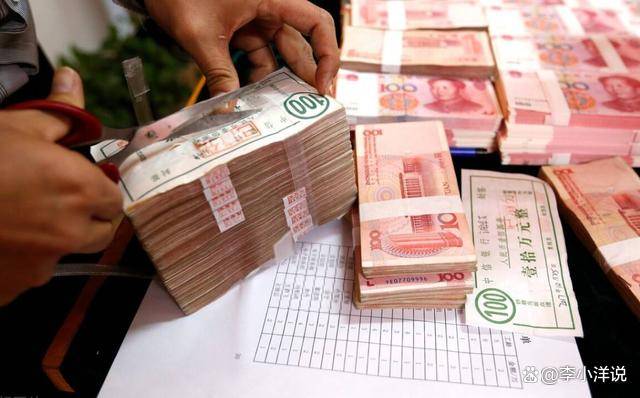
100万元放在银行里吃利息,靠利息过日子,可以过上怎样的生活?
Sou Hu Cai Jing· 2025-08-29 00:07
Core Insights - The article discusses the feasibility of living off 1 million yuan in savings in China by 2025, emphasizing the need for careful financial planning rather than relying solely on bank interest [1][12] Income Analysis - Interest income is fundamental for living off savings, with current rates suggesting that a 1 million yuan deposit in a state-owned bank yields approximately 28,000 yuan annually at a 2.8% interest rate [3] - Higher returns can be achieved through large time deposits, with rates reaching up to 3.3%, resulting in an annual income of 33,000 yuan [3] - For those seeking higher yields, structured deposits or wealth management products offer annualized returns between 3.5% and 5%, potentially generating 40,000 yuan annually at a 4% rate [5] Cost of Living - Living costs vary significantly across different cities, impacting the quality of life based on interest income [6] - In lower-tier cities, monthly expenses can be maintained at 2,000-3,000 yuan, allowing for a comfortable lifestyle on interest income [6] - In second-tier cities like Chengdu and Wuhan, monthly costs rise to 3,000-4,000 yuan, necessitating strict budget management [6] - In first-tier cities such as Beijing and Shanghai, monthly expenses exceed 6,000 yuan, making it challenging to live solely on interest income [6] Risk Considerations - Inflation poses a significant risk, with an estimated annual rate of 2.5% potentially reducing the real value of 1 million yuan to about 780,000 yuan over ten years [10] - A downward trend in interest rates could further diminish passive income from savings [10] - Unexpected expenses, such as medical emergencies, could necessitate drawing from principal savings, thereby reducing future interest income [11] Optimization Strategies - Diversifying investments can enhance income and mitigate risks, such as allocating funds to large time deposits, government bonds, and bond funds to achieve an overall return of around 3.5% [11] - Purchasing commercial insurance can help manage health-related financial risks [11] - Relocating to lower-cost areas while renting out property in high-cost cities can also improve financial stability [11] Conclusion - For individuals with low consumption needs living in smaller cities, it may be feasible to maintain a basic lifestyle on interest income, albeit with limited discretionary spending [14] - Families or those with higher consumption needs may require 2-3 million yuan to achieve a comfortable lifestyle, necessitating dynamic asset management [14] - Relying solely on 1 million yuan for living expenses may only provide a basic standard of living, highlighting the importance of additional income sources and asset growth strategies [14]
头部券商最新研判:国内财政政策保持多样性 A股ROE拐点或在四季度出现
Shang Hai Zheng Quan Bao· 2025-08-29 00:02
Group 1 - The 2025 Autumn Investment Summit held by Huatai Securities focused on long-term planning and new opportunities in growth sectors such as digital assets, AI+, and innovative pharmaceuticals [1] - Huatai's Chief Macro Economist Yi Han indicated that domestic fiscal policy will maintain diversity and that the U.S. may continue a trend of monetary easing, contributing to global economic resilience [1] - Yi Han warned investors about the declining credibility of the U.S. dollar and suggested a more open attitude towards asset allocation, particularly in scarce assets like equities [1] Group 2 - Huatai Securities' Head of Research Zhang Jiqiang noted that the price-performance ratio between stocks and bonds is narrowing, with a focus on whether corporate earnings can follow market recovery [2] - Zhang expressed confidence in the long-term revaluation of Chinese assets, despite potential volatility in the stock market [2] - From a quantitative perspective, Huatai's Chief of Financial Engineering Lin Xiaoming advised caution regarding U.S. equities, which are at a cyclical high, while suggesting opportunities in U.S. Treasuries as the economic cycle shifts [2] Group 3 - The commodity market is experiencing a pause in the long-term upward trend of gold, with a recommendation for investors to adopt a wait-and-see approach, while still recognizing its hedging value [3] - Copper prices may decline if the global economy enters a downturn, while black commodities and crude oil are currently at relatively low levels, expected to experience wide fluctuations [3] Group 4 - Huatai's Chief Strategist He Kang suggested that the A-share market may see a return on equity (ROE) turning point in the fourth quarter, with a shift from liquidity-driven to fundamentals-driven market dynamics [4] - He recommended focusing on sectors that have shown signs of overbuying while reserving some capital to manage potential future volatility [4] Group 5 - Huatai's Analyst Li Yujie highlighted the increasing importance of the Hong Kong stock market, emphasizing that it should not be viewed merely as an extension of the A-share market but as a distinct market with core and scarce assets [5] - The advantages of the Hong Kong market lie in sectors such as internet and software, new consumption, and innovative pharmaceuticals, which are currently experiencing positive trends [5]
现在该买金还是卖金?8月28日黄金价格全面分析,看懂再出手
Sou Hu Cai Jing· 2025-08-28 23:14
Core Insights - The international gold market is experiencing a significant surge, with spot gold prices surpassing $3,383 per ounce, leading to a corresponding increase in domestic gold prices to 779.1 yuan per gram [1][3]. Price Comparison - A comprehensive survey of major gold retailers reveals substantial price differences, with brands like Chow Sang Sang and Lao Feng Xiang exceeding 1,000 yuan per gram. Chow Sang Sang's price reached 1,014 yuan per gram, while China Gold's price was lower at 969 yuan per gram, resulting in a price difference of 45 yuan per gram [4]. - For a 20-gram gold bracelet, purchasing from China Gold would cost approximately 19,380 yuan, while from Chow Sang Sang it would be around 20,280 yuan, indicating a nearly 1,000 yuan difference [4]. Investment in Gold Bars - The price variation in gold bars is also notable, with Chow Tai Fook offering gold bars at 896 yuan per gram, while Lao Miao Gold is at 965 yuan per gram. Chow Sang Sang and Xie Rui Lin are both priced at 948 yuan per gram. For larger purchases, selecting a lower-priced brand can lead to significant savings [5]. Recycling Market - The recycling segment of the gold market is active, with current buyback prices at 426 yuan per gram for 585 gold/14K gold, 280 yuan per gram for platinum, and 766 yuan per gram for gold bars. This presents a favorable opportunity for individuals looking to liquidate idle gold [6]. Buying vs. Selling - Investors are advised to make decisions based on their actual needs. For essential purchases, opting for lower-priced brands is recommended to avoid brand premiums. For investment purposes, gold bars or gold ETFs are suggested due to their lower costs and better liquidity [7][8]. - For those already holding gold and considering selling, a phased approach to selling can help lock in profits [9]. Gold Allocation - Gold is recognized as a crucial asset for risk diversification in investment portfolios. Investors are encouraged to assess their financial situation and risk tolerance when allocating gold assets, ensuring a balanced approach with other asset classes to mitigate risks and achieve value preservation [11][13].