
结构性货币政策工具

Search documents
盛松成:未来不排除继续降息,但更可能采取渐进式调整
Di Yi Cai Jing· 2026-01-10 09:04
Group 1 - The core viewpoint emphasizes a monetary policy approach focused on reserve requirement ratio (RRR) cuts as the primary tool, supplemented by interest rate cuts, to work in tandem with more proactive fiscal policies to stabilize economic operations [1] - The current external environment and domestic economy exhibit significant uncertainty, leading to a preference for gradual monetary policy adjustments rather than aggressive actions [1] - RRR cuts are deemed more relevant for the current Chinese economy, as the banking system plays a dominant role in the financial framework, with over 60% of government bonds and nearly 80% of local government bonds held by commercial banks [1] Group 2 - Caution is advised regarding substantial interest rate cuts due to the narrowing net interest margins of commercial banks, which have decreased to approximately 1.42% as of the end of Q3 2025, significantly lower than historical highs [2] - The reliance on indirect financing and the stability of the banking system are critical, as pressures on the financial system combined with real estate risks could pose greater challenges to macroeconomic stability [2] - There is still potential for interest rate cuts, given the low domestic price levels and positive real interest rates, with future adjustments likely to be gradual rather than drastic [2] - The importance of structural monetary policy tools is expected to rise, directing credit resources towards key areas such as technological innovation and the real estate "white list," enhancing policy support without significantly lowering overall interest rates [2]
济源人民币贷款增速连续16个月居全省第一
Sou Hu Cai Jing· 2026-01-09 23:11
Group 1 - The core viewpoint is that by the end of December 2025, the total balance of RMB loans and deposits in Jiyuan is expected to exceed 200 billion yuan, marking a historic milestone with loans at 100.965 billion yuan and deposits at 102.001 billion yuan. The year-on-year growth rate of RMB loans is 20.27%, maintaining the highest growth rate in the province for 16 consecutive months [1] - Jiyuan's loan-to-deposit ratio is projected to reach 155.84%, significantly higher than the provincial average of 115.59%, ranking first in the province [1] - The growth of various loan categories, including technology loans, green loans, inclusive small and micro loans, and agricultural loans, has outpaced the provincial average [1] Group 2 - To enhance the precision of credit allocation, Jiyuan has initiated special actions such as "Golden Benefit for Enterprises" and green financial innovation, establishing a "white list" for key sectors to guide financial institutions in meeting enterprise needs, benefiting over a thousand enterprises with loans exceeding 10 billion yuan [2] - Jiyuan has implemented a debt "three replacement" mechanism to alleviate financing pressure on enterprises, utilizing monetary policy tools like re-loans and rediscounts, resulting in a total of 12.36 billion yuan in "three replacements" since 2025, saving enterprises approximately 134 million yuan in interest [2] - The weighted average interest rate of newly issued enterprise loans has decreased by 0.55 percentage points year-on-year, effectively reducing the financial burden on operating entities [2]
第三篇钟才平,来了
财联社· 2026-01-09 03:36
Core Viewpoint - The article emphasizes the importance of integrated macroeconomic policies to enhance governance effectiveness and support sustainable economic growth in China [1]. Group 1: Macroeconomic Policy Overview - Macroeconomic policies are crucial for maintaining stable economic operations and achieving high-quality development in China. The implementation of a more proactive fiscal policy and moderately loose monetary policy in 2025 is highlighted as a key driver for economic recovery [2]. - The central economic work conference outlines that in 2026, macroeconomic policies will focus on stability and quality improvement, continuing to implement proactive policies while enhancing counter-cyclical and cross-cyclical adjustments [2]. Group 2: Fiscal Policy - The proactive fiscal policy aims to increase efficiency through targeted support for key projects and significant investment in basic research. In 2025, the fiscal deficit rate will be raised, and larger government bonds will be issued to support local governments and manage hidden debts [3]. - The article stresses the need for effective fiscal management, optimizing expenditure structures, and ensuring that public funds are used efficiently to support growth and social welfare [4]. Group 3: Monetary Policy - A flexible and effective monetary policy is essential, with measures such as timely interest rate cuts and targeted support for key sectors introduced in 2025 to create a conducive financial environment for economic recovery [5]. - The central economic work conference emphasizes the importance of maintaining liquidity and managing social financing costs to support economic growth and price stability [5]. Group 4: Policy Coordination - The article highlights the necessity of enhancing the consistency and effectiveness of macroeconomic policies to avoid conflicts and ensure that various measures work synergistically [7]. - It calls for a systematic approach to policy evaluation, integrating economic and non-economic policies, and ensuring collaboration between fiscal and monetary policies to achieve cohesive economic management [8].


钟才平: 发挥政策集成效应,提升宏观经济治理效能
Ren Min Ri Bao· 2026-01-09 02:27
Group 1: Macroeconomic Policy Overview - The macroeconomic policy is crucial for maintaining stable economic operations and advancing high-quality development in China [1] - In 2025, China will implement a more proactive fiscal policy and a moderately loose monetary policy for the first time in 14 years, which will significantly support economic recovery [1] - The 2026 macroeconomic policy will focus on stability and progress, enhancing quality and efficiency while integrating existing and new policies [1] Group 2: Fiscal Policy - The fiscal policy in 2025 will increase the deficit ratio, issue larger government bonds, and enhance transfer payments to local governments to support growth and risk prevention [2] - There is a need to address local fiscal difficulties by establishing mechanisms for increasing revenue and reducing expenditure, ensuring the sustainability of fiscal policies [2] - The national public budget expenditure is projected to reach 29.7 trillion yuan in 2025, with 10.3 trillion yuan allocated for transfers to local governments [3] Group 3: Monetary Policy - The monetary policy in 2025 will include timely reductions in reserve requirements and interest rates, providing a favorable financial environment for economic recovery [4] - The emphasis will be on maintaining liquidity and promoting low financing costs while addressing structural economic issues through targeted monetary tools [4] - A diverse toolbox of monetary policy instruments will be utilized to balance short-term and long-term goals, supporting the real economy while ensuring financial system health [4] Group 4: Policy Coordination and Effectiveness - The effectiveness of macroeconomic policies relies on precise implementation and coordination between fiscal and monetary policies, as well as between various reform measures [5][6] - There is a need to enhance the consistency and effectiveness of macroeconomic policies to avoid conflicts and ensure that policies work synergistically [5][6] - Strengthening the management of expectations and improving communication about economic policies will be essential for boosting social confidence [6]
第三篇钟才平,来了
Ren Min Wang· 2026-01-09 01:50
Core Viewpoint - The article emphasizes the importance of integrated macroeconomic policies to enhance governance effectiveness and support China's economic stability and high-quality development [3][4]. Group 1: Macroeconomic Policy - Macroeconomic policies are crucial for maintaining stable economic operations and achieving high-quality development in China [3]. - In 2025, China will implement a more proactive fiscal policy and a moderately loose monetary policy for the first time in 14 years, which will significantly aid in economic recovery [3][4]. - The 2026 macroeconomic policy will focus on stability and quality improvement, continuing to implement proactive policies and enhancing counter-cyclical and cross-cyclical adjustments [3][4]. Group 2: Fiscal Policy - The fiscal policy in 2025 will increase the deficit ratio and issue a larger scale of government bonds, supporting local governments and addressing hidden debt replacement policies [4]. - There is a need to enhance local fiscal capacity and establish mechanisms for increasing revenue and reducing expenditure to ensure basic public services [4][5]. - The total public budget expenditure for 2025 is projected to reach 29.7 trillion yuan, with 1.03 trillion yuan allocated for transfers to local governments [5]. Group 3: Monetary Policy - The monetary policy in 2025 will include timely reductions in reserve requirements and interest rates, providing a favorable financial environment for economic recovery [6]. - The central economic work conference highlights the importance of stabilizing economic growth and ensuring reasonable price recovery as key considerations for monetary policy [6]. - A variety of monetary policy tools will be utilized flexibly to support the real economy while maintaining financial system health [6][7]. Group 4: Policy Coordination - Effective macroeconomic governance requires a focus on the consistency and effectiveness of policies, integrating economic and non-economic policies [8][9]. - There is a need to strengthen the coordination between fiscal and monetary policies to ensure that various measures work in concert to stabilize the economy [9]. - The article stresses the importance of managing expectations and enhancing narrative capabilities to boost social confidence in the economy [9].
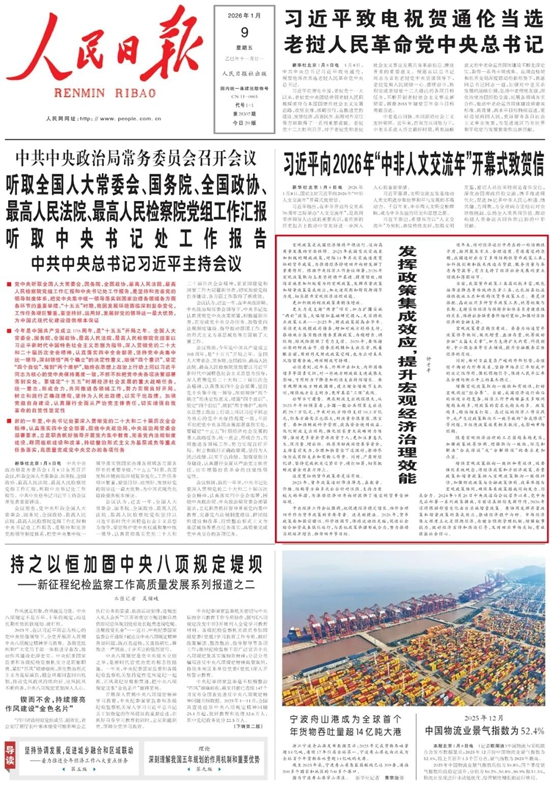
发挥政策集成效应,提升宏观经济治理效能
Ren Min Ri Bao· 2026-01-08 22:47
Core Viewpoint - The macroeconomic policy is crucial for maintaining stable economic operations and advancing high-quality development in China, with a focus on implementing more proactive fiscal and monetary policies in 2025 and 2026 [1] Fiscal Policy - In 2025, the fiscal policy will increase the deficit ratio and arrange a larger scale of government bonds, enhancing local transfer payments to support growth, structural adjustments, and risk prevention [2] - The fiscal expenditure for 2025 is projected to reach 29.7 trillion yuan, with central government transfers to local governments amounting to 10.3 trillion yuan, indicating significant fiscal pressure [3] - There is a need to address local fiscal difficulties by establishing mechanisms for increasing revenue and reducing expenditure, ensuring the basic financial security for grassroots services [2] Monetary Policy - The monetary policy in 2025 will adopt a flexible approach, including timely reductions in reserve requirements and interest rates to create a favorable financial environment for economic recovery [4] - The emphasis will be on maintaining liquidity and promoting low financing costs while addressing structural economic issues through targeted monetary policy tools [4] - A diverse toolbox of monetary policy instruments will be utilized to balance short-term and long-term goals, supporting the real economy while ensuring the health of the financial system [4] Policy Coordination - There is a strong emphasis on the need for precise and effective macroeconomic policies, focusing on enhancing the transmission mechanism of monetary policy and supporting key areas such as domestic demand and technological innovation [5] - The coordination of fiscal and monetary policies is essential to prevent inconsistencies that could undermine market expectations and policy effectiveness [6] - The government aims to strengthen the consistency and effectiveness of macro policies, ensuring that various measures work in concert to stabilize the economy [6]
宏观纵览 | 央行2026年政策定调,降准降息可期
Sou Hu Cai Jing· 2026-01-08 08:44
Group 1 - The People's Bank of China (PBOC) has outlined seven key priorities for 2026, focusing on monetary policy implementation, financial services for the real economy, risk prevention, and financial reform and opening-up [3] - The monetary policy for 2026 will be moderately accommodative, aiming to promote high-quality economic development and reasonable price recovery, utilizing various tools such as reserve requirement ratio (RRR) cuts and interest rate reductions [4][5] - The PBOC aims to maintain a stable RMB exchange rate at a reasonable and balanced level while preventing excessive fluctuations, with a supportive external environment expected for the RMB's moderate appreciation in 2026 [6][7] Group 2 - The PBOC's accommodative monetary policy will have two main directions: total policy and structural policy, ensuring liquidity remains ample and financing conditions are relatively loose [4] - Structural policies will focus on targeted support for key areas such as expanding domestic demand, technological innovation, and small and micro enterprises, with an increase in the overall quota of structural monetary policy tools [5] - The PBOC is exploring mechanisms to provide liquidity support to non-bank financial institutions in specific scenarios to mitigate financial risks, reflecting a proactive approach to financial stability [8][9][10]

货币政策继续适度宽松 央行释放新信号
Sou Hu Cai Jing· 2026-01-08 06:42
Core Viewpoint - The People's Bank of China (PBOC) will continue to implement a moderately accommodative monetary policy in 2026, focusing on enhancing both incremental and stock policies to support economic recovery and stabilize prices [1][2]. Monetary Policy - The meeting emphasized the importance of promoting high-quality economic development and reasonable price recovery as key considerations for monetary policy, utilizing various tools such as reserve requirement ratio (RRR) cuts and interest rate reductions to maintain ample liquidity [2][3]. - The PBOC aims to ensure that social financing conditions remain relatively loose, guiding reasonable growth in total financing and balanced credit allocation, aligning the growth of social financing and money supply with economic growth and price level expectations [2][3]. Financial Resource Allocation - The meeting highlighted the need to optimize the financial policy framework to focus resources on key areas, particularly through structural tools and market innovations, with a notable emphasis on the development of the "technology board" in the bond market [4]. - In 2025, over 700 entities issued technology innovation bonds through this platform, with a total scale exceeding 1.5 trillion yuan, addressing financing challenges for technology enterprises [4]. Structural Monetary Policy Tools - The PBOC will continue to enhance the "precision drip irrigation" effect of structural monetary policy tools, optimizing tool design and management to increase credit support for consumption and small and micro enterprises [4][6]. - It is anticipated that structural tools will see an "increase in quantity and decrease in price" trend in 2026, with steady increases in quotas and reductions in operational interest rates, aiding in the transition of old and new growth drivers [4]. Supply Chain Financing - The meeting underscored the importance of strengthening regulatory oversight of key supply chain financing information service platforms to ensure smooth funding flows while preventing risks associated with false trade [6]. - The financial work in 2026 is expected to support multiple missions, including stabilizing growth, adjusting structures, preventing risks, and promoting openness, reflecting a commitment to high-quality financial development [6].
上市公司回购、增持、分红月度跟踪(2025年12月):AH股回购金额大幅增长,关注新发布分红承诺公司-20260107
Shenwan Hongyuan Securities· 2026-01-07 07:41
Group 1 - The report highlights a significant increase in stock repurchase amounts in December 2025, with a 97% month-on-month growth in implemented repurchases, totaling approximately 232.6 billion CNY [11][23] - The report notes that the total amount of repurchase plans announced in December reached 88.3 billion CNY, marking a 50% increase from November [11][23] - The majority of the funds used for repurchases, about 95%, came from self-owned or raised funds, with only 5% from special loans [11][23] Group 2 - In December 2025, the amount of stock repurchases in the Hong Kong market was approximately 219.3 billion HKD, reflecting an 87% increase compared to November, primarily due to stock price corrections [23] - The top three companies in terms of repurchase amounts in the Hong Kong market were Tencent Holdings, Xiaomi Group-W, and China COSCO Holdings, with repurchase amounts of 133.5 billion HKD, 32.5 billion HKD, and 9.2 billion HKD respectively [23] Group 3 - The report identifies key companies for potential investment based on their recent repurchase and increase announcements, considering their fundamentals, current valuations, and the proportion of repurchase/increase amounts [27][30] - Notable companies for repurchase in December include China Metallurgical Group, ZTE Corporation, and Zhongju High-tech, with planned repurchase amounts of 10-20 billion CNY, 10-12 billion CNY, and 3-6 billion CNY respectively [28] - For the A-share market, the report lists companies with significant dividend commitments, such as Gigabit and Weixing New Materials, emphasizing their commitment to shareholder returns [31]
央行定调2026货币政策,降准降息“灵活高效”
Xin Lang Cai Jing· 2026-01-07 03:48
转自:北京日报客户端 《经济参考报》1月7日刊发记者向家莹采写的文章《央行定调2026货币政策 降准降息"灵活高效"》。 文章称,2026年中国人民银行工作会议1月5日至6日召开。根据会议释放的信号,央行将继续实施适度 宽松的货币政策,发挥增量政策和存量政策集成效应,加大逆周期和跨周期调节力度;灵活高效运用降 准降息等多种货币政策工具,保持流动性充裕;完善结构性货币政策工具体系,优化工具设计和管理, 加强对扩大内需、科技创新、中小微企业等重点领域的金融支持。 在适度宽松货币政策的实施路径上,会议指出,把促进经济高质量发展、物价合理回升作为货币政策的 重要考量,灵活高效运用降准降息等多种货币政策工具,保持流动性充裕,保持社会融资条件相对宽 松,引导金融总量合理增长、信贷投放均衡,使社会融资规模、货币供应量增长同经济增长和价格总水 平预期目标相匹配。畅通货币政策传导机制,发挥好政策利率引导作用,做好利率政策执行和监督,促 进社会综合融资成本低位运行。 东方金诚首席宏观分析师王青认为,围绕"五篇大文章"落地,2026年央行将优化用好各类结构性货币政 策工具,总体呈现"加量降价"态势——工具额度大概率稳步增加,操作利 ...