即时零售

Search documents
外卖的“疯狂星期六”,还能疯狂多久?
首席商业评论· 2025-07-14 04:10
Core Viewpoint - The recent "takeout war" has intensified, with major platforms like Meituan and Taobao Flash Sale engaging in aggressive subsidy strategies to attract consumers, reminiscent of the early days of food delivery services [1][3][10]. Group 1: Current Promotions and Strategies - Meituan has launched a "0 yuan purchase" campaign, allowing users to redeem drinks for free if they pick them up, or pay a minimal delivery fee if ordered online [6][15]. - Taobao Flash Sale has introduced a "Super Saturday" promotion, offering substantial discount coupons, leading to a surge in orders and longer delivery times [8][11]. - Other platforms like JD.com are also participating, with promotions such as "one price 16.18" for popular dishes, indicating a competitive landscape [14][21]. Group 2: Market Dynamics and User Engagement - The competition has led to significant increases in user engagement, with Taobao Flash Sale reporting over 80 million daily orders and 200 million active users [19][24]. - Meituan's daily order count peaked at over 1.2 billion, with a significant portion being food delivery orders [21][28]. - The aggressive subsidy strategies have resulted in a notable rise in active users across major platforms, reversing previous declines [24]. Group 3: Future Outlook and Industry Implications - Analysts predict three potential outcomes for the ongoing competition: Meituan maintaining its lead, a duopoly between Meituan and Alibaba, or a three-way competition including JD.com [26][28]. - The financial implications are significant, with projected losses for platforms reaching hundreds of billions in the coming quarters due to ongoing subsidies [28]. - The sustainability of these subsidy strategies is questioned, as they may lead to long-term challenges for merchants and delivery personnel, impacting overall profitability [29][33]. Group 4: Regulatory Environment and Market Challenges - Regulatory bodies have begun to intervene, urging platforms to adhere to e-commerce laws and ensure fair competition, highlighting the need for responsible business practices [34]. - The competition has revealed deeper issues within the industry, such as the pressure on merchants to lower prices and the high workload on delivery personnel, raising concerns about long-term viability [37].



第2个冲锋周末,外卖三国杀持续多久?
3 6 Ke· 2025-07-14 03:15
Core Insights - The "0 Yuan Purchase" campaign initiated by Taobao and Meituan has led to a significant increase in order volumes, indicating an escalation in the competition among food delivery platforms [3][4][21] - Taobao's flash purchase service has seen rapid growth, with daily orders increasing from 10 million to 60 million within two months, and a goal to subsidize consumers and merchants with 50 billion in the next 12 months [8][19] - The competition has resulted in a shift in market share, with Meituan's order volume from brands decreasing from 70% to 60-65%, while Ele.me and JD's share increased to 25% and 20% respectively [22][21] Group 1: Campaign Impact - The "0 Yuan Purchase" event led to a surge in orders, with some stores experiencing a 35-45% increase in order volume [7][23] - On July 5, Taobao's flash purchase recorded over 13 million non-food orders, a sixfold increase compared to the previous year [23] - The campaign has not only changed consumer perceptions of low prices but also indicates a new round of competition in the food delivery sector [3][4] Group 2: Competitive Landscape - Meituan responded to the competitive pressure by launching aggressive subsidies, which caused a temporary system crash due to the influx of orders [10][12] - JD's entry into the market with a "Double Hundred Plan" aims to support brands and increase sales, further intensifying the competition [16][19] - The battle for market share among the three major platforms (Taobao, Meituan, and JD) is characterized by a shift in consumer behavior towards instant retail services [24][25] Group 3: Strategic Shifts - Alibaba's restructuring to integrate Ele.me and Fliggy into its e-commerce division reflects a strategic shift towards enhancing instant retail capabilities [19] - The rapid growth of Taobao's flash purchase service is seen as a critical move to capture consumer attention and increase user engagement [24][25] - The overall trend indicates that traditional e-commerce growth is plateauing, prompting companies to pivot towards high-frequency, instant services as a necessity for future growth [25][26]

国元证券晨会纪要-20250714
Guoyuan Securities2· 2025-07-14 01:45
Key Points - The report highlights that the U.S. tariff revenue has exceeded 100 billion for the first time this fiscal year, with a year-on-year increase of 301% [4] - The report mentions that the U.S. Senate Armed Services Committee has approved 500 million in aid to Ukraine [4] - The report notes that the EU Commission President Ursula von der Leyen has extended the suspension of countermeasures against U.S. tariffs until early August [4] - Canada has postponed its plans to impose retaliatory tariffs on U.S. aluminum and steel [4] - The report indicates that China's natural uranium production has achieved a breakthrough with the successful production of its first uranium [4] - It is projected that during the 14th Five-Year Plan period, China's automobile export scale may reach its peak [4] - The report states that the new housing market in first-tier cities is becoming increasingly active [4] - Meituan's instant retail order volume has reached a new high [4] - Elon Musk's xAI is planning a new round of financing, with a target valuation soaring to 200 billion [4] Economic Data - The Baltic Dry Index closed at 1663.00, up 13.52% [5] - CME Bitcoin futures closed at 118,140.00, up 3.75% [5] - ICE Brent crude oil closed at 70.63, up 2.90% [5] - The London gold spot price closed at 3354.75, up 0.95% [5] - The U.S. dollar index closed at 97.87, up 0.29% [5] - The Hang Seng Index closed at 24139.57, up 0.46% [5] - The Shanghai Composite Index closed at 3510.18, up 0.01% [5]
申万宏源证券晨会报告-20250714
Shenwan Hongyuan Securities· 2025-07-14 00:41
Group 1: Computer Industry Deep Dive Report - The report emphasizes the evolution of technology paths and the opportunities within the industry chain, focusing on hardware interconnection and scenario adaptation [10][12] - The emergence of supernodes is driven by explosive growth in model parameters, shifting computing demand from single points to system-level integration [12] - Key players like NVIDIA and Huawei have made significant breakthroughs in cabinet-level interconnection and cross-cabinet networking technologies, marking a competitive focus on high-density computing [12] - Domestic solutions, represented by Huawei's CloudMatrix 384, have achieved significant computing scale breakthroughs, surpassing single-card performance bottlenecks [12] - The industrialization of supernodes will reshape the computing industry chain, creating investment opportunities in server integration, optical communication, and liquid cooling [12] Group 2: Insurance Industry Commentary - The report discusses the implementation of long-cycle assessments for insurance companies, which aims to align long-term investments with short-term evaluations [11][13] - The new policy encourages insurance funds to enter the market, addressing previous barriers to investment and enhancing the role of insurance capital in the capital market [13][15] - The insurance sector is expected to benefit from a potential reduction in long-term interest rates, which could optimize new liability costs and improve investment returns [15] Group 3: Tencent Holdings Commentary - Tencent is projected to achieve a revenue of 178.3 billion yuan in Q2 2025, reflecting an 11% year-on-year growth, with net profit expected to reach 60.2 billion yuan, a 5% increase [17][19] - The gaming segment continues to show healthy growth, with anticipated revenue growth of 14% in Q2 2025, driven by new game releases [17] - The advertising revenue is expected to grow by 17%, supported by AI-driven enhancements in advertising capabilities [17] - Tencent's commitment to AI is evident across its business segments, enhancing user engagement and operational efficiency [17] Group 4: Debt Market Analysis - The report describes the current "stair-step" trend in the debt market, characterized by a low interest rate and low spread environment [14][16] - The analysis highlights the importance of identifying small strategies within the debt market, as the overall market remains in a state of fluctuation [14] - Future developments, such as potential interest rate cuts and the resumption of government bond purchases, are seen as necessary to break the current market trend [14]
外卖专家交流
2025-07-14 00:36
Summary of Meituan's Earnings Call Company Overview - **Company**: Meituan - **Industry**: Food delivery and local e-commerce Key Points and Arguments Market Competition and Subsidy Strategy - Meituan has increased its subsidy efforts, particularly in South China, with daily subsidies reaching 160 to 200 million yuan, and a national estimate of 800 to 1,000 million yuan, to counter competitors like JD.com and maintain market leadership. However, these subsidies are expected to reduce earnings by 0.3 to 0.4 yuan per order [2][3][8] - The company does not have a fixed subsidy budget and adjusts based on market conditions, exercising caution to minimize unnecessary expenditures [2][7] Order Volume and Business Performance - In July, Meituan's order volume saw significant growth, reaching 150 million orders in a week, driven by summer demand and effective communication with riders and merchants [3] - The daily order volume for Meituan's flash purchase business has surged to between 20 million and 30 million, more than doubling year-on-year, primarily due to subsidies [4][21] Product Contribution and Growth - Among the 150 million orders, approximately 120 million are from food delivery, while non-food delivery accounts for about 25 million. The "Pin Hao Fan" and "Shen Qiang Shou" products have significantly increased their contribution, with "Pin Hao Fan" growing from 12-15% to four to five times its previous share [6][12] - The average daily order volume for flash purchase has reached 1.3 to 1.4 million, with promotional periods seeing numbers close to 2 million, nearing 60% of JD.com's peak order volume [4][20] Rider and Delivery Structure - Meituan has around 1.4 to 1.5 million dedicated riders online daily, with an additional 2 million crowd-sourced riders, of which 600,000 to 700,000 are active [14][17] - Third-party delivery services account for approximately 25% to 30% of total orders [15] Future Outlook and Market Position - Meituan aims to maintain a market share of 65% to 70% and plans to increase daily order volume to 20 million by mid-2026, potentially achieving this goal earlier due to competitive pressures [4][31] - The company is focused on enhancing its brand perception and user loyalty through targeted activities and subsidies, ensuring its position as a leading local life platform [27][28] Challenges and Strategic Responses - The entry of competitors like JD.com and Alibaba into the food delivery space has intensified competition, prompting Meituan to adapt its strategies to maintain market share [18][26] - Meituan has implemented measures to address fulfillment capacity bottlenecks during order surges, including limiting order flow to ensure operational stability [19] User Experience and Retention - Meituan's user retention is strong, with a high level of platform loyalty compared to competitors, attributed to its dedicated delivery model and service quality [29][30][25] Cross-Selling Opportunities - Currently, there are no significant cross-selling opportunities identified, but as traffic increases, potential for such initiatives may arise in the future [33] Additional Important Insights - Meituan's flash purchase business is evolving with the establishment of lightning warehouses, enhancing logistics efficiency and expanding product offerings [22] - The company is cautious about the long-term impact of aggressive subsidy strategies on its overall business lines, ensuring stability across various sectors [32]
阿里、美团、京东:业绩基本面解读&竞争近况更新
2025-07-14 00:36
Summary of Conference Call Records Companies and Industries Involved - **Alibaba (阿里巴巴)** - **Meituan (美团)** - **JD.com (京东)** - **Industry**: E-commerce and food delivery Key Points and Arguments Alibaba's Performance and Outlook - **Customer Management Revenue (CMR)**: Expected to grow by 10%-11% YoY to approximately 71 billion RMB in Q2 2025, with a full-year forecast of high single-digit growth [1][5] - **Take Rate Adjustments**: Slight decline in EBIT due to adjustments in take rates and increased investments in new businesses [1][5] - **Food Delivery Business**: Q2 delivery volume expected to exceed 80 million orders, with an average loss of about 4 RMB per order, leading to an overall loss increase of 8-10 billion RMB [1][6] - **Subsidy Strategy**: Anticipated increase in subsidies during Q3 to 16-20 billion RMB, with Q4 maintaining around 10 billion RMB, extending into 2026 [1][6] - **Overall GMV Growth**: Expected to align with market trends, showing low to mid single-digit growth [1][7] - **Cloud Business**: Projected revenue of approximately 32 billion RMB in Q2 2025, a 20% YoY increase, driven by AI developments and delayed revenue recognition from the Spring Festival [1][8] Meituan's Competitive Position - **Delivery Volume Growth**: Q2 delivery volume increased by about 10%, but revenue growth was only 4-5% due to subsidies [4][14] - **Profitability**: Maintained profitability with an average profit of about 1 RMB per order, despite a 30% YoY decline in operating profit [4][14] - **Q3 Challenges**: Facing increased competition, with expected profit per order dropping to a few cents, but not incurring losses [16][15] - **Investment in Instant Retail**: Plans to invest over 100 billion RMB in the restaurant sector over the next three years, with significant growth in instant retail orders [13][14] JD.com's Strategy and Performance - **GMV Growth**: Expected YoY growth of 15%-20% in Q2 2025, with similar revenue growth [21][22] - **Aggressive Subsidy Strategy**: Significant investment in food delivery, reaching a peak of 25 million orders in June, but facing losses exceeding 10 RMB per order [21][22] - **Customer Acquisition Focus**: Emphasis on customer acquisition and retention, with a stable subsidy strategy to improve ROI [23][24] Market Dynamics and Future Trends - **Competitive Landscape**: The summer period is expected to showcase the effectiveness of subsidies, with projected order volumes indicating a competitive market share distribution [20][26] - **Long-term Valuation Considerations**: Current valuations for Alibaba, Meituan, and JD.com reflect market pressures, with potential for recovery as competition stabilizes [25][26] - **Impact of Subsidy Wars**: Short-term boosts in user activity and GMV from subsidy wars, but long-term growth potential remains uncertain [25][26] Additional Insights - **Cloud Business Potential**: Alibaba's cloud business is expected to maintain high single-digit growth rates, driven by emerging demand in new technology sectors [9][8] - **Investment Adjustments**: Meituan is reallocating budgets to focus on key areas, indicating a strategic shift in resource allocation [17][18] This summary encapsulates the essential insights from the conference call records, highlighting the competitive dynamics and financial outlooks of Alibaba, Meituan, and JD.com in the e-commerce and food delivery sectors.

“疯狂星期六”,会持续到什么时候?
3 6 Ke· 2025-07-14 00:32
Core Viewpoint - The ongoing competition in the food delivery market, particularly between Meituan and Taobao, is characterized by aggressive subsidy strategies, with expectations that this "super Saturday" promotion will continue for at least the next two years [1][44]. Group 1: Market Dynamics - The recent "Super Saturday" event saw a significant increase in consumer engagement, with Meituan achieving a record of 1.2 billion orders in a single day, including over 1 billion food orders [3][12]. - Both Meituan and Taobao have shifted from aggressive subsidies to a more controlled "drip irrigation" subsidy strategy, indicating a response to previous over-saturation and regulatory signals against excessive competition [4][6]. - The food delivery market's share in China's retail sector has been steadily increasing, reaching 11.4% in 2024, highlighting the growing importance of local and high-frequency consumption [14][16]. Group 2: Competitive Strategies - Meituan and Taobao are employing creative subsidy tactics, such as random free orders and time-limited coupons, to encourage consumer habits and manage subsidy costs effectively [6][7]. - The competition is not just about food delivery but also about integrating these services into broader e-commerce strategies, with both companies aiming to leverage high-frequency users for cross-selling opportunities [18][21]. - The financial implications of the subsidy war are significant, with estimates suggesting that total investments could reach hundreds of billions, akin to national subsidies, indicating a fierce battle for market dominance [27][28]. Group 3: Long-term Outlook - Analysts express concerns about the sustainability of these aggressive subsidy strategies, questioning whether they will yield long-term benefits or merely serve as a short-term tactic to boost user engagement [38][39]. - The future of the food delivery market is tied to the growth of instant retail, with predictions that the market could reach a GMV of 4 trillion RMB by 2030, making the current investments seem rational if the market expands as anticipated [35][36]. - The competitive landscape is evolving, with companies like Alibaba and JD.com also adjusting their strategies to capture market share in the rapidly growing instant retail sector [30][32].
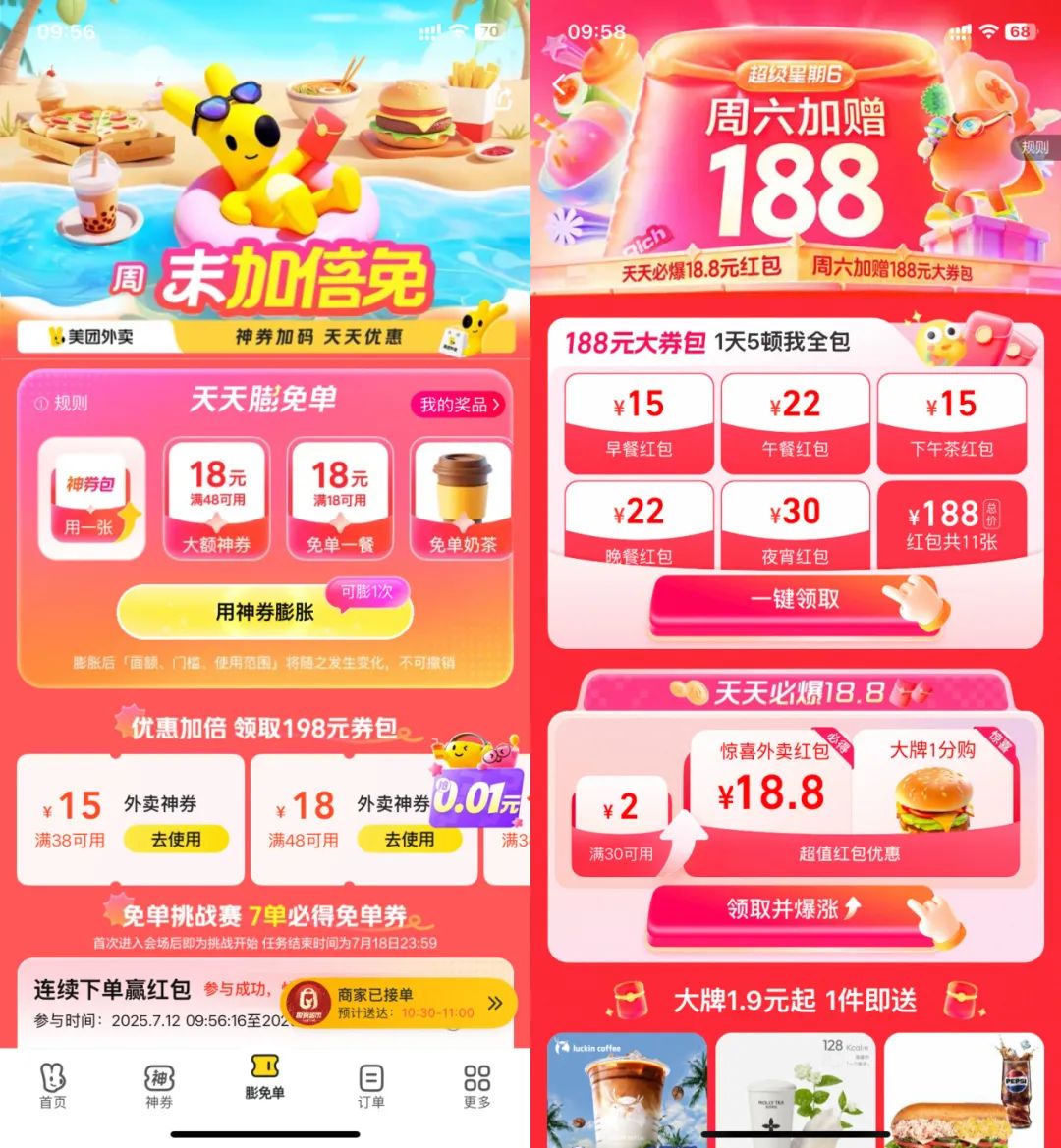
外卖市场“硝烟起” 打响零售“入口战”
Nan Jing Ri Bao· 2025-07-14 00:23
□ 南京日报/紫金山新闻记者 江芬芬 在刚刚过去的周末,外卖市场"硝烟再起"。美团、淘宝闪购、京东三大外卖平台再次掀起折扣狂潮,让 众多用户度过了一个"疯狂星期六"。 7月13日凌晨,美团发布最新"战报":截至12日23时36分,即时零售日订单量突破1.5亿单,再次刷新历 史纪录。这场"闪购补贴战"的背后,究竟隐藏着怎样的商业逻辑,消费者、骑手、商家又扮演着怎样的 角色? 用户狂欢:"超级星期六",高低得点个外卖 "快去'薅羊毛'!"7月12日17时,市民王悦的微信突然弹出一条来自好友的消息。错过7月5日"外卖补贴 大战"的她,赶紧打开各大外卖App,将各类红包优惠领了个遍。 美团打出"周六,快乐继续"的标语,在其自营的小象超市中,大量商品以0.01元的超低价出售。同时, 王悦家附近的知名餐饮品牌也加入了"神抢手"活动——平时售价49.9元的两荤一主食套餐,活动价为 28.9元。 最近几个周末,外卖订单激增,但刘师傅并不敢开启无限量接单权限,"否则单量会一下子涌进来,根 本接不过来。特别是很多家奶茶店爆单,等待时长经常超过半小时。" 虽然身处盛夏,但他舍不得休息,每天保持100单左右的接单频率,加上平台提高骑 ...
外卖大战背后,需要怎样的市场竞争?
Sou Hu Cai Jing· 2025-07-14 00:15
Core Viewpoint - The external delivery industry is undergoing a significant transformation, moving from price wars to a focus on quality and service, emphasizing the need for sustainable business practices and fair competition among stakeholders [2][3][6]. Group 1: Market Dynamics - The external delivery market has shifted dramatically, with intense competition leading to a "price war" scenario, reminiscent of previous battles in the shared economy sector [3]. - Major players like JD.com, Meituan, and Taobao are engaging in aggressive promotional strategies, including substantial discounts and cash vouchers, to capture market share [2][3]. - The current market environment is characterized by a "buying frenzy," where consumers are eager to take advantage of low prices, benefiting merchants and delivery personnel in the short term [4]. Group 2: Challenges and Risks - The intense focus on low prices may lead to irrational consumer behavior, reduced profit margins for merchants, and a decline in service quality [4]. - The historical context of similar price wars in the shared economy, such as the downfall of Ofo and the acquisition of Mobike by Meituan, highlights the potential risks of unsustainable business practices [3]. Group 3: Strategic Recommendations - Companies should prioritize quality and service improvements over merely competing on price, suggesting a need for internal motivation and a shift in strategic thinking [5]. - A dual-track system combining full-time and gig workers could enhance rider rights and reduce turnover, while integrating supply chain management could lower costs and benefit both merchants and consumers [6]. - The industry should aim for a transition from price competition to value competition, fostering a collaborative ecosystem that benefits all parties involved [6].


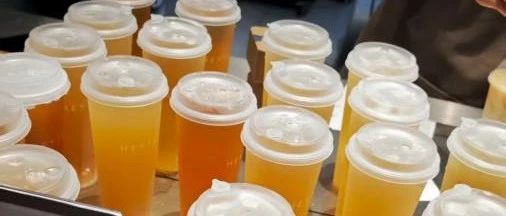
“几分钟几百杯订单”
财联社· 2025-07-14 00:07
Core Viewpoint - The recent surge in instant retail subsidies from platforms like Meituan, Taobao Flash Sale, and JD Takeout has led to a significant increase in order volumes, but concerns about profit erosion due to heightened competition have been raised by Goldman Sachs [1][15]. Group 1: Instant Retail Subsidy Activities - Meituan launched a new round of "0 yuan purchase" coupons, allowing consumers to redeem drinks from various brands, leading to a spike in orders [3][12]. - Taobao Flash Sale responded with large red envelopes and lottery draws for free orders, indicating a competitive strategy against Meituan's offerings [3][12]. - JD Takeout announced a subsidy for 100,000 portions of crayfish, priced at only 16.18 yuan each, to attract consumers during peak hours [14]. Group 2: Order Volume and Market Growth - On July 12, Meituan's daily order volume exceeded 150 million, with a 65% increase in overall takeaway orders during the summer promotional period [1][14]. - The overall takeaway market is expected to grow by 30% year-on-year, driven by increased competition and user engagement, despite concerns about a potential decline in orders once subsidies decrease [15]. Group 3: Profitability Concerns - Goldman Sachs highlighted that the competitive intensity among Meituan, Alibaba, and JD has reached unprecedented levels, with an estimated total investment of 25 billion yuan (approximately 3 billion USD) in the second quarter alone [15][16]. - Projections indicate that Alibaba and JD's takeaway businesses may incur losses of 41 billion yuan and 26 billion yuan respectively over the next 12 months, while Meituan's EBIT could decline by 25 billion yuan [16].