杠铃策略

Search documents
投资的“避风港”在哪里:三大策略让你的资产更安全 | 螺丝钉带你读书
银行螺丝钉· 2025-07-12 11:12
Core Viewpoint - The article discusses the concept of "safe havens" in investment, emphasizing strategies to reduce portfolio risk while maintaining returns, particularly during market volatility [3][4][12]. Group 1: Safe Haven Theory - The "safe haven" theory suggests that there are methods to lower risk without sacrificing returns, contrary to traditional financial theories that posit a direct relationship between risk and return [4]. - The book "Safe Haven" introduces strategies to mitigate overall investment portfolio risk, aiming for stability during significant market fluctuations [12]. Group 2: Types of Safe Haven Strategies - Three main strategies for achieving safe havens are identified: 1. **Diversified Allocation + Rebalancing**: This strategy involves a mix of 40% stocks and 60% bonds, where bonds act as a buffer during stock market downturns [15][17]. 2. **Utilizing Negative Correlation Among Assets**: This approach, exemplified by Bridgewater's All Weather strategy, diversifies across various asset classes to ensure that not all assets move in the same direction [21][22]. 3. **Barbell Strategy**: Proposed by Nassim Taleb, this strategy allocates most capital to safe assets like government bonds while a small portion is invested in high-risk options, preparing for unpredictable market events [29][32]. Group 3: Comparison of Strategies - All three strategies serve as effective "safe havens" during financial crises, significantly reducing risk exposure for investors [40]. - The Barbell strategy requires a higher level of investor sophistication due to its use of derivatives, while the other two strategies are more accessible and widely adopted [42][43].


疯狂刷屏!银行大胜纳斯达克
格隆汇APP· 2025-07-10 10:55
Core Viewpoint - The banking sector in China has shown significant resilience and potential for growth, with recent performance surpassing major indices like the Nasdaq 100, indicating a shift in investor sentiment towards banking stocks [1][3][4]. Group 1: Banking Sector Performance - The China Banking AH Index and the China Banking Index have outperformed the Nasdaq 100 Index over the past year [1]. - Major banks such as ICBC, ABC, and others have reached new highs, with the Bank AH Preferred ETF (517900) rising by 28.29% year-to-date [3]. - The banking sector's strong momentum suggests a need for investors to reassess the value of banking stocks [4]. Group 2: Historical Context and Challenges - The current banking rally began in early 2024, initially overshadowed by AI-related stocks [5][6]. - Concerns about the banking sector included shrinking interest margins and pressures on income and profits due to economic recovery challenges [7][8]. - In 2023, a 0.1% decrease in interest margins resulted in a profit reduction of approximately 200 billion [8]. Group 3: Industry Transformation - The banking sector has undergone significant reforms, leading to improved risk management and operational efficiency [12][16]. - Non-interest income has become a larger part of banks' revenue, with some banks achieving over 35% from wealth management [11]. - The restructuring of business models has shifted focus from merely earning interest to diversified profit sources [14]. Group 4: Financial Performance and Outlook - In Q1 2024, listed banks reported a total revenue of 1.52 trillion yuan, a 1.3% year-on-year increase, with net profits rising by 0.6% [18]. - Non-interest income surged by 12.6%, indicating a positive trend despite a decline in interest income [18]. - The outlook for 2024 suggests potential profit growth, with optimistic views from some institutions predicting a recovery in net profit growth [19][20]. Group 5: Investment Trends - Institutional investments in banking stocks have increased, with significant net purchases from foreign capital and insurance funds [21][22]. - The Bank AH Preferred ETF has seen substantial inflows, indicating strong market interest in banking stocks [25][26]. - The introduction of policies linking fund manager compensation to performance may drive further investment into the banking sector [24]. Group 6: Future Prospects - The banking sector is expected to benefit from ongoing economic recovery and a favorable investment environment, with high dividend yields attracting investors [28][29]. - Despite low interest rates, the sector's reforms and diversification strategies have enhanced resilience and profitability [28].





策略定期观点:胜率与赔率,胆量与耐心-20250709
Guoxin Securities· 2025-07-09 07:22
Group 1 - The market experienced a volatile first half of 2025, with two major upward trends leading to a positive close. The market saw a rapid decline in early January, followed by a recovery supported by government interventions and liquidity measures [6][10]. - The A-share market demonstrated a preference for smaller stocks, with micro-cap stocks outperforming small and mid-cap stocks. As of June 30, 2025, the indices for large, mid, small, and micro-cap stocks increased by 0.36%, 1.66%, 6.81%, and 36.41% respectively [10][18]. - The valuation structure improved significantly, with the proportion of stocks at extremely low valuations (bottom 5%) decreasing from approximately 10% in early April to less than 3% by the end of June [18][28]. Group 2 - The banking sector saw a cumulative increase of over 11% since May 2025, driven by positive policy signals and expectations of liquidity improvements. Banks are becoming a core allocation for long-term funds due to their high dividends and low valuations [28][80]. - The new consumption sector is showing signs of recovery, with specific stocks experiencing volatility due to growth concerns. The performance of innovative drugs and new consumption stocks has been influenced by market sentiment and valuation adjustments [28][31]. - The technology sector, particularly in AI computing and semiconductors, is expected to see a rebound after a period of adjustment, with specific opportunities in light modules and PCBs [28][31]. Group 3 - The global stock market ranking for the second half of 2025 is Japan > USA > India > Vietnam > UK > Germany > France, with Japan leading due to macroeconomic improvements and foreign capital inflows [49][50]. - The report highlights that the US dollar is facing a dual dilemma, with its status as a reserve currency being questioned during economic downturns and policy constraints during strong economic periods, leading to a "Dollar Frown" scenario [39][40]. - The outlook for gold remains bullish in the long term, driven by potential factors such as Federal Reserve rate cuts, ongoing trade uncertainties, and supply constraints, while geopolitical tensions and high interest rates pose risks [54][51].
贝塔7月投资布局精选
贝塔投资智库· 2025-07-03 03:50
点击蓝字,关注我们 FedWatch,7月降息预期已提升至21.7%,但大概率维持不变,将导致港股海外资金流出压力上升;9 月降息概率91.1%,9月降息或已成定局。 6月24日,以伊停火,地缘冲突引发的市场短期波动逐渐缓 解。 受美联储政策预期以及市场整体风险偏好影响最大的科技股反弹行情有望延续。 国内来看,6月末六部委联合政策文件的发布,市场重燃政策发力预期;进入7月,政治局会议也是全 年重要的政策观测时点, 为实现年内增长目标,7月宏观政策有望加码。 前次6月策略涨跌情况 我们推荐的所有美股均实现正收益! | 美股 | | | | | --- | --- | --- | --- | | 证券代码 | 证券同称 | 6月涨跌幅 | 所属 Wind行业 | | AMD.O | 超威半导体 | 28.15% | 信息技术 | | TEM.O | TEMPUS AI | 15.15% | 医疗保健 | | ITYN | 礼来 | 5.67% | 医疗保健 | | UNH.N | 联合健康集团 | 4.07% | 医疗保健 | | OXY.N | 西方石油 | 3.59% | 能源 | | 港股 | | | | ...

“不扎堆”也能赢基金经理练就多元配置硬实力
Zhong Guo Zheng Quan Bao· 2025-07-02 20:16
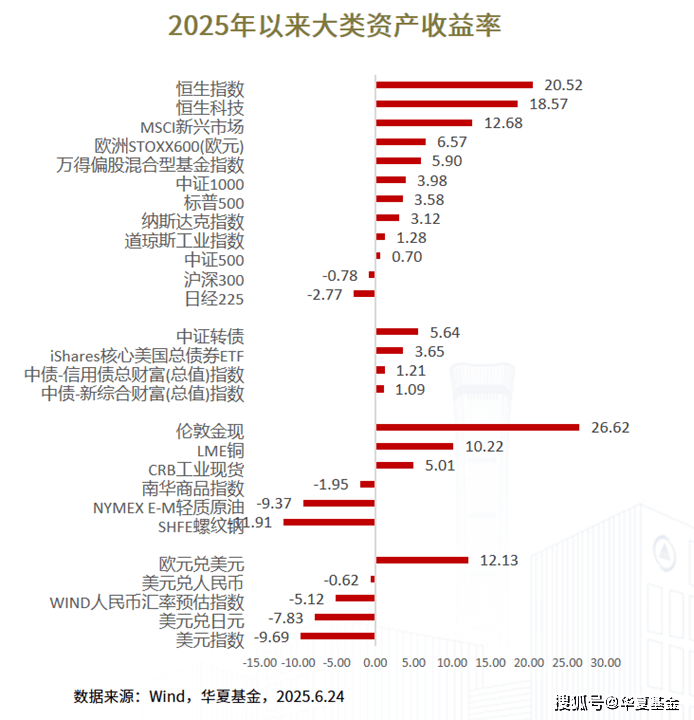
Core Insights - The performance of public funds in the first half of the year has been significantly influenced by thematic investments, particularly in the innovative pharmaceutical sector and the Beijing Stock Exchange [1][2] - Despite the high volatility associated with concentrated investment strategies, some fund managers have successfully achieved stable returns through diversified approaches [1][2] Group 1: Fund Performance - Many top-performing active equity funds in the first half of the year focused heavily on thematic investments, such as innovative pharmaceuticals and robotics [2] - Growth-oriented fund manager Gao Nan achieved over 25% returns with a strategy that included both high-growth sectors like innovative pharmaceuticals and semiconductor industries, as well as more stable sectors like home furnishings [2] - Value-oriented fund manager Lan Xiaokang's fund achieved a return of 17.44%, focusing on high-dividend stocks and sectors like finance and precious metals [3] - The cyclical fund managed by Ye Yong recorded a return of 26.62%, emphasizing investments in resource stocks such as precious metals and oil [4] - The quantitative fund managed by Yao Jiahong and Ma Fang achieved a return of 20.02%, with a diversified portfolio across various industries [4] Group 2: Investment Strategies - The China Securities Regulatory Commission's new action plan aims to link fund manager compensation more closely to fund performance, potentially leading to a shift in investment strategies [5] - Fund managers are expected to focus more on absolute valuation metrics, emphasizing cash flow, competitive advantages, and dividend capabilities [5] - The outlook for the equity market in the second half of the year is optimistic, with expectations of economic recovery and opportunities for fundamental resonance [6] - The "barbell strategy" is favored, focusing on both high-return, high-dividend assets and growth-oriented sectors, particularly in the technology and military industries [6]
“2025首席策略荟”:聚焦机遇与挑战,业内共探经济趋势与投资策略
第一财经· 2025-07-01 08:00
Core Viewpoint - The article discusses the insights and strategies shared during the 2025 Chief Strategy Forum, focusing on macroeconomic trends, investment opportunities, and the performance of various sectors in the second half of 2025 [1][5][20]. Group 1: Macroeconomic Analysis - Zhang Jun, Dean of the School of Economics at Fudan University, analyzed the current macroeconomic situation, highlighting a 6.3% year-on-year increase in industrial added value for the first five months and a 3.7% increase in fixed asset investment, indicating a disparity between expenditure and production perspectives [8]. - Zhang suggested adjusting the inflation target to 2% and emphasized the need for monetary policy to focus on stimulating demand through price-based tools, anticipating significant adjustments in interest and exchange rate policies in the second half of the year [8][9]. - Experts discussed the potential for the U.S. Federal Reserve to lower interest rates, which could create a favorable window for China's central bank to adjust its monetary policy [8][9]. Group 2: Investment Strategies - The forum consensus indicated that the technology growth sector is expected to lead the market, with a focus on AI applications and related opportunities [13]. - Analysts suggested a "barbell strategy," recommending a balanced allocation between dividend assets (like coal) and growth stocks, with coal benefiting from price rebound expectations [13]. - The discussion highlighted the importance of monitoring market volatility and volume changes, as any positive signals could trigger rebounds [14]. Group 3: New Consumption Trends - The new consumption sector is experiencing high growth, driven by changing consumer preferences among younger generations, moving from functional needs to emotional and social attributes [18][20]. - Analysts noted that the rise of new consumption is linked to demographic changes and economic influences, with traditional sectors like liquor facing pressure while new consumption stocks gain traction [18][20]. - The potential for AI technology to reshape consumption scenarios was emphasized, with applications in various sectors such as education and e-commerce [21]. Group 4: Foreign Investment and Market Dynamics - The article noted a significant trend of foreign capital returning to China, driven by improved fundamentals and a shift in perception regarding Chinese technology assets [15][16]. - Analysts expressed optimism about the performance of Hong Kong stocks, particularly in the technology sector, which is seen as having unique assets in AI applications [15][16]. - The potential impact of currency fluctuations on capital flows between Hong Kong and A-shares was also discussed, indicating that changes in the RMB's value could influence investment strategies [15].

下一站,多元资产配置|全球大类资产半年度复盘与展望
Sou Hu Cai Jing· 2025-06-30 10:31
Group 1 - The first half of 2025 has seen a significant rebalancing of global funds, characterized by a "funding boom and asset scarcity" [2][4] - Gold has emerged as a star asset, with a 26% increase in international spot gold prices, driven by geopolitical conflicts and a weakening dollar [5][37] - The Chinese central bank has increased its gold reserves for seven consecutive months, reaching 73.83 million ounces, indicating a collective move towards "de-dollarization" [5][37] Group 2 - The bond market is experiencing volatility, with U.S. Treasury yields fluctuating above 4.0%, while China's 10-year government bond yields have dropped to a historical low of 1.65% [6][7] - Credit bond ETFs have rapidly gained popularity, with a total market size exceeding 210 billion yuan, reflecting a shift towards stable income assets [8] - The divergence in economic cycles between the U.S. and China is evident, with the U.S. experiencing a slowdown while China is bottoming out [8] Group 3 - The Hong Kong stock market has shown resilience, with the Hang Seng Index leading global markets with a 20.5% increase, supported by liquidity from southbound funds [10] - The A-share market has seen strong sector rotation, particularly in the AI industry and consumer sectors, indicating a lack of a consistent overarching theme [11][15] - The current market is driven by liquidity, with expectations of a stabilization in earnings, suggesting a potential return to value-based investing [15] Group 4 - Three key underlying logics have emerged in the market: the continuous rise of certainty premiums, the revaluation of industrial narratives, and the rebalancing of global asset allocation [16][19] - The demand for certainty is reflected in the strong performance of gold and high-dividend assets, as investors seek visible cash flows amid macro uncertainties [17] - The AI industry is transitioning from concept to performance, with significant growth in cloud business revenues and capital expenditures among leading tech firms [18] Group 5 - The outlook for major asset classes in the second half of 2025 emphasizes the importance of strategic asset allocation amid increasing market volatility [23][24] - A diversified asset allocation strategy is recommended, with a focus on both undervalued, high-dividend value stocks and growth sectors driven by AI [27][28] - The U.S. stock market faces risks from high valuations and downward adjustments in earnings expectations, necessitating caution [32]
读研报 | 当杠铃两端同时出现了缩圈
中泰证券资管· 2025-06-24 10:46
Core Viewpoint - The article discusses the phenomenon of "contraction" in both ends of the barbell strategy, highlighting the extreme situation of dividend assets and the implications for investment strategies in the current market environment [4][8]. Group 1: Barbell Strategy and Market Trends - The barbell strategy has gained popularity recently, but research indicates that both ends of the strategy are experiencing a contraction [4]. - A report from Guolian Minsheng Securities notes that the contraction of high-dividend assets has reached a historical extreme, suggesting that focusing solely on high-dividend bank stocks may yield the highest returns among various dividend asset allocations [4]. - Huabao Securities reports that micro-cap stocks are experiencing "three highs," including a record high index, increased trading volume, and a sustained high annualized discount rate [4]. Group 2: Indicators and Risks - The "contraction indicators" for both dividend and micro-cap stocks have reached historical highs, indicating an extreme level of contraction in both ends of the barbell strategy [4][6]. - When the "micro-cap contraction indicator" is high, trading volume for micro-cap stocks tends to increase, suggesting a peak in trading sentiment that requires liquidity support to maintain momentum [6]. - Historical data shows that after reaching "three highs," micro-cap stocks have faced significant drawdowns, with maximum declines of 22.94% and 23.47% in previous instances [6]. Group 3: Implications for Dividend Assets - For bank stocks, the main concern affecting their allocation value is the reduction in cost-effectiveness rather than liquidity or sentiment [8]. - Historical trends indicate that when the price of bank stocks rises and the yield spread narrows to around 2.5%, it often triggers significant market corrections [8]. - The article suggests that the current contraction can be interpreted as a form of "herding," where investors seek certainty in uncertain times, reinforcing similar trading behaviors [8].

下半年A股怎么走?最新研判来了
天天基金网· 2025-06-23 06:14
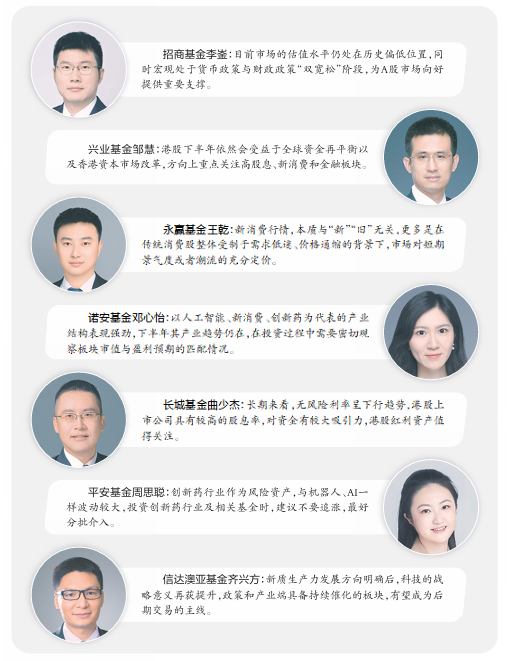
2025年上半年即将收官。展望下半年市场,基金经理对整体投资机会有何预期?哪些领域更 值得布局?影响股市行情的核心因素有哪些? 中国基金报采访了七位绩优公募基金经理,分别为 招商基金投资管理一部总监李崟,兴业基 金权益投资部总经理邹慧,永赢基金权益研究部总经理、永赢惠添益基金经理王乾,诺安基 金研究部总经理邓心怡,长城基金国际业务部副总经理、长城港股通价值精选基金经理曲少 杰,平安医药精选股票基金经理周思聪和信澳领先增长基金经理齐兴方 。 整体看,他们对后市较为乐观,认为A股市场整体估值水平仍处在历史偏低位置,货币政策和 财政政策处于"双宽松"阶段,为A股市场向好提供重要支撑;预计下半年市场有望震荡向上, 看好大健康、新消费、科技创新等领域。 中国资产仍具备较强吸引力 中国基金报:对2025年下半年的A股市场怎么看?市场拐点有望在何时出现? 李崟: 目前市场的估值水平仍处在历史偏低位置,同时宏观处于货币政策与财政政策"双宽 松"阶段,为A股市场向好提供重要支撑。 王乾: 预计下半年市场整体或保持区间震荡,重点关注贸易政策、逆周期调节等因素的影 响。考虑到政策资金托底意愿较强,预计市场整体走势较为平稳,结构性行 ...

下半年A股怎么走?最新研判来了
Zhong Guo Ji Jin Bao· 2025-06-22 12:37
Core Viewpoint - Fund managers are optimistic about the A-share market in the second half of 2025, expecting a gradual upward trend supported by low historical valuation levels and a "double easing" monetary and fiscal policy [1][4][5]. Market Outlook - The overall market is anticipated to remain in a range-bound fluctuation, with key factors such as trade policies and counter-cyclical adjustments influencing the market [4][5]. - The A-share market is expected to experience a gradual upward shift, with the third and fourth quarters being critical periods to watch [4][5][6]. - The current valuation levels of the A500 index are at historical averages, indicating significant potential for upward movement [4][5]. Investment Strategies - A "barbell strategy" is favored, focusing on stable high ROE and high dividend assets on one end, and growth assets with valuation elasticity, particularly in the new productivity sectors represented by the Sci-Tech Innovation Board, on the other end [7][12]. - Specific sectors of interest include AI, new consumption, and innovative pharmaceuticals, which are expected to perform well due to favorable policies and market conditions [11][12][19]. Sector Focus - The technology sector, particularly AI and robotics, is expected to see significant growth, with structural bull markets anticipated in these areas [11][12]. - New consumption trends and the aging population are driving demand in service consumption and healthcare sectors, presenting new investment opportunities [11][12][19]. - The pharmaceutical sector, especially innovative drugs, is projected to benefit from increasing market demand and favorable policy support [11][12][19]. Investment Opportunities - There are structural investment opportunities in sectors that have not been fully priced in, such as certain small-cap pharmaceutical companies and high-dividend yielding assets [16][19]. - The potential for recovery in the Hong Kong market is noted, with opportunities in technology, new consumption, and financial sectors due to low valuations and high dividend yields [19][20]. Key Influencing Factors - The core factors influencing the stock market include macroeconomic conditions, policy environment, and industry development trends [25][26]. - External risks such as trade tensions, geopolitical conflicts, and global economic conditions are critical to monitor as they may impact market sentiment and performance [25][26].