
逆全球化

Search documents
中企出海进入新时期,服务贸易发展空间巨大
Di Yi Cai Jing· 2026-01-07 14:25
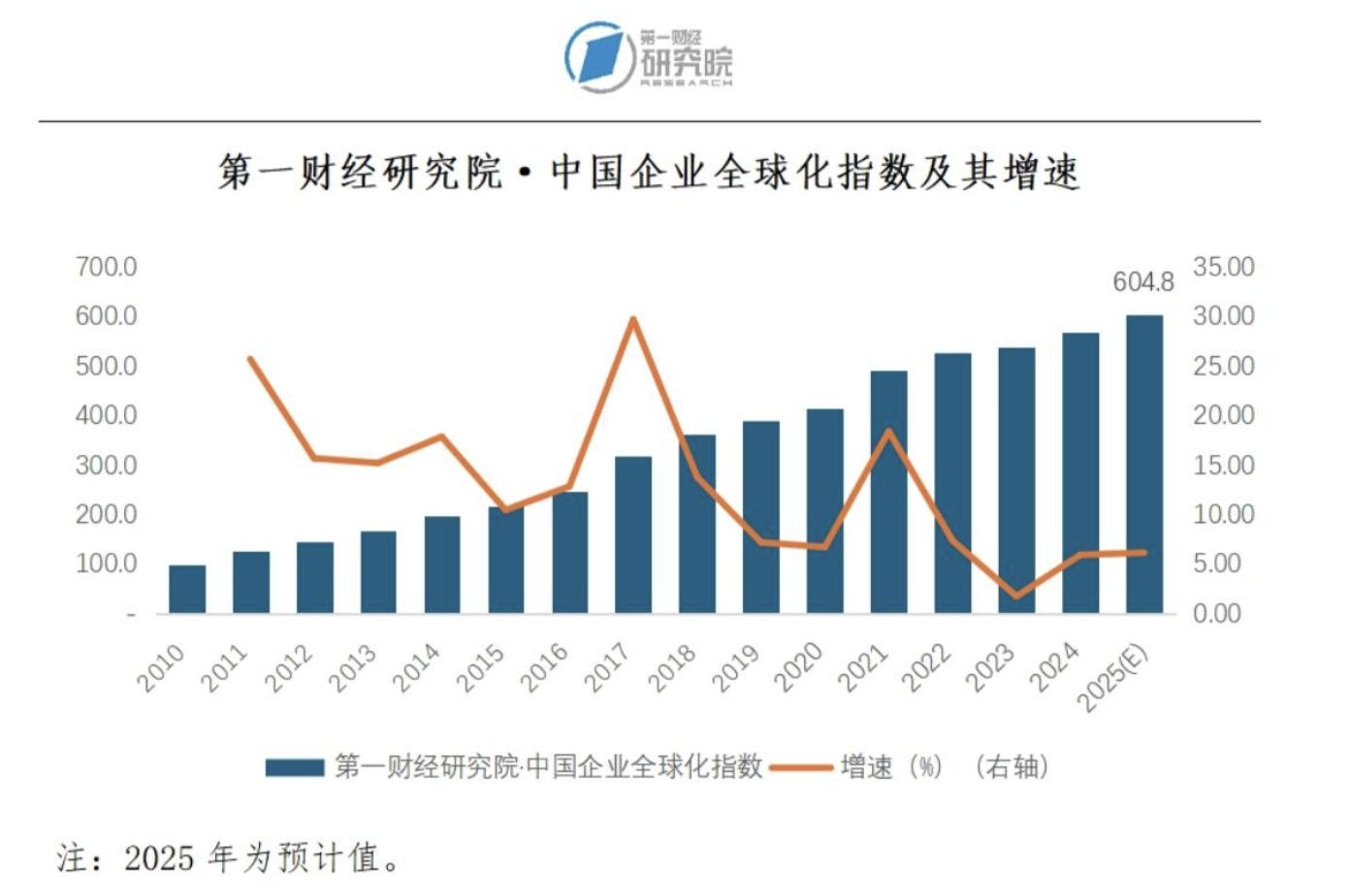
Core Viewpoint - The globalization process of Chinese enterprises is entering a new stage, characterized by increased resilience and global competitiveness, as highlighted by the launch of the "Wenhai: New Observations on Chinese Enterprises Going Global" column by Yicai [2] Group 1: Globalization Trends - Chinese enterprises are showing high activity in overseas markets, with exports increasing by 6.2% to 24.46 trillion RMB and foreign direct investment rising by 7.5% to 1.13145 trillion RMB in the first 11 months of 2025 [2] - Direct investment in countries along the Belt and Road Initiative saw a significant increase of 19% to 255.53 billion RMB, while new contracts for overseas engineering projects grew by 20.4% to 1.44269 trillion RMB [3] - The current wave of globalization for Chinese enterprises began in 2023, transitioning from individual efforts to a more collaborative approach supported by government initiatives [3] Group 2: Challenges and Adaptations - The globalization landscape is facing new challenges due to rising trade protectionism and geopolitical tensions, leading to a more complex and uncertain environment for global operations [4] - The UNCTAD reports that by the end of 2024, 46 countries will have established foreign direct investment review mechanisms, more than double the number from a decade ago, indicating a tightening of investment scrutiny [4] - The Chinese enterprise globalization index is projected to grow by 6.1% in 2025, reaching 604.8, reflecting the continued expansion of Chinese enterprises in global markets [5] Group 3: Sectoral Insights - Emerging industries such as renewable energy and industrial robotics are experiencing sustained export growth, while digital technology is accelerating its integration with local services [8] - The report identifies 50 leading Chinese enterprises in globalization based on their overseas impact, global layout, and social responsibility, highlighting the diverse nature of current Chinese global enterprises [8] Group 4: State-Owned Enterprises (SOEs) - SOEs play a unique and critical role in globalization, characterized by a focus on cooperation and responsibility, with significant overseas investments since 2001 [11] - Compared to private enterprises, listed SOEs show higher levels of overseas revenue, particularly in heavy asset industries like construction and oil [12] - SOEs face dual challenges in globalization, including regulatory scrutiny and the need for effective cross-cultural management [16] Group 5: Service Trade Opportunities - The global service trade is projected to reach 8.69 trillion USD by 2024, with China’s service trade expanding and optimizing its structure, although it still faces a trade deficit in high-value services [19][22] - The overseas revenue of listed service enterprises in China is expected to grow from 1.4 trillion RMB in 2020 to 1.7 trillion RMB in 2024, marking a 21.4% increase [22] - Recommendations for enhancing the quality of China's service trade include optimizing service structures, promoting digital transformation, and supporting the development of emerging service sectors [22]

机构看金市:1月7日
Xin Hua Cai Jing· 2026-01-07 05:25
·盛宝银行:支撑金银大涨的核心驱动因素依然稳固 ·正信期货:避险资金活跃推高贵金属价格 ·瑞达期货:贵金属中期看多逻辑尚未发生明显松动 ·东证期货:短期市场炒作热情高企贵金属延续涨势 ·Heraeus Metals:如果美联储宽松预期加强可能令黄金再次朝着新纪录迈进 (文章来源:新华财经) ·东证期货表示,金价延续涨势,贵金属其他板块以及有色金属大涨,委内瑞拉局势动荡强化了市场对 于逆全球化的交易逻辑,资金对大宗商品的做多意愿增加。美联储理事米兰再度发表支持大幅降息的讲 话,但1月降息概率较低,关注下任美联储主席人选花落谁家。此外,Bloomberg商品指数权重调整在 即,注意市场波动,贵金属抛压增加。 ·德国Heraeus Metals贵金属交易员Alexander Zumpfe表示,委内瑞拉的局势显然重新激活了避险需求。 如果地缘政治紧张局势进一步扩大,或者如果即将公布的美国经济数据强化了美联储将不得不采取比目 前预期更激进的宽松政策的预期,那么黄金很可能再次朝着刷新纪录迈进。市场正在等待周五的美国12 月非农就业数据。此外,白银在2025年飙升,得益于需求增长带来的结构性市场短缺。 ·盛宝银行大宗商品策 ...

贵金属数据日报-20260107
Guo Mao Qi Huo· 2026-01-07 03:06
Group 1: Report Industry Investment Rating - No relevant content provided Group 2: Core Viewpoints of the Report - On January 6, the main contract of Shanghai gold futures closed up 1.27% to 1,004.98 yuan/gram, and the main contract of Shanghai silver futures closed up 7.06% to 19,452 yuan/kilogram [6]. - After the escalation of the US - Venezuela situation and Trump's radical statements, geopolitical risks and the tight supply of silver spot have driven up the prices of precious metals. In the short term, precious metal prices are expected to remain strong, but there are still potential risks. Investors are advised to control their positions [6]. - In the long - term, the Fed is still in an easing cycle, geopolitical uncertainties are high, and the credit risk of the US dollar is increasing. The demand for precious metal allocation by central banks, institutions, and residents is expected to continue. The long - term price of gold is likely to rise, and long - term investors are advised to buy on dips [6]. Group 3: Summary by Related Catalogs 1. Price Tracking - **Precious Metal Prices**: On January 6, 2026, compared with January 5, London gold spot price was 4,466.61 dollars/ounce (up 1.0%), London silver spot price was 78.96 dollars/ounce (up 4.7%), COMEX gold price was 4,476.70 dollars/ounce (up 1.1%), COMEX silver price was 78.76 dollars/ounce (up 4.7%), AU2602 was 1,004.98 yuan/gram (up 1.0%), AG2602 was 19,457.00 yuan/kilogram (up 6.6%), AU (T + D) was 1,002.30 yuan/gram (up 1.0%), and AG (T + D) was 19,468.00 yuan/kilogram (up 6.4%) [3]. - **Price Spreads/Ratios**: From January 5 to January 6, the spread of gold TD - SHFE active price decreased by 7.6%, the spread of silver TD - SHFE active price decreased by 69.4%, the spread of gold TD - London decreased by 9.5%, the spread of silver TD - London decreased by 30.6%, the SHFE gold - silver main ratio decreased by 5.2%, the COMEX gold - silver main ratio decreased by 3.4%, the spread of AU2604 - 2602 increased by 5.2%, and the spread of AG2604 - 2602 decreased by 61.5% [3]. 2. Position Data - From January 2 to January 5, gold ETF - SPDR remained unchanged at 1,065.13 tons, silver ETF - SLV decreased by 0.55% to 16,353.59541 tons. COMEX gold non - commercial long positions decreased by 5.02% to 275,592 contracts, non - commercial short positions decreased by 10.19% to 44,419 contracts, and non - commercial net long positions decreased by 3.96% to 231,173 contracts. COMEX silver non - commercial long positions decreased by 8.57% to 50,506 contracts, non - commercial short positions increased by 5.60% to 20,443 contracts, and non - commercial net long positions decreased by 16.22% to 30,063 contracts [3]. 3. Inventory Data - From January 5 to January 6, SHFE gold inventory remained unchanged at 97,704 kilograms, SHFE silver inventory decreased by 13.16% to 581,436 kilograms. COMEX gold inventory increased slightly (0.00%) to 36,403,452 ounces, and COMEX silver inventory decreased by 0.06% to 449,521,788 ounces [3]. 4. Other Market Data - From January 5 to January 6, the US dollar index decreased by 0.08%, the US dollar/Chinese yuan central parity rate remained unchanged at 7.02, the 2 - year US Treasury yield decreased by 0.29% to 3.46%, the 10 - year US Treasury yield decreased by 0.48% to 4.17%, VIX increased by 2.69% to 14.90, the S&P 500 increased by 0.64% to 6,902.05, and NYMEX crude oil increased by 1.78% to 58.35 [5].
西南期货早间评论-20260107
Xi Nan Qi Huo· 2026-01-07 02:40
2026 年 1 月 7 日星期三 重庆市江北区金沙门路 32 号 23 层; 023-67071029 上海市浦东新区世纪大道 210 号 10 楼 1001; 021-61101854 地址: 电话: 1 市场有风险 投资需谨慎 | | | | 铅: | | 15 | | --- | --- | --- | | 锡: | | 16 | | 镍: | | 16 | | 豆油、豆粕: | | 17 | | 棕榈油: | | 17 | | 菜粕、菜油: | | 18 | | 棉花: | | 19 | | 白糖: | | 20 | | 苹果: | | 21 | | 生猪: | | 21 | | 鸡蛋: | | 22 | | 玉米&淀粉: | | 22 | | 免责声明 | | 24 | 上一交易日,国债期货收盘全线下跌,30 年期主力合约跌 0.31%报 110.930 元, 10 年期主力合约跌 0.13%报 107.700 元,5 年期主力合约跌 0.11%报 105.570 元,2 年 期主力合约跌 0.05%报 102.366 元。 公开市场方面,央行公告称,1 月 6 日以固定利率、数量招标方式开展了 ...
广发早知道:汇总版-20260107
Guang Fa Qi Huo· 2026-01-07 02:39
Report Industry Investment Rating No information provided in the given text. Core Viewpoints of the Report - The market is affected by various factors such as geopolitical risks, supply - demand dynamics, and macro - policies. Different industries show different trends, with some expected to be strong in the short - term, some in a state of shock, and others facing downward pressure [2][3][4] - The overall market sentiment is influenced by geopolitical events, and investors need to pay attention to the follow - up impact of these events on different industries [2][13][15] Summary by Directory Daily Selections - **Nickel**: The supply - side contraction expectation and geopolitical risks drive the nickel price to be strong. It is expected to operate in the range of 142,000 - 152,000, with attention to the breakthrough around 150,000 [2][40] - **Methanol**: The port price is strong, and the market is expected to maintain a strong shock pattern. The 05 contract is recommended to buy at a low price in the range of 2,100 - 2,350 [3][111] - **Iron Ore**: Supported by the expectation of steel mill replenishment, the price is expected to fluctuate strongly in the short - term, with a reference range of 770 - 840 [4][59] - **Pig**: After the festival, the demand declines. The disk is affected by capital sentiment, but the upside space is limited [5][79] - **Silver**: The tight inventory boosts the price. It is recommended to maintain a light - position and low - buying strategy [6][17] Financial Derivatives Financial Futures - **Stock Index Futures**: The A - share market is on the rise, and the four major stock index futures contracts are all rising. It is recommended to hold a bullish spread portfolio and build a covered call portfolio on dips [7][8][9] - **Treasury Bond Futures**: The bond market is under pressure due to the strong performance of the equity market. It is recommended to wait and see in the short - term, pay attention to the positive arbitrage in the spot - futures strategy, and tend to steepen the curve [10][11][12] Precious Metals - The geopolitical risks and supply tightness drive the prices of precious metals to rise. Gold is recommended to hold long positions above $4,300. Silver is recommended to maintain a light - position and low - buying strategy. Platinum and palladium are expected to rise in the medium - to - long - term and are recommended to be lightly long on dips [13][15][17] Commodity Futures Non - ferrous Metals - **Copper**: The price hits a new high. The medium - to - long - term fundamentals are good, but the short - term price may be overestimated. It is recommended to hold long positions lightly and pay attention to the support at 99,000 - 100,000 [18][21][22] - **Alumina**: The spot price is under pressure, and the futures price is volatile. It is recommended to wait and see in the short - term and short on rallies in the medium - term, with a reference range of 2,700 - 3,000 [22][24] - **Aluminum**: The price hits a new high. It is expected to maintain a high - level shock, with a reference range of 23,800 - 24,800. It is not recommended to chase the rise, and long positions can be established on dips [24][26][27] - **Zinc**: The price center moves up. It is expected to be strong in the short - term, with a reference support at 23,300 - 23,400. Long positions can be held, and cross - market reverse arbitrage can be continued [30][33] - **Tin**: Affected by news and sentiment, the price is expected to be strong in the short - term. It is recommended to wait and see [34][38] - **Nickel**: The supply - side contraction expectation and geopolitical risks drive the price to be strong. It is expected to operate in the range of 142,000 - 152,000 [2][38][40] - **Stainless Steel**: Affected by raw material tightening expectations, the price is expected to be strong in the short - term, with a reference range of 13,500 - 14,200 [41][44] - **Lithium Carbonate**: The price is rising strongly. It is expected to be strong in the short - term, but there are risks of liquidity and regulation. It is recommended to wait and see and convert long positions to call options appropriately [45][49][50] - **Polysilicon**: The futures price rises and then falls. It is expected to be in a high - level shock. It is recommended to wait and see [50][52] - **Industrial Silicon**: The price is in a low - level shock. It is recommended to pay attention to the implementation of production cuts [52][55] Ferrous Metals - **Steel**: The night - session raw materials drive the steel price to rise. It is expected to fluctuate upward in the range, with a reference range of 3,000 - 3,200 for rebar and 3,150 - 3,350 for hot - rolled coils [55][56] - **Iron Ore**: The price is supported by the expectation of steel mill replenishment. It is expected to be strong in the short - term, with a reference range of 770 - 840 [4][58][59] - **Coking Coal**: The price is weak in the spot market. It is recommended to short on rallies and pay attention to the long - coking - coal and short - coke arbitrage [60][63] - **Coke**: The fourth round of price cuts is implemented. It is recommended to short on rallies and pay attention to the long - coking - coal and short - coke arbitrage [64][68] - **Silicon Iron**: Affected by the policy, the price is expected to be strong in the short - term, with a reference range of 5,500 - 6,000 [69][71] - **Manganese Silicon**: The price is supported by manganese ore. It is expected to fluctuate in the range of 5,700 - 6,000 [72][74] Agricultural Products - **Meal**: The global loose pattern and South American bumper harvest expectations suppress the market. The domestic spot is loose. It is expected to be strong in the short - term [75][76][77] - **Pig**: After the festival, the demand declines. The disk is affected by capital sentiment, but the upside space is limited [5][78][79] - **Corn**: There is a game between short - selling and policy support. The price is expected to fluctuate [80][81] - **Sugar**: The international market is affected by Brazil and India. The domestic market is affected by the peak season of sugar production. It is expected to be in a low - level shock [83][84] - **Cotton**: The US cotton is expected to be in a shock. The domestic cotton is expected to be strong in the short - term [85] - **Egg**: The supply pressure is relieved. The price is expected to be in a low - level shock [88] - **Oil**: The palm oil may face downward pressure. The soybean oil and rapeseed oil are expected to have limited upside [89][90][91] - **Jujube**: The price is stable, but the trading volume is poor. It is necessary to pay attention to the Spring Festival stocking and the planting area in 2026 [92] - **Apple**: The good - quality fruit is scarce, driving the price up. It is necessary to pay attention to the actual de - stocking progress [93][94] Energy and Chemicals - **PX**: The supply is high, and the demand is weak. It is expected to be in a shock in the short - term and go long at a low price in the medium - term [95][96] - **PTA**: The supply is expected to increase, and the demand is expected to decrease. It is expected to be in a shock in the short - term and go long at a low price in the medium - term [97][98] - **Short - fiber**: The supply is high, and the demand is weak. It is expected to follow the raw materials to fluctuate [99][100] - **Bottle Chip**: The supply and demand are expected to decrease. It is expected to follow the cost to fluctuate, and the processing fee has limited upside space [101][102] - **Ethylene Glycol**: The supply is high, and the demand is weak. The price is under pressure in January [103][104] - **Pure Benzene**: The supply is stable, and the demand is slightly improved. The price is under pressure due to high inventory [106] - **Styrene**: The short - term supply and demand are in a tight balance, but there is a risk of inventory accumulation in the future. The price rebound space is limited [107][108] - **LLDPE**: The market is covering short positions. It is recommended to go long on the 2605 contract in the short - term [109] - **PP**: The supply and demand are weak. It is necessary to pay attention to the PDH profit expansion [110] - **Methanol**: The port price is strong. It is recommended to buy the 05 contract at a low price in the range of 2,100 - 2,350 [3][111] - **Caustic Soda**: The futures price rebounds, and the spot price is stable. The market is expected to be stable and weak [111][113] - **PVC**: The price rises, but the supply - demand pattern is weak. It is expected to decline in a shock [114] - **Urea**: The Indian tender result boosts the market. It is expected to be strong in a shock in the short - term [115] - **Soda Ash**: The macro - environment drives the price to rebound, but the supply - demand pressure still exists. It is recommended to wait and see [117][118][119] - **Glass**: The macro - environment drives the price to rebound. It is necessary to pay attention to the sales and production sustainability. It is recommended to wait and see [117][119] - **Natural Rubber**: The market sentiment drives the price up. It is recommended to wait and see [120][121] - **Synthetic Rubber**: The fundamental support is limited. The BR contract is expected to be strong in the short - term, and it is not recommended to short [121][123]
综合晨报:特朗普考虑动用美军夺取格陵兰岛-20260107
Dong Zheng Qi Huo· 2026-01-07 00:44
Report Industry Investment Ratings - No information provided in the given content Core Views - The global geopolitical risk is potentially rising due to Trump's consideration of using force to seize Greenland, leading to short - term volatility in the US dollar index [1][15] - Gold prices continue to rise, and there is an increased willingness to go long on commodities. However, there are risks of short - term market fluctuations and precious metal corrections [2][12][13] - A - shares are extremely strong at the beginning of the year, and the market has entered a bullish phase. It is recommended to hold long positions in the short term [3][22][23] - The steel market is expected to continue its range - bound pattern in the short term due to insufficient accumulation of contradictions [4][29][30] - The overall market sentiment for lithium carbonate is more sensitive to bullish information, and the price is expected to remain strong, but caution is needed when chasing long positions [5][46][47] - Oil prices have fallen, with a decline in US API crude oil inventory but a significant increase in gasoline and diesel inventories [6][58][59] Summary by Directory 1. Financial News and Comments 1.1 Macro Strategy (Gold) - Trump and his team are discussing plans to acquire Greenland, and Fed official Milan expects data to support further interest rate cuts [11][12] - Gold prices continue to rise, and there is increased enthusiasm for short - term market speculation. The probability of a January interest rate cut is low, and attention should be paid to the next Fed chair selection and the adjustment of the Bloomberg commodity index weights [12] - It is recommended to be aware of the risk of precious metal corrections in the short term and consider going long on the gold - silver ratio [13] 1.2 Macro Strategy (Foreign Exchange Futures - US Dollar Index) - The US will support Ukraine if it is attacked by Russia again, and Trump warns of potential impeachment if he loses the mid - term elections. Trump is considering using the military to seize Greenland [14][15] - The global geopolitical risk is potentially rising, and the US dollar index will fluctuate in the short term [15] - It is expected that the US dollar will fluctuate in the short term [16] 1.3 Macro Strategy (US Stock Index Futures) - Trump's government is discussing plans to acquire Greenland, and there are differences among Fed officials regarding future interest rate cuts [17][18][19] - Short - term geopolitical risks remain, and the market reaction is limited. Future Fed decisions will mainly depend on data trends [19] - It is expected that the US stock market will fluctuate strongly, and a bullish approach should be maintained [20] 1.4 Macro Strategy (Stock Index Futures) - The central bank will continue to implement a moderately loose monetary policy, and A - shares are extremely strong at the beginning of the year [21][22] - The market has entered a bullish phase, and trading volume is the key indicator. It is recommended to hold long positions in the short term [22][23] 1.5 Macro Strategy (Treasury Bond Futures) - The central bank carried out a 162 - billion - yuan 7 - day reverse repurchase operation, resulting in a net withdrawal of 2963 billion yuan on the day [25] - The bond market is in a headwind situation, and it is recommended not to bet on oversold rebounds. Short - selling opportunities can be considered if there is a rebound [26][27] 2. Commodity News and Comments 2.1 Black Metal (Rebar/Hot - Rolled Coil) - Handan lifted the emergency response to heavy pollution weather [28] - Steel prices are expected to continue their range - bound pattern in the short term due to insufficient accumulation of contradictions and potential pressure on finished product inventories [29] - A range - bound approach is recommended for steel prices in the short term [30] 2.2 Black Metal (Steam Coal) - The price of steam coal in the northern port market was stable with a slight upward trend on January 6 [31] - Short - term coal prices are expected to continue their weak and volatile pattern, and attention should be paid to daily consumption and pre - holiday start - up changes [31] 2.3 Black Metal (Iron Ore) - Fenix Resources' quarterly iron ore shipments reached a new high [31] - The iron ore price is expected to have strong short - term support but limited upside [32] 2.4 Agricultural Products (Soybean Oil/Rapeseed Oil/Palm Oil) - Malaysia's palm oil exports increased by 31.12% from January 1 - 5, while production decreased by 34.48% [33][34] - There are preliminary signs of supply pressure relief, but there is still high uncertainty. It is recommended to lightly position long on the 05 contract in advance and add positions gradually after clear bullish signals [34] 2.5 Agricultural Products (Sugar) - Sugar production data from different regions in China shows a mixed picture, with overall weak demand [35][36][37] - The Zhengzhou sugar futures main contract is expected to be range - bound. Attention should be paid to the start of pre - holiday stocking demand and sugar mill production and sales progress [38] 2.6 Non - Ferrous Metal (Lead) - On January 5, the LME 0 - 3 lead was at a discount of $45.52 per ton [39] - Lead prices are expected to maintain a volatile and slightly bullish pattern, and it is recommended to wait and see both for single - side and arbitrage strategies [39][40] 2.7 Non - Ferrous Metal (Zinc) - On January 5, the LME 0 - 3 zinc was at a discount of $36.3 per ton, and Vedanta's fourth - quarter zinc concentrate production increased by 8% year - on - year [41] - Zinc prices are expected to maintain a volatile and slightly bullish pattern in the short term. It is recommended to be cautious when chasing long positions and to take partial profits on previous long positions [43][44] 2.8 Non - Ferrous Metal (Lithium Carbonate) - The first batch of price negotiations for lithium iron phosphate in the new year has landed [45] - The lithium carbonate price is expected to remain strong, but caution is needed when chasing long positions [46][47] 2.9 Non - Ferrous Metal (Copper) - Ukraine will ban the export of metal scrap starting from 2026, and Codelco's 2025 copper production increased slightly [48][49] - Macro factors support copper price increases, but short - term fundamentals are weakening. It is recommended to buy on dips for single - side trading and wait and see for arbitrage [50][51] 2.10 Non - Ferrous Metal (Nickel) - Indonesian mining companies can produce 25% of their 2026 planned output in Q1 [52] - It is recommended to pay attention to buying opportunities on dips for single - side trading and continue to hold previously recommended option strategies [54][55] 2.11 Non - Ferrous Metal (Tin) - On January 5, the LME 0 - 3 tin was at a discount of $30.01 per ton [56] - The supply of tin ore remains tight, and demand is weak. Attention should be paid to supply recovery and demand improvement, and beware of price drops due to the fading of capital enthusiasm [57][58] 2.12 Energy Chemical (Crude Oil) - US API crude oil inventory decreased, but refined product inventories increased significantly [58] - Attention should be paid to geopolitical risk disturbances [60] 2.13 Energy Chemical (Carbon Emissions) - On January 6, the CEA closing price was 74.63 yuan per ton [61] - The CEA price is expected to remain volatile [62]
世界级港口群,打法变了
2 1 Shi Ji Jing Ji Bao Dao· 2026-01-06 03:53
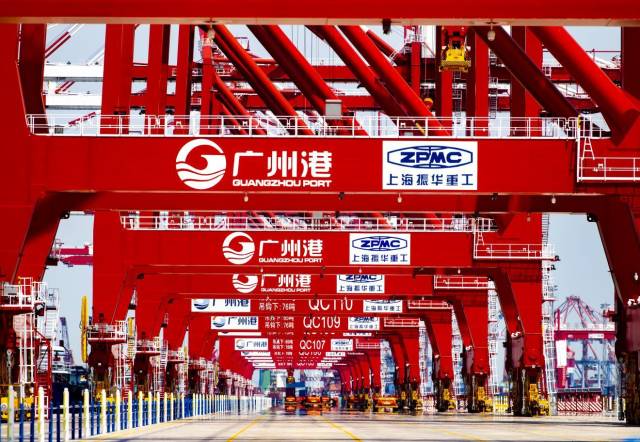
新年刚上班,两份港口的"成绩单"就摆在了眼前: 连续17年雄踞中国内贸第一港的广州港,外贸集装箱占比首次突破50%;深圳港集装箱吞吐量突破3500 万标箱,创下历史新高。 看似是两件事,说的却是同一个趋势:在全球贸易的版图上,粤港澳大湾区的港口群,正在改变打法。 广东"十五五"规划建议多次提及港口群,明确提出打造世界一流港口群,强化大机场、大港口的整体统 筹、功能集成。 2025年,以香港为国际航运中心,广州港、深圳港为枢纽,东莞港、佛山港等为喂给港的粤港澳大湾区 港口群,集装箱处理能力约占到全国总量的四分之一。大湾区这片中国最繁忙的港口群,用实实在在的 行动,划出了三条通向"世界最强"的清晰轨迹。 第一,越是风高浪急,越要把大门敞开。当"逆全球化"的声音不时传来,这里的港口,正把航线铺向更 远的地方。 广州港一年新增10条外贸航线,首次把航线直接拉到了南美西海岸;深圳港的"国际朋友圈"扩大到29个 友好港。它们没有收缩,反而把网络织得更密。广州港目前已与全球100多个国家和地区的400多个港口 建立了紧密的航运联系,深圳港国际集装箱班轮航线累计达279条,覆盖全球6大洲12大航区。 这张不断延伸的航线网络, ...

西南期货早间评论-20260106
Xi Nan Qi Huo· 2026-01-06 02:55
1. Report Industry Investment Ratings No relevant content provided. 2. Core Views of the Report - The macro - economic recovery momentum is still weak, but different investment products have different trends. For example, the stock index is expected to have its fluctuation center gradually move up, while the treasury bond futures are expected to face some pressure [6][9]. 3. Summary by Category Treasury Bonds - **Market Performance**: The previous trading day saw most treasury bond futures close down. The 30 - year, 5 - year, and 2 - year main contracts declined by 0.05%, 0.02%, and 0.03% respectively, while the 10 - year main contract rose by 0.03% [5]. - **Policy and News**: The central bank conducted 13.5 billion yuan of 7 - day reverse repurchase operations on January 5th, with a net withdrawal of 468.8 billion yuan due to 482.3 billion yuan of reverse repurchases maturing. The 9 - department notice on promoting green consumption was released [5]. - **Outlook**: Treasury bond futures are expected to face some pressure, and caution is advised [6]. Stock Index Futures - **Market Performance**: The previous trading day saw mixed performance in stock index futures. The main contracts of IF, IH, IC, and IM rose by 2.26%, 2.55%, 3.11%, and 2.69% respectively [8]. - **Policy and News**: The China Securities Regulatory Commission held a symposium on promoting the cross - departmental work of the comprehensive prevention and control system for financial fraud in the capital market. It aims to improve the system, strengthen coordination, and enhance corporate governance [9]. - **Outlook**: The fluctuation center of the stock index is expected to gradually move up, and investors can choose the right time to go long [9]. Precious Metals - **Market Performance**: The previous trading day saw the gold main contract close at 995 with a 1.78% increase, and the silver main contract close at 18,247 with a 6.87% increase [11]. - **Policy and News**: The Minneapolis Fed President Kashkari commented on the employment market, inflation, and economic outlook [11]. - **Outlook**: The market volatility is expected to significantly increase. It is advisable to exit long positions and wait and see [11]. Steel Products (Thread and Hot - Rolled Coil) - **Market Performance**: The previous trading day saw thread steel and hot - rolled coil futures weakly oscillate. The spot prices of Tangshan billet, Shanghai thread steel, and Shanghai hot - rolled coil were reported [13]. - **Supply and Demand**: The demand for thread steel is in a year - on - year decline, and the market will enter the off - season. The supply pressure has eased as the production is at a low level this year. The inventory is higher than last year but the consumption speed is fast. The hot - rolled coil has similar fundamentals [13]. - **Outlook**: The prices are likely to continue to weakly oscillate. Investors can look for short - selling opportunities at high levels during rebounds and manage their positions carefully [13]. Iron Ore - **Market Performance**: The previous trading day saw iron ore futures oscillate at a high level. The spot prices of PB powder and Super Special powder were reported [15]. - **Supply and Demand**: The national hot metal daily output has declined in the past two months. The import volume in the first 11 months of 2025 increased by 1.4% year - on - year, and the domestic production is lower than in 2024. The port inventory is at the highest level in the same period of the past five years [15]. - **Outlook**: The market supply - demand pattern is weak, but the futures may continue to be strong in the short term. Investors can look for short - selling opportunities at high levels and manage their positions carefully [15]. Coking Coal and Coke - **Market Performance**: The previous trading day saw coking coal and coke futures decline significantly [17]. - **Supply and Demand**: After the holiday, domestic coking coal production increased. The demand from downstream coke enterprises is weak, and the fourth - round price cut of coke procurement has been implemented. The blast furnace profit is low, and the demand for coke is weak [17]. - **Outlook**: The futures may continue to weakly oscillate in the short term. Investors can look for buying opportunities at low levels and manage their positions carefully [17]. Ferroalloys - **Market Performance**: The previous trading day saw the manganese - silicon main contract decline by 0.78% and the silicon - iron main contract decline by 1.37% [19]. - **Supply and Demand**: The manganese ore supply is gradually recovering, and the port inventory is slightly increasing. The cost of ferroalloys fluctuates slightly at a low level. The production of thread steel by sample steel mills is lower than in 2024, and the production of ferroalloys is at a low level in the past five - year period, but the inventory continues to increase [19]. - **Outlook**: After a decline, investors can consider long - position opportunities at low levels when the spot loss expands [20]. Crude Oil - **Market Performance**: The previous trading day saw INE crude oil decline significantly due to the possible development of Venezuelan oil resources by the US [21]. - **Policy and News**: The US may have captured the Venezuelan president, and the US oil production reached a record high in October. The OPEC meeting confirmed a suspension of production increase in the first quarter [21]. - **Outlook**: It is advisable to look for long - position opportunities in the main crude oil contract [22]. Fuel Oil - **Market Performance**: The previous trading day saw fuel oil decline significantly and close below the moving average group. The Asian VLSFO spot discount narrowed, and the HSFO oscillated within a range [23]. - **Supply and Demand**: The Singapore fuel oil inventory is high, which is negative for prices. The spot discount narrowing and the possible increase in crude oil prices may support the fuel oil price [24]. - **Outlook**: It is advisable to look for long - position opportunities in the main fuel oil contract [25]. Polyolefins - **Market Performance**: The previous trading day saw the Hangzhou PP market have mixed price movements, and the Yuyao LLDPE price increased [26]. - **Supply and Demand**: The production enterprises are actively reducing inventory, and the market price has stopped falling and rebounded, which is conducive to price stability [26]. - **Outlook**: It is advisable to wait and see for now [27]. Synthetic Rubber - **Market Performance**: The previous trading day saw the synthetic rubber main contract rise by 0.95%. The Shandong mainstream price increased, and the basis was stable [28]. - **Supply and Demand**: The price increase was supported by the rise in butadiene price and high device operating rate, but the weak downstream demand limited the increase. The inventory of domestic cis - polybutadiene rubber decreased [28][29]. - **Outlook**: It is expected to oscillate strongly [30]. Natural Rubber - **Market Performance**: The previous trading day saw the natural rubber main contract and 20 - rubber main contract rise by 1.06% and 1.14% respectively. The Shanghai spot price increased, and the basis slightly widened [31]. - **Supply and Demand**: The domestic supply has stopped, but the overseas pressure remains. The demand from tire enterprises is weak, and the inventory is seasonally increasing. The 20 - rubber delivery supply has expanded [31]. - **Outlook**: It is expected to oscillate [32]. PVC - **Market Performance**: The previous trading day saw the PVC main contract decline by 0.67%. The spot price was stable, and the basis slightly widened [33]. - **Supply and Demand**: It is in the traditional off - season. The supply pressure is increasing, and the demand is weak. The cost support is strong, and the social inventory is increasing [33][34]. - **Outlook**: It is expected to oscillate at a low level. Attention should be paid to changes in the supply side [33][34]. Urea - **Market Performance**: The previous trading day saw the urea main contract rise by 1.43%. The Shandong Linyi price increased, and the basis was stable [35]. - **Supply and Demand**: The daily output has slightly increased, and the agricultural demand is expected to increase. The demand from the industrial sector is weak. The inventory has decreased [35]. - **Outlook**: The downward space is limited [36]. PX - **Market Performance**: The previous trading day saw the PX2603 main contract decline by 1.23%. The PXN spread and short - term profit are recovering [37]. - **Supply and Demand**: The PX load is stable, and the inventory is low. The crude oil price may be adjusted due to the US - Venezuela situation [37][38]. - **Outlook**: It may oscillate and adjust in the short term. It is advisable to participate with caution and pay attention to macro - policies and fundamental changes [38]. PTA - **Market Performance**: The previous trading day saw the PTA2605 main contract decline by 1.87%. The processing fee has recovered [39]. - **Supply and Demand**: The PTA load has increased, and the polyester load has recovered. The export has increased. The cost of crude oil may be uncertain due to geopolitical situations [39]. - **Outlook**: It may oscillate in the short term. It is advisable to operate with caution and pay attention to oil price changes [39]. Ethylene Glycol - **Market Performance**: The previous trading day saw the ethylene glycol main contract decline by 2.51% [40]. - **Supply and Demand**: The supply is expected to increase, the port inventory is increasing, and the demand support is slightly weakening [40][41]. - **Outlook**: It is advisable to wait and see and pay attention to port inventory and supply changes [41]. Short - Fiber - **Market Performance**: The previous trading day saw the short - fiber 2602 main contract decline by 1.25% [42]. - **Supply and Demand**: The supply is at a relatively high level, and the terminal factories are mainly consuming inventory. The new orders in the weaving sector are weak [42]. - **Outlook**: It may oscillate following the raw material price. It is necessary to control risks and pay attention to cost changes and macro - policy adjustments [42]. Bottle - Chip - **Market Performance**: The previous trading day saw the bottle - chip 2603 main contract decline by 1.46%. The processing fee is around 410 yuan/ton [43]. - **Supply and Demand**: The bottle - chip factory load has increased, and the export growth rate has increased. The supply - demand structure has slightly improved, but the cost is still the main influencing factor [43]. - **Outlook**: It is expected to oscillate following the cost. It is advisable to participate with caution and control risks [44]. Lithium Carbonate - **Market Performance**: The previous trading day saw the lithium carbonate main contract rise by 7.74% [45]. - **Supply and Demand**: The supply is at a high level, and the demand from the energy - storage and power - battery sectors has improved. The inventory has decreased [45]. - **Outlook**: The price may be supported in the short term, but it is necessary to operate with caution as it is easily affected by news [45]. Copper - **Market Performance**: The previous trading day saw the Shanghai copper main contract rise by 2.22% [46]. - **Supply and Demand**: The global copper supply may be tight due to strikes in Chile. The domestic consumption is in the off - season, and the inventory is increasing [46]. - **Outlook**: The price is at a high level. It is necessary to be cautious about chasing the rise [46]. Aluminum - **Market Performance**: The previous trading day saw the Shanghai aluminum main contract rise by 2.57%, and the alumina main contract decline by 0.72% [48]. - **Supply and Demand**: The alumina supply is in excess, and the electrolytic aluminum production is stable. The demand from processing enterprises is weak [48]. - **Outlook**: The price is at a high level. It is necessary to be vigilant about price retracement [48]. Zinc - **Market Performance**: The previous trading day saw the Shanghai zinc main contract rise by 1.16% [50]. - **Supply and Demand**: The zinc concentrate processing fee is low, and the refined zinc production may decrease. The overseas supply - demand tension has eased [50]. - **Outlook**: It is necessary to be cautious about chasing the rise as the consumption off - season is approaching [50]. Lead - **Market Performance**: The previous trading day saw the Shanghai lead main contract rise by 0.32% [52]. - **Supply and Demand**: The supply from primary and secondary lead enterprises is weak, and the consumption is in the off - season. The inventory is low [52][53]. - **Outlook**: It is expected to oscillate within a range [54]. Tin - **Market Performance**: The previous trading day saw the Shanghai tin main contract rise by 1.05% [55]. - **Supply and Demand**: The tin supply is tight due to geopolitical conflicts and slow production resumption in Wa State. The demand has some resilience [55]. - **Outlook**: It is expected to oscillate strongly [55]. Nickel - **Market Performance**: The previous trading day saw the Shanghai nickel main contract rise by 0.71% [56]. - **Supply and Demand**: The Indonesian nickel policy may increase costs. The stainless - steel demand is weak, and the primary nickel is in an oversupply situation [56]. - **Outlook**: It is necessary to pay attention to policy changes [56]. Soybean Oil and Soybean Meal - **Market Performance**: The previous trading day saw the soybean meal main contract decline by 0.28% and the soybean oil main contract decline by 0.13% [57]. - **Supply and Demand**: The Brazilian soybean planting is almost completed. The soybean supply is relatively loose, and the demand for soybean meal is growing moderately, while the demand for soybean oil has slightly improved [57][58]. - **Outlook**: It is advisable to look for long - position opportunities in the cost - support range for soybean meal and long - position opportunities for call options at low levels for soybean oil [58]. Palm Oil - **Market Performance**: The previous trading day saw Malaysian palm oil rise slightly [59]. - **Supply and Demand**: The Malaysian palm oil inventory is expected to reach a seven - year high, and the export has decreased. The domestic import has increased [60]. - **Outlook**: It is advisable to wait and see for now [61]. Rapeseed Meal and Rapeseed Oil - **Market Performance**: The Canadian rapeseed price increased by more than 1% [62]. - **Supply and Demand**: The domestic rapeseed and rapeseed oil imports have changed, and the inventory of rapeseed meal and rapeseed oil is at a relatively high and low level respectively in the past seven years [62]. - **Outlook**: It is advisable to wait and see for now [63]. Cotton - **Market Performance**: The previous trading day saw the domestic Zhengzhou cotton first rise and then fall. The overseas cotton price rose by 1% [64]. - **Supply and Demand**: The domestic cotton production is expected to increase slightly, but the future planting area may decrease. The textile and clothing export has shown some resilience [65][66]. - **Outlook**: The cotton price is expected to be strong [66]. Sugar - **Market Performance**: The previous trading day saw the Zhengzhou sugar oscillate and rebound, and the overseas raw sugar slightly rebounded [68]. - **Supply and Demand**: The domestic and Indian sugar production is expected to increase, and the supply pressure is increasing. The import volume has changed [69]. - **Outlook**: The upward space may be limited after the significant rebound [70]. Apples - **Market Performance**: The previous trading day saw the domestic apple futures rise significantly [72]. - **Supply and Demand**: The apple inventory is at a low level in recent years, and the new - season production and quality have declined [73]. - **Outlook**: The price is expected to be strong in the medium and long term [73]. Pigs - **Market Performance**: The previous trading day saw the national average pig price remain unchanged. The main contract declined by 0.98% [75][76]. - **Supply and Demand**: The supply of large - scale farms may increase in January, and the demand has weakened after the holiday. The frozen - product inventory has decreased [75][76]. - **Outlook**: The supply may face great pressure in the first quarter. It is advisable to consider an inverse spread strategy [76]. Eggs - **Market Performance**: The previous trading day saw the main contract rise by 1.42% [78]. - **Supply and Demand**: The egg supply is expected to remain at a high level in January, but the supply may improve marginally. The consumption is weak after the New Year's Day [77][78]. - **Outlook**: It is advisable to consider a positive spread strategy [78]. Corn and Starch - **Market Performance**: The previous trading day saw the corn main contract decline by 0.22% and the corn starch main contract decline by 0.44% [79]. - **Supply and Demand**: The North Port corn inventory is low, and the Northeast production area's grain - selling progress is fast. The
华安基金:上周贵金属波动加剧,地缘局势再度紧张
Xin Lang Cai Jing· 2026-01-06 02:24
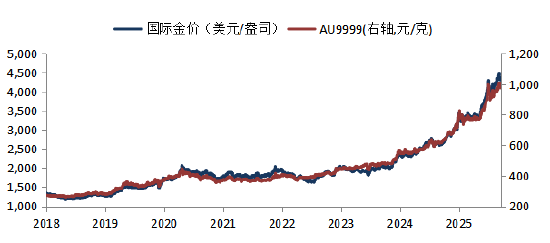
黄金行情回顾及主要观点: 上周金价波动放大。伦敦现货黄金收于4,333美元/盎司(周环比-4.4%),国内AU9999黄金收于975元/ 克(周环比-3.5%)。 美国袭击委内瑞拉,地缘紧张局势有望利好黄金。当地时间1月3日凌晨,美军对委内瑞拉发动大规模空 袭,逮捕该国总统马杜罗及其夫人,并寻求扶植亲美政权。美国此举的核心经济动机或在于控制委内瑞 拉丰厚的石油矿产资源,其拥有全球最大的已探明石油储量;而更深层次的地缘战略在于践行"特朗普 版门罗主义",意图确立西半球绝对主导权,对其他拉美左翼国家形成威慑。全球百年未有之大变局 下,逆全球化与地缘冲突不断,地缘政治的不确定性有望促使更多避险资金涌向黄金。 上周黄金的回调主要源于白银波动加剧的外溢效应。白银在今年下半年尤其是近一个多月呈现飙涨态 势,不乏多头逼空等交易型因素,但近期芝商所提高保证金要求的消息加剧了波动性。12月12日,芝商 所首次将白银保证金上调10%。随后在12月29日收盘后,再次全面上调黄金、白银、锂等金属期货品种 的履约保证金。12月26日,上海期货交易所将黄金、白银期货合约的涨跌停板幅度调整为15%,并相应 上调交易保证金比例。这些举措反映 ...
广发早知道:汇总版-20260106
Guang Fa Qi Huo· 2026-01-06 01:32
Report Industry Investment Rating No relevant information provided. Core Viewpoints of the Report The report presents a comprehensive analysis of various sectors in the financial and commodity markets, including financial derivatives, precious metals, non - ferrous metals, black metals, agricultural products, and energy chemicals. It assesses the supply - demand fundamentals, price trends, and provides corresponding investment strategies for different commodities based on macroeconomic conditions, geopolitical events, and industry - specific factors [2][3][4]. Summary by Directory Daily Selections - **Aluminum**: Strong macro and policy expectations support the price, but the weakening supply - demand fundamentals and inventory accumulation pressure will limit the upside. It is expected to maintain a high - level wide - range shock in the short term, with the Shanghai Aluminum main contract operating in the range of 23,200 - 24,400 yuan/ton [2]. - **Methanol**: The port price is strong, and the basis is maintained. The market is expected to be in a strong - side shock pattern in the short term. The strategy is to buy low for the 05 contract (2100 - 2350) [3]. - **Iron Ore**: Supported by the expectation of inventory structure tightness and steel mill restocking, the price is expected to be in a short - term shock - strengthening trend. The short - term strategy is to try short - term long positions, with the range reference of 770 - 840 [4]. - **Apple**: Due to the scarcity of high - quality apples and the inventory pressure of ordinary apples, the short - term market is in a game. If there is no significant improvement in consumption during the Spring Festival stocking season, the price may fall after the Spring Festival. It is recommended to combine long positions with put options for protection [5]. - **Silver**: The continuous tightening of inventory boosts the price. In the high - volatility market, it is recommended to maintain a light - position low - buying strategy and use options to lock in profits in a timely manner [7]. - **Stock Index Futures**: After the holiday, the A - share market had a good start, with major indexes breaking through previous highs. It is recommended to continue to hold bull spread portfolios and build covered call portfolios on dips [7][8][9]. - **Treasury Bond Futures**: Concerns about supply and the strengthening of the equity market put pressure on bond futures. It is recommended to wait and see for the unilateral strategy, focus on positive arbitrage for the spot - futures strategy, and tend to steepen the curve for the curve strategy [11][12]. - **Precious Metals**: The weakening of the US economy and geopolitical conflicts boost precious metals. It is expected that the price will maintain high volatility in January, and it is recommended to pay attention to the long - volatility strategy and allocate on dips [13][15][16]. Non - Ferrous Metals - **Copper**: Concerns about the stability of metal supply drive up the price. The medium - to long - term fundamentals are good, but the short - term price is overestimated to some extent. It is recommended to hold long positions lightly, with the main contract focusing on the support at 95,500 - 96,000 [18][21][22]. - **Alumina**: The supply is continuously loose, and the price is expected to fluctuate widely around the cash - cost line. The main contract is in the range of 2,600 - 2,950 yuan/ton. It is recommended to wait and see in the short term and sell short on rallies in the medium term [22][24]. - **Aluminum**: The short - term buying sentiment is high, but the supply - demand fundamentals are weakening. The price is expected to maintain a high - level wide - range shock, with the main contract in the range of 23,200 - 24,400 yuan/ton. It is recommended to take profits on previous long positions on rallies and build long positions on pullbacks [24][26][27]. - **Aluminum Alloy**: The price is mainly driven by cost. It is expected to continue the high - level range shock in the short term, with the main contract in the range of 22,400 - 23,400 yuan/ton. It is recommended to conduct an arbitrage of going long AD03 and short AL03 [27][29]. - **Zinc**: The price is rising, and the spot is at a premium. The short - term price is expected to be in a shock - strengthening trend. It is recommended to hold long positions, with the main contract focusing on the support at 23,300 - 23,400, and continue to hold the cross - market reverse arbitrage [30][33]. - **Tin**: Affected by news and sentiment, the price is in a strong - side shock. It is recommended to wait and see, and pay attention to the macro and supply - side recovery [34][38]. - **Nickel**: Driven by the expectation of increased nickel ore control in Indonesia, the price is expected to maintain a strong - side operation in the short term, with the main contract in the range of 130,000 - 138,000. Pay attention to the possible pullback after the news is digested [39][41]. - **Stainless Steel**: The strong expectation and weak reality are in a continuous game. The price is expected to maintain a strong - side shock adjustment, with the main contract in the range of 12,800 - 13,500. Pay attention to the news from the ore end and the downstream restocking [42][45]. - **Lithium Carbonate**: Driven by news, the price is expected to be in a strong - side shock. It is recommended to wait and see due to the increased volatility, and pay attention to the breakthrough around 130,000 [46][49]. - **Polysilicon**: The price is in a high - level shock. It is recommended to wait and see, and pay attention to the subsequent production reduction and price adjustment acceptance [50][52]. - **Industrial Silicon**: The price is under pressure. It is expected to maintain a low - level shock, and pay attention to the implementation of production reduction [52][54]. Black Metals - **Steel**: The steel price maintains a shock trend. The rebar fluctuates in the range of 3,000 - 3,200, and the hot - rolled coil fluctuates in the range of 3,150 - 3,350. It is recommended to pay attention to the support at around 3,000 for rebar and 3,150 for hot - rolled coil [54][55]. - **Iron Ore**: The price is expected to be in a short - term shock - strengthening trend, with the short - term strategy of trying short - term long positions, and the range reference of 770 - 840 [56][59]. - **Coking Coal**: The price is falling. It is recommended to sell short on rallies for the unilateral strategy and conduct an arbitrage of going long coking coal and short coke [60][64]. - **Coke**: The price is falling, and there is still an expectation of price cuts. It is recommended to sell short the 2605 contract on rallies for the unilateral strategy and conduct an arbitrage of going long coking coal and short coke [65][67]. - **Silicon Iron**: The supply - demand contradiction is relieved, and the price is expected to be in a range shock, with the range reference of 5,500 - 5,800 [68][70]. - **Manganese Silicon**: The manganese ore supports the price, and the supply - demand contradiction still exists. It is recommended to conduct range operations, with the reference range of 5,700 - 6,000 [71][75]. Agricultural Products - **Meal**: The global easing pattern remains unchanged, and the domestic and foreign markets maintain a range shock. The short - term trend is shock - strengthening [76][77]. - **Hog**: After the holiday, the demand declines, and the price is in a small - range shock. The short - term is expected to be in a consolidation [79][80]. - **Corn**: There is a game between the reluctance to sell and policy supply. The price is expected to be in a shock, and pay attention to the policy implementation and farmers' selling mentality [81][82]. - **Sugar**: The supply outlook is loose, and the price is expected to be in a low - level shock and weakening trend. It is recommended to maintain a short - on - rally strategy [83][85]. - **Cotton**: The US cotton is in a bottom - shock, and the domestic price is relatively strong. The short - term is expected to maintain a shock - strengthening pattern [86]. - **Egg**: The supply pressure is gradually relieved, and the price is expected to maintain a low - level shock [89]. - **Oil**: Palm oil may face a downward risk after a short - term rise. Soybean oil is expected to be in a shock adjustment, and rapeseed oil is not recommended to be overly bullish [90][91][93]. - **Jujube**: The trading is light, and the upward momentum is insufficient. Pay attention to the Spring Festival stocking and the planting area in 2026 [94]. - **Apple**: There is a game between the scarcity of good apples and the inventory pressure of ordinary apples. If the Spring Festival consumption is not improved, the price may fall after the festival. It is recommended to combine long positions with put options [95][96]. Energy Chemicals - **PX**: The valuation is high, and the downstream negative feedback is obvious. It is expected to be in a short - term weak - side shock. The short - term is in a high - level shock at 7,000 - 7,500, the medium - term strategy is to buy low, and the PX5 - 9 is in a low - level positive arbitrage [97][98]. - **PTA**: The processing fee is good, and the downstream negative feedback is obvious. It is expected to be under pressure in the short term. The short - term is in a shock at 4,800 - 5,200, the medium - term strategy is to buy low, and the TA5 - 9 is in a low - level positive arbitrage [99][100]. - **Short - Fiber**: The supply - demand expectation is weak, and it follows the raw material fluctuations. The strategy is the same as PTA, and the PF processing fee is expected to fluctuate between 800 - 1000, and it is recommended to shrink the spread on rallies [101][102]. - **Bottle Chip**: The supply and demand will both decline in January, and the cost support is relatively strong. The PR processing fee has limited upside space. The strategy is the same as PTA, and the PR main - contract processing fee is expected to fluctuate between 300 - 450 yuan/ton, and it is recommended to shrink the processing fee on rallies [103][104]. - **Ethylene Glycol**: There is a seasonal inventory accumulation, and the supply - demand expectation is weak in the near - term and strong in the long - term. The price is under pressure in January. It is recommended to sell out - of - the - money call options of EG2605 on rallies and conduct a reverse arbitrage on the EG5 - 9 on rallies [105]. - **Pure Benzene**: The supply - demand expectation improves slightly, but the high - inventory suppresses the price. It is expected to continue the low - level shock, and the BZ2603 may fluctuate in the range of 5,300 - 5,600 [106][107]. - **Styrene**: The supply - demand expectation is weak, and the driving force is limited. It is recommended to short the EB02/03 around 6,800 and shrink the EB processing fee on rallies [108][109]. - **LLDPE**: The market covers short positions, and the basis strengthens. It is recommended to go long the 2605 contract in the short term [110][111]. - **PP**: The basis is weak, and the price rises slightly. Pay attention to the expansion of PDH profit after the release of maintenance information [112]. - **Methanol**: The port price is strong, and the basis is maintained. It is recommended to buy low the 05 contract (2100 - 2350) [112]. - **Caustic Soda**: The futures rebound strongly, and the spot price is stable with a slight decline. It is expected that the liquid caustic soda price will show a stable - to - weak trend [113][115]. - **PVC**: The supply is marginally loose, and the high - price trading is light. The price is expected to shock and weaken [116]. - **Soda Ash**: The short - term inventory is decreasing, and the price has certain support. It is recommended to wait and see [117][118]. - **Glass**: The cold - repair and the improvement of the sales rate support the price. It is expected to continue the bottom - shock and strengthening trend. It is recommended to wait and see [117][119][120]. - **Natural Rubber**: There is a short - term game between long and short. It is recommended to hold previous short positions [120][123]. - **Synthetic Rubber**: The fundamental support is limited, and the BR follows the commodity fluctuations. It is expected to be in a wide - range shock between 11,200 - 12,000 in the short term [123][125].