
产业升级

Search documents
链上发力 激活产业新动能
Su Zhou Ri Bao· 2025-08-24 23:19
Core Insights - The article highlights the importance of precise industry chain matching in enhancing regional economic competitiveness and fostering collaboration among enterprises [2][4][11] Group 1: Industry Chain Matching Activities - Wujiang District has organized 43 industry chain matching events this year, facilitating efficient connections between enterprises and enhancing collaboration within the industry [3][10] - The events have successfully attracted various enterprises, including those in the agricultural machinery, textile, and artificial intelligence sectors, to engage in direct discussions and partnerships [5][9][12] Group 2: Government Initiatives and Support - The Wujiang government has established a service brand "Intelligent Gathering of Enterprises, Chain in Wujiang" to promote precise matching and support traditional and emerging industries [15] - The government aims to enhance the quality of industrial development by focusing on the precision and efficiency of enterprise services [15] Group 3: Sector-Specific Developments - The textile industry has seen significant engagement, with over 50 well-known children's clothing brands participating in matching events, leading to direct feedback on market demands and innovation directions [6][7] - The automotive industry is also a focus, with a goal to exceed 20 billion yuan in scale within two years, driven by collaboration among suppliers and manufacturers [11] Group 4: Long-term Industry Growth - The matching activities are expected to foster a positive cycle of talent, capital, and technology aggregation, particularly in the semiconductor sector, enhancing the region's innovation capacity [13] - The collaboration between enterprises is anticipated to lead to increased orders, resource matching, and an overall boost in industry resilience and competitiveness [11][14]

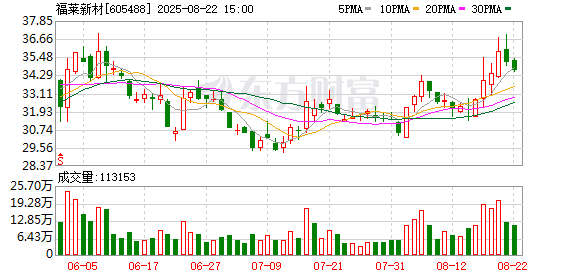
福莱新材:营收规模创同期历史新高,产业升级持续投入
Zheng Quan Shi Bao Wang· 2025-08-24 14:24
Group 1 - The company reported a total revenue of 1.334 billion yuan in the first half of 2025, marking a year-on-year increase of 15.4%, achieving the highest revenue in the same period historically [3] - The net profit attributable to the parent company was 51 million yuan, a decrease of 19.58% year-on-year, primarily due to intensified competition in the advertising inkjet printing materials market and the ramp-up of new projects [3] - The revenue from label printing materials reached 419 million yuan, a year-on-year increase of 28.42%, accounting for 31% of total revenue, with a gross margin increase of 1.3 percentage points to 20.6%, becoming the largest profit contributor [2] Group 2 - The company achieved a revenue of 93 million yuan from functional base film materials, reflecting a year-on-year growth of 19.87%, with a gross margin increase of 2.79 percentage points to 5.49% [2] - The company has made significant technological breakthroughs and commercial progress in the flexible sensor field, establishing the first pilot production line and launching the first and second generation of flexible tactile sensor products [4][6] - The company invested 54 million yuan in R&D in the first half of 2025, representing 4.1% of revenue, which is the highest R&D expenditure for the same period since its listing [4] Group 3 - The company added 6 new patents during the reporting period, including 4 invention patents, bringing the total authorized patents to 118, with 73 being invention patents [6] - The company is transitioning its product line from traditional adhesive tapes and release films to higher value-added areas such as optical protective films, and has successfully developed UV release adhesive for mass production [6]


差距拉大!2025年,中国GDP将突破20万亿美元,美国可超过30万亿
Sou Hu Cai Jing· 2025-08-24 04:28
Economic Growth Projections - China's GDP is projected to reach $20 trillion by 2025, supported by a stable economic growth rate of at least 5% [1][3] - In 2024, China's GDP is estimated at $18.94 trillion, with the first half contributing $8.68 trillion, accounting for 45.83% of the total [3] Trade and Surplus - China's trade surplus for the first seven months reached $683.514 billion, a year-on-year increase of 31.2%, marking the highest level for the same period [3] - The trade surplus is expected to exceed $1.2 trillion in 2025, providing strong support for economic growth [3] Domestic Demand and Investment - Social retail sales grew by 4.8% year-on-year in the first seven months, but fixed asset investment growth was only 1.6% due to weak real estate and private investment [4] - The uneven development across industries is a core reason for the moderate economic growth rate of around 5% [6] Structural Challenges - The transition from old to new economic drivers is incomplete, with traditional growth engines losing momentum [6] - There is a need for precise macroeconomic regulation and deeper reforms to stimulate private investment and stabilize the real estate market [6] Future Economic Landscape - By 2025, both China and the U.S. are expected to achieve significant GDP milestones, with the U.S. projected to reach $30.04 trillion [8][10] - The economic growth of both countries will have systemic impacts on global trade, investment, and market confidence [10] Quality of Growth - The focus is shifting towards achieving balanced, efficient, and sustainable development, emphasizing the quality of growth alongside quantity [10] - China's economic transformation is aimed at enhancing the quality of life for its citizens while navigating various challenges [10]
科创板:寒武纪+中芯国际双驱动,8大核心标的揭示产业升级方向!
Sou Hu Cai Jing· 2025-08-24 01:16
Core Viewpoint - The semiconductor industry is experiencing a rare upward trend driven by policy support, technological breakthroughs, and market demand, with the Sci-Tech Innovation Board benefiting significantly from the strong performance of companies like Cambricon and SMIC [1]. Group 1: Dual Engine Drive - Cambricon and SMIC serve as benchmark companies, driving the semiconductor sector's growth [2]. Group 2: Eight Representative Companies - Haiguang Information (688041): Leading domestic CPU/DCU company, expected to benefit from AI computing power demand with a projected net profit increase of 120% in 2025 [4]. - Northern Huachuang (002371): Leading semiconductor equipment company, with a projected 35% increase in orders in 2025 and continuous market share growth in etching and thin film deposition equipment [5]. - Zhaoyi Innovation (603986): Leading storage chip company, ranked third globally in NOR Flash market share, with significant growth expected in automotive-grade storage chips [6]. - Zhongwei Company (688012): Leading etching equipment company, with a breakthrough in 5nm technology and expected new orders exceeding 20 billion yuan in 2025 [6]. - Baiwei Storage (688525): Leading storage module company, projected to see a 191% year-on-year increase in net profit in Q2 2025 due to emerging demands from AI glasses [6]. - China Resources Microelectronics (688396): Leading power semiconductor company, with IGBT modules entering the new energy vehicle supply chain and a projected capacity utilization rate of 95% in 2025 [6]. - Changdian Technology (600584): Leading advanced packaging company, with Chiplet technology in mass production and high-end packaging revenue expected to exceed 40% in 2025 [6]. - Jingjiawei (300474): Leading domestic GPU company, increasing investment in edge AI chip development to adapt to low-power scenarios [6]. Group 3: Potential Stock Focus - Jingjiawei (300474): A rare player in edge AI chips, benefiting from the trend towards AI terminalization [8]. - The company has made technological breakthroughs, with its edge AI chips already adapted for smart glasses and robots, and plans to launch its first GPU supporting FP8 precision in 2025, improving decoding efficiency by 30% [9]. - The global smart glasses shipment volume is expected to increase by 110% year-on-year, with Meta holding over 70% market share, leading to a surge in high-density storage demand [9]. Group 4: Industry Outlook - The semiconductor industry is entering a new cycle of simultaneous volume and price increases, supported by policies (brain-computer interfaces, AI+), technological advancements (domestic lithography machines, FP8 precision), and demand growth (AI model iteration, storage price increases) [10]. - The Sci-Tech Innovation Board, as a main battleground for hard technology, will continue to benefit from domestic substitution and industrial upgrades, with a focus on computing power chips, advanced packaging, and edge AI [10].



第一届世界五百强:美国独占151家,日本149家,中国只有3家,现在呢?
Sou Hu Cai Jing· 2025-08-23 23:28
Group 1 - The number of Fortune Global 500 companies from a country reflects its overall strength and economic power [1] - In 1995, only 3 Chinese companies were on the list, while the US and Japan dominated with 151 companies, accounting for nearly 60% of global enterprises [3][6] - Japan's peak was in the 1990s, with 6 out of the top 10 companies being Japanese, but it faced a significant economic downturn afterward [7][10] Group 2 - Since 2001, after China's accession to the WTO, the number of Chinese companies in the Fortune Global 500 has surged, with China becoming the second-largest economy [11][13] - By 2024, China had 133 companies on the list, surpassing Japan, which only had 40, while the US had 139 [13][14] - The growth of Chinese companies has been rapid, with significant GDP growth rates exceeding 10% for several years [11][12] Group 3 - Chinese companies on the list have an average profit of $39 million, significantly lower than the US average of $88 million, indicating challenges in profitability and operational efficiency [16] - Many of the top Chinese companies are state-owned enterprises, which dominate sectors like energy, finance, and telecommunications [16][17] - The increasing number of private enterprises on the list is noted, but their representation remains low compared to state-owned firms [17] Group 4 - To improve profitability, there is a call for a focus on productive service industries, which are seen as crucial for high-quality manufacturing development [18][19] - The emphasis is on upgrading the industrial structure and moving towards mid-to-high-end industries to enhance profit margins [20] - Avoiding internal competition and focusing on high-tech product exports is essential for achieving true economic strength [21]

用电量创新高汽柴油消费却在下滑:能源转型让中国经济更高质量?
Sou Hu Cai Jing· 2025-08-23 01:38
Group 1: Electricity Consumption Trends - In July, China's electricity consumption reached 10,226 billion kilowatt-hours, marking an 8.6% increase year-on-year and more than doubling from a decade ago [1][3] - The increase in electricity consumption is attributed to three main factors: a clear release in demand, improved supply efficiency, and higher usage of air conditioning and cooling due to high temperatures [3][5] - The contribution of renewable energy sources, including wind, solar, and biomass, accounted for nearly one-quarter of the electricity consumed in July, indicating significant progress in energy transition [3][5] Group 2: Economic Indicators and Energy Structure - The rise in electricity consumption is part of a broader economic vitality indicator, often referred to as the "Li Keqiang Index," which includes electricity usage, railway freight, and loan issuance [5] - Diesel and gasoline consumption decreased by approximately 7% and 4% respectively in the first half of 2025 compared to the previous year, while the share of new energy vehicles is rapidly increasing [5] - The energy structure is undergoing long-term optimization, with renewable energy sources expected to account for over half of the new installed capacity in 2024, reducing reliance on fossil fuels [5][7] Group 3: AI and Power Demand - The demand for electricity is rising due to the increasing need for computing power in data centers and smart manufacturing, positioning China as a major player in global AI computing capacity [7] - The competitiveness of power generation and electricity costs is becoming a critical factor in industrial competitiveness, with electricity serving as a foundational element for high-end manufacturing and intelligent services [7] - The milestone of surpassing 10 trillion kilowatt-hours in electricity consumption is seen as a marker of progress in energy structure optimization, industrial upgrading, and the application of advanced technologies [7]
前7个月新设外商投资企业同比增14.1%
Zheng Quan Ri Bao· 2025-08-23 00:12
Core Insights - The number of newly established foreign-invested enterprises in China increased by 14.1% year-on-year in the first seven months of 2025, totaling 36,133, while the actual utilized foreign capital decreased by 13.4% to 467.34 billion RMB [1] - The growth in newly established foreign-invested enterprises indicates strong foreign investment interest in the Chinese market, driven by high-level opening-up policies, improved business environment, and opportunities in high-end manufacturing and digital economy sectors [1][2] Industry Analysis - In the first seven months, the actual utilized foreign capital in the manufacturing sector was 121.04 billion RMB, while the service sector attracted 336.25 billion RMB. High-tech industries received 137.36 billion RMB, with significant growth in e-commerce services (146.8%), aerospace manufacturing (42.2%), chemical pharmaceuticals (37.4%), and medical equipment manufacturing (25.5%) [2] - The investment from ASEAN countries grew by 1.1%, while Switzerland, Japan, and the UK saw increases of 63.9%, 53.7%, and 19.5% respectively, indicating a diversification of foreign investment sources [2] Future Outlook - To attract and utilize foreign investment more effectively, the Ministry of Commerce suggests improving the foreign investment policy system, optimizing the business environment, and enhancing the "Invest in China" brand with tailored strategies for different investment sources [3] - The long-term outlook for foreign investment in China remains positive due to the country's economic resilience, large market potential, and ongoing improvements in the business environment, particularly in the service and high-tech sectors [3]
北交所上市公司整体盈利韧性强 75家已披露半年报企业中超九成归母净利润为正
Zheng Quan Ri Bao· 2025-08-22 23:04
Core Insights - The overall performance of companies listed on the Beijing Stock Exchange (BSE) is showing resilience and growth potential, with many achieving both revenue and profit increases in the first half of 2025 [1][2]. Group 1: Financial Performance - As of August 22, 2025, 75 companies listed on the BSE disclosed their semi-annual reports, with 54 companies reporting year-on-year revenue growth [1]. - Among the 75 companies, 69 reported positive net profits, representing over 90% of the total, and 46 companies achieved year-on-year profit growth [1]. - Notable performers include Zhuozhao Adhesive, which reported a revenue of 156 million yuan, a year-on-year increase of 207.46%, and a net profit of 26.78 million yuan, recovering from a loss of 12.02 million yuan in the previous year [2]. - Haineng Technology achieved total revenue of 136 million yuan, a year-on-year increase of 34.87%, with a net profit of 547,150 yuan, recovering from a loss of 1.4 million yuan in the previous year [2]. Group 2: Strategic Focus and Market Trends - Companies on the BSE are increasingly focusing on high-growth sectors such as computing services and new energy materials, benefiting from the digital economy and energy transition [2]. - There is a significant emphasis on innovation, with R&D investments translating into technological advantages and core competitive barriers [2]. - The dual drivers of policy support and market demand are providing a broad space for growth, particularly for leading companies in the sector [2][3]. Group 3: Future Outlook - The future development prospects for BSE-listed companies are promising, supported by ongoing policy benefits and deepening reforms that assist specialized and innovative enterprises in financing and growth [3]. - The long-term growth potential in sectors such as new energy, high-end manufacturing, and the digital economy is substantial [3]. - Companies like Jinbo Bio and Mingyang Technology are planning mid-term dividends to reward investors, indicating confidence in their financial health [3].
焦作万方: 中国银河证券股份有限公司关于焦作万方铝业股份有限公司发行股份购买资产暨关联交易之独立财务顾问报告
Zheng Quan Zhi Xing· 2025-08-22 16:48
Core Viewpoint - The report outlines the independent financial advisory opinion regarding the share issuance for asset acquisition by Jiaozuo Wanfang Aluminum Industry Co., Ltd., emphasizing the transaction's compliance with legal regulations and its potential impact on the company's business structure and market position [1][2]. Group 1: Transaction Overview - Jiaozuo Wanfang plans to acquire 99.4375% equity of Kaiman Aluminum (Sanmenxia) Co., Ltd. through share issuance, with a transaction price of approximately 3,194.93 million yuan [3][10]. - The transaction aims to enhance the company's upstream business capabilities, creating a complete aluminum material industry chain from alumina to electrolytic aluminum and aluminum processing [10]. Group 2: Financial and Operational Impact - The target company, Sanmenxia Aluminum, has an alumina production capacity of 10.28 million tons per year, ranking fourth in China and sixth globally, along with over 1 million tons of electrolytic aluminum capacity [10]. - The acquisition is expected to improve Jiaozuo Wanfang's profitability and financial status, strengthening its market position and operational performance in the aluminum industry [10]. Group 3: Shareholding Structure Changes - Post-transaction, the controlling shareholder will change to Jinjiang Group, while the actual controller remains the same, ensuring no change in the company's control structure [10][11]. - The shareholding distribution will see significant changes, with new shareholders including Jinjiang Group and others acquiring substantial stakes in the company [12].


湖南天雁: 湖南天雁机械股份有限公司投资管理办法(2025年8月修订)
Zheng Quan Zhi Xing· 2025-08-22 16:24
Core Viewpoint - The investment management measures of Hunan Tianyan Machinery Co., Ltd. aim to standardize investment behavior, allocate resources effectively, enhance investment returns, and control investment risks in alignment with the company's strategic development needs [1][2]. Investment Definition and Scope - Investment refers to fixed asset investment, long-term equity investment, and private equity fund investment, including fixed assets like buildings, equipment, and intangible assets [1][2]. - Major investment projects require approval from the company's shareholders' meeting or board of directors [4]. Investment Principles - Investment activities must adhere to new development concepts, support industrial transformation, and focus on high-end, intelligent, low-carbon, and green development [8][9]. - Emphasis on strategic planning, innovation-driven development, digital transformation, and green development is crucial [8][9][10]. Investment Management Structure - The company's shareholders' meeting is the highest decision-making body for investment decisions, with the board of directors authorized to manage and decide on annual investment plans [10][11]. - The investment management department is responsible for the overall management of the investment system, including planning and project feasibility studies [6][7]. Decision-Making Process - Investment decisions are based on approved long-term development plans and annual budgets, with a clear classification of decision-making authority [18][19]. - Projects requiring significant investment must undergo expert evaluations and adhere to a strict decision-making process [23][24]. Risk Management - The company is responsible for managing investment risks, with a focus on identifying and assessing risks at all stages of the investment process [37][38]. - A comprehensive risk management framework is established to monitor and control risks dynamically [41][42]. Project Implementation and Supervision - Projects must be implemented according to approved plans, with strict controls on changes to project scope and budget [43][44]. - Regular evaluations and audits are conducted to ensure compliance and assess project outcomes [49][50]. Evaluation and Accountability - The investment management department conducts annual evaluations of investment activities, which influence personnel assessments and compensation [52][53]. - A mechanism for accountability is established to address violations and ensure responsible management of investment activities [56][57].
