能源转型

Search documents
古特雷斯呼吁加大努力实现可持续发展目标
Xin Hua Wang· 2025-09-23 00:30
Core Points - The UN Secretary-General António Guterres emphasized the need for increased efforts to achieve sustainable development goals, highlighting the importance of reforming the global financial architecture and prioritizing climate action [1][1][1] - The President of the 80th UN General Assembly, Baerbock, noted that only 35% of the sustainable development goal targets are on track, with 47% making insufficient progress and 18% experiencing setbacks [1][1][1] - Baerbock pointed out a 7.1% decrease in net official development assistance last year, despite increasing demands, indicating a severe financial situation [1][1][1] Financial and Development Insights - Guterres stated that global military spending in 2024 is 13 times the amount of official development assistance, underscoring the need to prioritize peace in all efforts [1][1][1] - The 2025 Sustainable Development Goals report revealed that over 800 million people are still living in extreme poverty, and billions lack access to safe drinking water and sanitation services [1][1][1] - The report also highlighted the exacerbation of climate change and the impact of armed conflicts, with nearly 50,000 deaths and 120 million people displaced by the end of the year [1][1][1]
航运公司共识:航运减排的全球框架非常必要
Sou Hu Cai Jing· 2025-09-22 15:41
Core Viewpoint - The discussion during the Capital Link conference highlighted the need for a unified global regulatory framework to drive substantial changes in the shipping industry, particularly regarding fleet renewal and alternative fuels [3][9]. Regulatory Framework - The upcoming international regulatory framework is seen as a "milestone" that could provide long-awaited global guidance for the industry, potentially accelerating the energy transition [3]. - A unified carbon pricing and certification system is deemed essential for shipowners' investments, with lessons learned from the EU ETS implementation [5]. - The complexity of new regulations raises concerns about compliance difficulties, leading some shipowners to face potential fines to maintain operations [5][9]. Fuel Selection - The topic of fuel selection is contentious, with a focus on transitional fuels as practical solutions compatible with existing fleets [5]. - The "chicken and egg" dilemma regarding alternative fuel production and regulatory certainty is a significant concern for shipowners and fuel suppliers [7]. - A new responsibility framework and insurance arrangements are necessary for the transition to alternative fuels, as the shipping industry has long relied on by-products from the refining industry [7]. Shipowner Strategies - Shipowners exhibit cautious attitudes towards new ship orders, with significant uncertainty suppressing new orders, particularly in the tanker and bulk markets [9]. - Some companies are opting for stock buybacks and cash retention instead of placing new orders, citing high costs and regulatory risks associated with traditional fuel vessels [9]. - The industry is leaning towards a "gradual transition" rather than aggressive transformation, waiting for clearer policies and fuel market signals before making large-scale fleet updates [9]. Consensus and Future Outlook - Despite differing views on fuel pathways and investment timing, there is consensus on the necessity of a unified and enforceable regulatory system for the shipping industry's green transition over the next decade [9][10]. - Energy efficiency improvements are prioritized as more practical than large-scale alternative fuel adoption before 2030 [10]. - A multi-pathway approach involving LNG, methanol, ammonia, and other fuels is recognized as essential, as the industry cannot rely on a single fuel for its transition [10]. - Uncertainty continues to delay investments from both shipowners and fuel suppliers, who are awaiting clearer policy and market signals [10].



2025 INVESTOPIA全球系列对话北京站成功举办
Zhong Zheng Wang· 2025-09-22 15:24
Core Insights - The 2025 INVESTOPIA Global Dialogue in Beijing successfully connected Chinese and Arab governments, capital, and enterprises, promoting sustainable dialogue and collaboration in energy transition, technology cooperation, and financial connectivity [1][1][1] Group 1: Event Overview - The event was initiated by the UAE's international investment platform INVESTOPIA and co-hosted by the China-Arab Entrepreneurs Association [1] - The dialogue aims to facilitate deep connections and industrial ecosystem integration between Chinese and Arab enterprises [1] Group 2: Agreements and Collaborations - A cooperation agreement was signed between the Abu Dhabi Chamber of Commerce, the China-Arab Entrepreneurs Association, and INVESTOPIA, indicating a commitment to enhance enterprise interaction, industrial alignment, and investment facilitation [1] - A memorandum of understanding was also signed to expand collaboration in the Middle East and Africa [1] - Additional projects signed include a cross-border payment platform Klickl and a precision medicine company P4ML, covering emerging sectors such as fintech and healthcare [1]
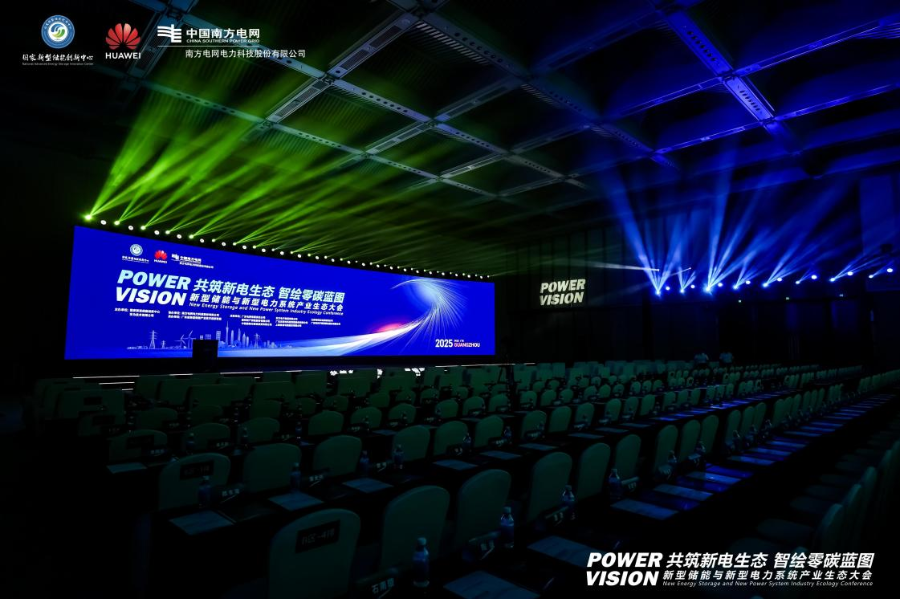
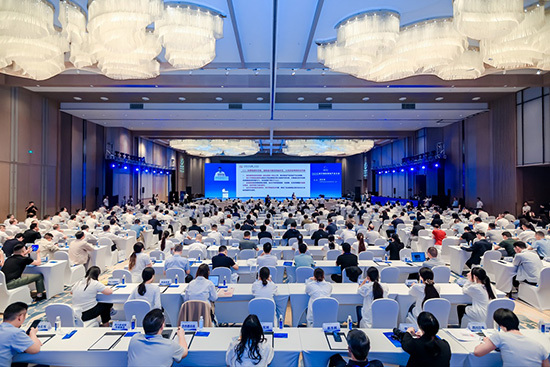
首届新型储能与新型电力系统产业生态大会在广州隆重召开
2 1 Shi Ji Jing Ji Bao Dao· 2025-09-22 15:21
Core Insights - The new power system is a key vehicle for achieving the "dual carbon" goals, ensuring energy security, and addressing challenges in power transformation [1] - New energy storage is crucial for building a new energy system and supporting the new power system [1] Group 1: Conference Overview - The first New Energy Storage and New Power System Industry Ecosystem Conference was held in Guangzhou, co-hosted by the National New Energy Storage Innovation Center and Huawei Technologies [1][4] - The conference aimed to create a high-level international cooperation platform, expand the global new energy market, and enhance China's influence in the new energy storage and power system sectors [4][29] Group 2: Key Themes and Goals - The conference focused on breakthroughs in key technologies, collaborative innovation in the industry chain, and ecological co-construction, aligning with the national "dual carbon" goals [4][29] - The event gathered over 600 industry leaders, representatives, and experts to discuss the development paths of the new energy storage industry [4][29] Group 3: Technological and Strategic Developments - The National New Energy Storage Innovation Center emphasized the importance of new energy storage as a key technology for global energy transition [6][27] - The Guangdong Power Grid aims to deepen the construction of the new power system, focusing on strategic emerging businesses and international growth [10][26] Group 4: International Cooperation and Market Expansion - The conference released overseas complete solutions for the new power system and highlighted China's leading capabilities in new energy technology innovation [12][29] - 22 new energy storage ecosystem enterprises signed agreements to explore innovative models for industry expansion and zero-carbon development [14][29] Group 5: Future Directions and Initiatives - The conference marked a new phase for China's new energy storage and power system industries in terms of collaboration and international cooperation [14][29] - The establishment of the New Generation Carrier Communication Industry Alliance aims to lead the new energy storage industry in transitioning from technology leadership to ecological leadership [31][33]
金银比翼齐飞,花旗再度上调金价预期,看好铜铝接棒大涨!
Jin Shi Shu Ju· 2025-09-22 14:23
Group 1 - Gold prices reached new highs, with silver prices hitting their highest levels in over a decade, driven by expectations of a dovish Federal Reserve leadership and declining real interest rates [1] - Citi strategists predict a bullish trend for gold and silver, extending to copper and aluminum by 2026, influenced by economic conditions and stimulus measures from the Inflation Reduction Act [1][2] - The report highlights cyclical factors like a weak labor market and structural concerns such as U.S. debt and a weakening dollar as key drivers for precious metal price increases [1] Group 2 - The current conditions for a gold bull market are nearly all in place, with a target price of $3,800 per ounce in the next three months and a potential peak of $4,000 per ounce in the coming months [2] - For aluminum, the outlook is very bullish over the next 6 to 36 months, with any price pullbacks seen as strong long-term buying opportunities due to its connection with AI and energy demands [2] - Copper prices are expected to reach a baseline of $12,000 per ton in the next 6 to 12 months, with an optimistic scenario predicting $14,000 per ton, benefiting from structural energy transitions and AI trends [2] Group 3 - Citi revised its gold price forecast for Q1 2026 from $2,900 per ounce to $3,700 per ounce, while projecting a decline to $2,800 per ounce by Q4 2026, slightly above previous estimates [3]

金价徘徊之际银价再度刷新逾十四年新高
Xin Hua Cai Jing· 2025-09-22 06:48
Group 1 - The core viewpoint of the articles highlights the rising demand and potential for silver, particularly driven by its industrial applications and the ongoing bullish trend in precious metals due to anticipated interest rate cuts by the Federal Reserve [1][2][3] - Silver prices have shown a significant increase, with a cumulative rise of over 33% in the past five months, compared to a 12% increase in gold prices during the same period [1] - The World Silver Association predicts a supply deficit in the global silver market, reaching 117.6 million ounces by 2025, indicating a sustained demand for silver [1][2] Group 2 - The recovery in the photovoltaic industry and the positive outlook for the energy storage sector are contributing to the strong demand for silver as a key metal in energy transition [2] - The European Photovoltaic Association forecasts that global solar power installations will reach 655 GW in 2025 and 665 GW in 2026, further boosting silver's industrial demand [2] - Investment demand for silver remains high, with the largest silver ETF maintaining holdings above 15,000 tons, indicating strong market interest despite being below historical highs [2][3] Group 3 - Analysts suggest that the current market dynamics favor a scenario where silver prices could reach $50 per ounce, driven by both investment and industrial demand [2][3] - The relationship between gold and silver is characterized as "gold on the stage, silver in the spotlight," indicating that while gold leads in a bull market, silver is expected to follow with significant gains [3] - There is a cautionary note regarding the historical pattern where surging silver prices may coincide with a peak in gold prices, necessitating close monitoring of market trends [3]
聚焦固态及钠电池突破 “锂电之都”撬动千亿级产业变革
Zhong Guo Jing Ji Wang· 2025-09-22 06:11
Group 1: Lithium Battery Industry Conference - The "2025 Suining International Lithium Battery Industry Conference" was held in Suining, Sichuan, focusing on high-quality development of the lithium battery industry and innovations in next-generation battery technologies such as solid-state and sodium batteries [1][3] - The conference gathered various stakeholders including government, industry, academia, research, finance, and services to discuss topics like technology routes, policy support, market mechanisms, and industry chain collaboration [1] Group 2: Current Trends and Innovations - The lithium battery industry is transitioning from rapid growth to high-quality development, with ongoing upgrades in existing lithium battery technologies and emerging technologies like solid-state and sodium batteries [3] - A report on the global lithium battery industry’s intellectual property status and development trends was released, along with a development white paper for the global lithium battery industry chain map for 2025 [3] Group 3: China's Dominance in the Battery Market - China continues to lead the global battery new energy industry, with electric vehicle production and sales ranking first in the world for ten consecutive years, and holding a 70% share of global power battery installations [6] - The lithium battery industry chain in China has developed a "regional agglomeration, multi-point blossoming" pattern, with key cities like Suining showing strong development momentum across various industry chain segments [9][10] Group 4: Solid-State Battery Development - Solid-state batteries are seen as a focal point for global research, with significant challenges remaining in commercialization, including material, process, and interface issues [11][15] - The Chinese government has outlined a clear roadmap for solid-state battery commercialization, aiming for demonstration applications by 2026 and achieving energy density targets by 2030 [14][19] Group 5: Sodium-Ion Battery Opportunities - The sodium-ion battery industry is entering a significant development window, supported by policy guidance, technological breakthroughs, and market demand for low-cost energy storage solutions [26] - In 2023, China's sodium-ion battery shipments were 0.7 GWh, projected to grow to 3.7 GWh in 2024, marking a 428% year-on-year increase [27] Group 6: Future Projections and Challenges - By 2030, global sodium-ion battery shipments are expected to exceed 1000 GWh, with a market value of 300 billion yuan, covering various applications including energy storage systems and electric vehicles [28] - The development of sodium-ion batteries faces challenges, particularly in achieving cost reductions to enhance market application and industry growth [28]
南亚-东南亚四国生物燃料市场展望
Hua Tai Qi Huo· 2025-09-22 05:57
Report Industry Investment Rating - Not provided in the content Core Views of the Report - The development of biofuel industries in India, Malaysia, Thailand, and Singapore is driven by the need for energy transition, emission reduction, and enhanced energy security. Each country has distinct development models based on its resource endowment and policy orientation, with biofuels showing significant potential in replacing traditional fossil fuels, but also facing various challenges [3][4][5] Summary by Relevant Catalogs Biofuel Industry Development Background - The energy demand in South and Southeast Asia is rising due to population growth, economic development, and urbanization. To meet emission reduction targets and enhance energy autonomy, countries are turning to biofuels, with different development routes based on their resource endowments [9] Fuel Ethanol Industry Analysis India: E20 Target Achieved Ahead of Schedule, with Controversies and Opportunities - India has become a major global producer and consumer of fuel ethanol, achieving significant economic and environmental benefits. Policy is the core driver, with the E20 target advanced to 2025. However, challenges such as raw material supply and vehicle compatibility remain. The government is promoting raw material diversification and capacity expansion, but corn price increases may cause inflation, and raw material supply is subject to climate and food security risks [11][20][21] Thailand: Accelerated Development of Electric Vehicles, Fuel Ethanol to Gradually Yield - Thailand is a major producer and consumer of fuel ethanol in Southeast Asia, with development driven by policies. However, the rapid rise of electric vehicles is squeezing fuel ethanol demand. In the short term, fuel ethanol still plays a transitional role, but in the long term, the industry may need to explore exports or alternative uses. Raw material supply is affected by weather, and future capacity may need to be digested through new channels [30][31][33] Biodiesel Industry Analysis Malaysia: Blending Policy Implementation Encountered Hurdles, B20 Temporarily Implemented Locally - Malaysia's biodiesel industry, based on palm oil, has been steadily developing under policy promotion but faces challenges such as production fluctuations and shrinking export markets. The B20 and B30 plans have been delayed due to infrastructure and investment issues. The industry relies on domestic palm oil resources, and current production capacity is about 2.7 billion liters, with efforts being made to upgrade facilities and develop HVO [37][38][47] Singapore: Explosive Growth in Demand for Bio - Marine Fuels, Promising Future - Singapore, as the world's largest marine fuel bunkering port, has seen a rapid increase in demand for bio - marine fuels. Policy goals have created growth space for biofuel consumption, and market - driven demand has led to a significant increase in sales. An investment project is under construction to expand production capacity [48][49][52] Sustainable Aviation Fuel Industry Analysis SAF is in the Initial Stage with Great Development Potential - The development of SAF is crucial for the aviation industry to reduce carbon emissions. India, Thailand, Malaysia, and Singapore have all set SAF blending targets and are taking measures in policy, technology, and capacity building. However, challenges such as high investment and high prices need to be addressed [54][55][56] Impact of Biofuel Development on Petroleum Consumption - The development of biofuel industries in the four countries has effectively replaced traditional fossil fuel consumption. In the fuel ethanol sector, India has achieved significant substitution results, while Thailand's substitution effect may peak and then decline. In the biodiesel sector, Malaysia is steadily replacing traditional diesel, and Singapore's bio - marine fuel demand is growing rapidly. In the aviation sector, SAF is expected to replace a considerable amount of traditional aviation kerosene in the future [61] Summary and Outlook - Biofuels are becoming an important alternative to traditional fossil fuels. The four countries have different development models, with India excelling in fuel ethanol, Thailand facing challenges in ethanol development, Malaysia making progress in biodiesel with implementation bottlenecks, and Singapore having a bright future in bio - marine fuels. All four countries have potential in SAF. In the future, India's ethanol industry has prospects but needs to address challenges, Thailand's ethanol may yield to electric vehicles, Malaysia's biodiesel has potential but needs to solve problems, and bio - marine fuels and SAF will be more important, with Singapore leading in the bio - marine fuel market [67][68]
毕马威《世界能源统计年鉴2025》:全球能源系统正持续向电气化方向转变
Zheng Quan Shi Bao Wang· 2025-09-22 05:51
Group 1 - Fossil fuels will continue to dominate the global energy structure in 2024, accounting for 87% of total energy consumption, with oil, natural gas, and coal all experiencing growth [1][2] - Renewable energy (excluding hydropower) is the fastest-growing energy type, with a growth rate of 9%, significantly outpacing the average growth rate of total energy demand over the past five years [1][2] - In 2024, renewable energy generation will account for one-third of global electricity supply, but only 8% of total energy demand, indicating substantial room for improvement in renewable energy penetration in end-use energy [2][4] Group 2 - The global energy transition is challenged by increasing energy demand and carbon emissions, which are projected to reach historical highs in 2024 [2][4] - Wind and solar energy generation will see a 16% increase, raising their share of total global electricity generation from 13% to 15%, with China being a major driver of this growth [2][4] - Countries are increasingly viewing renewable energy investments as a cornerstone of energy security, helping to reduce dependence on fossil fuel imports and stabilize economies against price fluctuations [4][5] Group 3 - Advanced technologies like artificial intelligence are playing a significant role in driving the demand for renewable energy, presenting complex challenges for energy development and utilization [3][5] - China plays a dual role in the global energy landscape, being the largest consumer of coal while also leading in renewable energy capacity, electric vehicle sales, and battery storage deployment [5] - The introduction of the "total energy supply" metric provides a more comprehensive view of energy system efficiency and the benefits of low-carbon and zero-carbon energy sources [4]
东莞金融市场周报:东科创首期科创债发行;捷邦科技实控人变更
2 1 Shi Ji Jing Ji Bao Dao· 2025-09-22 04:54
Group 1: Financial News - Dongguan Science and Technology Innovation Group successfully issued its first phase of technology innovation bonds with a scale of 500 million yuan, a term of 3+2 years, and a coupon rate of 2.30%, marking a new low for comparable bonds in 2025 [3] - The successful issuance strengthens the financial capacity of the Science and Technology Innovation Group, optimizes its financing structure, and enhances its risk resistance ability [3] Group 2: Company Developments - Xiangxin Technology launched a commercial energy storage system in collaboration with PANECO, officially entering the commercial energy storage market [4] - The project is set to start in December 2024 and aims for trial production by June 2025, focusing on applications such as peak-valley arbitrage and emergency backup power [4] - Tuosda released its first wheeled humanoid robot, "Xiao Tuo," which features 21 degrees of freedom and can handle loads up to 20 kg, targeting the injection molding industry [5] - Greenway Technology signed a five-year strategic cooperation agreement with Greeenmei to establish a comprehensive partnership in the recycling and utilization of power batteries [6] - The partnership aims to create a closed-loop industrial chain for the lifecycle of electric vehicles and power batteries, enhancing market competitiveness and promoting green low-carbon development [6] Group 3: Shareholder Actions - Yidong Electronics announced that its controlling shareholder's concerted actors plan to reduce their holdings by up to 6.9168 million shares, representing 2.96% of the total share capital [7] - Jiebang Technology's actual controllers have changed, with Xin Yunfeng and Yang Wei now holding a combined 55.89% voting rights after the expiration of the previous concerted action agreement [8] - Jinlong Co., Ltd. announced that 30 million shares, representing 3.35% of the total share capital, will be auctioned starting October 12, 2025, with the shares currently frozen by the court [9]