稳定币

Search documents
金融工程日报:A股冲高回落,封板率创近一个月新低-20250705
Guoxin Securities· 2025-07-05 08:08
- The report discusses the market performance of various indices, including the Shanghai Stock Exchange 50 Index, which performed well with a rise of 0.58%[6] - The report highlights the performance of sector indices, noting that the banking, comprehensive finance, media, steel, and pharmaceutical industries performed well, with returns of 1.85%, 1.13%, 0.72%, 0.52%, and 0.41%, respectively[7] - The report provides data on market sentiment, including the number of stocks that hit their daily limit up and down, with 41 stocks hitting the limit up and 13 stocks hitting the limit down at the close of trading[12] - The report includes information on the financing and securities lending balance, which stood at 18,591 billion yuan as of July 3, 2025, with a financing balance of 18,464 billion yuan and a securities lending balance of 127 billion yuan[16] - The report discusses the premium and discount rates of ETFs, noting that the innovative drug ETF Huatai Bairui had the highest premium at 0.92%, while the Kechuang New Materials ETF Huatai Bairui had the highest discount at 0.74%[20] - The report provides data on block trading, noting that the average daily transaction amount over the past six months was 1.2 billion yuan, with the transaction amount on July 3, 2025, being 1.8 billion yuan and the average discount rate over the past six months being 5.75%[23] - The report discusses the annualized discount rates of stock index futures, noting that the annualized discount rates of the main contracts of the Shanghai Stock Exchange 50, CSI 300, CSI 500, and CSI 1000 stock index futures were 3.86%, 5.27%, 15.75%, and 14.40%, respectively, on July 4, 2025[25] - The report provides data on institutional attention and the Dragon and Tiger list, noting that the stocks with the highest net inflows from institutional seats were Shenzhou Cells, Xice Testing, Longyang Electronics, Guangsheng Tang, Nanling Technology, Rejing Biology, Desheng Technology, Yihong New Materials, Xuedilong, and Canning Power[27][30][33] - The report includes data on the net inflows and outflows of stocks from the Shanghai-Hong Kong Stock Connect, noting that the stocks with the highest net inflows were Beijing New Pharmaceuticals, Hengbao Shares, Bomin Electronics, Longyang Electronics, Guangsheng Tang, and Shenzhou Cells[34]
复旦大学“跨学科视野下的稳定币问题”圆桌会成功举办,研讨数字金融前沿动态
Sou Hu Cai Jing· 2025-07-05 00:29
Core Viewpoint - Stablecoins are emerging products in the digital finance sector, rapidly developing globally and increasingly impacting sovereign currency systems, cross-border payments, and financial stability [1] Group 1: Development and Characteristics of Stablecoins - Stablecoins are defined as new digital assets that combine the efficiency of cryptocurrencies with the stability of fiat currencies, categorized into fiat-collateralized, crypto-collateralized, and algorithmic types [2] - Stablecoins offer advantages in cross-border payments, including efficiency and low costs, but also face risks such as insufficient reserves, algorithm failures, clearing difficulties, and regulatory uncertainties [2] - The development of stablecoins is influenced by the depth of financial markets and the level of legal systems, with their heterogeneity and cross-border nature posing challenges to existing regulatory frameworks [3] Group 2: Regulatory and Governance Challenges - The credit risk, liquidity risk, and de-pegging risk of stablecoins can affect not only individual markets but also the global financial system, necessitating a "same risk, same regulation" principle in global stability regulation [3] - China is encouraged to promote international cooperation in regulatory information exchange, risk assessment, and joint crisis response measures to improve the cross-border governance framework of stablecoins [3] Group 3: Political and Economic Implications - Stablecoins are seen as a product of the competition between national and market credit in the digital age, with the U.S. aiming to consolidate the dollar's dominance while China should explore a supply chain-based stablecoin issuance strategy [4] - The rise of stablecoins may weaken the global position of the dollar and its influence within the SWIFT system, presenting both opportunities and risks for China in balancing national security and economic development [5] Group 4: Future Prospects and Strategic Recommendations - Stablecoins represent a new form of currency in the tokenized era, with significant potential in cross-border payments and inclusive finance, prompting China to actively participate in their development [6] - Experts agree that while stablecoins present opportunities, they also come with multiple challenges across technology, law, and politics, necessitating a strategic exploration of stablecoin development paths by China [6]
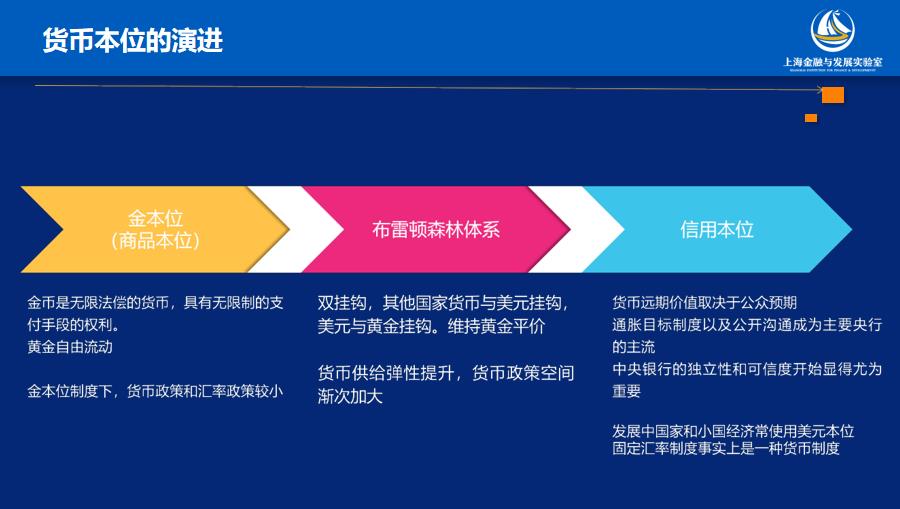
上海金融与发展实验室曾刚:货币体系变迁视角的数字货币
Guan Cha Zhe Wang· 2025-07-04 23:51
Core Viewpoint - The emergence and development of digital currencies, particularly stablecoins, are seen as a necessary evolution in the context of historical changes in the international monetary system, driven by technological advancements and shifting societal values [1][7][12]. Group 1: Evolution of the International Monetary System - The international monetary system has transitioned through three main stages: the gold standard, the Bretton Woods system, and the current credit-based system, with each stage reflecting changes in global economic dynamics [4][6]. - The credit-based era has enhanced central banks' ability to control money supply, making monetary policy crucial, yet it also presents management challenges, as not all countries can effectively manage their credit currencies [6][10]. Group 2: Necessity of Digital Currency - The rise of digital currencies is closely linked to technological progress and the emergence of a new generation of consumers, termed "digital natives," who have different preferences for payment methods and asset types compared to previous generations [7][8]. - Digital currencies, especially stablecoins, are a response to the demand for real-time settlement, global asset circulation, and privacy protection, driven by participants in the digital economy [9][10]. Group 3: Trends in Monetary Diversification - The future monetary landscape is expected to be more diversified, with various forms of digital currencies and stablecoins playing increasingly significant roles in payments, cross-border settlements, and asset allocation [10][11]. - Stablecoins, while anchored to fiat currencies or specific assets, can disrupt traditional banking structures and challenge central banks' control over money circulation and financial data [10][11]. Group 4: Central Bank Responses - Central banks and financial regulators need to adapt their strategies to leverage the benefits of stablecoins and digital currencies while preventing monopolistic practices by non-bank entities [11][13]. - The exploration of stablecoin compliance regulations in economies like the U.S. serves as a reference for global financial markets, emphasizing the importance of anti-money laundering, customer fund safety, and risk management [11][12]. Group 5: Future Outlook - The evolution of money reflects societal consensus on value, with digital currencies still in a phase of exploration and integration into the financial system [12][13]. - Despite the rise of new monetary tools, central bank-issued currencies will continue to play a foundational role in payment systems and financial regulation for the foreseeable future [12][13].

英国央行行长警告稳定币不断增长所带来的“脆弱性”
news flash· 2025-07-04 20:12
Core Viewpoint - The Governor of the Bank of England, Andrew Bailey, emphasized the importance of maintaining public trust in currency if stablecoins become a new payment method [1] Group 1 - Central banks must ensure that the public continues to trust in money, especially with the rise of stablecoins as a payment method [1] - The significance of official reserves lies in their ability to maintain financial stability during times of stress [1] - In extreme pressure situations, official reserves may need to support the liquidity of the financial system [1]
稳定币产业生态加速构建,重视国产替代新机遇
Yin He Zheng Quan· 2025-07-04 14:36
Investment Rating - The report maintains a "Recommended" rating for the computer industry [1] Core Insights - The stablecoin industry ecosystem is accelerating its construction, with significant opportunities for domestic alternatives. The recent passage of the "Stablecoin Regulation" in Hong Kong is expected to boost the adoption of stablecoins, with major e-commerce platforms like Shopify and retail giants like Amazon and Walmart exploring stablecoin issuance [2][3] - The AI sector is experiencing structural investment opportunities, particularly in domestic alternatives, financial IT, and cross-border payments. The AI sector index saw a 7.6% increase in June, outperforming major indices [2][6] - Huawei's recent developer conference showcased advancements in HarmonyOS and AI cloud services, indicating a strong potential for domestic AI computing infrastructure [2][3] Market Overview - The AI index closed at 9481.88 with a monthly increase of 7.6%, while the computer industry index rose by 7.11% [6] - The AI sector's total market capitalization reached 23666.38 billion, with 84 constituent stocks [8] AI Industry Dynamics - The report highlights the latest developments in data elements and data exchanges, emphasizing the importance of data asset development and high-quality growth in the sector [19][20] - Major AI models are being developed and released, with Huawei announcing the open-sourcing of its Pangu models, which is expected to enhance AI applications across various industries [25] Investment Recommendations - The report suggests focusing on specific segments and companies, including: 1. Domestic computing industry chain: Industrial Fulian, Zhongke Shuguang, etc. 2. IDC service providers and computing leasing: Runze Technology, Guanghuan New Network, etc. 3. Domestic software vendors: China Software, Softcom Power, etc. 4. AI applications: iFlytek, Kingsoft Office, etc. 5. Cloud computing vendors: Kingdee International, Kingsoft Cloud, etc. 6. Data element industry chain companies: Tuolisi, Shensanda A, etc. 7. Stablecoin and RWA: Hengsheng Electronics, Sifang Jichuang, etc. [2][3]
龙虎榜 | 机构狂买神州细胞,西测测试惨遭多游资“一日游”!
Ge Long Hui A P P· 2025-07-04 13:07
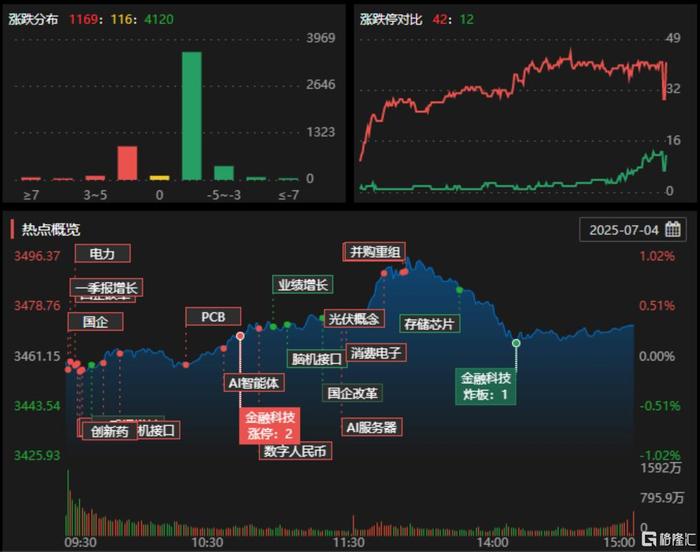
Market Overview - On July 4, A-shares showed mixed performance with the three major indices fluctuating. The total trading volume reached 1.45 trillion yuan, an increase of 121 billion yuan compared to the previous trading day, with over 4,100 stocks declining [1] - Market focus was on stablecoins, digital currencies, and cross-border payment sectors, while banking and gaming sectors strengthened. Energy metals and small metals sectors experienced declines [1] Stock Performance - A total of 39 stocks hit the daily limit up, with 10 stocks achieving consecutive limit ups. The limit up rate was 65% (excluding ST and delisted stocks) [3] - Notable stocks included Chengbang Co., which saw a significant drop after hitting the limit up, while innovative drug concept stock Seli Medical achieved a limit up for the fourth consecutive day [3] Key Stocks and Trading Data - **Shenzhou Cell**: Increased by 16.46% with a trading volume of 20.17 million shares and a total transaction value of 1.63 billion yuan. Institutional net buying amounted to 156 million yuan [18] - **Jingxin Pharmaceutical**: Rose by 10.02% with a trading volume of 8.74 million shares and a total transaction value of 1.49 billion yuan. The company focuses on innovative drugs and medical devices [9][10] - **Hengbao Co.**: Engaged in financial technology and digital currency, with a focus on expanding overseas markets. The company reported overseas revenue of 93.62 million yuan, accounting for 10.37% of total revenue [12] - **Jingbeifang**: Engaged in stablecoin and digital currency sectors, recently signed a strategic cooperation agreement to enhance financial technology innovation [15] Institutional Trading - The top three net buying stocks by institutions were Shenzhou Cell, Hengbao Co., and Nanling Technology, with net purchases of 156 million yuan, 98.35 million yuan, and 91.73 million yuan respectively [6] - The top three net selling stocks were Haoshanghao, Jingbeifang, and Yingfangwei, with net sales of 110 million yuan, 105 million yuan, and 72.72 million yuan respectively [6] Summary of Key Companies - **Jingxin Pharmaceutical**: Focuses on the mental health sector and has a first-class innovative drug expected to be listed in March 2024, with plans to enter the medical insurance payment directory [9][10] - **Hengbao Co.**: Involved in financial technology and digital security, with a focus on digital currency innovation and expanding into overseas markets [12] - **Jingbeifang**: Actively participates in the construction of key digital currency systems for major state-owned banks and aims to innovate in financial technology [15]




加密行业专题报告:稳定币法案推动行业加速,看好发行平台、支付以及RWA场景
Hua Yuan Zheng Quan· 2025-07-04 12:39
证券研究报告|行业专题报告 海外 2025年7月4日 稳定币法案推动行业加速 看好发行平台、支付以及RWA场景 --加密行业专题报告 姓名:郑嘉伟 资格编号:S1350523120001 邮箱:zhengjiawei@huayuanstock.com 证券分析师 证券分析师 姓名:陆韵婷 资格编号:S1350525050002 邮箱:luyuntingn@huayuanstock.com 证券分析师 姓名:郑冰倩 资格编号:S1350525040002 邮箱:zhengbingqian@huayuanstock.com 证券分析师 姓名:于炳麟 资格编号:S1350524060002 邮箱:yubinglin@huayuanstock.com 请务必仔细阅读正文之后的评级说明和重要声明 报告要点:看好发行平台、支付、RWA应用场景 n 稳定币法案推动合规机构扎堆发行 行业发展加速 Ø 稳定币作为连接传统金融与区块链经济的重要桥梁,已形成以USDT和USDC为代表的双寡头格局。USDT依托灵活监管,在线下支付、跨境 交易及OTC市场展现强大适用性,截至2025年3月,市占率高达62%;而USDC则凭借全额储备、 ...
总量的视野:电话会议纪要
CMS· 2025-07-04 11:58
Macroeconomic Outlook - The U.S. trade and fiscal policies are expected to become clearer in Q3 2025 after significant fluctuations in H1 2025, with potential easing of trade policies and a new budget coordination bill possibly being implemented by July[2] - The U.S. inventory cycle is shifting towards active destocking, with the impact of tariffs on trade relations likely to be permanent, reducing the likelihood of large-scale replenishment by U.S. companies[2] Capital Expenditure Cycle - The global capital expenditure cycle, which began in 2021, is anticipated to enter a downward phase in H2 2025, with overall capital expenditure in 2024 expected to decline slightly compared to 2023[3] - The U.S. capital expenditure increase is nearing its peak, as evidenced by high import levels of water and electricity infrastructure materials in Q3 2024[3] U.S. Stock Market - The U.S. stock market has shown a recovery since mid-April 2025, with ongoing momentum supported by advancements in artificial intelligence and favorable economic policies from the "Great Beauty Act"[3] - The valuation of U.S. stocks is expected to continue rising, even if the risk-free interest rate does not decline significantly[4] U.S. Bond Market - The space for interest rate cuts is constrained, with U.S. Treasury yields unlikely to decline significantly; however, stablecoins may facilitate liquidity release[4] - The U.S. is likely to maintain a weak dollar to alleviate the concentration of U.S. assets globally, which could help mitigate the risk of asset bubbles[6] A-Share Market Outlook - The A-share market is expected to see an upward trend in July 2025, driven by fiscal stimulus and resilient consumer demand, despite anticipated export pressures[7] - The median increase in stock prices for the first half of 2025 is around 5%, indicating a positive market sentiment and potential for further gains[8] Real Estate Market - New home sales in 39 cities have seen a year-on-year decline of 14% as of late June 2025, while second-hand home sales have shown a smaller decline of 1%[27] - The inventory cycle for unsold properties has lengthened, indicating a potential slowdown in the real estate market[27] Investment Strategy - The banking sector is projected to experience a slight increase in net profit by 1.3% in 2025, with revenue growth expected to stabilize around 0%[25] - Long-term investment strategies should focus on balanced allocations across recovery, growth, and dividend-paying banks, given the current valuation discounts in the banking sector[25]

北水成交净买入66.83亿 北水加仓小鹏近9亿港元 继续抛售阿里巴巴
Zhi Tong Cai Jing· 2025-07-04 10:19
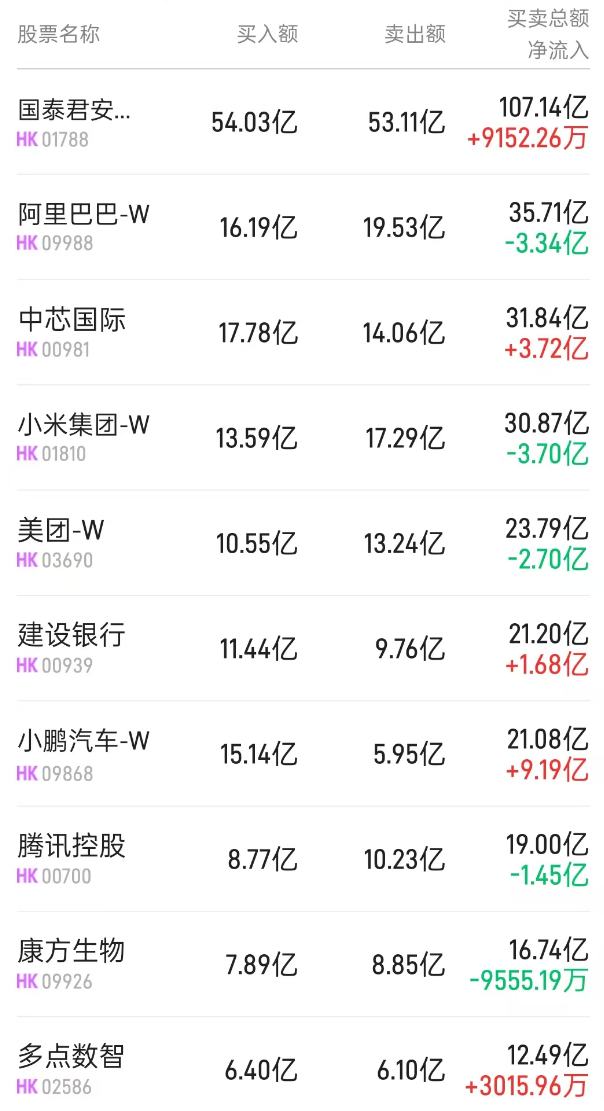
7月4日港股市场,北水成交净买入66.83亿港元,其中港股通(沪)成交净买入30.04亿港元,港股通(深)成 交净买入36.79亿港元。 港股通(深)活跃成交股 小鹏汽车-W(09868)获净买入8.72亿港元。消息面上,小鹏汽车公布,其全新中型SUV小鹏G7售价19.58 万元人民币起,远低于23.58万元的预售价,开售9分钟大定突破10,000辆。里昂认为,此次G7推出,象 征着集团已完成其SUV车型G6、G7及G9的矩阵,预计可带动全系列每月销售1.3万至1.7万辆。 中芯国际(00981)获净买入7.68亿港元。消息面上,西门子、新思科技和楷登电子公司发布的声明称,美 国政府已于本周四取消对中国部分芯片设计软件的出口管制措施。摩根士丹利5月发布的研究显示,三 家公司去年共占据中国EDA软件市场约82%的份额。EDA工具是芯片制造商在智能手机、计算机、汽车 等广泛应用领域中进行半导体设计的核心软件。 北水净买入最多的个股是小鹏汽车-W(09868)、中芯国际(00981)、建设银行(601939)(00939)。北水净 卖出最多的个股是阿里巴巴-W(09988)、小米集团-W(01810)、腾讯(007 ...



拉卡拉赴港上市:跨境支付高增长难掩业绩颓势 稳定币能否成破局关键?
Xin Lang Zheng Quan· 2025-07-04 09:49
Core Viewpoint - Lakala plans to issue H-shares and list on the Hong Kong Stock Exchange to advance its international development strategy, despite facing significant performance challenges, including a 51.71% year-on-year decline in net profit for Q1 2025 [1][2]. Group 1: Strategic Background and Performance Challenges - The announcement of the Hong Kong listing aims to accelerate the application of digital currency in cross-border scenarios, targeting the growing fintech sector of cross-border payments and digital currencies [2]. - In 2024, Lakala's cross-border payment transaction volume reached 49.2 billion yuan, a 14% increase year-on-year, with over 120,000 clients, an 80% growth [2]. - However, cross-border business only accounted for 1.16% of the company's total payment transaction volume, limiting its contribution to overall performance [2]. - Financial data shows a decline in revenue to 5.759 billion yuan in 2024, down 3% year-on-year, and a net profit of 351 million yuan, a 23% decrease [2]. Group 2: Recent Financial Performance - In Q1 2025, revenue fell to 1.299 billion yuan, a 13.01% decrease year-on-year, with net profit halving to 101 million yuan, a 51.71% drop [3]. - The company's payment transaction volume in Q1 2025 was 982 billion yuan, down 10.51% year-on-year, contributing to the decline in revenue and profit [3]. - Lakala's user base is significantly smaller compared to competitors, with only 18 million active personal users, less than 1/50 of Alipay's user base [3]. Group 3: Transformation Efforts and Market Position - Lakala is pursuing three transformation paths: cross-border payments, a "payment + SaaS" strategy, and AI technology applications, each facing substantial challenges [4]. - In the "payment + SaaS" strategy, the company added over 10,000 SaaS service stores in 2024, with a 65% increase in transaction volume, but its SaaS penetration rate is only 8%, lower than competitors [4]. - The company has adopted an "AI First" approach, achieving over 70% replacement of human customer service with AI, but 60% of R&D spending is focused on POS upgrades, limiting innovation [4]. Group 4: Opportunities and Governance Issues - The recent enactment of the "Stablecoin Ordinance" in Hong Kong presents potential opportunities for Lakala, although significant challenges remain in integrating stablecoin operations [5]. - The cross-border application of digital renminbi has surged, with a 217% year-on-year increase in trade settled using digital renminbi in Q1 2025, providing Lakala with a first-mover advantage [5]. - Governance concerns have arisen, with major shareholders reducing their stakes significantly, and executive compensation rising despite declining profits, indicating potential structural imbalances [5]. Group 5: Investment Outlook - Lakala has faced setbacks in investments, including a significant loss from exiting a stake in a bank, reflecting a passive strategic adjustment [6]. - The market's short-term optimism is evident from a 16.16% stock price increase following the listing announcement, but long-term viability remains uncertain [6]. - Analysts suggest that while the Hong Kong listing may provide short-term funding and brand benefits, overcoming business bottlenecks is essential for sustainable growth [6].