
产业出海

Search documents
云南孟连牛油果首次出口东盟市场
Xin Hua Wang· 2026-01-24 09:05
Core Viewpoint - A batch of 1.5 tons of fresh avocados from Menglian County, Yunnan Province, has successfully exported to Malaysia and Thailand, marking the first export to ASEAN from this avocado cultivation base [1][3]. Group 1: Export Achievement - The avocados are sourced from a standardized cultivation base in Menglian County, which has established 122,100 acres dedicated to avocado farming, making it a key area for stable supply of high-quality avocados in China [3]. - This export signifies a successful entry into the ASEAN market, showcasing the potential for local agricultural products to reach international consumers [1][3]. Group 2: Government and Customs Support - Local government and customs have implemented an innovative "customs and local cooperation" support mechanism to assist enterprises in overcoming challenges related to export qualifications, quarantine standards, and customs clearance efficiency [3]. - The initiative includes tailored guidance for each enterprise, extending services to the production front lines to help improve quality traceability systems and facilitate the registration of orchards and packaging plants [3]. Group 3: Future Development Plans - Menglian County plans to further enhance the collaboration between government, enterprises, and customs to optimize export processes and promote industrial chain upgrades [3]. - The goal is to enable high-quality Menglian avocados to reach global markets, contributing to rural revitalization and high-quality foreign trade development [3].


怡亚通:公司将围绕“AI算力+产业出海”两大时代主轴,构建以数字技术为神经、以供应链网络为骨架的整合型生态
Zheng Quan Ri Bao Wang· 2026-01-23 12:14
Core Viewpoint - The core strategy of Yiyaton (002183) is to transform from a "global supply chain service platform" to a "technology-driven industrial ecosystem organizer" [1] Group 1: Strategic Goals - The company aims to focus on two main themes: "AI computing power + industrial overseas expansion" [1] - The goal is to build an integrated ecosystem driven by digital technology and supported by a supply chain network [1] Group 2: Business Objectives - The company not only targets its own business growth but also aims to become a key enabling platform for the country's development of "new quality productivity" [1]

怡 亚 通(002183) - 002183怡 亚 通投资者关系管理信息20260123
2026-01-23 02:32
Group 1: Strategic Goals and Development Directions - The core of the "14th Five-Year Plan" strategy is the transformation from a "global supply chain service platform" to a "technology-driven industrial ecosystem organizer" [2] - The company aims to become a key enabling platform for the country's new productive forces during the "14th Five-Year Plan" period [2] Group 2: Supply Chain and Storage Chip Layout - The full-chain layout in the storage chip sector includes "design - controller - module - distribution," aimed at enhancing industry chain control and capturing value [3] - The company has invested in key areas such as SSD controllers and module design to respond quickly to market changes and provide reliable solutions [3] Group 3: Capital Operations - Capital operations are divided into "bringing in" and "going out," focusing on investments and mergers in high-quality upstream and downstream enterprises, particularly in semiconductor and AI computing sectors [4] - The "going out" strategy involves subsidiaries seeking financing or being acquired to provide returns to shareholders [4] Group 4: Investment Strategies - "Invested on the chain" refers to the company participating in financing of enterprises while providing supply chain services, fostering deep cooperation [5] - "On-chain investment" involves investing in financing-needing companies among existing partners, such as Lianyun Technology and Xinghuo Semiconductor [5] Group 5: Core Value in Storage Business - The core value in the storage chain is a spiral increase in "scale and influence," with large-scale distribution as the foundation and strategic investments to gain technical authority [5][6] - The balance between "cooperation" and "independence" is achieved through self-sufficiency in key areas while collaborating widely in general products and market channels [6] Group 6: AI Computing and Global Expansion - AI computing business supports manufacturing and brand enterprises in their global expansion, creating a feedback loop that enhances both sectors [6] - The company accumulates valuable global experience and customer networks during the expansion process, which informs the development of products tailored to overseas markets [6] Group 7: Future Focus on Storage - The company plans to focus more resources on the storage sector as demand increases with advancements in AI technology and user data growth [6]
校地协同加产业出海,激活强区引擎
Qi Lu Wan Bao· 2026-01-20 02:31
Group 1: Strategic Development Initiatives - Jinan's Zhangqiu District aims to transform strategic deployments into practical actions, focusing on project construction as a core approach to achieve new breakthroughs [2] - The district plans to implement upgrades for heavy-duty truck group’s new energy vehicle models and establish a shared pilot workshop and logistics center to enhance its manufacturing capabilities [2] - The "Gongfu Zhangqiu" initiative will facilitate the digital transformation of over 30 enterprises this year, while also deepening the aerospace information industry chain and focusing on key technologies like rocket component processing [2] Group 2: Project Empowerment and Industrial Growth - The district will prioritize project development, aiming to have at least 500 projects in the pipeline and implement no less than 120 industrial projects throughout the year [3] - Targeted industrial chain investment will lead to the signing of at least 80 new projects this year [3] Group 3: Tourism and Cultural Development - The ongoing construction of the 4A-level scenic area in Bu Village aims to boost the ice and snow economy, creating a sports paradise for skiing enthusiasts [4] - The "Datang Baiquan Yi" project is expected to open this year, serving as a significant driver for service industry development in Zhangqiu District [4] - Efforts will be made to enhance the "Longshan Spring Culture and Tourism City" brand by revitalizing cultural resources and promoting the integration of modern service industries with advanced manufacturing and agriculture [4] Group 4: Education and Innovation Collaboration - Zhangqiu District will leverage its rich educational resources to foster collaboration between universities and local industries, aiming to align academic research with regional industrial needs [5] - The district plans to advance the construction of Shandong University’s Longshan campus and deepen the integration of education and industry in the aerospace information sector [5] - Initiatives will include the establishment of innovation parks and support for the formation of innovation alliances between enterprises and academic institutions [5] Group 5: Infrastructure and Logistics Development - The district will enhance regional industrial collaboration and improve logistics capabilities, focusing on advanced manufacturing and new energy equipment [6] - Infrastructure improvements will be made to facilitate the flow of resources, including the development of the Xiaoqing River Zhangqiu Port logistics park [6] - The district aims to integrate urban and rural development, promoting smart agriculture and creating provincial-level smart agriculture application bases [6]

专访章丘区副区长李经国:校地协同+产业出海 激活强区引擎
Qi Lu Wan Bao· 2026-01-19 10:16
Group 1: Strategic Development Goals - The year 2026 marks the beginning of the "14th Five-Year Plan" and is a critical point for the transformation of Zhangqiu District, which aims to become a hub for technological innovation and modern urban development [1] - Zhangqiu District has been assigned four key functional roles: a high ground for technological innovation, a cultural tourism city, a demonstration area for school-local collaboration, and a modernized strong district within the Jinan metropolitan area [1] Group 2: Industrial Development Initiatives - The automotive industry is a primary focus, with plans to advance the production of new energy vehicles and core components, including upgrades to the heavy truck group's new energy models [3] - The district aims to complete the digital transformation of over 30 enterprises this year and enhance the aerospace information industry chain, particularly in rocket component processing [5] Group 3: Tourism and Cultural Development - The district plans to enhance its tourism sector through projects like the 4A-level scenic area in Bucun and the Datang Baiquan Inn, which will focus on the "ice and snow economy" [6][8] - The Datang Baiquan Inn aims to create an immersive experience reflecting the Tang Dynasty lifestyle, contributing to the service industry's growth in Zhangqiu [8] Group 4: Educational and Research Collaboration - Zhangqiu District is leveraging its rich educational resources by promoting collaboration between universities and local industries, aiming to align academic research with industrial needs [9] - Plans include the establishment of innovation alliances between enterprises and educational institutions, as well as the construction of a collaborative innovation park [11] Group 5: Infrastructure and Logistics Development - The district is focused on enhancing regional industrial collaboration and improving logistics capabilities, including the construction of the Xiaoqing River Zhangqiu Port logistics park [12][14] - Infrastructure improvements will facilitate better connectivity and support the integration of modern agriculture with urban markets [14]
豫企扬帆香江秀出自信范儿
Sou Hu Cai Jing· 2026-01-18 23:14
Group 1 - The pace of Henan enterprises planning to list in Hong Kong has significantly accelerated, with three companies advancing their listing processes within a week, which is rare in the history of Henan's capital market [1] - Muyuan Foods, the world's largest pig farming company, has successfully passed the Hong Kong Stock Exchange listing hearing, moving closer to its listing [1] - Hanwei Technology announced its plan to list in Hong Kong, aiming to leverage the platform for international expansion [1] - Jinxing Beer submitted its main board listing application to the Hong Kong Stock Exchange, marking the beginning of local beer companies' engagement with international capital markets [1] Group 2 - The recent wave of listings is driven by a synergy of policies, market conditions, and corporate needs, with the Henan government promoting high-quality development of the private economy and establishing a "green channel" for companies seeking to list [1] - Listing in Hong Kong not only injects capital into enterprises but also encourages them to improve governance structures and management standards according to international norms [2] - Leading companies are utilizing A-shares for high valuation financing while expanding international capital channels through Hong Kong listings, creating a dual empowerment effect in the capital market [2] - The recent surge in Henan enterprises planning to list reflects the province's deeper integration into domestic and international dual circulation, showcasing a transformation of key variables into significant growth for high-quality development [2]


加速产业出海,锚定中高端 | 工程机械或延续内外销共振
工程机械杂志· 2026-01-04 09:54
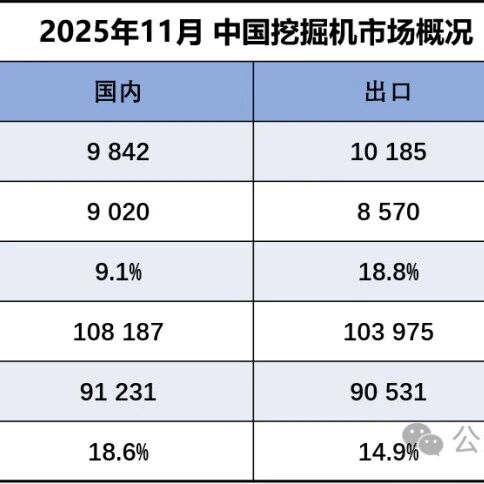
Core Viewpoint - The article highlights the increasing overseas revenue share and the expansion of product offerings in the engineering machinery sector, indicating a shift towards globalization and improved profitability for leading companies by 2025 [1][5]. Group 1: Market Trends - By 2025, the share of overseas revenue for leading engineering machinery companies is expected to continue rising, with major manufacturers accelerating the establishment of overseas sales networks and production capacity [1]. - The domestic market is anticipated to recover as the renewal cycle begins in 2025, while "going abroad" remains a key strategy for domestic manufacturers to capture profits [1][5]. - The demand for engineering machinery is projected to maintain a steady upward trend in 2026 as large projects commence, supported by a gradual recovery in demand from Europe and the U.S. [1][5]. Group 2: Sales and Profitability - In the first eleven months of the year, a total of 212,162 excavators were sold, representing a year-on-year increase of 16.7%, with domestic sales up by 18.6% and exports by 14.9% [2]. - The engineering machinery industry saw total operating revenue and net profit attributable to shareholders grow by 8.69% and 18.87% year-on-year, respectively, in the first three quarters [2]. - Major companies like SANY Heavy Industry, XCMG, and Zoomlion reported significant net profit growth rates of approximately 47%, 12%, and 25%, respectively, in the same period [2][3]. Group 3: Strategic Developments - Companies are transitioning from "product export" to "industrial export," establishing overseas centers and local operations, with cumulative export value expected to reach or exceed $59 billion in 2025 [5]. - SANY Heavy Industry has allocated about 45% of its fundraising for global sales and service network expansion, aligning with its strategy of globalization and digitalization [6]. - The demand for mining machinery is expected to rise due to increased capital expenditure in the mining sector, with a positive outlook for equipment upgrades and replacements [6]. Group 4: Future Outlook - The engineering machinery sector is predicted to enter a new cycle starting in 2025, with a longer duration expected, particularly in emerging industries like new energy machinery [6]. - The overseas markets, especially in Latin America, Africa, and the Middle East, are anticipated to show strong demand, particularly in mineral development and energy infrastructure [6].



加速产业出海锚定中高端“蛋糕” 明年工程机械或延续内外销共振 |2025年终大盘点
Xin Lang Cai Jing· 2025-12-31 09:29
Group 1 - The core viewpoint of the articles highlights the increasing overseas revenue share and the expansion of product types in the engineering machinery sector, indicating a shift towards globalization and improved profitability for leading companies by 2025 [1][2][4] - Domestic sales of excavators are recovering, with a notable increase in both domestic and export sales, leading to a significant improvement in profit margins for major engineering machinery manufacturers [2][3] - Major companies like SANY Heavy Industry, XCMG, and Zoomlion are experiencing substantial profit growth, driven by increased overseas sales and cost reduction strategies [2][3] Group 2 - The engineering machinery industry is transitioning from merely exporting products to establishing overseas centers and localized operations, with a projected export value of over $59 billion by 2025 [4][5] - Companies are investing heavily in research and development for overseas markets, with Zoomlion allocating more than half of its R&D resources to international operations [4][5] - The demand for mining machinery is expected to rise due to increased capital expenditure in overseas mining projects, with optimistic forecasts for equipment upgrades and new machinery in emerging markets [6]
禾芯动力发布全球品牌战略 从产品出海到产业出海
Xin Hua Cai Jing· 2025-12-29 14:58
Core Insights - HeXin Power, an agricultural robotics innovation company, launched its global brand strategy in Beijing, aiming to redefine the future of global agriculture with Chinese intelligence [1] - The company emphasizes not only product export but also technology, standards, and industry export, leveraging China's leading capabilities in industrial manufacturing and artificial intelligence [1] Group 1: Company Strategy - HeXin Power has established a closed-loop system of "global demand insight - localized R&D - industrialization" to meet global market needs [1] - The company is conducting scenario-based experiments domestically and has set up experimental bases and joint projects in Nigeria, Egypt, and the Netherlands [1] Group 2: Industry Perspectives - Experts suggest that the globalization of agricultural robotics requires a combination of local characteristics in business models and collaboration with upstream and downstream partners [2] - The current global landscape has minimal information disparity, necessitating effective data collection and local R&D centers to align with local standards [2] - There is a consensus among industry professionals that Chinese agricultural robotics companies should adopt a global perspective and localized strategies to transition from "Made in China" to "Intelligent Manufacturing in China" [2]
产业互联网千峰奖揭晓,欧冶云商入选深度价值链60强
Xin Lang Cai Jing· 2025-12-18 14:24
Core Insights - The article highlights that Ouyeyunshang has been recognized in the "Deep Value Chain Top 60" at the 2025 Yibang Industry Internet Annual Conference for its continuous efforts in digitalization and innovation within the steel industry [1][8]. Group 1: Event Overview - The 2025 Yibang Industry Internet Annual Conference was held with the theme "Unlocking New Cycles," gathering over 600 executives, investors, and experts to discuss key topics such as artificial intelligence, supply chain upgrades, and platform innovation [5][12]. - The selection of the Qianfeng Award is particularly noteworthy as the industry internet transitions to a phase focused on "verifiable and sustainable value" [5][12]. Group 2: Ouyeyunshang's Achievements - Ouyeyunshang has been recognized for its focus on user needs, optimization of channel networks, and enhancement of digital technology applications, particularly in energy service innovation [5][12]. - The evaluation committee noted Ouyeyunshang's significant achievements in enabling precise matching, safety, controllability, and green low-carbon initiatives within the steel supply chain [5][12]. Group 3: Qianfeng Award Details - The Qianfeng Award, initiated by Yibang Power in 2019, selects companies with long-term value and scalability potential from an investor's perspective [5][12]. - The 2025 evaluation committee included nearly 60% participation from state-owned funds, ensuring professionalism and fairness through a multi-step selection process [5][12]. Group 4: Future Directions - Ouyeyunshang aims to continue focusing on value creation and deepening the integration of digital technology in supply chain scenarios to support high-quality and sustainable development in the steel industry [6][13]. - The company is positioned to expand the depth and breadth of the industrial internet through technological empowerment, model innovation, and ecosystem co-construction [6][13].
