
供应链出海

Search documents
研报掘金丨华福证券:维持美盈森“持有”评级,具备较高安全边际、股息价值凸显
Ge Long Hui A P P· 2025-12-17 07:00
Core Viewpoint - Mexico's imposition of import tariffs on non-free trade countries is expected to increase the cost of imported goods and promote local procurement, while also accelerating the structural trend of local supply and supply chain expansion abroad [1] Group 1: Company Overview - Meiyingsen serves leading enterprises across various downstream sectors, with a diversified and high-quality customer base [1] - The company has established production capacity in Mexico, Vietnam, Thailand, and Malaysia, primarily focusing on consumer electronics and home appliances [1] Group 2: Operational Strategy - The company's overseas factories primarily source raw materials locally or from nearby regions, and they negotiate price adjustments with clients during significant price fluctuations [1] - Overseas expansion is mainly achieved through leasing factories and reallocating domestic equipment, keeping overall capital expenditure manageable, which helps offset the costs of input tariffs [1] Group 3: Financial Performance - The profitability of the company's overseas business is significantly higher than that of its domestic operations, with projected foreign sales revenue of 1.104 billion yuan in 2024, representing a year-on-year increase of 34.5% and accounting for 27.5% of total revenue [1] - The gross profit margin for foreign sales is 33%, which is 8.63 percentage points higher than domestic sales, indicating potential benefits from the migration of orders due to clients establishing factories overseas and localizing supply [1] Group 4: Valuation and Rating - The current stock price corresponds to a 2026 price-to-earnings ratio of 13.7X, indicating a high margin of safety and highlighting the value of dividends [1] - The company maintains a "hold" rating based on its financial metrics and market positioning [1]

从“京东工业”上市解读2026年工业品采购市场洞察
Sou Hu Cai Jing· 2025-12-16 06:19
Group 1 - The core viewpoint of the articles highlights the transformation of industrial procurement from a decentralized, offline, and manual approach to a centralized, online, and intelligent model, with a projected total procurement amount of approximately 188.3 trillion yuan in 2024 and a digital penetration rate of 11.5%, growing at 16.2% [2] - Central state-owned enterprises are becoming pivotal in this transformation, driven by the issuance of the "Guiding Opinions on Regulating Central Enterprise Procurement Management" (Document No. 53) in July 2024, which emphasizes both "regulation and efficiency" [2] - Advanced technologies such as AI, IoT, and blockchain are shifting procurement from a "transaction tool" to a "productive service platform," indicating that procurement supply chains are evolving into critical infrastructure for enterprise competitiveness and resilience [2] Group 2 - The industrial product circulation has long been constrained by issues such as a chaotic coding system, dialectical specifications, and fragmented information, leading to inconsistencies in product naming and pricing across different enterprises and regions [4] - A solution involves establishing a unified system covering classification codes, identification codes, and attribute codes, achieving a standardization of product descriptions throughout the entire supply chain [5] - Leading companies are transitioning from "transaction-focused" to "supply chain-focused," enhancing end-to-end capabilities through digitization in procurement, which can save approximately 20%-30% in costs and reduce transactional procurement time by about 30% [5] Group 3 - The "hard power" of the fulfillment network is crucial for achieving speed and stability in industrial procurement, as exemplified by JD Industrial's self-operated central warehouse model covering 86 core categories, enabling same-day or next-day delivery [6] - Near-field services targeting small and medium-sized enterprises, such as "park stores," are rapidly expanding, effectively addressing the unpredictable purchasing characteristics of these businesses [6] - The "going global" phase of supply chains is becoming systematic, evolving through stages of brand globalization, digital globalization, and supply chain globalization, with leading platforms replicating domestic governance and standardization systems for overseas operations [6] Group 4 - Intelligent tools, such as the "Customs Management Intelligent Agent," are significantly reducing customs evaluation response times from weeks to minutes, resulting in over 50% reduction in labor costs for outbound clients [7] - As more enterprises enter various stages of overseas construction, standardized inventory and localized compliance systems will become key competitive factors [7]

公募“固收+”业绩分化基金公司强化资产配置能力
Shang Hai Zheng Quan Bao· 2025-12-14 15:30
Group 1 - The core viewpoint of the articles highlights the growing popularity and performance differentiation of "fixed income plus" products in the investment market, with a significant increase in total market size and varying returns among different products [1][2]. - As of the end of Q3, the total market size of "fixed income plus" products reached 2.44 trillion yuan, an increase of over 500 billion yuan from the end of Q2, and a rise of 1.11 trillion yuan compared to the same period in 2024 [1]. - The average net value growth rate of "fixed income plus" products over the past year was 5.05%, with the top-performing product, Huazhang Zhilian LOF, achieving a net value growth of 50.40% [1]. Group 2 - Investors are increasingly favoring "fixed income plus" products due to declining interest rates and a growing demand for stable financial arrangements amid an aging population [2]. - The key to enhancing "fixed income plus" products lies in the strategic addition of various asset types, moving beyond simple stock-bond combinations to include diverse assets for better risk management and yield enhancement [2][3]. - The strategic asset allocation for "fixed income plus" products should consider market volatility and the current economic transition, focusing on controlling fluctuations while identifying investment opportunities in traditional cyclical sectors [3]. Group 3 - Three critical factors for large asset allocation in "fixed income plus" products include the development of AI technology and its impact on financial markets, changes in price levels, and geopolitical factors that are closely tied to industries like AI computing power [4].
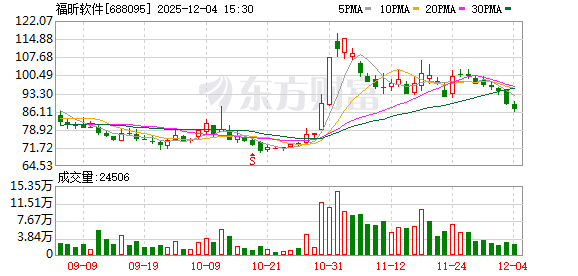
福昕软件熊雨前:标准引领,构建“自主研发+全球协同”技术供应链
Zhong Guo Jing Ying Bao· 2025-12-04 10:55
Core Viewpoint - The software industry is undergoing a transformation from "cost-driven outsourcing" to "technology-driven value output," emphasizing the importance of supply chain capabilities for global competitiveness [5][10]. Group 1: Company Strategy - Foxit Software has transitioned from a follower to a technology leader in the PDF software industry, investing heavily in international standard development [2]. - The company emphasizes the importance of building localized organizations to strengthen its global presence and adapt to regional market needs [6][10]. - Foxit Software adopts a "domestic core R&D + overseas regional branches" structure to balance compliance with local regulations and long-term growth [4][6]. Group 2: Supply Chain Capabilities - The company identifies three core capabilities for supply chain success: connectivity, control, and design [3]. - Foxit Software collaborates with upstream technology providers and downstream local partners to create a closed-loop system of "technology supply - market feedback - product iteration" [3][4]. - The company focuses on mastering key value nodes, such as format parsing and encryption, to avoid dependency on foreign technologies [3][4]. Group 3: Global Market Expansion - Foxit Software plans to expand its market reach beyond traditional regions like Europe and the U.S., targeting emerging markets with high digital transformation needs [5][10]. - The company employs a strategy of "precise selection of regions + layered advancement" to adapt its approach based on market characteristics [5][10]. - The firm aims to build a collaborative ecosystem with local partners to enhance its service network in new markets, particularly along the Belt and Road Initiative [5][10]. Group 4: Collaborative Ecosystem - The company believes in the importance of "collective overseas expansion" to mitigate risks, where leading firms set direction and platforms while supporting enterprises fill in the supply chain [8]. - Foxit Software has established a collaborative network with various partners, enhancing its software capabilities within local digital ecosystems [7][8]. Group 5: Compliance and Resilience - The company stresses the need for compliance as a prerequisite, localization as a key factor, and resilience as a guarantee for successful overseas operations [11]. - Foxit Software aims to build a technology supply chain system that avoids reliance on a single region, thereby reducing geopolitical risks [10].

轻工-行业深度汇报:供应链出海产业趋势开启
2025-12-01 00:49
Summary of Key Points from the Conference Call Industry Overview - The conference call focuses on the Chinese light industry, particularly the trend of companies expanding their supply chains overseas, with notable examples including Yingke Medical, Yutong Technology, and Zhongxin Shares. These companies have significantly improved their profitability, especially in the European and American markets, capturing a global consumer market share of 38% [1][2][3]. Core Insights and Arguments - **Overseas Expansion Models**: Chinese light industry companies are adopting various models for overseas expansion, including capacity transfer, product export, and brand development. This trend is particularly evident in the manufacturing and consumer sectors [2]. - **Profitability in International Markets**: Companies like Yutong Technology derive 40% of their revenue from international clients, with gross margins 10% higher than domestic levels. For instance, Meiyingsen's order prices in Mexico are over double those in China, indicating enhanced profitability [1][3][6]. - **Global Economic Impact**: The global economic environment has significantly affected exports, with a notable shift from inventory accumulation in the U.S. during 2021-2022 to a replenishment phase starting in mid-2023. Emerging markets in Southeast Asia, the Middle East, and Africa are providing new growth opportunities [7][10]. - **Supply Chain Optimization**: To mitigate tariffs and trade barriers, companies like Yutong Technology and Meiyingsen are optimizing their global supply chain layouts by establishing overseas production bases or leasing facilities, which helps reduce tariff impacts and improve capacity utilization [8][9]. Additional Important Insights - **Cross-Border E-commerce**: The development of cross-border e-commerce is promising, with key factors such as warehousing and last-mile delivery capabilities being crucial. Companies like Zhiyou Technology have shown significant growth in Europe, indicating the importance of strong logistics capabilities [4][14]. - **Brand Localization Challenges**: Brands face challenges in localizing operations for international markets. For example, Pop Mart has successfully localized its team and products in Thailand and North America, demonstrating that effective localization strategies are essential for success [4][16]. - **Future Development Directions**: The light industry is expected to continue focusing on overseas expansion, enhancing brand development, and exploring new markets in Europe, Southeast Asia, the Middle East, and Africa to sustain growth [10][11]. - **Investment Recommendations**: The investment focus for 2026 will remain on the overseas strategy, particularly capacity transfer. Recommended companies include Yingke Medical, Yutong Technology, Xiangxin Home, Zhiyou Technology, and Pop Mart, all of which have demonstrated significant profitability and growth potential in international markets [17].
浙商证券浙商早知道-20251201
ZHESHANG SECURITIES· 2025-11-30 23:30
Group 1: Company Insights - The report highlights Ice Wheel Environment (000811) as a leading player in industrial refrigeration equipment, driven by AIDC and nuclear power business growth [5] - The company is experiencing accelerated demand in the data center sector due to a surge in AI computing needs, having served numerous domestic and international data center clients [5] - Revenue projections for Ice Wheel Environment are estimated at 6,959 million, 7,849 million, and 8,637 million yuan for 2025, 2026, and 2027 respectively, with corresponding growth rates of 4.9%, 12.8%, and 10.0% [5] Group 2: Industry Trends - The cosmetics industry is characterized by stability and new developments, with a focus on strong brand groups that can enhance market share and profit realization [6] - The medical beauty sector is expected to maintain a favorable outlook, particularly in segments like PDRN, recombinant collagen, and hair loss treatment, which are anticipated to have a better competitive landscape [6] - The light industry is witnessing a trend of companies accelerating their overseas expansion, leading to higher profit margins and improved competitive dynamics in foreign markets [9][10] Group 3: Market Dynamics - The macroeconomic report indicates that recent fluctuations in the US stock market are attributed to a combination of Federal Reserve interest rate expectations and uncertainties in industry outlooks, but the medium-term trend remains positive [7] - The strategy report suggests focusing on large-cap consumer stocks, particularly in food and beverage, travel services, and transportation sectors, as these are expected to perform well in December due to improved liquidity and stable earnings [8] - The light industry report emphasizes the shift from passive to active overseas market exploration, highlighting opportunities in capacity, product, and brand expansion [10]

近百个募投项目变更的背后:汽车供应链加速智能化与出海布局
Shang Hai Zheng Quan Bao· 2025-11-14 18:39
Core Insights - The automotive parts industry is undergoing significant changes, with 71 companies announcing fundraising project adjustments, totaling 99 changes, which is more than double last year's total [2] - The adjustments are primarily focused on two main trends: the shift towards intelligent upgrades and global expansion, with funds being redirected from domestic production to overseas expansion [2] Group 1: Intelligent Upgrades - Many parts manufacturers are reallocating funds from traditional automotive production lines to intelligent component production lines, such as control systems and smart sensors, to meet the demand for new energy vehicles and intelligent driving [3] - For instance, Top Group announced a shift of 400 million yuan in unspent funds towards its "Intelligent Manufacturing Industrial Park" project to produce air suspension systems and smart door drive systems [4] Group 2: Global Expansion - The second major trend involves companies redirecting funds to establish overseas production facilities, responding to the global expansion needs of major automotive manufacturers [5] - Examples include Tianyouwei allocating 103 million yuan for a new automotive electronics factory in South Korea and Top Group investing 380 million yuan in a thermal management system project in Thailand [5] Group 3: Market Dynamics - The shift in funding reflects a restructuring of the supply chain driven by cost-cutting pressures from downstream manufacturers, leading to increased opportunities for local suppliers [4] - Local suppliers are gaining market share in areas like air suspension systems, with domestic companies accounting for 89% of the market share based on installation volume from January to August this year [4] Group 4: Caution in Investment - Despite the trend of reallocating funds, some companies are exhibiting caution in their decision-making, focusing on risk dilution and controlling the pace of project development [6] - Top Group has indicated a careful approach to its expansion plans, emphasizing the need for a balanced investment strategy to mitigate risks associated with rapid growth [6][7]


“卷王”京东物流:既要又要还要
Xin Lang Cai Jing· 2025-11-04 17:34
Core Viewpoint - JD.com aims to build a more resilient "super supply chain" during the APEC Business Leaders Summit, with significant investments planned in logistics technology [4][6]. Investment Plans - JD Logistics plans to purchase 3 million robots, 1 million unmanned vehicles, and 100,000 drones over the next five years, marking an unprecedented investment in China's logistics history [4][6]. - The estimated investment cost for these purchases is projected to be no less than 290 billion RMB [7][8]. Financial Considerations - As of mid-2025, JD Logistics has 17.317 billion RMB in cash, which is insufficient to cover the planned expenditures [8]. - JD Group, which holds a 63.31% stake in JD Logistics, has total cash and cash equivalents of 223.4 billion RMB, but even with annual cash flow growth, it may struggle to independently support this massive investment [8]. Technological Advancements - JD Logistics has significantly increased its R&D spending, with a cumulative investment exceeding 10 billion RMB from 2022 to 2024, surpassing competitors like SF Express [11]. - The company has developed various technological innovations, including AI models and autonomous delivery systems, which have improved operational efficiency [11][12]. Market Expansion - JD Logistics is expanding its global footprint with a "Global Network Plan," aiming to double its self-operated overseas warehouse space by mid-2025 [12][18]. - The company has also initiated a large-scale recruitment of full-time delivery personnel to enhance its last-mile delivery capabilities [12][14]. Strategic Shift - JD Group is transitioning from a traditional e-commerce model to a technology-driven supply chain infrastructure service provider, focusing on logistics as a core business [16][18]. - The company is also investing in instant delivery services and integrating them with its existing logistics network to enhance service quality [14][18]. Financial Performance - JD Logistics achieved profitability in 2023 after 11 years of losses, with a significant increase in adjusted net profit in 2024 [16]. - However, the company's profit growth has slowed in 2025 due to expansion costs, with a notable decline in operating cash flow [18][19].


新华网财经观察丨新茶饮的出海密码
Xin Hua Wang· 2025-10-16 03:31
Core Insights - The internationalization trend of Chinese new tea beverage brands is becoming increasingly prominent, with companies like Mixue Group and Bawang Chaji leading the way in overseas expansion [2][9]. Overseas Expansion: Seeking Growth and New Opportunities - New tea beverage brands are rapidly expanding globally, moving from Southeast Asia to regions like Europe, North America, and Oceania [3]. - Mixue Ice City opened its first store in Central Asia in Kazakhstan, achieving over 430,000 RMB in sales in the first month, and has expanded to 12 countries with over 4,700 overseas stores [5]. - Bawang Chaji opened its first U.S. store in Los Angeles, selling over 5,000 cups on the first day, and has expanded to 208 overseas stores by mid-year [7]. Market Potential and Growth Drivers - The Chinese new tea beverage market is projected to reach 354.72 billion RMB in 2024, with a year-on-year growth of 6.4%, indicating stable growth in the coming years [8]. - The overseas market presents new growth opportunities compared to domestic demand, which is a core driver for companies to "go global" [9]. Supply Chain as a Foundation for Success - A stable supply chain is crucial for tea beverage companies expanding overseas, with significant differences in standards between domestic and international markets [12]. - Mixue Group has established a comprehensive supply chain, including self-built factories and a global procurement network, to ensure product quality and freshness [14]. - Bawang Chaji has also focused on localizing its supply chain to meet the specific needs of different markets [15]. Localization Strategies for Market Penetration - Companies face challenges in adapting to different consumer preferences and regulatory environments in overseas markets [16]. - Successful brands conduct thorough market research to develop localized products, such as Mixue Ice City's chocolate ice cream lemon mint water tailored for Malaysian tastes [16]. - Bawang Chaji has implemented local partnership mechanisms and collaborated with local universities to integrate local innovation into product development [19]. Future Trends in Globalization - The expansion of tea beverage brands will be a long-term, phased process, with trends indicating a shift from quantity to quality in market management [22]. - There will be a growing emphasis on health and functionality in product offerings, with concepts like "low sugar" and "organic" gaining traction in international markets [23]. - Building a strong brand presence through content expression and community engagement will become increasingly important in overseas markets [24]. Digital Transformation and Market Opportunities - The integration of digital and intelligent solutions is reshaping the industry, with online ordering and supply chain traceability becoming standard practices [25]. - The global beverage market is expected to see significant growth in ready-to-drink products, particularly in regions like Southeast Asia and North America [26].


东南亚老板亲述!餐饮出海,到底有哪些坑要避?
Xi Niu Cai Jing· 2025-10-14 07:10
Core Insights - The article discusses the transformation of Chinese cuisine's global expansion, moving from serving the Chinese community to establishing brand recognition and chain operations worldwide [1] - Key discussions at the 2025 China Catering Brand Festival focused on strategies for transitioning from localized survival to global expansion [1] Group 1: Globalization Potential - Categories with global potential include addictive products, sweet beverages, spicy dishes, and fried foods [2][3] - High adaptability and standardization are crucial for successful international operations [3][4] - Brands must respect local tastes and preferences, adapting their offerings accordingly [3][4] Group 2: Key Conditions for Global Expansion - Successful international brands require strong organizational capabilities, marketing strategies, and local partnerships [6][11] - A systematic approach involving product localization, effective marketing, and understanding local cultures is essential [6][11][12] - Establishing a stable and standardized supply chain is critical for operational success [11][12] Group 3: Marketing Strategies - Localized marketing is vital for brand recognition in new markets, requiring an understanding of local consumer behavior [17][18] - Collaborating with local influencers and utilizing appropriate marketing channels can enhance brand visibility [17][18] - The importance of selecting the right location for physical stores cannot be overstated, as it significantly impacts customer traffic [19] Group 4: Financial and Compliance Considerations - Compliance with local tax, data, and hardware regulations is essential for smooth operations [22][23][24] - Companies must invest in digital systems to manage financial operations effectively in foreign markets [21][22] Group 5: Cultural Integration - Successful brands must balance their Chinese cultural identity with local cultural elements to avoid alienating consumers [26][27] - Engaging in local cultural events and respecting local customs can foster goodwill and acceptance [27][30] Group 6: Future Outlook - The next 3-5 years are seen as a critical window for Chinese restaurants to expand internationally [28][29] - The inherent advantages of Chinese cuisine, such as diverse flavors and rich cultural heritage, position it well for global success [29][30]