Workflow
关税政策调整
icon
Search documents
宝城期货豆类油脂早报-20251110
Bao Cheng Qi Huo· 2025-11-10 02:30
1. Report Industry Investment Rating No specific industry investment rating is provided in the report. 2. Report's Core View - The soybean meal market is affected by both the support of import costs and the pressure of domestic fundamentals, with high - level volatility of short - term futures prices intensifying [5]. - The palm oil market is suppressed by inventory pressure, weak demand, and the external market environment, and short - term futures prices will remain weak in the oil market [7]. 3. Summary by Relevant Catalogs 3.1 Soybean Meal (M) - **Market Conditions**: Short - term, medium - term, and intraday views are all "oscillating weakly". The core logic includes China's tariff policy on the US, import and arrival rhythm, oil mill start - up rhythm, and inventory pressure [5][6]. - **Driving Factors**: After China adjusted the tariff policy on the US, although the 10% additional tariff was cancelled, the 13% benchmark tariff was retained, weakening the cost support of US soybean futures on the domestic market. Domestic spot pressure has increased significantly, with high inventory, weak demand from the breeding end, and obvious pressure on spot prices [5]. 3.2 Palm Oil (P) - **Market Conditions**: Short - term view is "weak", medium - term and intraday views are "oscillating weakly". The core logic involves bio - diesel attributes, palm oil production and exports in Malaysia and Indonesia, tariff policies of major producing countries, domestic arrival and inventory, and substitution demand [6][7]. - **Driving Factors**: It is expected that the Malaysian palm oil inventory at the end of October will increase by 3.5% month - on - month to 2.44 million tons, reaching a two - year high, and production may reach a seven - year high. Weak international crude oil prices and a stronger ringgit exchange rate have reduced the attractiveness and price competitiveness of palm oil. Demand is also weak, with India's palm oil imports in October dropping to a five - month low [7].
美国对我们关税砍半!交换条件直指芬太尼,仍保留10%关税
Sou Hu Cai Jing· 2025-11-06 22:43
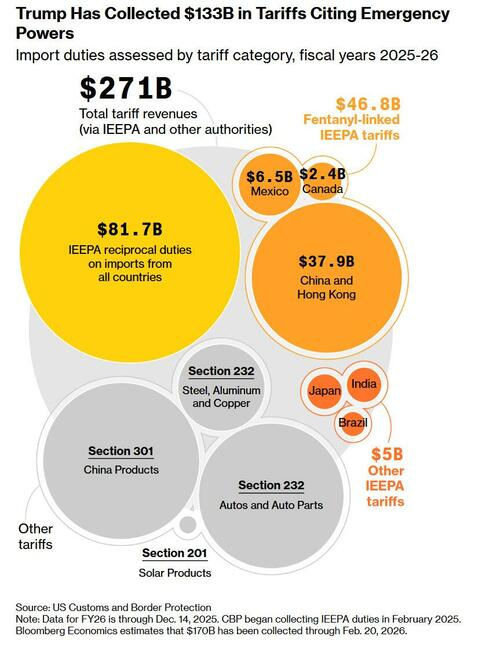
Group 1 - The U.S. has announced a plan to cut tariffs on Chinese goods by 50%, reducing the current 20% tariff to 10%, effective November 10 [1][3] - This tariff reduction is seen as a significant move in the ongoing U.S.-China trade negotiations, with implications for supply chains and employment [3][5] - The decision to extend the suspension of reciprocal tariffs until November 2026 indicates a strategic pause in the trade conflict, allowing both sides to negotiate further [5][9] Group 2 - The tariff cut is linked to the issue of fentanyl, with the U.S. suggesting that further tariff reductions could be contingent on China's control over fentanyl exports [3][11] - The extension of the tariff suspension and the exemption list, which includes 178 items ranging from children's products to solar panels, reflects a response to market demands and a trial of policy adjustments [5][11] - The temporary relief from port fees for Chinese ships and the suspension of U.S. countermeasures signal a broader attempt to ease trade tensions and foster cooperation [7][16] Group 3 - The U.S. is facing inflationary pressures, prompting a need to lower import costs for consumers and businesses, which the tariff reduction aims to address [13][14] - The retention of 10% tariffs serves as a bargaining chip for future negotiations, maintaining a level of uncertainty in U.S.-China relations [9][14] - The adjustments in trade policy are part of a larger strategy to maximize national interests, with both countries carefully navigating their positions in the ongoing negotiations [18]
光大期货软商品日报-20251030
Guang Da Qi Huo· 2025-10-30 07:11
Group 1: Report Industry Investment Rating - No relevant content provided. Group 2: Core Views of the Report - Cotton is expected to have a relatively strong oscillation. On Wednesday, ICE US cotton rose 1.38% to 65.95 cents/pound, and CF601 rose 0.41% to 13,620 yuan/ton. The current supply peak has passed, and supply pressure will gradually ease. The domestic cotton supply - demand pattern is not very loose this year. Macro - level positive news, such as the confirmed meeting between Chinese and US leaders in South Korea during the APEC meeting, gives hope for tariff policy adjustment. The bottom of Zhengzhou cotton has support, and upward drive depends on whether there will be unexpected progress during the APEC meeting [1]. - Sugar is expected to have a wide - range oscillation. The market focuses on the northern hemisphere's crushing progress, and the concern about Indian exports is mainly emotional. Raw sugar has limited rebound under the background of increased production in the northern hemisphere and expected continued increase in Brazil's 26/27 sugar season. The news of restricted imports of syrup and pre - mixed powder in China is still fermenting, and the spot trading is average. The futures market faces risks in further rebound, so it should be treated as a wide - range oscillation, and attention should be paid to the news from the Chengdu Sugar Conference [1]. Group 3: Summary of Each Section Research Views - **Cotton**: ICE US cotton and CF601 rose on Wednesday. The main contract's open interest decreased by 596 lots to 578,500 lots. The 3128B cotton spot price index rose by 10 yuan/ton. The Fed cut interest rates by 25BP as expected, but Powell's hawkish remarks made the US dollar index strong. The confirmed meeting between Chinese and US leaders supports the US cotton price. The domestic Zhengzhou cotton price has rebounded, and future macro and fundamental factors are likely to improve [1]. - **Sugar**: Spot sugar prices in different regions have different adjustments. The market focuses on the northern hemisphere's crushing progress. Raw sugar has limited rebound due to expected increased production. The news of restricted imports of syrup and pre - mixed powder in China is fermenting, and the spot trading is average. The futures market is in a stalemate and should be treated as a wide - range oscillation [1]. Daily Data Monitoring - **Cotton**: The 1 - 5 contract spread is - 5 with no change, the main contract basis is 1220 yuan/ton with a decrease of 45 yuan/ton. The Xinjiang spot price is 14,650 yuan/ton with a decrease of 1 yuan/ton, and the national spot price is 14,840 yuan/ton with an increase of 10 yuan/ton [2]. - **Sugar**: The 1 - 5 contract spread is 65 yuan/ton with an increase of 13 yuan/ton, the main contract basis is 256 yuan/ton with a decrease of 11 yuan/ton. The Nanning and Liuzhou spot prices are both 5,750 yuan/ton with no change [2]. Market Information - **Cotton**: On October 29, the number of cotton futures warehouse receipts decreased by 17 to 2,471, and the number of effective forecasts was 882. The cotton arrival prices in different domestic regions are as follows: Xinjiang 14,650 yuan/ton, Henan 14,871 yuan/ton, Shandong 14,884 yuan/ton, and Zhejiang 14,956 yuan/ton. The yarn comprehensive load was 51.2, unchanged from the previous day; the yarn comprehensive inventory was 26.2, unchanged; the short - fiber cloth comprehensive load was 51.9, unchanged; the short - fiber cloth comprehensive inventory was 29.9, up 0.1 [3]. - **Sugar**: On October 29, the Nanning and Liuzhou spot sugar prices were both 5,750 yuan/ton, unchanged from the previous day. The number of sugar futures warehouse receipts decreased by 70 to 7,625, and the number of effective forecasts was 586 [3][4]. Chart Analysis - Multiple charts are provided, including the closing price, basis, 1 - 5 spread, 1% tariff quota internal - external spread, warehouse receipts and effective forecasts of cotton and sugar, as well as the China Cotton Price Index: 3218B. The data sources are Wind and the Everbright Futures Research Institute [6][9][11][14][17]. Research Team Personnel Introduction - Zhang Xiaojin is the director of the resource product research at Everbright Futures Research Institute, focusing on the sugar industry. He has won many industry - related awards [19]. - Zhang Linglu is a resource product analyst at Everbright Futures Research Institute, responsible for research on futures varieties such as urea, soda ash, and glass. She has also won many industry - related awards [20]. - Sun Chengzhen is a resource product analyst at Everbright Futures Research Institute, mainly engaged in fundamental research and data analysis of varieties such as cotton, cotton yarn, and ferroalloy. He won the Zhengzhou Commodity Exchange's textile product senior analyst title in 2024 [21].
光大期货软商品日报(2025 年10月30日)-20251030
Guang Da Qi Huo· 2025-10-30 05:23
Group 1: Research Views - ICE cotton rose 1.38% to 65.95 cents/pound on Wednesday, CF601 rose 0.41% to 13,620 yuan/ton, and the main contract's open interest decreased by 596 lots to 578,500 lots. The spot price index of cotton 3128B was 14,535 yuan/ton, up 10 yuan/ton from the previous day. The Fed cut interest rates by 25BP as expected, but Powell's hawkish remarks strengthened the US dollar. The upcoming meeting between Chinese and US leaders in South Korea is expected to support US cotton prices. In the domestic market, Zhengzhou cotton futures prices have rebounded, and the current position has strong support. Supply pressure will gradually ease, and the domestic cotton supply-demand pattern is not very loose this year. The market anticipates tariff policy adjustments. Overall, the macro and fundamental factors are likely to improve, and the bottom of Zhengzhou cotton is supported. The upward drive depends on whether there will be unexpected progress during the APEC meeting [1]. - Sugar spot quotes vary among regions, with some adjustments. The market focuses on the northern hemisphere's crushing progress, and the current price is difficult to reflect India's exports. Raw sugar has limited rebound potential due to expected increases in production in the northern hemisphere and Brazil in the 26/27 season. In China, the news of restricted imports of syrup and premixed powder continues to ferment, and the spot trading volume is average. The futures market faces risks in further rebounds and is expected to fluctuate widely. Attention should be paid to the news from the Chengdu Sugar Conference [1]. Group 2: Daily Data Monitoring - For cotton, the 1 - 5 contract spread is -5 with no change, the main contract basis is 1220, down 45. The Xinjiang spot price is 14,650 yuan/ton, down 1, and the national spot price is 14,840 yuan/ton, up 10 [2]. - For sugar, the 1 - 5 contract spread is 65, up 13, the main contract basis is 256, down 11. The Nanning and Liuzhou spot prices are both 5,750 yuan/ton with no change [2]. Group 3: Market Information - On October 29, the number of cotton futures warehouse receipts was 2,471, down 17 from the previous day, and the valid forecast was 882 [3]. - On October 29, the arrival prices of cotton in different regions were: 14,650 yuan/ton in Xinjiang, 14,871 yuan/ton in Henan, 14,884 yuan/ton in Shandong, and 14,956 yuan/ton in Zhejiang [3]. - On October 29, the comprehensive load of yarn was 51.2, unchanged from the previous day; the comprehensive inventory of yarn was 26.2, unchanged; the comprehensive load of staple fiber cloth was 51.9, unchanged; and the comprehensive inventory of staple fiber cloth was 29.9, up 0.1 [3]. - On October 29, the spot prices of sugar were 5,750 yuan/ton in Nanning and 5,750 yuan/ton in Liuzhou, both unchanged from the previous day [3]. - On October 29, the number of sugar futures warehouse receipts was 7,625, down 70 from the previous day, and the valid forecast was 586 [4]. Group 4: Research Team - Zhang Xiaojin is the director of resource product research at Everbright Futures Research Institute, focusing on the sugar industry. She has won multiple awards, including the "Best Agricultural Product Analyst" and the "Best Agricultural and Sideline Products Chief Futures Analyst" [18]. - Zhang Linglu, a master of accounting and finance from the University of Bristol, is a resource product analyst at Everbright Futures Research Institute, responsible for researching futures varieties such as urea and soda ash glass. She has won many honors [19]. - Sun Chengzhen, a financial master from Yunnan University, is a resource product analyst at Everbright Futures Research Institute, engaged in fundamental research and data analysis of varieties such as cotton, cotton yarn, and ferroalloys. He won the title of senior analyst in textiles at the Zhengzhou Commodity Exchange in 2024 [20].
特朗普赚了,中美刚刚谈完,巴西、印度也传来好消息,有希望达成协议
Sou Hu Cai Jing· 2025-10-29 03:34
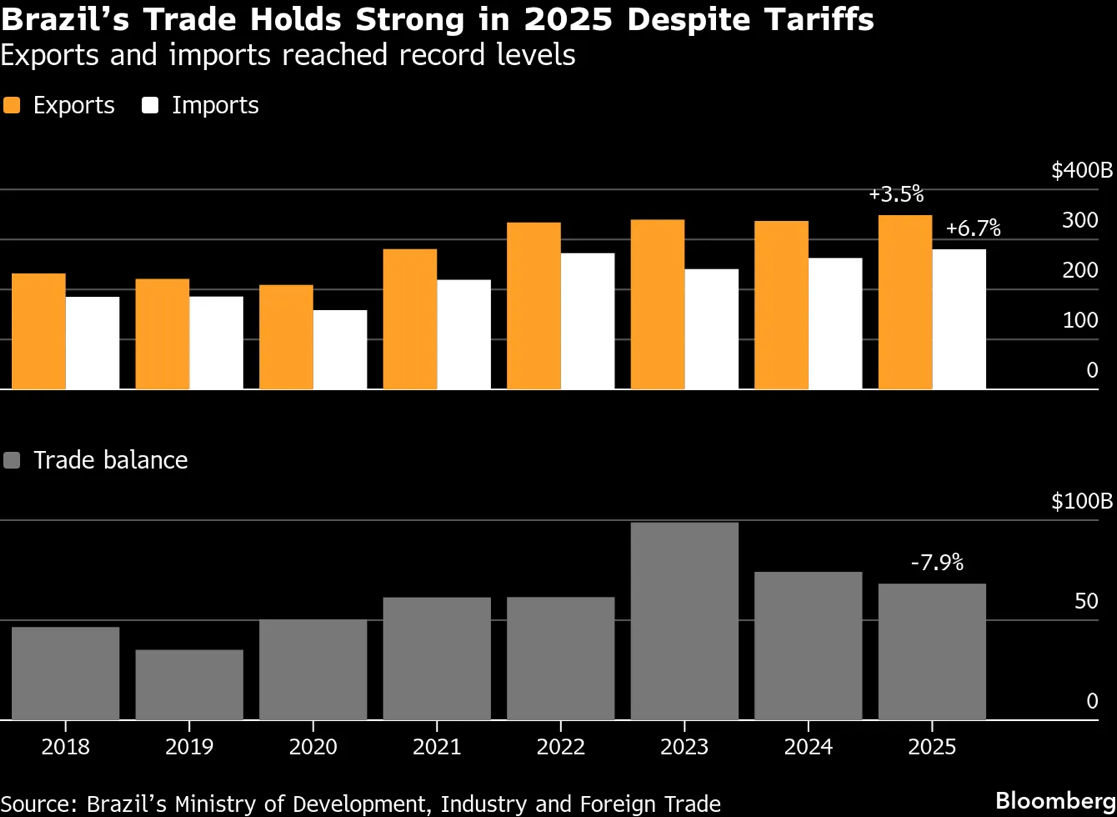
Group 1 - The core point of the news is the significant shift in Trump's tariff policy, moving from a comprehensive offensive to selective withdrawal, as evidenced by the agreements reached in negotiations with China, Brazil, and India [1][3][10] - The U.S. and China reached a preliminary consensus on key issues such as soybeans and rare earths during the fifth round of trade talks, with the U.S. Treasury Secretary stating that they have developed a "very successful framework" and will no longer consider imposing a 100% tariff on China [3][10] - China's control over rare earths, which constitutes 70% of global mining and 90% of refining capacity, was a crucial bargaining chip in the negotiations, leading to the U.S. softening its stance on tariffs [3][10] Group 2 - The U.S. government raised tariffs on most Brazilian goods from 10% to 50%, impacting key industries such as beef, coffee, and steel, despite maintaining a trade surplus with Brazil [5] - During a meeting between Trump and Brazilian President Lula, both parties agreed to suspend tariffs and initiate negotiations, with Brazil leveraging its rare earth resources for concessions from the U.S. [5][10] - India's Reliance Industries announced it would stop purchasing oil from sanctioned Russian companies, which accounted for one-third of its total oil imports, as a strategic move to facilitate trade negotiations with the U.S. [7][8] Group 3 - The economic cost for India includes increased oil import costs from the Middle East, leading to a projected 3% compression in refining profit margins, while the U.S. tariffs have already caused a 12% decline in India's generic drug exports to the U.S. [8] - The shift in negotiation strategies reflects the backlash from Trump's tariff policies, which have resulted in rising inflation and supply chain disruptions in the U.S. [10] - The easing of trade tensions has positively impacted market reactions, with Brazilian beef futures prices dropping significantly, indicating potential cost reductions for U.S. consumers [10]
代价太惨重,加拿大主动对我们后退一大步,还要特朗普别生气
Sou Hu Cai Jing· 2025-10-24 17:27
Core Viewpoint - Canada is adjusting its import tariff policy on steel and aluminum products, selectively reducing tariffs on certain products from the US and China amidst the ongoing US-China trade tensions [1][4]. Group 1: Tariff Policy Adjustments - Canada is making significant changes to its tariff policy by selectively exempting certain steel and aluminum products from the US and China [1][4]. - The decision to reduce tariffs comes after Canada faced backlash from its previous decision to impose tariffs on Chinese electric vehicles, which negatively impacted its canola exports and local farmers [3][4]. Group 2: Economic and Diplomatic Implications - The tariff reductions aim to alleviate pressure on domestic industries and maintain supply chain stability, particularly in key sectors related to public health and national security [4]. - Canada's strategy reflects a balancing act between appeasing the US and mitigating the economic consequences of its earlier decisions, raising questions about the effectiveness of this approach in stabilizing its economy and diplomatic relations [4].
Tech Rally Boosts SPX; GM & GE Shine
Youtube· 2025-10-21 12:31
Market Overview - The S&P 500 has recaptured the 20-day moving average, indicating a potential upward trend, with the next resistance level being the all-time highs [5] - Recent trading saw light volume, one of the lowest levels of the year, which raises caution among new buyers [6][7] - The VIX has decreased to around 18.5, suggesting a conducive environment for equities to move higher [3][10] Earnings Reports General Motors (GM) - GM reported revenue of $48.59 billion, exceeding the expected $44.1 billion, and adjusted earnings per share of $2.80, surpassing the forecast of $2.31 [12] - The company raised its full-year guidance for adjusted EBIT to a range of $12 billion to $13 billion, up from $10 billion to $12.5 billion [12] - Adjustments in tariff policies and strong demand pockets contributed to GM's positive outlook [13][15] General Electric (GE) Aerospace - GE Aerospace reported revenue of $11.31 billion, beating the expected $10.41 billion, with a year-over-year growth of approximately 25% [17][18] - Adjusted earnings per share came in at $1.66, exceeding the forecast of $1.46 [18] - The company raised its fiscal year 2025 earnings guidance to a range of $6 to $6.20, up from $5.60 to $5.80 [19] - Demand is driven by aftermarket maintenance of existing Boeing planes, despite restrictions on new airplane production [20][21]
金价,又爆了!中国资产,大爆发!
中国基金报· 2025-10-21 01:15
Market Overview - The US stock market saw a significant rise, with the Dow Jones increasing by 515.97 points (1.12%), the Nasdaq up by 310.57 points (1.37%), and the S&P 500 rising by 71.12 points (1.07%) [4][5] - The current market sentiment is buoyed by easing concerns over regional bank credit and the potential end of the US government shutdown, alongside tariff exemptions on various imports announced by Trump [2][6] Federal Reserve and Economic Data - The US federal government shutdown has entered its 20th day, causing delays in the release of key economic data, which has left investors in a "data vacuum" ahead of the Federal Reserve's upcoming meeting [6] - Traders are anticipating a 99% probability of a rate cut by the Federal Reserve next week, with another cut expected in December [7] Banking Sector Performance - Zion Bank reported better-than-expected earnings for Q3, with earnings per share at $1.48, surpassing analyst expectations of $1.46, leading to a 3% increase in its stock price [9] - Major banks such as JPMorgan, Goldman Sachs, Citigroup, Morgan Stanley, Bank of America, and Wells Fargo all saw stock price increases, reflecting a positive sentiment in the banking sector [11] Technology Sector Highlights - Apple Inc. shares rose by 3.94%, reaching a new all-time high, driven by strong demand for the iPhone 17, which saw a 14% increase in sales compared to the iPhone 16 within the first ten days of launch [13][16] - The broader technology sector also performed well, with the TAMAMA Technology Index rising by 1.44% [14] Gold Market Dynamics - Spot gold prices surged over 2%, reaching a new historical high of $4,381.49 per ounce, driven by expectations of further rate cuts from the Federal Reserve and ongoing safe-haven buying [18] - Analysts predict that gold prices may continue to rise, potentially reaching $4,500 in the coming weeks [19] Chinese Concept Stocks - Chinese concept stocks experienced a broad increase, with the Nasdaq Golden Dragon China Index rising by 2.39% and the Wande Chinese Technology Leaders Index up by 2.31% [21][22] - Notable individual stock performances included iQIYI rising over 8%, Century Internet increasing by approximately 7%, and Alibaba gaining nearly 4% [22]
银河期货有色金属衍生品日报-20251020
Yin He Qi Huo· 2025-10-20 11:33
Group 1: Market Outlook for Each Metal Copper - Market Review: On October 20, the Shanghai Copper 2512 contract closed at 85,380 yuan/ton, up 0.73%, with the Shanghai Copper Index adding 6,102 lots to 536,600 lots. Spot copper prices had a stable bottom - support, with Shanghai spot copper at a premium of 60 yuan/ton, up 5 yuan/ton from the previous trading day. Guangdong inventory decreased after the weekend, but downstream procurement was sluggish due to high prices. The North China market was mainly for rigid - demand and long - term order delivery, with low activity [2]. - Logic Analysis: Macro - economically, Sino - US trade relations eased, and the 3rd Plenary Session of the 14th Central Committee was in focus. Fundamentally, supply - side disturbances in copper mines increased, with expectations of processing fees dropping to 0 dollars/ton or lower next year. SMM predicted that the electrolytic copper output in October would drop to 1.0825 million tons, a decrease of 38,500 tons from the previous month. Consumption showed a marginal weakening, but rigid demand was resilient [7]. - Trading Strategy: Adopt a "buy - on - dips" approach, be cautious about chasing high prices. Hold cross - market positive spreads, take profit when the export window opens, and then enter positive spreads again. Consider cross - period positive spreads after domestic inventory starts to decline. Keep options on hold [8]. Alumina - Market Review: The Alumina 2601 contract rose 4 yuan to 2,806 yuan/ton. Spot prices in different regions showed a downward trend, with some regions experiencing price drops [9]. - Logic Analysis: The previous supply - demand surplus in alumina was absorbed by downstream electrolytic aluminum plant stockpiling, but as stockpiling was completed, the surplus became more significant. Some production cuts and maintenance started in October, and more were expected in November [12]. - Trading Strategy: Alumina is expected to oscillate at a low level in the short term. Keep an eye on supply - side changes. Temporarily hold off on arbitrage and options trading [13]. Electrolytic Aluminum - Market Review: The Shanghai Aluminum 2512 contract fell 80 yuan to 20,910 yuan/ton, with positions decreasing by 8,272 lots to 487,400 lots. Spot prices in different regions also declined [14]. - Logic Analysis: Sino - US officials' communication improved market sentiment. Economic data releases and important Chinese meetings were in focus. Fundamentally, consumption resilience supported prices [17]. - Trading Strategy: With improved macro - expectations, take a "buy - on - dips" approach to aluminum prices, be cautious about chasing high prices. Temporarily hold off on arbitrage and options trading [18]. Cast Aluminum Alloy - Market Review: The Cast Aluminum Alloy 2512 contract fell 125 yuan to 20,350 yuan/ton, with positions increasing by 107 lots. Spot prices in different regions remained stable [22]. - Logic Analysis: Sino - US officials' communication improved market sentiment. The tight supply of scrap aluminum supported costs, but high social inventory and warehouse receipts might suppress the upside. The price was expected to remain strong in the short term [26]. - Trading Strategy: With improved tariff panic, take a "buy - on - dips" approach to aluminum alloy prices, which are expected to strengthen in the medium - term. Temporarily hold off on arbitrage and options trading [27]. Zinc - Market Review: The Shanghai Zinc 2512 contract fell 0.34% to 21,850 yuan/ton, with the Shanghai Zinc Index adding 7,322 lots to 236,600 lots. Spot trading in Shanghai was mainly among traders, with downstream enterprises having low purchasing enthusiasm [30]. - Logic Analysis: At the mine end, import losses of zinc ore increased, and domestic processing fees declined. At the smelting end, although profits were narrowed, smelters' enthusiasm remained high. Consumption was expected to weaken as the traditional peak season passed. An external - strong and internal - weak pattern was likely to continue [35]. - Trading Strategy: Partially liquidate profitable short positions and re - short at high prices. Temporarily hold off on arbitrage and options trading [37]. Lead - Market Review: The Shanghai Lead 2512 contract rose 0.12% to 17,090 yuan/ton, with the Shanghai Lead Index adding 1,361 lots to 81,300 lots. Spot prices increased slightly, and downstream battery manufacturers had a certain purchasing willingness [39]. - Logic Analysis: With the resumption of production of secondary lead and the increase in primary lead production in mid - to - late October, lead supply might increase, and prices were at risk of falling [41]. - Trading Strategy: Hold profitable short positions and add short positions at high prices. Temporarily hold off on arbitrage and sell out - of - the - money call options [42]. Nickel - Market Review: The Shanghai Nickel main contract NI2512 fell 630 yuan to 120,860 yuan/ton, with the index adding 7,691 lots. Spot premiums of Jinchuan nickel increased, while those of Russian nickel and electrowinning nickel remained stable [44]. - Logic Analysis: The macro - environment became more volatile. Although nickel ore prices provided cost support, the supply - demand surplus was difficult to reverse. Nickel prices were expected to oscillate widely with a downward trend [47]. - Trading Strategy: Short when prices rebound to the upper limit of the oscillation range. Temporarily hold off on arbitrage and sell a wide - straddle combination of the 2512 contract [48]. Stainless Steel - Market Review: The Stainless Steel main contract SS2512 fell 20 yuan to 12,595 yuan/ton, with the index reducing 5,239 lots. Spot prices of cold - rolled and hot - rolled stainless steel were at certain levels [52]. - Logic Analysis: The spot price was below the steel mill's cost. Terminal demand in October was still not optimistic, and steel mills might further cut production. Stainless steel was likely to remain in a weak - oscillation pattern [53]. - Trading Strategy: Expect weak oscillations. Temporarily hold off on arbitrage [56]. Tin - Market Review: The Shanghai Tin 2511 contract closed at 279,340 yuan/ton, down 2,040 yuan/ton or 0.72%, with positions decreasing by 1,300 lots to 63,665 lots. Spot prices were stable, and downstream purchasing improved slightly [59]. - Logic Analysis: Trade uncertainties and concerns in the US credit market pressured LME metals. Although Indonesia cracked down on illegal mining, the impact on tin production was limited. Supply was still tight, and demand recovered slowly. Tin prices were expected to oscillate weakly [61]. - Trading Strategy: Tin prices may oscillate weakly in the short term due to macro - disturbances. Temporarily hold off on options trading [62]. Industrial Silicon - Logic Analysis: In November, polysilicon production cuts would be negative for industrial silicon demand. Before large - scale production cuts in Southwest industrial silicon plants, there was a slight surplus, and prices were under pressure in the short term. In the medium term, price support might appear after production cuts in November [67]. - Strategy Suggestion: Industrial silicon prices are expected to be weak in the short term. Wait for a full correction. There are no arbitrage and option strategies for now [68]. Polysilicon - Logic Analysis: In November, leading manufacturers' production cuts would significantly improve the supply - demand balance. Currently, with no further news on capacity integration, some funds left the market, and the futures price might correct further [75]. - Strategy Suggestion: Avoid long positions in the short term. Hold reverse spreads of the 2511 and 2512 contracts with a target range of (- 3300, - 3000). Adjust the previous double - buying strategy, take profit on the put option and hold the call option [77]. Lithium Carbonate - Market Review: The Lithium Carbonate 2601 contract rose 40 yuan to 75,940 yuan/ton, with the index adding 387 lots and the Guangzhou Futures Exchange warehouse receipts increasing by 19 to 30,705 tons. Spot prices increased [81]. - Logic Analysis: Lithium carbonate prices rose, and lithium ore prices also increased. Although imports in September decreased, demand was strong, and prices might rise further if supply risks occurred [83]. - Trading Strategy: Adopt a "buy - on - dips" approach. Temporarily hold off on arbitrage and sell out - of - the - money put options [86]. Group 2: Important Industry Data Copper - Inventory: As of October 20, SMM national mainstream copper inventory increased by 9,100 tons to 186,600 tons compared to last Thursday. Imported copper supply was expected to continue, while domestic supply was expected to decrease. Consumption was expected to slightly recover, and weekly inventory might decrease [3]. - Production: Zijin Mining's copper production from January to September was 830,000 tons, up 5% year - on - year. In Q3, production was 260,000 tons, down 6% quarter - on - quarter [6]. - Trade: In September 2025, China's copper ore and concentrate imports were 2,586,873.52 tons, down 6.24% month - on - month but up 6.43% year - on - year. Refined copper imports were 374,075.58 tons, up 21.76% month - on - month and 7.44% year - on - year [3][4]. Alumina - Inventory: As of October 16, the national alumina inventory was 4.017 million tons, up 115,000 tons from the previous week. Some electrolytic aluminum plants increased long - term order execution and spot purchases, but transportation issues affected inventory distribution [11]. - Trade: In September 2025, China exported 246,000 tons of alumina, up 36.5% month - on - month and 82.3% year - on - year; imported 60,000 tons, down 36.4% month - on - month but up 61.7% year - on - year [11]. Electrolytic Aluminum - Inventory: On October 20, China's aluminum ingot spot inventory was 620,000 tons, up 5,000 tons from last Thursday [16]. - Production: From January to September, real estate development data showed a decline in construction area, new construction area, and completion area [16]. Zinc - Inventory: As of October 20, the total inventory of zinc ingots in seven major regions monitored by SMM was 165,300 tons, up 2,200 tons from October 13 and 2,600 tons from October 16 [31]. - Trade: In September 2025, China imported 505,400 tons of zinc concentrates, up 8.15% month - on - month and 24.94% year - on - year; imported 22,700 tons of refined zinc, down 11.6% month - on - month and 57% year - on - year [31][32]. Lead - Inventory: As of October 20, the total social inventory of lead ingots in five major regions monitored by SMM was 37,700 tons, up 1,800 tons from October 13 [40]. - Trade: In September 2025, lead concentrate imports increased 11.72% month - on - month but decreased 7.21% year - on - year. Refined lead exports decreased 46% month - on - month, and imports decreased 17.17% month - on - month [40]. Lithium Carbonate - Trade: In September 2025, China imported 19,596.90 tons of lithium carbonate, down 10.30% month - on - month but up 20.49% year - on - year; exported 150.82 tons, down 59.12% month - on - month and 9.08% year - on - year [82].
关税突发!特朗普最新发声,释放重磅信号!
天天基金网· 2025-10-20 01:21
Group 1 - The article discusses the recent signals from Trump regarding tariff policies, indicating a potential easing of trade tensions [4][5] - Trump has reportedly exempted dozens of products from "reciprocal tariffs" and is open to excluding more items from tariffs during trade negotiations [5][6] - The shift in tariff policy reflects an internal belief within the Trump administration that the U.S. should lower tariffs on goods not produced domestically [5][6] Group 2 - On October 19, Trump announced new tariffs under Section 232, including a 25% tariff on trucks and truck parts, and a 10% tariff on buses, effective November 1 [6] - The administration has expanded the tariff exemption program for automakers, allowing them to apply for deductions on tariff costs until 2030 [6] - A new list of product exemptions, referred to as "Attachment Three," aims to include items that the U.S. cannot produce, such as certain agricultural products and aircraft parts [7]