
双焦市场

Search documents
双焦周报:首轮提降落地,盘面先扬后抑-20251208
Ning Zheng Qi Huo· 2025-12-08 08:57
Report Summary 1. Report Industry Investment Rating - Not provided in the given content 2. Core Viewpoints of the Report - This week, the prices of coking coal and coke in the domestic market were weakly stable. On the 1st, mainstream steel mills in Hebei and other places tendered to lower the coke price by 50 - 55 yuan/ton, and the first round of coke price reduction was implemented. Currently, the profits of coking plants have rebounded and are basically in a profitable state. Coke enterprises maintain normal production rhythms and operate with low inventories. The price of coking coal, the raw material, has been continuously falling recently, with many auction failures, causing coke to lose cost support. Overall, the pessimistic sentiment in the spot market remains unchanged, while the futures market is affected by capital games, showing a small rebound followed by a sharp decline. It is expected that the start of winter storage replenishment in mid - to late December will improve the fundamentals and sentiment. The current valuation of the futures market is too low, and the valuation will gradually recover after the sentiment reverses [2] 3. Summary by Relevant Catalogs Market Review and Outlook - **Price Changes**: The prices of coking coal and coke were weakly stable this week. The first - round coke price reduction of 50 - 55 yuan/ton by mainstream steel mills in Hebei and other places was implemented on the 1st [2] - **Coking Plant Situation**: Coking plant profits have rebounded and are basically profitable, with normal production rhythms and low - inventory operations [2] - **Raw Material Situation**: The price of coking coal has been falling, and there have been many auction failures, resulting in coke losing cost support [2] - **Market Sentiment**: The spot market is pessimistic, while the futures market is affected by capital games, showing a small rebound followed by a sharp decline [2] - **Outlook**: Winter storage replenishment in mid - to late December is expected to improve the fundamentals and sentiment, and the undervalued futures market will gradually recover [2] Fundamental Data Weekly Changes | Indicator | Latest Week | Previous Period | Weekly Change | Weekly Change Rate | | --- | --- | --- | --- | --- | | Total coking coal inventory (10,000 tons) | 2103.97 | 2106.1 | -2.13 | -0.10% | | Total coke inventory (10,000 tons) | 882.99 | 884.68 | -1.69 | -0.19% | | Average daily pig iron output of steel mills (10,000 tons) | 232.3 | 234.68 | -2.38 | -1.01% | | Profit per ton of coke for independent coking enterprises (yuan/ton) | 30 | 46 | -16 | -34.78% | [4]
双焦周报:悲观情绪仍存,盘面承压不改-20251201
Ning Zheng Qi Huo· 2025-12-01 09:03
Report Industry Investment Rating - Not mentioned in the provided content Core Viewpoints - This week, the coking coal and coke markets showed an overall pattern of weak fluctuations, with intensified gaming between supply and demand sides. Affected by the increasing bearish sentiment in the market, speculative demand significantly weakened, leading to a large accumulation of inventory in upstream mines and coal washing plants, and prices continued to bottom out. There is a strong atmosphere of expecting a price drop in coke, and steel mills may officially propose the first round of coke price cuts next week. - Currently, the spot sentiment is poor, the fundamentals have slightly deteriorated marginally, and both the spot and futures prices continue to be under pressure. However, the current valuation level of the futures market is too low, and the low - production state of domestic coal mines will continue. There are strong expectations for mid - and downstream winter storage replenishment in the future, and there is still support at the bottom of the spot price. It is expected that the futures market will fluctuate. [1] Summary by Relevant Catalogs Market Review and Outlook - The coking coal and coke markets were weak and fluctuating this week. Due to bearish sentiment, speculative demand weakened, and upstream inventory accumulated. Coke price cuts are expected next week. - Despite current pressure, low futures valuation, continued low coal mine production, and winter storage expectations suggest the market will likely oscillate. [1] Fundamental Data Weekly Changes - The total coking coal inventory was 2106.1 million tons, a week - on - week decrease of 20.67 million tons (-0.97%). - The total coke inventory was 884.68 million tons, a week - on - week increase of 4.05 million tons (0.46%). - The daily average pig iron output of steel mills was 234.68 million tons, a week - on - week decrease of 1.6 million tons (-0.68%). - The profit per ton of coke for independent coking enterprises was 46 yuan/ton, a week - on - week increase of 27 yuan/ton (142.11%). [3]
周报:铁水转增,成本支撑带动钢价低位回升-20251118
Zhong Yuan Qi Huo· 2025-11-18 04:38
Report Industry Investment Rating No relevant content provided. Core View of the Report - The prices of steel products, iron ore, and coking coal and coke are expected to be volatile and moderately strong in the short term. The five major steel products continue to reduce inventory, and the iron ore and coking coal and coke markets have cost support. The macro - environment has slightly improved risk appetite, and the third round of the fifth batch of central ecological environmental protection inspections has been launched, which may affect steel production [3][4][5]. Summary According to the Table of Contents 1. Market Review - The five major steel products continued to reduce inventory. The decline in rebar demand slowed down, and the decline in inventory increased. The demand for hot - rolled coils changed little, and the decrease in production slowed down the increase in total inventory. The end of the US government "shutdown" slightly improved market risk appetite, and prices were supported at low levels. Futures fluctuated, and most spot prices remained stable [9]. - Spot prices of rebar and hot - rolled coils in some regions increased, and futures prices of related contracts also generally rose. The long and short positions of some contracts decreased, and the basis and spreads of some products changed. Rebar inventory decreased, and hot - rolled coil inventory increased slightly [10]. 2. Steel Supply and Demand Analysis - **Production**: Rebar and hot - rolled coil production both decreased slightly. Rebar blast furnace and electric furnace production decreased. The blast furnace operating rate decreased, and the electric furnace operating rate increased slightly [13][15][17]. - **Profit**: The profits of rebar and hot - rolled coils improved compared with the previous period [27]. - **Demand**: The demand for rebar and hot - rolled coils both decreased slightly. The apparent consumption of rebar and hot - rolled coils decreased, and the 5 - day average of national building materials transactions increased [31]. - **Inventory**: Rebar inventory decreased more, and both factory and social inventories declined. The increase in hot - rolled coil inventory slowed down, with social inventory stable and factory inventory rising slightly [36][40]. - **Downstream**: In the real estate market, the transaction volume of commercial housing and land improved compared with the previous period. In the automotive market, in October 2025, automobile production and sales continued to rise both month - on - month and year - on - year [45][48]. 3. Iron Ore Supply and Demand Analysis - **Supply**: The shipments from Australia and Brazil increased, but the arrival volume at 45 ports decreased significantly [53]. - **Demand**: The daily output of hot metal increased month - on - month, and the port clearance volume continued to increase [58]. - **Inventory**: The port inventory of iron ore continued to rise, and the iron ore inventory of steel enterprises increased slightly [63]. 4. Coking Coal and Coke Supply and Demand Analysis - **Supply**: The operating rate of domestic mines increased, and the customs clearance of Mongolian coal remained at a high level [70]. - **Demand**: The transaction rate of coking coal auctions decreased slightly [75]. - **Coking Enterprises**: The profit of independent coking plants decreased slightly, and the capacity utilization rate decreased slightly [79]. - **Inventory**: The port inventory of coking coal decreased, and the inventory of coking plants decreased slightly. The port inventory of coke decreased, and the inventory of coking plants remained at a low level [84][90]. - **Spot Price**: The fourth round of price increases for coke was implemented, and the game between steel and coke enterprises continued [96]. 5. Spread Analysis - The basis of rebar and hot - rolled coils both decreased, and the 1 - 5 spread of rebar increased slightly. The coil - to - rebar spread decreased slightly, and the 1 - 5 spread of iron ore increased [102][106].
黑色建材日报:市场低价放量,钢价有所反弹-20251107
Hua Tai Qi Huo· 2025-11-07 02:34
Report Summary 1. Report Industry Investment Ratings - Steel: No specific overall industry investment rating is provided, but the strategy for steel is "oscillating weakly" [2] - Iron Ore: The strategy is "oscillating weakly" [4] - Coking Coal and Coke: Coking coal is expected to "oscillate", and coke is also expected to "oscillate" [6] - Thermal Coal: No specific investment strategy is provided [7] 2. Core Views - Steel market has low - price and high - volume trading, with steel prices rebounding slightly. However, due to weak real estate, potential weakening of domestic demand in infrastructure and consumer - related manufacturing in the fourth quarter, and the need to exchange external demand with low prices, further production cuts are needed for inventory reduction [1] - Iron ore prices are under downward pressure due to falling steel mill profitability, reduced iron - water production, and a significant increase in iron ore arrivals [3] - Driven by the sharp rise in thermal coal prices, coking coal and coke prices are oscillating and rebounding. The supply of coking coal and coke is tight, and the demand shows certain resilience [5][6] - Thermal coal prices continue to rise. The downstream non - power demand is strong, and prices are expected to be firm in the short term due to winter storage expectations and difficulty in inventory accumulation [7] 3. Summary by Related Catalogs Steel - **Market Analysis**: The closing price of the rebar futures main contract is 3037 yuan/ton, and that of the hot - rolled coil futures main contract is 3256 yuan/ton. The overall spot trading volume of steel is average, with the national building materials trading volume at 11.03 tons, showing an increase compared to the previous day and a good week - on - week performance [1] - **Supply and Demand Logic**: The weekly output of the five major steel products is 856.74 tons, a week - on - week decrease of 18.55 tons. All product outputs have declined. The real estate remains weak, and there is pressure on the domestic demand of infrastructure and consumer - related manufacturing in the fourth quarter. The inventory reduction of the five major steel products has slowed down [1] - **Strategy**: Unilateral trading is "oscillating weakly", and there are no strategies for inter - period, inter - variety, spot - futures, and options trading [2] Iron Ore - **Market Analysis**: Iron ore futures prices are oscillating. The prices of mainstream imported iron ore varieties have risen slightly. The trading volume of national main - port iron ore is 115.4 tons, a 6.07% increase compared to the previous day, and the trading volume of forward - looking spot is 158.9 tons, a 6.00% increase. The daily average iron - water output of 247 steel mills is 234.22 tons, a decrease of 2.14 tons compared to the previous period, and the steel mill profitability rate is 39.83%, a 5.19% decrease [3] - **Supply and Demand Logic**: The apparent demand for steel has dropped significantly this week, and the steel mill profitability rate has further decreased. The iron ore arrival volume has increased significantly, and the iron - water output has decreased, resulting in reduced demand [3] - **Strategy**: Unilateral trading is "oscillating weakly", and there are no strategies for inter - period, inter - variety, spot - futures, and options trading [4] Coking Coal and Coke - **Market Analysis**: Affected by the rise in thermal coal prices and market sentiment, the coking coal and coke futures prices are oscillating and rebounding. The import volume of Mongolian coking coal has recovered, and the trading volume is average [5][6] - **Logic and Views**: For coking coal, the domestic supply recovery is slow, and imported coal is abundant, with a slightly loose overall situation but a lower inventory accumulation rate than last year. The demand is supported by the successful third - round price increase of coke. For coke, the supply is tight due to profit losses, and the demand shows certain resilience after the third - round price increase [6] - **Strategy**: Coking coal is expected to "oscillate", and coke is also expected to "oscillate". There are no strategies for inter - period, inter - variety, spot - futures, and options trading [6] Thermal Coal - **Market Analysis**: In the production areas, coal prices are rising, and the non - power demand is strong. At the ports, the trading volume of market coal is low, but traders are reluctant to sell due to rising coal mine prices and low port inventories. The price of imported coal is also rising [7] - **Demand and Logic**: In the short term, prices are oscillating and rising due to tight supply in production areas. In the long - term, the supply pattern is loose, but with the approaching of the winter heating season and strong non - power demand, attention should be paid to overall consumption and inventory replenishment [7] - **Strategy**: No specific strategy is provided [7]
双焦周报20251020:供应扰动加剧,双焦震荡偏强-20251020
Hong Ye Qi Huo· 2025-10-20 09:03
Report Industry Investment Rating - No relevant content provided Core Viewpoints - Last week, the coking coal market was generally strong, with both supply and demand showing signs of recovery, but policy and sentiment disturbances increased market volatility. Coking coal is expected to oscillate at a high level in the short term [5]. - Last week, the coke market oscillated strongly, and the second round of spot price increases was initiated. Coke is expected to follow coking coal to oscillate at a high level in the short term, and attention should be paid to the fulfillment of policy expectations and changes in demand at the finished product end [6]. Summaries by Sections Market Views Coking Coal Fundamentals - Supply: The开工 rate of 523 sample mines and the daily average output of clean coal increased month - on - month, and the capacity utilization rate and clean coal output of 314 coal washing plants also increased slightly. However, due to safety inspections and over - production checks, the supply recovery space is limited [5]. - Demand: The daily output of molten iron and the blast furnace operating rate of 247 steel mills remained stable at a high level, and the available days of coking coal for steel mills and coking plants increased slightly, indicating that rigid demand is still supported [5]. - Inventory: Except for a significant decline in port inventory, mines, coal washing plants, and downstream sectors all saw inventory accumulation, and downstream sectors still have some inventory replenishment momentum [5]. - Summary: In the short term, the fundamental contradictions of coking coal are not significant. The expectation of supply contraction and winter storage demand jointly support prices, but the upside is still restricted by the profit of finished products and the effect of policy implementation [5]. Coke Fundamentals - Supply: The average profit per ton of coke for coking plants returned below the break - even line, and the production willingness of coking enterprises decreased slightly. The capacity utilization rate and output decreased month - on - month [6]. - Demand: The daily output of molten iron and the blast furnace operating rate of 247 steel mills remained stable, the inventory usage cycle of steel mills decreased slightly, and rigid demand was resilient [6]. - Inventory: The inventory of coking plants and steel mills decreased, the port inventory remained stable, and the overall explicit inventory decreased, indicating that the market supply - demand structure is approaching a tight balance [6]. - Summary: In the short term, the coke fundamentals are tight. The second round of price increases is likely to be implemented, but the future continuous increase space may be limited. Coke is expected to follow coking coal to oscillate at a high level [6]. Macro - real Estate Tracking - The report presents data on the cumulative year - on - year growth rate of national fixed - asset investment, the cumulative year - on - year growth rate of new construction, construction, and completion areas of national real estate, the weekly commercial housing transaction area of 30 large - and medium - sized cities, and the purchasing managers' index (PMI) of the steel industry, but no specific analysis is provided [8][11][15][17] Coking Coal Supply - demand Tracking - Coking coal spot prices have risen [21]. - Mines have shifted from destocking to stockpiling, and the inventory of coal washing plants has gradually recovered [34]. - The customs clearance volume of Mongolian coal has rebounded to a high level [47]. Coke Supply - demand Tracking - The second round of price increases for coke has been initiated, and attention should be paid to the actual implementation rhythm [55]. - Due to cost increases, the profit per ton of coke for coking enterprises has fallen below the break - even line [59]. - Independent coking plants have slightly reduced their inventory, and steel mills have shifted from previous inventory replenishment to destocking [69]. - The port coke inventory has stabilized [73].

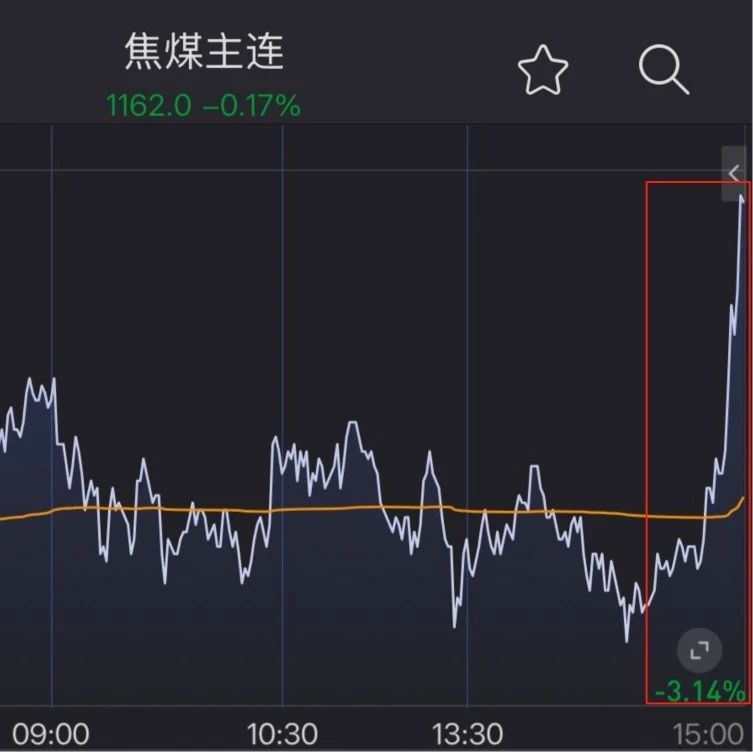
焦煤焦炭,尾盘异动!第七轮调涨,启动!
证券时报· 2025-08-22 15:38
Core Viewpoint - The coal market, particularly coking coal and coke, is experiencing a phase of price adjustment after significant increases, but supply constraints are expected to support a bullish outlook in the short term [3][4][12]. Group 1: Market Trends - After a significant price surge, coking coal and coke prices have seen a decline since mid-August, with the main coking coal futures contract dropping by 14% from its recent peak [6][11]. - The current market for coking coal shows a stable price trend, with main transaction prices in Shanxi and Shandong regions reported at 1400-1450 CNY/ton and 960-990 CNY/ton respectively [8][11]. - The seventh round of price increases for coke has commenced, with plans to raise prices by 50-75 CNY/ton depending on the type of coke [11][14]. Group 2: Supply and Demand Dynamics - Supply-side constraints are anticipated due to policies aimed at reducing production capacity and inspections of coal mine capacities, leading to a potential tightening of supply in the coal industry [8][13]. - Current operating rates for independent coking enterprises are at 74.65%, slightly down from the previous period, indicating a slight reduction in supply [13]. - Steel mills are currently experiencing decent profitability, but there are indications of reduced purchasing activity, particularly in Hebei province, which may affect demand for coke [13][14]. Group 3: Future Outlook - Analysts predict that the coking coal market will maintain a strong performance in the short term due to supply constraints and low inventory levels at both coking plants and steel mills [12][14]. - The overall sentiment in the market remains cautiously optimistic, with expectations of price stability or slight increases in the near future, despite potential pressures from environmental regulations and production limits [12][14].

煤矿供应预期收缩,双焦偏强震荡
Hua Lian Qi Huo· 2025-08-10 13:24
Report Summary 1) Report Industry Investment Rating No industry investment rating is provided in the report. 2) Core Viewpoint of the Report - The supply of domestic coal is expected to be constrained in August, and the supply ceiling effect is obvious, making it difficult to return to high - level production. The recovery of domestic coal supply is slow, and the production has decreased week - on - week. Although the customs clearance of Mongolian coal has returned to medium - high levels, it can only partially make up for the reduction of domestic coal. - The demand for coking coal and coke remains strong. The blast furnace operating rate of steel mills has increased slightly, and the iron - making water production has only slightly decreased. The profitability of steel mills has improved, and the losses of coking enterprises have narrowed. After the price increase, speculative demand has increased. - The inventory of coking coal and coke continues to decline. The inventory of coal mines, coking plants, and steel mills has different trends, but the overall inventory is decreasing. - It is expected that coking coal and coke will continue to be strong, and the strategy is to go long on the coking coal 2601 contract at low levels, with a reference support level of 1120 yuan/ton [4]. 3) Summary by Relevant Catalogs **Weekly Viewpoint and Strategy** - **Supply**: Last week, the coal mine start - up rate dropped significantly, and the supply recovery was slow, with production decreasing week - on - week. In August, it is difficult for domestic coal production to return to high levels due to over - production inspections and stricter safety supervision. The customs clearance of Mongolian coal has returned to medium - high levels. On August 8, the capacity utilization rate of 230 independent coking plants was 73.75%, a week - on - week increase of 0.27%, and the daily average output of all - sample independent coking enterprises was 65.1 tons, a week - on - week increase of 0.29 tons [4]. - **Demand**: The blast furnace operating rate of 247 steel mills was 83.75%, a week - on - week increase of 0.29%. The daily average iron - making water production decreased by 0.39 tons to 242.32 tons. The profitability of steel mills was 68.4%, a 3.03% increase from the previous week. The average profit per ton of coke was - 16 yuan/ton, a 29 - yuan increase from the previous week. After the fifth round of price increases for coke, the losses of coking enterprises have narrowed, and the sixth round may be implemented soon. After the price increase, speculative demand has increased [4]. - **Inventory**: Last week, the inventory of coal mines continued to decline, but the decline rate slowed down. On August 8, the raw coal inventory of 523 sample mines was 476.52 tons, a week - on - week decrease of 6.78 tons. The coking coal inventory of coking plants decreased, while that of steel mills continued to rise. The inventory of independent coking enterprises and steel mills for coke continued to decline, and the port coke inventory increased slightly, with the total coke inventory continuing to decline [4]. - **Viewpoint**: Last week, there were frequent disturbances on the coal mine supply side. Under the influence of policies, domestic coal production will be restricted, and the supply contraction expectation has boosted market sentiment. The rigid demand for coking coal and coke remains strong, and speculative demand has increased after the price increase. It is expected that coking coal and coke will continue to be strong [4]. - **Strategy**: Go long on the coking coal 2601 contract at low levels, with a reference support level of 1120 yuan/ton [4]. **Industrial Chain Structure** - **Futures and Spot Markets**: The report presents multiple charts of coking coal and coke futures contracts, including the DCE jm2509, jm2601, j2509, j2601 contracts, as well as the price trends of coking coal and coke spot, and the price differences between contracts [9][14][19][26]. - **Inventory**: It shows the inventory trends of coking coal (including washing plants, mines, ports, steel mills, and coking enterprises) and coke (including coking enterprises, steel mills, and ports) from 2021 to 2025 [33][42]. - **Supply Side**: - **Coking Coal Import**: Displays the monthly import volume of coking coal from the world, Mongolia, Australia, and Russia to China from 2021 to 2025 [52]. - **Washing Coal Production**: Presents the start - up rate and daily average output of 110 washing plants from 2021 to 2025 [57]. - **Coking Production**: On August 8, the capacity utilization rate of 230 coking enterprises was 73.75%, a week - on - week increase of 0.27%, and the daily average output of all - sample independent coking enterprises was 65.1 tons, a week - on - week increase of 0.29 tons [61]. - **Steel Mill Coke Production**: The current capacity utilization rate of steel mill coke is 86.3%, a week - on - week decrease of 0.32%, and the daily average output is 46.8 tons, a week - on - week decrease of 0.17 tons [64]. - **Demand Side**: - **Hot Metal and Operating Rate**: The blast furnace operating rate of 247 steel mills was 83.75%, a week - on - week increase of 0.29%, and the daily average iron - making water production decreased by 0.39 tons to 242.32 tons [68]. - **Rebar and Hot - Rolled Coil**: The report shows the production and consumption trends of rebar and hot - rolled coil from 2021 to 2025 [69][71]. - **Long - Process and Short - Process**: Displays the production trends of long - process and short - process rebar from 2021 to 2025 [77]. - **Steel Mill and Coke Profit per Ton**: As of August 8, 2025, the profitability of 247 steel mills was 68.4%, a 3.03% increase from the previous week. The average profit per ton of coke was - 16 yuan/ton, a 29 - yuan increase from the previous week [82].
长江期货双焦八月报-20250804
Chang Jiang Qi Huo· 2025-08-04 03:53
Report Industry Investment Rating - Not provided Core Views of the Report - The coking coal market currently shows characteristics of "ongoing supply disruptions and rigid demand support." The key factors to watch are the actual impact of the over - production inspection by the Energy Bureau on the output in major production areas, changes in imported coal prices, and the transmission effect of coking enterprises' profit repair on the raw material replenishment rhythm. The coke market's fundamentals remain relatively strong, with rigid demand support and transportation disruptions jointly driving up market bullish expectations. Key factors to monitor include the impact of steel mill profit changes on the replenishment rhythm, the continuous impact of extreme weather on transportation, and the transmission effect of futures price fluctuations on traders' behavior. Due to significant disturbances in market news, the volatility risk of coking coal and coke has increased, and it is advisable to maintain a neutral and wait - and - see stance [12][13] Summary by Directory Coal and Coke Investment Strategy - **Coking Coal**: On the supply side, the over - production inspection by the Energy Bureau is ongoing, some previously over - producing coal mines have reduced production due to policy constraints, and the production recovery rhythm of some mines is slow. In addition, environmental protection control in Wuhai, Inner Mongolia has tightened, making it difficult for open - pit mines to resume production, resulting in a tight supply of resources such as fat coal. On the import side, the auction transaction has improved. In terms of demand, the coking price increase rhythm was postponed due to the weakening of the futures market. Some coking enterprises' losses have expanded due to cost pressure, and their enthusiasm for raw material replenishment is limited. However, steel mill blast furnaces still maintain a certain production intensity, and coking enterprises have many pre - sold orders. Overall, the coking coal price remains stable, and the market trading atmosphere is cautious [12] - **Coke**: On the supply side, after the fourth round of price increases, the profits of some enterprises have improved, and their production enthusiasm has increased. However, some coking enterprises' production is still restricted by previous losses, environmental protection, and maintenance, and the overall supply increase is limited. On the demand side, steel mill blast furnace production remains high, and the rigid demand for coke is strong. Although the fifth - round price increase process was initially slowed down by the futures market, it picked up later, and the supply - demand tight situation remains unchanged [12] - **Operation Strategy**: Due to significant disturbances in market news, the volatility risk of coking coal and coke has increased, and it is advisable to maintain a neutral and wait - and - see stance [13] Coking Coal Data Tracking - **July Price Operation Logic Review**: In early July, the coking coal market was in a tight balance under the game between supply and demand, and the cost support of coking coal gradually emerged. In mid - July, cost pressure drove the price increase of coke, and the coking coal market differentiation intensified. In late July, there were frequent news disturbances in the coking coal market, and the strong cost supported the coke price [19] - **Price Performance**: Domestic coking coal prices in major production areas have stabilized. The port pick - up prices of Australian, Russian, and Mongolian coking coal have decreased. The coking coal futures closing price has shown a volatile trend [21] - **Price Difference**: The spot price difference between Shanxi coking coal and Mongolian coking coal from Ganqimaodu has widened significantly. The futures price difference and the basis have also shown a widening trend [24] - **Production**: The production recovery rhythm of coal mines is slow. The daily average output of 110 coal washing plants has decreased slightly, and the monthly total supply of coking coal has increased [28][29] - **Profit**: The cost of coking coal has increased significantly, but coking enterprises still face losses. The average profit per ton of independent coking enterprises is - 45 yuan/ton [33] - **Inventory**: The overall coking coal inventory has stabilized, and the inventory pressure of upstream coal mines has been significantly reduced [35] Coke Data Tracking - **Price Increase**: The spot prices of coke in various regions have increased, and the futures closing price has shown a volatile trend [40][42] - **Price Difference and Basis**: The price difference between export coke and domestic coke has increased, and the basis of coke has converged [44][46] - **Downstream Demand**: The daily average iron - water output of 247 steel mills has fluctuated slightly, and the profit of steel mills has increased [50][53] - **Inventory**: The overall coke inventory has continued to decline, with the inventory of coking plants and steel mills decreasing and the port inventory increasing [55][56]
焦煤焦炭周度报告-20250627
Zhong Hang Qi Huo· 2025-06-27 12:39
1. Report Industry Investment Rating - No relevant content provided 2. Core Viewpoints of the Report - This week, the double - coking futures broke through the previous oscillation range and drove the entire black - series to run strongly. The external geopolitical conflict cooled down, and the central bank and other six departments issued policies to boost the stock market. The National Development and Reform Commission will allocate the third batch of consumer goods replacement funds in July, improving the domestic macro - sentiment. There is an expected game around the Politburo meeting in July [6]. - In the spot market, the trading sentiment recovered this week. Under the pattern of decreasing supply, increasing demand, and inventory reduction of coking coal, the price got a short - term rebound drive. However, due to the expected accumulation of steel inventory, the demand for furnace materials is affected, and there is pressure on the upside of the rebound. The pressure around 860 should be noted. After the fourth round of price cut of coke was implemented, and the coking coal price was supported at a low level, the average loss per ton of coke for coking enterprises increased. As the coking coal price runs strongly, the support for coke on the downside becomes stronger, and the game between steel and coke intensifies, with the expectation of further price cuts postponed [6]. - The coking coal supply is shrinking, and the overall inventory has decreased significantly on a weekly basis. Coking enterprises replenished raw materials, and coke inventory continued to decline. Steel mills replenished coking coal and reduced coke inventory. The overall coke production remained stable, and the molten iron production changed little, supporting the coke demand. The fourth - round price cut of coke was implemented, and the expectation of further price cuts was postponed [7]. 3. Summary by Directory 3.1 Report Summary - As of June 24, the capital availability rate of sample construction sites was 59.11%, a week - on - week increase of 0.06 percentage points. The non - housing project capital availability rate was 61.02%, up 0.05 percentage points week - on - week, and the housing project capital availability rate was 49.59%, up 0.08 percentage points week - on - week [5]. - On the 26th, safety inspections in the Guxian area of Linfen became stricter. There were no new coal mine shutdowns except for 2 mines that had shut down due to belt replacement. Affected by safety inspections, some coal mines and coal washing plants suspended transportation. The effective operating coal mines in Guxian had a total capacity of 690 million tons, with a daily raw coal output of only 13,700 tons [7]. - Recently, the purchasing sentiment in the Luliang coking coal market has improved, and the prices of some coking coal types have increased. The new orders of some coal mines in Lishi were about 100,000 tons, and there was a phenomenon of vehicles waiting for coal. Except for lean coal, the offline prices of high - sulfur main coking coal also increased, and the auction success rate improved [7]. 3.2 Multi - Empty Focus - Bullish factors: Coking coal supply has shrunk, downstream has replenished inventory in the short term, and domestic policies encourage consumption [10]. - Bearish factors: Steel has entered the seasonal off - season, and there is pressure on inventory accumulation [10]. 3.3 Data Analysis - **Coking coal supply contraction**: The opening rate of 523 sample mines was 82.48%, a decrease of 2.01% from last week, and the daily average clean coal output was 738,200 tons, a decrease of 530,000 tons from last week. The opening rate of 110 sample coal washing plants was 59.1%, a decrease of 2.24% from last week, and the daily output was 501,450 tons, a decrease of 840,000 tons from last week. The customs clearance volume at the Ganqimaodu Port decreased, and both imports and domestic production declined significantly [12]. - **Significant weekly reduction of coking coal inventory**: As of the week of June 27, the clean coal inventory of 523 sample mines was 4.6309 billion tons, a reduction of 360,600 tons from last week; the clean coal inventory of 110 sample coal washing plants was 2.3187 billion tons, a reduction of 55,200 tons from last week; the port inventory was 2.8559 billion tons, a reduction of 177,200 tons from last week [14]. - **Coking enterprises replenish raw materials and coke inventory continues to decline**: As of June 27, the coking coal inventory of all - sample independent coking enterprises was 8.0898 billion tons, an increase of 131,900 tons. The available days of inventory were 9.43 days, an increase of 0.18 days from the previous period. The coke inventory of independent coking enterprises was 1.1303 billion tons, a reduction of 25,500 tons [17]. - **Steel mills replenish coking coal and reduce coke inventory**: As of June 27, the coking coal inventory of 247 steel enterprises was 7.8121 billion tons, an increase of 65,500 tons. The available days of inventory were 12.39 days, an increase of 0.1 days from the previous period. The coke inventory was 6.2775 billion tons, a reduction of 64,500 tons from the previous period, and the available days were 11.22 days, a decrease of 0.2 days from the previous period [21]. - **Stable overall coke production**: As of June 27, the capacity utilization rate of all - sample independent coking enterprises was 73.35%, a decrease of 0.22% from the previous period, and the daily average output of metallurgical coke was 645,100 tons, a decrease of 190,000 tons from the previous period. The capacity utilization rate of 247 steel enterprises was 87.46%, an increase of 0.07% from the previous period, and the daily coke output was 474,300 tons, an increase of 40,000 tons [25]. - **Little change in molten iron production, supporting coke demand**: As of the week of June 27, China's coke consumption was 1.0903 billion tons, an increase of 50,000 tons. The daily average molten iron output of 247 steel enterprises was 2.4229 billion tons, an increase of 110,000 tons. The blast furnace opening rate was 83.82%, the same as last week [26]. - **The fourth - round price cut of coke was implemented, and the expectation of further price cuts was postponed**: As of the week of June 27, the average loss per ton of coke for independent coking enterprises was 46 yuan/ton, a significant increase from last week. With the coking coal price running strongly, the support for coke on the downside becomes stronger, and the game between steel and coke intensifies [28]. - **Double - coking far - month basis structure**: The futures market has stabilized and rebounded first, and the spot trading has been active and stabilized [30]. 3.4后市研判 - Recently, the external geopolitical conflict cooled down, and domestic policies improved the macro - sentiment. The spot market trading sentiment recovered this week. Coking coal has a short - term rebound drive, but there is pressure on the upside due to the expected steel inventory accumulation. Attention should be paid to the pressure around 860 [32]. - As the coking coal price runs strongly, the support for coke on the downside becomes stronger, and the game between steel and coke intensifies. The expectation of further price cuts is postponed. In the short term, the coke futures will fluctuate with the cost - side coking coal [35].
供需格局未变,价格仍将寻底
Dong Zheng Qi Huo· 2025-06-26 08:13
1. Report Industry Investment Rating - The trend rating for coking coal and coke is "Oscillation" [1] 2. Core Views of the Report - In the coking coal market, supply over - increased in H1 2025, leading to rapid inventory accumulation and a one - sided price decline. In H2, although demand is resilient, the supply - demand contradiction is hard to ease, and prices will continue to seek a bottom. Policy changes are crucial for supply [2][76]. - The coke market is restricted by over - capacity, and prices mainly follow cost fluctuations. The current inventory is okay, and the fundamentals are healthier than coking coal, but the over - capacity problem persists. The export market is shrinking, but stable daily pig iron production provides some support [3][77]. - In H1 2025, the prices of coking coal and coke dropped rapidly due to intensified supply - demand contradictions and capital factors, reflecting fundamental expectations in advance. In H2, coking coal prices are expected to continue the weak oscillation pattern with limited downside space, and there may be periodic rebounds restricted by warehouse receipt cost pressure. Attention should be paid to coal mine policy adjustments and marginal changes in demand [4][77]. 3. Summary According to the Directory 3.1 2025 H1 Market Review - Coking coal prices continued the downward trend from 2024, with a step - by - step decline in the price center. In Q1, it declined slowly, and in Q2, it accelerated. In June, the market oscillated due to tightened safety supervision and inventory pressure. Coke prices followed coking coal prices due to over - capacity, and its fundamentals were relatively healthy with low supply and balanced supply - demand [11][12]. 3.2 Coking Coal: Difficulty in Active Supply Reduction and Continuous Accumulation of Upstream Inventory 3.2.1 Domestic Production with Obvious Year - on - Year Increment - The supply - demand imbalance in the coking coal market in H1 was mainly due to the over - release of supply. From January to April 2025, the national coking coal production increased by 6.12% year - on - year, with Shanxi's output increasing by 13.17%. In Q1, the resumption of production after the Spring Festival was faster than before. In Q2, inventory pressure emerged, and in June, the coal mine operating rate declined due to safety supervision and inventory pressure [23]. 3.2.2 Profit Remains the Key Factor for Imports, and Import Volume Slows Down - In H1 2025, the sharp decline in domestic coking coal prices led to an inverted import profit and a contraction in import volume. By April, the cumulative import volume decreased by 4% year - on - year. Mongolian coal imports decreased year - on - year, and port inventory accumulated. Seaborne coal imports also decreased and are expected to remain low in H2 [40][45]. 3.2.3 Coal Mine Inventory Accumulation - In Q1, the overall inventory was depleted by downstream consumption, but upstream inventory remained high. In Q2, downstream inventory was low, and coal mine inventory accumulated, pushing up the total inventory to a historical high [59]. 3.3 Coke: Low Supply, Lower Cost, but the Over - Capacity Pattern Remains Unchanged 3.3.1 Difficulty in Changing the Over - Capacity Pattern and Low Coking Profits - The decline in coking coal prices in H1 drove down coke prices, but the contraction of coking profits was relatively limited. The coke inventory is okay, and the fundamentals are healthier than coking coal. The coking industry still has an over - capacity problem, and the standardization of the J2604 contract is expected to promote technological transformation [68]. 3.3.2 Low Downstream Inventory and Declining Exports - The coking industry maintained a low operating rate, and the overall coke inventory was healthy. Downstream enterprises are expected to continue the low - inventory strategy in H2. The coke export market shrank, with a 25% year - on - year decline in cumulative exports by May 2025. However, the stable daily pig iron production of about 2.4 million tons in Q2 provided some support for coke demand [70][72]. 3.4 Coking Coal and Coke Supply - Demand Summary - In the coking coal market, supply over - increased in H1, leading to inventory accumulation and price decline. In H2, prices will be under pressure, and policy changes are crucial for supply. In the coke market, prices follow cost fluctuations, with over - capacity and a shrinking export market. The stable pig iron production provides some support. Coking coal prices are expected to oscillate weakly in H2, with limited downside space and possible periodic rebounds [76][77].