品类创新

Search documents
科技浪潮之下,企业如何保持清醒
36氪· 2025-12-30 13:13
Core Insights - The rapid pace of technological advancement, particularly in AI, has outstripped the ability of businesses to effectively integrate these innovations into sustainable commercial value, leading to strategic confusion among companies [3][5] - Many companies are struggling to determine where to allocate resources amidst a plethora of technological options, resulting in costly trial-and-error processes [3][5] - The importance of external perspectives is highlighted, as companies begin to engage strategic consulting firms to help clarify their positioning and strategic direction [5][15] Group 1 - The issue is not a lack of innovation but rather an overwhelming density of innovation, leading to difficulties in identifying specific commercial applications for new technologies [3][20] - Companies often become trapped in their internal narratives, leading to decision-making failures even during periods of apparent success [9][13] - The case of Great Wall Motors illustrates the tension between successful niche positioning and the risks of over-expansion and strategic dilution [10][11] Group 2 - The concept of "category innovation" is emphasized as a response to saturated markets, where companies must redefine their market positions to achieve growth [29][30] - The strategic opportunities for Chinese companies include leveraging AI technologies, adapting to evolving consumer perceptions, and establishing global brands [29][30] - The competitive landscape is shifting, requiring companies to establish clear mental positions in the minds of consumers to navigate the complexities of the market [25][33] Group 3 - The need for clarity in strategic direction is underscored, as companies face the challenge of distinguishing between various growth opportunities and determining which are worth long-term investment [27][29] - The role of strategic consulting is framed as essential for helping companies navigate the complexities of modern competition and avoid confirmation bias [15][16] - The ongoing evolution of the positioning theory reflects the necessity for companies to continuously recalibrate their strategies in response to changing market dynamics [32][33]



写在2026价值重估时,一位潮玩老兵的商业独白
3 6 Ke· 2025-12-28 23:15
Core Insights - The value of IP (Intellectual Property) is not solely dependent on secondary market prices, as demonstrated by LABUBU's success, which relies on a solid fan base rather than speculative trading [1][7][22] - The period from 2018 to 2023 marked the initial growth phase for original潮玩 (trendy toys), with 2024 expected to be a turning point for market dynamics and IP commercialization [2][14] - The formula for IP commercialization is defined as IP x Category x Amplifier, emphasizing the importance of each component in driving growth and sustainability [9][19][23] Industry Trends - The潮玩 market has seen a shift from speculative trading to a focus on emotional value and everyday usage, with LABUBU's revenue projected to grow from 260 million in 2022 to 3 billion in 2024 [2][7] - The market is experiencing a re-evaluation of IP values, as evidenced by the volatility in stock prices for companies like泡泡玛特 (Pop Mart), which reflects concerns over the sustainability of popular IPs [2][22] - The introduction of new categories, such as搪胶毛绒 (rubber plush), is expected to drive further growth and diversification in the潮玩 sector [14][20] Business Strategies - Successful潮玩 companies must focus on serving IP rather than merely facilitating transactions, as demonstrated by the development of Lockerr, which enhances community engagement and operational efficiency for IP creators [8][9] - The choice of product category is crucial; categories that resonate with consumers, such as毛绒挂件 (plush hangers), can significantly enhance market appeal and sales potential [16][17] - Companies that innovate within specific categories and leverage their unique IP assets are more likely to achieve sustainable growth and market leadership [21][22] Market Dynamics - The潮玩 industry is characterized by a stark divide between leading brands and smaller players, with泡泡玛特 exemplifying high commercial value due to its control over the entire supply chain [22] - The next wave of successful潮玩 IPs is anticipated to emerge from companies that can effectively navigate market challenges and capitalize on category innovations [20][23] - The interplay between IP, category, and amplification strategies will determine the long-term viability and success of潮玩 brands in a competitive landscape [19][23]

中酒协秘书长何勇:啤酒风味竞争 从满足口感到创造“心感”
Mei Ri Jing Ji Xin Wen· 2025-12-11 06:24
Core Insights - The 2025 CIBC China International Beer Technology Summit highlighted the importance of technological innovation in the beer industry, focusing on green brewing, smart equipment, and health-oriented beverages [1] - The Chinese beer industry is undergoing structural adjustments and upgrades, with a reported production of 19.04 million kiloliters in the first half of 2025, slightly down from 19.088 million kiloliters in the same period last year [1] - The beer market faces challenges such as personalized consumer demands, diverse flavor choices, fragmented distribution channels, and the global push for sustainability, necessitating innovation and high-end product development [1] Industry Trends - The beer industry is shifting from a focus on scale and speed to quality and efficiency, with a relatively stable competitive landscape compared to other alcoholic beverages [1] - Future technological advancements in the beer industry will focus on enhancing product quality, expanding flavor diversity, and integrating technology with culture to elevate industry value [2] - The intelligent transformation of the beer industry involves a comprehensive upgrade of the entire supply chain, merging traditional brewing methods with smart technologies [2] Market Dynamics - The competition in the beer market is fundamentally about expanding the breadth of flavors within the broader beverage alcohol market, requiring continuous technological innovation [2] - The value of beer must be presented through traceable technology systems and verifiable quality standards, with technology creating new cultural experiences for consumers [2]
吾岛酸奶创始人&CEO王炜建确认出席“风正千帆起·2025新网商峰会”
Sou Hu Cai Jing· 2025-12-11 03:39
Group 1 - The "2025 New E-commerce Summit" will be held on December 19-20, 2025, organized by Tianxia Wangshang, focusing on practical solutions for consumer brands and e-commerce companies in the new economic landscape [1] - Wang Weijian, founder and CEO of Wuzhou Yogurt & Kanno Food Dairy Group, will discuss category innovation in the dairy market and how a new brand in a niche segment can achieve continuous doubling growth [1] Group 2 - Wuzhou was established in 2020, focusing on fresh, natural, and additive-free dairy products, specifically Greek yogurt [4] - The founder, Wang Weijian, conducted global research starting in 2016, studying advanced dairy enterprises in Europe, America, Japan, and South Korea [4] - From 2021 to 2024, Wuzhou invested approximately 420 million yuan in building a future-oriented factory centered around Greek yogurt, achieving the highest capacity, output, and sales in this niche market in China [4] - Wang Weijian emphasized that dairy companies typically do not focus on a single category, but rather aim to create quality products that meet market demand within niche segments [4]

【重磅深度/小鹏汽车】2026年看点梳理,从汽车走向AI科技!
东吴汽车黄细里团队· 2025-12-07 09:59
Group 1: C-end Smart Vehicles - The core competitiveness of the company lies in its ability to create mass-market hit products, focusing on both range extension and global expansion [2][14][16] - The company plans to launch seven new models by 2026, covering both pure electric and range-extended vehicles, with a focus on long-range capabilities and high oil-electric conversion rates [2][22][26] - The global strategy aims for localized production and channel expansion, targeting a significant increase in delivery scale [2][41][44] Group 2: B-end Robotaxi - The company is leveraging favorable policies and technological breakthroughs to differentiate itself in the Robotaxi market, predicting a market size of 83.1 billion yuan by 2030 [3][50][57] - The Robotaxi project is set to launch in the second half of 2026, with plans for mass production and trial operations [3][70][78] - The company proposes a dual-mode approach for Robotaxi, including a fully shared model and a private ownership model, enhancing its competitive edge [3][73][76] Group 3: Partnership with Volkswagen - The partnership with Volkswagen has evolved from joint vehicle development to deeper collaboration on electronic and electrical architecture and AI chip development [4][93][95] - The company is expected to assist Volkswagen in launching two full-size electric models in 2026, with a projected sales volume of over 2.6 million units in China [4][97][101] - The collaboration is anticipated to enhance the company's positioning as a smart technology solution provider [4][92] Group 4: Robotics - The company's robotics division integrates bionic design with AI capabilities, aiming for commercial applications in various service scenarios by 2026 [5][12][29] - The IRON robot features advanced bionic structures and AI systems, enhancing its interaction and decision-making abilities [5][12][29] Group 5: Flying Cars - The company is on the verge of mass production for its new generation of flying cars, with the A868 model entering the test flight phase [6][12] - The flying car has achieved a range of over 500 km, with significant pre-orders already secured [6][12] Group 6: Financial Projections - The company maintains a revenue forecast of 78.5 billion yuan for 2025, with a year-on-year growth of 92%, while adjusting projections for 2026 and 2027 due to policy uncertainties [7][34] - The expected earnings per share (EPS) for 2025, 2026, and 2027 are projected at -0.71, 1.29, and 3.26 yuan, respectively [7][34]

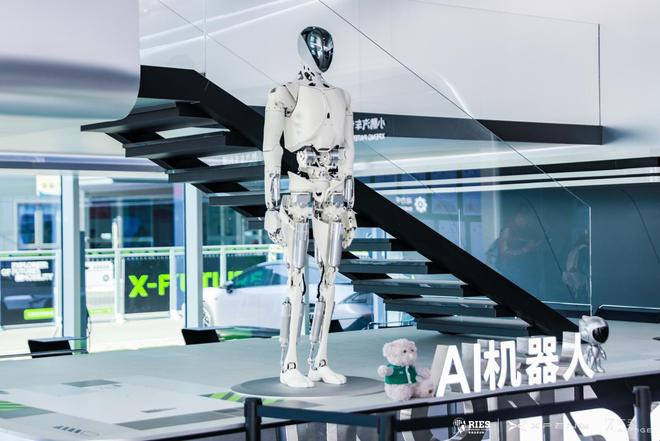
深挖AI企业破局密码,里斯携百名企业家走进小鹏科技园
Nan Fang Du Shi Bao· 2025-12-03 13:17
Core Insights - The event "Global AI Innovation Summit" at Xpeng Technology Park highlighted the importance of AI-driven innovation in future mobility and smart living, emphasizing the need for companies to achieve differentiation through category innovation in the AI era [1][3]. Industry Overview - The AI sector is experiencing a dichotomy, with IDC forecasting the global AI application market to exceed $500 billion by 2025, while China's mobile AI application market user growth is projected at 101% [3]. - As of April 2025, over 4,500 AI-related companies exist in China, indicating intense competition in the sector [3]. Company Strategy - Xpeng has redefined its strategic positioning from a traditional car manufacturer to a "global AI driving technology company," focusing on AI capabilities as core features rather than optional add-ons [8][10]. - The launch of the new P7+ model is positioned as the "world's first AI car," featuring comprehensive AI driving capabilities without additional costs, showcasing a unique business model [8][10]. Market Performance - Xpeng achieved significant milestones, including the production of its one-millionth vehicle at the 2025 Guangzhou Auto Show, marking it as the first pure electric new force company to reach this scale [10]. - From January to November 2025, Xpeng delivered 391,937 vehicles, reflecting a 156% year-on-year increase and surpassing its annual targets [10]. Innovation and Challenges - The discussion among entrepreneurs at the summit focused on converting technological advantages into sustainable business success, with emphasis on category innovation as a means to build competitive barriers [11]. - The principles of AI category innovation include optimizing existing categories, identifying new problems to create new categories, and focusing on category design rather than merely launching new products [11]. Future Outlook - As AI technology integrates into various industries, identifying the next growth category will be crucial for companies' futures, with Xpeng's strategic collaboration with Ries Consulting serving as a potential model for other Chinese enterprises in the AI era [14].
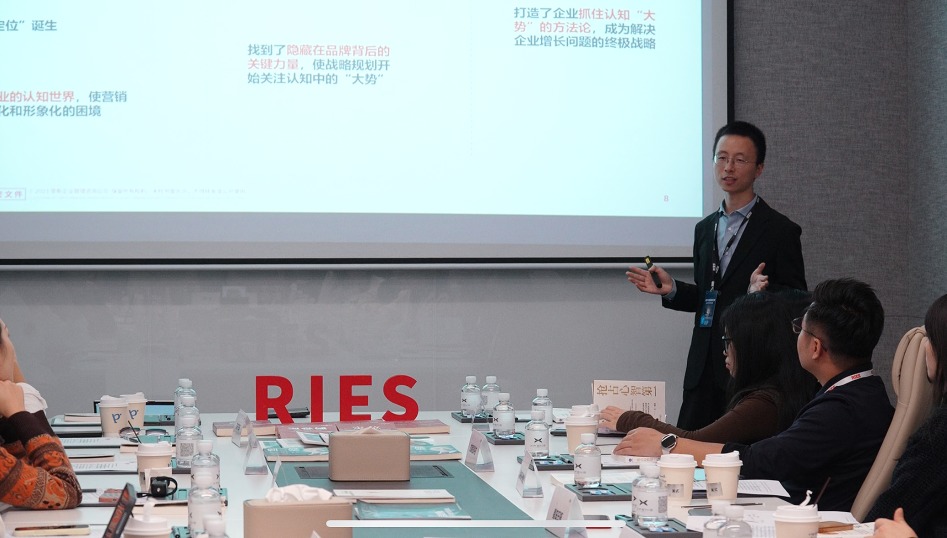
里斯咨询中国区副总裁罗贤亮:以“品类创新”赋能AI科技企业破局
Zhong Guo Jing Ying Bao· 2025-12-02 12:20
Core Insights - The current AI investment boom masks a critical fact: technology alone cannot build sustainable business barriers [1] - The emergence of AI super technologies has fundamentally disrupted traditional brand-building methods, shifting the focus to defining new categories and creating super tech brands [3] Industry Overview - The global AI application market is projected to exceed $500 billion by 2025, with China's AI application market experiencing explosive growth, particularly in mobile user adoption, which has surged by 101% [4] - As of April 2025, the number of AI-related companies in China has surpassed 4,500, indicating intense competition and emerging risks of technology homogenization [4] - IDC forecasts that global IT spending growth will decline from 10% to 5% by 2025 due to factors like tariff policies, highlighting the increasing competition in financing, technology, and product development [4] Company Strategy - In 2024, the company assisted XPeng in a strategic pivot, redefining it as a "global AI smart driving technology company" rather than a traditional car manufacturer [4] - The concept of the "world's first AI car" was defined, exemplified by the new P7+ model, which features "end-to-end AI smart driving" as a standard offering without additional costs [5] - Recent product launches include the second-generation VLA, XPeng Robotaxi, a new generation of Iron humanoid robots, and two flying car systems, reinforcing XPeng's position as a "super AI tech brand" [5][6] Brand Positioning - The branding strategy emphasizes differentiation, moving beyond mere product specifications to anchor on the core label of "AI technology," thus avoiding the pitfalls of direct competition with peers like NIO and Li Auto [8] - The success of Tesla illustrates the importance of brand narrative that transcends product identity, linking technological aspirations and founder innovation to create a robust brand ecosystem [7][8] - XPeng's strong technical foundation, rooted in the founder's engineering background, provides a competitive edge in research and development, supporting its innovative positioning in the market [8]
我们的杯子一年狂卖50亿,背后竟有100个假货商
创业家· 2025-11-26 10:14
Core Viewpoint - The article emphasizes the importance of innovative thinking and understanding consumer needs in product development, highlighting how a design company successfully disrupted the cup market by leveraging new marketing strategies and consumer insights [4][15][19]. Group 1: Market Insights - A design company created a cup that generated sales of 5 billion, but the company only received less than 100 million due to competition from counterfeit products [4][5]. - The largest self-owned brand in the Chinese cup industry has an annual revenue of no more than 300 million, indicating a significant market gap [12]. - The article discusses how the company faced challenges with production capacity, as the initial manufacturer could only produce 2,000 cups per day, while demand surged to 200,000 cups daily in the first week [17]. Group 2: Innovative Thinking - The success of the cup product was attributed to a different mindset and the use of internet marketing strategies, which allowed the company to create a new product category [13][15]. - The article posits that the current consumer market is shifting towards a demand for imaginative and innovative products, suggesting that understanding deep-seated consumer needs can lead to industry disruption [18][19]. Group 3: Product Philosophy - The author introduces the concept of "product three views" (product user view, product value view, product world view) as essential for creating successful products [20][22]. - The article encourages businesses to adopt a correct "product three views" to enhance product development and market positioning [22]. Group 4: Training and Development - The article promotes a training program aimed at unlocking market potential through category innovation, scheduled for December 8-10, with limited availability [23][24]. - The program focuses on practical strategies for product lifecycle management, user value understanding, and category growth, featuring insights from industry experts [28][30].

一个小小的杯子,我卖了50亿
创业家· 2025-11-24 10:12
Core Viewpoint - The article emphasizes the importance of understanding user needs and perspectives in product design, illustrated through a personal experience that led to the creation of a new product category, the "55-degree cup" [23][25][28]. Group 1: Personal Experience and Product Development - The author recounts a traumatic incident where a child was severely burned by hot water, highlighting the emotional impact and the realization of unmet user needs in everyday products like cups [12][14][23]. - This experience prompted the author to question why there were no products designed to prevent such accidents, leading to the development of the "55-degree cup," which can cool hot water to a safe drinking temperature [24][26][28]. Group 2: Product Philosophy and Market Impact - The "55-degree cup" quickly became a bestseller, achieving nearly 5 billion in sales within the first year, demonstrating the effectiveness of addressing a specific user need [28]. - The author introduces the concept of "product three views" (user view, value view, world view) as essential for successful product development, paralleling the importance of these views to personal values [29][30][32]. Group 3: Training and Knowledge Sharing - The article promotes a training program focused on category innovation and product strategy, aimed at helping participants unlock market potential and develop successful products [33][40]. - The program is designed for founders, CEOs, and product leaders across various industries, emphasizing practical strategies and tools for product development [52].

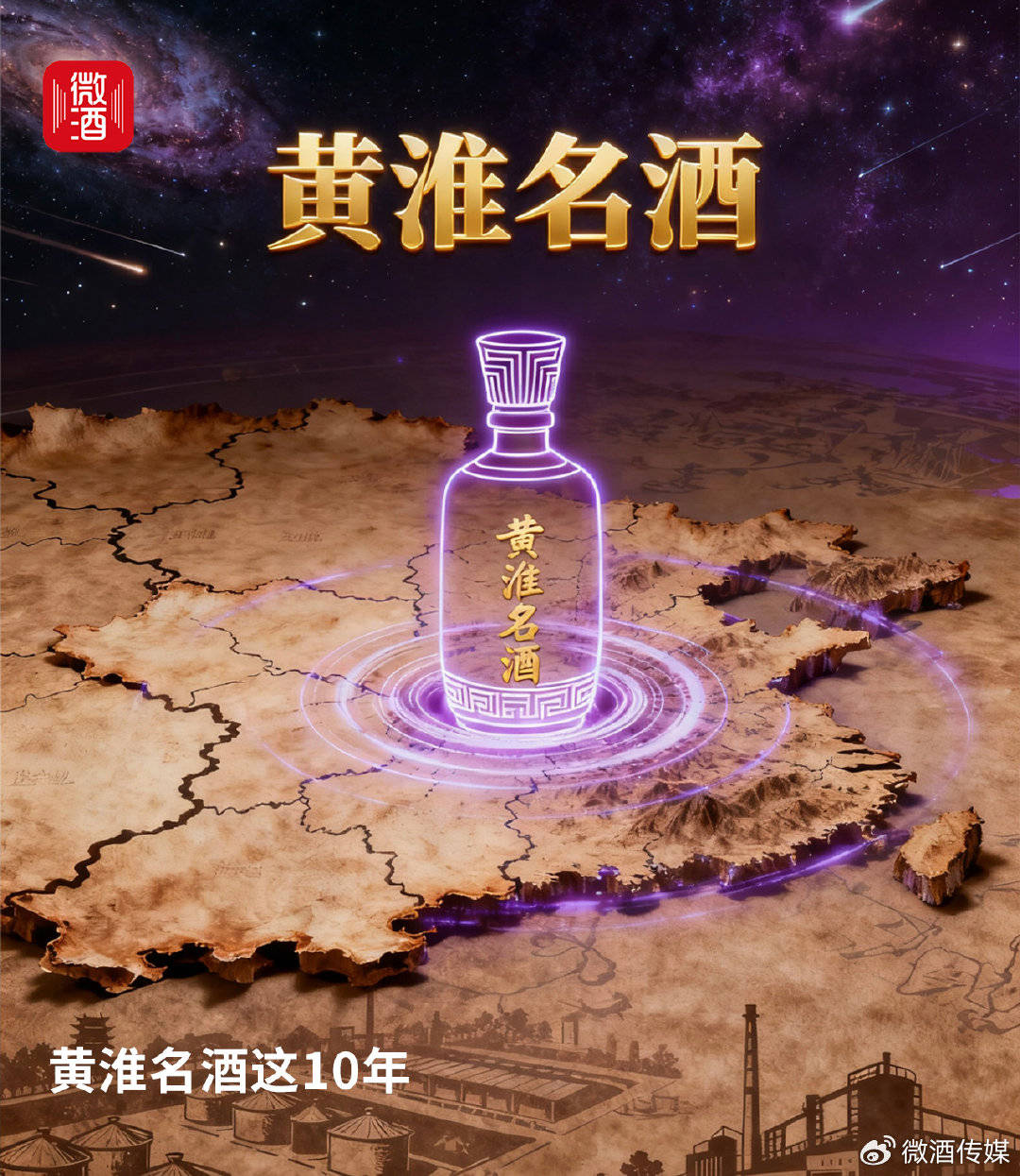
黄淮名酒这10年
Sou Hu Cai Jing· 2025-11-20 15:16
Core Insights - The Huanghuai famous liquor summit held in Zibo, Shandong, highlighted the significant growth and development of liquor enterprises from Anhui, Shandong, Henan, and Jiangsu over the past decade, with a market scale increase from approximately 1150 billion yuan in 2014 to 2369 billion yuan in 2024, more than doubling in size [2][3] Market Growth - The market scale of the Huanghuai liquor region has seen a substantial increase, with the total market size surpassing 2000 billion yuan by 2024, reaching 2369 billion yuan [2] - The number of large-scale enterprises in the Huanghuai liquor region decreased from 424 in 2014 to 283 in 2024, indicating a rise in market concentration and competitiveness [3] Brand Development - In 2014, only Yanghe had a sales scale exceeding 10 billion yuan, while by 2024, half of the top 10 listed liquor companies in China were from the Huanghuai region, with Gujing Gongjiu achieving 235.78 billion yuan in revenue and joining the top brands [3] - The successful upgrade of price bands has allowed Huanghuai liquor brands to break through previous limitations, with mainstream consumer prices rising from around 80 yuan in 2014 to 200 yuan and beyond by 2018 [3][4] Price Band Strategy - Huanghuai liquor companies have successfully established a complete pricing system covering mass-market, mid-range, and high-end products, with price ceilings reaching up to 2000 yuan by 2024 [3][4] - The introduction of high-quality products in the 100-600 yuan price range has allowed these companies to capture both the value-for-money and premium market segments [3][4] Innovation and Standards - The past decade has seen significant innovation in product categories, with various new fragrance types and industry standards being established, positioning Huanghuai liquor companies at the forefront of the industry [4] - Multiple national-level standards have been created for different types of Huanghuai liquor, enhancing the overall quality and marketability of the products [4] Production Capacity and Storage - The cancellation of the white liquor production limit in 2019 allowed Huanghuai liquor companies to expand their production capacity significantly, with many top enterprises doubling their capacity over the past decade [5][6] - Yanghe has achieved the highest production capacity for solid-state liquor and the largest storage capacity for high-quality original liquor globally [5][6]