
国补退坡

Search documents
长虹美菱(000521):受国补退坡影响,公司经营表现边际下滑
Changjiang Securities· 2025-10-25 11:17
Investment Rating - The investment rating for the company is "Buy" and is maintained [8]. Core Views - The company reported a revenue of 25.393 billion yuan for the first three quarters of 2025, representing a year-on-year growth of 11.49%. However, the net profit attributable to shareholders decreased by 8.20% to 488 million yuan, and the net profit excluding non-recurring items fell by 12.47% to 451 million yuan. In Q3 2025, revenue was 7.321 billion yuan, down 6.33% year-on-year, with a net profit of 71.22 million yuan, a decline of 38.58% [2][6][14]. Summary by Sections Financial Performance - For the first three quarters of 2025, the company's gross margin was 10.15%, a decrease of 0.19 percentage points year-on-year. The operating profit for the same period was 365 million yuan, reflecting a growth of 0.99% year-on-year, with an operating profit margin of 1.44%, down 0.15 percentage points [14]. - In Q3 2025, the gross margin was 9.44%, with an operating profit of 26.64 million yuan, showing a year-on-year increase of 4.67% [14]. Market Opportunities - The company is expected to benefit from structural opportunities in the industry, including cautious domestic consumption, the rise of e-commerce, and upgrades in refrigerator structures. The air conditioning business is anticipated to gain market share through e-commerce and competitive pricing, while the refrigerator segment aims to enhance average prices and profit elasticity through structural upgrades [14]. Profit Forecast - The company forecasts net profits attributable to shareholders for 2025, 2026, and 2027 to be 649 million yuan, 716 million yuan, and 801 million yuan, respectively. The corresponding price-to-earnings ratios are projected to be 11.08, 10.04, and 8.97 times [14].

家电板块25年三季报业绩前瞻
2025-10-19 15:58
Summary of Key Points from the Conference Call Industry Overview - The home appliance industry is experiencing a shift in competition dynamics, particularly in the white goods sector, with a notable increase in the proportion of mid-to-high-end consumption driven by national subsidies [1][2][4] - Price competition for flow models has eased, returning to levels seen in April, likely due to the seasonal decline in air conditioning demand [1][2][4] - Consumer demand is currently weak, with a notable impact from the expiration of subsidies in various regions, particularly in the southwest and eastern areas of China [2][3] Company Performance Midea Group - Midea's revenue growth is expected to be in the high single digits, around 10%, but profit growth may lag due to the consolidation of assets [1][6] - The company demonstrates strong operational resilience, effectively managing inventory to adjust to market conditions [6] Haier - Haier's revenue growth is projected at 7%-8%, with double-digit profit growth anticipated due to channel reforms and reduced expense ratios [1][7] - The Casarte brand continues to perform well under national subsidy policies, contributing positively to profitability [7] Hisense - Hisense is expected to see slight increases in both revenue and profit, although its central air conditioning business faces challenges [1][8] - The company has experienced a rebound in installation card growth since July, indicating a stabilization in price competition [2][4] TCL - TCL's revenue is expected to remain flat compared to last year, with profit also stabilizing due to high base effects from the previous year [1][9] Hailong Cold Chain - Hailong Cold Chain's revenue is expected to match the first half of 2025, with strong growth in refrigeration and exports [1][10] Market Dynamics Mini LED Technology - The penetration rate of Mini LED technology has slightly decreased, influenced by subsidy reductions and cost adjustments in electronic modules [1][11] - Despite this, product iterations are expected to support higher selling prices [11] Small Appliances - The small appliance sector is witnessing significant growth, particularly in cleaning devices like robotic vacuums, with companies like Stone Technology reporting an 80% revenue growth and a 50% profit increase [1][14] - The kitchen small appliance market remains stable, with companies like Bear Electric projecting a 13% revenue increase, while New Bao is expected to face negative growth [1][15][16] Export Market - The export market is experiencing volatility, particularly in Europe and Latin America, with the latter entering its peak air conditioning sales season [3][5] - Chinese companies are shifting production to countries like Egypt and Thailand to mitigate tariff pressures [3][5] Future Outlook - The small appliance industry is expected to continue evolving, focusing on cost control and innovation to drive growth [1][17] - New product categories, such as washing robots, are anticipated to become significant growth drivers [17]




中国银河证券:国补退坡零售下滑 空调出口继续调整
Zhi Tong Cai Jing· 2025-09-23 08:16
Core Viewpoint - The air conditioning retail market in China is experiencing a significant slowdown due to the impact of reduced national subsidies and high year-on-year comparison bases starting from September 2023 [1][2]. Group 1: Domestic Sales and Production - From September to November, the domestic air conditioning production is expected to decline compared to the same period last year, with decreases of -6.3%, -23.4%, and -17.6% respectively, indicating a cautious industry outlook [1][2]. - In August, domestic air conditioning shipments reached 7.737 million units, showing a year-on-year increase of 1.2%, driven by sustained high temperatures across the country [2]. - The reduction in national subsidy funding has led to various measures across provinces to control subsidy spending, including daily limits on subsidies and the suspension of certain categories [2]. Group 2: Export Trends - In August, air conditioning exports totaled 5.287 million units, reflecting a year-on-year decrease of 4.2%, although this was an improvement compared to previous production forecasts [3]. - For September to November, the expected production for household air conditioning exports shows declines of -16.6%, -7.8%, and -9.1% respectively, attributed to the transfer of U.S. orders overseas and high year-on-year comparison bases [3]. Group 3: Pricing Dynamics - The retail average price of air conditioners in the offline market has shown a recovery, rising to 4,301 yuan per unit in September after a decline from April to July [4]. - Online retail prices have also improved, with the average price reaching 2,859 yuan per unit in September, following a downward trend earlier in the year [4]. Group 4: Industry Competition and Service Upgrades - Xiaomi has announced an upgrade to a 10-year free warranty for its air conditioners, reflecting a shift in the industry from price competition to a focus on quality and service [5]. - The extension of service periods is expected to enhance consumer confidence in product quality and increase competitive pressure on manufacturers [5]. Group 5: Investment Recommendations - The current market is active, with traditional home appliance leaders lacking growth potential, while technology-related companies are performing better [6][7]. - Recommendations include companies with low valuations and high dividend yields, such as Midea Group and Haier Smart Home, as well as innovative firms like Ousheng Electric and Rongtai Health [6][7].

中国银河证券:国补退坡下社零增速放缓 未来还将面临高基数压力
智通财经网· 2025-09-17 02:37
Group 1: Retail Sales Performance - In August, China's retail sales grew by 3.4% year-on-year, with a month-on-month decline of 0.3 percentage points, continuing a slowdown since June [1] - The decline in national subsidy consumption categories is impacting retail sales growth, with various provinces controlling subsidy spending through measures like limiting daily subsidies and reducing eligible categories [1][2] - The overall expectation is for retail sales growth to continue to slow in the coming months, influenced by high base effects from the previous year [1] Group 2: Consumer Categories Analysis - The growth rates for various consumer categories in August were as follows: communication equipment +7.3%, furniture +18.6%, cultural and office supplies +14.2%, home appliances +14.3%, and daily necessities +7.7%, with future high base pressures anticipated [2] - The automotive sector showed weak demand, with traditional fuel vehicle prices declining, resulting in a year-on-year retail sales growth of only 0.8% for automobiles in August [2] - The food and beverage sector saw a year-on-year decline of 2.3% in tobacco and alcohol retail sales, while restaurant sales grew by 2.1% year-on-year, indicating a recovery in dining consumption [2] Group 3: Export Performance - In August, China's export scale reached $321.81 billion, with a year-on-year growth of 4.4% but a month-on-month decline of 2.8 percentage points [4] - The export growth to the United States continued to decline significantly, with a year-on-year decrease of 33.1% in August, which negatively impacted overall export growth by 5.1 percentage points [4]
新能源乘用车一线情况
数说新能源· 2025-09-12 03:26
Overall Situation - The market is expected to remain strong for the next four months, with a potential surge in demand for vehicle registrations by year-end due to the upcoming tax changes on new energy vehicles (NEVs) in the following year [1] - If national subsidies decrease, the industry may see an overall decline of 5% to 7%, while continued subsidies could support growth [1] - The slowdown in NEV replacement rates this year is attributed to insufficient discounts from NEV manufacturers and accelerated price reductions in fuel vehicles, leading to a lack of price competitiveness [1] - The transition to electrification is irreversible, with plug-in hybrid vehicles likely to continue replacing fuel vehicles in the coming years [1] - The growth potential for fuel vehicles is now limited, leading many dealerships to consider closing or switching to NEV brands due to financial losses [1] - Currently, about one-third of BBA dealerships are operating at a loss, while two-thirds are profitable, but profits have significantly decreased [1] Brand-Specific Situations - Galaxy A Network is in an upward phase, with half of its sales coming from the Galaxy A7, which has stable monthly sales exceeding 15,000 units, potentially reaching 20,000 [2] - BYD is facing performance pressure and is unlikely to reverse this trend within the year, with a current direct sales gross margin of around 3% [2] - Customer feedback indicates that BYD's low-end intelligent driving features are not well-received, suggesting a need for improvements in battery technology instead [3] - The new P7 from Xiaopeng has received over 10,000 orders in the first hour, but actual delivery numbers are expected to drop significantly thereafter due to its niche positioning [5][6]



绿色动力环保涨超7% 上半年归母净利同比增加24.49% 供汽业务成为业绩增长核心引擎
Zhi Tong Cai Jing· 2025-09-03 03:27
Core Viewpoint - Green Power (601330) has shown a significant increase in stock price, rising by 7.56% to HKD 4.84, with a trading volume of HKD 15.83 million, following the release of its mid-year performance for 2025 [1] Group 1: Financial Performance - For the first half of 2025, the company reported a revenue of CNY 1.684 billion, reflecting a year-on-year increase of 1.41% [1] - The net profit attributable to shareholders reached CNY 377 million, marking a substantial growth of 24.49% [1] - The weighted Return on Equity (ROE) was 4.56%, an increase of 0.77 percentage points [1] Group 2: Revenue Drivers - The company achieved revenue growth despite a decline in construction income, with construction revenue for the first half of 2024 at CNY 23 million and no construction revenue in the first half of 2025 [1] - Key contributors to revenue growth included an increase in sludge expansion, higher garbage volume, increased steam supply, and enhanced sales from leachate biogas purification [1] - Operating revenue for the same period increased by CNY 46 million, a year-on-year rise of 2.83% [1] Group 3: Dividend and Cash Flow - The current dividend yield for the company is 6.87% for Hong Kong shares and 4.29% for A-shares [1] - Free cash flow continued to strengthen in the first half of 2025, indicating potential for increased dividends [1] Group 4: Business Expansion - The company has been actively expanding its non-electricity businesses, particularly in heating, to mitigate the impact of national subsidy reductions [2] - In the first half of 2025, the steam supply business saw rapid growth, with a total supply of 513,800 tons, representing a significant year-on-year increase of 114.98% [2] - Several projects in the heating sector achieved breakthroughs, contributing to a notable increase in profits due to the high margin and quality cash flow associated with this business [2]

中国垃圾是如何不够烧的
投资界· 2025-07-16 03:27
Core Viewpoint - The Chinese waste incineration industry is experiencing a shift from a "garbage siege" to "oversupply," with many incineration plants facing insufficient waste supply due to overcapacity and changes in waste generation patterns [3][4][5]. Industry Changes - In the first half of 2025, a survey revealed that two-thirds of waste incineration plants are struggling with insufficient waste supply [3]. - The proportion of waste incineration in urban waste management has dramatically increased from 9.8% in 2005 to 82.5% in 2023, while landfill disposal has decreased from 85.2% to 7.5% [3]. - The average capacity utilization rate of domestic waste incineration projects is around 60%, indicating a significant portion of capacity is underutilized [4][7]. Reasons for Supply-Demand Imbalance - The overcapacity is attributed to two main factors: overly optimistic projections of future waste generation and the impact of waste classification, which has reduced the amount of combustible waste available for incineration [3][9]. - The construction of incineration plants has outpaced actual waste generation, leading to a mismatch between supply and demand [8][9]. Future Trends - Waste incineration plants are being urged to diversify their operations, such as providing steam and hot water or collaborating on sludge treatment, to adapt to the changing market [4][15]. - The industry is also looking to expand into international markets, with over 80 overseas waste incineration projects involving Chinese companies [4][8]. Financial Challenges - The revenue model for waste incineration plants relies heavily on government subsidies and waste disposal fees, with electricity sales accounting for about two-thirds of their income [14][15]. - Recent policy changes have led to a reduction in government subsidies, increasing the financial pressure on these plants and prompting them to seek higher waste disposal fees from local governments [15][17]. Market Dynamics - The shift in waste generation patterns, including the impact of the COVID-19 pandemic, has led to a notable decrease in waste supply, with some plants reporting utilization rates as low as 24% [8][9]. - The industry is facing increased operational costs due to the need to excavate previously landfilled waste to meet incineration capacity [11][12].

中国垃圾是如何不够烧的
经济观察报· 2025-07-14 10:34
Core Viewpoint - The article discusses the phenomenon of "insufficient garbage supply" in China's waste incineration power generation industry, highlighting the transition from "garbage siege" to "garbage scarcity" and the challenges faced by incineration plants due to overcapacity and reduced waste generation [2][3][4]. Group 1: Industry Overview - In the past two decades, China has transformed its waste management approach, with the proportion of urban household waste treated by incineration rising from 9.8% in 2005 to 82.5% in 2023, while landfill treatment dropped from 85.2% to 7.5% [2]. - The number of waste incineration plants has increased from 67 to 1010, with an average capacity utilization rate of around 60% in recent years [3][4]. - The daily incineration capacity of waste has surged from 23.8 million tons in 2016 to 115.5 million tons in 2024, yet the industry average load factor remains below 60%, with 40% of capacity idle [9]. Group 2: Causes of Insufficient Garbage Supply - The insufficient garbage supply is attributed to two main factors: overestimation of future waste generation during planning and the impact of waste classification, which has diverted organic waste away from incineration [3][10]. - The construction of incineration plants has outpaced actual waste generation, leading to a supply-demand imbalance, with many plants operating at low capacity [10][11]. - The promotion of waste classification has resulted in a significant portion of waste being processed differently, reducing the amount available for incineration [11]. Group 3: Financial and Operational Challenges - The financial viability of incineration plants is increasingly challenged by the reduction of government subsidies and the need to diversify operations, such as providing steam and heat to nearby industries [4][20]. - The revenue structure of incineration plants relies heavily on government subsidies, which have been declining, leading to increased pressure on local governments to cover rising waste disposal fees [19][21]. - The average waste disposal fee has risen significantly, with some regions charging up to 150 yuan per ton, increasing the financial burden on local governments [23][24]. Group 4: Future Trends and Adaptations - The industry is expected to adapt by exploring new business models and expanding services beyond waste incineration, such as heat supply and sludge treatment [4][25]. - The article suggests that the industry must focus on improving economic efficiency and diversifying revenue sources to cope with the challenges of insufficient waste supply and subsidy reductions [25].
中国垃圾是如何不够烧的?
Jing Ji Guan Cha Wang· 2025-07-14 09:34
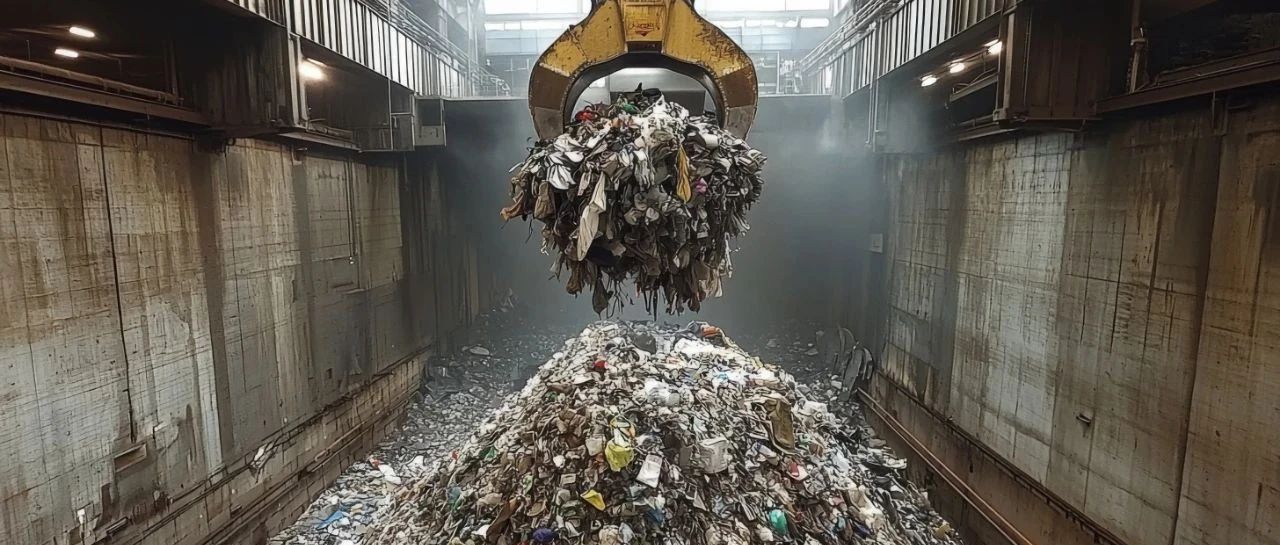
Core Insights - The Chinese waste incineration industry is facing a paradox of overcapacity and insufficient waste supply, with two-thirds of surveyed incineration plants reporting a lack of garbage to process [2][3][7] - The shift from "garbage encirclement" to "garbage scarcity" has been marked by a significant increase in incineration capacity, yet the average utilization rate remains around 60% [2][4][7] - The industry is urged to diversify operations, such as providing steam and heat, due to declining waste supply and reduced government subsidies [3][11][15] Industry Overview - The number of waste incineration plants in China has surged from over 100 to more than 1,000 in the past two decades, with incineration capacity rising from 3.3 million tons per day to 86.18 million tons per day [2][3] - The average daily incineration capacity increased from 23.8 million tons in 2016 to 115.5 million tons in 2024, yet the industry operates at an average load factor of less than 60% [5][7] - The government has historically supported the industry through subsidies, but recent policy changes have led to a reduction in these financial supports, increasing operational challenges for incineration plants [11][12][13] Challenges Faced - The decline in waste supply is attributed to overbuilding of incineration facilities, overly optimistic projections of waste generation, and effective waste sorting practices that reduce the amount of burnable waste [7][8] - The average waste disposal fee has increased significantly, from around 60-70 yuan per ton to over 100 yuan, placing additional financial pressure on local governments [12][13][14] - Some regions are resorting to excavating previously landfilled waste to meet incineration needs, although this approach is costly and complex [8][9] Future Trends - The industry is expected to continue evolving, with a focus on expanding market reach and exploring new business avenues such as heat and gas supply [15] - Chinese waste incineration companies are increasingly looking to international markets, with over 80 overseas projects reported [3][9] - The anticipated increase in waste processing capacity to 800,000 tons per day by the end of 2025 may further exacerbate the supply-demand imbalance if waste generation does not keep pace [7][11]
都市车界|中国单月销量超百万 全球份额超六成!新能源车市场格局加速洗牌
Qi Lu Wan Bao· 2025-06-18 08:09
Core Insights - Global sales of new energy vehicles (pure electric + plug-in hybrid) reached 1.6 million units in May 2025, marking a 24% year-on-year increase and setting a new monthly record [1] - China's market sales surpassed 1 million units for the first time, accounting for 63.75% of global sales, highlighting its role as a key growth engine [1] - Cumulative sales in China from January to May 2025 reached 4.56 million units, a 35% year-on-year increase, with expectations to exceed 10 million units for the year [1] Factors Driving Growth in China - Continued support from local governments through charging infrastructure subsidies and relaxed restrictions despite the gradual phase-out of national subsidies [2] - Significant improvements in domestic battery technology, with energy density reaching 300Wh/kg and charging times reduced to 15 minutes [2] - Increased market penetration in lower-tier cities, with rural market penetration rising from 8% in 2024 to 15% in 2025 [2] - BYD leads the market with a 32% share, while Tesla's share has decreased to 18% [2] Brand Landscape and Competition - BYD's global sales reached 2.1 million units in the first half of 2025, surpassing Tesla to become the global leader [3] - New entrants like Zeekr and Xpeng are gaining market share through high-end strategies, with their shares rising to 8%-12% [3] - Traditional automakers like Geely and Changan have seen their new energy vehicle sales increase by over 50% year-on-year [2][3] - The market is experiencing consolidation, with smaller brands facing significant declines in sales, leading to a predicted 80% market share concentration among the top 10 brands by 2025 [3] Impact of Subsidy Phase-Out - The gradual reduction of subsidies is expected to increase the cost per vehicle by 30,000 to 50,000 yuan, putting pressure on low-cost models [4] - Companies are accelerating cost-reduction technologies, such as CATL's CTP 3.0 battery system, which lowers costs by 15% [4] - Consumer focus on cost-performance has risen to 70%, with the share of high-end models dropping from 25% to 18% [4] - Non-subsidy-driven personal consumption accounted for 85% of the market from January to May 2025, indicating stronger internal growth dynamics [4] Future Market Outlook - BNEF predicts global new energy vehicle sales will reach 9 million units in the second half of 2025, with an annual growth rate of 22%-25% [6] - Technological competition is expected to intensify, focusing on 800V high-voltage platforms, solid-state batteries, and L4 autonomous driving technology [6] - Chinese brands are accelerating their expansion into Europe and Southeast Asia, with exports expected to exceed 2 million units in 2025, accounting for 20% of total sales [6] - The number of charging stations increased by 1.2 million in the first half of 2025, improving the vehicle-to-charger ratio from 3.5:1 to 2.8:1 [6] - The 2025 new energy vehicle market will experience both breakthrough growth and structural adjustments, driven by China's leadership, rapid technological innovation, and brand reshaping [6]
