地方债

Search documents
【申万固收|地方债周报】10Y和30Y减国债利差走阔,下周发行再放缓——地方债周度跟踪20250926
申万宏源证券上海北京西路营业部· 2025-09-30 02:12
Core Viewpoint - The article discusses the widening of the yield spread between 10-year and 30-year government bonds, indicating a potential shift in market dynamics and investor sentiment towards local government bonds [2] Summary by Relevant Sections - **Yield Spread Analysis** - The yield spread between 10-year and 30-year government bonds has widened, suggesting increased risk perception or changing interest rate expectations among investors [2] - **Local Government Bonds Issuance** - The issuance of local government bonds is expected to slow down in the coming week, which may impact liquidity and investment strategies in the bond market [2] - **Market Implications** - The changes in yield spreads and issuance rates could signal a shift in investment focus, with potential implications for asset allocation and risk management strategies among institutional investors [2]


刘尚希:地方债的作用机理及风险结构优化
Sou Hu Cai Jing· 2025-09-28 09:47
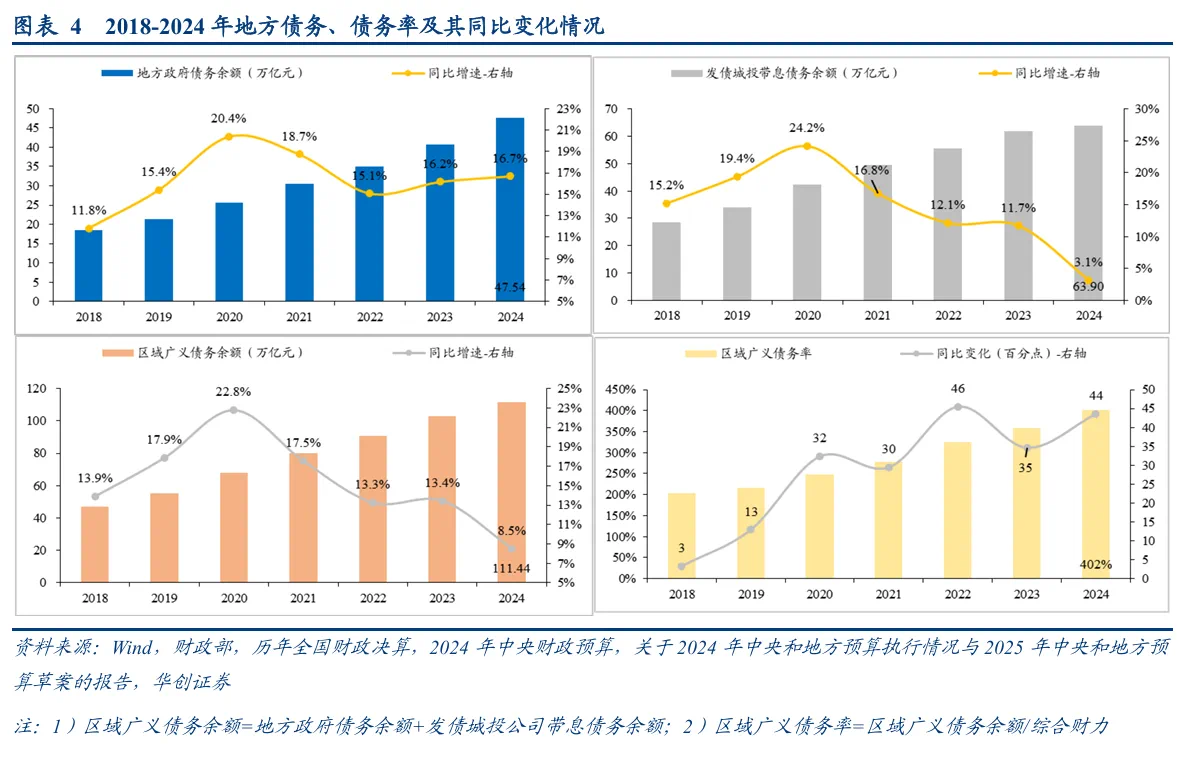
Group 1: Role of Local Debt - Local debt serves as a key policy tool in China's macroeconomic regulation, playing a significant role in stabilizing economic and social operations, expanding fiscal spending, and optimizing public resource allocation [2][5] - During the 2008 global financial crisis and the COVID-19 pandemic from 2020 to 2022, local debt was crucial in countering economic downturns by facilitating infrastructure investment [2][5] - The use of local debt has become a routine policy tool for smoothing economic fluctuations and stabilizing overall demand in China [5] Group 2: Fiscal Policy Transmission - Local debt has become the main channel for transmitting policy signals to the real economy, with bond funds flowing directly to specific projects, primarily in infrastructure sectors like transportation and water conservancy [3] - The concentration of debt funds in these areas has improved the overall economic development environment and created investment increments, effectively transmitting fiscal expansion intentions through local debt [3][4] Group 3: Structural Support and Resource Optimization - The scope of special debt has expanded from traditional infrastructure to new areas such as consumption promotion, thereby broadening the coverage of funds [4] - Local debt promotes the simultaneous optimization of resource allocation between public and private sectors, enhancing market resource allocation efficiency through government debt financing [4] Group 4: Regional Coordination and Spillover Effects - Local debt investment in infrastructure generates positive externalities, with studies indicating that a 1% increase in local government debt can boost neighboring regions' economic growth by 0.15-0.3 percentage points [6] - The spillover effects of local debt are cumulative over time, with long-term benefits significantly outweighing short-term impacts [6] Group 5: Debt Risk and Management - Local government debt risks exhibit spatial contagion characteristics, where risk events in one administrative region can trigger synchronized debt risk increases in neighboring areas [7] - The relationship between debt and assets is crucial for repayment safety, with current mechanisms for converting debt into effective assets lacking clarity [10][12] Group 6: Future Directions for Local Debt - There is a need to balance the expansion of fiscal space through local debt with the accumulation of risks, as rising government debt burdens can significantly reduce fiscal surplus rates [10][11] - A three-tiered government debt structure is proposed, with central government debt as the main component, provincial governments sharing some burden, and local governments retaining only essential municipal revenue bonds [16]

专家:建议建立经济+社会效益评价体系 推动地方债提质增效
Zhong Guo Xin Wen Wang· 2025-09-24 01:25
Core Viewpoint - The establishment of an economic and social benefit evaluation system is recommended to enhance the quality and efficiency of local government debt, emphasizing the importance of sustainable debt management in local debt development [1][5]. Group 1: Importance of Local Debt - Local debt plays an irreplaceable role in stabilizing the macro economy, facilitating government fiscal expenditure, and optimizing resource allocation [2]. - It serves as a primary channel for fiscal policy transmission, directing funds to the real economy, particularly in transportation and water conservancy sectors, thereby improving the economic development environment and stimulating investment [2]. - Local debt contributes to price discovery and resource allocation in the bond market, enhancing the efficiency of capital flow to higher-performing regions [2]. Group 2: Addressing Hidden Debt Risks - There is a growing concern about balancing the functions and risks of local debt, particularly regarding hidden debt risks that are not immediately visible [3]. Group 3: Policy Measures and Debt Management - The National People's Congress approved an increase of 6 trillion yuan in debt limits to replace local government hidden debts, which is seen as a timely policy intervention [4]. - As of August 2023, 4 trillion yuan of the newly added special debt limit has been issued, resulting in an average interest cost reduction of over 2.5 percentage points, saving more than 450 billion yuan in interest expenses [4]. - Over 60% of hidden debts from financing platforms are expected to be cleared by June 2025, highlighting the importance of financing platform reform in alleviating local debt pressure [4]. Group 4: Future Directions for Local Debt - The concept of debt sustainability should be central to local debt development, with a focus on aligning local debt with national strategies to ensure effective utilization and repayment [5]. - There is a need to maintain a dynamic balance between debt scale, economic growth, and fiscal capacity, avoiding disorderly expansion of local borrowing [5]. - Recommendations include enhancing regulatory mechanisms and establishing a dual-dimensional performance evaluation system that incorporates both economic and social indicators to drive improvements in local debt quality and efficiency [6].
政府债周报:2万亿化债再融资债即将发完-20250919
Guoxin Securities· 2025-09-19 11:03
Report Industry Investment Rating No relevant content provided. Core View No specific core view was clearly presented in the given text. Summary by Related Content Government Bond Net Financing - Government bond net financing was 60.84 billion yuan in Week 37 (9/8 - 9/14) and 31.79 billion yuan in Week 38 (9/15 - 9/21). As of Week 37, the cumulative amount reached 1.11 trillion yuan, exceeding the same period last year by 490 billion yuan [1][7]. - The sum of national debt net financing and new local bond issuance was 56.22 billion yuan in Week 37 and 40.56 billion yuan in Week 38. As of Week 37, the cumulative general deficit was 870 billion yuan, with a progress of 78.5%, surpassing the same period last year [1][7]. National Debt - National debt net financing was 41.56 billion yuan in Week 37 and 28.71 billion yuan in Week 38. The total national debt net financing for the year is 666 billion yuan. As of Week 37, the cumulative amount was 530 billion yuan, with a progress of 78.9%, exceeding the average of the past five years [10]. Local Debt - Local debt net financing was 19.28 billion yuan in Week 37 and 3.09 billion yuan in Week 38. As of Week 37, the cumulative amount was 590 billion yuan, exceeding the same period last year by 280 billion yuan [12]. - New general debt issuance was 1.47 billion yuan in Week 37 and 2.07 billion yuan in Week 38. The local deficit for 2025 is 80 billion yuan. As of Week 37, the cumulative new general debt was 63.55 billion yuan, with a progress of 79.4%, exceeding the same period last year [12]. - New special - purpose debt issuance was 13.19 billion yuan in Week 37 and 9.78 billion yuan in Week 38. The planned new special - purpose debt for 2025 is 440 billion yuan. As of Week 37, the cumulative amount was 340 billion yuan, with a progress of 77.6%, exceeding the same period last year. Special new special - purpose debt of 118.19 billion yuan has been issued, including 21.4 billion yuan since September. Land reserve special - purpose debt of 33.02 billion yuan has been issued [2][15]. Special Refinancing Bonds - Special refinancing bond issuance was 2.62 billion yuan in Week 37 and 2.14 billion yuan in Week 38. As of Week 37, the cumulative amount was 196 billion yuan, with a issuance progress of 98% [2][30]. Urban Investment Bonds - Urban investment bond net financing was 1.55 billion yuan in Week 37 and is expected to be - 0.7 billion yuan in Week 38. As of this week, the balance of urban investment bonds is 1.02 trillion yuan [3][33].
每日债券市场要闻速递(2025-09-19)
Xin Lang Cai Jing· 2025-09-19 08:24
Group 1 - China reduced its holdings of US Treasury bonds by $25.7 billion in July, marking the lowest level since 2009 [1] - Bridgewater's founder warns that the US debt crisis poses a threat to the monetary system [1] - Analysts note that the Bank of England's reduction in long-term government bond sales indirectly acknowledges that previous actions harmed public finances [1] Group 2 - BlackRock states that foreign capital inflow will drive a rebound in Indian bonds [1] - The Ministry of Science and Technology reports that 288 entities have issued over 600 billion yuan in technology innovation bonds [1] - Xiamen plans to issue 9.224 billion yuan in local bonds, including 1.461 billion yuan in "special" new special bonds [1] Group 3 - China Pacific Insurance completed the issuance of 15.556 billion Hong Kong dollars in zero-coupon convertible bonds [1] - China Railway Construction Real Estate successfully issued 1 billion yuan in corporate bonds with a coupon rate of 2.52% [1] - Guangzhou Port Group's second phase of corporate bond issuance for 2025 has a determined interest rate of 1.96% [1] - Greentown plans to pay interest on 1 billion yuan medium-term notes, with the current interest rate for this period set at 3.95% [1] - Huaxia Happiness's "20 Happiness 01" corporate bond is due on September 21, and a repayment plan is being formulated [1]
中资离岸债风控周报(9月1日至5日):一级市场发行平稳,二级市场全线上行
Xin Hua Cai Jing· 2025-09-06 00:50
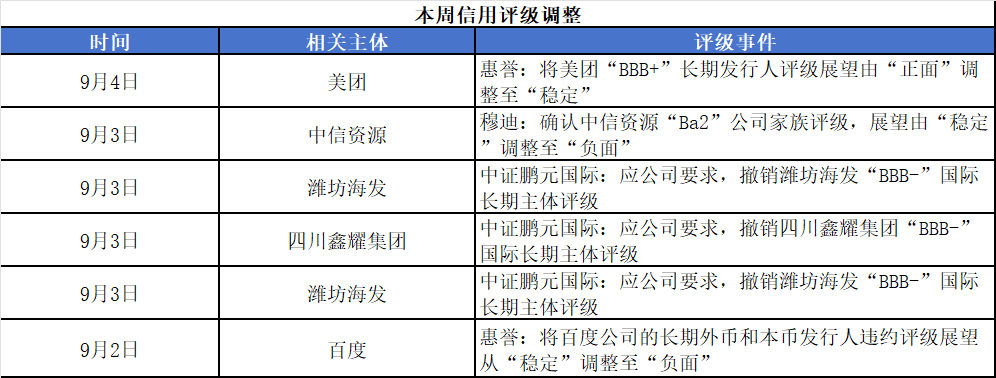
Primary Market - A total of 22 offshore bonds were issued by Chinese entities from September 1 to 5, 2025, including 3 offshore RMB bonds, 11 USD bonds, and 8 HKD bonds, with issuance sizes of 30 billion RMB, 4.15 billion USD, and 5.475 billion HKD respectively [1] - The largest single issuance in the offshore RMB bond market was 2 billion RMB by China Construction Bank's London branch, with the highest coupon rate of 2.95% issued by East Asia Bank [1] - In the USD bond market, the largest single issuance was 2 billion USD by the Asian Infrastructure Investment Bank, with the highest coupon rate of 6.9% issued by Zhengding County State-owned Assets Holding and Operating Group [1] Secondary Market Overview - The yield on Chinese USD bonds rose across the board, with the Markit iBoxx Chinese USD Bond Composite Index increasing by 0.18% to 248.3, and the investment-grade USD bond index rising by 0.19% to 240.64 [2] - The high-yield USD bond index increased by 0.07% to 244.64, while the real estate USD bond index rose by 0.13% to 186.03 [2] - The local government financing vehicle (LGFV) USD bond index increased by 0.08% to 151.34, and the financial USD bond index rose by 0.1% to 288.27 [2] Benchmark Spread - The spread between the 10-year benchmark government bonds of China and the US narrowed to 241.16 basis points, a decrease of 6.07 basis points from the previous week [3] Rating Changes - Fitch adjusted Meituan's long-term issuer rating outlook from "Positive" to "Stable" on September 4 [4] - Moody's confirmed CITIC Resources' "Ba2" corporate family rating, changing the outlook from "Stable" to "Negative" on September 3 [4] - Several companies, including Weifang Haifa and Sichuan Xinyao Group, had their international long-term ratings withdrawn at their request [4] - Fitch changed Baidu's long-term foreign and local currency issuer default rating outlook from "Stable" to "Negative" on September 2 [4] Domestic News - Local government bond issuance in August exceeded expectations, with actual issuance of 977.6 billion RMB, higher than the planned 940.8 billion RMB, and a planned issuance of 726.5 billion RMB in September [5] - The existing stock of local government debt reached 53.05 trillion RMB, with general debt at 17.1 trillion RMB and special debt at 35.95 trillion RMB [5] Offshore RMB Bonds - Kazakhstan Development Bank successfully issued its first offshore RMB bond of 2 billion RMB with a 3.35% coupon rate on September 2, marking several market firsts [6] - Multiple offshore RMB local government bonds were announced, including plans from Hainan and Shenzhen to issue up to 5 billion RMB each [7] - Guangdong Province successfully issued 2.5 billion RMB in offshore RMB local government bonds in Macau, continuing a five-year trend [7] Overseas News - Federal Reserve's Williams indicated that policy rates are expected to gradually decrease over time, aligning with the dual mandate goals [8][9] Offshore Debt Alerts - Kaisa Group announced that its offshore debt restructuring plan is expected to take effect by the end of September, aiming to optimize its debt structure and reduce debt by approximately 8.6 billion USD [10] - AVIC Capital announced the early redemption of 32.45 million USD principal of its bond on September 4 [11] - Alibaba initiated an exchange offer for its outstanding senior notes, with a total principal amount not exceeding 1 billion USD for 2030 notes and 1.15 billion USD for 2035 notes [12] - DBS China signed a green loan agreement of 490 million RMB with Henderson Land for financing retail and office projects in Shanghai [13]
7.5亿元柜台山西债全部售罄个人购买占比84%
Sou Hu Cai Jing· 2025-08-27 16:22
Core Insights - The issuance of 750 million yuan in counter bonds in Shanxi Province was fully subscribed on the second day of the distribution event, indicating strong investor interest [1] - Individual investors accounted for 631 million yuan, representing 84% of the total subscriptions, while small and medium-sized institutional investors contributed 119 million yuan, or 16% [1] - Since the first issuance of counter bonds in 2021, Shanxi Province has cumulatively issued 2.51 billion yuan in government bonds, showcasing a commitment to public finance and inclusive financial services [1] Future Plans - The province aims to enhance the role of local bonds in connecting fiscal and financial systems, contributing to high-quality economic development in Shanxi [1] - Ongoing efforts will include improving post-sale tracking of bonds and continuing to promote the benefits of public finance to a broader customer base [1]
前7个月财政收入由负转正,卖地收入降幅收窄
Sou Hu Cai Jing· 2025-08-19 08:49
Group 1 - The core viewpoint of the article highlights the mixed performance of China's public budget revenue and expenditure in the first seven months of the year, with a slight increase in local revenue but a decline in central revenue [1][2] - National general public budget revenue reached 135839 billion yuan, a year-on-year increase of 0.1%, while the central budget revenue was 58538 billion yuan, down 2% [1] - Tax revenue for the same period was 110933 billion yuan, a decrease of 0.3%, while non-tax revenue was 24906 billion yuan, an increase of 2% [2] Group 2 - Total public budget expenditure was 160737 billion yuan, reflecting a year-on-year growth of 3.4%, with central expenditure at 23327 billion yuan, up 8.8% [2] - Specific areas of expenditure such as social security and employment, education, and health saw significant increases of 9.8%, 5.7%, and 5.3% respectively [3] - Government fund budget revenue was 23124 billion yuan, down 0.7%, with local government fund revenue declining by 1.8% [5] Group 3 - Analysts suggest that fiscal policy is expected to strengthen in the second half of the year, emphasizing the need for timely implementation of existing policies and the introduction of new measures [5] - Recommendations include accelerating local debt issuance, considering the issuance of special government bonds, and enhancing investment in human capital to boost consumption [5][6] - The focus areas for fiscal support include increasing transfer income for residents, promoting consumption through trade-in programs, and accelerating public spending in technology and infrastructure [6]
一季度地方债发行超1.5万亿元 新增专项债占比超四成
Zheng Quan Ri Bao· 2025-08-08 07:31
Group 1 - In the first quarter of this year, local government bond issuance exceeded 1.5 trillion yuan, with new special bond issuance surpassing 600 billion yuan, accounting for over 40% of the total [1][2] - The issuance pace of local bonds has significantly accelerated since February, with monthly issuance figures increasing from approximately 384.45 billion yuan in January to 629.45 billion yuan in March [1][2] - The total number of local bonds issued in the first quarter was 303, with a total scale of about 1.573 trillion yuan [1] Group 2 - The issuance of new special bonds has also seen a notable increase since February, with January, February, and March figures at 56.78 billion yuan, 346.59 billion yuan, and 230.76 billion yuan respectively [2] - Compared to the same period last year, the issuance of new special bonds is lower, primarily due to the impact of a 1 trillion yuan national bond issued at the end of last year, which reduced the urgency for special bond issuance this year [2] - The funds raised from special bonds are primarily directed towards municipal and industrial park infrastructure, transportation infrastructure, public services, and other key areas, indicating a focus on maintaining high levels of infrastructure investment [2][3] Group 3 - The new local government special debt limit for this year is set at 3.9 trillion yuan, an increase of 100 billion yuan from the previous year, aimed at supporting local governments in addressing key areas [3] - The National Development and Reform Commission emphasized the importance of improving the efficiency of government investment and its role in driving overall social investment [3] - Fixed asset investment (excluding rural households) from January to February reached 5.0847 trillion yuan, with a year-on-year growth of 4.2%, indicating a positive trend in infrastructure investment [3] Group 4 - The infrastructure sector is expected to remain a primary focus for special bond funding, particularly for major national strategies and projects, to effectively utilize special bonds for counter-cyclical investment stimulation [4] - The issuance pace of local bonds and new special bonds is anticipated to remain steady, supported by the previously issued national bonds [5] - If the long-term special national bonds are issued in large quantities in the second quarter, it may lead to a slowdown in the issuance of ordinary national bonds and new special bonds to avoid pressure on the funding market [5]
“十四五”地方债规模翻倍稳经济,“十五五”应关注哪些重点
Di Yi Cai Jing· 2025-07-22 10:19
Core Viewpoint - The establishment of a high-quality government debt management mechanism and a comprehensive local debt monitoring and regulatory system is crucial for balancing development and risk prevention during the "14th Five-Year Plan" period [1][2]. Group 1: Local Government Debt Growth - Local government debt has rapidly increased from approximately 25.7 trillion yuan at the end of 2020 to an estimated 51.3 trillion yuan by May 2025, representing a doubling of the debt [1]. - The total local debt is currently within the limit of 57.9 trillion yuan, indicating that the overall risk is manageable [1]. - The significant increase in local debt during the "14th Five-Year Plan" is attributed to the need for economic stability in response to the pandemic and other macroeconomic changes [4][8]. Group 2: Mechanisms for Debt Management - The "14th Five-Year Plan" has seen a shift towards a more transparent management of all debts, moving from dual-track management of hidden and legal debts to a unified approach [1][4]. - The issuance of special bonds has surged, with the annual issuance during the "14th Five-Year Plan" period averaging around 4 trillion yuan, aimed at supporting infrastructure and housing projects [9][10]. - The central government has implemented a comprehensive debt reduction policy, with an estimated 12 trillion yuan allocated to mitigate existing hidden debts [9][15]. Group 3: Regulatory Framework and Challenges - The regulatory framework for local government financing has improved, with measures such as dynamic management of high-risk areas and enhanced transparency in debt monitoring [11][15]. - Despite progress, challenges remain, including the potential for new hidden debts and inflated revenue projections for special bond projects [16][17]. - The need for a balance between debt sustainability and fiscal space is emphasized, particularly as interest payments on debts increase [16][21]. Group 4: Future Considerations for the "15th Five-Year Plan" - The focus for the "15th Five-Year Plan" will be on enhancing the quality of debt management and ensuring that debt financing aligns with high-quality development goals [2][21]. - There is a call for a more refined evaluation system for the entire lifecycle of projects funded by debt to ensure accountability and effectiveness [16]. - The transformation of local financing platforms into market-oriented entities is necessary to reduce reliance on government credit and enhance operational efficiency [20][21].