多元资产配置

Search documents
多元资产配置里的债类资产,可以用「固收+基金」替代吗?
雪球· 2026-02-10 13:31
Core Viewpoint - The article discusses the role of bond assets in multi-asset allocation, emphasizing that bonds are not primarily for generating high returns but serve as stabilizers, cash flow sources, and safety nets in investment portfolios [6][7][8]. Group 1: Role of Bonds in Multi-Asset Allocation - Bonds are not intended for high returns but serve three core functions: stabilizing overall portfolio volatility, providing predictable cash flow, and acting as a safety net during extreme risks [6][7][8]. - The focus of bond assets is on whether investors can hold them through market fluctuations rather than on the potential for high earnings [9]. Group 2: Understanding "Fixed Income +" Funds - "Fixed Income +" funds are not simply better bond funds; they typically consist of 70%-90% bonds and 10%-30% equity or equity-related assets, aiming for higher long-term returns with acceptable volatility [10]. - The essence of "Fixed Income +" can be summarized as bonds providing the base while equities act as the growth engine [11]. Group 3: Replacement of Bonds with "Fixed Income +" Funds - "Fixed Income +" can partially replace bonds in multi-asset allocation but should not be seen as an equivalent substitute [13]. - Three scenarios are outlined for the use of "Fixed Income +" in place of bonds: - **Partial Replacement**: When the primary goal of bonds is to smooth returns, a mix of 70% pure bonds and 30% "Fixed Income +" is advisable [15]. - **Cautious Replacement**: If a high proportion of equities is already present, replacing bonds entirely with "Fixed Income +" may lead to compounded risks [16][17]. - **Not Suitable for Replacement**: In cases where asset preservation and low volatility are critical, such as pre-retirement or specific financial goals, "Fixed Income +" should not replace bonds [18][19]. Group 4: Considerations Regarding Interest Rate Cycles - The current interest rate cycle significantly impacts the performance of bonds versus "Fixed Income +" funds, with different strategies being more effective in varying rate environments [20]. Group 5: Mature Allocation Thinking - "Fixed Income +" can serve as a yield enhancement module within bond allocations but cannot fully replace the foundational role of bonds in multi-asset strategies [21].


20.33万户到54.63万户 1月基金新开户数同比大增超168%
Shang Hai Zheng Quan Bao· 2026-02-09 18:21
Core Insights - The public fund market is experiencing a significant increase in investor enthusiasm, with new fund account openings rising over 168% year-on-year and new fund issuance exceeding 150 billion yuan this year [1][2] Group 1: Fund Account Openings and Issuance - In January 2026, new fund account openings reached 546,300, a 123.8% increase from December 2025 and a 168.72% increase compared to January 2025 [2] - As of February 9, 2026, 163 new funds have been established this year, with a total issuance scale of 151.07 billion yuan, compared to 115 funds and 85.71 billion yuan in the same period last year [2] - The surge in new fund openings and issuances is driven by both equity funds and stable income products, indicating a dual growth trajectory in the market [1][3] Group 2: Fund Types and Performance - The demand for equity funds, particularly actively managed equity funds, has significantly increased, with notable issuances such as 7.22 billion yuan for Guangfa Research Smart Mixed Fund and 5.78 billion yuan for Huabao Advantage Industry Mixed Fund [2] - The performance of equity funds has been strong, with the mixed equity fund index showing a growth of over 37% in the past year [2] - In a low-interest-rate environment, stable income products are gaining attention, with 21 FOFs established this year, totaling 36.80 billion yuan in issuance [3] Group 3: Industry Trends and Regulatory Changes - The public fund industry is undergoing a fundamental shift in its operational logic, moving away from a focus on scale expansion and towards enhancing long-term investor returns [4] - New regulations implemented in January 2026 emphasize a client-centered approach, requiring sales institutions to focus on maintaining assets and investor performance rather than just sales volume [4] - Analysts predict that the future of public funds will be driven by diversified asset allocation products, such as "fixed income plus" and FOFs, as the industry adapts to changing investor needs [5]
基金早班车丨FOF新发近300亿,从“固收+”迈向多元配置2.0
Sou Hu Cai Jing· 2026-02-09 00:49
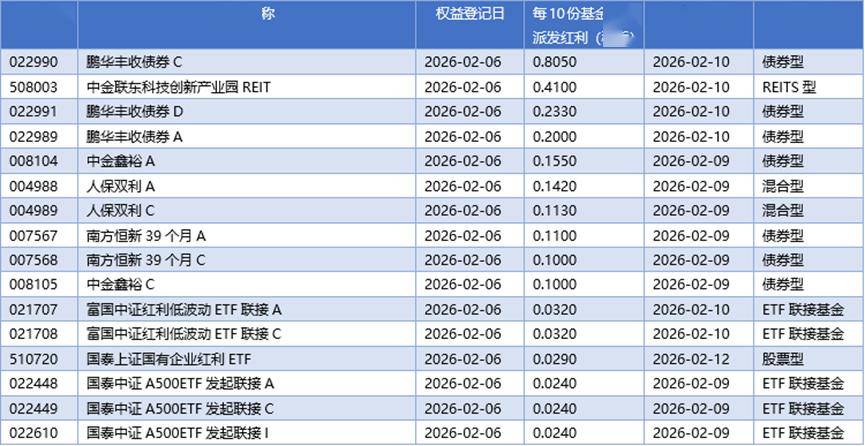
Group 1 - The public FOF market has seen a surge in activity at the beginning of 2026, with new products raising nearly 30 billion yuan, driven by strong demand from bank clients for diversified asset allocation in a low-interest-rate environment [1] - FOF is transitioning from a "fixed income+" dominated phase to a "multi-asset allocation" phase, utilizing a combination of stocks, bonds, commodities, and overseas assets to help investors manage market volatility and achieve stable growth [1] - On February 6, the A-share market experienced significant fluctuations, with the Shanghai Composite Index closing down 0.25% at 4065.58 points, and total market turnover reaching 2.16 trillion yuan, a decrease of 30.8 billion yuan from the previous trading day [1] Group 2 - On February 6, only one new fund was launched, primarily an equity fund, with the E Fund Hang Seng A-Share Electric Grid Equipment ETF aiming to raise 8 billion yuan; 16 funds distributed dividends, with the highest being 0.8050 yuan per 10 shares for the Penghua Harvest Bond Fund [2] - A total of 43 funds are set to be launched from February 9 to the end of the month, with a focus on equity funds, which account for nearly 80% of the new offerings, as institutions prepare for a potential spring market rally [2] - Fund managers are shifting strategies in response to increased market volatility, focusing on specific sectors or enhancing bottom-up stock selection, with an emphasis on preserving returns over seeking high gains in 2026 [2] Group 3 - Public fund institutions are increasingly launching Hong Kong-themed funds, with over 30 such funds reported since the beginning of the year, reflecting optimism about long-term investment opportunities in Hong Kong stocks, particularly in technology, consumer, and dividend sectors [3]
从“固收+”到“多元配置” 公募FOF乘风而起
Shang Hai Zheng Quan Bao· 2026-02-08 17:48
Group 1 - The core viewpoint of the articles highlights the significant growth and popularity of FOF (Fund of Funds) products in the A-share market, driven by strong demand from bank clients for diversified asset allocation in a low-interest-rate environment [1][6][7] - Since the beginning of 2026, FOF products have seen a surge in issuance, with many products being sold out in just one day, indicating a robust market interest [2][3] - The total issuance scale of new FOF products in 2026 has reached approximately 300 billion yuan, a substantial increase compared to 61.29 billion yuan in the same period of 2025 [2][3] Group 2 - Major banks are actively promoting FOF products, with several banks creating FOF preferred pools to enhance product visibility and growth [4][5] - The collaboration between banks and fund companies has led to significant increases in FOF product sizes, with some products reaching nearly 100 billion yuan in scale [5][6] - The shift from "fixed income +" to "multi-asset allocation" reflects a broader trend in the FOF market, as new products increasingly incorporate diverse asset classes, including equities and commodities [6][7] Group 3 - The unique advantage of FOF products lies in their ability to diversify investments and improve the risk-return profile, making them attractive in the current market environment where traditional fixed-income assets are underperforming [7] - FOF products are positioned as essential tools for investors seeking stable returns and wealth preservation in uncertain market conditions [7][8] - The focus for FOF management in 2026 will be on diversified allocation to mitigate risks rather than solely pursuing returns from individual asset classes [7]




节前最后一周,你需要知道的五件大事
表舅是养基大户· 2026-02-08 13:33
Group 1 - The article discusses the significant rebound in global markets, particularly in precious metals like gold and silver, and cryptocurrencies such as Bitcoin, following a liquidity shock caused by the announcement of the new Federal Reserve chairperson [5][14]. - Silver has shown extreme volatility, with two instances of over 20% single-day declines in the past six trading days, followed by a rebound of over 21% from its low point [5][10]. - The article emphasizes the importance of long-term value in asset allocation, particularly highlighting gold as a stable investment choice for ordinary investors due to its clearer underlying logic and lower volatility [10][12]. Group 2 - The article notes a significant rebound in U.S. and Chinese stocks, with major indices like the Nasdaq and S&P 500 rising around 2%, and the Dow Jones reaching a historical high [15][16]. - Concerns remain regarding the capital expenditures of major tech companies, which have been a source of market anxiety, particularly in relation to their ability to generate sufficient returns [21][29]. - The article highlights the competitive landscape among internet giants in Hong Kong, with Alibaba and Tencent engaging in aggressive promotional activities, raising concerns about their spending and market positioning [25][26]. Group 3 - The article suggests that the upcoming Chinese New Year may lead to a surge in tourism, indicating potential investment opportunities in the service consumption sector [39][46]. - It mentions the increasing popularity of certain travel destinations during the holiday season, emphasizing the need for investors to focus on structural opportunities within the consumption sector [46][47]. - The article advises investors to monitor the recovery of consumer spending relative to pre-pandemic levels, particularly in terms of average transaction values [46].

银行理财到期后怎么投?一个自建多元资产配置实例
雪球· 2026-02-06 13:01
Core Viewpoint - The article discusses a customized investment strategy aimed at achieving an annualized return of 8%-12% through a diversified asset allocation model tailored to the specific financial profile and risk tolerance of an individual investor [4][9]. Group 1: Investment Strategy Overview - The investment strategy is based on a "60/30/10" model, allocating 60% to equities, 30% to bonds, and 10% to commodities [10][11]. - Historical data indicates that when the holding period exceeds three years, the probability of achieving positive returns from equity assets exceeds 85% [13]. Group 2: Asset Allocation Breakdown - The equity portion (60%) is divided into three pillars: global technology growth (30%), A-share "barbell strategy" (30%), and a defensive component (10%) in gold [14][15]. - The global technology growth pillar includes QDII funds focused on U.S. and Hong Kong tech stocks, specifically selecting two funds: Franklin Global Technology Internet Fund and GF Global Select Equity Fund [16][17]. - The A-share component employs a "dividend + quantitative" strategy, utilizing various funds to balance stability and market volatility [19][20]. Group 3: Fixed Income and Commodities - The fixed income portion (30%) serves as a "safety cushion," providing liquidity and positive returns regardless of market fluctuations [25]. - The gold allocation (10%) is justified as a hedge against currency devaluation and extreme risks, supported by ongoing central bank purchases and geopolitical tensions [29]. Group 4: Performance Management - The strategy emphasizes the importance of managing expectations, acknowledging potential drawdowns of 15%-20% in extreme market conditions [36]. - The investment approach includes regular portfolio reviews to ensure performance aligns with benchmarks and to make necessary adjustments [36]. Group 5: Conclusion - The article concludes that the key to successful investing lies not in predicting market movements but in establishing a resilient investment framework that diversifies across asset classes and geographies [38].

2026年全球市场主线在哪里?在这场分享会里找答案
Zhong Guo Zheng Quan Bao· 2026-02-05 05:12
Global Macro - The market is at the beginning of an artificial intelligence super cycle and an early stage of a commodities super cycle, with strong investment inflows expected in the US [2] - Current labor productivity in the US is at 2%, with estimates suggesting AI could increase productivity by 0.2% to 4.5%, indicating potential stock price increases but also market volatility as perceptions of AI benefits evolve [2] - Credit markets appear solid, but spreads are near historical lows; companies' balance sheets remain strong despite global economic tensions [2] Gold Investment - In 2026, gold should be viewed more as a risk hedging tool rather than a driver of absolute returns [3] Asian Bonds - Investment-grade bonds are seen as a relatively high-value choice in the current environment, with Asian investment-grade bond yields similar to global counterparts but with shorter durations and lower interest rate sensitivity [4] - The Asian high-yield bond market offers attractive yields above 8%, and the credit cycle may be at a turning point with a reduction in default trends [4] Asian Equities - China and South Korea are expected to show resilience and growth potential, supported by policy developments and corporate earnings expectations, while India may recover after adjustments [5][6] - The Korean market benefits from strong demand for AI-related investments and supportive government policies [5] Hong Kong Stock Strategy - Foreign investment interest in Chinese assets is increasing, with Hong Kong stocks showing attractive valuations despite potential market fluctuations [7] - The strategy focuses on sector selection and investment timing, acknowledging inherent risks [7] A-Share Strategy - A "spindle" strategy is favored, focusing on mid-cycle manufacturing assets while being cautious about high-dividend and AI-related assets [8] - The current environment shows low valuations and low attention for many cyclical industries, with potential for significant profit recovery as macroeconomic conditions improve [9] Pharmaceutical Sector - Confidence in the pharmaceutical sector is growing, particularly in innovative drugs, low-valuation segments like medical devices, and specific stock opportunities with strong growth potential [11]
大事频发,投资如何心安?
雪球· 2026-02-02 13:01
中泰证券(上海)资产管理有限公司官方公众订阅号,投资路上的好朋友。 以下文章来源于中泰证券资管 ,作者文/鲁资资 中泰证券资管 . ↑点击上面图片 加雪球核心交流群 ↑ 风险提示:本文所提到的观点仅代表个人的意见,所涉及标的不作推荐,据此买卖,风险自负。 作者: 中泰证券资管 "大事频发"是许多投资者近期的深切感受。地缘冲突、政策转向、巨头财报、重要会议……常常是前一个议题还没搞清楚,新的议题又已跃入视 野。在这种快节奏、高密度的信息冲击下,人很容易陷入焦虑,担心有片刻"离线",就会错过什么大事。 可能引发市场震荡的大事那么多,投资如何心安?这也是近期小编和同事们常讨论的问题。以下,是我们的一些思考整理。 一是接受"不可为",聚焦"可为处"。 是的,地缘冲突也好,贸易纠纷走向也好, 投资中有些事情,是我们必须接受的"已知未知"。 也唯有接受"不可为"的存在,我们才能腾出精力, 更为明智地分配自己有限的注意力,聚焦那些清晰、具体、可耕耘的"可为处"。 哪些是"可为处"?制定计划、优化成本、管理行为、控制情绪、提高对于所持标的的认知……这些事情平淡、枯燥,远不如追逐热点、高谈阔论 来得刺激和诱人,但往往是这些通过 ...

广发基金杨喆:以稳健配置穿越周期 打造低波多资产FOF
Shang Hai Zheng Quan Bao· 2026-02-01 18:22
Core Insights - The FOF (Fund of Funds) market is experiencing significant growth due to a combination of low interest rates and market volatility, leading to increased demand for diversified investment strategies [2][3] - Yang Zhe, a prominent FOF fund manager, emphasizes the importance of multi-asset strategies in achieving stable returns and risk mitigation [3][4] Group 1: Market Trends - The FOF market has seen a rise in "small blockbuster" funds, with total scale reaching new highs, driven by both demand and supply factors [2] - Low interest rates are pushing investors to seek diversified income sources, as traditional low-risk assets yield diminishing returns [2] - The proportion of QDII funds, alternative investment funds, and REITs in FOF portfolios has been increasing, with QDII and alternative funds accounting for 4.4% and 3.9% of allocations respectively as of Q3 2025 [2] Group 2: Performance Metrics - Yang Zhe's managed fund, Guangfa Anteng Stable Six-Month Holding (FOF), has maintained a maximum drawdown of no more than 1.5% since its inception in May 2023, achieving annual returns of 4.24% and 3.18% for 2024 and 2025 respectively [1] - The Guangfa Anyu Stable One-Year Holding (FOF) has delivered a cumulative return of 13% since its launch in March 2022, with a maximum drawdown of 4.53%, outperforming the bond-mixed fund index [3] Group 3: Investment Strategy - The core of multi-asset strategies lies in combining assets with different risk-return profiles to achieve effective hedging and manage volatility [4] - The asset allocation team at Guangfa Fund is structured into research groups based on asset categories, ensuring comprehensive qualitative and quantitative analysis [5] - The upcoming Guangfa Yuefeng Multi-Dimensional Stable Three-Month Holding (FOF) aims to provide a diversified investment approach, including domestic equities, overseas markets, and commodities [5] Group 4: Market Outlook - Current valuations in the A-share and Hong Kong markets are considered attractive compared to historical highs in the US and other developed markets [7] - The A-share market has seen significant valuation recovery, supported by improving PMI data and potential corporate earnings growth [7] - The outlook for 2026 favors large-cap growth styles, particularly in technology and healthcare sectors, driven by innovation and demand in AI and semiconductor markets [7]
当白银期货爆仓,投资者们应该看到哪些教训?
表舅是养基大户· 2026-01-31 02:59
Group 1 - The article discusses the significant decline in precious metals, with gold dropping over 9% and silver over 26% in a single day [2][4] - Gold reached a historical high of $5598, experiencing a cumulative drop of nearly 13% from that peak, while silver peaked at $121.6, with a cumulative decline of nearly 30% [4] - The author emphasizes that gold should be viewed as a component of a diversified asset allocation strategy, serving as a hedge against dollar-denominated assets [6] Group 2 - The article warns against the dangers of leverage in trading, particularly in futures markets, where many investors faced significant losses due to the recent price drops [9][10] - It highlights the importance of maintaining a cautious mindset in investing, as overconfidence and chasing trends can lead to substantial losses [21][25] - The piece critiques the notion of relying on so-called "experts" or "gods" in investment, advocating for a balanced and rational approach to asset allocation instead [27][32] Group 3 - The article notes that the recent volatility in precious metals is part of a broader trend influenced by U.S. monetary policy and market dynamics, suggesting that the current environment may not be sustainable [14][36] - It stresses the need for investors to recognize the risks of excessive trading and the potential for market corrections following periods of rapid price increases [38] - The author concludes that a well-rounded investment strategy, which includes regional diversification and balanced asset allocation, is essential for long-term success [37][39]