
多层次多支柱养老保险体系

Search documents
人力资源社会保障部:促进高质量充分就业 健全社会保障体系
Ren Min Ri Bao· 2025-12-20 02:58
Core Viewpoint - The article emphasizes the importance of promoting high-quality and full employment and improving the social security system as strategic goals outlined in the 14th Five-Year Plan, highlighting the need for policy support and innovative reforms to address new challenges in employment and social security [1][5]. Employment Promotion - The 14th Five-Year period presents new challenges for employment, including a high supply of urban labor and structural employment issues due to rapid technological advancements [2][3]. - The government aims to implement an employment-first strategy, focusing on creating an employment-friendly development model and integrating high-quality employment into national economic planning [3]. - Structural employment issues will be addressed by developing a human resource demand forecasting mechanism and aligning training programs with industry needs [3]. Targeted Employment Strategies - Specific measures will be taken to promote employment among key groups, such as youth and migrant workers, by expanding job opportunities and providing support for entrepreneurship [3]. - The government will ensure that zero-employment families receive assistance and will focus on the employment of veterans and women [3]. Fair Employment Environment - A unified and regulated human resources market will be established to eliminate barriers to labor mobility and ensure equal employment rights for all workers [4]. Social Security System Optimization - The goal of optimizing the social security system is to align with China's modernization and the common prosperity of all citizens, addressing weaknesses in certain areas [5][6]. - A multi-tiered pension system will be developed, enhancing the basic pension insurance system and promoting enterprise annuities [6]. - The government will improve the mechanism for determining and adjusting benefits, focusing on low-income groups [6]. Protection for New Employment Forms - A new occupational injury protection system will be established, particularly for new employment forms, with pilot programs already expanded to 17 provinces [6]. - Efforts will be made to increase the participation rate of flexible workers and migrant workers in social insurance [7]. Investment in Human Resources - The government will focus on investing in human resources by enhancing talent development and training programs, particularly for young and skilled workers [8][9]. - A large-scale vocational skills training initiative will be launched to meet the needs of emerging industries and improve the overall skill level of the workforce [9]. - The government will also work on improving talent evaluation and compensation mechanisms to attract and retain skilled workers [9].
山东建立企业年金单位超过1万家,基金规模超千亿
Qi Lu Wan Bao· 2025-11-27 07:18
Core Insights - Shandong Province has made significant progress in its pension insurance system, with over 80 million participants and a coverage rate of 96.1% expected by the end of 2024, effectively achieving universal coverage [1][2] - The province has established over 10,000 enterprise annuity units, with a fund size exceeding 100 billion, positioning itself among the top in the country [2] - The implementation of a multi-tiered pension system is being emphasized, focusing on the development of enterprise annuities and personal pensions to enhance the overall pension landscape [3] Group 1: Pension Insurance System - The basic pension insurance system has been reinforced, achieving a coverage rate of 96.1% with over 80 million insured individuals by the end of 2024 [1] - A comprehensive risk prevention system has been established to ensure timely and full payment of basic pension benefits [1] Group 2: Multi-Tiered Pension Development - The second pillar (enterprise annuities) and third pillar (personal pensions) are being developed in tandem, with over 10,000 enterprise annuity units established and a fund size exceeding 100 billion [2] - The personal pension system has seen over 14 million account openings, supported by innovative promotional strategies [2] Group 3: Digital Transformation and Services - The digital transformation of services is being driven by the social security card, with nearly 98.45 million cards issued and an electronic card coverage rate of 78.8% [2] - Various consumer subsidies and financial aid programs have been implemented through the social security card, benefiting millions and stimulating over 5.5 billion in consumption [2] Group 4: Future Directions - Future efforts will focus on enhancing the value preservation and appreciation mechanisms of pension funds, expanding enterprise annuities and personal pensions, and upgrading the social security card system to improve public service accessibility [3]
个人养老金产品扩容!专家解读!
中国基金报· 2025-11-24 14:21
Core Viewpoint - The inclusion of electronic savings bonds into personal pension products is expected to enhance investor enthusiasm and contribute to the high-quality development of the personal pension system [2][4]. Group 1: Policy Announcement - On November 21, the Ministry of Finance and the People's Bank of China announced that starting from June 2026, electronic savings bonds will be included in the personal pension product pool, requiring underwriters to provide related services for investors opening personal pension accounts [4]. - This move is seen as a signal of "safety" and "investment," reinforcing the security of pension funds and promoting long-term capital market participation [4][6]. Group 2: Market Impact - The addition of electronic savings bonds is expected to enrich the personal pension product pool, providing investors with safer and more stable investment options, thereby increasing public participation in the personal pension system [5][6]. - The current market offers 926 personal pension products, with 466 being savings products, indicating a diverse range of options available to investors [8]. Group 3: Challenges and Solutions - Despite the growth in account openings, there exists a "hot account, cold deposit" dilemma, reflecting various contradictions such as account liquidity versus closure, product homogeneity, and low perception of tax incentives [9]. - To address these issues, a collaborative effort between policy and market is necessary, including optimizing tax incentives and enhancing product innovation to better meet the needs of different risk profiles [9].


支持多层次多支柱养老保险体系发展“出实招” 对个人投资者产生哪些影响?
Yang Shi Wang· 2025-11-22 01:54
Group 1 - The Ministry of Finance and the People's Bank of China announced that savings bonds (electronic) will be included in the personal pension product range to support the development of a multi-tiered pension system [1][5] - Starting from June 2026, members of the underwriting group for savings bonds that comply with financial regulatory requirements will offer personal pension savings bonds (electronic) services to pension investors [4] - This initiative is expected to enhance the coverage and attractiveness of the personal pension system, catering to different risk preferences and promoting the development of the third pillar of the pension system [5] Group 2 - The inclusion of personal pensions in the bond market is anticipated to bring significant long-term funds, which will strongly support the development of the bond market [7]
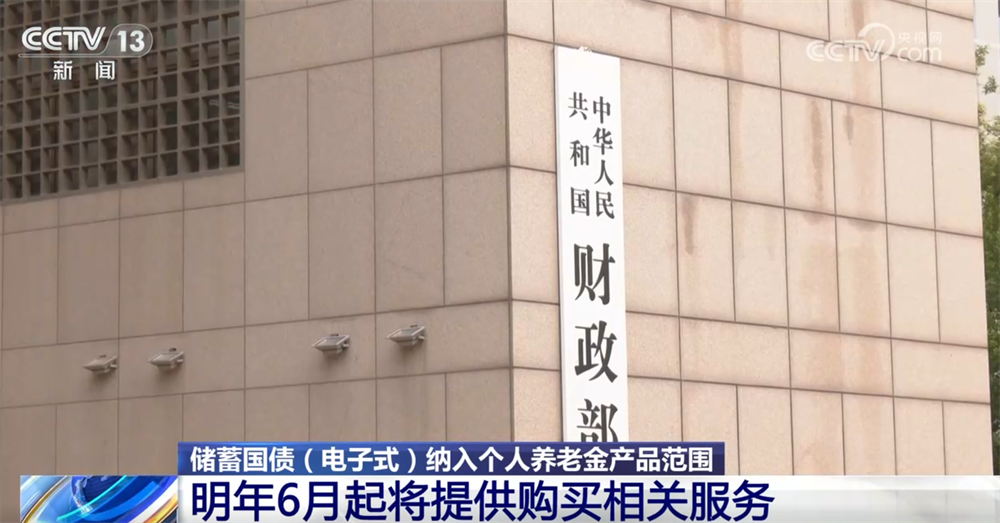
财政部、央行:储蓄国债(电子式)纳入个人养老金产品范围
Zheng Quan Ri Bao Wang· 2025-11-21 12:26
Core Viewpoint - The Ministry of Finance announced the inclusion of electronic savings bonds in the personal pension product range to support the development of a multi-tiered pension system, effective from June 2026 [1]. Group 1 - The notification specifies that institutions offering personal pension savings bonds must open dedicated accounts for pension investors to record their purchases and holdings [2]. - The dedicated pension bond accounts must be linked to the investors' personal pension accounts, adhering to relevant regulations regarding fund transactions and tax policies [2]. - The allocation ratio for dedicated pension bond quotas will be adjusted quarterly, with the initial ratio based on the proportion of uninvested amounts in all pension accounts at the institution [2]. Group 2 - The Ministry of Human Resources and Social Security will provide monthly updates to the Ministry of Finance regarding the funding and investment status of pension accounts to assist in quota management [2].
重磅!刚刚,国家重大宣布:纳入!
中国基金报· 2025-11-21 10:24
Core Viewpoint - The Ministry of Finance has announced that electronic savings bonds will be included in the personal pension product range to support the development of a multi-tiered pension insurance system [3][5]. Group 1: Implementation Details - Starting from June 2026, institutions offering personal pension savings bonds must provide services for purchasing electronic savings bonds to pension investors who have opened personal pension accounts [5][8]. - Institutions are required to open dedicated savings bond accounts for pension investors, which must be linked to their personal pension accounts [6][9]. - The distribution of exclusive quotas for selling electronic savings bonds to pension investors will be adjusted quarterly based on the proportion of uninvested amounts in all personal pension accounts [6][10]. Group 2: Operational Requirements - Institutions must ensure that their systems are upgraded to support the new electronic savings bond business and establish a three-way information exchange mechanism with the pension information platform [11][12]. - Institutions are responsible for reporting daily data on purchases and changes in holdings of electronic savings bonds to the relevant systems [12]. - The Ministry of Finance emphasizes the need for institutions to expedite the development of business plans and system preparations to ensure a smooth launch of the electronic savings bond business for personal pensions [6][13].

“十五五”政策信号一文看懂
Guo Ji Jin Rong Bao· 2025-10-30 11:36
Core Viewpoint - The "15th Five-Year Plan" emphasizes high-quality development as the primary goal, shifting focus from rapid economic growth to enhancing the quality of economic development [2][3]. Economic Development Goals - The plan does not set specific GDP growth targets but aims for an average annual GDP growth rate of 4.5% to 5.0% during the "15th Five-Year Plan" period, ensuring a balance between growth, structural adjustment, and risk prevention [3]. - The plan highlights a significant increase in the resident consumption rate, indicating a shift from investment-driven growth to consumption-led growth [3][4]. Capital Market Development - The plan calls for a well-functioning capital market that supports innovation-driven development, emphasizing reforms in the Sci-Tech Innovation Board and the Growth Enterprise Market to provide better financing for "hard tech" companies [5][6]. - It aims to balance direct and indirect financing, enhancing the financing structure to better serve small and innovative enterprises [6][7]. Fiscal and Monetary Policy - The plan stresses the importance of active fiscal policy to enhance sustainability and support long-term investments while balancing efficiency and equity [9][10]. - Monetary policy will maintain a moderately loose stance, focusing on effective transmission mechanisms and structural tools to support key sectors [11][12]. Digital Economy and Innovation - The plan promotes the construction of a digital economy, emphasizing the development of data markets and the integration of artificial intelligence into various sectors [13][14]. - It aims to address challenges in data resource sharing, algorithm development, and privacy protection to enhance the value of data and accelerate AI development [14][15]. Social Security and Insurance - The plan proposes a multi-tiered pension system and emphasizes the role of commercial insurance in providing supplementary coverage [16][17]. - It introduces long-term care insurance to address the needs of the aging population, aiming to build a comprehensive care system [17].
多方协力 加快发展多层次多支柱养老保险体系
Jin Rong Shi Bao· 2025-10-30 00:25
Core Viewpoint - The Chinese government emphasizes the importance of a robust social security system, particularly in the area of pension insurance, as part of its "14th Five-Year Plan" [1] Group 1: Pension Insurance System Development - The basic pension insurance coverage has reached 1.072 billion people, an increase of over 73 million since the end of the "13th Five-Year Plan," with the participation rate rising from 91% to over 95% [1] - The government aims to accelerate the development of a multi-tiered and multi-pillar pension insurance system to meet the diverse needs of the elderly population and ensure the sustainability of the pension system [1] Group 2: Characteristics of the Pension Insurance Pillars - The three pillars of the pension insurance system include: the first pillar (basic pension insurance), the second pillar (supplementary pension insurance), and the third pillar (personal pension systems and other commercial pension financial services) [1] - Current discussions highlight that the three pillars are not equally developed, with the first pillar being crucial for the existence of the second and third pillars [3] Group 3: Demographic and Labor Market Considerations - Over 50% of pension recipients are from the rural residents' pension insurance scheme, indicating the need to include this demographic in pension reform discussions [2] - The expansion of flexible employment due to digital and platform economies necessitates a reevaluation of traditional pension coverage strategies [3] Group 4: Role of Financial Institutions - Financial institutions play a vital role in providing diverse and innovative pension financial products, enhancing the second and third pillars as supplementary support beyond basic guarantees [4] - Key capabilities for financial institutions in this multi-tiered pension system include risk management, long-term investment stability, and integrated service offerings [4]
2025年半年度人身险行业分析
Lian He Zi Xin· 2025-10-15 08:09
Investment Rating - The report indicates a stable investment rating for the life insurance industry, with a focus on growth potential in the context of regulatory support and market demand for insurance products [4][5]. Core Insights - Since 2025, the demand for savings, wealth management, and retirement products among residents has continued to rise, leading to a growth in premium income for life insurance companies, although the growth rate has slowed [4]. - In the first half of 2025, life insurance companies achieved original insurance premium income of CNY 27,705.26 billion, representing a year-on-year growth of 5.38%, but the growth rate has decreased compared to the previous year [4]. - The structure of premium income remains dominated by life and health insurance, with life insurance accounting for 82.57% and health insurance for 16.65% of total premium income in the first half of 2025 [4]. - The industry is experiencing a peak in claims payments due to a concentration of maturing policies, with claims expenditures reaching CNY 8,269.04 billion in the first half of 2025, a year-on-year increase of 17.08% [4]. Summary by Sections Market Overview - The life insurance market remains highly concentrated, with the top five companies holding nearly 50% of the market share, indicating a stable competitive landscape [5]. - Regulatory support for the multi-pillar pension system is expected to enhance future business development opportunities [5][6]. Financial Performance - Life insurance companies have seen a continuous increase in their investment assets, with a notable rise in equity investments amid a low-interest-rate environment [7]. - As of June 2025, the total investment balance of life insurance companies reached CNY 32.60 trillion, a year-on-year growth of 8.86% [7]. - The comprehensive solvency adequacy ratio for life insurance companies was 196.6% as of June 2025, indicating a strong capital position [9]. Regulatory Environment - Regulatory bodies have maintained a cautious approach, continuously improving the regulatory framework to enhance risk management and business structure optimization within the insurance industry [10]. - The frequency of policy and regulatory updates related to the insurance sector has remained high, reflecting ongoing efforts to deepen risk prevention measures [10].
国家统计局:社会保障体系全球规模最大,保障水平不断提升
Bei Jing Shang Bao· 2025-09-28 02:20
Group 1: Pension Insurance - The number of participants in the basic pension insurance is projected to reach 1.07 billion by the end of 2024, with the average monthly pension for enterprise retirees increasing from approximately 2900 yuan in 2020 to 3162 yuan in 2023 [1] - The number of employees participating in enterprise annuities is expected to be 32.42 million by the end of 2024, with the accumulated fund scale of enterprise annuities reaching 3.6422 trillion yuan, representing growth of 19.3% and 61.9% respectively since the end of 2020 [1] Group 2: Medical Insurance - The number of participants in the basic medical insurance is anticipated to reach 1.33 billion by the end of 2024, maintaining a coverage rate of around 95% since 2018 [2] - The per capita financial subsidy standard for urban and rural residents' basic medical insurance has increased to 670 yuan, reflecting a growth of 21.8% since 2020 [2] - Policies such as basic medical insurance, serious illness insurance, and medical assistance are expected to benefit 220 million visits for low-income rural populations in 2024 [2] - The proportion of personal health expenses in total health expenditure has decreased from 27.7% in 2020 to 27.3% in 2023, indicating a reduction in the financial burden on individuals seeking medical care [2] Group 3: Social Assistance - By the end of 2024, the number of individuals receiving minimum living security in urban and rural areas is projected to be 6.25 million and 33.615 million respectively [2] - The average monthly minimum living security standards for urban and rural areas are expected to be 798.1 yuan and 593.9 yuan, showing increases of 17.8% and 19.5% respectively since 2020 [2]