实用主义

Search documents
J.D. Power研究:智能体验转向实用主义
Zhong Guo Qi Che Bao Wang· 2025-11-27 08:40
Core Insights - The research conducted by J.D. Power, Tongji University HVR Lab, and XAI Lab reveals that the average score for smart cockpit models in 2025 is 622 points out of 1000, with some models nearing 700 points, showcasing excellence in HMI multimodal interaction and AI capabilities [1][3] Group 1: Research Methodology - The 2025 China Smart Cockpit Research employs an innovation index scoring model, divided into HMI performance index (50%) and AI performance index (50%), ensuring comprehensive and accurate assessments through user satisfaction scores [3] - The study indicates a shift in smart cockpit development from "digital redundancy" to "pragmatism," focusing on the depth of user experience rather than the breadth of functions [3] Group 2: User Interaction Preferences - User interaction is returning to a rational balance, with touch controls remaining dominant (importance mean 4.17/5) while the demand for physical buttons is nearly as strong (4.11/5), indicating a need for a stable balance between touch, physical buttons, and multimodal collaboration [4] - The application ecosystem is perceived as more tool-oriented than social, with users prioritizing functionalities like "charging services" (importance mean 4.23/5) and "vehicle health management" (importance mean 4.24/5) over social interaction [4] Group 3: AI Functionality and User Expectations - AI experiences are shifting from "showy" to "trustworthy," with users valuing AI functionalities that enhance travel efficiency and safety, such as "smart traffic navigation" (importance mean 4.27/5) and "health monitoring" (importance mean 4.22/5) [5] - Concerns about reliability and safety have led 56.5% of users to reduce their use of AI vehicle control functions, highlighting the need for the industry to improve AI capabilities in complex scenarios [5] Group 4: Competitive Landscape - Data quality and scenario definition are becoming core competitive advantages as the industry faces functional homogenization, shifting competition from "model scale" to "data quality, scenario granularity, and depth of adaptation" [6] - The depth of user experience is emerging as a key factor in purchasing decisions, with increased willingness to pay for comfort features like smart seats and audio systems, indicating a transition from passive tools to proactive cognitive partners in smart vehicles [6]


机构报告:汽车智能座舱体验转向实用主义 AI可信度与场景能力成新赛点
Xin Hua Cai Jing· 2025-11-27 08:17
Core Insights - The report indicates that by 2025, the focus of smart cockpit competition will shift from "breadth of functionality" to "depth of experience," moving from "digital redundancy" to "pragmatism" [1] Group 1: Evolution of Smart Cockpits - The early "functional cockpit" centered around rich online services, while the subsequent "perceptual cockpit" integrated multi-modal interaction and perception technologies for natural interaction and task automation [1] - The industry has now entered the "cognitive cockpit" phase, enabled by the deep application of large model technology, which allows for precise understanding of user behavior and preferences, leading to proactive personalized service delivery [1] Group 2: Interaction Design - Touch controls remain mainstream, but there is a nearly equal demand for physical buttons, with 25.3% of users viewing the lack of dedicated buttons for common functions as an interaction flaw, indicating the irreplaceable nature of physical feedback in high-pressure driving scenarios [2] - Future interaction design must find a stable balance between touch, physical buttons, and multi-modal collaboration [2] Group 3: Application Ecosystem - Although 80.2% of users frequently use automotive apps, their needs are primarily tool-oriented, with "charging services" and "vehicle health management" significantly outpacing "social interaction" and "marketplace services" [3] - There is a misalignment between automakers' direction to develop apps as social platforms and users' demand for immediate utility, suggesting that ecosystem development should focus on essential scenarios [3] Group 4: AI Experience - Users currently prioritize AI functions that enhance travel efficiency and safety, such as "smart traffic navigation" and "health monitoring," with 56.5% reducing AI vehicle control usage due to reliability and safety concerns [4] - The industry needs to overcome challenges in complex scenarios, multi-modal collaboration, and intent correction to transition AI from "showcase intelligence" to "stable and trustworthy intelligence" [4] Group 5: Competitive Landscape - As large model capabilities become widespread, the industry is experiencing a trend of functional homogenization, shifting competition from "model scale" to "data quality, scene granularity, and depth adaptation" [5] - Automakers must build an integrated capability of "scene-data-model" to achieve differentiated experiences in real-world usage scenarios, with user willingness to pay for comfort features like smart seats and audio systems increasing [5] - The interaction paradigm of smart vehicles is rapidly transitioning from "passive response tools" to "proactive cognitive partners," integrating sensor data, user habits, and contextual needs to anticipate and provide services [5]
一个废弃奶茶袋卖到50元,年轻人到底在买什么?
Xin Jing Bao· 2025-11-21 04:08
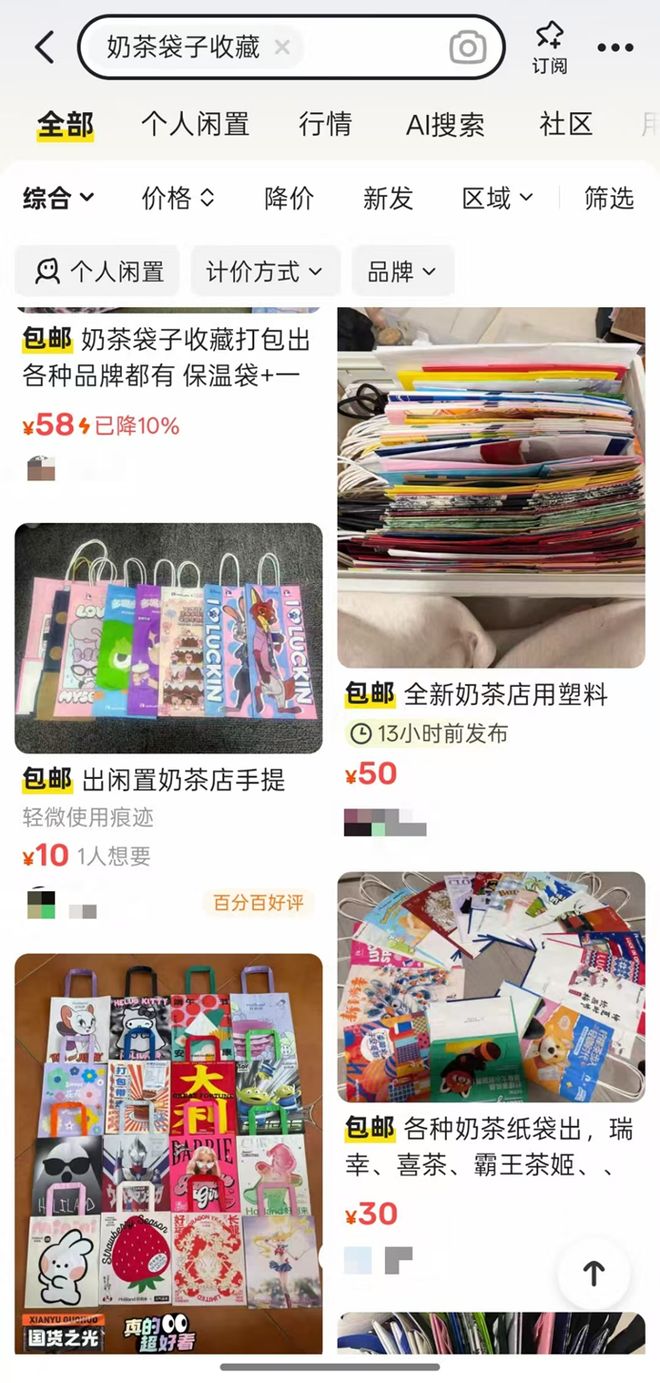
Core Insights - The article discusses the rising trend of selling used milk tea bags on second-hand trading platforms, where prices for ordinary bags range from 0.5 to 2 yuan, while limited edition bags can sell for 15 to 50 yuan, indicating a significant market for these items [1][5][9] Group 1: Market Dynamics - Ordinary milk tea bags are priced between 0.5 and 2 yuan, with actual costs including shipping reaching approximately 8 to 12 yuan per bag when purchased individually [5] - Limited edition and branded bags are highly sought after, with some selling for as much as 50 yuan due to their perceived rarity and brand association [1][7] - The demand for these bags is driven by young consumers, particularly those from Generation Z, who are sensitive to trends and seek unique items for personal expression [9][10] Group 2: Consumer Behavior - The primary buyers of second-hand milk tea bags include trend-sensitive young consumers, practical users who appreciate the design, and collectors who view these bags as trendy collectibles [9][10] - The emotional value, practicality, and speculative nature of these purchases contribute to the rising prices and demand for milk tea bags in the second-hand market [9][10] Group 3: Legal and Ethical Considerations - Selling personal used milk tea bags is legal, but bulk sales by individuals without brand authorization may infringe on intellectual property rights [8] - Brands like Heytea and Nayuki have not authorized the sale of their bags, raising concerns about potential infringement in the second-hand market [7][8] Group 4: Future Outlook - The sustainability of this trend depends on brands continuing to release attractive designs and the vitality of supply and demand in the second-hand market [10][11] - The current phase of this market is characterized as early diffusion, but it may face challenges due to limited supply and shifting consumer interests [11]
增程“二次战争”:技术派车企开始接管战场?
Tai Mei Ti A P P· 2025-11-13 00:44
Core Insights - The article discusses the evolution of range-extended electric vehicles (REEVs) in the automotive industry, highlighting a shift from the initial focus on alleviating range anxiety to enhancing user experience through advanced technology integration [2][3][12] - The competition in the REEV market is now characterized by a deeper emphasis on technical capabilities, energy efficiency, and adaptability to various driving scenarios, rather than merely extending driving range [4][5][12] Summary by Sections First War vs. Second War - The first phase of the REEV market addressed the issue of range anxiety, providing consumers with a flexible solution that combined electric and fuel options, thus proving the viability of REEVs [3][12] - The second phase, marked by the entry of technology-driven companies, focuses on optimizing user experience and integrating advanced technologies into REEV systems [5][12] Technological Advancements - Companies like Xiaopeng and Leap Motor are now competing on the basis of their ability to balance integration, energy consumption, and spatial efficiency, moving beyond simple functionality [4][5] - The introduction of advanced materials and AI in control systems signifies a shift towards higher technical barriers in the REEV market, emphasizing the importance of R&D capabilities [5][12] Market Strategies - There is a notable divergence in technical strategies, with some companies opting for "large battery + small fuel tank" configurations aimed at urban users, while others prefer "large battery + large fuel tank" setups to cater to long-distance travel needs [6][7] - The strategic choice of configurations reflects a deeper understanding of user scenarios and market demands, particularly in international markets where charging infrastructure may be lacking [8][9] Global Expansion - Several Chinese brands view REEVs as a gateway to international markets, leveraging their unique features to address the challenges posed by inadequate charging facilities in many regions [9][12] - The article notes that while REEVs are perceived as a transitional technology in China, they offer a practical solution in diverse global markets, providing users with a "zero-anxiety" electric driving experience [9][12] Challenges Ahead - The article highlights potential challenges in the global expansion of REEVs, including consumer understanding, regulatory risks, and the need for localization in different markets [10][11] - Despite these challenges, the rise of REEVs represents a victory for practical solutions that meet the immediate needs of consumers, balancing the benefits of electric vehicles with the realities of current infrastructure [11][12]




邪修MMT大战达里奥
Hu Xiu· 2025-10-03 03:35
Core Viewpoint - The article critiques Ray Dalio's understanding of sovereign debt issues, arguing that his microeconomic principles do not apply to sovereign currency nations [3][4][10]. Group 1: Critique of Dalio's Views - The first main point is that microeconomic principles are not applicable to sovereign currency nations, as governments can create their own currency and do not face the same constraints as individuals or companies [3][4]. - The second point is that macroeconomics is not a machine; it is influenced by changing environments and expectations, making it inappropriate to apply a one-size-fits-all approach to economic policy [7][10]. Group 2: Modern Monetary Theory (MMT) Discussion - The article suggests that the arguments presented align closely with Modern Monetary Theory (MMT), which has gained traction in Eastern economic discussions, contrasting with its perception in the West [10][12]. - It emphasizes that the government's ability to spend is not limited by money supply but by real resources, advocating for increased deficits in the context of insufficient domestic demand and excess capacity [13][12]. Group 3: Practical Implications - The article argues for a pragmatic approach to economic theory, suggesting that useful ideas from MMT should be adopted regardless of their traditional classification as heretical [14][15]. - It highlights a global shift towards practical, results-oriented economic thinking, moving away from rigid adherence to Western economic doctrines [15].
风向突然变了!印度终于摊牌:背刺俄罗斯不是不行,但价码得合适
Sou Hu Cai Jing· 2025-10-02 09:50
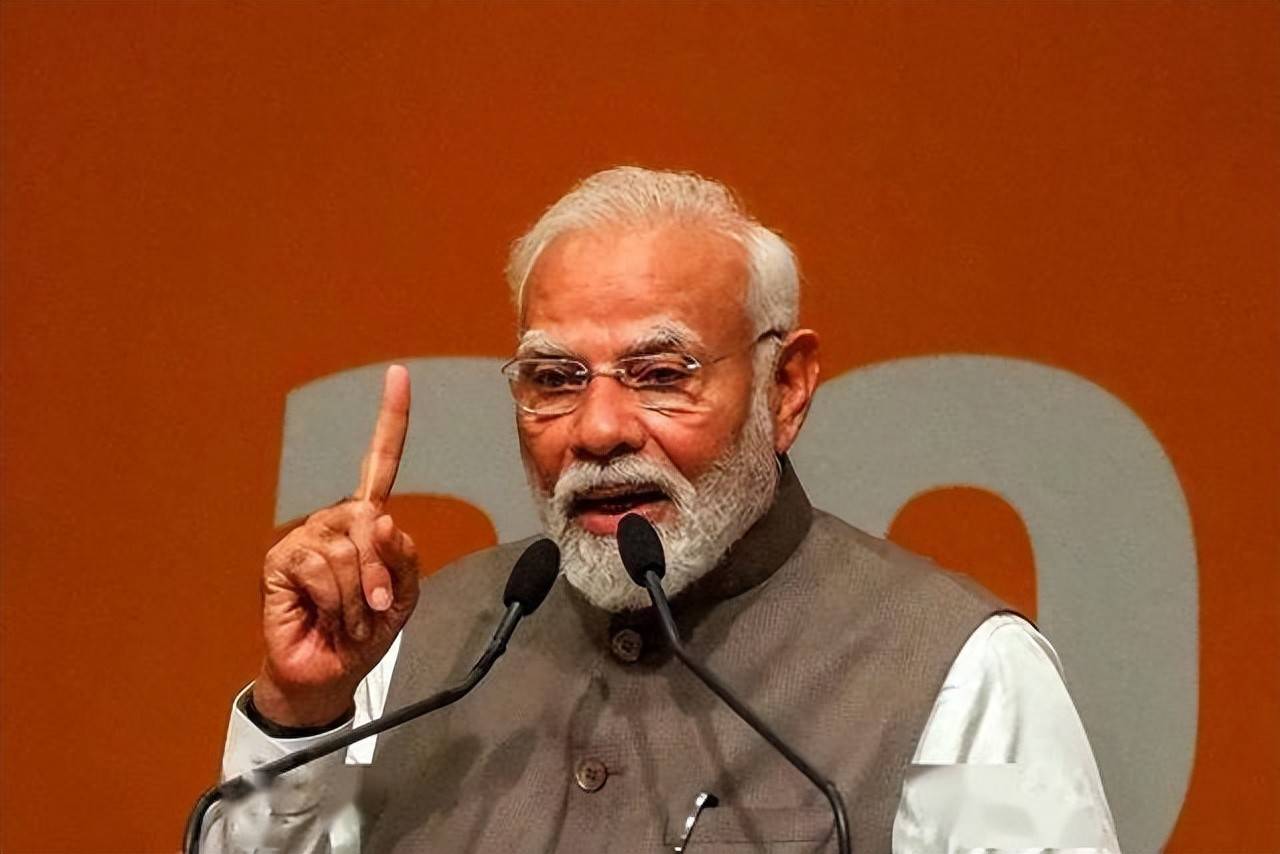
Core Viewpoint - The article discusses the evolving geopolitical dynamics between India and the United States, particularly in the context of trade tensions and energy procurement strategies, highlighting India's strategic maneuvering in response to U.S. pressure [1][19]. Trade Relations - The U.S. has raised tariffs on various Indian goods up to 50%, affecting sectors like agriculture, chemicals, and textiles, positioning India as the most impacted Asian country by U.S. tariffs [3][5]. - India has responded by asserting that the U.S. actions violate fair trade principles and has indicated it will take necessary measures to protect its interests [5][12]. Energy Procurement - India has significantly increased its oil purchases from Russia since 2022, making Russia one of its largest oil suppliers, a move that has drawn U.S. discontent [7][19]. - India has expressed a willingness to consider sourcing oil from Iran and Venezuela if the U.S. insists on reducing Russian oil imports, indicating a strategic bargaining position [8][10]. Strategic Autonomy - India emphasizes "strategic autonomy," seeking to maintain flexibility in its foreign relations without being forced into a binary choice between the U.S. and Russia [12][21]. - The Indian government is under pressure domestically, particularly from agricultural sectors affected by U.S. tariffs, which influences its negotiation stance [14][16]. Negotiation Dynamics - The ongoing negotiations reflect a complex interplay where both the U.S. and India are leveraging their respective positions without making significant concessions [19][21]. - India aims to maximize its benefits while retaining the ability to negotiate terms that do not compromise its domestic interests or industrial base [12][14]. Conclusion - The article illustrates that India's approach is not about antagonism but rather about securing favorable conditions in a multipolar world, where cooperation is contingent upon equitable exchanges rather than coercive tactics [21].
太久没谈恋爱,让我对今天是七夕这件事毫无感知
Hu Xiu· 2025-08-29 08:38
Group 1 - The article discusses the changing perceptions of holidays and personal relationships, highlighting a shift towards practicality and a decrease in celebratory enthusiasm among individuals [2][3] - It notes that the commercialization of holidays, such as Valentine's Day, has led to a focus on consumerism rather than genuine emotional connections [2][3] - The author reflects on the impact of busy lifestyles on social interactions and relationships, suggesting that people are prioritizing work and practical concerns over romantic pursuits [3][5] Group 2 - The article mentions a decline in marriage and birth rates, attributing this trend to the increasing busyness of individuals, which leaves little time for relationships [5] - It contrasts the current fast-paced lifestyle with previous generations, where individuals had more time for romantic relationships due to slower societal rhythms [5]

成都车展自有“活法”
3 6 Ke· 2025-08-29 03:34
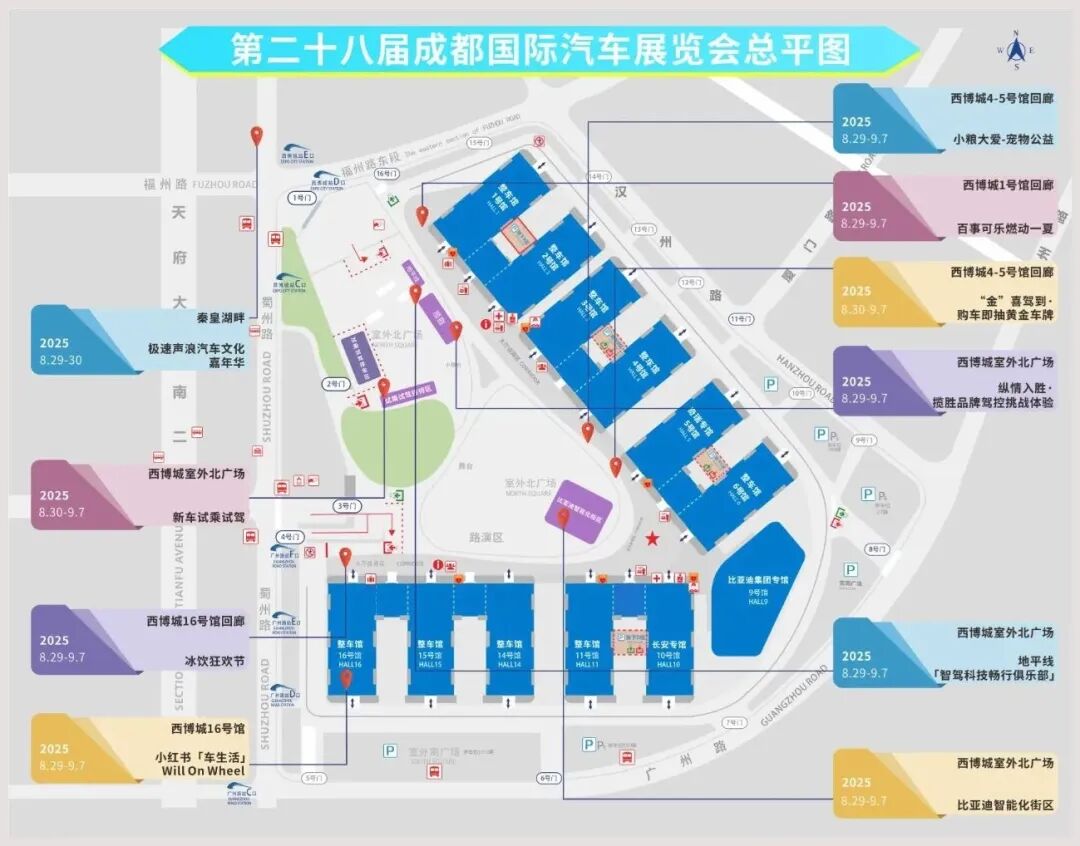
Core Insights - The automotive market in China is showing signs of fatigue as companies face intense competition and a challenging economic environment, leading to a focus on survival rather than innovation [1][5][12] - The Chengdu Auto Show is becoming a battleground for regional sales rather than a platform for showcasing new models, with many brands opting out due to budget constraints and market conditions [1][4][7] - The shift in consumer preferences towards practical and cost-effective vehicles is evident, with a decline in the diversity of new models presented at auto shows [5][12][18] Industry Trends - Major brands like BYD are targeting ambitious sales goals, while others like Geely and Chery are also striving to keep pace in a competitive landscape [1][4] - The absence of luxury brands at the Chengdu Auto Show reflects a broader trend of consumer caution and tightening budgets [1][3] - The overall market is witnessing a consolidation of power among leading manufacturers, with a focus on producing larger, more practical vehicles to meet consumer demands [12][16] Market Dynamics - The automotive industry is experiencing a prolonged price war, leading to increased competition and a shift in focus from brand differentiation to volume sales [5][12] - Data from the China Association of Automobile Manufacturers indicates a year-on-year increase in production and sales, despite a month-on-month decline in July [9] - The presence of new energy vehicles is growing, but the market is also seeing a saturation of similar models, particularly in the SUV segment [12][14] Consumer Behavior - There is a noticeable shift in consumer sentiment towards practicality over luxury or uniqueness, with a preference for vehicles that meet multiple needs [5][7] - The decline of niche brands and the rise of traditional manufacturers indicate a market that is increasingly favoring established players with proven models [12][16] - The impact of external factors, such as economic pressures and competition from tech companies, is reshaping consumer choices in the automotive sector [18]
为什么越丑的鞋越值钱?
36氪· 2025-07-16 13:37
Core Viewpoint - The article discusses the rise of "ugly shoes," particularly focusing on Crocs and Birkenstock, highlighting how their unconventional designs have led to significant market success and brand recognition despite initial criticism [5][31]. Group 1: Company Performance - Crocs has outperformed the Dow Jones U.S. Footwear Index for four consecutive years, indicating strong market performance [6]. - Birkenstock has maintained double-digit revenue growth for nine consecutive quarters, showcasing its robust financial health [9]. - In the 2024 fiscal year, Crocs' revenue growth has significantly slowed, while Birkenstock continues to achieve double-digit growth despite having only half the revenue of Crocs, yet its market value exceeds Crocs by over 50% [29]. Group 2: Brand Strategy - Crocs employs a volume-driven strategy, achieving over $2 billion in sales from its Classic Clog model alone in 2024, surpassing the total sales of Adidas' Yeezy line [33]. - The company has adopted a light-asset operational model, outsourcing production to third-party manufacturers and significantly reducing order lead times [34]. - In contrast, Birkenstock focuses on maintaining product scarcity, producing 95% of its products in Germany and controlling distribution to enhance brand value [36]. Group 3: Market Positioning - Birkenstock's average selling price has consistently increased, with a high full-price sales rate of 90%, attracting middle-class consumers and luxury investors alike [41]. - The brand has successfully positioned itself as a luxury item, with its products being sold at significantly higher prices on secondary markets after collaborations with high-end brands [41]. - The article emphasizes that the key to success for these brands lies not in aesthetics but in creating a narrative that resonates with consumers, positioning their products as more than just footwear [44][50].

为什么越丑的鞋越值钱?
远川研究所· 2025-07-08 10:54
Core Viewpoint - The article discusses the rise of "ugly shoes," particularly focusing on Crocs and Birkenstock, highlighting how their unconventional designs have led to significant market success and changing perceptions in the fashion industry [4][32]. Group 1: Market Performance - Crocs has outperformed the Dow Jones U.S. Shoe Company Index for four consecutive years, indicating strong market demand [5]. - Birkenstock has maintained double-digit revenue growth for nine consecutive quarters, showcasing its successful business model [9]. - In the 2024 fiscal year, Crocs' revenue growth is expected to slow down, while Birkenstock continues to achieve double-digit growth despite having only half the revenue of Crocs, with a market valuation exceeding Crocs by over 50% [32]. Group 2: Brand Strategy - Both Crocs and Birkenstock originated from a practical standpoint, focusing on comfort and functionality rather than aesthetics [14][18]. - Crocs adopted a volume-driven strategy, achieving over $2 billion in sales for its Classic Clog model in 2024, surpassing the entire Yeezy line from Adidas [36]. - Birkenstock, in contrast, has focused on maintaining scarcity and exclusivity, producing 95% of its products in Germany and controlling distribution to enhance brand value [40][41]. Group 3: Consumer Perception and Marketing - The perception of "ugly shoes" has shifted, with Crocs and Birkenstock leveraging their controversial designs to create media interest and public relations opportunities [24]. - Birkenstock's collaborations with luxury brands have significantly increased its market presence, with products that were once priced under $100 now selling for up to $1,000 on secondary markets [48]. - The article emphasizes that the key to success for these brands lies not in their aesthetics but in their ability to create a narrative and perceived value that resonates with consumers [51][59].