成本定价

Search documents
零跑朱江明:零跑将一直坚持以成本定价,明年还会有2-3台D系列车型丨新智驾对话
雷峰网· 2025-10-17 13:48
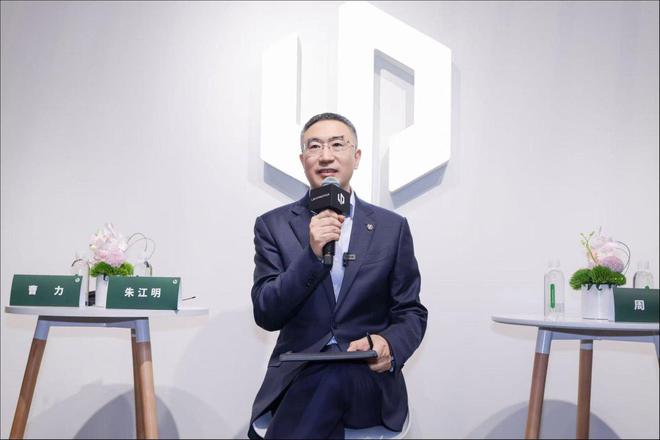
Core Viewpoint - Leap Motor is set to achieve its annual sales target of 500,000 units ahead of schedule this year, driven by its commitment to maintaining a cost-effective pricing strategy while entering the high-end market with its new D platform and D19 model [2][4][6]. Group 1: D Platform and Market Positioning - The D platform represents Leap Motor's entry into a new market segment, aiming to compete with leading players while adhering to its principle of "good but not expensive" [2][4]. - Leap Motor emphasizes that the D19 is not positioned as a luxury vehicle but rather as a high-spec model with flagship features, maintaining its core value proposition [5][18]. - The company plans to introduce 2-3 flagship models from the D series by 2026, alongside 2 new models from the A series [4][7]. Group 2: Sales and Growth Expectations - Leap Motor is optimistic about its Q4 performance, with orders meeting expectations, and anticipates reaching its sales target of 500,000 units ahead of schedule [6][8]. - The company has a strategic plan for the next five years, aiming for significant growth and will announce its next sales target upon achieving the current one [26]. Group 3: Cost Control and Innovation - Leap Motor's unique approach involves setting prices based on costs rather than pursuing high margins, which is a departure from typical high-end market strategies [3][5]. - The company focuses on in-house research and development, which allows it to maintain lower costs and higher efficiency in product development [4][10]. - Innovations such as the integrated electric drive and generator system contribute to cost savings and improved performance [10][22]. Group 4: Brand Strategy and Marketing - Leap Motor's brand positioning remains consistent, with the D series not representing a shift to a luxury brand but rather an enhancement of its existing product lines [5][18]. - The decision to engage a celebrity spokesperson is aimed at enhancing brand visibility and resonance with consumers, aligning with the launch of the D series [14][35]. Group 5: Future Product Development - The D19 model features advanced technology such as a dual-vector electric drive system, which enhances performance and control, particularly in challenging driving conditions [15][16]. - Leap Motor is committed to maintaining a high standard of quality and performance across all its models, leveraging its technological capabilities to meet consumer demands [20][32]. Group 6: Financial Outlook and Profitability - The company aims to achieve profitability through scale rather than high margins, with expectations for improved financial performance in the latter half of the year [24]. - Leap Motor's strategy includes maintaining reasonable profit margins across all platforms, ensuring that high-end models do not lead to inflated pricing [29].


氧化铝周报:情绪控制下的市场&行情-20250812
Zi Jin Tian Feng Qi Huo· 2025-08-12 08:46
Report Industry Investment Rating - The investment rating for the alumina industry is neutral [3]. Core Viewpoints - Guinea's rainy season supports ore prices and alumina costs, but the oversupply in the fundamentals suppresses prices. Without a new round of strong policy stimulus, it is difficult for prices to break upward. Short - term sentiment - driven funds may support the futures price. In the short term, alumina is expected to maintain a range - bound pattern, with the core range of near - month contracts at 3050 - 3300 yuan/ton [3][4]. Summary by Directory Spot - National spot prices are supported by futures and have stabilized. As of Monday this week, the average price of three networks in Shanxi was 3257 yuan/ton, a week - on - week decrease of 5 yuan/ton; in Henan, it was 3238 yuan/ton, a week - on - week decrease of 2 yuan/ton; the average price of three networks in Guizhou increased by 5 yuan/ton to 3323 yuan/ton, and prices in other regions remained unchanged week - on - week [14]. - As of last Friday, the FOB alumina price in Western Australia was 377 US dollars/ton, a week - on - week decrease of 3 US dollars/ton. After considering the small exchange - rate fluctuations, the cost of importing Western Australian alumina to northern ports in China was equivalent to 3356 yuan/ton [14]. - As of last Friday, the import profit and loss of alumina was - 103.05 yuan/ton. The Nanshan Bintan project in Indonesia started production in July, increasing overseas supply pressure. Alumina is expected to remain in a net - export state, but the volume has shrunk significantly [3][14]. Futures - Last week, the futures price of the main alumina contract first rose and then fell. The main alumina contract opened at 3162 yuan/ton last Monday and closed at 3170 yuan/ton last Friday, with a weekly change of - 1.92% and a volatility of 0.75%. The highest point during the week was 3253 yuan/ton, and the lowest was 3130 yuan/ton [18]. - The futures market is shifting from structure C to structure B, and the far - month contract has formed a C - type structure [18]. Cost - In terms of costs, they are basically the same as last week, with the fully - taxed costs in various regions currently running at around 2700 - 3000 yuan/ton [25]. - As of last Friday, the average CIF price of imported Guinea ore was 73.5 US dollars/ton, unchanged week - on - week; the average CIF price of imported Australian ore was 69.5 US dollars/ton, also unchanged week - on - week. The rainy season in Guinea supports the CAPE - type shipping fee at around 23 US dollars/ton, making it difficult for ore prices to fall in the short term [25]. - In the caustic soda market, the supply of caustic soda has increased, but the price of 50% caustic soda has rebounded, driving the 32% caustic soda price to stabilize temporarily. The caustic soda price is expected to fluctuate in the short term [25]. Supply - As of last Friday, the weekly alumina output was 1.851 million tons, a week - on - week increase of 0.4 million tons or 0.22%. The operating capacity of alumina was 95.35 million tons, a week - on - week increase of 0.6 million tons or 0.63%. The operating capacity of alumina has reached a record high, exceeding 95 million tons for the first time. Coupled with a sharp decrease in net exports, the weekly surplus has been rising [3][32]. - There is a new production - capacity project in Guangtou Beihai in Q3, and the operating capacity of alumina still has room to reach a new historical peak [32]. Inventory - Alumina has been accumulating inventory since the end of May and has fallen within the historical range for two consecutive weeks. As of last Friday, the total alumina inventory (the sum of on - site, in - transit, raw - material, and port inventories) according to the Steel Union's statistics was 4.144 million tons, a week - on - week increase of 0.062 million tons, with the inventory - accumulation rate being the highest in the past month [3][37]. - Special attention should be paid to the on - site inventory of alumina plants. It was previously predicted that the tightness of the spot market was easing, and there was an upward trend in the on - site inventory of alumina plants. Although the current on - site inventory is still at a historical low, the loosening of spot prices indicates that the tightness of the spot market is still easing [37]. - According to both the Steel Union and ALD data, the raw - material inventory of electrolytic aluminum plants has been decreasing continuously, indicating that the tightness of downstream demand has eased [37]. - However, in the current market, the bearish fundamental data should be viewed dialectically. Neither the increasing inventory - accumulation rate nor the continuously record - high operating capacity can be the sole basis for judging the market. In the short term, capital movements are the main factor [37].
焦炭 溢价偏高
Qi Huo Ri Bao· 2025-08-11 23:24
Group 1 - The core viewpoint indicates that coking coal prices are rising due to increased raw material costs, but the rise in coking coal prices is not fully transmitted to coke prices due to weak demand in the steel sector [1] - Coking coal prices have recently slowed down, with signs of weak supply and demand in both upstream and downstream industries, leading to a slight decline in coke prices [1] - There are two strong expectations supporting coke prices despite the current downward pressures from reduced downstream demand and weakened upstream cost support [1] Group 2 - Steel demand is expected to remain stable as the peak season approaches, with a slight decrease in iron output not significantly impacting demand for coke [2] - Short-term expectations for tight coking coal supply persist, driven by strong demand for thermal coal and potential production restrictions in coal mines [2] - The overall pricing outlook for the black series commodities is optimistic, with coking coal pricing reflecting overly optimistic expectations for crude steel demand [2] Group 3 - The average daily demand for crude steel in China during the first half of the year was 2.84 million tons, with a slight decrease expected in the second half due to reduced support from special government bonds [3] - The baseline assumption for coking coal production is an increase of 13 million tons by 2025, while imports are expected to decrease by 10 million tons [3] - The supply-demand balance indicates an annual surplus of 13.38 million tons of coking coal, with estimated warehouse values for coking coal and coke at 890 RMB/ton and 1454 RMB/ton, respectively [3] Group 4 - As of August 11, coking coal and coke contracts are trading at significant premiums compared to optimistic valuations, indicating strong market support for these commodities [4] - The high premiums for coking coal and coke are primarily supported by expectations of tightening supply [4] - If coking coal production does not meet optimistic expectations, the premium space for coking coal and coke may face contraction risks [4]
连续四个月销冠,零跑靠什么“杀疯了”?
和讯· 2025-07-14 09:51
Core Viewpoint - The article discusses the significant transformation and growth of Leap Motor, particularly highlighting the launch of the new C11 model, which is seen as a key to the company's success in the competitive electric vehicle market [3][4]. Group 1: Company Transformation - Leap Motor has evolved from a struggling newcomer to a leading player in the new energy vehicle sector, achieving remarkable sales growth and market presence [3][4]. - The founder, Zhu Jiangming, has shown increased confidence and stability compared to his earlier appearances, reflecting the company's maturation [3][4]. - Leap Motor's stock price has risen from under 30 HKD at the beginning of the year to around 60 HKD, indicating strong market performance [3]. Group 2: C11 Model Significance - The C11 is Leap Motor's first mainstream vehicle, marking a pivotal moment in the brand's development, with a focus on "extreme cost performance" [6][8]. - The C11 has achieved impressive sales figures, with monthly sales projected to exceed 10,000 units by October 2024, following a trajectory of 1,000 units in 2021, 4,000 in 2022, and 7,000 in 2023 [6][8]. - The new C11 model features over 110 upgrades across various dimensions, maintaining a competitive price range of 149,800 to 165,800 CNY [6][8]. Group 3: Pricing Strategy - Leap Motor employs a cost-based pricing strategy, ensuring maximum value for consumers by anchoring prices to research and manufacturing costs [8][9]. - The pricing logic allows for significant value differentiation between high and low configurations, with the company prioritizing consumer value over pushing high-end models [9][10]. - This approach contrasts with competitors who often pursue high-end models first before expanding to lower price segments [10][11]. Group 4: Market Position and Challenges - Despite achieving sales leadership among new energy vehicle brands, Zhu Jiangming remains cautious, emphasizing the need for sustainable competitive advantages beyond just sales figures [13][14]. - Leap Motor faces challenges in converting sales into sustainable profitability, with a reported loss of 150 million CNY in Q1 2025 despite achieving breakeven in Q4 2024 [15]. - The company aims to build a resilient supply chain and channel ecosystem to support long-term growth and value leadership [15]. Group 5: Future Outlook - Leap Motor has set an ambitious target of selling one million vehicles annually within the next three years, with a strong belief in achieving profitability [18][19]. - The company has plans to launch additional product series (A, B, C, D) to expand its market presence, with confidence in the success of upcoming models [19].

供应过剩压力下溃败,下半年氧化铝仍“负重前行”?
Wen Hua Cai Jing· 2025-07-04 12:32
Core Viewpoint - The alumina market has experienced significant fluctuations in 2025, characterized by a transition from supply shortages to oversupply, leading to price declines and subsequent rebounds due to production adjustments and external disruptions [2][3][5]. Supply and Production - In the first half of 2025, alumina prices fell sharply from over 4600 to below 2700, marking a new low since listing, primarily due to increased production and a shift to oversupply [2]. - By the end of May 2025, domestic alumina production capacity reached 10,890 million tons/year, a year-on-year increase of 6.45%, while operational capacity was 8,460 million tons/year, showing a slight decrease of 0.82% year-on-year [5]. - The overall alumina supply has cycled from oversupply to tightness and back to oversupply, with significant production cuts occurring in response to industry losses [5][8]. Price Trends - The alumina market saw a V-shaped price movement from mid-May to the end of June, influenced by temporary supply tightness and subsequent profit recovery among producers [3]. - Despite a slight rebound in prices, the overall expectation remains for continued oversupply, which is likely to exert downward pressure on prices [8][17]. Demand Dynamics - The demand for alumina is not expected to see significant improvement, as the electrolytic aluminum sector, a major downstream consumer, faces capacity constraints [9]. - In the first five months of 2025, China's alumina exports increased significantly, with a total of 117.23 million tons exported, reflecting a year-on-year growth of 79.37% [9]. External Factors - The Guinea mining sector faced disruptions due to government actions, but the overall impact on alumina supply was limited, as exports from Guinea remained robust [11][12]. - Despite concerns over mining operations in Guinea, the overall alumina supply situation is expected to remain stable, with no significant shortages anticipated [13][17]. Cost and Profitability - The average production cost for alumina in China was reported at 2879.8 yuan/ton, with an average profit of 187.20 yuan/ton, indicating a challenging profitability landscape despite declining costs [15][17]. - The industry is expected to continue facing pressure from oversupply, with potential for further production cuts if losses persist [17].

现房销售、成本定价、封闭流转,深圳发布配售型保障性住房管理办法
2 1 Shi Ji Jing Ji Bao Dao· 2025-05-28 11:29
Core Viewpoint - The newly released management measures for the allocation-type affordable housing in Shenzhen signify a significant step towards aligning the city's housing security system with national standards, aiming to better serve the housing needs of low-income groups [1][2]. Group 1: Policy and Management - The Shenzhen Municipal Housing and Construction Bureau has drafted the "Shenzhen Allocation-Type Affordable Housing Management Measures (Draft for Comments)," which outlines the criteria for purchasing such housing, including being a Shenzhen resident, not owning property in Shenzhen, and having paid social insurance for a specified duration [1][3]. - The allocation-type affordable housing will be sold as existing properties and will be subject to strict management, prohibiting any conversion to commercial housing [4]. Group 2: Pricing and Market Impact - The pricing of allocation-type affordable housing will be determined based on land costs, construction costs, reasonable profits, and relevant taxes, while considering economic conditions and the payment capabilities of low-income groups [4][5]. - The new management measures are expected to create a clear distinction between affordable housing and commercial housing, potentially leading to a healthier real estate market focused on product quality rather than just meeting basic demand [7]. Group 3: Construction and Supply - Shenzhen plans to construct 145,000 housing units in 2024, including 100,000 units of affordable housing, with 15,000 units specifically designated as allocation-type affordable housing [6]. - The distribution of these affordable housing units will be balanced across key districts in Shenzhen, promoting a "work-live balance" for applicants [6].
真正的好生意,毛利和净利是不会低的
Hu Xiu· 2025-05-27 00:32
Group 1: Internet Platform Companies - Tencent has a gross margin of 53% and a net margin of 33.7%, dominating the social media space [1] - Trip.com has a gross margin of 81.76% and a net margin of 32.02%, holding a market share of 65-70% in high-star hotels [1] - Pinduoduo reports a gross margin of 60.9% and a net margin of 28.6%, affected by losses from TEMU [1] - NetEase Games shows a gross margin of 57.14% and a net margin of 28.2% [1] Group 2: Fast-Moving Consumer Goods (FMCG) Brands - Leading FMCG brands like Nongfu Spring and Coca-Cola have net margins around 20%, with Coca-Cola at 22.6% due to its innovative business model [2] - Second-tier brands like PepsiCo and Nestlé have net margins around 10%, often due to insufficient brand loyalty or high pricing with low scale [3] - Third-tier brands such as Master Kong and Uni-President operate with net margins around 5%, relying on low prices for market share but struggling with brand loyalty and production scale [4] Group 3: Chain Beverage Companies - Top-tier chain beverage companies like Bawang Tea have a net margin of 20.3%, benefiting from brand premium [5] - Starbucks typically has a net margin of around 15%, but faces margin pressure due to increased competition [6] - Second-tier brands like Mixue Ice City and Gu Ming have net margins of 17.94% and 16.99%, respectively, leveraging scale advantages [6] Group 4: Hardware Companies - Apple has a gross margin of 46.2% and a net margin of 24%, while Xiaomi has a gross margin of 20.4% and a net margin of 6.44% [8] - NVIDIA shows a gross margin of 78.9% and a net margin of 57%, compared to AMD's gross margin of 50.2% and net margin of 15.3% [8] Group 5: Business Insights - High net margins (above 30%) often indicate monopolistic products, while margins below 15% suggest competitive pressures [9] - Companies with single-digit net margins typically rely on price wars, indicating weak product differentiation and low competitive advantage [14] - Trends in gross and net margins can reveal significant insights about a company's market position, as seen with Tesla and BYD [15]




零跑朱江明:红海竞争没有退路,销量是第一性原理
Tai Mei Ti A P P· 2025-04-30 04:52
Core Insights - The automotive industry is entering a phase of intense competition, with a significant number of new models expected to launch in 2025, leading to a price war among manufacturers [3][4] - The market is characterized by three main competitive groups: new energy vehicle startups, traditional Chinese automakers, and foreign companies, with sales performance becoming crucial for all players in the next three years [3][4] - Leap Motor aims to achieve a sales target of 500,000 vehicles in 2025, with a focus on increasing volume models and expanding its presence in overseas markets [4][5] Industry Overview - The 2025 Shanghai Auto Show featured over a thousand exhibitors and more than a hundred new car models, indicating a vibrant automotive market [3] - An estimated 600 to 700 vehicle models are expected to launch this year, with around 120 being entirely new models [3] Company Strategy - Leap Motor's B series is set to contribute 40% of the company's growth, with the B10, B01, and B05 models planned for release [4][5] - The B10 model, launched at a price range of 99,800 to 129,800 yuan, has already seen significant demand, with over 10,000 pre-orders within an hour of its release [5] - Leap Motor is positioning itself as a "Uniqlo" of the automotive industry, focusing on high specifications at competitive prices while also planning to enter the high-end market with a new D series model [5] Technological Development - The company emphasizes the importance of end-to-end assisted driving technology as a key trend in the automotive sector, while also advocating for responsible marketing practices to avoid misleading consumers [6][7] - Leap Motor plans to enhance its R&D capabilities, expanding its team from 300 to over 500 personnel to accelerate technological advancements in smart driving [7][8] - The company aims to achieve industry-leading safety standards in its assisted driving features, with plans to implement Qualcomm's 8650 chip in the B10 model for improved urban driving assistance [8]