房地产周期

Search documents
李迅雷称:2026年有信心,“十五五”开局之年“提预期”是关键
Xin Lang Cai Jing· 2025-12-07 07:52
Core Insights - The event "China Economic 2025 Conference" was held on December 7 in Beijing, focusing on "Finding a Breakthrough Path for China's Economy" [1][4] - Li Xunlei, Chief Economist of Zhongtai International, emphasized that China's top-level design has effectively seized global opportunities, including AI, "Internet Plus," new energy, and new energy vehicles, showcasing the importance of the country's system in achieving stable growth [1][4] Economic Conditions - Li Xunlei noted a significant disparity between perceived and actual economic conditions, attributing this to overlapping real estate cycles and structural issues, which are not unique to China but are global challenges [3][6] - He acknowledged the central economic work meeting's proposed solutions but stressed the importance of implementation, highlighting the long-standing nature of structural issues since 2011 [3][6] Future Outlook - The direction for the future should focus on technology as a leading force to promote high-tech growth, alongside efforts to adjust structures and enhance reforms [3][6] - Li Xunlei expressed confidence in 2026, the first year of the 14th Five-Year Plan, suggesting that it will be crucial for setting a positive tone and expectations, with anticipated policies to stimulate consumption [3][6]


房地产2026年展望:“止跌回稳”,徐徐图之
2025-12-04 02:21
Summary of Real Estate Market Outlook and Key Insights Industry Overview - The real estate market is currently in a phase of stabilizing after a decline, with the second-hand housing market showing early signs of recovery, while the new housing market is recovering slowly due to developers' debt issues [1][2][3] - The market has experienced four rounds of policy stimulus, which have had short-term effects but have not fundamentally changed the weak transaction volume trend [1][3] Core Insights - Since June 2021, the comparable prices of second-hand homes have been on a downward trend, with a cumulative adjustment of 35% [1][3] - It is projected that in 2026, the sales area of second-hand homes will decline by approximately 3% year-on-year, while the sales area of new homes will see a smaller decline [1][3] - Real estate development investment is expected to be around 7 trillion yuan, a year-on-year decrease of about 15% [1][3] - The pressure on the market remains, with various indicators likely to continue declining, although at a slower rate [1][3] Factors Influencing the Market - The upward cycle of the real estate market depends on four key factors: demand, payment capacity, leverage space, and supply [2][9] - Current challenges include slowing population growth, limited urbanization potential, high housing price-to-income ratios, and significant corporate debt pressure [2][8][9] - The need for policy determination to address corporate debt and asset matching issues is emphasized [2][9] Strategies for Stimulating Demand and Improving Payment Capacity - To stimulate housing demand, strategies such as urban renewal, village renovations, relaxing purchase qualifications, and providing birth subsidies are suggested [10] - Improving payment capacity requires increasing income, reducing tax burdens, stabilizing the economy, ensuring employment, and lowering mortgage rates and transaction taxes [10] Addressing Inventory Issues - The real estate inventory problem is a significant concern, necessitating a reduction in housing supply, expediting the implementation of existing projects, and minimizing the supply of guaranteed housing [12] Future Market Outlook - The cyclical nature of the real estate market suggests that confidence and patience are needed while waiting for policy effects to manifest [13] - The market's future trajectory will be closely linked to monetary factors, as historical data indicates a strong correlation between asset prices and money supply [1][3]
政策挡不住房地产大势?拆解美日历史,看清当前市场核心矛盾
Sou Hu Cai Jing· 2025-11-27 08:01
Group 1 - The core viewpoint of the article emphasizes that macro policies have limitations in reversing the underlying logic of real estate cycles, as evidenced by historical crises in the US and Japan [1][3] - The US subprime mortgage crisis in 2007 was triggered by excessive debt expansion under a loose monetary environment, leading to a systemic risk that was exacerbated by delayed policy responses [3] - Japan's experience post-1990 highlights the severe consequences of policy hesitation, where the lack of timely intervention led to a prolonged period of economic stagnation and the accumulation of bad debts [3][5] Group 2 - Three key insights from the US and Japan experiences are identified: rapid monetary policy response is essential to prevent crisis transmission; bad debts must be cleared quickly to avoid long-term burdens; and a coordinated effort between policy support and market clearing is necessary during debt crises [5] - The current state of China's real estate market is at a critical juncture, with major city housing prices reverting to 2017 levels, indicating significant deflation of the bubble, yet liquidity issues remain prominent [5][7] - The core task of policy in China is to prevent the liquidity crisis from escalating into a debt crisis, with potential structural tools available, but implementation challenges are significant [7]
外汇商品 | 暖春开局,牛市延续——2026年贵金属展望
Sou Hu Cai Jing· 2025-11-26 09:32
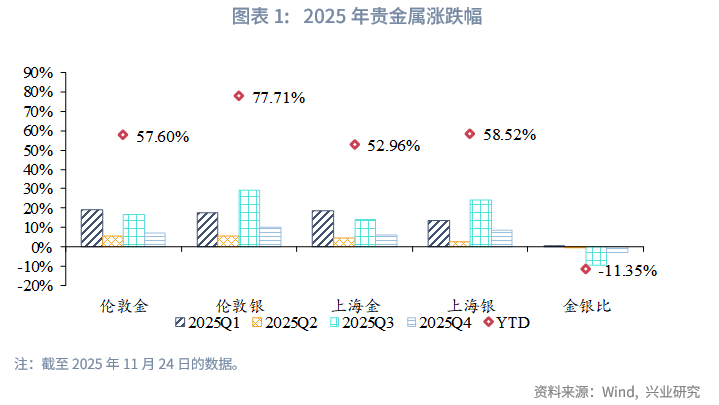
Group 1 - The core viewpoint of the article is that the logic for the long-term rise in gold prices remains intact, with manageable adjustments expected in 2025 and a favorable outlook for 2026 due to potential interest rate cuts by the Federal Reserve and inventory cycles [1][30][64] - Gold prices are projected to have a central expected return of $4,993 per ounce, with an upper limit of $5,793 and a lower limit of $4,193 based on various models [1][69] - The cumulative increase in gold prices for 2025 is reported at 57.60% for London gold, 52.96% for Shanghai gold, and 77.71% for London silver, indicating strong performance among precious metals [2] Group 2 - The U.S. economy is expected to experience a "soft landing" in 2026, with a potential rebound in housing demand and investment cycles supporting gold prices [31][38] - The inventory cycle is anticipated to reach a low in the first half of 2026, with a possible recovery in the second half, which may influence gold price movements [32][38] - The macroeconomic environment is projected to favor the U.S. dollar in a low-growth scenario, which could have implications for gold prices [44][45] Group 3 - The development of cryptocurrencies is currently seen as having limited negative impact on gold prices, especially as Bitcoin's status faces scrutiny [57][58] - The introduction of "digital gold" by the World Gold Council aims to enhance the accessibility and liquidity of gold, potentially increasing its competitiveness in the digital asset space [59][60] - Historical patterns suggest that significant adjustments in gold prices typically occur after strong upward trends, with adjustments expected to remain controlled through the end of 2025 [64][65]
李迅雷:期望“十五五”期间出台一批超预期超常规刺激政策
Di Yi Cai Jing· 2025-11-26 03:06
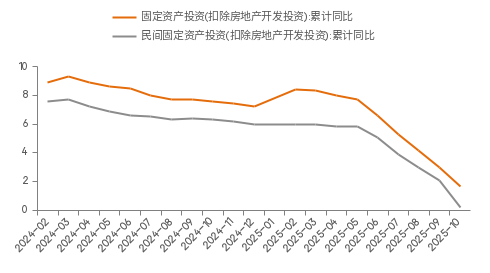
Real Estate Cycle - The long-term upward phase of the real estate market from 2000 to 2020 led to a widespread belief that housing prices would not decline, despite contrary predictions from analysts like Professor Zhu Ning [1][2] - The average rental yield in core cities of China is around 2%, indicating a price-to-earnings ratio of 50 times, while Shanghai's rental yield is even lower, suggesting a need for adjustment to around 3% [2] - Real estate investment has seen a significant decline, with a 14.7% year-on-year drop in the first ten months, raising concerns about a consensus bearish outlook [2][3] Economic Impact - The real estate sector influences numerous industries, and its downturn is expected to affect economic growth through 2026, with private investment growth already showing a significant decline [2][3] - The need for a real estate stability fund has been suggested, as urbanization continues and many new citizens have yet to purchase homes, indicating potential structural shortages in first- and second-tier cities [3] Export and Trade - China's exports have shown resilience, with a 5.3% increase in the first ten months, despite concerns over a potential downturn in external demand in the coming year [4][5] - The ongoing trade tensions and tariff wars, particularly with the U.S., are expected to impact trade volumes negatively, with a forecasted reduction in trade with major economies [5] Consumption and GDP Contribution - Consumption is projected to become a more significant contributor to GDP growth, especially as investment contributions decline [8] - The current economic environment shows a trend of high consumer debt levels, which may hinder future consumption growth unless addressed through fiscal measures [9] Fiscal and Monetary Policy - The fiscal policy for 2026 is expected to be more aggressive, with an anticipated increase in the broad deficit to around 13.2 trillion yuan, reflecting the need for stimulus amid economic pressures [15][19] - Interest rates may be lowered to stimulate demand, although this poses challenges for banks' net interest margins [18] Stock Market Dynamics - The stock market is currently facing resistance, with the need for corporate profit growth to drive a sustainable bull market, as recent gains have been primarily due to valuation increases rather than earnings growth [22][23] - Structural bull markets are anticipated, particularly in the context of the ongoing AI revolution, which may provide opportunities for growth in specific sectors [24]
李迅雷:对当前经济热点的一点思考 | 立方大家谈
Sou Hu Cai Jing· 2025-11-25 14:11
Group 1: Real Estate Cycle - The long-term upward cycle of real estate from 2000 to 2020 led to a widespread belief that housing prices would not decline, despite contrary predictions from analysts like Professor Zhu Ning [2][3] - The average rental yield in core cities of China is estimated to be around 2%, indicating a high price-to-earnings ratio of 50 times, suggesting that a rental yield of 3% is necessary for a price bottom [3][6] - Real estate development investment in China decreased by 14.7% year-on-year in the first ten months of the year, indicating a potential acceleration in the downward trend [3][6] Group 2: Economic Impact - The decline in the real estate sector is expected to continue affecting China's economy through 2026, with significant impacts on related industries and financial sectors [3][6] - The slowdown in urbanization, aging population, and declining total population are identified as pressures on the real estate market post-2021 [6] - The contribution of real estate to GDP and employment is significant, and its decline could hinder overall economic growth [6][12] Group 3: Export Trends - China's exports grew by 5.3% in the first ten months of the year, contrary to initial fears of negative growth, with a notable increase in capital and technology-intensive products [7][8] - However, the growth in exports is expected to slow down in the coming year due to the diminishing "import grabbing" effect from the U.S. and high base effects from previous years [11][12] - The ongoing trade tensions and tariff wars between major economies are likely to impact future export performance negatively [11][12] Group 4: Consumer Spending - Consumer spending is projected to become a more significant contributor to GDP growth, especially as export growth declines [12][16] - The consumption growth has shown a pattern of being higher in the first half of the year, with expectations of a slowdown in the latter half due to high base effects from previous years [15][16] - Long-term improvements in consumption will depend on rising household incomes and increased marginal propensity to consume, which are currently challenged by the real estate downturn [16][19] Group 5: Fiscal and Monetary Policy - The fiscal policy for 2026 is expected to be more aggressive, with a projected increase in the general deficit from approximately 11.9 trillion yuan to 13.2 trillion yuan [28][31] - Interest rates may be lowered by 10-20 basis points in 2026 to stimulate demand, although this poses challenges for banks' net interest margins [35][36] - Coordination between fiscal and monetary policies is deemed essential to address the economic challenges and support growth [40][41] Group 6: Stock Market Outlook - The stock market has faced resistance around the 4000-point mark, with the need for corporate profit growth to outpace GDP growth for a sustained bull market [41][43] - The current economic environment suggests that corporate profitability must improve significantly to support stock market performance [41][43] - Structural bull markets are anticipated, particularly in the context of the AI revolution, which may provide new growth opportunities for companies [47][48]
对当前经济热点的一点思考
李迅雷金融与投资· 2025-11-25 11:53
Group 1: Real Estate Cycle - The long-term upward cycle of real estate from 2000 to 2020 led to a belief that housing prices would not decline, but this notion has been challenged as prices have started to fall [2][3] - The average rental yield in core cities of China is estimated to be around 2%, indicating a high price-to-earnings ratio of 50 times, suggesting that prices may need to adjust to a more sustainable level [3] - Real estate development investment in China has decreased by 14.7% year-on-year in the first ten months of the year, indicating a potential acceleration in the downward trend [3][6] Group 2: Economic Impact of Real Estate - The decline in the real estate sector is expected to continue affecting the overall economy, with private investment growth dropping by 4.5% year-on-year, even excluding real estate investments [3][6] - The real estate downturn is also negatively impacting financial sectors such as banking and trust, although state-owned enterprises are providing some stability [3][6] Group 3: Export Trends - China's exports have shown resilience, with a 5.3% increase in the first ten months of the year, despite concerns about negative growth earlier in the year [7][10] - However, the export growth rate is expected to slow down in the coming year due to the diminishing "import grabbing" effect from the U.S. and high base effects from previous years [10] Group 4: Consumer Spending - Consumer spending is projected to contribute more than half of GDP growth this year, as capital formation's contribution declines [11][14] - The consumption growth has shown a pattern of being high in the first half of the year and lower in the second half, influenced by previous stimulus measures [14][17] Group 5: Fiscal and Monetary Policy - The fiscal policy for 2026 is expected to be more aggressive, with a projected increase in the general deficit from approximately 11.9 trillion yuan to 13.2 trillion yuan [26][28] - Interest rates may be lowered by 10-20 basis points in 2026, but this poses challenges for banks' net interest margins [29][35] Group 6: Stock Market Dynamics - The stock market has faced resistance around the 4000-point mark, with valuation increases rather than profit growth driving recent performance [39][41] - For a sustained bull market, corporate profits must grow faster than GDP, which has not been the case recently [41][44] Group 7: Future Outlook - The GDP growth target for 2026 is estimated to remain around 5%, but achieving this will depend on various uncertain factors, including growth rates and exchange rates [24][25] - The real estate sector's ongoing challenges and the need for structural reforms in fiscal and monetary policies are critical for future economic stability [28][48]

80后、90后这一代,恰恰是房地产里亏最惨的
Sou Hu Cai Jing· 2025-10-23 17:18
Core Insights - The article highlights the struggles faced by the post-80s and post-90s generations in the context of the real estate market, emphasizing the disparity between effort and reward in their pursuit of homeownership [1][5][12] Group 1: Societal Expectations and Reality - The younger generations have been raised with the belief that hard work leads to stability and homeownership, following a traditional life path of education, employment, and family formation [3] - Despite their adherence to societal norms, many individuals find themselves in dire situations due to the timing of their real estate purchases, particularly those who bought homes at peak prices [11][12] Group 2: Real Estate Market Dynamics - The years 2020 to 2022 marked a peak in housing prices, coinciding with a significant number of homebuyers entering the market, leading to a situation where many are now facing financial losses [8][10] - Data indicates that from 2018 to 2021, real estate sales remained high at around 1.7 billion square meters annually, but this figure plummeted to 1.36 billion square meters in 2022 and is projected to drop further to 0.98 billion square meters in 2024 [10] Group 3: Impact on Homebuyers - Approximately 50 million families purchased homes during the peak years, many of whom are now experiencing significant financial strain as property values have declined [10] - The article illustrates the plight of first-time homebuyers who entered the market during the peak, highlighting a specific case of a young individual who, despite following societal expectations, found himself in a precarious financial situation due to market timing [11][12]

First American(FAF) - 2025 Q3 - Earnings Call Transcript
2025-10-23 16:02
Financial Data and Key Metrics Changes - The company reported adjusted earnings per share (EPS) of $1.70 for Q3 2025, reflecting a 27% increase year-over-year [4] - Adjusted consolidated revenue grew by 14% [4] - GAAP earnings were $1.84 per diluted share [9] - Investment income increased by 12% to $153 million [10] - The provision for policy losses and other claims remained unchanged at $42 million, representing 3.0% of title premiums and escrow fees [12] Business Line Data and Key Metrics Changes - Commercial revenue surged by 29% to $246 million, with a record average revenue per order exceeding $16,000 [4][9] - Purchase revenue declined by 2%, primarily due to a 5% drop in closed orders [9] - Refinance revenue rose by 28%, although it accounted for only 6% of direct revenue [9] - The agency business generated $799 million in revenue, up 17% from the previous year [10] - Home warranty segment revenue was $115 million, a 3% increase, with a loss ratio improvement to 47% [13][14] Market Data and Key Metrics Changes - The commercial market showed broad-based strength, particularly in the industrial sector, while the residential market faced challenges due to affordability and elevated mortgage rates [6][7] - For October, commercial orders were up 14%, while purchase orders were down 6% [12] Company Strategy and Development Direction - The company is focused on modernizing its platforms and integrating AI to drive productivity gains and unlock new revenue opportunities [8] - Investments in data, technology, and AI are expected to position the company favorably as the market strengthens [7] - The company is optimistic about capturing growth when purchase volumes normalize [7] Management's Comments on Operating Environment and Future Outlook - Management noted the resilience of the business despite challenging market conditions in the residential sector [4] - The company is at the early stages of the next real estate cycle and is well-positioned for future growth [7] - Management expressed optimism regarding the commercial market's momentum and the potential for continued strong performance [17] Other Important Information - The company raised its common stock dividend by 2% to an annual rate of $2.20 per share [14] - Share repurchases totaled 598,000 shares for $34 million at an average price of $56.24 [14] - The debt-to-capital ratio was reported at 33.0%, with a lower ratio of 22.5% when excluding secured financings [14] Q&A Session Summary Question: Sustainability of commercial ARPO - Management indicated that the strong commercial average revenue per order (ARPO) is sustainable and expected to continue building in Q4 [17] Question: Outlook for investment income - Investment income is expected to decline slightly in Q4 due to headwinds from rate cuts [18] Question: Recent trends in refinance orders - The company reported opening about 875 refinance orders per day in early October [19] Question: Update on Endpoint and Sequoia pilots - Both Endpoint and Sequoia are on track, with Endpoint expected to roll out in December and Sequoia testing for purchase transactions planned for Q1 [24][26] Question: Margin impact of Endpoint and Sequoia - Management stated that the margin drag from these programs will no longer be disclosed as they are being integrated into core operations [32] Question: Default and other order count increase - An increase in default activity was noted, but it is not considered material to the business [39] Question: Regulatory updates on title waivers - No new updates were provided since the last quarter, with expectations of a 6.2% rate cut in Texas [72] Question: Investment income outlook for 2026 - Investment income is expected to face headwinds from rate cuts, but operational enhancements may help offset some impacts [75]

房价到底了吗?看富豪亏惨、连跌50个月的数据,普通人该这样判断
Sou Hu Cai Jing· 2025-09-29 10:55
Core Viewpoint - The current real estate market is experiencing significant challenges, with both wealthy individuals and ordinary buyers facing difficulties in property sales and asset depreciation. Caution is advised for potential homebuyers as the market is not as favorable as it once was [2][4][6]. Market Overview - Wealthy individuals, including real estate moguls like Wang Jianlin and Wang Sicong, are encountering financial issues, indicating a broader industry downturn. Wang Jianlin faced a court execution for a payment of 186 million, highlighting the severity of the market conditions [4][6]. - Wang Sicong's luxury property in Shanghai, previously valued at over 100 million, has dropped to 60 million with no buyers, reflecting a loss of over 40 million. This trend suggests that if high-end properties are struggling, ordinary homes are likely in an even worse position [6][11]. Historical Price Trends - The peak of the real estate market occurred in 2021, with many cities reaching historical price highs. For instance, average prices in major cities like Shenzhen and Beijing were significantly elevated during this period [8][9]. - From 2021 to September 2023, a continuous decline in second-hand housing prices has been observed, with many homeowners reducing prices by 5% to 10% to attract buyers [11][13]. - As of August 2024, the national second-hand housing prices have been in decline for over 50 months, marking the longest downturn in nearly two decades, surpassing the duration of the 2008 financial crisis [17][19]. Future Outlook - The People's Bank of China has indicated that the real estate sector still requires time to reduce inventory, suggesting that a quick rebound in prices is unlikely [19][21]. - The real estate cycle, known as the Kuznets cycle, typically lasts 15-25 years, indicating that individuals may only experience two complete cycles in their lifetime. The current phase is characterized by a prolonged downturn followed by a potential stabilization period [23][24]. - Historical data shows that after a bubble burst, average price declines can reach around 34%, with some extreme cases exceeding 50%. Current declines in first-tier cities are around 30%, suggesting limited further downside [26][39]. Investment Considerations - For first-time homebuyers, it is recommended to purchase when suitable without overthinking short-term fluctuations. In contrast, investors should be cautious, as 90% of properties may not yield returns and could become liabilities [43][44]. - The era of guaranteed profits in real estate has ended, necessitating a more discerning approach to property purchases based on location, amenities, and personal needs rather than speculation [46].