消费理性回归

Search documents
十七年从流量博弈到价值创造 今天我们还需要“双十一”吗
He Nan Ri Bao· 2025-11-10 23:19
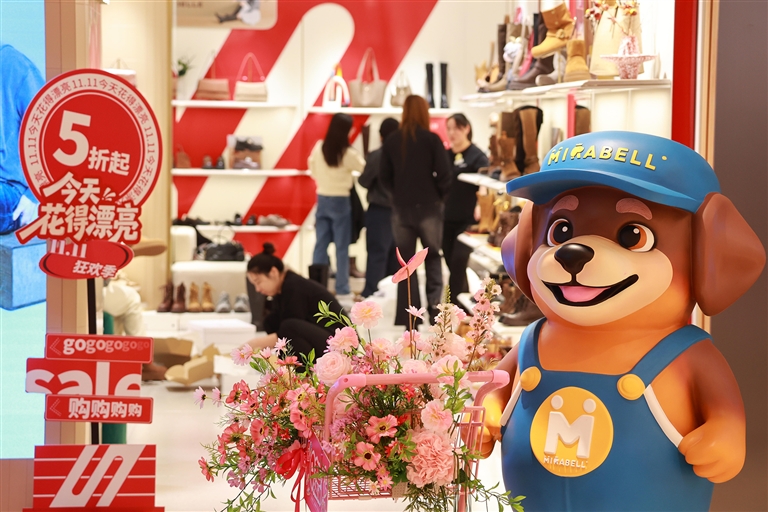
Core Insights - The "Double Eleven" shopping festival has evolved from a single-day event to a month-long promotional period, reflecting a shift in consumer behavior towards more rational purchasing decisions [9][10][11] - The integration of online and offline retail strategies is becoming more pronounced, with businesses leveraging both channels to enhance consumer engagement and drive sales [19][20] Group 1: Changes in Consumer Behavior - Consumers are increasingly adopting a rational approach to shopping, moving from impulsive buying to need-based purchases, as evidenced by the slowing growth rates of GMV during "Double Eleven" [12][13] - The simplification of promotional strategies by e-commerce platforms indicates a maturation in consumer shopping habits, with a preference for straightforward discounts over complex promotional rules [12][13] Group 2: E-commerce Strategies - The duration of promotional activities has been extended significantly, with major platforms launching campaigns as early as September, leading to a competitive landscape focused on supply chain efficiency and customer experience [10][11] - Instant retail has emerged as a key player in this year's "Double Eleven," with platforms like Meituan and Taobao integrating rapid delivery services, enhancing consumer convenience and expanding market reach [15][16][17] Group 3: Offline Retail Participation - Physical retail spaces are actively participating in "Double Eleven," utilizing promotional events and experiential marketing to attract consumers, thereby benefiting from the increased foot traffic generated by online campaigns [18][19] - The emotional connection and experiential value offered by brick-and-mortar stores are becoming significant factors in consumer decision-making, as shoppers seek tangible interactions with products [20]




国庆只剩1天了!却发生5个大反常现象,和往年大不相同
Sou Hu Cai Jing· 2025-11-10 00:38
Core Insights - The article highlights a significant shift in consumer behavior during the National Day holiday, indicating a decline in traditional festive spending patterns and a move towards more rational consumption choices [1][3]. Group 1: Consumer Behavior Changes - There is a noticeable decline in festive spending, with traditional markets and events experiencing reduced activity compared to previous years [1][3]. - Consumers are adopting a more rational approach to shopping, focusing on buying only what they need rather than stockpiling goods [4][6]. - The demand for luxury items, such as high-priced crabs and premium liquors, has decreased significantly, with prices dropping and sales volumes plummeting [7][11]. Group 2: Market Dynamics - The pork market remains stable due to sufficient supply, including stable pig stocks and government meat reserves, leading consumers to resist paying inflated prices during the holiday [6]. - The wedding market is experiencing a downturn, with a 30% decrease in bookings compared to last year, as couples prioritize cost-saving measures over traditional lavish celebrations [13]. - The liquor market is facing excess inventory, with prices for premium brands like Moutai and Wuliangye dropping significantly, indicating a shift away from ostentatious spending [15][18]. Group 3: Restaurant and Tourism Trends - The restaurant industry is adapting to changing consumer preferences, with a rise in demand for affordable dining options and a decline in expensive banquet-style meals [20]. - Tourists are increasingly valuing transparency and fairness in pricing, with businesses adopting honest practices to attract customers [21][24]. - The overall trend reflects a return to rational consumption, where consumers prioritize genuine value over superficial luxury [25][27].
劲酒预计今年业绩增长超20%
Cai Jing Wang· 2025-10-19 11:51
Group 1 - The core viewpoint is that the growth of the company's product, Jinjiu, is present but not as rapid as some reports suggest, with an overall growth of about 10% this year [2] - The company attributes its growth to the health and wellness trend, as well as a return to rational consumption among users who value cost-effectiveness [2] - Jinjiu has expanded its market presence to 36 countries and regions, with increasing popularity among overseas consumers due to the appeal of Chinese manufacturing and culture [2] Group 2 - The company has built a user data platform three years ago, revealing that over 9 million new users aged 18 to 30 have joined in the past year, indicating a shift in the user demographic [3] - There has been a notable increase in female consumers, with over 4 million new female users added in the past year [3] - Younger consumers are experimenting with new mixing methods for Jinjiu, such as combining it with Sprite, Wangzai, and Red Bull [3]
消费理性回归:2025抖音数据洞察,丰草牧场以超高复购率领跑驼奶市场
Zhong Guo Shi Pin Wang· 2025-09-26 10:10
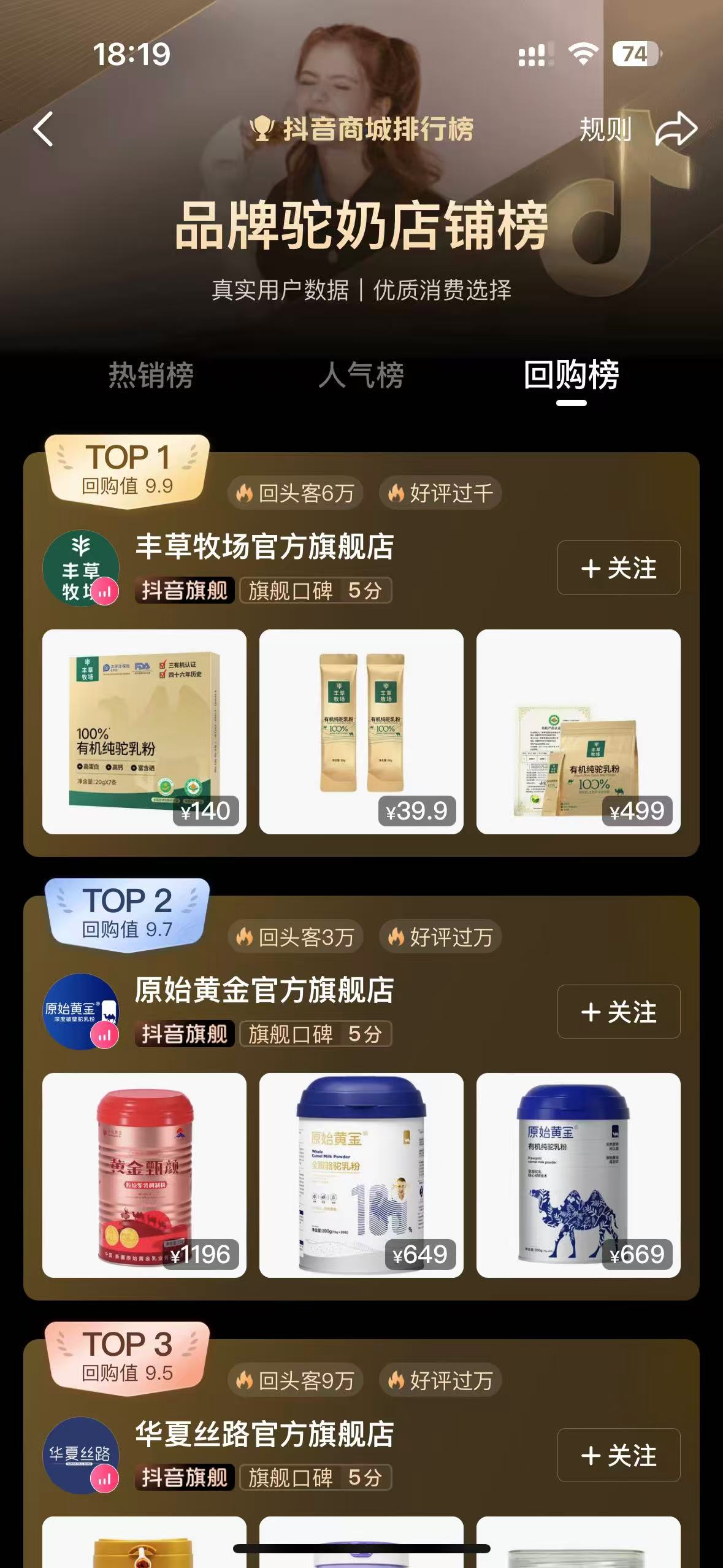
Core Insights - The camel milk powder market is experiencing intense competition, with brands vying for consumer attention through various marketing strategies. The key to sustained consumer trust lies in the recent "repurchase ranking" released by Douyin E-commerce, which reflects genuine consumer behavior and brand loyalty [1][4]. Group 1: Repurchase Ranking - The repurchase ranking is based on millions of real consumer behaviors on the Douyin platform, incorporating metrics such as repurchase rate, user reviews, and consumption cycles, providing an objective reference for brand appeal [1]. - The top brand in the repurchase ranking is Fengcao Pasture, which has been in the dairy industry for 47 years and only recently launched its own brand image, highlighting that true quality and long-term consumer trust are essential for enduring success [4]. Group 2: Fengcao Pasture's Strengths - Fengcao Pasture is recognized as a pioneer in "three organic camel milk," having achieved organic certification in pasture, camel milk, and processing, establishing a new benchmark for quality in the industry [5]. - The company cultivates 1,200 acres of organic alfalfa in the Ili River Valley, a prime dairy source, and has access to 114,100 acres of natural grassland, ensuring that camels are fed high-quality natural herbs and mineral-rich water, which enhances milk quality [7]. - Fengcao Pasture's 3.0 smart factory employs fully automated processes from raw milk to powder, adhering to maternal and pharmaceutical industry standards, and utilizes low-temperature spray drying technology to preserve nutritional value [7]. Group 3: Market Trends - With the Mid-Autumn Festival and National Day approaching, organic camel milk powder is becoming a popular gift choice, driven by its nutritional benefits, including 18 amino acids and various vitamins, making it suitable for all age groups [8]. - The upcoming implementation of the new national standard for camel milk (GB 19644—2024) in February 2025 is expected to further standardize the industry, favoring brands that maintain high-quality standards [8].
如何应对行业周期?白酒企业集体转向“三低”市场
Sou Hu Cai Jing· 2025-09-05 10:07
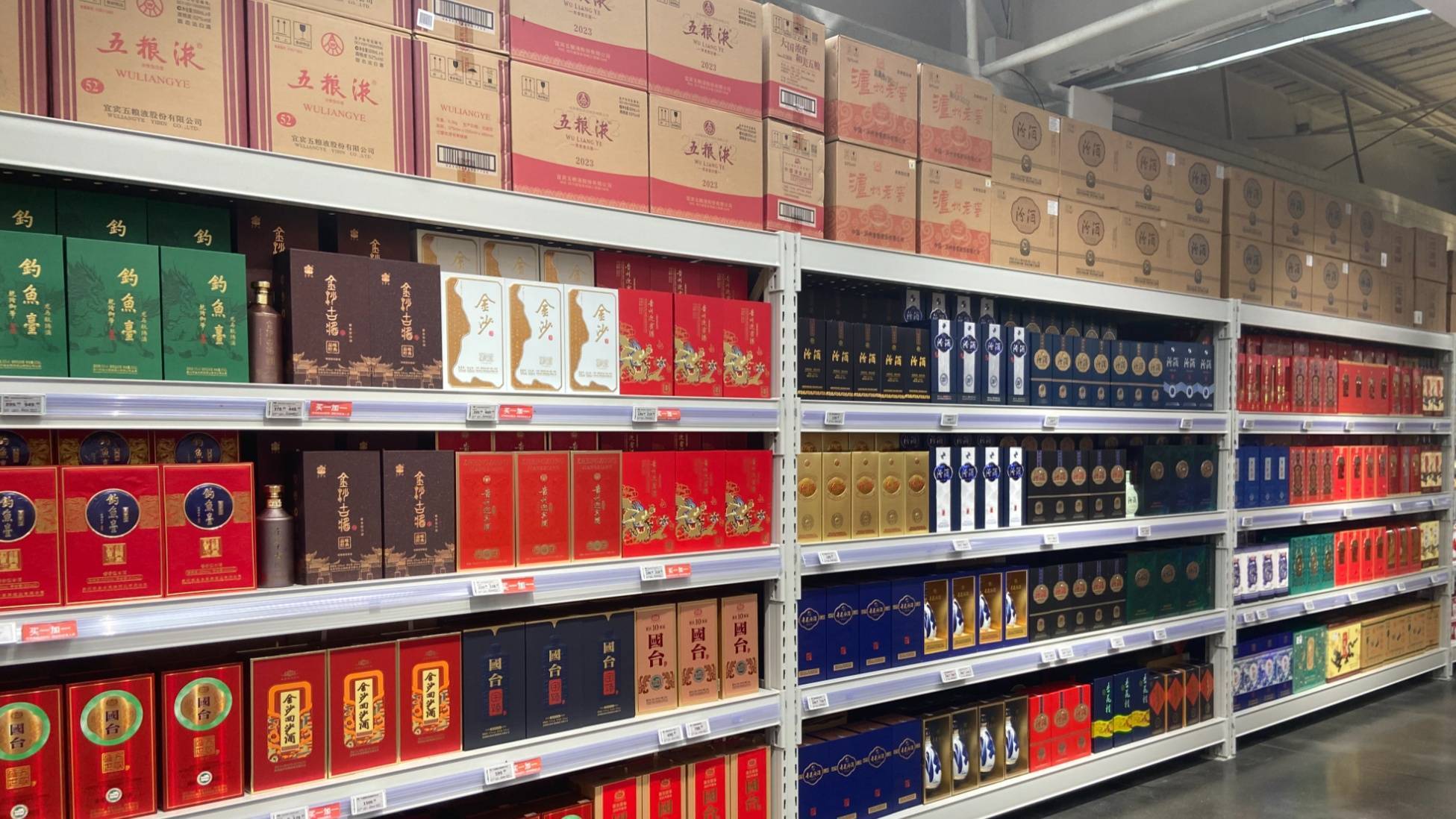
Core Insights - The Chinese liquor industry is undergoing a deep adjustment, with companies shifting their focus towards low-alcohol, low-priced products, and lower-tier markets due to macroeconomic pressures and changing consumer behaviors [1][6]. Group 1: Low-Alcohol Products - Several liquor companies have recently launched low-alcohol products targeting younger consumers, with notable releases including Gujing's 26-degree "Light Gu20," Wuliangye's 29-degree "Wuliangye Yijian Qingxin," and Shede's 29-degree "Shede Zizai" [2]. - The China Alcoholic Drinks Association predicts that the low-alcohol market will exceed 74 billion yuan by 2025, with a compound annual growth rate of 25% [3]. - Companies like Luzhou Laojiao are actively developing lower-alcohol products, with their 38-degree offerings now making up 50% of sales in the Guojiao 1573 series, which has surpassed 20 billion yuan in sales [3]. Group 2: Consumer Trends - The younger demographic, particularly those born in the 1980s and 1990s, along with young women, are emerging as key consumer groups, favoring personalized, low-alcohol, and aesthetically pleasing products for casual social settings [2]. - The shift in consumer preferences emphasizes a move from traditional social drinking to a focus on personal enjoyment and experience [3]. Group 3: Pricing and Market Dynamics - The demand for mid-range products is recovering slowly, while low-priced products are showing resilience, with some even experiencing growth [6]. - Wuliangye reported a production increase of 11.56% and sales growth of 12.75% for its products in the first half of 2025, driven by consumer preference for mid to low-priced options [7]. - The market is seeing a trend where high-end liquor prices are declining, and consumers are increasingly valuing cost-effectiveness, leading to a preference for lower-priced options [9]. Group 4: Market Competition and Strategy - The industry is facing intensified competition as major brands penetrate lower-priced segments, which could squeeze local brands out of their traditional markets [10][11]. - Local liquor companies are responding by launching competitively priced products, with some offering prices 20%-40% lower than similar premium products [11]. - Analysts suggest that local brands should leverage their regional advantages and focus on differentiation rather than competing on price with larger brands [11].



一瓶几十元,白酒巨头狂卷光瓶酒
Xin Lang Cai Jing· 2025-07-16 05:50
Group 1 - The core viewpoint of the article highlights the growing popularity of low-priced "light bottle" liquor in the Chinese market, as high-end liquor brands struggle with price declines and sales challenges [1][14][16] - Major liquor companies are launching new products in the light bottle segment, with notable examples including Yanghe's "Yanghe Daqu High Line Light Bottle Liquor" priced at 59 yuan, which sold over 10,000 bottles in 48 hours [1][4] - The light bottle liquor market has reached a scale of approximately 1.5 trillion yuan in 2024, with continued growth expected in 2025, making it one of the most dynamic segments in the liquor industry [3][10] Group 2 - Consumer behavior is shifting towards more rational choices, with a significant portion of consumers prioritizing cost-effectiveness and practicality in their liquor purchases [10][11] - The traditional light bottle liquor market, represented by brands like Niulanshan and Baijiu, has established a strong presence, while new entrants are emerging to capture market share amid changing consumer preferences [7][9] - The competitive landscape is intensifying as more companies enter the light bottle segment, leading to concerns about market saturation and the ability to maintain quality and differentiation [17][18] Group 3 - The high-end liquor market, particularly brands priced above 1,000 yuan, is experiencing significant price declines, with major brands like Moutai and Wuliangye seeing their market prices drop below their official guidance prices [16][17] - The shift towards light bottle liquor reflects a broader trend in the industry where companies are adapting to consumer demands and seeking new growth opportunities in a challenging market environment [15][17] - The light bottle segment is increasingly viewed as a mainstream choice, moving away from its previous perception as a low-end product, and is now seen as a potential growth engine for liquor companies [17][18]





啤酒拯救白酒?年轻人正用“平价快乐”定义酒桌江湖
Qi Lu Wan Bao Wang· 2025-06-27 07:19
Group 1: Market Trends - The beer market is thriving as consumer preferences shift from traditional spirits like baijiu to beer, especially among younger generations born in the 1990s and 2000s [1][6][8] - The overall sales of high-end baijiu have significantly declined, with some retailers reporting daily revenues dropping from tens of thousands to just over a hundred yuan [2][3] - The white liquor market is experiencing a downward trend, with production volume decreasing from 13.58 million kiloliters to 4.145 million kiloliters, a cumulative decline of 69.5% from 2016 to 2024 [3][4] Group 2: Consumer Behavior - Consumers are increasingly favoring lower-priced baijiu options, with a notable shift towards self-consumption and family-oriented drinking rather than business-related consumption [3][4][5] - The most popular price range for baijiu is now between 100 to 300 yuan, reflecting a preference for affordable options among consumers [4][5] - The trend of home drinking has led to a rise in the popularity of "staple liquor," with consumers purchasing in bulk for personal use [7][8] Group 3: Industry Dynamics - The beer industry is seeing a robust growth trajectory, with major brands capturing approximately 70% of the market share, and companies like Yanjing Beer reporting a 94.3% increase in net profit [6][8] - The market for craft and specialty beers is expanding, driven by younger consumers' desire for diverse and innovative options [6][8] - The competitive landscape of the beer market is solidifying, with leading brands maintaining stable growth in sales, revenue, and net profit [6][8]
消费理性回归 电商走向共赢
Zheng Quan Shi Bao· 2025-06-18 18:30
Core Insights - The 6.18 shopping festival has shifted from intense competition to a more collaborative approach among e-commerce platforms, reflecting changes in consumer behavior and preferences [1][2][3] Group 1: Changes in Consumer Behavior - Consumers are increasingly fatigued by complex promotional rules and prefer simpler, more direct discounts, leading platforms to simplify their promotional strategies [1][2] - Over 80% of consumers prefer the 6.18 promotion duration to be no longer than two weeks, with 34.2% believing two weeks is optimal for comparison shopping [2] - A growing number of consumers express indifference or even aversion to pre-sales, indicating a preference for immediate purchases [2] Group 2: E-commerce Platforms' Strategies - Major platforms like Tmall and Douyin have simplified their promotional rules, moving towards direct discounts rather than complicated tiered discounts [1][2] - Platforms are exploring cooperative strategies, such as Tmall's partnership with Xiaohongshu to drive traffic through shared marketing efforts [2] - JD.com is integrating external traffic sources and collaborating with Bilibili to create a marketing ecosystem that enhances user engagement [2] Group 3: Supply Chain and Logistics Innovations - E-commerce platforms are focusing on supply chain efficiency and consumer experience, with initiatives like Tmall's establishment of a local warehouse in Xinjiang to improve delivery times [3] - JD.com has launched a comprehensive logistics enhancement plan, including the deployment of high-density unmanned vehicles and the opening of self-operated stations in remote areas [3] Group 4: Marketing and Innovation - The 6.18 festival has seen the introduction of innovative marketing strategies, such as live streaming and virtual fitting rooms, enhancing consumer engagement and experience [4] - The shift towards rational competition emphasizes the importance of resource integration and efficiency over mere sales volume, indicating a potential turning point for the e-commerce industry [4]

选错阵地=烧钱!货架/内容/直播/社交电商模式解析
Sou Hu Cai Jing· 2025-06-10 04:20
Core Viewpoint - The sales of top live-streaming e-commerce hosts have halved during the 2024 Double 11 shopping festival, with return rates for popular women's clothing stores soaring above 90%, prompting many e-commerce operators to return to traditional shelf-based e-commerce models. This shift is attributed to the decline of traffic dividends, high operational costs, and a return to rational consumer behavior, indicating that relying solely on impulse buying driven by interest e-commerce and big data recommendations is not sustainable [1]. Group 1: E-commerce Models - Shelf e-commerce is a fundamental model that mirrors traditional offline supermarkets by categorizing products online to attract users to search and purchase actively [2]. - Content e-commerce has emerged as a new shopping method that uses high-quality content (text, short videos, live streams) to subtly guide consumer behavior, where "content is the marketplace" [5]. - Live-streaming e-commerce involves hosts showcasing products in real-time and interacting with consumers, driven by emotional decision-making, and differs from other content e-commerce by emphasizing user participation [11]. Group 2: Advantages and Disadvantages - Shelf e-commerce advantages include a wide range of products, one-stop shopping convenience, stable logistics, and mature after-sales systems, while disadvantages include intense competition, low margins, and insufficient personalized recommendations [7]. - Content e-commerce benefits from driving consumption through integrated product information and high user engagement, but faces challenges such as low brand loyalty and high impulse purchase return rates [8][15]. - Live-streaming e-commerce has high impulse purchase characteristics and fosters trust through real-time interaction, but it also suffers from high return rates and limited market reach [16]. Group 3: Comparative Analysis - The driving logic of shelf e-commerce is search and comparison (user finds products), while content e-commerce relies on content to stimulate interest (products find users), and live-streaming e-commerce focuses on real-time interaction [17]. - User roles differ across models: shelf e-commerce users are active shoppers, content e-commerce users are content consumers, and live-streaming e-commerce users are audience members [17]. - Core scenarios vary: shelf e-commerce is for clear demand orders, content e-commerce stimulates demand during browsing, and live-streaming e-commerce relies on time-limited promotions [17]. Group 4: Industry Insights - The e-commerce landscape is evolving, and regardless of the chosen model, success hinges on analyzing and monitoring transaction efficiency, including return rates and conversion costs [1]. - Nine Numbers Cloud BI provides real-time data analysis and monitoring capabilities for e-commerce businesses, supporting multi-dimensional evaluation of return performance and profit margin calculations to identify high-profit products and loss items [1].
食品饮料周报:白酒配置价值更强,大众品拥抱新消费
Zheng Quan Zhi Xing· 2025-05-23 07:20
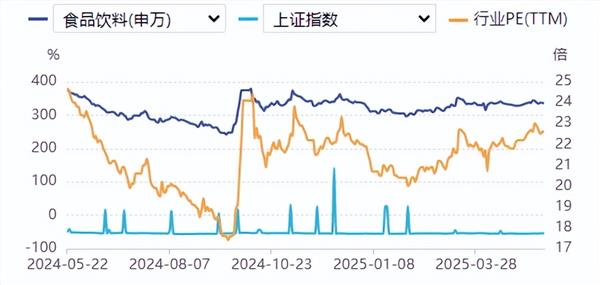
Market Performance - The Shanghai Composite Index decreased by 0.18% and the Shenwan Food and Beverage Index fell by 0.92% during the week of May 19 to May 23, 2025 [1] Institutional Insights - Open Source Securities recommends a combination of Shanxi Fenjiu, Kweichow Moutai, and Ximai Food, highlighting that Shanxi Fenjiu faces short-term demand pressure but has strong mid-term growth potential [2] - Guizhou Moutai is focusing on sustainable development and increasing its dividend payout ratio, indicating a long-term positive outlook [2] - Ximai Food is expected to improve profitability due to stable growth in its oat business and better raw material costs [2] Industry Recommendations - Zheshang Securities suggests focusing on leading liquor companies such as Shanxi Fenjiu and Kweichow Moutai, as well as cyclical stocks like Luzhou Laojiao and Yingjia Gongjiu [3] - Recommendations for consumer goods include companies that focus on cost control and new consumption trends, such as Ximai Food and Weifang Zhai [4] Macro Events - Japan's rice prices surged by 98.4% year-on-year in April, marking the highest increase since 1971, with the average price of 5 kg of rice reaching 4268 yen [5] - In Sudan, food prices increased by 124% year-on-year in April, with significant rises in wheat and goat prices, exacerbated by currency devaluation [7] Company News - The white wine industry in Renhuai showed strong growth in the first quarter, with significant improvements in production capacity and quality [8] - Huaren Beer faced challenges with a 0.76% decline in revenue and an 8.03% drop in net profit, attributed to market contraction and extreme weather [14] - Gujing Gongjiu was involved in a legal case concerning a 166,000 yuan execution notice, raising concerns about compliance management [12] Price Trends - High-end liquor prices have seen a significant decline, with key products like Wuliangye and Moutai dropping below 1000 yuan, reflecting a market correction [10] - The liquor industry is undergoing a deep adjustment period, with a shift from capital-driven to consumer-driven dynamics [10][11]