贵金属价格波动

Search documents
Silver miners fall in premarket trading as the metal drops 2%
CNBC· 2026-02-17 13:23
Group 1 - Silver prices fell in early premarket trading, with spot silver down 2% to around $74.85 per ounce and silver futures down 4% to $74.7 per ounce [1] - Major silver mining companies experienced declines, with Hecla Mining down 3%, Endeavour Silver down 3.5%, First Majestic Silver down nearly 4%, and Coeur Mining down nearly 3.4% [2] - Silver ETFs also saw significant drops, with ProShares Ultra Silver down 7% in premarket trading, while iShares Silver Trust and ABRDN physical silver fell just over 3% [3] Group 2 - Deutsche Bank analysts noted that silver was trading $7 below its real adjusted price from 1790, indicating a potential undervaluation despite current market conditions [3] - Spot gold also experienced a decline, with prices down over 1% to $4,931 per ounce and gold futures down nearly 2% to $4,952 per ounce [3]

国际贵金属继续走低:国内多家金饰价格回落,约1530元/克
Bei Ke Cai Jing· 2026-02-16 06:13
Group 1 - International precious metals continue to decline, with spot gold dropping by 1.22% to $4976.82 per ounce and spot silver falling by 2.66% to $75.07 per ounce [1] Group 2 - Domestic gold jewelry prices remain stable, with multiple gold jewelry prices falling within the range of 1529 to 1530 yuan per gram, while Lao Feng Xiang's gold jewelry prices experienced the largest decline [2]
铂钯数据日报-20260211
Guo Mao Qi Huo· 2026-02-11 03:01
Report Industry Investment Rating - Not provided Core View of the Report - On February 10, platinum and palladium prices overall rose and then fell. The PT2606 contract closed down 0.5% to 537.5 yuan/gram, and the PD2606 contract closed down 1.06% to 429.05 yuan/gram. The decline of the US dollar index and the recovery of market liquidity led to the rise of platinum and palladium. Fundamentals such as Western countries' plans for critical minerals and relatively limited changes in New York inventories support platinum and palladium prices, but there is no significant short - term change in fundamentals, so the upside space is relatively limited. In the short term, platinum and palladium prices are expected to continue the pattern of narrow - range fluctuations. In the long - term, the supply - demand prospects of platinum and palladium are different. There is still a supply gap for platinum, while palladium tends to have a loose supply. It is recommended to allocate platinum unilaterally at low prices or continue to pay attention to the "long platinum short palladium" arbitrage strategy [5]. Summary by Relevant Catalog Price and Fluctuation - **Domestic Futures and Spot Prices**: The closing price of platinum futures main contract was 537.5 yuan/gram, down 1.39% from the previous value; the spot price of platinum (99.95%) was 540 yuan/gram, up 0.19%. The closing price of palladium futures main contract was 429.05 yuan/gram, down 2.08%; the spot price of palladium (99.95%) was 433.5 yuan/gram, down 1.03% [5]. - **International Prices**: The London spot platinum (15:00) was 2071.1 US dollars/ounce, down 1.66%; the London spot palladium was 1715.5 US dollars/ounce, down 1.42%. NYMEX platinum was 2079.3 US dollars/ounce, down 1.80%; NYMEX palladium was 1726.5 US dollars/ounce, down 1.85% [5]. - **Price Differences**: The difference between Guangzhou platinum and London platinum was 14.87 yuan/gram, up 13.28%; the difference between Guangzhou platinum and NYMEX platinum was 12.80 yuan/gram, up 25.05%. The difference between Guangzhou palladium and London palladium was - 3.84 yuan/gram, up 180.17%; the difference between Guangzhou palladium and NYMEX palladium was - 6.62 yuan/gram, up 7.88% [5]. - **Price Ratios**: The ratio of Guangzhou Futures Exchange platinum to palladium was 1.2528, an increase of 0.0088; the ratio of London spot platinum to palladium was 1.2073, a decrease of 0.0029 [5]. Inventory and Position - **Inventory**: NYMEX platinum inventory was 190,874 ounces, with no change; NYMEX palladium inventory was 646,441 ounces, down 2.44% [5]. - **Position**: NYMEX total platinum position was 73,590, down 7.37%; non - commercial net long position of platinum was 13,106, down 5.86%. NYMEX total palladium position was 17,304, down 9.51%; non - commercial net long position of palladium was 1,133, up 65.64% [5].
多家银行清退贵金属三无客户
21世纪经济报道· 2026-02-11 02:51
Core Viewpoint - The article discusses the significant fluctuations in gold prices and the resulting adjustments in gold repurchase policies by various companies and banks to manage risks and operational pressures [1][4][5]. Group 1: Gold Price Fluctuations - As of February 11, 2026, spot gold prices increased by 0.34% to $5044.7 per ounce, while spot silver rose over 1% [1]. - Year-to-date, London gold has risen by 16.82%, and London silver has increased by 14.47% [2]. Group 2: Adjustments in Repurchase Policies - Starting February 7, 2026, China Gold will suspend gold repurchase services on non-trading days, including weekends and public holidays, to adapt to market risk management requirements [4]. - Beijing Caishikou Department Store has also updated its repurchase rules, halving the daily gold repurchase limit from 200 kilograms to 100 kilograms [4]. Group 3: Risk Management Measures - The adjustments in repurchase policies are primarily due to the significant volatility in gold prices, which complicates fair pricing and increases operational pressures on gold retailers [5][6]. - Analysts expect more gold retailers to follow suit in tightening repurchase policies, focusing on risk control and operational efficiency [6]. Group 4: Bank Policies on "Three No" Clients - Several banks have begun to limit services for "Three No" clients (no positions, no inventory, no debts), reflecting a broader trend of tightening regulations in the gold trading sector [7][9]. - Since September 2025, at least 11 banks have announced adjustments to their gold trading services, including suspending new trades and closing accounts for inactive clients [9].






黄金、白银价格“过山车”,专家:当前金银市场面临的主要风险是价格波动加剧
Sou Hu Cai Jing· 2026-02-10 03:03
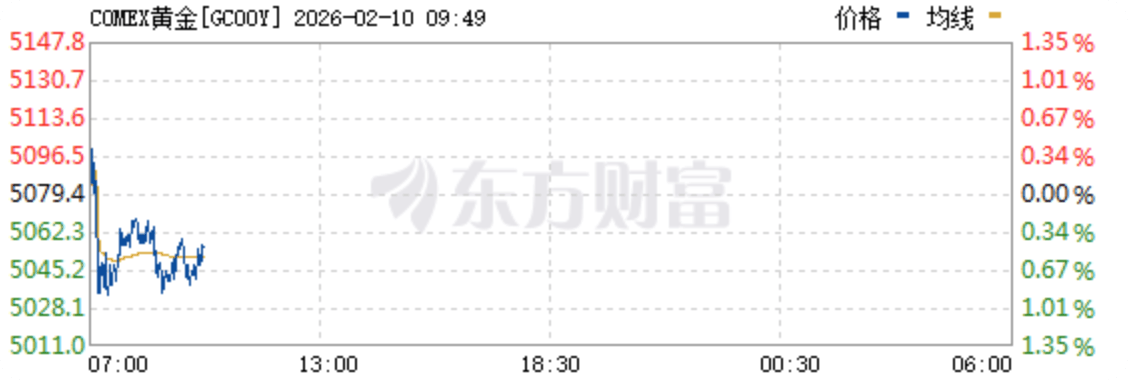
Core Viewpoint - The recent volatility in gold and silver prices is primarily driven by market reactions to Kevin Warsh's nomination as the Federal Reserve Chair, which raised concerns about potential liquidity tightening, leading to panic selling and significant price fluctuations [4][5][6]. Group 1: Market Performance - On February 10, COMEX gold futures were reported at $5052.3 per ounce, down 0.5%, while COMEX silver was at $81.6 per ounce, showing a slight correction [1]. - On February 9, gold closed up 2.1% at $5084.2 per ounce, and silver rose 8% to $83.05 per ounce [1]. - Recent market trends have shown extreme volatility, with gold reaching a peak of $5600 per ounce and silver hitting $121.64 per ounce on January 29, followed by significant declines [2]. Group 2: Factors Influencing Price Movements - The sharp fluctuations in gold and silver prices are attributed to heightened market sensitivity and panic selling triggered by Warsh's nomination, which led to fears of liquidity tightening [4][5]. - Despite the recent downturn, the long-term outlook for gold and silver remains positive due to ongoing geopolitical risks and central banks' continued gold purchases [3][6]. Group 3: Long-term Price Outlook - The long-term logic for rising gold and silver prices is supported by factors such as geopolitical risks, potential U.S. monetary policy changes, and ongoing demand in sectors like solar energy and electric vehicles, which will likely increase silver demand [7]. - The supply constraints in silver, due to its mining characteristics and production cycles, are expected to further support price increases [7]. Group 4: Market Dynamics - Silver prices are more volatile than gold due to its industrial and financial attributes, lower market scale, and high leverage in futures trading, which can amplify price movements [8][9]. - The current market is characterized by short-term fluctuations, with silver likely to experience continued volatility due to speculative trading and high leverage [10]. Group 5: Risks and Sensitivities - The gold and silver markets are currently sensitive to various risks, including changes in U.S. trade policies, fluctuations in the U.S. dollar, geopolitical events, and Federal Reserve monetary policy [12].
白银为啥跌得比黄金猛?
3 6 Ke· 2026-02-06 10:56
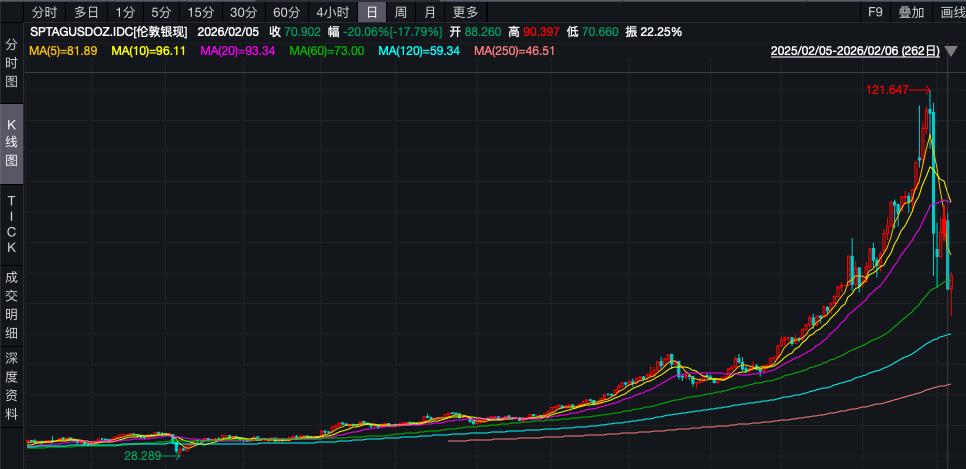
Core Viewpoint - The recent significant price fluctuations in silver, which have erased most of its gains for the year, are attributed to its dual role as both an industrial metal and a precious metal, making it more sensitive to market dynamics compared to gold [8][11][12]. Price Movements - Since January 2, 2026, silver prices have experienced a rollercoaster, starting at $72.49 per ounce and peaking at $121.65 per ounce on January 29, marking a cumulative increase of approximately 61.88% [3]. - On January 30, 2026, silver prices plummeted by 26.42% to $85.26 per ounce, and further fluctuations were noted, with a 9.69% drop on February 6, followed by a recovery to around $72.35 per ounce [3][4]. - In the same period, COMEX silver futures rose from $71.74 per ounce to $121.79 per ounce, reflecting a cumulative increase of about 63.99%, before experiencing a rapid decline [4]. Comparison with Gold - Gold prices also saw fluctuations, with a peak of $5598.75 per ounce on January 29, 2026, and a cumulative increase of approximately 24.52% for the year [6]. - From January 29 to February 6, gold prices fell by about 10.36%, while COMEX gold futures dropped by 8.62% [6][7]. Market Dynamics - The volatility in silver prices is largely due to its smaller market size compared to gold, making it more susceptible to speculative trading and market sentiment [11][12]. - Silver's dual nature as both a precious metal and an industrial metal means it is influenced by economic cycles and industrial demand, which can lead to greater price fluctuations [11][12]. Industrial Demand and Economic Factors - Despite the ongoing global re-industrialization, the demand for silver has not provided sufficient support for its prices due to a lag in demand release and economic uncertainties [13]. - Factors such as the potential appointment of a hawkish Federal Reserve chair and tightening global liquidity have contributed to negative sentiment in the silver market [13]. Future Outlook - Short-term predictions indicate continued volatility in silver prices, influenced by speculative trading and the pace of industrial demand recovery [14]. - Long-term expectations suggest that as industrial demand in sectors like solar energy and AI increases, coupled with supply constraints, silver prices may experience a recovery [15].
贵金属暴涨暴跌是实体经济毒药!央行购金才是涨跌核心
Sou Hu Cai Jing· 2026-02-06 10:53
Group 1 - The core driver of recent fluctuations in precious metals is the large-scale gold purchases by central banks, which have shifted from being market observers to "super players" influencing supply and demand dynamics [3][4] - In 2022, global central banks purchased a record 1,136 tons of gold, followed by 1,081 tons in 2023, marking two consecutive years of historical highs [3] - The recent price drop in precious metals is largely a market reaction to expectations of reduced central bank gold purchases, leading to a technical sell-off [3][4] Group 2 - Traditional factors such as Federal Reserve policies and dollar strength have been fully absorbed by the market, and their influence on gold prices is now limited [4] - The extreme volatility in precious metals prices cannot be explained by conventional economic analysis, as central bank gold purchases have become a new variable that disrupts historical norms [4][5] Group 3 - Silver, with over 60% of its demand coming from industrial applications, is particularly affected by price volatility, which poses a significant threat to the real economy [6][7] - The demand for silver in the electric vehicle sector has surged from under 1,000 tons in 2020 to over 3,500 tons in 2023, driven by increasing penetration rates [6] - The solar photovoltaic industry has also seen a dramatic increase in silver demand, with usage rising from 3,672 tons in 2022 to 6,017 tons in 2023, a nearly 64% increase [7] Group 4 - The extreme fluctuations in silver prices can severely impact production costs for industrial companies, particularly in the electric vehicle and solar sectors, where rising costs can erode profit margins [6][8] - The current economic recovery is fragile, and the volatility in precious metals prices acts as a barrier to growth, affecting production and consumer confidence [8][10] Group 5 - To mitigate the adverse effects of precious metal price volatility on the real economy, governments and central banks must take action to stabilize prices through coordinated communication and macroeconomic policies [9] - Companies should innovate to reduce reliance on silver, employing new technologies to offset rising raw material costs [9][10] - A consensus on the importance of stabilizing the precious metals market is crucial for the healthy development of the real economy, as speculative financial behaviors should not undermine industrial production and economic recovery [9][10]
金银巨震,后市如何?分析师认为……
天天基金网· 2026-02-06 08:43
Core Viewpoint - The recent volatility in the precious metals market, particularly gold and silver, has drawn significant attention due to a combination of market factors leading to sharp price fluctuations [2][3]. Group 1: Factors Influencing Precious Metals Prices - In January, precious metals prices surged due to structural supply tensions and a weaker dollar boosting investment demand [2]. - In February, a significant pullback occurred due to multiple factors, including cautious monetary policies from central banks, leading to a shift in macro expectations, and a reduction in market liquidity as institutions reduced positions before the Lunar New Year [3]. - The volatility in precious metals prices is primarily influenced by four key factors: uncertainty surrounding Federal Reserve policies, upcoming employment and inflation data, moderate performance in COMEX silver futures deliveries, and domestic silver premiums remaining within an arbitrage window [4][5]. Group 2: Silver's Performance and Market Sentiment - Silver has experienced a more pronounced decline compared to gold, highlighting market fragility and structural differentiation among commodities [5]. - The recent drop in silver prices was triggered by easing geopolitical tensions, which diminished its safe-haven appeal, compounded by increased margin requirements by the CME that withdrew high-leverage speculative liquidity [5]. Group 3: Future Price Trends and Market Dynamics - High volatility in precious metals may become the new norm, but the long-term outlook remains bullish due to a paradigm shift in the global order, with gold returning to a core asset status amid a debt crisis and a multipolar world [6]. - Three structural issues underpinning this shift include a crisis of trust in the global credit currency system, increasing demand for precious metals as a safe haven, and central banks, especially in emerging economies, raising their gold reserves [6]. - The long-term bullish logic for precious metals remains intact, with tight inventories and a potential shift in the Federal Reserve's policy stance providing support for investment demand [6][8]. Group 4: Investment Strategies and Recommendations - Investors are advised to manage their positions carefully in light of increased market volatility, with a focus on risk management rather than trend chasing [9]. - Gold retains its value as a traditional safe-haven asset, but investors should control their positions to navigate short-term fluctuations, while silver, due to its speculative nature, is recommended to be avoided in the current market environment [9].
白银一夜大跌20%,年内涨幅完全抹平
Xin Lang Cai Jing· 2026-02-06 00:02
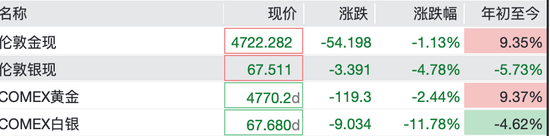
Core Viewpoint - The recent sharp decline in gold and silver prices has raised questions about whether this is a typical technical correction or indicative of deeper macroeconomic changes [2][3]. Price Movements - As of February 6, silver prices dropped over 5%, fluctuating around $67 per ounce, and have retreated more than 20% from the previous day, erasing gains made since the beginning of the year and falling over 40% from the historical high reached on January 29 [1][4]. - Gold prices fell over 1%, settling at approximately $4722 per ounce [1][4]. - The gold-silver ratio has risen to 70, marking a new high in two and a half months, indicating that silver has been underperforming compared to gold [5]. Market Dynamics - On February 5, the CME raised the initial margin requirements for COMEX gold futures from 8% to 9% and for COMEX silver futures from 15% to 18%, effective after the market close on February 6 [2][6]. - The market is experiencing increased divergence regarding the volatility of gold and silver prices, with ongoing geopolitical risks, expanding U.S. fiscal deficits, and concerns over dollar depreciation still present [3][7]. Expert Insights - William Pugliese, Chairman of the COMEX, noted that silver tends to attract short-term funds, especially towards the end of market trends, leading to significant price volatility when these funds withdraw [3][7]. - Gold is primarily viewed as a reserve asset and macro hedge, while silver exhibits stronger cyclical and leverage effects on an emotional level [3][7]. - The implied volatility of silver is currently around 85%, indicating a high level of market uncertainty, which contributes to substantial price fluctuations [3][7]. - Pugliese emphasized that silver has found support at a critical bottom during the recent downturn, suggesting that short-term traders should monitor price reactions at key retracement levels during any potential rebounds [3][7].
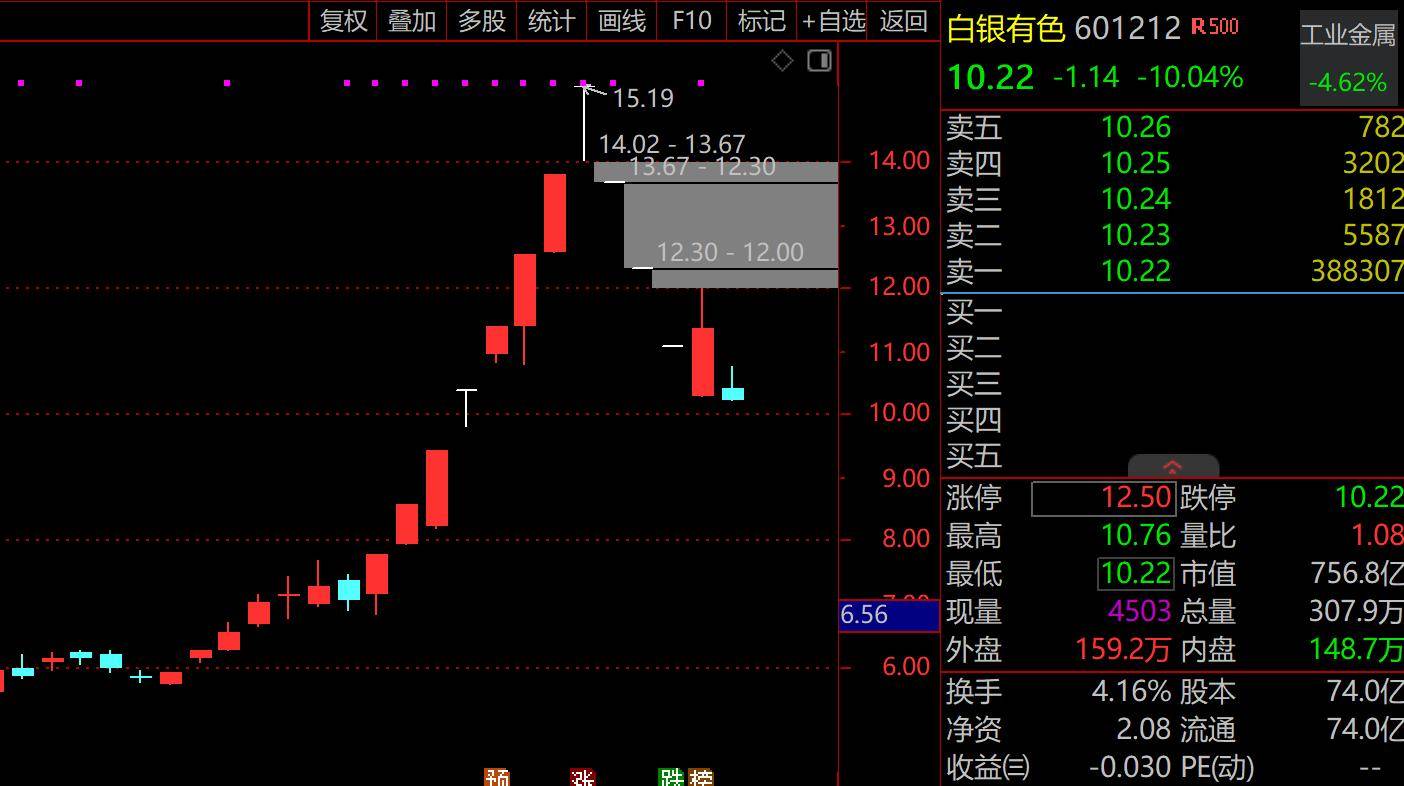
黄金白银再次大跌,现货白银一度暴跌16%,白银有色6天第5次跌停,贵金属巨震引发资金踩踏
Sou Hu Cai Jing· 2026-02-05 12:46
Group 1 - The core viewpoint is that Silver Industry has faced significant stock price declines, with the stock hitting its fifth consecutive trading limit down, indicating a clear outflow of funds [1] - Silver Industry has issued multiple stock price fluctuation announcements since January 23, 2026, with a notable announcement on February 3 indicating a cumulative price drop of over 20% across three trading days [2] - The company is expected to report a loss of between 450 million to 675 million yuan in its 2025 annual report, highlighting its operational difficulties and disconnect between previous stock price surges and weak profitability [2] Group 2 - The recent drop in precious metals prices, including a significant decline in silver prices, has contributed to the overall adjustment in the precious metals and non-ferrous sectors, leading to continued net selling of the company's stock by major funds [2] - Discussions in the Silver Industry stock forum have surged, focusing on the stark contrast between previous stock price surges and current losses, the potential for a halt in consecutive trading limit downs, and whether the company's fundamentals can support future stock performance [5] - The current market environment has seen spot silver prices plummet, with a reported intraday drop of 16%, and related investment products like the Guotou Silver LOF experiencing four consecutive trading limit downs [3]