
智驾平权

Search documents
比亚迪:2025年一季报点评:Q1业绩表现亮眼,三电核心技术再突破-20250427
Soochow Securities· 2025-04-27 01:23
Investment Rating - The report maintains a "Buy" rating for BYD [1] Core Views - The Q1 performance of BYD is impressive, with revenue reaching 170.4 billion yuan, a year-on-year increase of 36% [7] - The company expects a sales growth of 25-30% for the year, with a target of 5.5 million vehicles sold [7] - BYD's net profit for Q1 is reported at 9.2 billion yuan, showing a year-on-year increase of 100% [7] - The report anticipates a target price of 507 yuan for 2025, corresponding to a PE ratio of 28x [7] Financial Forecasts - Total revenue projections for BYD are as follows: - 2023: 602.3 billion yuan - 2024: 777.1 billion yuan - 2025: 983.3 billion yuan - 2026: 1,157.1 billion yuan - 2027: 1,316.1 billion yuan - Net profit forecasts are: - 2023: 30.0 billion yuan - 2024: 40.3 billion yuan - 2025: 55.0 billion yuan - 2026: 68.3 billion yuan - 2027: 82.1 billion yuan - The report indicates an EPS of 9.88 yuan for 2023, increasing to 27.02 yuan by 2027 [1][8] Sales and Market Share - BYD's Q1 sales reached 1 million vehicles, with a domestic market share of 35% [7] - The export volume for Q1 was 210,000 vehicles, a year-on-year increase of 110% [7] - The report highlights that high-end vehicle sales reached 53,000 units in Q1, a year-on-year increase of 37% [7] Cost and Profitability - The average selling price per vehicle in Q1 was 151,000 yuan, with a gross profit of 32,000 yuan per vehicle [7] - The report projects that single vehicle profit will maintain above 9,000 yuan despite an expected increase in costs due to the introduction of smart driving models [7] Capital Expenditure and Inventory - BYD's capital expenditure in Q1 was 37 billion yuan, a year-on-year increase of 42% [7] - The inventory at the end of Q1 was reported at 154.4 billion yuan, reflecting a 33% increase from the beginning of the year [7]

比亚迪: 车王还是车王!但能否再继续狂奔?
海豚投研· 2025-04-26 11:18
比亚迪股份于北京时间 4 月 25 日晚,港股盘后发布了 2025 年第一季度业绩。要点如下: 1. 再次交出惊艳的汽车毛利率答卷,比亚迪强降本能力毋庸置疑: 在一季度卖车周期底部,比亚迪仍然实现了非常不错的卖车毛利率水平(一季度汽车毛利率 24%,超市场预期 22.3%)。 而从历史可比性的毛销差角度来看(会计调整将质保金从销售费用端拉到销售成本端,天然拉低毛利率),一季度毛销差达到了 16.4%,竟然做到了去年一季度大 超市场预期的毛利率水平,背后仍然体现的是强供应链溢价能力 + 高垂直整合能力 + 出海高毛利三重优势的释放。 2. 卖车收入端不及预期,但在清库存周期中海豚君认为问题不大: 一季度卖车收入端看似不及预期,但海豚君认为市场对比亚迪卖车收入单价预期过高,虽然一 季度由于出海放量,出海销量占比达到新高,对单价端有正向的拉动作用(可能也是市场预期本季度单价还在环比上行的核心原因),但其实海豚君了解到,比 亚迪一季度仍然在以清老款车库存为主,且降价幅度很大,而智驾版车型的实际上市时间较晚,所以这样的卖车单价是在海豚君意料之内的。 3. 单车净利端表现不错,略超预期中枢: 对于投资者同样关注的单车净利 ...

2024年财报解读:四维图新拿到了智驾终局的船票
Zhong Jin Zai Xian· 2025-04-26 07:01
Core Insights - The year 2025 is referred to as the "Year of Universal Intelligent Driving," indicating an acceleration in the penetration of intelligent driving technology, with companies like 四维图新 emerging as key players in this competitive landscape [1] Financial Performance - 四维图新 reported a total revenue of 3.518 billion yuan in 2024, a year-on-year increase of 12.68% from 3.122 billion yuan in 2023, showcasing resilience in a challenging macroeconomic environment [1] - The company's operating losses narrowed significantly, with a 21.69% reduction in non-GAAP net profit loss compared to 2023 [1] Business Segments - The intelligent cloud segment saw substantial growth, with revenue reaching 2.254 billion yuan, up 28.96% year-on-year, becoming the main driver of the company's performance [2] - The intelligent chip business also experienced double-digit growth, with revenue from the 智芯 segment reaching 566 million yuan, a 10.92% increase [4] - In the intelligent driving sector, 四维图新 secured 3 million units of basic driving products and 600,000 units of cabin parking products from early 2024 to the first quarter of 2025, marking a significant milestone in mass production [4] Market Trends - The demand for data compliance is rising, driven by the widespread application of intelligent driving technology, which is expected to boost revenue from data compliance services [3] - The penetration rate of intelligent driving remains low, suggesting that 四维图新’s growth is just beginning, with expectations of significant loss reduction by 2025 [5] Competitive Strategy - 四维图新 has identified "cost-effectiveness" as a breakthrough point in the intelligent driving sector, similar to the previous wave of electric vehicles, enabling high-end features to be accessible in mid-range models [6][7] - The company has established a comprehensive intelligent driving product matrix covering entry-level to mid-high-end vehicles, enhancing its competitive edge through high integration and autonomy in its solutions [9] Ecosystem Collaboration - 四维图新 is actively enhancing ecosystem collaboration to drive the implementation of intelligent driving solutions, including investments in new companies and partnerships with industry leaders [12][13] - Recent collaborations with companies like 火山引擎 and 卓驭科技 aim to strengthen service capabilities and cost-effectiveness in intelligent driving products [13][14] - The integration of various capabilities, including mapping, AI, data compliance, and algorithms, positions 四维图新 as a full-stack provider in the intelligent driving ecosystem [14]

比亚迪(002594):Q1业绩表现亮眼,三电核心技术再突破
Soochow Securities· 2025-04-26 06:32
Investment Rating - The investment rating for BYD is "Buy" (maintained) [1] Core Views - The Q1 performance of BYD is impressive, with a revenue of 170.4 billion yuan, a year-on-year increase of 36%, and a net profit of 9.2 billion yuan, doubling year-on-year [7] - The company expects a sales growth of 25-30% for the year, with a target of 5.5 million vehicles sold [7] - BYD's single vehicle profit is projected to maintain above 9,000 yuan, despite an increase in costs due to the introduction of intelligent driving models [7] - The company is focusing on overseas expansion and high-end vehicle sales, with exports expected to double to 800,000 units [7] - The target price for BYD is set at 507 yuan, corresponding to a PE ratio of 28x for 2025 [7] Financial Summary - Total revenue forecast for 2023 is 602.315 billion yuan, with a year-on-year growth of 42.04% [1] - Net profit for 2023 is projected at 30.041 billion yuan, reflecting a year-on-year increase of 80.72% [1] - The EPS for 2023 is estimated at 9.88 yuan, with a PE ratio of 37.51 [1] - The company anticipates a steady increase in net profit, reaching 82.111 billion yuan by 2027, with a growth rate of 20.23% [1][8]
【招商电子】电连技术:25Q1盈利能力短期承压,看好后续智驾平权带动车载业务高增长
招商电子· 2025-04-25 10:27
点击招商研究小程序查看PDF报告原文 事件: 公司发布 2024 年及 25Q1 业绩, 24 全年营收 46.6 亿元,同比 +49.0% ,归母净利润 6.2 亿元,同比 +74.7% 。 25Q1 公司营收 11.96 亿元,同比 +15.0%/ 环比 -9.9% ;归母净利润 1.23 亿元,同比 -23.8%/ 环比 -24.7% 。我们点评如下: 24 全年收入及净利润同比高增,汽车、软板等业务贡献业绩增量。 24 全年营收 46.6 亿元,同比 +49.0% ,归母净利润 6.2 亿元,同比 +74.7% ,扣非归母净利润 6.1 亿元,同比 +75.6% ;毛利率 33.64% ,同比 +1.26pct 。分业务看, 24 全年公司汽车连接器 / 射频连接器及线缆组件 / 电磁兼容 件 / 软板 / 其他主营业务营收分别为 14.6/10.4/9.1/5.4/7.1 亿元,同比 +77.4%/30.1%/14.8%/73.1%/ 77.4% ;毛利率 39.4%/43.2%/30.8%/12.6%/27.6% ,同比 -0.7/+0.8/+1.7/+6.5/ +3.9pct 。其中 1 ) 汽 ...

上市公司财报释放了哪些景气改善线索?
淡水泉投资· 2025-04-23 07:14
重要提示:本材料不构成任何形式的要约、承诺或其他法律文件,亦非任何投资、法律或财务等方面的专业建议。过往业绩不预示 未来表现。投资须谨慎。 随着4月底临近,上市公司正迎来一季报的密集披露期。通常来讲,一季报作为上市公司每年首份公开 披露的业绩报告,对全年经营具有较强的前瞻性指引作用,因其不仅能够有效反映当下行业和公司的经 营状况,而且也能体现对未来经营的预期。我们以A股和港股总市值超过200亿元的所有上市企业,以 及其它具有行业代表性的公司为样本,梳理卖方分析师的盈利预测后,发现以下三个领域当前展现出了 明显的景气改善迹象: 1 AI产业链代表的科技行业 AI产业链代表的科技行业 数据来源:万得、淡水泉投资,选用数据区间为2024年1月1日至2025年4月18日。 超越经济周期、具有独立成长逻辑的优质公司 在宏观经济仍面临不确定性的大环境下,各行各业开始涌现出越来越多超越经济周期、具备独立成长逻 辑的优质公司。以储能产业链为例,虽然行业仍存在供给过剩的情况,但是部分龙头公司凭借全球化产 能布局在一定程度上规避关税影响,同时依靠先进技术带来的成本优势,海外产能充分受益于海外需求 增长带动的储能订单释放,形成量利 ...
思特威(688213):LOFIC/200MP有望接力50MP冲击高端,“智驾平权”带动车规业务快速增长
Bank of China Securities· 2025-04-21 01:32
Investment Rating - The report maintains a "Buy" rating for the company, with a market price of RMB 95.60 and a sector rating of "Outperform" [2][4]. Core Insights - The company has shown rapid revenue growth, with Q1 2025 revenue reaching RMB 1.75 billion, a year-over-year increase of 109%. The gross margin improved to 22.8%, up 1.5 percentage points year-over-year. The automotive business is expected to deepen its layout, contributing to future growth [4][9]. - The company is positioned to benefit from new product launches, particularly the LOFIC+200MP, which is anticipated to drive incremental revenue in 2025. The smartphone, automotive, and security sectors are all experiencing robust growth [4][9]. - The company’s earnings per share (EPS) estimates for 2025, 2026, and 2027 are projected at RMB 2.14, RMB 3.32, and RMB 4.16 respectively, with corresponding price-to-earnings (PE) ratios of 44.7, 28.8, and 23.0 [6][9]. Summary by Sections Revenue and Growth - The company’s main revenue for 2024 is projected at RMB 5.968 billion, reflecting a growth rate of 108.9%. By 2025, revenue is expected to reach RMB 8.556 billion, with a growth rate of 43.4% [8][9]. - The smartphone business is expected to generate RMB 3.291 billion in revenue in 2024, a year-over-year increase of 269%, accounting for 55.2% of total revenue [9]. Profitability - The company’s net profit for 2024 is projected at RMB 393 million, a significant increase of 2,662.8% year-over-year. For 2025, the net profit is expected to reach RMB 859 million [8][9]. - The EBITDA for 2025 is estimated at RMB 1.192 billion, with a growth rate of 70.6% [8][9]. Market Position - The company ranks fifth globally in the smartphone CIS market with an 11.2% market share in 2024. In the automotive CIS market, it is ranked fourth globally and second domestically [9]. - The security business is expected to generate RMB 2.150 billion in revenue in 2024, with a year-over-year growth of 29%, maintaining its leading position in the global market [9].

工信部新一轮稳增长方案出台,深入实施“机器人+”等行业的推广应用;全球首个人形机器人半程马拉松冠军诞生,天工Ultra率先撞线——《投资早参》
Mei Ri Jing Ji Xin Wen· 2025-04-21 00:29
Important Market News - The 2025 China Internet Entrepreneurs Forum was held in Beijing on April 20, emphasizing the need for breakthroughs in original, frontier, and disruptive technologies within the internet industry to support modernization and digital transformation [1] Industry Insights - On April 19, the world's first humanoid robot half-marathon champion was born in Beijing, with the humanoid robot TianGong Ultra completing the race in 2 hours, 40 minutes, and 42 seconds. The Beijing Humanoid Robot Innovation Center, initiated by UBTECH, aims to accelerate the development of general-purpose robots, with the humanoid robot market expected to exceed 1 trillion yuan by 2026 [2] - In a press conference regarding Q1 economic data, it was reported that nearly 70% of key products in the equipment industry saw production growth of 69.2%, an increase of 16.7 percentage points year-on-year. The Ministry of Industry and Information Technology plans to introduce new growth stabilization plans for key industries [3] - Huawei is set to hold a strategic and product launch event on April 22, where it will unveil a megawatt-level ultra-fast charging product capable of delivering 20 kWh in one minute, significantly enhancing electric vehicle charging efficiency. The global megawatt charging market is projected to grow from approximately $6.406 million in 2024 to $1.5 billion by 2030, with a compound annual growth rate of 80.91% [4] - The National Development and Reform Commission is promoting the development of the low-altitude economy, with a focus on safety and health. The low-altitude economy is expected to become a new growth engine for urban economies, with a market size projected to reach trillions as policies and infrastructure accelerate [6] Risk Alerts - Shenghe Resources announced a new exclusive distribution agreement with MP Company for rare earth products, with no significant impact on operations despite a temporary halt in exports due to tariffs [7] - Hongda New Materials reported that its 2024 financial statements may include a significant uncertainty paragraph regarding its ability to continue as a going concern, which could lead to risk warnings for its stock [8] - ST Tianlong announced that due to negative net assets, its stock will be subject to delisting risk warnings, with a change in stock name to "*ST Tianlong" [9]

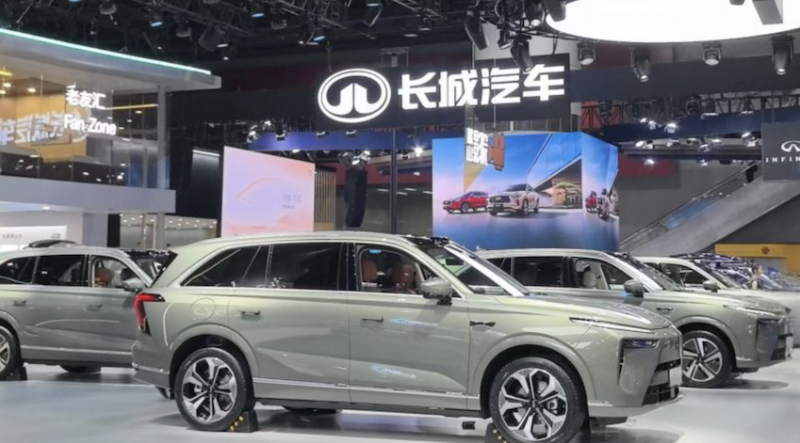
从实验室到全球战场,魏建军解码长城安全的“偏执狂”逻辑
Hua Xia Shi Bao· 2025-04-20 10:16
Core Viewpoint - The automotive industry is facing unprecedented safety challenges amid the rapid transition to electrification and intelligence, with companies focusing on advanced driver assistance systems while neglecting fundamental collision safety and real-world validation [2][3] Group 1: Safety Testing and Innovations - Great Wall Motors has invested 500 million yuan to build Asia's top safety laboratory, conducting comprehensive collision tests that address real user safety concerns [2][3] - The new safety laboratory spans 57,000 square meters and is equipped with advanced technology, including a collision dummy matrix valued over 100 million yuan, capable of capturing millisecond-level data during tests [5][8] - The laboratory features innovative designs, such as eight micro-traction tracks and a 120-ton rotating rigid barrier, allowing for simulations of extreme scenarios and breaking international technical monopolies [5][6] Group 2: Safety Philosophy and Commitment - Great Wall Motors emphasizes a cautious approach to intelligent driving, advocating for a "human-machine co-driving" philosophy and prioritizing safety over aggressive marketing of smart features [3][8] - The company has established a comprehensive safety verification system, having built China's first collision testing laboratory in 2008 and planning to complete the largest safety laboratory in Asia by 2025 [3][8] - Great Wall Motors has achieved a 97.3% score in C-NCAP safety tests and has received 138 international certifications, demonstrating its commitment to safety across the product lifecycle [8][9] Group 3: Real-World Testing and Results - A recent public collision test simulated a three-generation family outing, showcasing the vehicle's passive safety performance with excellent damage ratings for crash test dummies [7][8] - The testing involved advanced safety features, such as multi-chamber side airbags and a strong cage structure, effectively absorbing collision energy and ensuring the vehicle's door could still open post-collision [7][8] - The company’s safety measures include a multi-modal safety monitoring system that activates 28 safety operations during a collision, enhancing overall vehicle safety [8]


“智驾平权”时代加速来临 提升技术安全性要软硬件兼顾
Zheng Quan Shi Bao· 2025-04-17 18:19
Core Insights - The concept of "Universal Intelligent Driving" proposed by BYD has shifted the automotive industry's focus towards intelligent driving technology, prompting competitors like Geely, Chery, and Changan to follow suit [1][2] - A recent serious traffic accident involving a Xiaomi SU7 has raised concerns about the safety of intelligent driving, highlighting the need for a robust safety framework in the industry [1][7] Group 1: Industry Trends - BYD's strategy aims to make high-level intelligent driving as essential as safety belts and airbags, with a target year of 2025 for widespread adoption [2] - The introduction of various intelligent driving systems by competitors, such as Geely's "Qianli Haohan" and Chery's "Falcon Intelligent Driving," indicates a competitive race for the 100,000 to 150,000 yuan intelligent vehicle market [2][3] - The penetration rate of high-level intelligent driving is expected to increase significantly, with projections indicating that by 2025, 65% of new passenger cars in China will feature L2-level or higher driving assistance [7] Group 2: Regulatory Developments - The Ministry of Industry and Information Technology is accelerating the industrialization of autonomous driving and has begun to approve L3-level autonomous vehicle production [5][6] - The implementation of the Beijing Autonomous Driving Vehicle Regulations allows L3-level vehicles to operate legally on public roads, marking a significant regulatory milestone [5] Group 3: Safety and Technology - Experts emphasize the need for improved safety standards and robust technology in intelligent driving systems, with a focus on multi-sensor integration for better environmental perception [8] - The demand for high-performance chips for intelligent driving is expected to rise, as the technology requires significant computational power for real-time data processing [9] - The trend towards "intelligent driving equality" is anticipated to reshape various segments of the automotive supply chain, benefiting components like cameras, domain controllers, and radar systems [3][4]


