
高股息

Search documents
【广发金工】AI识图关注能源、高股息
广发金融工程研究· 2025-11-16 11:14
Market Performance - The Sci-Tech 50 Index decreased by 3.85% over the last five trading days, while the ChiNext Index fell by 3.01%. In contrast, the large-cap value stocks rose by 1.44%, and large-cap growth stocks declined by 1.64%. The Shanghai Stock Exchange 50 Index saw a minimal increase of 0.003%, and the small-cap index represented by the CSI 2000 dropped by 0.53%. The comprehensive and textile apparel sectors performed well, whereas the communication and electronics sectors lagged behind [1]. Valuation Levels - As of November 14, 2025, the static PE of the CSI All Share Index is at a percentile rank of 81%. The Shanghai Stock Exchange 50 and CSI 300 indices are at 77% and 73%, respectively. The ChiNext Index is close to the 50th percentile, while the CSI 500 and CSI 1000 indices are at 62% and 61%, respectively. The valuation of the ChiNext Index is relatively at the historical median level [1]. Risk Premium - The risk premium, calculated as the inverse of the static PE of the CSI All Share Index minus the yield of ten-year government bonds, stands at 2.78% as of November 14, 2025. The two-standard deviation boundary is at 4.74% [1]. ETF Fund Flows - In the last five trading days, ETF inflows amounted to 12.2 billion yuan, while the margin trading balance increased by approximately 7.7 billion yuan. The average daily trading volume across both markets was 20.226 billion yuan [2]. Thematic Indexes - The latest thematic allocations include energy and high dividend strategies, specifically focusing on the CSI Energy Index, CSI High Dividend Strategy Index, and CSI Tourism Theme Index among others [2][3].


险资四季度扫货高股息,百济神州、汇川技术成调研“新宠”
Huan Qiu Wang· 2025-11-15 03:17
Core Insights - Insurance capital remains active in the market, conducting 348 company surveys in November, with over 126 stocks receiving attention, despite a year-on-year decline in total survey frequency [1][3] - The focus of insurance capital is on high-dividend stocks and sectors aligned with national strategic goals, such as new productive forces, high-end manufacturing, and biomedicine, with companies like BeiGene, Inovance Technology, and Luxshare Precision being particularly favored [1][3] Group 1: Survey Trends - Leading insurance asset management companies are the main players in conducting surveys, with Taikang Asset leading with 21 surveys, followed by Sunshine Asset, Taiping Asset, and others, each exceeding 10 surveys [1] - The Shenzhen Main Board and ChiNext are the primary targets for insurance capital, especially in technology growth sectors like integrated circuits and electronic components [1][3] Group 2: Investment Strategy - Insurance capital is adopting a dual strategy of "stable base + growth elasticity," focusing on high-dividend stocks while enhancing research in new productive forces [3][4] - The emphasis on high ROE and high-dividend companies aligns with the new accounting standards and long-term performance assessments, making them attractive to insurance capital [4] Group 3: Key Companies - BeiGene, Inovance Technology, and Luxshare Precision are highlighted as top targets for insurance capital, each receiving interest from over 20 insurance firms due to their strong competitive advantages and growth potential [3] - Other notable companies in the renewable energy and communication equipment sectors, such as Trina Solar and Dekor, have also attracted attention from more than 10 insurance firms [3]



港股红利风景好!港股通红利ETF(513530)、港股通红利低波ETF(520890)跟踪标的股息率吸引
Xin Lang Ji Jin· 2025-11-14 05:45
Core Viewpoint - The Hong Kong stock market is experiencing a pullback, with investors shifting towards dividend-paying assets due to profit-taking in the technology sector and a preference for lower-risk investments as the year ends [1] Fund Flows and Preferences - Southbound funds are increasingly allocating to Hong Kong dividend stocks, with banks being the most favored sector over the past month, followed by oil and petrochemicals, and non-bank financials [1] - The Hong Kong Dividend ETF (513530) and the Hong Kong Dividend Low Volatility ETF (520890) are becoming popular choices for mainstream fund allocations, with the former seeing a net inflow of 374 million yuan over 11 consecutive trading days [2] Dividend Yield and Performance - The high dividend yield of Hong Kong dividend assets is becoming more attractive in a low-interest-rate environment, with the Hong Kong Dividend ETF and the Low Volatility ETF showing yields of 5.46% and 5.65%, respectively, significantly higher than the 1.81% yield of 10-year government bonds [3] - Over the past year, the cumulative returns of the Hong Kong Dividend ETF and the Low Volatility ETF were 36.97% and 40.71%, outperforming several A-share dividend indices and the Hang Seng Technology Index [3] Shareholder Returns - The Hong Kong market has a strong emphasis on shareholder returns, with the average dividend amounts for the Hong Kong Dividend Index components significantly exceeding those of A-share indices, indicating a more robust dividend-paying capability [4] Fund Characteristics - The Hong Kong Dividend ETF (513530) is the first ETF in the A-share market that allows investment in the Hong Kong Dividend Index through the QDII model, potentially reducing dividend tax costs for long-term holders [5] - Both the Hong Kong Dividend ETF and the Low Volatility ETF support T+0 trading, providing flexibility for investors [6] Management and Performance - The fund manager, Huatai-PB Fund, has over 18 years of experience in index investment and has developed a comprehensive range of dividend-themed ETFs [7] - As of November 13, 2025, the total management scale of Huatai-PB's dividend-themed ETFs reached 47.879 billion yuan, with the Hong Kong Dividend ETF showing returns of 3.59%, 7.14%, 30.16%, and 12.94% for the years 2022 to 2025 [8]
高股息“港港好”?连续9日吸金,港股通红利ETF(159220)11月12日场内大涨1.91%,又双叒叕创收盘价新高!
Xin Lang Ji Jin· 2025-11-13 01:39
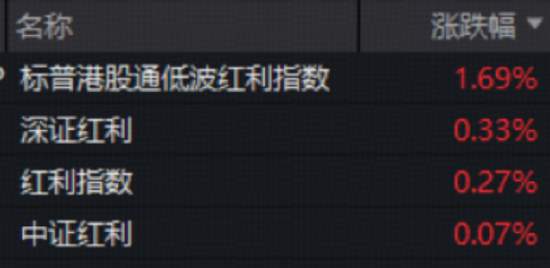
Market Overview - On November 12, A-shares experienced fluctuations, with the Shanghai Composite Index hovering around the 4000-point mark, while Hong Kong stocks strengthened, with the Hang Seng Index rising by 0.85% [1] - The Hong Kong Dividend ETF (159220), which passively tracks the S&P Hong Kong Low Volatility Dividend Index, surged by 1.91%, outperforming mainstream dividend indices in A-shares [1] Performance Metrics - The S&P Hong Kong Low Volatility Dividend Index increased by 1.69%, while other indices such as the Shenzhen Dividend Index and the CSI Dividend Index saw smaller gains of 0.33% and 0.07%, respectively [2] - The Hong Kong Dividend ETF has achieved a new closing price high for six consecutive trading days since November 5, indicating strong momentum in dividend assets [2] Fund Inflows and Investor Behavior - The Hong Kong Dividend ETF has seen a net inflow of funds for nine consecutive days, driven by significant buying from southbound funds, which recorded a net inflow of HKD 66.53 billion on November 10, with total net inflows exceeding HKD 1.3 trillion for the year [3][4] - The ETF's transparency, low fees, and trading convenience have made it increasingly popular among investors [3] Index Composition and Dividend Potential - The S&P Hong Kong Low Volatility Dividend Index includes a mix of large-cap and mid-cap stocks, with over half of its constituents being state-owned enterprises, which are expected to benefit from favorable policies related to state-owned enterprise market value management [4] - In the first half of 2025, 713 Hong Kong companies announced dividends totaling HKD 812.7 billion, a year-on-year increase of 31.35%, indicating a strong dividend-paying trend in the market [4] Dividend Yield Comparison - As of the end of October 2025, the Hong Kong Dividend ETF's underlying index had a dividend yield of 5.54%, significantly higher than the yields of the CSI Dividend Index (4.80%), CSI Low Volatility Dividend Index (4.74%), and Shanghai Dividend Index (5.31%) [6]
万亿港元南向资金爆买港股,重点板块、个股曝光
2 1 Shi Ji Jing Ji Bao Dao· 2025-11-12 15:06
Core Viewpoint - The Hong Kong stock market has reached a milestone with cumulative net purchases from southbound funds exceeding 5 trillion HKD, reflecting unprecedented enthusiasm from mainland investors [1][4][5]. Group 1: Southbound Fund Inflows - As of November 11, southbound funds have recorded a net inflow of 1.31 trillion HKD in 2023, marking a historical high for the year [4][5]. - The inflow of southbound funds has accelerated, with 16 consecutive trading days of net purchases, and only 3 out of 23 trading days in October showing net outflows [5][9]. - The Hong Kong stock market has demonstrated significant profitability, with major indices like the Hang Seng Index and Hang Seng Tech Index rising over 30% this year [3]. Group 2: Investment Strategy Shift - There has been a notable shift in investment strategy among southbound funds, moving from a growth-oriented "offensive" approach to a focus on high-dividend "defensive" stocks [9][10]. - Financials have become the core asset for southbound funds, accounting for 39% of net purchases since 2025, with the top three sectors being financials, information technology, and consumer discretionary [9][10]. - The recent trend shows a significant reduction in holdings of high-growth, high-valuation sectors like pharmaceuticals and technology, while increasing investments in traditional sectors such as banking and oil, which offer low valuations and high dividend yields [10][11]. Group 3: Market Dynamics and Future Outlook - Analysts attribute the continued inflow of southbound funds to the low valuations and high dividend yields in the Hong Kong market, making it an attractive investment destination [6][7]. - The market is witnessing a rotation towards high-dividend sectors, with stocks like China National Offshore Oil Corporation gaining favor due to their strong dividend attributes [10]. - Despite the current defensive posture, there is potential for growth in undervalued quality stocks, suggesting future opportunities for a shift back to an offensive strategy [11].


万亿港元南向资金爆买港股,重点板块、个股曝光
21世纪经济报道· 2025-11-12 14:48
Core Viewpoint - The Hong Kong stock market has reached a milestone with cumulative net purchases from southbound funds exceeding 50 billion HKD, reflecting unprecedented enthusiasm from mainland investors for Hong Kong stocks [1][3]. Group 1: Southbound Fund Inflows - Southbound funds have recorded a net inflow of 1.31 trillion HKD in 2023, marking a historical high for the year, which is over 60% higher than the previous record of 810 billion HKD in 2024 [3]. - The Hang Seng Index and Hang Seng Tech Index have both seen gains exceeding 30% this year, with the Hong Kong Stock Connect Innovative Drug Index rising over 80% [3]. - The low valuation and high dividend yield of Hong Kong stocks are key factors driving the inflow of southbound funds [3][4]. Group 2: Investment Strategy Shift - There has been a notable shift in the investment strategy of southbound funds from a growth-oriented "offensive" approach to a more defensive strategy emphasizing high dividend yields [5][6]. - Financials have become the core asset for southbound funds, accounting for 39% of net purchases since 2025, with the top three sectors being financials, information technology, and consumer discretionary [6]. - A significant example of this shift is the movement of funds from Alibaba to China National Offshore Oil Corporation, with Alibaba experiencing a net sell-off of approximately 11 billion HKD in market value over the past month [6][7]. Group 3: Sector Rotation - Southbound funds are increasingly favoring high dividend sectors while reducing exposure to high-growth, high-valuation sectors such as pharmaceuticals, electronics, media, and computing [7]. - Traditional industries like banking, oil and gas, telecommunications, and coal are attracting significant inflows due to their low valuations and high dividend yields, becoming a "safe haven" for investors [7][8]. - The market's risk appetite appears to be shifting towards a more conservative stance, focusing on high dividend stocks rather than technology stocks [7].

李迅雷专栏 | 把握“十五五”结构性机会,四大配置主线浮现
中泰证券资管· 2025-11-12 11:32
Global Landscape - The strategic interaction and policy choices between China and the US significantly impact global trade, industrial chain layout, and capital flows [4] - China is estimated to account for over 40% of global manufacturing capacity, reinforcing its influence in trade and industry [4] - The debt-driven growth model poses challenges but also reflects China's substantial policy resources and market development potential [4] Chinese Economy - The current economic situation is characterized as "high at the front and low at the back," with a GDP growth rate of 5.2% in the first three quarters, making the annual target achievable [6] - Consumption grew by 4.5%, supported by policies like "old-for-new" exchanges, while investment saw a decline of 0.5% [6] - Exports were a highlight, increasing by 6.1%, particularly strong in emerging markets like Africa and ASEAN [6] "14th Five-Year" Plan Highlights - The plan emphasizes accelerating "technological self-reliance," aiming to build a modern industrial system with advanced manufacturing as its backbone [8] - There is a strong push for consumption and increased social welfare spending, particularly in response to an aging population [8] - The establishment of a nationwide unified market is prioritized, optimizing resource allocation in energy, public services, and data [8] Asset Allocation Strategies - In a low-interest-rate environment, high-dividend assets are highlighted as scarce and valuable, with Hong Kong stocks offering a dividend rate 30% higher than A-shares [11] - Sectors like military, gold, and rare earths are recommended as strategic allocations in response to global geopolitical tensions [11] - Focus on AI technology sectors, including computing power and robotics, is essential as they represent a significant investment opportunity [11] - New consumption trends driven by younger demographics and single-person economies present emerging investment opportunities [11]

ETF甄选 | 三大指数震荡走低,港股创新药、港股消费、港股红利等ETF表现亮眼
Sou Hu Cai Jing· 2025-11-12 08:05
Group 1 - The market experienced a volatile trading day with all three major indices closing lower, with the Shanghai Composite Index down 0.07%, the Shenzhen Component down 0.36%, and the ChiNext Index down 0.39% [1] - The mining, insurance, and pharmaceutical sectors showed the highest gains, while photovoltaic equipment, non-metallic materials, and power equipment sectors faced the largest declines [1] - Major capital inflows were observed in banking, biopharmaceuticals, and consumer electronics sectors [1] Group 2 - The pharmaceutical sector has undergone a prolonged valuation adjustment and is now showing a significant structural recovery trend, although public fund holdings remain below historical averages [1] - Recent slight corrections in the pharmaceutical sector present low-entry opportunities, with a recovery in domestic innovative drug research and development demand due to capital market financing recovery and increased overseas trading scale [1] - Related ETFs include Hong Kong Innovative Drug ETFs and Hong Kong Medical ETFs [1] Group 3 - The Ministry of Finance has announced a focus on six key areas to enhance fiscal policy, including the continuation of special actions to boost consumption and providing fiscal subsidies for personal consumption loans [2] - The emergence of new consumer goods reflects the evolving consumption concepts of the younger generation, which is crucial for capturing growth opportunities in new consumer companies [2] - Related ETFs include Hong Kong Consumption ETFs and Hong Kong Consumption 50 ETFs [2] Group 4 - Over 80% of the components in the Hong Kong high dividend index announced dividends, with a total dividend amount of HKD 8.127 billion, representing a year-on-year growth of 31.35% [2] - The high dividend companies in the Hong Kong market show stable fundamentals and dividend capabilities, with net profits remaining stable among companies with dividend yields above 4.5% [3] - Related ETFs include Hong Kong Dividend ETFs and Hong Kong Low Volatility Dividend ETFs [3]
中信建投:2026年机械设备行业呈现结构性繁荣 专用设备领域看好自主可控及高股息方向
智通财经网· 2025-11-12 03:36
Core Viewpoint - The report from CITIC Securities indicates a structural prosperity in the mechanical industry despite relatively weak domestic demand, with a focus on new technologies and identifying beneficiaries from interest rate cuts and manufacturing capacity transfers [1][2]. Group 1: Focus on New Technologies - Emphasis on emerging industries with intensive technological changes and strong capital expenditures, such as humanoid robots, solid-state battery equipment, controllable nuclear fusion, and PCB equipment [1][3]. - The humanoid robot sector is expected to see significant advancements, with major companies like Tesla and Nvidia making substantial investments, marking 2026 as a pivotal year for mass production [3]. - The lithium battery equipment sector is showing signs of recovery after a two-year downturn, with improvements in revenue and profit, driven by new technologies [3]. Group 2: Seeking New Growth - The engineering machinery sector is recovering, with various categories showing growth, particularly in non-excavation machinery, supported by favorable export trends [4]. - The tools and hardware sector is expected to benefit from improved US-China relations and tariff reductions in the short term, with long-term gains anticipated from real estate demand following US interest rate cuts [4]. - The mining machinery sector is experiencing increased capital expenditures due to rising non-ferrous metal prices, with domestic companies expanding their overseas presence [4].

天然气、硝酸等涨幅居前,建议关注进口替代、纯内需、高股息等方向 | 投研报告
Zhong Guo Neng Yuan Wang· 2025-11-11 02:56
Core Viewpoint - The report highlights significant price fluctuations in chemical products, with natural gas and nitric acid showing the largest increases, while ammonium chloride and butadiene experienced notable declines [2][3]. Price Movements - Products with significant price increases this week include: - Natural gas (NYMEX futures) up by 30.25% - Nitric acid (Anhui) up by 20.59% - Liquid chlorine (East China) up by 10.27% - Lithium battery electrolyte (national average) up by 9.52% - Dichloromethane (East China) up by 8.93% - Sulfur (Vancouver FOB spot price) up by 8.33% - Sulfuric acid (Hangzhou pigment chemical plant) up by 5.32% - Toluene (FOB Korea) up by 4.48% - Coke (Shanxi market price) up by 3.72% - Xylene (Southeast Asia FOB Korea) up by 3.28% [1][2][3]. - Products with significant price declines this week include: - Aniline (East China) down by 4.90% - Methanol (East China) down by 4.99% - Styrene-butadiene rubber (East China) down by 5.48% - Trichloroethylene (East China) down by 6.00% - Carbon black (Jiangxi Heibao N330) down by 6.09% - Styrene-butadiene rubber (Shandong) down by 6.42% - Butadiene (Shanghai Petrochemical) down by 12.66% - Ammonium chloride (agricultural wet) down by 13.33% [2][3]. Industry Outlook - The chemical industry remains in a weak position overall, with mixed performance across sub-sectors due to past capacity expansions and weak demand [3][4]. - The report suggests focusing on investment opportunities in glyphosate, fertilizers, import substitution, domestic demand, and high-dividend assets [4]. - Specific recommendations include: - Investing in the glyphosate sector, which is showing signs of recovery with decreasing inventory and rising prices [4]. - Selecting stocks with good competitive dynamics and profitability, such as Ruifeng New Materials in the lubricant additive sector and Baofeng Energy in the coal-to-olefins sector [4]. - Emphasizing domestic demand-driven sectors like chemical fertilizers and certain pesticide sub-products, with a focus on companies like Hualu Hengsheng and China Heart Link Fertilizer [4]. - Continuing to favor high-quality assets with high dividend yields in the context of declining international oil prices, particularly China Petroleum & Chemical Corporation [4].