AI芯片

Search documents
Alphabet的新时代来了?
美股研究社· 2026-01-10 06:16
Core Viewpoint - Alphabet Inc. has surpassed Apple in market capitalization for the first time since 2019, although analysts view this as more anecdotal than a bullish market driver, with the company's stock price rising by a low single-digit percentage [1]. Group 1: Key Drivers - The current performance of Alphabet is driven by three main narratives: consumer AI chatbot powered by Gemini [2], AI chips driven by Ironwood TPU [3], and autonomous driving through Waymo [4]. Group 2: Gemini vs. ChatGPT - Gemini has shown a 30% growth in monthly active users (MAU) from August to November 2025, reaching 346 million, while ChatGPT only grew by 6% during the same period, with 810 million MAU [8][9]. - In December, traffic data indicated a 5.6% decline for ChatGPT, while Gemini's traffic increased by 28.4%, with average visit durations of 6 minutes 31 seconds for ChatGPT and 7 minutes 16 seconds for Gemini [8]. - Analysts estimate that if Gemini maintains its growth rate, it could potentially surpass ChatGPT in about 12 months [11]. Group 3: TPU and Market Dynamics - Alphabet's TPU is designed for inference tasks, reducing reliance on Nvidia GPUs, with significant cost advantages: a Google TPU cluster costs $99 million compared to $852 million for an equivalent Nvidia setup [15]. - However, analysts express skepticism about the TPU narrative due to energy efficiency concerns, as Nvidia's GPUs outperform Google's TPUs in this regard [18]. Group 4: Valuation and Market Sentiment - Alphabet's P/E ratios are competitive within the cloud services sector, with a Non-GAAP P/E of 30.58 for FY1, second only to Amazon [20]. - Analysts believe the optimistic sentiment is driven by Gemini's growing appeal against ChatGPT, positioning Alphabet as a key challenger in the consumer AI space [22]. - There are potential headline risks related to regulatory scrutiny, particularly concerning the acquisition of Wiz, which could impact market sentiment [23][26]. Group 5: Future Outlook - Analysts are closely monitoring Gemini's user growth and the outcome of the Wiz acquisition decision by the European Commission, as these factors will influence Alphabet's valuation and market position [26]. - Alphabet is currently testing historical highs in market capitalization, indicating strong investor interest [27].



通富微电,募资44亿扩产
半导体行业观察· 2026-01-10 03:37
Core Viewpoint - Tongfu Microelectronics Co., Ltd. plans to raise up to 4.4 billion yuan through a private placement of A-shares to enhance its competitiveness in the semiconductor packaging and testing industry, focusing on storage chips, automotive electronics, wafer-level packaging, high-performance computing, and communication sectors [1][7]. Fundraising Projects Summary - The total investment for the five projects is approximately 46.86 billion yuan, with the following allocations: - Storage chip packaging capacity enhancement project: 8.88 billion yuan investment, raising 8 billion yuan [2][3]. - Automotive electronics packaging capacity enhancement project: 10.99 billion yuan investment, raising 10.55 billion yuan [2][4]. - Wafer-level packaging capacity enhancement project: 7.43 billion yuan investment, raising 6.95 billion yuan [2][5]. - High-performance computing and communication packaging capacity enhancement project: 7.24 billion yuan investment, raising 6.2 billion yuan [2][6]. - Supplementing working capital and repaying bank loans: 12.3 billion yuan [2][6]. Storage Chip Packaging Insights - The storage chip packaging project aims to invest 8.88 billion yuan, adding an annual capacity of 849,600 pieces. The Chinese storage chip market is projected to reach 460 billion yuan in 2024 and exceed 550 billion yuan in 2025, driven by demand from AI, smart terminals, and new energy vehicles [3]. Automotive Electronics Focus - The automotive electronics project, with a total investment of 10.99 billion yuan, will add an annual packaging capacity of 50.4 million pieces. The global automotive semiconductor market is expected to grow from 72.1 billion USD in 2024 to 80.4 billion USD in 2025, supported by the rise of electric vehicles and smart driving technologies [4]. Wafer-Level Packaging Development - The wafer-level packaging project, with a total investment of 7.43 billion yuan, will increase capacity by 312,000 pieces and 1.5732 billion pieces for high-reliability automotive products. This technology is crucial for AI chips and data centers, with the AI chip market in China expected to grow at a CAGR of 53.7% from 2024 to 2029 [5]. High-Performance Computing and Communication - The high-performance computing and communication project, with a total investment of 7.24 billion yuan, will focus on advanced packaging technologies, adding an annual capacity of 48 million pieces. This project aims to meet the demands of AI, 5G communication, and edge computing applications [6]. Financial Structure Improvement - The 12.3 billion yuan raised will also be used to supplement working capital and repay bank loans, addressing the company's increasing operational funding needs and optimizing its financial structure [6].

115万片晶圆,决定2026年的“芯片战”,苹果、联发科、OpenAI火线入局
3 6 Ke· 2026-01-09 12:15
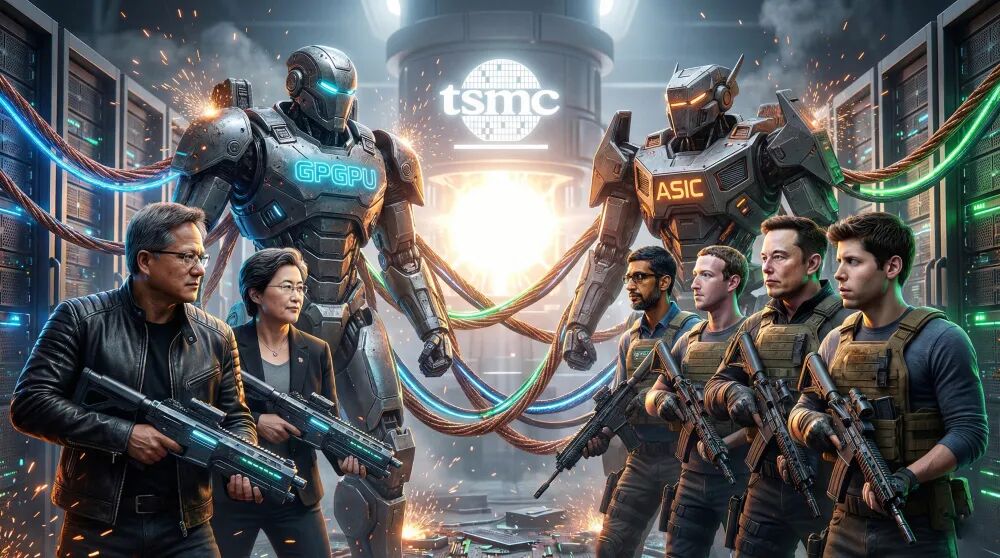
Core Insights - The article discusses the ongoing competition between GPGPU (General-Purpose Graphics Processing Units) and ASIC (Application-Specific Integrated Circuits) in the AI chip market, emphasizing the critical role of TSMC's CoWoS (Chip on Wafer on Substrate) advanced packaging capacity in determining the future landscape of AI computing power [1][10][36] - Huang Renxun predicts that data center revenues will reach $500 billion over the next six quarters, highlighting the significant financial stakes involved in this competition [1] Group 1: Competition Dynamics - The demand for computing power in AI is expanding, with advanced architectures, process technologies, and advanced packaging being the three key paths to progress [3][4] - NVIDIA has established itself as the leader in GPGPU through its CUDA ecosystem, while Google’s TPU represents a successful ASIC approach, showcasing the efficiency of custom architectures for specific algorithms [3][4] - The competition between GPGPU and ASIC is not merely about performance but also involves considerations of total cost of ownership (TCO) and the ability to optimize financial outcomes for large-scale users [27][28] Group 2: CoWoS Capacity and Supply Chain - TSMC's CoWoS capacity is projected to increase significantly, from approximately 12,000 wafers per month in December 2023 to an estimated 120,000 wafers per month by December 2026, equating to a total capacity of about 1.15 million wafers for AI chips [12][13] - The allocation of CoWoS capacity will be influenced by a complex interplay of technology, business, and geopolitical factors, with NVIDIA expected to secure nearly 60% of the capacity due to its early investments and strong demand [13][15] - The distribution of CoWoS wafers among major clients indicates that NVIDIA will receive around 660,000 wafers, while AMD and the ASIC camp will receive significantly less, highlighting the competitive advantage held by NVIDIA [16][20] Group 3: Performance and Revenue Implications - The performance of AI chips is closely tied to the area of the silicon interposer, with larger interposer areas allowing for more transistors and higher performance [25][26] - NVIDIA's GPUs are expected to command higher prices, with projections of $30,000 to $50,000 per unit, while ASICs like Google's TPU are priced significantly lower, impacting revenue dynamics in the AI chip market [26] - The article concludes that NVIDIA, leveraging its CoWoS capacity, is positioned to capture over 70% of the AI acceleration chip market revenue and more than 90% of the profits, reinforcing its dominant market position [26][34] Group 4: Future Outlook - The future of AI computing is likely to be a hybrid model combining both GPGPU and ASIC technologies, with cloud giants using NVIDIA GPUs for cutting-edge model training and self-developed ASICs for cost-sensitive large-scale inference [35] - The ongoing competition is characterized as a "boundary war," where both GPGPU and ASIC ecosystems will coexist, with TSMC as the ultimate beneficiary due to its critical role in providing CoWoS capacity [36]


涨停复盘:今日全市场共111只股涨停,连板股总数19只,AI应用概念志特新材20CM 5连板!
Sou Hu Cai Jing· 2026-01-09 11:10
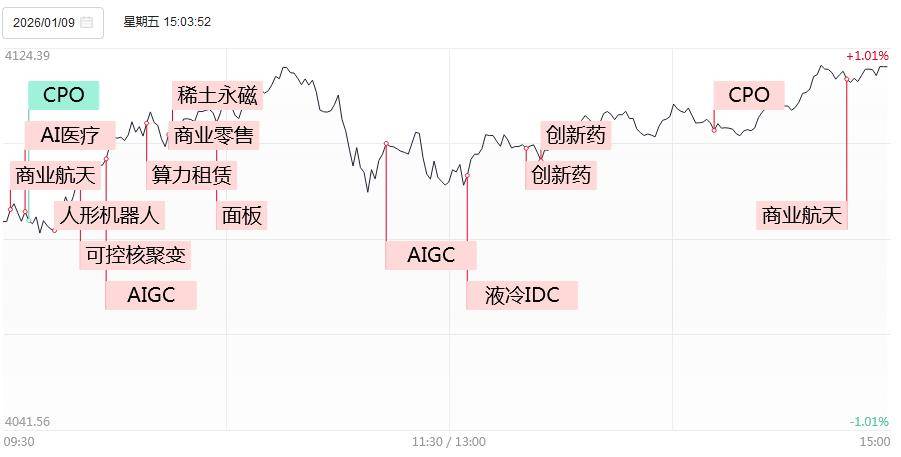
Market Overview - The market experienced a significant rally on January 9, with the Shanghai Composite Index breaking through 4100 points and the Shenzhen Component Index rising over 1% [1] - The total trading volume in the Shanghai and Shenzhen markets reached 3.12 trillion yuan, an increase of 322.4 billion yuan compared to the previous trading day, marking the fifth time in history that the trading volume surpassed 3 trillion yuan [1] - Over 3900 stocks in the market rose, with more than 100 stocks hitting the daily limit up for two consecutive days [1] Sector Performance - The AI application sector saw a collective surge, with over 20 constituent stocks hitting the daily limit up, including notable performers like Yiyuan Media and Provincial Advertising Group [1][2] - The commercial aerospace sector initially dipped but saw a strong recovery in the afternoon, with over 40 stocks either hitting the daily limit or rising over 10%, including Lu Xin Investment and Goldwind Technology [1] - The controllable nuclear fusion concept continued its strong performance, with Hongxun Technology and China First Heavy Industries both achieving three consecutive limit ups [1] Stock Highlights - In the AI application sector, Zhi Te New Materials led the charge with five consecutive limit ups, followed by other stocks like Fast Elevator and Yiyuan Media [2][11] - In the commercial aerospace sector, Lu Xin Investment achieved four limit ups in 11 days, driven by its stake in Blue Arrow Aerospace [10] - The controllable nuclear fusion sector saw Hongxun Technology and China First Heavy Industries both achieving three consecutive limit ups, indicating strong investor interest [12] Trading Statistics - A total of 94 stocks hit the daily limit up across the market (excluding ST and delisted stocks), with 19 stocks achieving consecutive limit ups and a limit up rate of 67% [2] - The Shanghai Composite Index closed up 0.92%, the Shenzhen Component Index up 1.15%, and the ChiNext Index up 0.77% [1]



2025年IPO:“撤单潮”退去、审核维度穿透
Sou Hu Cai Jing· 2026-01-09 10:11
Group 1 - The A-share IPO market is experiencing a comprehensive recovery in 2025, characterized by high-quality development with both the number of listed companies and fundraising scale achieving double growth [2] - A total of 410 companies underwent counseling and filing, with 300 accepted and 115 successfully listed, raising a total of 131 billion yuan, marking a significant rebound in the capital market's financing function [2] - The Beijing Stock Exchange (BSE) has emerged as the core engine of the IPO market, accounting for 44% of counseling filings, 46% of approved companies, and 61% of companies under review, solidifying its position as the preferred path for small and medium-sized enterprises [2] Group 2 - In terms of application distribution, the BSE dominated with 176 out of 300 accepted companies, representing 59%, while the Sci-Tech Innovation Board and the Growth Enterprise Market also saw significant increases in acceptance [3] - The Sci-Tech Innovation Board demonstrated a higher tolerance for unprofitable companies, with 18 out of 48 accepted companies not yet profitable, indicating support for tech firms with high R&D investments [3] - The fundraising scale varied significantly across different boards, with the Shanghai Main Board leading at 43.23 billion yuan, followed by the Sci-Tech Innovation Board at 35.30 billion yuan and the Growth Enterprise Market at 24.51 billion yuan [4] Group 3 - The manufacturing sector dominated the industry distribution of applications, with significant concentrations in chemicals, industrial machinery, electronic equipment, semiconductors, and automotive parts, reflecting the capital market's targeted support for advanced manufacturing [4] - The "Matthew Effect" is evident in the intermediary institutions, with leading brokerages like Guotai Junan and Haitong Securities each having 15 approved projects, indicating a growing advantage in acquiring quality project resources [4] Group 4 - The "withdrawal wave" of IPO applications has significantly decreased, with only 108 companies terminating their reviews in 2025, a 75% reduction year-on-year, indicating improved application quality and caution among intermediary institutions [5] - The BSE and the Growth Enterprise Market accounted for 65% of the terminated reviews, primarily due to concerns over control stability, ongoing operational capability, and information disclosure issues [6] Group 5 - The IPO listing cycle has extended, with an average duration exceeding two years, particularly for the Growth Enterprise Market, which has the longest average time of 943 days [7] - The current evaluation standards have shifted from "approval feasibility" to "investment feasibility," focusing on long-term growth value and investment attractiveness rather than merely meeting listing thresholds [7] Group 6 - The IPO market has transitioned from quantity-driven to quality-driven development, emphasizing the technological innovation strength and long-term potential of companies as core evaluation metrics [7] - The average first-day increase for new stocks reached 256.77%, marking a three-year high, while over 80% of new stocks saw price declines post-listing, indicating a shift towards value investing [7] Group 7 - The brokerage industry is witnessing a wave of mergers, with leading firms like Guotai Junan and Haitong Securities consolidating, further solidifying their market dominance and intensifying the "Matthew Effect" [8] - Looking ahead to 2026, the BSE is expected to remain a central platform for IPO applications, with continued focus on sectors like AI, biomedicine, quantum technology, and commercial aerospace [8]

光大期货0109热点追踪(股指):站上4100点,股指是“快牛冲刺”还是“慢牛启动”?
Xin Lang Cai Jing· 2026-01-09 08:36
Core Viewpoint - The Shanghai Composite Index continues to rise, surpassing the 4100 mark, driven by policy support, improved liquidity, and heightened expectations for earnings reports [3][7]. Market Performance - The four major stock index futures have also increased, with the CSI 500 and CSI 1000 futures rising over 2% during the session [3][7]. - Market turnover has significantly rebounded, maintaining above 2.5 trillion yuan for four consecutive days as of January 8, indicating increased trading confidence [3][7]. - The margin trading balance has seen heightened activity, surpassing 2.6 trillion yuan for the first time on January 7 [3][7]. Influencing Factors - The market is currently influenced by three main factors: policy-driven support, improved liquidity, and rising expectations for earnings reports [3][7]. - The central bank has indicated a continuation of moderately loose monetary policy, enhancing expectations for liquidity benefits [3][7]. - The upcoming annual report announcements are expected to boost performance expectations, particularly in the technology sector, coinciding with the CES 2026 event showcasing global tech giants [3][7]. Sector Focus - The technology sector is anticipated to see increased performance expectations, with key areas such as robotics, AI chips, and smart hardware becoming popular investment targets [3][7].

英伟达挖角谷歌,剑指全球品牌升级
Huan Qiu Wang· 2026-01-09 05:55
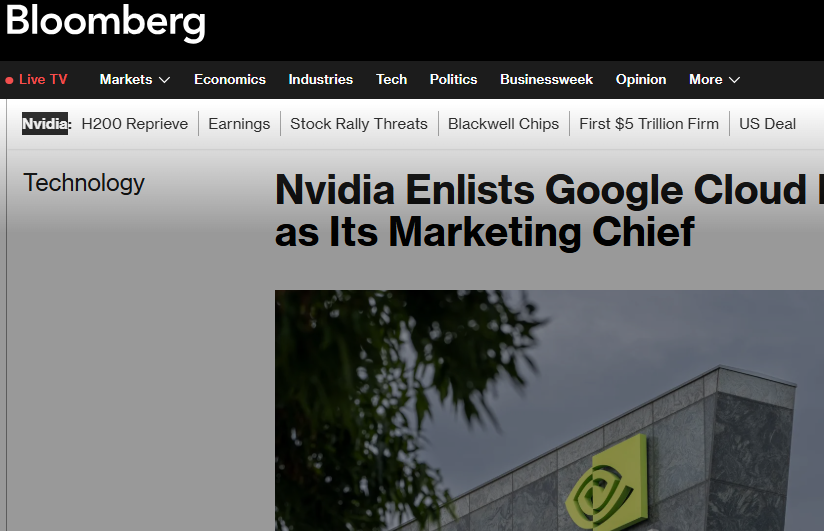
Group 1 - Nvidia has appointed Google Cloud executive Allison Wagonfeld as Chief Marketing Officer, a move interpreted as a strategy to enhance global brand influence and strengthen market positioning during a new growth cycle [1][3] - Wagonfeld will officially join Nvidia's core leadership team in late January, bringing extensive experience in technology marketing and a proven track record in enterprise market promotion and brand strategy [3] - Nvidia has achieved rapid growth in the AI chip sector, previously becoming the first publicly traded company to surpass a market capitalization of $5 trillion, with key products like H200 and Blackwell dominating the industry [3] Group 2 - The global chip market is becoming increasingly competitive, necessitating Nvidia to not only solidify its AI chip advantages but also enhance its global brand penetration capabilities [3] - The addition of Wagonfeld is expected to introduce new marketing strategies that will help Nvidia expand its market influence in enterprise services and emerging technology sectors [3]
芯天下技术股份有限公司(H0296) - 申请版本(第一次呈交)
2026-01-08 16:00
香港聯合交易所有限公司及證券及期貨事務監察委員會對本申請版本的內容概不負責,對其準 確性或完整性亦不發表任何意見,並明確表示概不就因本申請版本全部或任何部分內容而產生 或因倚賴該等內容而引致的任何損失承擔任何責任。 XTX Technology Inc. 芯天下技術股份有限公司 (「本公司」) (於中華人民共和國註冊成立的股份有限公司) 的申請版本 警告 本申請版本乃根據香港聯合交易所有限公司(「聯交所」)及證券及期貨事務監察委員會(「證監會」) 的要求而刊發,僅用作提供資料予香港公眾人士。 本申請版本為草擬本,其內所載資料並不完整,亦可能會作出重大變動。 閣下閱覽本文件, 即代表 閣下知悉、接納並向本公司、其保薦人、整體協調人、顧問或包銷銀團成員表示同意: 倘於適當時候向香港公眾人士提出要約或邀請,有意投資者務請僅依據於香港公司註冊處處長 註冊的本公司招股章程作出投資決定,招股章程的文本將於發售期內向公眾人士刊發。 (a) 本文件僅為向香港公眾人士提供有關本公司的資料,概無任何其他目的。投資者不應根據 本文件中的資料作出任何投資決定; (b) 在聯交所網站登載本文件或其補充、修訂或更換附頁,並不引起本公司、 ...
英伟达收紧芯片付款条件
Xin Lang Cai Jing· 2026-01-08 15:29
Group 1 - Nvidia (NVDA) is requiring overseas customers to pay full upfront for its H200 AI chips due to regulatory uncertainties [1][2] - The order volume for the H200 AI chips has exceeded 2 million units [1][2] - TSMC (Taiwan Semiconductor Manufacturing Company) has been asked to increase production in response to the high demand for the H200 AI chips [1][2]
A股缩量微跌,背后竟暗藏好消息……
Guo Ji Jin Rong Bao· 2026-01-08 15:04
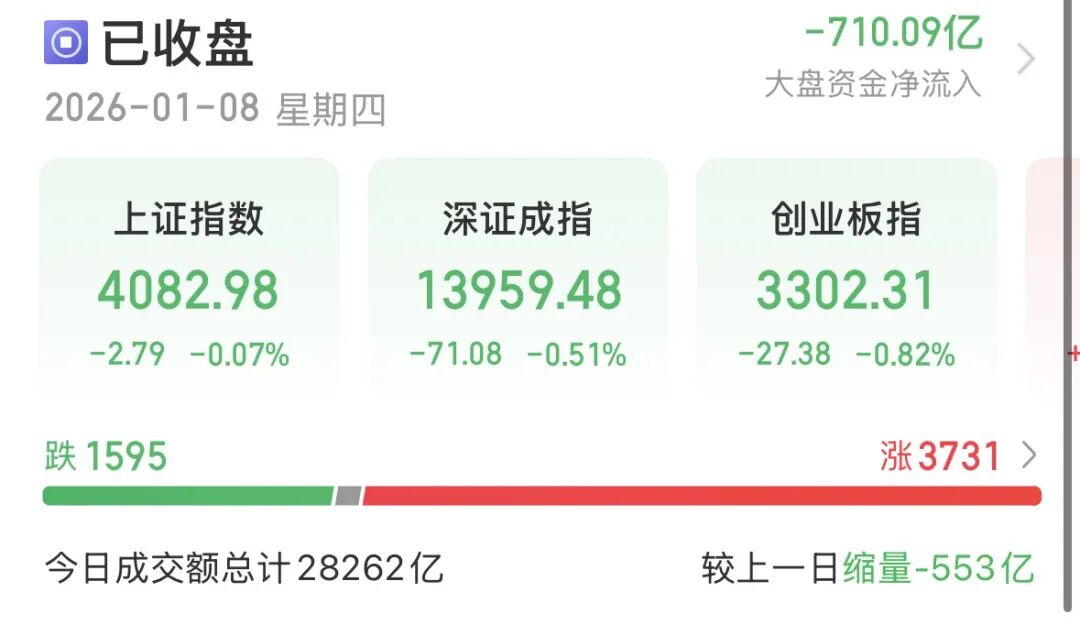
Market Overview - The A-share market experienced a slight decline with a trading volume above 2.8 trillion yuan, while 3,731 stocks closed in the green, led by military, aerospace, and satellite sectors [1][4] - The market sentiment has turned cautious after consecutive gains, with a decrease in the willingness to chase high prices, but profit-taking has not triggered panic, maintaining a balance between bulls and bears [3][4] Sector Performance - The defense and military sector surged by over 4%, leading the market, with 12 stocks hitting the daily limit up [7][13] - Other sectors such as media, construction decoration, real estate, and building materials also saw gains exceeding 1% [7] - The commercial aerospace sector continued to show strong performance, with many stocks experiencing significant increases [5][13] Trading Dynamics - The margin trading balance rose to 2.6 trillion yuan, indicating sustained interest in leveraged investments [1][4] - The trading volume decreased by 552 billion yuan compared to the previous day, reaching 2.83 trillion yuan [4] - The market remains active despite profit-taking pressures, with a notable number of stocks still performing well [3][4] Notable Stocks - Key stocks in the defense sector included Aerospace South Lake and Hailanxin, both hitting the daily limit up of 20% [8][13] - Other notable performers included Tianrun Technology and Qian Zhao Lighting, which also saw significant price increases [13] - The AI chip sector showed positive momentum, while sectors like brokerage, CPO, and rare metals experienced corrections [5][11] Summary of Key Indices - The Shanghai Composite Index fell by 0.07% to 4,082.98 points, while the ChiNext Index dropped by 0.82% to 3,302.31 points [4] - The CSI 300 and SSE 50 indices both declined by nearly 1% [4]