国补政策

Search documents
京东(9618.HK):核心零售预计保持强劲 外卖大战影响短期利润
Ge Long Hui· 2025-07-16 03:27
Core Viewpoint - The company is expected to see a 14.1% year-on-year revenue growth in Q2, driven by national subsidies and the "618" promotional event, with a projected adjusted net profit of 56 billion yuan [1][2] Group 1: Revenue and Growth Projections - The company's core e-commerce revenue is anticipated to maintain strong growth momentum [1] - JD Retail's revenue is expected to grow by 15% year-on-year in Q2, with the growth rate of electronic products likely outpacing that of daily necessities [1] - Despite some regions experiencing a temporary pause in national subsidies during the "618" event, the overall impact on the company's business has been minimal, with subsidies expected to continue until the end of the year [1] Group 2: Investment in Delivery Business - The company has made significant investments in the delivery market, with Q2 expenditures estimated at around 10 billion yuan [2] - During the "618" period, the company reported a peak daily order volume exceeding 25 million [2] - The delivery business is expected to further expand losses in Q3, although operational efficiency improvements may offset some of these losses [2] Group 3: Valuation and Rating - The target price has been adjusted to 146 HKD / 38 USD, maintaining a "Buy" rating [2] - The company's current stock price corresponds to a valuation of 7.3x P/E, which is considered low [2] - The adjusted net profit forecast for Q2 has been revised down to 56 billion yuan, while revenue predictions remain largely unchanged [2]
京东集团-SW(09618):核心零售预计保持强劲,外卖大战影响短期利润
SPDB International· 2025-07-15 11:03
Investment Rating - The report maintains a "Buy" rating for the company with a target price adjusted to HKD 146 / USD 38, indicating a potential upside of 19% for the Hong Kong stock and 23% for the US stock [1][2][5]. Core Insights - The company is expected to achieve a revenue growth of 14.1% year-on-year in Q2, driven by government subsidies and the "618" promotional event, with core e-commerce revenue showing strong growth momentum [1]. - The report anticipates an adjusted net profit of RMB 56 billion for Q2, reflecting the impact of significant investments in the food delivery market, which is expected to lead to short-term profit pressures but also long-term business synergies [2][3]. - The company’s retail revenue is projected to grow by 15% year-on-year in Q2, with growth in the electronics category expected to outpace that of daily necessities [1][2]. Financial Projections - Revenue forecasts for the company are as follows: - FY23: RMB 1,084,662 million - FY24: RMB 1,158,819 million - FY25E: RMB 1,281,189 million - FY26E: RMB 1,352,876 million - FY27E: RMB 1,423,794 million [3][8]. - Adjusted net profit projections are: - FY23: RMB 35,200 million - FY24: RMB 47,827 million - FY25E: RMB 23,596 million - FY26E: RMB 39,823 million - FY27E: RMB 51,251 million [3][8]. Market Performance - The current stock price is HKD 122.4, with a 52-week price range of HKD 94.65 to HKD 192.3, and a total market capitalization of HKD 355,476 million [3][5]. - The average daily trading volume over the past three months is HKD 2,066 million [3]. Valuation Metrics - The company is currently valued at 7.3x P/E, which is considered low compared to the adjusted target P/E of 10.0x for FY26E [2][3].

上半年消费成经济增长主动力,如何持续发挥“国补”效能?
Nan Fang Du Shi Bao· 2025-07-15 10:39
Economic Growth - In the first half of 2025, China's GDP grew by 5.3% year-on-year, with final consumption expenditure contributing 52.3% to economic growth, and capital formation contributing 16.8% [1][4] - The net export of goods and services contributed 31.2% to economic growth, indicating strong performance in both domestic demand and foreign trade [1] Consumer Market - The total retail sales of social consumer goods reached 24.55 trillion yuan, growing by 5% year-on-year, with a quarter-on-quarter acceleration of 0.8 percentage points in the second quarter [4] - The consumption market has become more active due to a series of policies aimed at expanding domestic demand and promoting consumption [4][6] Policy Impact - The "National Subsidy" policy, particularly the trade-in subsidy, has played a significant role in driving consumption growth, although concerns exist regarding its sustainability beyond June [5][6] - Experts suggest that to enhance the sustainability of the "National Subsidy" policy, measures should include increasing residents' income and optimizing initial distribution to boost purchasing power [5] Inflation and Price Trends - Despite the positive impact of the "National Subsidy" policy on consumption, the Consumer Price Index (CPI) fell by 0.1% year-on-year in the first half of 2025, indicating low inflation [8] - The decline in CPI is attributed to structural and transitional factors, including adjustments in traditional economic drivers and the impact of food and energy prices [8][9] Future Economic Focus - Experts emphasize that the focus for the second half of the year should remain on expanding domestic demand, stabilizing exports, and fostering technological innovation [11] - Recommendations include implementing more proactive fiscal policies and exploring monetary policy adjustments to further stimulate domestic demand [11][12]

A股2025年首份半年报发布 花落中盐化工
Zheng Quan Shi Bao Wang· 2025-07-14 14:55
Group 1 - The core viewpoint of the news is that Zhongyan Chemical's half-year report for 2025 shows a significant decline in both revenue and net profit, indicating challenges in the current market environment [1] - Zhongyan Chemical reported a revenue of 5.998 billion yuan, a year-on-year decrease of 5.76%, and a net profit attributable to shareholders of 52.7155 million yuan, down 88.04% year-on-year [1] - The company faced price pressure on its main products due to macroeconomic conditions and fluctuations in downstream demand, leading to a contraction in overall gross profit margins [1] Group 2 - Despite the decline in prices, Zhongyan Chemical experienced a 38.82% increase in sales volume due to insufficient production capacity in the previous year [1] - The company plans to enhance cost reduction and efficiency improvement measures in the second half of the year, focusing on optimizing processes and maintaining high operational rates to ensure stable and safe production [1] - Zhongyan Chemical aims to innovate its business model and adjust competitive strategies to improve overall competitiveness, including optimizing marketing strategies for its main products [2] Group 3 - The half-year report from Zhongyan Chemical is the first to be released in the A-share market for 2025, with more companies expected to disclose their reports in the coming weeks [3] - The peak period for half-year report disclosures is anticipated to be from August 25 to 30, with nearly 4,000 listed companies expected to report [3] - The Guangfa Strategy Team notes that the correlation between stock prices and performance typically increases during the half-year report trading window, with a focus on growth assets and sectors recovering from downturns [3]

家电板块25Q2业绩前瞻
2025-07-14 00:36
Summary of Key Points from the Conference Call Industry Overview - The home appliance sector is expected to show strong performance in Q2 2025, with leading brands like Midea, Haier, and Gree projected to achieve double-digit growth due to stable profitability and market share gains. In contrast, second-tier brands may experience single-digit declines or marginal growth [1][3][4]. Key Insights and Arguments White Goods and Components - The white goods and components sector is anticipated to demonstrate robust operational resilience, with leading companies expected to achieve over 10% year-on-year growth. In contrast, second-tier white goods companies are likely to see weak performance, with revenue and earnings projected to decline slightly or grow marginally [4]. - Midea Group is recommended as a top pick, with expected revenue and earnings growth of over 15%. Haier is also expected to achieve double-digit growth due to strong domestic air conditioning performance and stable overseas business [4]. Home Appliance Performance - The overall performance of the home appliance industry in Q2 2025 is promising, with strong domestic demand driven by national subsidy policies. The air conditioning market saw a 36% increase in online retail volume, with Midea and Haier gaining market share [5]. - The kitchen small appliance sector is recovering, with a 25% growth during the 618 shopping festival, driven by improved average prices and sales volume [10]. Cleaning Appliances - The cleaning appliance sector is benefiting from national subsidy policies and global market share gains. Companies like Ecovacs and Roborock are experiencing strong revenue growth, while the price increase by a competitor has led to a decline in market share for others, providing growth opportunities for leading brands [1][6]. Black Goods - The black goods sector is stable, with an increase in Mini LED penetration driving price increases. TCL Electronics and Hisense are expected to see revenue and performance growth due to product structure optimization and overseas market expansion [1][13][15]. Export Manufacturing - Export manufacturing companies like Ousheng Electric and Lek Electric are expected to gradually recover their performance in Q3 and Q4 2025, benefiting from well-established production capacity in Southeast Asia [12]. Additional Important Insights - The air conditioning market remains competitive, but leading companies are managing costs effectively without sacrificing profit margins. The small appliance sector is seeing improved profitability due to capacity clearing and marginal improvements in traffic costs [2]. - The kitchen appliance sector is facing pressure from real estate completion demands, but national subsidy policies are providing support. Traditional products are stable, while integrated stoves are experiencing significant declines [17][19]. - Companies like Bull Group are facing growth pressures due to a weak macro environment, although their new energy and overseas business segments are growing rapidly [21]. - Ecovacs is projected to achieve a net profit of 485 to 515 million yuan in Q2, representing a year-on-year growth of 56% to 66%, driven by strong domestic market performance and international sales [7][8]. This summary encapsulates the key points from the conference call, highlighting the performance expectations and strategic insights across various segments of the home appliance industry.





热热热!选购空调看这篇环保节能又省钱
Yang Shi Xin Wen· 2025-07-11 07:05
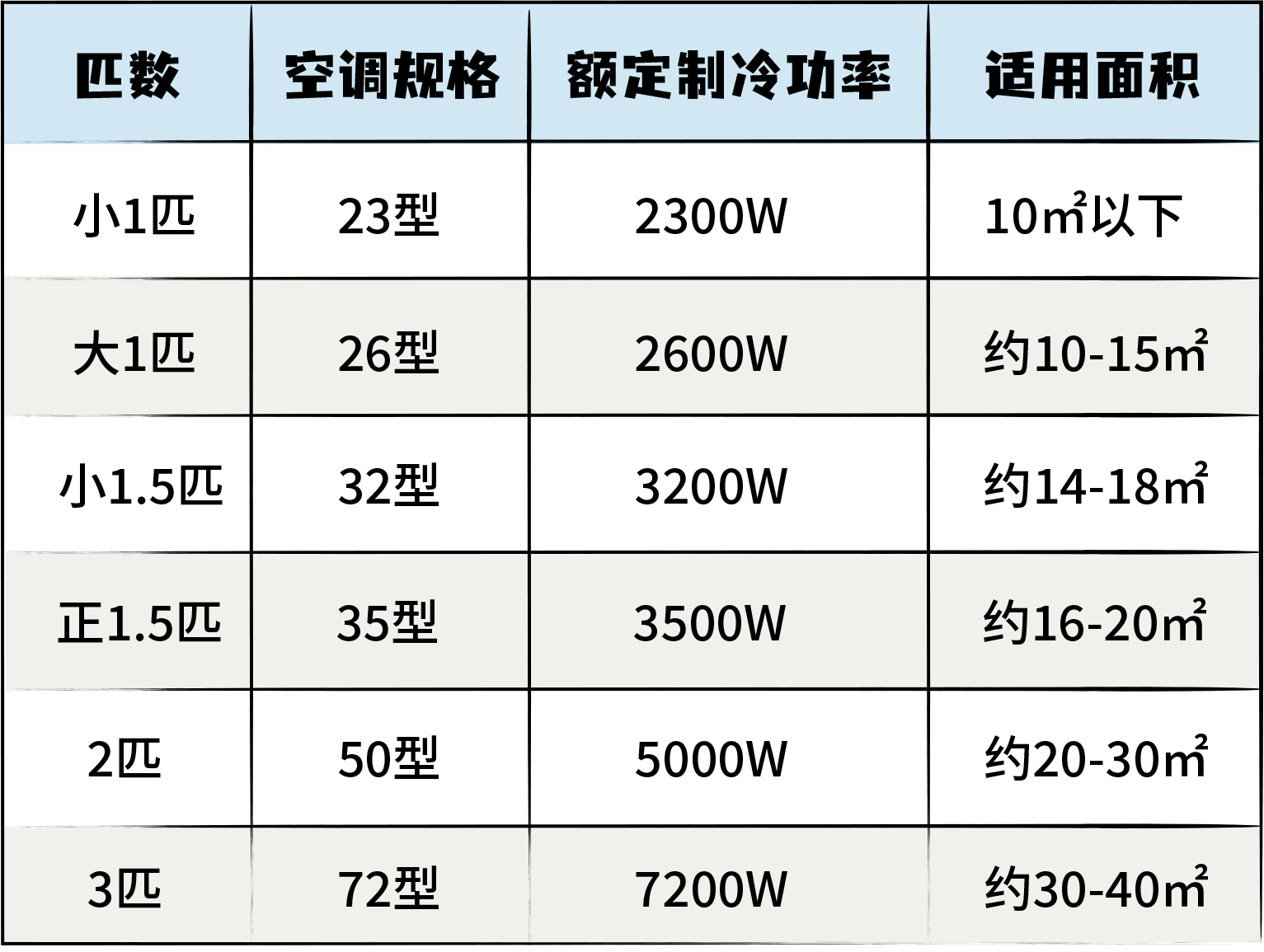
Group 1: Air Conditioner Selection - The size of the air conditioner should be determined based on the room area, with different power ratings (in HP) corresponding to specific cooling capacities [1] - A reference table is provided to match the appropriate HP with the room size to avoid over or under-sizing the air conditioner [1] Group 2: Energy Efficiency - Understanding energy efficiency labels is crucial for evaluating air conditioners, which indicate energy consumption and efficiency levels [2] - Energy efficiency is categorized into five levels, with Level 1 being the most efficient and Level 5 being the minimum standard for market entry [4] - The APF (Annual Energy Consumption Efficiency) value and CC (Rated Cooling Capacity) are important metrics for assessing energy savings [6] Group 3: Inverter vs. Non-Inverter - Inverter air conditioners are recommended due to their superior cooling speed, precise temperature control, lower noise levels, and energy efficiency compared to non-inverter models [7][9] - Non-inverter models have less accurate temperature control and higher noise levels, making them less comfortable for users [9] Group 4: Air Conditioner Lifespan and Replacement - The recommended lifespan for air conditioners is 8 to 10 years, and consumers are advised to replace them before they fail [10] - The government offers a "national subsidy" policy for replacing old air conditioners, with significant funding allocated for consumer incentives [11][14] - Consumers can receive subsidies based on the energy efficiency level of the new appliances, with specific limits on the amount per item [14]
韧性与弹性——家电行业2025年度中期投资策略
2025-07-11 01:05
Summary of Key Points from the Conference Call on the Home Appliance Industry Industry Overview - The home appliance sector is influenced by both U.S. tariff policies and domestic subsidy policies, with a positive impact from the easing of tariffs in May 2025 and a subsequent pullback due to the suspension of subsidies in some regions in June 2025 [1][4] - The sector's various subfields, including white goods, kitchen appliances, black goods, lighting equipment, and components, are generally undervalued, with public fund holdings in the home appliance sector at 6.28%, a slight increase of 0.14 percentage points [1][5][6] Core Insights and Arguments - Domestic demand has been significantly stimulated by subsidy policies, particularly for high-priced small appliances, with notable growth in categories such as photography equipment, which saw a year-on-year increase of 38.8% in April 2025 [1][7] - The two-wheeler market has also benefited from subsidy policies, with over 600,000 new vehicles sold by May 20, 2025, generating sales of 17.8 billion yuan [1][8] - The air conditioning market has experienced a notable decline in average prices, with a controlled year-on-year decrease, indicating rational demand [1][9][10] Subsector Performance - In the first half of 2025, the home appliance sector performed well overall, with positive returns in all subfields except for black goods. The home appliance index rose by 1.2 percentage points, outperforming the CSI 300 index [2] - The air conditioning market is undergoing structural adjustments, with an increase in the proportion of low-priced models and more promotional activities [3][12] - The refrigerator, washing machine, and television markets are trending towards high-end specifications, with increased demand for multi-door refrigerators and large-capacity washing machines [3][14] Export and International Market Dynamics - The U.S. tariffs on Chinese home appliances remain high, with most categories exceeding 40%, leading to a decline in exports to the U.S. [15][21] - The overseas market significantly contributes to China's home appliance exports, with air conditioning exports nearing 60% and refrigerators over 40% [17] - The sales scale in overseas markets is approximately 50% of that in China, with potential for higher domestic growth driven by international demand [18] Future Outlook - The home appliance sector may face risks of a downturn in the second half of 2025, but strong domestic demand supported by subsidies is expected to provide resilience [19][22] - Companies like Gree and Midea are recommended for investment due to their stable dividend yields and potential for recovery in the face of tariff impacts [21][22]
国泰海通 · 晨报0710|黑白电龙头引领,小家电格局改善
国泰海通证券研究· 2025-07-09 14:38
Core Viewpoint - The article discusses the improvement in the competitive landscape of small home appliances and the leadership of major players in the white and black appliance sectors, highlighting growth opportunities and market dynamics [1][3]. Group 1: Investment Recommendations - Two main investment themes are suggested: 1) The improvement in the competitive landscape of small home appliances is expected to bring profit elasticity, particularly in the robotic vacuum cleaner sector, which has high growth potential and low penetration rates. The industry is anticipated to stabilize after a period of competition and the leading companies are expected to see profit improvements [3]. 2) The concentration of market share among leading companies and their high dividend yields provide a stable investment option. Major brands are leading the current price competition, resulting in increased industry concentration. The global production capacity of leading home appliance manufacturers is well-established, allowing them to adjust production plans based on tax rate changes [3]. Group 2: Domestic and Export Performance - Domestic sales have seen growth driven by government subsidies, with various categories achieving double-digit growth despite some limitations in Q2. The sales growth during the 618 shopping festival showed significant increases in categories such as cleaning appliances (+26%), water appliances (+22%), and kitchen small appliances (+22%) [4]. - Export performance in Q2 was negatively impacted by uncertainties in tariff policies, leading to a reduction in shipment volumes. However, as tariff policies become clearer, a gradual recovery in export performance is expected in subsequent quarters [4]. Group 3: Segment Growth Expectations - The expected growth ranking for different segments of the home appliance industry is as follows: white appliances > cleaning appliances > black appliances > small kitchen appliances > components > personal care appliances > large kitchen appliances [5].

国联民生证券:聚焦优质家电行业龙头 维持“强于大市”评级
Zhi Tong Cai Jing· 2025-07-09 06:50
Group 1: Core Views - The company maintains a "stronger than market" investment rating for the home appliance industry, emphasizing the need for upward expectations and the overall low exposure to the U.S. market [1] - Key recommendations include focusing on high-quality, high-dividend white goods leaders, leading TV brands with strong product capabilities, and small appliances with expected performance elasticity [1] Group 2: White Goods - Domestic sales of white goods are expected to see high single to double-digit growth by Q2 2025, driven by national subsidy policies, with terminal sales outpacing shipments [1] - The air conditioning leaders are actively adjusting product structures, showing significant market share elasticity and outperforming the overall industry [1] - The cost environment is improving, and stable average prices are expected to enhance profitability, with Q2 revenue performance likely to exceed expectations [1] Group 3: Color TVs - The demand for color TVs has shown slight fluctuations, but the penetration rate of MiniLED technology is increasing due to subsidy policies [2] - The average selling prices for online and offline channels have increased by 10.5% and 6.5% year-on-year, respectively, indicating a significant product structure optimization [2] - Leading Chinese TV brands are expected to maintain steady revenue growth, benefiting from their advantages in the panel supply chain [2] Group 4: Kitchen Appliances - The demand for kitchen appliances is supported by national subsidies, with retail growth expected to remain relatively stable in Q2 2025 despite a decline in construction area [3] - The integrated stove market may face pressure, while the demand for separate stoves is expected to remain steady [3] Group 5: Emerging Small Appliances - The market for robotic vacuum cleaners and washing machines is experiencing high growth, with domestic brands performing well in exports [4] - The domestic market is expected to continue growing, driven by high-end products and competitive pricing strategies [4] Group 6: Small Kitchen Appliances - The trend of recovering domestic demand for small kitchen appliances continues, supported by low base effects and national subsidies [5] - The competitive landscape in the small appliance sector has eased, with significant price increases during the "618" shopping festival [5] - However, external sales are under pressure due to tariffs affecting some OEM small appliance companies [5]

石嘴山市上半年消费品以旧换新活动带动3.28亿元消费
Sou Hu Cai Jing· 2025-07-08 12:42
Core Insights - The consumption upgrade policy in Shizuishan has significantly boosted sales across various sectors, with a total of 438 merchants participating in the program and government subsidies amounting to 55.68 million yuan, leading to a sales increase of 328 million yuan in related products [1][6]. Automotive Sector - The automotive consumption policy has shown remarkable results, with Shining Star Automobile Sales Service Co. reporting a 30% year-on-year increase in sales, totaling 210 vehicles and generating 21 million yuan in revenue from January to June [3]. - Government subsidies for new energy vehicles amount to 15,000 yuan for purchases over 100,000 yuan, with total incentives exceeding 30,000 yuan when combined with manufacturer subsidies. For fuel vehicles, the government subsidy is 13,000 yuan, with total incentives reaching 40,000 to 50,000 yuan [3]. Consumer Electronics - The demand for consumer electronics, particularly smartphones, has surged due to the consumption upgrade policy, with citizens taking advantage of government subsidies of up to 500 yuan [5]. - A Huawei authorized experience store reported an 800,000 yuan revenue from January to June, with 40% of this revenue attributed to participation in the national subsidy program, marking a 20% increase compared to the previous year [6]. Overall Market Impact - The consumption upgrade initiative has led to significant increases in sales across various categories: automotive sales grew by 33.1% year-on-year, with new energy vehicles up by 56.8%; home appliances increased by 6.4%; and mobile phones rose by 33% [7]. - The local government is committed to maintaining the momentum of the consumption upgrade policy by developing monthly funding plans and adjusting consumption voucher distributions to ensure the program's effectiveness throughout the year [7].