人工智能

Search documents
可孚医疗(301087) - 2026年3月30日投资者关系活动记录表
2026-03-30 11:10
Group 1: Performance Overview - The company will disclose its Q1 2026 report on April 24, 2026, and investors are advised to refer to this report for specific performance details [2]. Group 2: Respiratory Device Business Development - The smart connected ventilator has maintained rapid growth since its launch, ranking among the top categories on major e-commerce platforms [2]. - The company launched the C11 smart ventilator in March 2026, featuring a patented multi-level acoustic optimization structure that reduces operational noise to 23 decibels without traditional sound-absorbing materials [2]. - The C11 integrates a cloud-based large language model and intelligent sensing algorithms to automatically compensate for issues like patient repositioning, air leakage, or rapid breathing, while providing users with sleep health insights and personalized recommendations via an app [2]. Group 3: Future Plans - The company aims to continue deepening its focus on respiratory health, steadily advancing product iterations, and enhancing the integration of artificial intelligence with respiratory devices [2]. - Plans include accelerating overseas product certification and channel establishment to boost the international market presence of ventilators [2]. - The company is committed to expanding its global footprint and continuously improving product competitiveness [2].
把握AI时代中国的HALO资产配置机遇:寻找中国的HALO资产
Shanghai Aijian Securities· 2026-03-30 11:09
Group 1 - The report highlights the emergence of HALO assets, defined as "Heavy Assets, Low Obsolescence," which have gained investor attention due to the decline in appeal of "light asset, high growth" tech companies amid the AI revolution [4][11] - Three main reasons for the rise of HALO assets are identified: the slowdown in capital expenditure growth among US tech giants, the anxiety in "light asset, high growth" sectors due to AI's disruptive potential, and the increasing demand for energy driven by AI development [4][5] - The report suggests that HALO assets are likely to continue being favored by investors, drawing parallels to the internet revolution of the late 1990s, indicating a structural shift rather than a temporary trend [38][40] Group 2 - The macro geopolitical context, particularly the escalating US-Israel-Iran tensions, has contributed to rising oil prices, indirectly boosting the attractiveness of HALO assets [5][46] - The report outlines three scenarios regarding the geopolitical situation, with an 80% probability that HALO assets will benefit from either optimistic or neutral outcomes [53][62] - The analysis indicates that the ongoing geopolitical uncertainties, while disruptive, are unlikely to derail the overall positive trend for HALO assets [62] Group 3 - The report emphasizes the unique advantages of Chinese HALO assets compared to their US counterparts, including strong government support, high asset quality, and newer equipment [6][63] - A quantitative method is proposed for constructing a HALO asset portfolio in China, which has shown significant excess returns in backtesting [6][8] - The report recommends investors to overweight HALO assets in their A-share portfolios, highlighting the potential for substantial upside given the current market dynamics [6][8]
科创创业AI指数:双线精选,一键布局全景AI链
GF SECURITIES· 2026-03-30 11:05
Group 1 - The Sci-Tech Innovation and Entrepreneurship AI Index (932456.CSI) was officially launched on May 14, 2025, to reflect the overall performance of large and mid-cap growth companies with core artificial intelligence attributes in the Sci-Tech Innovation Board and the ChiNext market [1][3] - The index aims to provide a comprehensive view of AI core assets across sectors, highlighting the balance between domestic and overseas computing power chains and focusing on high-elasticity computing targets [9][10] - The index includes 50 securities selected based on their average market capitalization and liquidity, specifically those involved in providing foundational resources, technical support, and applications for artificial intelligence [10] Group 2 - The AI industry is transitioning from a training phase to a reasoning phase, indicating a shift towards profitable application commercialization, with significant capital expenditures from cloud vendors continuing to expand [14][17] - The consumption of tokens, which are critical for validating the AI industry's real demand, has surged, reflecting the increasing penetration and commercialization of AI large models [19][20] - The supply-demand imbalance in the AI sector, driven by explosive computing power demand and a shortage of storage chips, is expected to sustain the price increase in the AI value chain [22][23] Group 3 - The index focuses on mid to large-cap growth styles, with a significant portion of its weight in companies with market capitalizations over 100 billion, providing strong support through leading firms [36][38] - The index achieves a balanced risk profile by covering three major technology sectors: semiconductors, communication equipment, and software development, effectively mitigating the risks associated with over-concentration in a single sector [45][46] - The index's structure allows for exposure to both upstream and downstream segments of the AI industry chain, capturing the benefits of the entire cycle while maintaining a focus on core computing power [48][52] Group 4 - The profitability outlook for the index is strong, with projected net profit growth rates significantly outpacing major broad-based indices, indicating a high degree of certainty in earnings driven by the AI sector [56][57] - The index has demonstrated a high annualized return of 50.02%, with a relatively high annualized volatility of 40.78%, indicating a strong risk-reward profile suitable for capturing industry trends [61]
数字经济周报(2026年第8期):Token成为智能时代的价值锚点-20260330
Yin He Zheng Quan· 2026-03-30 10:56
Core Insights - Tokens are evolving from a technical measurement unit in large models to a fundamental value scale and settlement tool in the smart economy, becoming a value anchor in the intelligent era [1][3][4] - The AI industry is accelerating towards a "commercial closed loop + Agent landing" evolution, with application-driven development becoming a core variable [1][3] - In China, the development of AI is entering a phase of systematic constraints with dual advancements in security governance and data regulations [1][3] - Globally, AI competition is entering a phase of governance and resource constraints, with a focus on mobilization and resource allocation [1][3] - The integration of computing power architecture, intelligent agents, and physical systems is advancing, accelerating the embedding of AI into critical infrastructure [1][3] AI Industry and Representative Company Dynamics - The global AI large model token call volume reached a new high of 20.4 trillion times, indicating continued growth in demand [22] - The competition in AI computing power is intensifying, particularly between the US and China, with a shift towards commercial applications and agent deployment [22] - Major AI companies are experiencing significant developments, including accelerated IPO processes and increased commercialization of applications, while facing ongoing pressure in the supply chain [22][24] China Dynamics - The Chinese AI development landscape is characterized by rapid upgrades in security and governance systems, reflecting a more structured approach to AI regulation [1][3] - The dual focus on safety governance and data systems is indicative of a broader strategy to manage AI growth within a regulatory framework [1][3] Overseas Dynamics - The global AI competition is marked by a dual approach of governance and resource constraints, highlighting the strategic maneuvers of nations in the AI sector [1][3] Technological Frontiers - The integration of computing power architecture and intelligent agents is progressing, with AI increasingly embedded in essential infrastructure [1][3] Think Tank Perspectives - The rise of smart glasses is noted, with AI terminal forms shifting from immersive devices to lightweight interfaces, indicating a trend towards more accessible AI technology [1][3]
定增市场双周报2026.03.16-2026.03.29:折价率创新低,β收益分化-20260330
Shenwan Hongyuan Securities· 2026-03-30 10:44
Group 1: Market Dynamics - As of March 30, 2026, 18 new private placement projects were added, a decrease of 4 from the previous period, with 6 projects terminated, also down by 3[4] - The number of projects awaiting approval stands at 662, with 75 having passed the review, a decrease of 8[8] - The average discount rate for competitive bidding projects reached a record low of 1.36%, down 13.26 percentage points, while the market price discount rate averaged 4.16%, down 11.80 percentage points[4] Group 2: Project Analysis - Jiangfeng Electronics plans to raise up to 1.928 billion yuan for projects related to semiconductor materials, with expected revenue growth exceeding 20% in 2024 and 2025[4] - iFLYTEK aims to raise up to 4 billion yuan for AI education projects, with the AI industry expected to grow at a compound annual growth rate of 32.1% from 2024 to 2029[4] - The average price-to-sales (PS) and price-to-book (PB) ratios for Jiangfeng Electronics are 10.75X and 7.83X, respectively, while iFLYTEK's PS and PB ratios are 4.63X and 6.12X[4] Group 3: Investment Insights - 62.5% of the newly unlocked competitive bidding projects yielded positive returns, with an average absolute return of 13.88% and an excess return of 1.30%[4] - The average market price discount rate for newly listed competitive projects was 15.24%, with some projects exceeding 22%[4] - The average subscription premium rate for competitive projects was 12.05%, reflecting a 4.35 percentage point increase[4]


钻石芯片,更近了
半导体芯闻· 2026-03-30 10:36
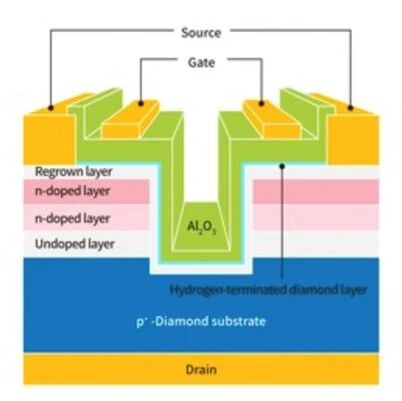
Core Viewpoint - The article discusses the advancements in diamond semiconductor technology, highlighting its potential applications and the efforts of Power Diamond Systems (PDS) in this field [1][2]. Group 1: Company Background - Power Diamond Systems (PDS) was established in August 2022, originating from Waseda University, with the aim of applying academic research to societal needs [2]. - The company was founded with the support of Waseda University Venture Company (WUV) and has a strong research background in diamond semiconductors [2]. Group 2: Characteristics and Applications of Diamond Semiconductors - Diamond semiconductors exhibit exceptional thermal conductivity and dielectric breakdown strength, surpassing silicon carbide (SiC) and gallium nitride (GaN), making them top-tier materials for power semiconductors [3]. - Potential applications for diamond semiconductors include electric vehicles, data centers, renewable energy, and harsh environments like aerospace and nuclear power [3]. Group 3: Development Progress and Device Features - PDS is developing a vertical diamond MOSFET, which features low resistance and high voltage tolerance, enhancing power density while maintaining efficient operation due to diamond's high thermal conductivity [4]. - A working model of the diamond MOSFET was demonstrated at the SEMICON Japan exhibition in December 2025, showcasing the progress in their research and development [4]. Group 4: Future Outlook and Challenges - Full societal application of diamond semiconductors is expected to occur in the 2030s or 2040s, with the 2020s focused on identifying target application areas and initiating large-scale production technology development [8]. - Building an ecosystem through collaboration with supply chain partners is crucial for the successful application of diamond semiconductors [8]. - Concerns about the high cost of diamond substrates are acknowledged, but it is believed that significant performance advantages and market demand will drive cost reduction efforts [9]. Group 5: Collaboration and Market Engagement - PDS prioritizes collaboration with potential user companies currently utilizing silicon or SiC devices, aiming to understand their challenges and expectations for diamond semiconductors [10]. - The company is actively engaging with multiple firms using power semiconductors to enhance the feasibility of diamond semiconductor technology in societal applications [11].

芯片,全面涨价
半导体芯闻· 2026-03-30 10:36
Group 1 - The semiconductor price increase is spreading beyond storage semiconductors to non-storage sectors, driven by AI infrastructure investments impacting DRAM and NAND flash prices, as well as other products like analog chips, power semiconductors, communication chips, and CPUs experiencing supply disruptions and price hikes [1] - Major semiconductor companies, including Intel and AMD, are reportedly planning to raise CPU prices by an average of 10% to 15% due to increased demand from AI and supply constraints, with delivery times for some PC manufacturers extending from 1-2 weeks to up to 6 months [3] - Companies like NXP, Texas Instruments, and Infineon Technologies are also set to increase prices, indicating a clear trend of rising costs starting from memory chips and extending to analog and power semiconductor sectors [1][2] Group 2 - The price surge in semiconductors is attributed to stable demand in the automotive and industrial sectors, alongside a production bottleneck caused by a significant portion of mature semiconductor nodes being redirected towards AI and data center applications [2] - Communication chips and network components are also affected, with Broadcom noting that the surge in demand for AI chips and network components has strained the production capacity of its main manufacturing partner, TSMC [2] - The delivery timelines for optical communication components like lasers and PCBs have extended from confirmed orders to several months, indicating increasing procurement pressure for high-performance chips and network integration components [2]



两个巩固、两个确保!农业银行王志恒明确2026年三农金融服务目标
Xin Lang Cai Jing· 2026-03-30 10:36
Core Viewpoint - Agricultural Bank emphasizes its commitment to rural revitalization as a core responsibility and strategic focus, highlighting it as a competitive advantage [1][4]. Group 1: Performance Highlights - In the past year, Agricultural Bank has significantly contributed to rural financing, with daily deposits and loan increments in county areas exceeding 1 trillion yuan, with increases of 10.5% and 1.4% respectively compared to the previous year [1][4]. - The balance of loans to farmers has surpassed 1.8 trillion yuan, with an increase of 337.7 billion yuan, reflecting a growth rate of 22.4%. Loans in key areas such as rural industries have grown at a rate significantly higher than the overall loan growth [1][4]. - The non-performing loan ratio in county areas has decreased by 0.08 percentage points since the beginning of the year, indicating stable asset quality [1][4]. Group 2: Future Goals and Strategies - For 2026, Agricultural Bank aims to align closely with national rural work directives and plans, setting goals to consolidate the proportion of county loans and maintain service advantages in these areas [1][5]. - The bank plans to increase policy resource investment to enhance financial service capabilities, focusing on five key areas: 1. Strengthening services for key rural revitalization projects, targeting a net increase of over 1 trillion yuan in county loans [2][6]. 2. Improving financial service capabilities at the village and township levels, with a goal to relocate 180 inefficient branches and establish 3,000 agricultural service stations by year-end [2][6]. 3. Innovating financial products and models in agriculture, including the use of AI and advanced data systems [3][7]. 4. Maintaining regular financial support, particularly for vulnerable populations and underdeveloped areas [3][7]. 5. Enhancing risk compliance management in county operations to ensure sustainable development [3][7].

新材料行业月报:几内亚考虑收紧铝土矿供应,具身智能领域首个行业标准正式发布
Zhongyuan Securities· 2026-03-30 10:24
Investment Rating - The report maintains an investment rating of "Outperform the Market" for the new materials industry [1][8]. Core Insights - The new materials sector underperformed the CSI 300 index in March, with a decline of 11.46%, lagging behind the CSI 300's drop of 4.64% by 6.81 percentage points [8][12]. - The overall market valuation for the new materials index is at a PE (TTM, excluding negative values) of 30.29, which is a decrease of 8.26% from the previous month, indicating a relatively high valuation compared to the overall A-share market PE of 17.84 [21][23]. - The growth potential for the new materials sector is supported by increasing demand from China's manufacturing industry and the integration of technologies such as artificial intelligence [8][21]. Summary by Sections Industry Performance Review - The new materials index's performance in March was weaker than the CSI 300, with a total trading volume of 25,626.40 billion yuan, reflecting a 55.45% increase from the previous month [8][12]. - Most stocks in the new materials sector experienced declines, with only 22 out of 170 stocks rising [16][17]. Important Industry Data Tracking - Basic metal prices saw a general decline in March, with copper down by 7.63% and tin down by 18.37% [31][34]. - Global semiconductor sales continued to grow, with January 2026 sales reaching $82.54 billion, a year-on-year increase of 46.1% [36][37]. - Exports of superhard materials and products increased by 15.13% in volume and 21.15% in value in the first two months of 2026 [44]. Industry Dynamics - The report highlights the establishment of the first industry standard in the field of humanoid robots, indicating ongoing innovation within the sector [1][8]. - The report notes that the domestic new materials sector may gradually enter a prosperous cycle driven by recovery in downstream demand and domestic substitution [8].


2026年投资风向标,看睿远基金三位基金经理划重点
市值风云· 2026-03-30 10:09
Core Viewpoint - The article discusses the significant changes in the hidden heavy positions of fund manager Fu Pengbo and the overall performance and strategies of Ruifeng Fund, particularly in the context of the latest annual reports of public funds [3][8]. Group 1: Fund Management Overview - Ruifeng Fund currently manages a total of 653.2 billion yuan across 11 funds, with experienced managers like Fu Pengbo and Zhao Feng overseeing over 100 billion yuan each [4][6]. - The three main funds managed by Fu Pengbo, Zhao Feng, and Rao Gang have a combined scale of 371.8 billion yuan [6]. Group 2: Portfolio Composition - As of the end of the fourth quarter, key stocks in the portfolios include Ningde Times, Tencent Holdings, and Luxshare Precision, indicating a consensus among the fund managers [8]. - Fu Pengbo's portfolio is characterized by a strong focus on electric equipment and technology, while Zhao Feng and Rao Gang maintain a more balanced approach with significant allocations in non-bank financials, media, electric equipment, and electronics [8]. Group 3: Stock Performance and Changes - Fu Pengbo's hidden heavy positions have seen substantial changes, with new entries including Siquan New Materials, Sensata Technologies, and Shannon Semiconductor, alongside three pharmaceutical stocks [12]. - The article highlights the performance of the three main funds, with varying returns over different time frames, indicating a competitive positioning against the market [9]. Group 4: Future Outlook and Investment Strategy - Fu Pengbo emphasizes increasing allocations in AI and chip industries, predicting a potential divergence in the AI sector by 2026, while reducing exposure to coal and traditional chemicals [13][14]. - The article notes that the return expectations for equity assets in 2026 may see a moderate decline compared to 2025, but structural opportunities remain [16]. - Rao Gang points out that capital expenditures in non-financial A-shares have reached historical lows, suggesting a potential price rebound in the midstream manufacturing sector [17].