内需主导

Search documents
12月中央政治局会议对投资的启示
Yin He Zheng Quan· 2025-12-08 10:45
Group 1 - The December Central Political Bureau meeting emphasizes the importance of expanding domestic demand and optimizing supply, aiming to stimulate new growth points and improve resource allocation efficiency [2][5][6] - The macro policy framework for 2026 will continue to focus on stability while promoting progress, with a shift towards enhancing quality and effectiveness in economic development [6][7] - The meeting outlines a clear path for industrial policy, prioritizing domestic demand and innovation, which will benefit sectors such as consumer goods, AI, digital economy, and new energy [8][11] Group 2 - The meeting provides initial guidance for A-share investment, focusing on domestic demand, innovation, and reform, which will support market stability and investor confidence [11][12] - The upcoming Central Economic Work Conference is expected to detail specific fiscal, monetary, and industrial policies, further activating market dynamics [11][12] - The report identifies two main investment themes: the transition to new productive forces and the recovery of manufacturing and resource sectors, alongside a focus on consumer-driven policies [12]
中共中央政治局:继续实施更加积极的财政政策和适度宽松的货币政策
Feng Huang Wang· 2025-12-08 05:40
会议指出,明年经济工作要坚持稳中求进、提质增效,继续实施更加积极的财政政策和适度宽松的货币 政策,发挥存量政策和增量政策集成效应,加大逆周期和跨周期调节力度,切实提升宏观经济治理效 能。要坚持内需主导,建设强大国内市场;坚持创新驱动,加紧培育壮大新动能;坚持改革攻坚,增强 高质量发展动力活力;坚持对外开放,推动多领域合作共赢;坚持协调发展,促进城乡融合和区域联 动;坚持"双碳"引领,推动全面绿色转型;坚持民生为大,努力为人民群众多办实事;坚持守牢底线, 积极稳妥化解重点领域风险。 中共中央政治局12月8日召开会议,分析研究2026年经济工作,审议《中国共产党领导全面依法治国工 作条例》。 ...
内需外需均有改善,11月制造业PMI回升至49.2%
Hua Xia Shi Bao· 2025-12-02 12:36
Core Viewpoint - The manufacturing Purchasing Managers' Index (PMI) in November shows a slight recovery to 49.2%, indicating improvements in both domestic and overseas demand, although it remains in a contraction zone for the eighth consecutive month [2][5]. Economic Indicators - The November PMI reflects improvements in 11 sub-indices, including new orders and production expectations, with a composite PMI output index at 49.7%, suggesting overall economic stability [2][5]. - The new orders index increased by 0.4 percentage points to 49.2%, while the production index rose to the critical point of 50.0%, indicating a return to expansion after a contraction [5][6]. Policy Impact - Recent government policies, including the introduction of 500 billion yuan in new policy financial tools and an additional 500 billion yuan in special bonds, are expected to stimulate domestic market demand and infrastructure investment [5][8]. - The positive outcomes from recent US-China trade talks have also contributed to a marginal increase in export orders, with the new export orders index rising by 1.7 percentage points to 47.6%, marking the largest increase in six months [5][6]. Sector Performance - High-tech manufacturing sectors continue to show strong demand, with their PMIs remaining above the critical point for ten consecutive months, while traditional energy-intensive industries are still in contraction [6]. - Specific industries such as agricultural processing and non-ferrous metal smelting are experiencing active demand, whereas sectors like petroleum and chemical manufacturing are lagging [6][7]. Price Trends - The main raw material price index rose by 1.1 percentage points to 53.6%, indicating ongoing expansion since the implementation of "anti-involution" policies [7]. - The Producer Price Index (PPI) is expected to see a slight month-on-month increase, although year-on-year comparisons may still reflect a decline due to higher base effects from the previous year [7][8]. Future Outlook - The construction PMI is anticipated to rise into the expansion zone as the effects of the new policy financial tools and special bonds materialize [8]. - The overall industrial product prices remain subdued, influenced by weak consumer demand and declining real estate investments, with the long-term effects of "anti-involution" policies on prices still under observation [8].


杨伟民:深刻把握“十五五”规划建议的重点和要求|宏观经济
清华金融评论· 2025-11-29 09:48
Core Viewpoint - The "14th Five-Year Plan" emphasizes the need for qualitative and effective economic growth, promoting comprehensive human development and common prosperity, ensuring decisive progress towards socialist modernization [3][4]. Group 1: Economic Development Strategy - The plan highlights the importance of forming an economic development model driven by domestic demand, consumption, and endogenous growth, which is a strategic decision for the "14th Five-Year Plan" [3][10]. - A significant focus is placed on improving the income distribution system to support a consumption-driven growth model, which is crucial for achieving modernization in the Chinese context [3][11]. - The plan sets a target for per capita GDP to reach approximately $23,000 by 2035, requiring an average nominal growth of around 5% annually over the next decade [4]. Group 2: Principles for Economic and Social Development - The "14th Five-Year Plan" outlines six essential principles for economic and social development, including the necessity of the Party's comprehensive leadership, which is fundamental for achieving modernization [7][8]. - Emphasizing a people-centered approach, the plan aims to meet the growing needs of the populace while expanding development opportunities [7]. - High-quality development is identified as the primary task, focusing on innovation-driven growth and enhancing domestic consumption [8]. Group 3: Income Distribution and Employment - The plan stresses the importance of fair income distribution and increasing residents' income as a prerequisite for expanding consumption and meeting the people's needs [11][12]. - New policies are proposed to create an employment-friendly development model, ensuring that income growth aligns with economic growth [11]. - The introduction of a "Rural and Urban Residents' Income Increase Plan" is highlighted as a significant initiative to enhance the financial well-being of the population [12].

21社论丨经济呈现稳中有进,新动能持续积累壮大
21世纪经济报道· 2025-11-15 00:37
Economic Overview - The national economy in October shows a stable and progressive development trend, with basic stability in production supply and overall employment situation [1] - The industrial added value for large-scale enterprises increased by 4.9% year-on-year, a decrease from the previous 6.5% [1] - Exports fell by 1.1% year-on-year, a significant drop from the previous month's growth of 8.3% [1] - Retail sales of consumer goods grew by 2.9% year-on-year, slightly below the previous 3.0% [1] Price Trends - The Consumer Price Index (CPI) turned from a decrease of 0.3% last month to an increase of 0.2%, indicating a gradual recovery in domestic demand [1] - Core CPI, excluding food and energy, rose by 1.2% year-on-year, with the growth rate expanding for six consecutive months [1] - The Producer Price Index (PPI) decreased by 2.1% year-on-year, but the decline has narrowed for three consecutive months, with a slight month-on-month increase of 0.1% [1] Investment Insights - Fixed asset investment decreased by 1.7% year-on-year from January to October, with the decline in the tertiary industry investment being a major factor [2] - Investment in the real estate sector dropped by 14.7%, significantly impacting overall investment growth [2] - Manufacturing investment grew by 2.7% year-on-year, indicating structural optimization, with high-tech manufacturing investment increasing rapidly [3] Consumption Dynamics - Service consumption is becoming a key driver of consumer growth, with manufacturing upgrades leading to increased demand for productive services [3] - There is a notable investment opportunity in the tertiary sector, which contrasts with the rising demand in the service industry [3] - The need for policy guidance and investment support in both living and productive service sectors is emphasized to foster high-quality economic development [3]
21社论丨经济呈现稳中有进,新动能持续积累壮大
2 1 Shi Ji Jing Ji Bao Dao· 2025-11-14 23:17
Economic Overview - The national economy in October continues to show a stable and improving trend, with production supply remaining stable and employment conditions generally solid [1] - The overall growth rate has slowed, with industrial added value increasing by 4.9% year-on-year, down from 6.5% [1] - Exports decreased by 1.1%, a significant drop from the previous month's growth of 8.3% [1] - Retail sales of consumer goods grew by 2.9%, slightly below the previous value of 3.0% [1] Price Trends - The Consumer Price Index (CPI) turned from a decline of 0.3% last month to an increase of 0.2%, indicating a gradual recovery in domestic demand [1] - Core CPI, excluding food and energy, rose by 1.2%, marking six consecutive months of growth [1] - The Producer Price Index (PPI) fell by 2.1% year-on-year, but the decline has narrowed for three consecutive months, with a slight month-on-month increase of 0.1% [1] Investment Insights - Fixed asset investment decreased by 1.7% year-on-year from January to October, with the decline in the tertiary sector investment being a major factor [2] - Investment in the first and second industries remains positive, while the third industry saw a decline of 5.3% [2] - Private investment dropped by 4.5%, but excluding real estate development, it showed a slight positive growth of 0.2% [2] Manufacturing Sector - Despite overall investment pressures, manufacturing investment grew by 2.7% year-on-year from January to October, surpassing the overall investment growth rate [3] - High-tech manufacturing investment is increasing rapidly, indicating a structural optimization in the manufacturing sector [3] - The demand for productive services is expanding due to manufacturing upgrades, highlighting significant investment opportunities in the service sector [3] Policy Recommendations - To establish a new economic growth model driven by domestic demand, consumption, and innovation, there is a need for enhanced policy guidance and investment support for both living and productive services [3] - Private enterprises, with their flexible mechanisms, are well-positioned to capitalize on opportunities in these service sectors [3] - Reform efforts should focus on reducing entry barriers to stimulate private investment in high-value-added service areas, thereby contributing to high-quality economic development [3]
经济呈现稳中有进,新动能持续积累壮大
2 1 Shi Ji Jing Ji Bao Dao· 2025-11-14 22:45
Economic Overview - The national economy in October shows a stable and improving development trend, with production supply remaining stable and employment conditions generally solid [1] - The overall growth rate has slowed down, with industrial added value increasing by 4.9% year-on-year, down from 6.5% [1] - Exports decreased by 1.1% year-on-year, a significant drop from the previous month's growth of 8.3% [1] - Retail sales of consumer goods grew by 2.9% year-on-year, slightly lower than the previous value of 3.0% [1] Price Trends - The Consumer Price Index (CPI) turned from a decline of 0.3% last month to an increase of 0.2%, indicating a gradual recovery in domestic demand [1] - Core CPI, excluding food and energy, rose by 1.2% year-on-year, with the growth rate expanding for six consecutive months [1] - The Producer Price Index (PPI) decreased by 2.1% year-on-year, but the decline has narrowed for three consecutive months, with a slight month-on-month increase of 0.1% [1] Investment Insights - Fixed asset investment decreased by 1.7% year-on-year from January to October, with the decline in the tertiary industry investment being a major factor [2] - Investment in the first and second industries remains positive, while the third industry saw a decline of 5.3% [2] - Private investment fell by 4.5%, but excluding real estate development investment, it showed a slight positive growth of 0.2% [2] Manufacturing Sector - Despite overall investment pressures, manufacturing investment grew by 2.7% year-on-year from January to October, surpassing the overall investment growth rate [3] - High-tech manufacturing investment is growing rapidly, indicating a structural optimization in the manufacturing sector [3] - The demand for productive services is expanding due to manufacturing upgrades, highlighting significant investment opportunities in the service sector [3] Policy Recommendations - To establish a new economic growth model driven by domestic demand, consumption, and innovation, there is a need for enhanced policy guidance and investment support for both life and productive services [3] - Private enterprises, with their flexible mechanisms, have a natural advantage in these service sectors, suggesting a need for reforms to stimulate private investment in high-value-added service areas [3]
杨伟民:“两个推动、一个确保”是“十五五”规划建议的最大亮点
Zheng Quan Shi Bao Wang· 2025-11-01 11:38
Core Insights - The key highlight of the "14th Five-Year Plan" proposal is the emphasis on "two promotions and one guarantee," focusing on qualitative and effective economic growth and ensuring significant progress towards socialist modernization [1][2] Group 1: Economic Growth and Development - The proposal aims to maintain economic growth within a reasonable range, which is crucial for achieving socialist modernization by 2035 [1] - The plan emphasizes the need for innovation-driven growth, promoting high-level technological self-reliance, and developing new productive forces to optimize and upgrade the economic structure [1] Group 2: Domestic Demand and Consumption - A new economic development model is proposed, which is driven by domestic demand, consumption, and endogenous growth, addressing structural issues such as low consumer spending and income distribution [2] - The contribution of investment to domestic demand is expected to increase, but it is unlikely to return to previous peak levels, necessitating a greater reliance on sustained expansion of consumer spending [2]
如何投资于人?增加民生公共服务投入
Nan Fang Du Shi Bao· 2025-10-31 23:05
Core Insights - The article discusses the recently published "14th Five-Year Plan" and its implications for China's economic transformation and development goals [4][6]. Group 1: Economic Transformation - China's manufacturing sector is transitioning from a cost advantage to a comprehensive competitive advantage, supported by a super-large market, complete industrial chain, and rich talent resources [5]. - The super-large market, with over 1.4 billion people and more than 400 million middle-income individuals, is expected to unleash significant demand potential, benefiting manufacturing costs through economies of scale [5]. - The complete industrial chain advantage enhances industrial support capabilities, while the abundance of talent, particularly in STEM fields, strengthens industrial competitiveness [5]. Group 2: Development Goals - The plan aims for per capita GDP to reach the level of moderately developed countries by 2035, with an average growth rate target of 4.5% during the "15th Five-Year Plan" [6]. - The average growth rate during the "14th Five-Year Plan" is projected to be around 5.4%, contingent on achieving a 5% growth target this year [6]. Group 3: Unified National Market - The construction of a unified national market is essential for supporting domestic circulation and enhancing the internal dynamics of the economy [7]. - Current challenges include "involutionary" competition, distorted local investment policies, and market fragmentation, which hinder the free flow of production factors [7]. Group 4: Economic Development Model - The economic growth model is shifting from reliance on investment and exports to one driven by domestic demand, consumption, and endogenous growth [8]. - The article highlights the need to increase the household consumption rate, which has been relatively low compared to historical levels and international benchmarks [8][9]. Group 5: Investment in People - The plan emphasizes the importance of combining investments in physical assets with investments in human capital, advocating for increased public service and social welfare spending [9][10]. - By reallocating funds from traditional investment projects to enhance public services, the aim is to boost household income and consumption capacity [10].
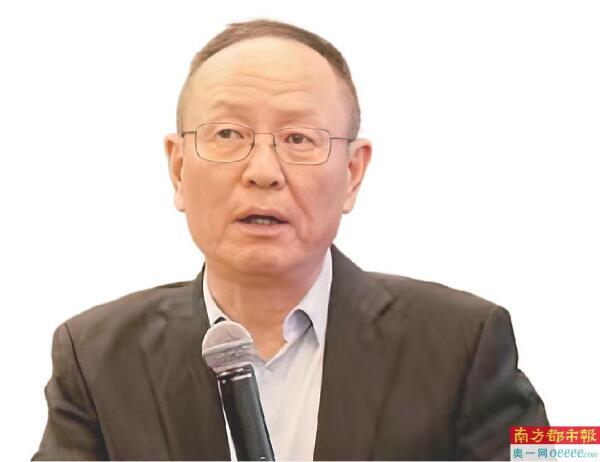
王一鸣谈全国统一大市场建设:应提高制度统一性、规则一致性
Sou Hu Cai Jing· 2025-10-31 08:42
Core Viewpoint - The "14th Five-Year Plan" outlines China's economic and social development goals for the next five years, emphasizing a shift from investment and export-driven growth to a model focused on domestic demand, consumption, and endogenous growth [1][12]. Group 1: Economic Transition - China's manufacturing sector is transitioning from a cost advantage to a comprehensive competitive advantage, supported by a super-large market, complete industrial chain, and rich talent resources [1][5]. - The super-large market, with over 1.4 billion people and more than 400 million middle-income individuals, is expected to unleash significant demand potential as income levels rise [5][6]. - The plan aims for per capita GDP to reach the level of moderately developed countries by 2035, with an average growth rate of 5.4% during the "14th Five-Year Plan" period [6]. Group 2: Domestic Market Development - The construction of a unified national market is essential for smooth domestic circulation, requiring the elimination of market segmentation and enhancing institutional uniformity and rule consistency [9]. - Current challenges include "involutionary competition," distorted local investment policies, and market fragmentation, which hinder the free flow of production factors [9][12]. Group 3: Consumer Spending and Public Investment - The shift towards a consumption-driven economy necessitates increasing the resident consumption rate, which has been relatively low compared to other countries [12][13]. - The plan emphasizes the need to increase government spending on public services and social welfare, reallocating funds from traditional investment projects to enhance public service and living standards [13].