贸易保护主义

Search documents
今晨!美国,突发“关税”大利空!美股集体杀跌!
券商中国· 2026-01-14 23:18
Group 1: Tariff on Semiconductors - The U.S. government announced a 25% import tariff on certain semiconductors, semiconductor manufacturing equipment, and derivatives starting January 15 [1][3] - The tariff aims to encourage semiconductor manufacturers to produce more chips domestically, as the U.S. currently only produces about 10% of its required chips, creating significant economic and national security risks [3] - The tariff will not apply to chips imported to support the U.S. technology supply chain or those related to enhancing domestic semiconductor manufacturing capabilities [3] Group 2: Market Reactions - Following the announcement of the tariffs, U.S. stock markets experienced declines, with the Nasdaq dropping 1% and major tech companies like Broadcom, Facebook, Amazon, and Microsoft seeing losses of over 2% [1] - The tariffs are part of a broader effort by the Trump administration to support U.S. manufacturing and have introduced new trade uncertainties [3] Group 3: Iran Situation - President Trump indicated a cautious approach regarding the situation in Iran, stating that the U.S. would observe developments while acknowledging positive statements from Iran [5] - There are concerns about potential military actions, as the U.S. has received a detailed list of high-value military targets in Iran [5] - Saudi Arabia has warned against military strikes on Iran, emphasizing that such actions could destabilize the region and disrupt global oil markets [6]

突发!美国白宫宣布对特定半导体等加征25%关税
证券时报· 2026-01-14 23:11
Core Viewpoint - The article discusses the recent announcement by the U.S. government regarding the imposition of a 25% import tariff on certain semiconductor products, highlighting the ongoing legal challenges and the broader implications for global trade [1][4]. Group 1: Tariff Announcement - On January 14, 2026, the U.S. White House announced a 25% import tariff on certain semiconductors, semiconductor manufacturing equipment, and derivatives starting January 15 [1]. - Previously, on August 6, 2025, President Trump indicated that tariffs of approximately 100% would be imposed on chips and semiconductors, with no fees for products manufactured in the U.S. [1][2]. Group 2: Legal Challenges - The U.S. Supreme Court did not make a ruling on the legality of Trump's tariff policy on January 14, 2026, leaving the case unresolved [3]. - The Supreme Court had previously held hearings regarding the legality of the tariff policy, with many justices expressing skepticism about the government's reliance on declaring a "national emergency" to impose comprehensive tariffs [4]. Group 3: Global Trade Impact - According to the World Trade Organization (WTO), nearly 20% of global imports are affected by tariffs and similar measures, a significant increase from 12.6% a year prior [5][6]. - The WTO's Director-General highlighted that the global trading system is experiencing its most severe turmoil in 80 years, driven by increased unilateral tariffs and geopolitical tensions [6].

贸易逆差降至2009年以来最低水平,特朗普关税初见端倪
Sou Hu Cai Jing· 2026-01-14 11:06
Group 1 - The U.S. trade deficit unexpectedly narrowed to $29.4 billion in October, the lowest level since June 2009, primarily due to a sharp decline in imports and moderate growth in exports [1] - U.S. imports fell by 3.2% to $331.4 billion, with goods imports dropping 4.5% to $255 billion, marking the lowest level since June 2023 [1] - The decline in imports is attributed to the impact of tariffs imposed by the Trump administration, which have increased import costs and forced companies to adjust their supply chains [1] Group 2 - The significant drop in pharmaceutical imports, which fell by $14.3 billion to the lowest level since July 2022, is a major contributor to the overall decline in imports [1] - The decrease in consumer goods imports by $14 billion, the lowest since June 2020, indicates weakening domestic consumer demand in the U.S. [1] - The uncertainty surrounding tariffs has led to fluctuations in U.S. trade data, but the long-term trend suggests a potential "declining cycle" for the trade deficit [1] Group 3 - The reduction in the U.S. trade deficit is a complex situation for China, presenting both risks and opportunities, as China's manufacturing capabilities span across various sectors [8] - China's competitive pricing allows for significant exports, with projections indicating that it will produce one-third of the world's industrial goods by 2024 and achieve a trade surplus exceeding $1 trillion by 2025 [8] - The decrease in U.S. trade deficit and dollar liquidity could negatively impact global trade dynamics, particularly affecting China's export potential [10] Group 4 - The trade protectionism under the Trump administration aims to fragment globalization, pushing companies to relocate production to regions like Southeast Asia and Mexico, which may lead to a loss of manufacturing orders for China [6] - The shrinking trade deficit could lead to a decline in globalization, making it more challenging for countries like China to maintain previous levels of dollar earnings from exports [14] - The reliance on the U.S. dollar as a global currency is critical, and any reduction in U.S. trade deficits could diminish the liquidity that supports global trade [9][10]

卡尼还未登机访华,加拿大先来了个下马威,不许取消电动车关税
Sou Hu Cai Jing· 2026-01-14 06:07
还没访华,加拿大就想给中国来个下马威:不许取消电动车关税。看起来加拿大似乎搞错了重点。根据 中国外交部1月12日发布的正式公告,应中国领导人的邀请,加拿大总理卡尼将于1月14日至17日对中国 进行正式访问。这是自2017年以来,首次有加拿大总理访华,同时也标志着卡尼自2025年当选后,处理 对华关系的一次关键行动。 系的转折点,并在社交平台上发文表示,中加致力于以务实和建设性的方式重塑双边关系,承诺将采取 实际行动,解决遗留的贸易问题。 然而,卡尼政府的对华示好没想到引发了国内的叛徒。1月8日,安大略省省长道格·福特直言不讳地要 求卡尼维持对中国电动汽车的高额关税。但这番话显然并非出于加拿大整体利益的考虑,而是为了保护 安大略省的利益。作为加拿大汽车产业的核心地区,安大略省拥有通用、福特等国际车企的制造基地, 汽车产业对于该省的就业和经济至关重要。 对福特来说,中国电动汽车凭借技术优势和价格竞争力,一旦取消关税进入加拿大市场,无疑会对本土 汽车产业造成冲击,进而影响到他的选民基础。因此,他在1月8日的新闻发布会上直言:我们绝不能退 让,就这么简单。甚至提出了苛刻的条件:除非中国车企能在加拿大本土建厂,雇佣当地 ...
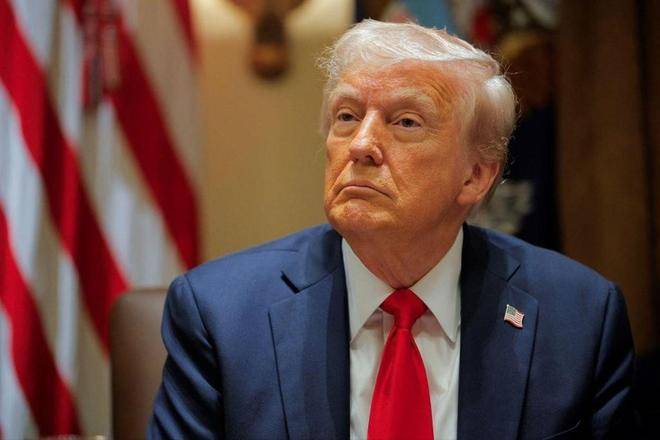
特朗普紧急发文,直言美国可能要完蛋,中国已是他的最大救星
Sou Hu Cai Jing· 2026-01-14 04:49
我们就完蛋了!这一句话出自特朗普口中,原因正是美国法院即将对关税政策做出裁决。然而,正是在 这番充满混乱与焦虑的言辞中,中国的稳定与从容反而成为了一股难得的确定性力量。为了更好理解特 朗普为何会如此绝望,我们需要理清这起关税风波的全貌。 面对如此天文数字,特朗普直言不讳地表示:这将是一团糟,我们的国家几乎不可能支付这些费用。他 甚至用完蛋了这一极为冲击的词语来形容可能的后果。要知道,2025年美国就将关税水平提高到了近百 年来的最高点,虽然短期内,由于人工智能投资热潮和扩张性财政政策的对冲,全球经济看似稳定,但 关税带来的结构性伤害却在悄然积累,并预计在2026年集中显现。更为关键的是,这些关税成本最终还 是要由美国本土承担。 在这样的经济压力下,若美国还要面临数万亿美元的赔偿,毫无疑问,美国经济将陷入前所未有的困 境,这也正是特朗普之所以发出如此绝望言论的核心原因。有趣的是,就在特朗普为可能的赔偿问题感 到恐慌的同时,他在真实社交上发布了另一条截然不同的推文,宣布即日起,任何与伊朗进行商业往来 的国家,在与美国进行商业活动时都将被征收25%的关税,并强调这一决定最终且不可更改。 一边是对现有关税政策可能带来 ...
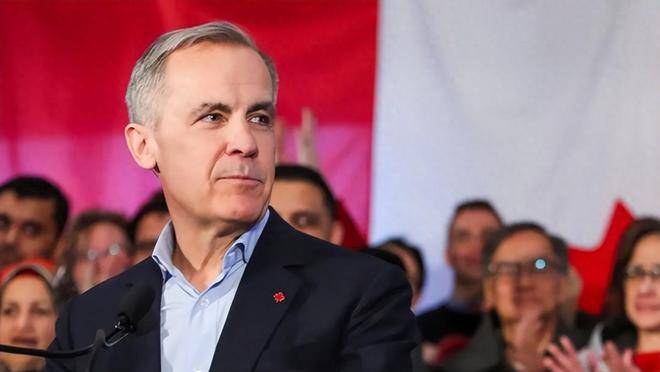
多位内阁要员随行,聚焦政治经贸议题,加拿大总理访华“修复关系”
Huan Qiu Shi Bao· 2026-01-13 22:28
Group 1 - Canadian Prime Minister Carney's visit to China from January 14 to 17 is the first by a Canadian Prime Minister in eight years, highlighting the importance of improving bilateral relations [1][4] - The visit aims to reactivate a long-dormant strategic partnership, with expectations for discussions on political and economic issues [3][4] - Carney's government is focused on diversifying trade relationships to reduce dependence on the U.S., with China seen as a crucial new trade partner [4][6] Group 2 - A delegation of Canadian cabinet ministers will accompany Carney, indicating a strong emphasis on political and economic discussions during the visit [3] - Polls show that over 54% of Canadians support closer trade ties with China, reflecting a growing recognition of the need for market diversification [6][7] - Experts anticipate that the visit may result in some agreements or commitments for future cooperation, although immediate breakthroughs are unlikely [5][8] Group 3 - The visit is viewed as a potential starting point for addressing existing trade disputes, particularly concerning tariffs on agricultural products and electric vehicles [7][8] - Recommendations from Australian media suggest that Canada should adopt a patient and pragmatic approach to improve relations with China, learning from Australia's experience [9] - The visit is expected to send a positive signal about the importance of international communication and cooperation amid rising unilateralism [9]
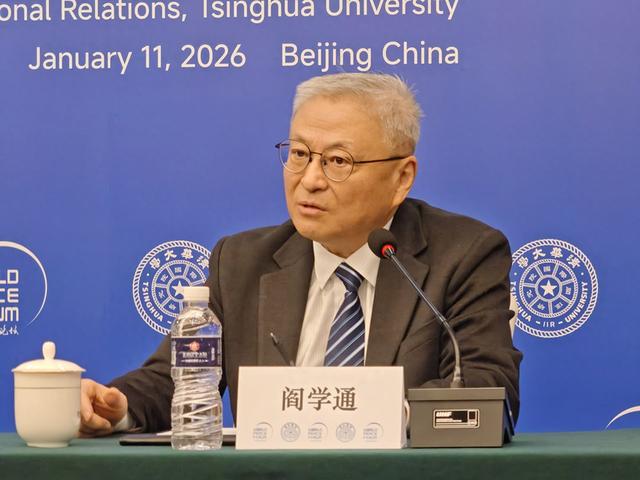
阎学通:欧洲自身难保还往东亚派兵
Xin Lang Cai Jing· 2026-01-13 14:35
Core Viewpoint - The current state of European security is inadequate, leading to criticism of Europe's decision to deploy troops to East Asia while failing to ensure its own safety [1] Group 1: European Security and Responsibility - Europe is unable to guarantee its own security and should reflect on its responsibilities instead of blaming external factors [1] - European leaders lack a sense of responsibility for maintaining their own security, often attributing failures to the United States [1] - The rise of populism in Europe has contributed to internal and transatlantic divisions, with leaders prioritizing their political survival over national interests [1] Group 2: U.S.-Europe Relations - The relationship between the U.S. and Europe is characterized by three levels of division: between the U.S. and Europe, within Europe, and within each of their internal politics [1] - The potential for increased conflict exists if internal political divisions continue, affecting cooperation on security and trade [1] - The U.S. under Trump's administration has adopted a bullying approach towards allies, which may lead to further deterioration of U.S.-Europe relations [1] Group 3: Future Implications - If Europe does not address its internal issues, it risks worsening relations not only with the U.S. and Russia but also with other countries [1] - The possibility of military conflict between the U.S. and Europe could increase, particularly in areas like arms control, despite the current cooperation against Russia [1] - Trump's ambitions, such as the attempt to claim Greenland, could provoke extreme responses from Europe if realized [1]
阎学通:欧洲连自己的安全都保证不了,居然还往东亚地区派兵
Xin Lang Cai Jing· 2026-01-13 13:36
Group 1 - The core viewpoint is that Europe is currently unable to guarantee its own security while attempting to deploy troops to East Asia, indicating a need for self-reflection among European leaders [1][2] - The root cause of the turmoil in US-Europe relations is identified as the political division within the United States, which has led to three levels of division: between the US and Europe, within Europe itself, and within each of their internal politics [1][3] - The rise of populism in Europe has resulted in a prioritization of security over development, leading to reduced cooperation, decoupling, and trade protectionism among Western nations [3][4] Group 2 - European leaders are criticized for lacking a sense of responsibility regarding their own security, often blaming the US for failures in maintaining safety and security [2][4] - There is a call for European leaders to adopt a more humble and self-reflective attitude to recognize their shortcomings, which is essential for correcting their course and improving transatlantic relations [4][5] - The potential for increased military conflict between the US and Europe is highlighted, particularly in the context of aggressive actions such as Trump's ambitions regarding Greenland, which could provoke unexpected responses from Europe [5]
美国对伊朗所有贸易伙伴加税25%!对中俄的精准打击!欲锁死伊朗
Sou Hu Cai Jing· 2026-01-13 12:35
Core Viewpoint - The recent unilateral sanctions imposed by the U.S. aim to directly target Iran while also delivering precise strikes against China and Russia, attempting to force global alignment through trade tariffs [1] Trade Data Summary - In 2024, trade between China and Iran is projected to reach $13.37 billion, with China exporting $8.93 billion in essential goods and importing $4.44 billion primarily in energy and minerals [3] - Non-oil trade between China and Iran has also been significant, exceeding $30.4 billion in the first 11 months of 2025, with China being Iran's largest trading partner, accounting for over 30% of its total exports [3] - The trade between Russia and Iran is expected to reach $4.8 billion in 2024, marking a 16.2% year-on-year increase, with an additional 8% growth in the first three quarters of 2025 [3] Impact on China - The 25% tariff will primarily impact China's exports to the U.S., which are mainly machinery and electrical products with an average profit margin of less than 5%, leading to increased export costs [5] - However, China has already initiated currency settlement and "oil-for-infrastructure" models with Iran, mitigating risks associated with dollar transactions [5] - The trade volume between China and Iran represents only 2% of China's total trade with the U.S., allowing China to adjust its supply chain and expand into ASEAN markets to offset potential losses [5] Impact on Russia - The sanctions may accelerate cooperation between Russia and Iran, as their trade is primarily settled in rubles and rials, minimizing the impact of the U.S. dollar system [7] - Both countries are working towards a free trade agreement within the Eurasian Economic Union, aiming to increase their trade volume to $10 billion [7] - The sanctions will not disrupt the energy complementarity between Russia and Iran, as Russia can leverage Iran to access Middle Eastern energy routes while providing nuclear technology and military support to Iran [7] Consequences of U.S. Actions - The sanctions are likely to accelerate the de-dollarization process, with 95% of trade between China and Russia already settled in local currencies, making barter trade and local currency settlements more common among the three countries [7] - The unilateral sanctions may undermine U.S. international credibility, as many countries are likely to reject alignment with U.S. policies, with a Pew survey indicating that over half of the populations in 19 countries lack confidence in U.S. handling of international affairs [7] - The sanctions could lead to increased global oil prices, as Iran exports 1.4 million barrels of oil daily and Russia exports 7.4 million barrels, potentially disrupting global energy supply and exacerbating inflation in the U.S. [9]
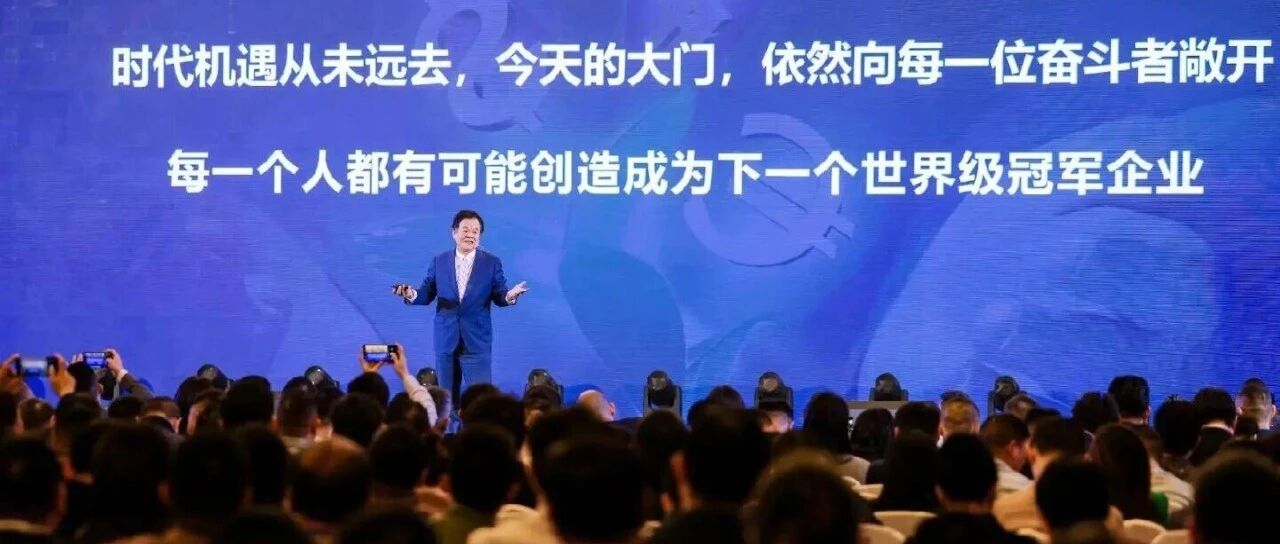
创维集团创始人黄宏生:光伏收入已超电视,“寻找下一个增长点”
经济观察报· 2026-01-13 12:10
Core Viewpoint - The Chinese home appliance industry is at a crossroads, facing declining domestic market demand while seeking new growth opportunities in renewable energy, particularly solar power, which is expected to surpass traditional television business revenue for companies like Skyworth by 2025 [2][3][5]. Group 1: Market Conditions - The Chinese TV market saw a retail volume decline of 2.9% year-on-year in the first three quarters of 2025, with a significant drop of 12.1% in the third quarter [2]. - The global restructuring of supply chains and rising trade barriers are challenging traditional home appliance giants, pushing them to seek new revenue streams [2]. Group 2: Skyworth's Business Strategy - Skyworth's solar business is projected to account for one-third of its revenue, with expectations that it will exceed TV revenue for the first time in 2025 [5]. - The company has strategically entered the solar market by focusing on household distributed solar solutions rather than competing with industry giants in large-scale projects [5][6]. - Skyworth's solar products are designed to be user-friendly and integrated into existing household systems, such as the "balcony solar" solution for urban residents [8]. Group 3: International Expansion - Skyworth is targeting international markets, particularly in Europe, South America, and Africa, where electricity prices are significantly higher than in China, creating a strong demand for solar solutions [6][7]. - The company has adopted a strategy of acquiring established local brands to mitigate geopolitical risks and enhance its market presence abroad [23]. Group 4: AI Integration and Product Development - Skyworth views AI as a critical component of its product offerings, focusing on practical applications that address consumer needs rather than speculative technologies like humanoid robots [9][15]. - The company is developing AI-enabled products that enhance user experience and promote family interaction, such as the "AI sports box" [15]. Group 5: Financial Performance and Challenges - Despite the rapid growth of the solar business, Skyworth's net profit for the first half of 2025 decreased by 67.4% year-on-year, indicating challenges in transitioning between old and new business models [27]. - The company is navigating rising costs, particularly in storage chips, which impact the affordability of AI features in lower-end products [17]. Group 6: Future Outlook - The founder of Skyworth, Huang Hongsheng, remains actively involved in the company's direction, emphasizing the need for continuous innovation and adaptation to survive in a competitive global market [28].