
贸易政策

Search documents
富格林:黑幕冻结妥当高效 关税大消息曝光
Sou Hu Cai Jing· 2025-07-09 07:30
Core Viewpoint - The recent decline in gold prices is attributed to optimistic sentiments regarding trade agreements between the U.S. and its partners, alongside a strengthening dollar and rising U.S. Treasury yields, which collectively exerted downward pressure on gold prices [2][4]. Group 1: Gold Market Analysis - On July 8, spot gold prices fell over 1%, briefly dropping below the $3,300 per ounce mark, marking a new low in over a week [1][2]. - The decline in gold prices is influenced by multiple factors, including optimistic trade negotiations, a stronger dollar, and rising U.S. Treasury yields, as well as the complexities introduced by Trump's tariff policies [2][4]. - In June, the People's Bank of China continued to increase its gold reserves for the eighth consecutive month, reflecting China's strategic emphasis on gold amid global monetary uncertainties [4]. Group 2: Future Outlook for Gold Prices - Analysts predict that gold prices will continue to rise in the second half of the year, with expectations for prices to reach $3,700 per ounce in Q3 and potentially $4,000 by year-end [9]. - The first half of 2025 saw gold prices increase by 25%, setting new records and significantly outperforming the previous year's highs, driven by inflation risks and geopolitical tensions [8][9]. - The market consensus remains bullish on gold, with analysts emphasizing the importance of aligning with market trends rather than attempting to counter them [9].


伦敦银多头受限仍需关注关税动态
Jin Tou Wang· 2025-07-09 04:15
Group 1 - The core viewpoint of the news highlights the mixed signals in U.S. trade policy, particularly regarding tariff adjustments for various countries, indicating a dual strategy of pressure and negotiation [2] - The U.S. has announced a slight increase in tariffs for Japan and Malaysia from 24% to 25%, while some countries like Kazakhstan and Tunisia will see a decrease, and others like South Korea and Indonesia will maintain their current rates [2] - The market reaction to the trade warnings has been cautiously optimistic, especially with the upcoming negotiations between the U.S. and the EU, as well as the U.S. and India, suggesting potential for lower tariff agreements [2] Group 2 - London silver prices are currently under pressure, with a recent price of $36.59 per ounce, reflecting a decline of 0.40% [1] - The analysis indicates that silver prices are expected to continue a downward trend, with key support levels at $36.40 and $36.15, and resistance levels at $36.80 and $37.00 [3] - The fluctuations in precious metal prices are being influenced by tariff news and broader market conditions [3]
【期货热点追踪】美玉米期货反弹,美豆、美小麦期货小幅回升,特朗普贸易政策加码,农产品期货市场面临哪些不确定性?美农报告即将公布,农作物产量预期如何影响期货市场?
news flash· 2025-07-09 03:09
Core Insights - U.S. corn futures have rebounded, while soybean and wheat futures have seen slight recoveries, indicating a mixed performance in the agricultural futures market [1] - The uncertainty surrounding agricultural futures is heightened by the escalation of Trump's trade policies, which may impact market dynamics [1] - An upcoming U.S. agricultural report is expected to provide insights into crop yield forecasts, which could significantly influence futures market trends [1] Group 1 - U.S. corn futures are experiencing a rebound [1] - Soybean and wheat futures have shown slight recoveries [1] - Trump's trade policies are adding uncertainty to the agricultural futures market [1] Group 2 - The upcoming U.S. agricultural report will likely affect crop yield expectations [1] - Crop yield forecasts are crucial for understanding potential impacts on the futures market [1]

【期货热点追踪】特朗普一声令下,COMEX铜价昨日大幅上涨,但LME铜市承压背离,全球最大铜生产国如何应对美国“贸易政策突袭”?
news flash· 2025-07-09 00:25
期货热点追踪 特朗普一声令下,COMEX铜价昨日大幅上涨,但LME铜市承压背离,全球最大铜生产国如何应对美 国"贸易政策突袭"? 相关链接 ...
突然爆雷!刚刚公告:暴跌56%!
券商中国· 2025-07-08 14:14
Core Viewpoint - Samsung Electronics reported a significant decline in its second-quarter operating profit, which is expected to be 4.6 trillion KRW, a 56% year-on-year drop and a 31.24% quarter-on-quarter decrease, marking the lowest level in six quarters and falling short of market expectations [2][5][6]. Group 1: Financial Performance - The anticipated sales for the second quarter are projected to remain flat at 74 trillion KRW [5][21]. - The operating profit of 4.6 trillion KRW is approximately 241 million RMB, indicating a substantial decline compared to previous quarters [5][21]. - This performance is significantly below the LSEG SmartEstimate prediction of a 39% decline to 6.3 trillion KRW [6]. Group 2: Reasons for Decline - The primary reasons for the poor performance include inventory value adjustments and uncertainties due to trade tensions, which have weakened the company's profitability [3][8]. - Samsung's competitive disadvantage in the AI chip sector has become increasingly apparent, particularly in the high bandwidth memory (HBM) chip business [9][10]. - The U.S. trade policies have hindered chip sales, and the company has faced losses in its non-memory chip business due to low utilization rates and trade policies [8][17]. Group 3: Competitive Landscape - Competitors like SK Hynix and Micron Technology are benefiting from strong demand for advanced HBM chips, with SK Hynix expected to report record quarterly earnings [11][14]. - Analysts predict that by 2025, SK Hynix will hold a 57% market share in the HBM market, while Samsung's share will be 27% [12]. - Samsung's stock performance has lagged behind its competitors, with only a 15% increase this year compared to SK Hynix's 65% and Micron's 37% [14]. Group 4: Future Outlook - Despite the dismal second-quarter results, Samsung expresses cautious optimism for the second half of the year, anticipating a narrowing of losses in its foundry business as demand gradually recovers [18][28]. - Analysts suggest that Samsung's profitability may rebound in the third quarter, contingent on the progress of HBM supply to Nvidia and an overall recovery in chip demand [19][28]. - Samsung has announced a stock buyback worth 3.9 trillion KRW to boost investor confidence [28].

豆粕生猪:进口成本趋稳,连粕小幅回落
Jin Shi Qi Huo· 2025-07-07 11:11
Report Summary 1. Investment Rating No investment rating for the industry is provided in the report. 2. Core Viewpoints - The price of US soybean futures is expected to continue weak and volatile due to the disappointment of trade - policy expectations and favorable weather for crops. The domestic continuous soybean meal M09 contract is affected by the external market and shows a downward trend, with the spot price expected to maintain a bottom - grinding oscillation. [16][17] - For the live hog market, the short - term supply is tight, leading to a relatively strong price fluctuation. However, in the later stage, as the slaughter rhythm recovers, the price increase will slow down and adjust, and the price upside is restricted by the off - season demand and medium - term supply pressure. [17][18] 3. Summary by Directory 3.1 Market Review - The DCE soybean meal main 2509 contract declined by 0.58% to 2937 yuan/ton, and the coastal mainstream oil mills' quotes decreased by 10 - 30 yuan/ton. The DCE live hog main 2509 contract dropped by 0.42% to 14245 yuan/ton. The national average ex - factory price of ternary live hogs was 14.85 yuan/kg, down 0.11 yuan/kg from the previous day. The overnight CBOT US soybean main contract remained unchanged at 1048 cents/bushel. [2] 3.2 Weather in Main Producing Areas - There will be local to scattered showers in the mid - week in the US Midwest, with temperatures near to above normal. In the west, there were local to sporadic showers from last Saturday to this Monday, and the temperature was above normal on Saturday, near to above normal on Sunday, and near normal on Monday. In the east, it was mainly dry last Friday, and there were local to sporadic showers from Saturday to Monday, with temperatures above normal from Saturday to Sunday and near to above normal on Monday. From Tuesday to Saturday, there will be local to scattered showers with temperatures near to above normal. Overall, the weather conditions in many areas are still basically favorable. [3][4] 3.3 Macro and Industry News - Last week, the domestic soybean crushing volume of oil mills decreased but remained at a high level. As of July 4, the crushing volume was 2330000 tons, down 160000 tons week - on - week, up 90000 tons month - on - month, up 340000 tons year - on - year, and up 530000 tons compared with the average of the same period in the past three years. It is expected that the operating rate of oil mills will remain high this week, with a crushing volume of about 2350000 tons. [5] - On July 7, the import cost of US soybeans was 4583 yuan, down 3 yuan from the previous day; that of Brazilian soybeans was 3870 yuan, down 2 yuan; and that of Argentine soybeans was 3686 yuan, down 2 yuan. [5] - On July 4, the national major oil mills' soybean meal sales volume was 63400 tons, down 102500 tons from the previous day. Among them, the spot sales volume was 51400 tons, up 7300 tons, and the far - month basis sales volume was 12000 tons, down 109800 tons. The operating rate of the national dynamic full - sample oil mills was 66.16%, up 1.68% from the previous day. [5] - As of July 4, 2025, the average physical inventory days of soybean meal in domestic feed enterprises was 7.91 days, up 0.16 days from June 27, an increase of 2.04% for the eighth consecutive week, and 3.69% higher than the same period last year. [6] - Based on a domestic crushing volume of 9.5 million tons in July, the soybean meal output will reach about 7.5 million tons, with a large surplus compared to the average monthly consumption of about 6.5 million tons. The soybean meal inventory of major domestic oil mills at the end of June was 510000 tons, and it is expected to continue to rise in late July, possibly reaching over 800000 tons. [6] - In June, due to the concentrated arrival of imported soybeans and strong downstream demand, the operating rate of oil mills remained high, and the domestic major oil mills' soybean crushing volume reached 10.11 million tons, a record high for a single month. It is expected that the high operating rate will continue in July, with a full - month crushing volume of about 9.5 million tons. [6] - In the fourth week of June 2025, Brazil exported a total of 13.4203 million tons of soybeans in 20 working days, with an average daily shipment of 671000 tons, a decrease of 3.86% compared to July last year. [7] - As of the week of July 4, the profit of self - breeding and self - raising live hogs was 119.72 yuan per head, up from 50.25 yuan per head in the previous week; the profit of purchasing piglets for fattening was a loss of 26.26 yuan per head, a decrease from a loss of 131.71 yuan per head in the previous week. [7] - In the week of July 3, the average slaughter weight of national ternary live hogs was 123.52 kg, down 0.10 kg from the previous week, a slight decrease of 0.08% month - on - month, hitting a new low in more than four months, and a year - on - year decrease of 0.17%. [7] - According to CME's "FedWatch", the probability that the Fed will keep the interest rate unchanged in July is 95.3%, and the probability of a 25 - basis - point rate cut is 4.7%. The probability of keeping the interest rate unchanged in September is 30.6%, the probability of a cumulative 25 - basis - point rate cut is 66.2%, and the probability of a cumulative 50 - basis - point rate cut is 3.2%. [7] 3.4 Data Charts - The report provides multiple data charts, including the prices of soybean meal in Zhangjiagang and DCE soybean meal futures, soybean meal basis, the prices of rapeseed meal in Nantong and CZCE rapeseed meal futures, rapeseed meal basis, the prices of live hogs in Henan and DCE live hog futures, live hog basis, Chinese soybean inventory, and Chinese soybean meal inventory. [10][13][14][15] 3.5 Analysis and Strategies - For soybean meal, the US soybean futures are likely to be weak due to unmet policy expectations and good weather. The domestic M09 contract is affected by the external market. The domestic soybean meal spot market has abundant supply, and the price is expected to oscillate at the bottom. [16][17] - For live hogs, the short - term supply is tight, but the mid - term supply has pressure. The demand is in the off - season. The short - term price is strong, but the upside is limited by supply and demand factors in the later stage. [17][18]
【期货热点追踪】伦铜、上期所铜期货价格齐跌,铜库存连续四天上升,特朗普对各国贸易政策即将公布,后续铜价走势如何?
news flash· 2025-07-07 02:24
Core Insights - Copper prices for both London and Shanghai futures have declined, indicating a bearish trend in the market [1] - Copper inventories have increased for four consecutive days, suggesting a potential oversupply situation [1] - Upcoming announcements from Trump regarding trade policies may significantly impact future copper price movements [1] Group 1 - The decline in copper prices reflects broader market concerns and potential shifts in demand [1] - The continuous rise in copper inventories could lead to further price pressure if the trend persists [1] - The market is closely monitoring trade policy developments, which could introduce volatility in copper prices [1]
鲍威尔最新表态:都是因为特朗普,所以才没降息
Sou Hu Cai Jing· 2025-07-06 10:00
Core Viewpoint - The Federal Reserve's monetary policy is facing unprecedented complexity due to the impact of tariff policies implemented by the Trump administration, which are significantly influencing interest rate decisions [1][3]. Group 1: Tariff Impact on Monetary Policy - The announcement of new tariffs in April has led to a comprehensive adjustment of the Federal Reserve's economic forecasting models, necessitating a reevaluation of inflation prospects [3]. - Federal Open Market Committee (FOMC) meeting minutes from June indicate that policymakers discussed the effects of tariffs in depth, ultimately deciding to maintain the federal funds rate target range at 4.25% to 4.50% for the fourth consecutive time [3][5]. - The policy statement highlighted "changes in the global trade environment" as a new risk factor [3]. Group 2: Market Reactions and Economic Indicators - Following Powell's remarks, the bond market reacted with a 5 basis point drop in the 10-year U.S. Treasury yield, which later rebounded by 3 basis points, reflecting investor confusion regarding policy outlook [5]. - The U.S. labor market remains tight with an unemployment rate at a historical low of 3.8%, while manufacturing activity indices have been below the neutral level for two consecutive months [5]. - The Consumer Price Index (CPI) for imported goods increased by 1.2% month-over-month, significantly above historical averages, complicating the Fed's decision-making process [5]. Group 3: Future Policy Expectations - Despite Powell's current stance against rate cuts, market expectations suggest a 65% probability of a rate cut in September, with uncertainty regarding the magnitude of the cut [6]. - Powell emphasized the need for data reliance and policy flexibility in response to the evolving trade policy landscape, indicating a shift in the Fed's approach to monetary policy [8]. - The intertwining of political and economic factors is expected to complicate future monetary policy decisions, as noted by a former Fed official [9].
美联储降息救市!7月5日,今日五大消息已全面袭来!
Sou Hu Cai Jing· 2025-07-05 23:26
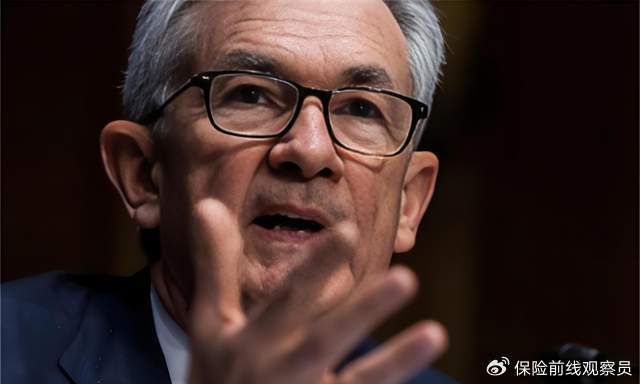
华盛顿的夏夜闷热粘稠,美联储主席鲍威尔在国会山听证席上擦去额角的汗珠。仅仅24小时前,他刚向议员们强调利率调整还需"观望",话音未落,特朗普 的咆哮已席卷社交媒体:"鲍威尔是最差的主席!立刻给我降息2到3个百分点!" 芝加哥商品交易所的交易屏幕在凌晨1点闪烁着冷光:美联储7月降息概率仅21%,而9月启动降息的可能性已飙升至90%以上。 市场刚消化完美联储内部分 裂的信号——两位特朗普任命的官员沃勒与鲍曼意外转向鸽派,暗示7月可能降息;但转眼间十多位官员集体泼下冷水:"需要更多数据!" 01 美联储降息博弈,政治阴影下的独立危机 鲍威尔在国会听证会上的表态成为这场风暴的导火索。面对议员质询,他反复强调关税政策使美联储难以预测通胀前景:"自二战以来各国都在减少关税, 但如今加征关税规模是特朗普第一任期的六倍,我们必须审慎分析。" 当被问及7月降息可能性时,他罕见松口:"降息宜早不宜迟",却拒绝承诺具体时间 点。 美联储内部裂痕在点阵图上暴露无遗:19位决策者中,7人坚持今年不降息,8人支持降息两次。 分裂程度创十年新高,最常见与次常见预测差距达50基 点。 德意志银行报告指出:"这不是历史性不确定性,而是历史性分 ...
美联储博斯蒂克:价格调整以适应贸易和其他政策将不会是短期或简单的过程,可能需要一年或更长时间。
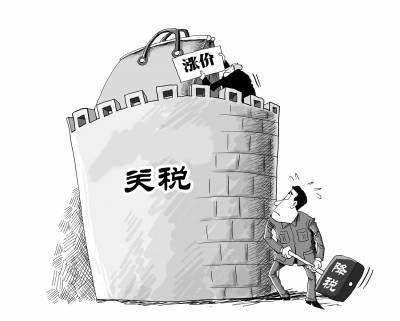
news flash· 2025-07-03 15:03
Core Viewpoint - The adjustment of prices to adapt to trade and other policies will not be a short-term or simple process, potentially taking a year or longer [1] Group 1 - The Federal Reserve's Bostic emphasizes the complexity of price adjustments in response to trade and policy changes [1] - The timeframe for these adjustments is projected to be at least one year, indicating a prolonged period of economic adaptation [1]