全球资产配置

Search documents
摩根资产管理《2025年中全球市场展望》正式发布!
Sou Hu Cai Jing· 2025-08-07 05:07
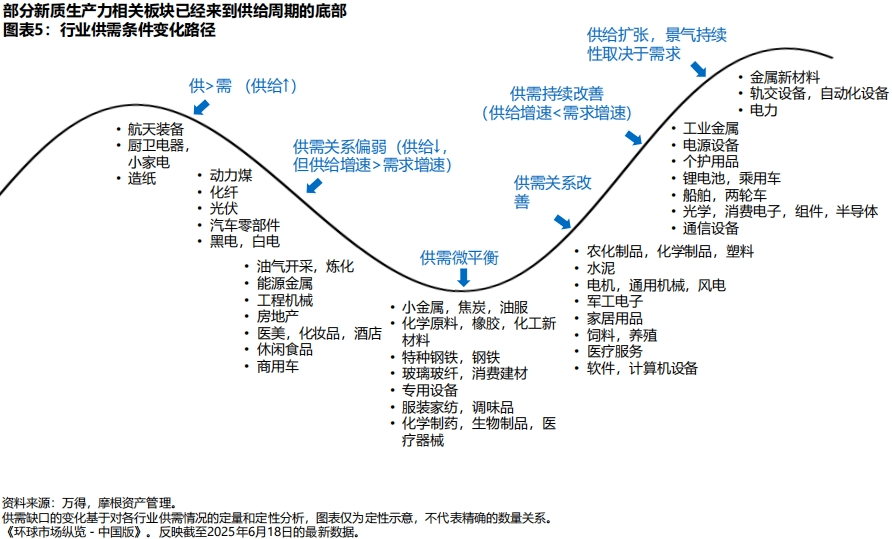
Global Market Outlook - Morgan Asset Management's report highlights significant uncertainty in the global economy and financial markets due to U.S. trade, fiscal policies, and geopolitical risks, suggesting investors should build resilient portfolios with global asset allocation to diversify returns and reduce volatility [1] China Equity Market - The report anticipates a structural slowdown in China's economic growth in the second half of the year due to weak confidence in households and businesses, ongoing real estate sector challenges, and deflationary pressures [2] - A "barbell strategy" combining growth and defensive sectors is expected to become mainstream, with potential opportunities in sectors related to new productivity, AI, new consumption, and innovative pharmaceuticals [2][4] Overseas Stocks - The U.S. economic outlook is influenced by tariff reductions, tax policies, and the Federal Reserve's interest rate decisions, with concerns about stagflation and declining consumer and business confidence [5] - European stocks are viewed favorably due to attractive valuations, reduced inflation pressures, and planned increases in defense spending and infrastructure investments, leading to a potential shift of investments back to Europe from U.S. markets [5] Asian Markets - Asian economies are experiencing reduced currency appreciation pressures, allowing central banks more room to lower interest rates to support growth, with Japan's stock market showing positive performance due to corporate transformation [6] Overseas Bonds - The report emphasizes focusing on non-U.S. bond markets, as central banks in mature markets and Asia may lower rates more aggressively than the Federal Reserve, presenting additional opportunities for bond investors [8] Alternative Assets - In uncertain environments, investors are encouraged to consider alternative assets such as infrastructure, real estate, and transportation, which historically have lower correlation with traditional stocks and bonds, providing predictable cash income and reducing portfolio volatility [10] Summary - The global economy faces downward risks and increased volatility, but a combination of fiscal and monetary policies may help mitigate risks outside the U.S. Investors are advised to diversify across regions and asset classes to enhance portfolio resilience against market shocks [13]

年内首只“日光基”诞生 透视外资FOF逆袭背后的招行“定制局”
Jing Ji Guan Cha Wang· 2025-08-07 03:04
Core Viewpoint - Morgan Fund Management (China) successfully raised nearly 2.8 billion yuan in a single day for its Morgan Yingyuan Stable Three-Month Holding Mixed FOF, marking it as the first FOF product to sell out in one day since 2025 [2][3] Fund Details - The fund's fundraising period was originally set to end on August 22 but was closed early on August 4 due to high demand, with a final size of 2.752 billion yuan [3][5] - The fund employs a "fixed income plus" strategy, with equity assets not exceeding 30%, and allows for diverse asset configurations including REITs, gold, and QDII [3][5] - The fund's design includes a potential 20% allocation to overseas assets, which is viewed as a significant selling point [3] Sales and Distribution - The rapid fundraising success is attributed to the strong sales capabilities of the main distributor, China Merchants Bank, which has a reputation as the "king of retail" [2][8] - The collaboration between Morgan Fund and China Merchants Bank involved a long communication process, emphasizing the importance of the bank's "TREE Long-term Profit Plan" in selecting products [8] Performance Metrics - Morgan Fund currently manages six FOF products with a total scale of 517 million yuan, with the Morgan Borui Balanced One-Year Holding FOF being the largest at 252 million yuan [4] - The new fund's single-day fundraising amount is over five times the total scale of Morgan Fund's existing FOF products [5] Manager Background - The fund is co-managed by En Xuehai and Wu Chunjie, both of whom have extensive backgrounds in asset management and investment strategies [6] - En Xuehai has a track record of returns of 3.04% and 3.95% for the two FOFs he manages, while Wu Chunjie's managed products have shown returns ranging from -3.03% to 8.77% [6] Market Context - As of August 4, there are 487 equity FOF products in the market, with an average return of 6.31% this year [7] - Morgan Fund's FOF products have outperformed the average market returns, with year-to-date returns of 7.56% and three-year returns of 2.85% [7]


全球资产配置转向初现 海外家办转向黄金、另类资产
2 1 Shi Ji Jing Ji Bao Dao· 2025-08-07 01:29
Market Overview - Global risk assets are showing significant differentiation under the dual narrative of "tariffs + interest rate cuts" [1] - Emerging markets are outperforming developed markets, with the South Korean Composite Index leading with a 33.28% increase [1] - The Hang Seng Index and Germany's DAX follow with increases of 24.14% and 19.77% respectively, while US indices like NASDAQ and S&P 500 have risen by 8.32% and 7.10% [1] - In the bond market, China's 10-year government bond yield has fluctuated between approximately 1.66% and 1.75% this year, while the US 10-year yield has decreased from 4.37% to 4.22% [1] Alternative Assets - Gold has shown remarkable performance, with the London spot gold price rising from approximately $2646.3 per ounce at the beginning of the year to $3375.30 per ounce by August 5, marking a 27.55% increase [2] - Conversely, the ICE Brent crude oil has seen a decline of 9.32% this year [2] Family Office Trends - Family offices are increasingly adopting a conservative approach due to rising geopolitical tensions and economic uncertainties, with a shift in focus towards stable returns [3][4] - Domestic family offices prioritize "preservation of value," while overseas family offices are more open to accepting single-digit returns in the current market environment [3] - There is a notable trend of family offices reducing cash holdings, with plans to hold only 6% in cash by 2025, while increasing investments in alternative assets like private debt [4] Asset Allocation Shifts - Family offices are observing three key trends in asset allocation: an increase in fixed income and cash-like assets, a rise in consultations for "safety net" tools, and a longer due diligence period for private equity investments [4] - While domestic family offices exhibit a strong aversion to risk and a preference for cash, overseas family offices are diversifying into gold and alternative assets [4][5] Global Asset Allocation - Family offices' wealth is primarily concentrated in North America and Western Europe, with 80% of their investments in developed market stocks and bonds [6] - There is a gradual shift in asset allocation, with some family offices beginning to reduce their exposure to the US market and reallocating to European markets [6] - Interest in the Greater China region is increasing, with 19% of global family offices planning to increase investments there, up 3 percentage points from the previous year [7] Emerging Markets and New Investment Opportunities - Family offices are increasingly looking towards emerging technologies such as pharmaceuticals, healthcare, electrification, and artificial intelligence for future investments [7] - Domestic family offices are entering a "second acceleration" phase in seeking high returns overseas, with a growing interest in regions like Singapore, Hong Kong, and emerging markets [8]

全球资产配置转向初现 中东、越南、泰国成“新三样”
2 1 Shi Ji Jing Ji Bao Dao· 2025-08-06 17:17
Market Overview - Global risk assets are showing significant differentiation under the dual narrative of "tariffs + interest rate cuts" [1] - Emerging markets are outperforming developed markets, with the South Korean Composite Index leading with a 33.28% increase [1] - The Hang Seng Index and Germany's DAX follow with increases of 24.14% and 19.77%, respectively [1] - The US stock market, represented by the Nasdaq and S&P 500, has seen increases of 8.32% and 7.10% [1] - A-shares in China have also performed well, with the Shanghai Composite Index and Shenzhen Component Index rising by 7.93% and 6.65% [1] Bond Market - Chinese government bond yields have shown a stable trend, with the 10-year yield fluctuating between approximately 1.66% and 1.75% [1] - In contrast, the US 10-year Treasury yield has decreased from 4.37% in early April to 4.22% by August 5, indicating rising expectations for interest rate cuts [1] Currency Market - The US dollar has begun to decline, with the dollar index dropping from 103.46 in March to 98.76 by August 5, a significant decrease [1] - The USD/CNY exchange rate is stable around 7.18, while the USD/JPY has depreciated to 147.18 [1] - The USD has appreciated against the Euro, with the exchange rate at 0.86 [1] Alternative Assets - Gold has performed exceptionally well, with the London spot gold price rising from approximately $3000/oz at the beginning of the year to $3375.30/oz by August 5, a 25.49% increase [2] - The oil market is under pressure, with ICE Brent crude oil down by 9.32% year-to-date [2] Family Office Trends - Global family offices are adjusting their risk tolerance and return expectations due to increasing geopolitical tensions and economic uncertainties [2][3] - Domestic family offices prioritize "preservation of value," shifting from "outpacing inflation" to "not losing is gaining" [3] - Overseas family offices are more open to single-digit returns in the current market environment [3] Asset Allocation - According to UBS's latest report, family offices plan to reduce cash holdings to only 6% by 2025, while increasing investments in alternative assets, particularly private debt [4] - There is a notable increase in the allocation to fixed income and cash-like assets, as well as a rise in consultations regarding family trusts and insurance products [4] - Family offices are extending their due diligence periods for private equity investments, focusing more on cash flow and dividend terms [4] Regional Asset Distribution - Family office wealth is primarily concentrated in North America and Western Europe, with 80% allocated to developed market stocks and bonds [6] - The allocation to North America is projected to be 53% in 2025, a slight increase from the previous year [6] - There is a gradual shift in investment focus, with some family offices reallocating from the US to European markets [6] Investment Opportunities - There is a growing interest in the Greater China region, with 19% of global family offices planning to increase investments there, up 3 percentage points from 2024 [7] - Future investment directions are expected to focus on emerging technologies, including pharmaceuticals, healthcare, electrification, and artificial intelligence [7] - Domestic family offices are increasingly looking overseas for high returns, with a notable rise in interest towards regions like Singapore, Hong Kong, and emerging markets [8]
全球资产配置转向初现,中东、越南、泰国成“新三样”
2 1 Shi Ji Jing Ji Bao Dao· 2025-08-06 10:50
Market Performance - Global risk assets are showing significant differentiation under the dual narrative of "tariffs + interest rate cuts" [1] - Emerging markets are outperforming developed markets, with the South Korean Composite Index leading with a 33.28% increase [1] - The Hang Seng Index and Germany's DAX have increased by 24.14% and 19.77% respectively, while US indices like Nasdaq and S&P 500 have risen by 8.32% and 7.10% [1] - A-shares have also performed well, with the Shanghai Composite Index and Shenzhen Component Index rising by 7.93% and 6.65% respectively [1] - The healthcare sector in Hong Kong has seen a remarkable increase of 83.25% [1] Bond Market - Chinese government bond yields have shown a stable trend, with the 10-year yield fluctuating between approximately 1.66% and 1.75% [1] - In contrast, US 10-year Treasury yields have decreased from 4.37% in early April to 4.22% by August 5, indicating rising expectations for interest rate cuts [1] Currency Market - The US dollar has been on a downward trend, with the dollar index falling from 103.46 on March 19 to 98.76 on August 5 [1] - The USD/CNY exchange rate is stable around 7.18, while the USD/JPY has depreciated to 147.18 and the USD/EUR has appreciated to 0.86 [1] Alternative Assets - Gold has performed exceptionally well, with the London spot gold price rising from approximately $3000/oz at the beginning of the year to $3375.30/oz by August 5, marking a 25.49% increase [2] - Conversely, the oil market is under pressure, with ICE Brent crude oil down by 9.32% year-to-date [2] Family Office Trends - Family offices are becoming more conservative in their investment strategies due to increasing geopolitical risks and economic uncertainties [3] - Domestic family offices prioritize "preservation of value," shifting their focus from "beating inflation" to "not losing is gaining" [3] - Overseas family offices are still seeking higher returns, with single-digit growth now being acceptable in the current market environment [3] Asset Allocation - According to UBS's latest report, family offices are reducing cash holdings, with only 6% planned for cash by 2025, while increasing investments in private debt to enhance portfolio returns [4] - There is a notable increase in fixed income and cash-like assets, as well as a rise in consultations for "safety net" tools like family trusts and large deposits [4] - The due diligence period for private equity has lengthened, with stricter requirements for cash flow and dividend terms [4] Global Asset Allocation Shifts - Family offices' wealth is primarily concentrated in North America and Western Europe, with 80% allocated to developed market stocks and bonds [6] - The allocation to North America is projected to be 53% in 2025, a slight increase from the previous year, while the Asia-Pacific region's allocation has decreased to 7% [6] - Some family offices are beginning to adjust their risk exposure to the US market, with a shift of stock allocations from the US to Europe [6] Investment Focus in Asia-Pacific - There is a growing interest in the Greater China region, with 19% of global family offices planning to increase investments there, up 3 percentage points from 2024 [7] - Future investment directions are expected to focus on emerging technologies, including pharmaceuticals, healthcare, electrification, and artificial intelligence [7] Overseas Investment Trends - Domestic family offices are increasingly seeking high returns overseas, with a consensus on diversifying market risks [8] - There is a noticeable increase in asset allocation demand towards Hong Kong and emerging regions [8] - Clients are also paying attention to cross-border tax implications related to overseas investments [8]
7月全球投资十大主线
一瑜中的· 2025-08-05 08:47
Core Viewpoint - The global asset performance in July shows that the US dollar leads with a return of 3.19%, followed by commodities at 2.00%, global stocks at 1.30%, and the Chinese yuan at -0.50%, with global bonds declining by 1.49% [2] Group 1: Global Asset Trends - The liquidity of Japanese government bonds has deteriorated beyond the levels seen during the 2008 financial crisis, with the Bloomberg Japan Government Bond Liquidity Index surpassing the post-Lehman Brothers bankruptcy levels [4][10] - There is a divergence in the performance of cyclical stocks versus defensive stocks in the US market, closely linked to forward swap rates tied to interest rates, indicating optimism among investors regarding sustained high interest rates [12] - The relative performance of MSCI Japan bank stocks is highly correlated with the 10-year Japanese government bond yield, benefiting from rising inflation expectations [5][15] Group 2: Fund Manager Allocations - Global fund managers have increased their allocation to technology to the highest level since March 2009, while reducing positions in cash, consumer staples, banks, emerging markets, and commodities [18] - Emerging market sovereign debt has seen its yield spread over US Treasuries narrow to a 15-year low, reducing the attractiveness of this strategy despite strong performance earlier in the year [24][21] Group 3: Economic Indicators - The relative performance of European consumer staples has diverged from the gold-to-copper ratio since 2024, indicating a weakening relationship between macroeconomic conditions and defensive sectors [28] - The relative price-to-earnings ratio of European and US stock indices is closely related to the uncertainty of economic policies in both regions, with European valuations rising as US policy uncertainty increases [31] Group 4: Interest Rate Dynamics - The interest rate swap spread between China's 5-year and 1-year rates has turned positive for the first time in seven months, reflecting confidence in long-term inflation due to domestic policies and infrastructure projects [35] - The South African stock index has closely followed gold prices, with a cumulative increase of approximately 19% since 2025, outperforming other emerging market indices [38] Group 5: Market Sentiment - The volume of bullish options on the SPDR US Dollar ETF has been declining, suggesting a potential softening of the dollar, as indicated by the falling risk reversal options [41]

中外资机构:中国权益资产有望跑赢海外市场
天天基金网· 2025-08-04 05:50
Group 1: Global Economic Impact of Tariffs - The average import tariff level in the U.S. has reached 15.6% in 2023, significantly higher than the 2.4% in 2024, which may increase inflation and weaken corporate profitability [3] - The impact of U.S. tariff policies includes a slowdown in global trade flows, reduced investment and consumption growth, and potential restructuring of global supply chains [3] - The legal standing of Trump's tariff policies remains uncertain, pending a final ruling from the Supreme Court [4] Group 2: U.S. Monetary Policy Outlook - The Federal Reserve decided to maintain interest rates in July, with expectations of potential rate cuts in September or October, and a total of four cuts by June 2024, amounting to 100 basis points [6][7] - High tariffs may hinder the Fed's ability to cut rates due to rising inflation and weakening corporate earnings [6] Group 3: Precious Metals and Investment Strategies - Gold prices are expected to rise, with a forecast of $3,700 per ounce by June 2026, driven by geopolitical risks and increased central bank gold reserves [8] - The market may see a correction in gold prices due to reduced uncertainty from tariff policies and a historical high price level [8] Group 4: Global Asset Allocation - U.S. economic and stock market pressures may lead to a decline in trust in dollar assets, while European stocks may attract investment due to lower valuations [10] - A-shares and H-shares are expected to benefit from policy support and improved fundamentals, with a focus on cyclical stocks and technology growth sectors [10] Group 5: Sector Focus in Chinese Market - The market is showing a "high-low" switching characteristic influenced by infrastructure policies and trade risks, with a focus on cyclical stocks and technology sectors [13] - The AI sector is anticipated to remain a core focus, with recommendations to monitor semiconductor and technology index stocks [13][14]

【华尔街见闻·大师课】戴康:美国非农大调整,改变了什么预期?
戴康的策略世界· 2025-08-04 04:08
Group 1 - The adjustment of the U.S. non-farm payroll data has significantly impacted market expectations, indicating a shift in economic outlook [10] - Understanding the future trajectory of the U.S. economy is crucial, with discussions on whether a recession can be avoided [10] - Following a substantial correction in the U.S. stock market, there are considerations on whether this presents a good buying opportunity [10] Group 2 - Future trends in the U.S. dollar, U.S. Treasury yields, and gold prices are essential for investment strategies [10]

鹏华全球高收益债过去1年业绩超6%,位居同类TOP1
Cai Fu Zai Xian· 2025-08-04 02:22
Core Viewpoint - The demand for diversified asset allocation is increasing among investors in the current volatile A-share market and declining interest rate environment, with QDII funds emerging as important tools for risk diversification and capturing overseas market opportunities [1] Group 1: Fund Performance - Penghua Global Short-Medium Bond RMB A and Penghua Global High Yield Bond (QDII) have shown strong performance, with net value growth rates of 6.61% and 17.18% over the past year and three years respectively for the former, ranking 3rd out of 55 and 9th out of 51 in their categories [1] - The Penghua Global High Yield Bond achieved a net value growth rate of 6.79% over the past year, ranking 1st out of 55 in its category [1] - The Penghua Global Short-Medium Bond has seen significant growth in scale, reaching 2.641 billion RMB as of June 30, 2025, an increase of 408 million RMB from the end of 2024 [1] Group 2: Fund Management - Both QDII bond funds are managed by Hao Lili, who has 15 years of experience in the securities industry and 8 years in U.S. dollar bond investment research, known for a prudent and stable investment style [2] - The Penghua Global Short-Medium Bond primarily invests in overseas investment-grade short to medium-term bonds, focusing on credit risk stability and diversification across industries and regions [2] - The fund employs foreign exchange derivatives to hedge against currency risks and adjusts duration to mitigate risks associated with rising interest rates [2] Group 3: Market Outlook - In the second quarter, adjustments were made to the portfolio of the Penghua Global High Yield Bond to enhance overall credit quality, with positive returns from trading certain industry bonds affected by fluctuating tariffs [3] - Future risks are anticipated from potential policy changes following tariff exemptions, with ongoing negotiations between Trump and various governments [3] - The outlook for U.S. Treasury bonds includes concerns over interest rate cuts and supply-demand dynamics, while the static yield of dollar bonds remains attractive, with a focus on timing and sector allocation strategies for enhanced returns [3]
中外资机构:中国权益资产有望跑赢海外市场
中国基金报· 2025-08-03 14:14
Core Viewpoint - Chinese equity assets are expected to outperform overseas markets in the second half of the year due to strong policy expectations and favorable liquidity conditions in the Asia-Pacific emerging markets [22]. Group 1: Global Economic Impact - The average import tariff level in the U.S. has reached 15.6% this year, significantly higher than the 2.4% expected in 2024, which may elevate U.S. inflation and weaken corporate profitability [11]. - The U.S. tariff policy is likely to slow global trade flows, reduce investment and consumption growth, and reshape global supply chains, potentially leading to a "de-Americanization" and "multilateralization" of trade among non-U.S. economies [11]. Group 2: U.S. Monetary Policy Outlook - The Federal Reserve is expected to maintain interest rates unchanged as long as the U.S. economy and labor market remain robust, with market expectations for rate cuts cooling down [14]. - It is anticipated that the Federal Reserve will cut rates four times by June next year, totaling 100 basis points [16]. Group 3: Investment Strategies - Investors are advised to increase their allocation to non-U.S. assets, particularly European investment-grade bonds and stocks, which are expected to benefit from Germany's fiscal stimulus plan [20]. - A focus on Chinese A-shares and H-shares is recommended, as they are likely to attract international capital inflows due to policy support and improving fundamentals [20]. Group 4: Sector Focus in China - The market is expected to show a "high-low cut" characteristic, with significant interest in cyclical stocks driven by infrastructure policies and technology events [23]. - The technology sector, particularly AI-related stocks, is projected to remain a core focus, with recommendations to monitor semiconductor, optical module, and high-end PCB stocks [23].